When to Plant Turnips: Spring and Fall Sowing
The Short Answer
Sow turnips 2–3 weeks before your last spring frost, and again in late summer 6–8 weeks before your first fall frost. They germinate in cool soil, mature in 40–60 days, and the fall crop — sweetened by frosts — is the best turnips you will ever grow.
Turnips are the ideal shoulder-season crop: in the ground early, out before summer heat, back in for fall. They ask for almost nothing but thinning and steady water.
When to Plant Turnips: Zone-by-Zone Timing
Your USDA hardiness zone determines your exact dates. Find your zone, then read your line — and remember that microclimates (south-facing walls, urban heat) can shift you half a zone warmer:
- Zones 3–5: spring late April–May; fall late July–early August. Fall crop sweetens beautifully.
- Zones 6–7: spring March–April; fall August. Possible overwintering under mulch in mild years.
- Zones 8–9: February–March and September–October; fall/winter is prime turnip season.
- Zone 10+: October–November; turnips are a winter crop where summers are hot.
Turnips Timing at a Glance
| Timing Factor | When |
|---|---|
| Spring sowing | 2–3 weeks before last frost |
| Fall sowing | 6–8 weeks before first frost |
| Soil temperature | 40°F min; 60–70°F ideal |
| Days to germination | 5–10 |
| Days to maturity | 40–60 |
| Thinning | To 4–6 inches — essential |
Soil Temperature: The Real Deciding Factor
Calendars lie; thermometers do not. Germinates 40–85°F, fastest at 60–70°F. Loose, stone-free soil — compacted ground grows forked roots. Moderate fertility; excess nitrogen grows tops, not roots. A $10 soil thermometer pushed 2 inches into the bed tells you more than any date on a calendar — when the soil hits the right temperature, it is time, regardless of what the calendar says.
Starting Indoors vs Direct Sowing
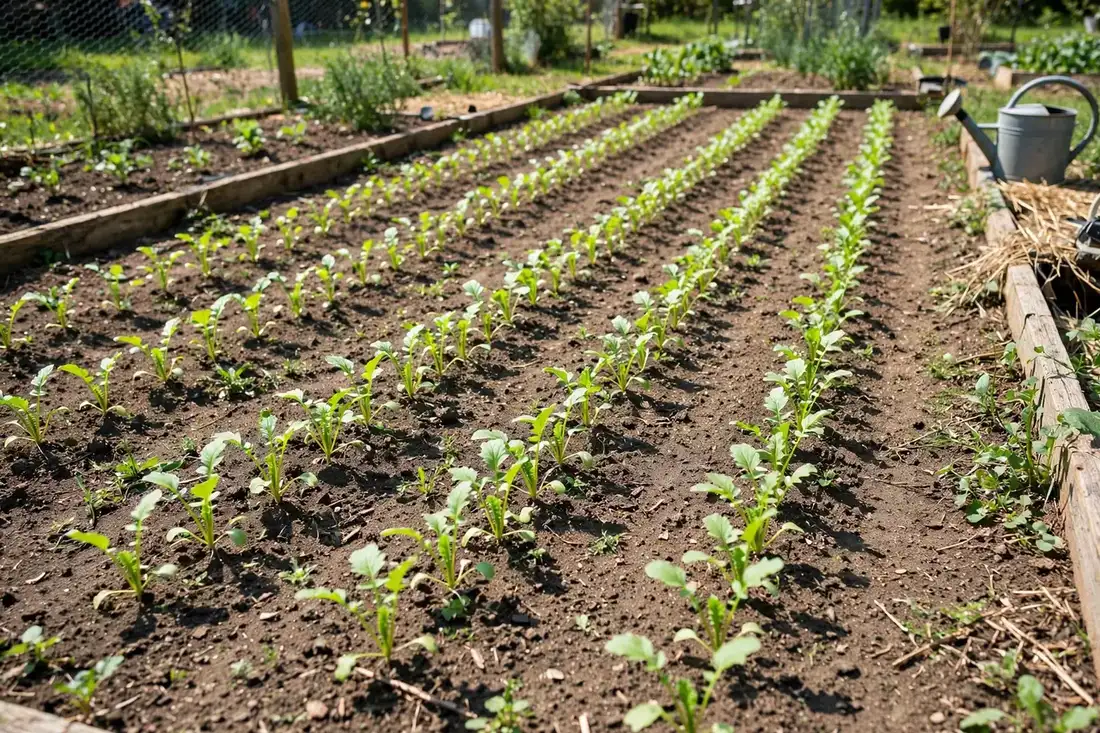
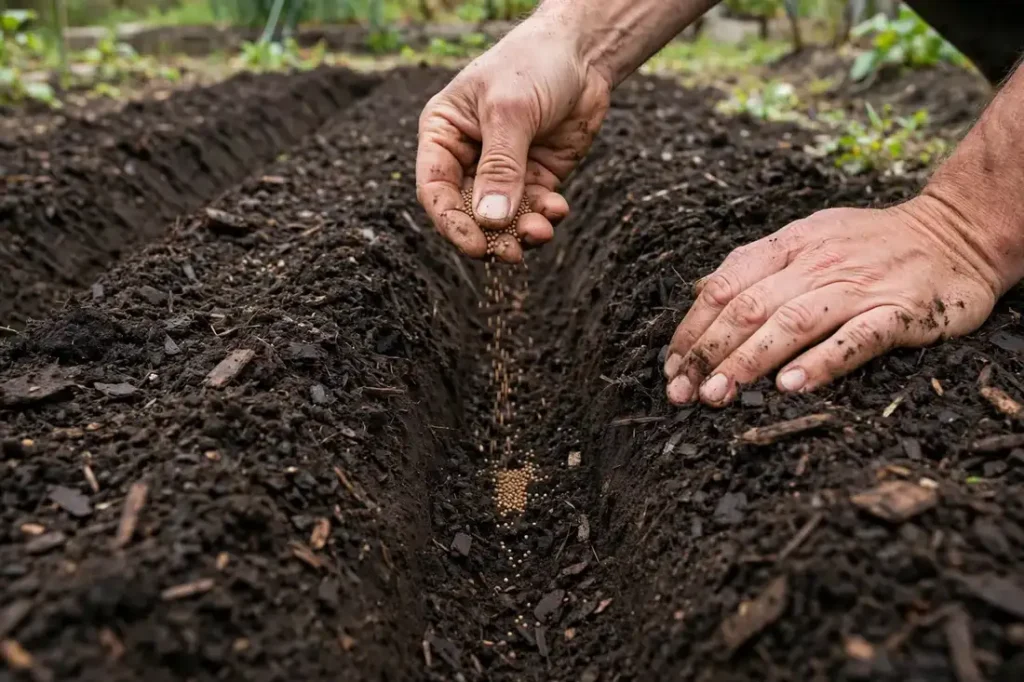
Direct sow 1/4–1/2 inch deep, 1 inch apart — then thin ruthlessly to 4–6 inches. Thinning is the entire secret of turnip growing; crowded roots stay tiny.
Succession Planting for Continuous Harvest
Sow every 3–4 weeks through the cool seasons for continuous young roots — turnips are best harvested small (2–3 inches), so successions keep the supply coming.
Fall Planting
The premium crop: sow 6–8 weeks before first frost; roots mature in cooling weather and sweeten with frost. Mulch heavily and harvest into winter — cold-harvested turnips are remarkably sweet.
What Happens If You Plant Too Early or Too Late
Too early: seeds rot in frozen soil. Wait until workable — turnips are early but need unfrozen ground.
Too late in spring: turnips maturing in summer heat turn woody and pungent. If spring slips away, the fall sowing is the crop to focus on — it is better anyway.

Understanding Frost Dates
Frost dates are the skeleton key of planting timing. Your last spring frost date is the average date of the final 32°F night — half of years see frost after it, half before. The first fall frost date works the same way in reverse. Together they define your growing season’s length, and nearly every planting decision hangs on them.
Find your dates from your local extension service or the NOAA climate normals for your zip code — not from a generic zone map, which only describes winter lows. Microclimates shift frost dates by days or weeks: low spots collect cold air (frost pockets), while south-facing walls and urban areas run warmer. A max-min thermometer left in your garden for a season teaches you your yard’s real dates.
For turnips, the frost dates matter twice: planting too close to the last spring frost risks a late freeze killing tender growth, and fall crops must mature before the first fall frost (plus a ‘fall factor’ — growth slows as days shorten, so add 1–2 weeks to fall maturity times).
USDA Zones, Microclimates, and What Actually Matters
USDA hardiness zones describe only one thing: the average coldest winter temperature. They tell you which perennials survive your winter — they say nothing about summer heat, rainfall, humidity, or frost dates. Two zone-7 gardens (one in Virginia, one in Oregon) have wildly different growing conditions.
More useful for annual vegetables: your frost-free days (season length), your summer heat (captured by the AHS heat zone map), and your soil’s spring warm-up speed (sandy soils warm fast, clay slowly). A gardener who knows these three numbers times plantings better than one who only knows their USDA zone.
Work your microclimates deliberately: plant heat-lovers against south-facing walls (reflected heat adds up to a zone of warmth), put frost-tender things on slopes (cold air drains downhill), and use shade from trees or buildings to create cool pockets for crops that bolt in heat. Your yard contains multiple climates — plant like it.
Planning with a Garden Calendar
The gardeners with the best timing all share one habit: they write it down. A simple garden calendar — paper or spreadsheet — records planned sowing dates, actual sowing dates, germination, first harvest, and notes. Within two seasons it becomes a custom planting guide for your exact yard, more accurate than any book.
Build yours backwards from goals: want turnips for a July 4th harvest? Subtract days-to-maturity plus a buffer, and that is your sow date. Planning fall crops? Start from the first fall frost and count back. This backwards planning is how market growers hit market dates reliably — and it works identically in a home garden.
Include succession slots: mark every 2–3 weeks through the season for repeat sowings of fast crops. And note what actually happened — the seasons you record become the timing wisdom you wish you had started collecting years ago.
Climate Change and Shifting Planting Windows
Planting calendars written decades ago are drifting: USDA zones have shifted warmer across much of the country, last spring frosts trend earlier, and first fall frosts later — the growing season is measurably longer than your grandparents’. Old ‘plant after Memorial Day’ rules may now cost you weeks of growing season.
Adapt by watching conditions, not dates: soil temperature and recent weather predict turnips success better than any traditional date. Keep your own records (see above) — your yard’s trend line is the only one that matters for your garden. And build resilience: diversify varieties and planting dates so a single weird-weather event cannot take your whole crop.
Heat is the emerging constraint: crops that thrived in your summers twenty years ago may now need afternoon shade, heat-tolerant varieties, or shifted sowing dates. Choose varieties bred for heat tolerance and give cool-season crops the fall slot they increasingly prefer.
Turnips Planting Checklist
| Step | Action | Done When |
|---|---|---|
| 1 | Look up your last/first frost dates | Dates written in your garden calendar |
| 2 | Check seed packet for days to maturity | You know the variety’s timeline |
| 3 | Count backwards to find your sow date | Sow date marked on calendar |
| 4 | Test soil temperature at planting depth | Soil at or above the crop’s minimum |
| 5 | Prepare the bed (compost, rake smooth) | Bed ready a week before sowing |
| 6 | Sow/transplant turnips at proper depth & spacing | Planted and watered in |
| 7 | Mark succession sowing dates | Calendar has 2–3 follow-up dates |
| 8 | Mulch and set up protection (row cover) | Bed mulched; cover on standby |
Succession Math: Never Run Out
The difference between a garden that feeds you for a month and one that feeds you all season is arithmetic. For turnips, divide your total desired harvest by the yield per sowing, and that tells you how many sowings you need; space them by the crop’s harvest window and you get continuous supply. Example: if one sowing of lettuce feeds you for 3 weeks and you want 12 weeks of salad, you need 4 sowings spaced 3 weeks apart.
Stagger varieties too, not just dates: an early, a midseason, and a late variety of the same crop, sown on the same day, naturally sequence their harvests — this ‘variety succession’ is easier to manage than calendar succession and hedges against a bad week of weather hitting every sowing.
Keep a simple sowing log: date, variety, location, germination date, first harvest. After one season you will know exactly how many sowings your household needs and when each should go in — the math replaces the guesswork permanently.
Interplanting and Intensive Spacing
Timing and spacing are two faces of the same coin: interplanting — growing fast crops between slow ones — doubles the use of both space and season. Sow radishes or lettuce between turnips rows; the quick crop harvests out just as the main crop needs the room. The bed produces twice with no extra timing effort.
Intensive spacing (plants closer than traditional rows, in a grid) works because a full canopy of leaves shades out weeds and keeps soil cool and moist — but it demands richer soil and more consistent water than wide rows, since more plants draw from the same ground. Feed and water intensively-spaced beds generously and they will out-yield traditional rows per square foot.
The relay version: as spring crops finish, their space immediately receives summer transplants; as summer crops fade, fall crops go in. The bed is never empty, and each planting’s timing is dictated by the previous crop’s finish — a self-perpetuating calendar that experienced gardeners run almost unconsciously.
Reading Weather Beyond the Forecast
The 7-day forecast tells you weather; soil and plants tell you timing. A soil thermometer ($10) is the most underused timing tool in gardening — {pl} care about soil temperature, not air temperature, and a cold snap after warm air fools more gardeners than any other spring trap. Measure at planting depth, mid-morning, for three consecutive days before sowing.
Phenology — timing by natural events — is the old wisdom that still works: plant corn when oak leaves are the size of a squirrel’s ear, set out tomatoes when lilacs bloom, sow beans when the apple blossoms fall. These indicators integrate temperature, day length, and soil conditions the way no calendar date can. Find the indicator plants for your region and watch them.
Track growing degree days if you want precision: many extension services publish them, and they predict pest emergence and crop development better than dates. It sounds technical; in practice it is one number checked weekly that tells you what is about to happen in the garden.
Crop Rotation Timing
When to plant turnips is also where — and where depends on when they last grew there. The 3-year rotation rule (no crop family in the same spot more than once every 3–4 years) breaks disease and pest cycles that build up in soil. Plan rotations on paper in winter: sketch the beds, assign families, and the timing largely takes care of itself.
The classic rotation sequence — heavy feeders (tomatoes, corn) → light feeders (carrots, herbs) → soil builders (beans, peas, cover crops) — matches each year’s planting to the soil’s condition. Legumes fix nitrogen; follow them with the hungriest crops for a free fertility boost that no bagged product matches.
In small gardens where true rotation is impossible, compensate: refresh the top inches of soil annually, use disease-resistant varieties, solarize beds in high summer (clear plastic for 4–6 weeks kills soil pathogens), and never compost diseased material. Small space demands smarter hygiene, not resignation.
Seed Storage and Inventory Timing
Timing starts at purchase: buy seeds in winter when selection is best, and inventory what you have before ordering — most vegetable seeds stay viable 2–5 years when stored cool, dark, and dry (a sealed jar in the refrigerator is ideal; add a silica packet for humidity control). The paper envelope in a hot garage is how seeds die.
Germination-test questionable seeds 6 weeks before sowing season: dampen a paper towel, place 10 seeds, seal in a bag, keep warm, and count sprouts after the packet’s stated germination time. 70%+ is plantable (sow thicker); below 50%, replace. This one test prevents the season’s most demoralizing failure — a bed of nothing.
Order timing matters for live plants too: seed garlic and onion sets sell out by early fall, bare-root fruit arrives in narrow spring windows, and the best nursery stock moves first. Mark ordering deadlines on the same calendar as your sowing dates — procurement is part of timing.
Regional Timing Notes for Turnips
| Region | Key Timing Consideration | Strategy |
|---|---|---|
| Deep South (8–10) | Long season; brutal summer heat | Plant turnips early spring and again in fall; summer is for heat-lovers only |
| Mid-South / Mid-Atlantic (6b–8a) | Good shoulder seasons | Exploit spring and fall; use shade cloth in July–August |
| Midwest / Northeast (4–6) | Short season; late springs | Start indoors; choose fast-maturing varieties; protect from early frosts |
| Pacific Northwest (7–9) | Cool summers; wet springs | Wait for soil warmth; favor cool-season crops; ensure drainage |
| Southwest / Mountain West | Altitude and aridity rule | Adjust for elevation (later springs); mulch heavily; water deeply |
| Coastal areas | Moderated temps; wind and salt | Windbreaks matter; salt-tolerant varieties near the ocean |
Worked Example: Calculating Your Turnips Dates
Theory is useful; a worked example makes it stick. Let us plan {pl} for a hypothetical gardener — ‘Maya in Columbus, Ohio (Zone 6a, last frost ~April 20, first fall frost ~October 20)’. Adapt the arithmetic to your own dates; the method is universal.
Step 1: Maya checks her seed packet — turnips need 60 days from transplant to harvest (or 75 from seed). Step 2: for spring, she counts back from her goal: wanting harvest by July 1, she subtracts 60 days → transplant around May 1 — safely after her April 20 last frost, with margin. Step 3: transplants need 6 weeks indoors → sow indoors around March 20. Her spring calendar is set: sow March 20, transplant May 1, harvest July 1.
Step 4: fall crop. First frost October 20, minus 75 days to maturity, minus 14 days ‘fall factor’ (slower autumn growth) → sow around July 18. Step 5: succession — she wants continuous harvest, so she adds sowings every 3 weeks: spring transplants May 1 and May 22, fall sowing July 18. Five dates on the calendar; the whole season planned in ten minutes of arithmetic.
Your turn: substitute your frost dates, your variety’s days to maturity, and your goals. The formula never changes — (goal date) minus (days to maturity) minus (fall factor, if applicable) minus (indoor head start, if applicable) equals sow date. Gardeners who do this math once never plant by guesswork again.
Seasonal Climate Patterns Worth Watching
Beyond your local frost dates, large-scale climate patterns shift entire seasons. El Niño and La Niña (the Pacific oscillation) reshape North American weather for months: El Niño typically brings wetter, milder winters to the southern US and drier conditions to the Pacific Northwest; La Niña often means colder, wetter northern winters and drier southern ones. The Climate Prediction Center publishes seasonal outlooks — a 5-minute read each spring that informs whether to plant early or hedge with later successions.
Watch your own trend lines too: keep a one-line-per-year record (last frost date, first frost date, notable extremes). After 5 years you will see your yard’s pattern more clearly than any regional forecast shows it — and you will notice the gradual shifts (earlier springs, hotter Julys) that demand adapting old timing rules.
For turnips specifically, the pattern to respect is spring volatility: the false springs that lure early planting followed by killing frosts. The defense is staged planting — never put the whole crop in on the first nice week. Plant a third early (gamble a little), a third at the safe date, a third late. One of the three will hit the season perfectly, and you will never lose everything to one frost.
The 52-Week Garden Year
Elite timing is not about one planting date — it is about never having an empty bed or a missed window. Map your whole year for turnips: late winter for ordering seeds and planning, early spring for indoor sowing, spring for transplanting and direct sowing, early summer for succession sowings, midsummer for fall-crop sowing (the date everyone forgets), fall for harvest and season extension, late fall for garlic and cover crops, winter for notes and learning.
The two dates gardeners miss most: the midsummer fall-sowing date (July feels too early for fall, but the math does not lie) and the late-fall soil-amendment window (lime and compost applied in fall work all winter). Put both on the calendar now — with reminders — and you will outperform gardeners with twice your experience.
Build the year view once, refine it annually. Within three years your 52-week map will be the most valuable gardening document you own — a custom almanac for your yard, your crops, and your goals. Timing mastery is not a talent; it is a calendar.
| Month | Typical Tasks | Do Not Forget |
|---|---|---|
| Jan–Feb | Order seeds; plan rotations; maintain tools | Inventory leftover seeds first |
| Mar | Sow indoors; prepare beds as soil allows | Test soil temperature before sowing |
| Apr | Transplant hardy crops; direct sow cool-season | Harden off transplants properly |
| May | Plant warm-season crops after frost | Mulch once soil warms |
| Jun | Succession sow; scout pests; water deeply | Side-dress heavy feeders |
| Jul | Sow fall crops (!); harvest daily | The forgotten sowing window |
| Aug | Transplant fall crops; save seeds | Keep watering through heat |
| Sep | Plant garlic; sow cover crops | Fall is second spring for cool crops |
| Oct | Harvest; protect from frost; compost | Soil test now for spring planning |
| Nov–Dec | Clean up; journal debrief; rest | Order seed catalogs; dream |
Missed the Window? Timing Rescues for Turnips
Life happens and planting windows close — but a missed date for turnips is rarely fatal to the season. The rescue playbook: first, calculate whether you still have enough season left (days to maturity plus a 2-week buffer before your first fall frost). If yes, plant immediately — late is infinitely better than never, and many crops planted ‘late’ surprise gardeners by catching up in warm soil.
If the season math does not work for a full crop, pivot: choose a faster-maturing variety (seed catalogs list days to maturity — dropping from 80 days to 55 can save a season), start with transplants instead of seeds (buys 3–6 weeks), or switch to a fall planting if the crop allows it. Garden centers discount transplants late in the season — the ‘rescue shelf’ is a bargain for timing rescues.
And if turnips truly cannot happen this year, convert the delay into preparation: build the bed, improve the soil, install irrigation, and plan so thoroughly that next year’s planting is your best ever. A missed season spent preparing beats a rushed season spent regretting. The garden will be there next spring — and so will you, better prepared.
The deeper lesson: windows are wider than they look. Planting guides give optimal dates, but most crops tolerate a 2–3 week miss with only modest yield reduction. Perfectionism about dates causes more missed plantings than weather ever does — when in doubt, plant.
5 Turnips Timing Mistakes to Avoid
- Skipping the thinning — the classic turnip failure. Crowded = tiny. Thin to 4–6 inches.
- Letting them get huge — oversized turnips are woody and hot. Harvest at 2–3 inches.
- Inconsistent water — drought during sizing makes woody pungent roots. Mulch and water evenly.
- Spring-only growing — the frost-sweetened fall crop is superior. Always sow it.
- Fresh manure — forked, hairy, strong-flavored roots. Finished compost only.
Watch: Planting Turnips at the Right Time
See the timing and technique demonstrated for turnips:
Frequently Asked Questions About When to Plant Turnips
When should I plant turnips?
2–3 weeks before your last spring frost, and 6–8 weeks before your first fall frost. They are cool-season crops for the shoulders of the year.
Why are my turnips woody?
Harvested too large, drought stress, or heat. Pick at 2–3 inches, water consistently, and grow in cool seasons — young turnips are always tender.
Can turnips survive frost?
Yes — mature roots handle frosts into the mid-20s°F, and frosts sweeten them. Mulch and harvest through winter in most zones.
Do I need to thin turnips?
Absolutely — it is the most important turnip task. Thin to 4–6 inches apart once seedlings have true leaves; eat the thinnings as greens.
Can you eat turnip greens?
Yes — they are delicious and nutritious. Harvest outer leaves once 6+ inches, or grow varieties like Seven Top specifically for greens.
Will turnips grow in shade?
They tolerate part shade — one of the few root crops that does. Full sun is best, but afternoon shade in hot climates actually improves root quality.
Keep Reading on DayZora
The Bottom Line
Timing turnips right is mostly about respecting what the plant wants: the right soil temperature, the right season, and the patience to wait for both. Mark your calendar from this guide, verify with a soil thermometer, and plant with confidence — the garden rewards good timing more than almost anything else. This season, get the date right and let nature do the rest.