What to Wear for Diwali 2026: Outfit Ideas for All Five Days
Diwali is five days long, and in many families, that means five different outfits — each day with its own mood, rituals, and photo opportunities. Dhanteras calls for something auspicious and new. Choti Diwali is relaxed and glowy. Diwali night itself demands your absolute best. Govardhan Puja is warm and traditional. Bhai Dooj is sweet and celebratory. Dressing for the festival is not vanity; it is participation. New clothes on Diwali are a tradition in themselves, a way of honoring the new beginnings the festival represents.
This guide covers everything: day-by-day outfit ideas for all five days of Diwali 2026, detailed style guides for women, men, and kids, fabric and color advice for the season, how to accessorize without overdoing it, budget-friendly strategies, and the styling mistakes that ruin otherwise beautiful outfits. Whether your Diwali involves a formal Lakshmi puja, a raucous card party, or a quiet family dinner, you will find looks here that fit the occasion, the weather, and your wallet.

One principle runs through everything below: dress for the day you are actually having. The most expensive lehenga in the room looks wrong at a casual family lunch, and the simplest well-fitted kurta outshines a wrinkled sherwani at any event. Fit, appropriateness, and confidence beat labels every single time.
Your 5-Day Diwali 2026 Wardrobe Planner
Before the detailed guides, here is the at-a-glance plan. Each day of Diwali has a distinct character — match your outfit’s formality to the day’s rituals and you will never feel over- or under-dressed.
Day 1 — Dhanteras: auspicious and fresh
Dhanteras is about new beginnings and prosperity, and tradition says to wear something new. Choose a fresh, elegant look in an auspicious color — a new kurta set, a silk saree, or a crisp anarkali. Golds, reds, yellows, and greens are classic. Keep it refined rather than maximal: this is the warm-up, not the finale. New jewelry or a new accessory counts toward the “something new” tradition if a full outfit is not in the budget.
Day 2 — Choti Diwali: relaxed radiance
Choti Diwali (Naraka Chaturdashi) is the low-key day — morning ubtan rituals, rangoli making, early diya lighting. Dress comfortably but festively: a cotton or chanderi kurta, a light salwar suit, a simple saree. You will be moving around, possibly getting color on your hands from rangoli, so save the delicate fabrics. Think “glowing and comfortable” — this is the day for breathable fabrics and easy silhouettes.
Day 3 — Diwali / Lakshmi Puja: your absolute best
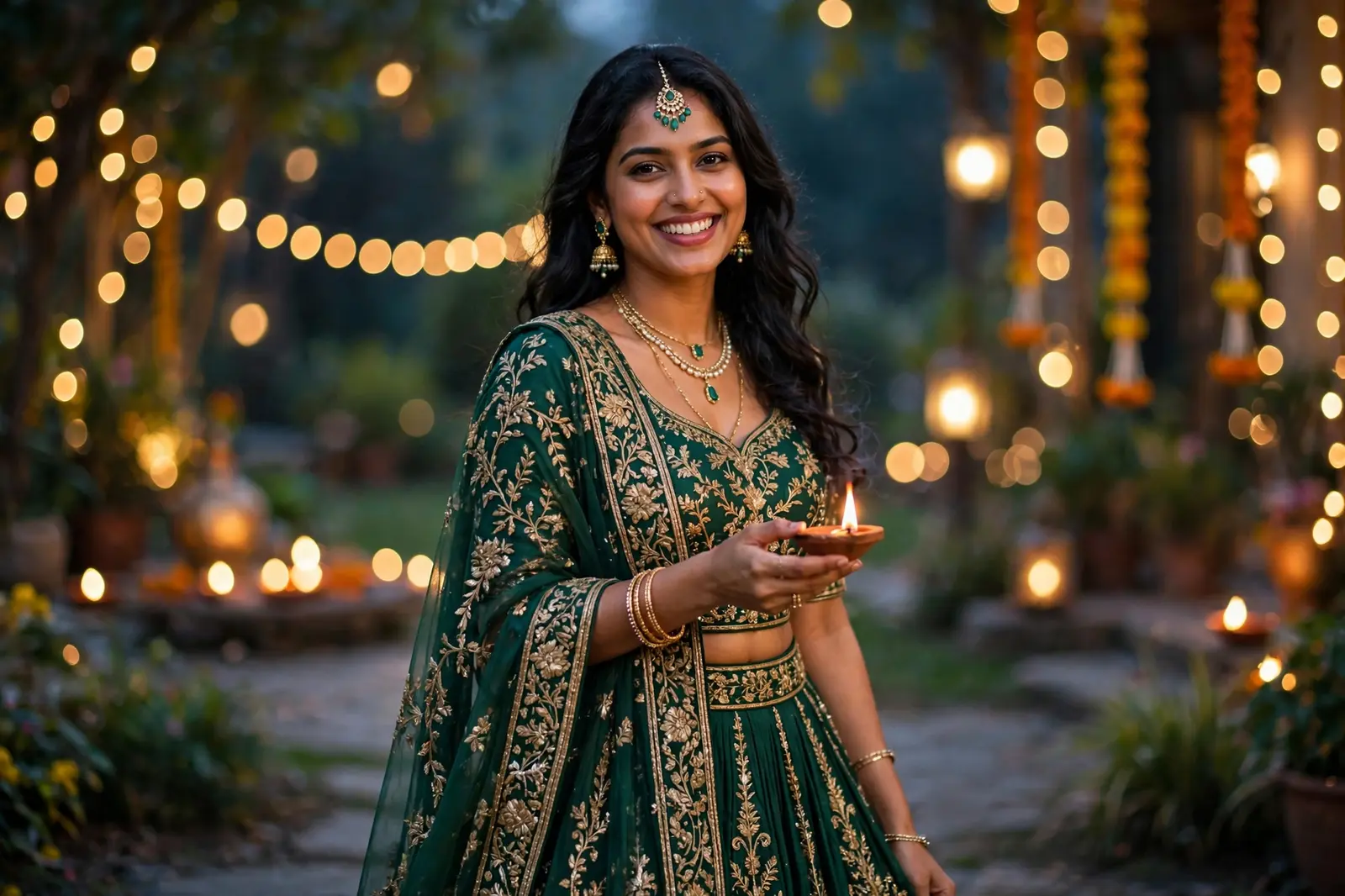
This is the main event. The Lakshmi puja, the grand diya lighting, the family photos that will be framed for years — Diwali night deserves your finest outfit. Silk sarees, embroidered lehengas, velvet sherwanis, bandhgalas with real presence. Rich colors, fine fabrics, full jewelry. If you are investing in one outfit this season, invest it here. For the spiritual context of the evening, our Diwali festival of lights guide explains the traditions your outfit is honoring.
Day 4 — Govardhan Puja: traditional warmth
Govardhan Puja is earthy and devotional — annakut offerings, community meals, a grounded mood. Choose traditional comfort: a Banarasi saree, a classic kurta-pajama, a simple lehenga. Warm colors — maroon, mustard, deep orange — suit the day’s harvest spirit. This is also a great day to re-wear a favorite from a previous Diwali with new accessories.
Day 5 — Bhai Dooj: sweet and celebratory
Bhai Dooj celebrates the sibling bond with the tilak ceremony and a festive meal. Dress joyfully: bright colors, playful prints, lighter lehengas or shararas, fun indo-western for the fashion-forward. Sisters often coordinate with brothers here — matching color families in photos make for wonderful memories. Comfort matters since the day involves travel between homes.
Diwali Style Guide for Women
The silk saree: timeless and unbeatable
If you own one great silk saree — Kanjeevaram, Banarasi, Mysore silk, or Patola — Diwali night is when it earns its place. Silk sarees need minimal styling: the weave is the statement. Pair with a well-fitted blouse (get it tailored, not off-the-rack), traditional gold jewelry, and a neat drape. For 2026, the trend leans toward rich solid colors with contrasting borders rather than all-over heavy work — more regal, less busy. Drape tip: pleat neatly, pin at the shoulder, and let the pallu fall long for evening events.
Lehengas: for maximum festive impact
Lehengas dominate Diwali party dressing for a reason — they are festive, photogenic, and comfortable to move in. For Diwali 2026, look for lehengas in jewel tones with thread embroidery, mirror work, or sequin detailing rather than heavy zardozi (lighter = you will actually enjoy the evening). A-line and flared silhouettes suit most body types; high-waisted skirts with cropped blouses elongate the frame. If you are between sizes, choose the lehenga with an adjustable drawstring waist and get the blouse tailored — the blouse fit makes or breaks the look.
Anarkalis and shararas: graceful alternatives
Floor-length anarkalis in georgette or chanderi offer lehenga-level drama with the ease of a single piece — no worrying about dupatta placement all night. Sharara and gharara sets, with their wide flared pants, are back in a big way for 2026, especially in pastel and metallic shades for daytime events. Both styles are excellent for women who want to dance, chase kids, or simply sit comfortably through a long puja.
Indo-western: modern festive dressing
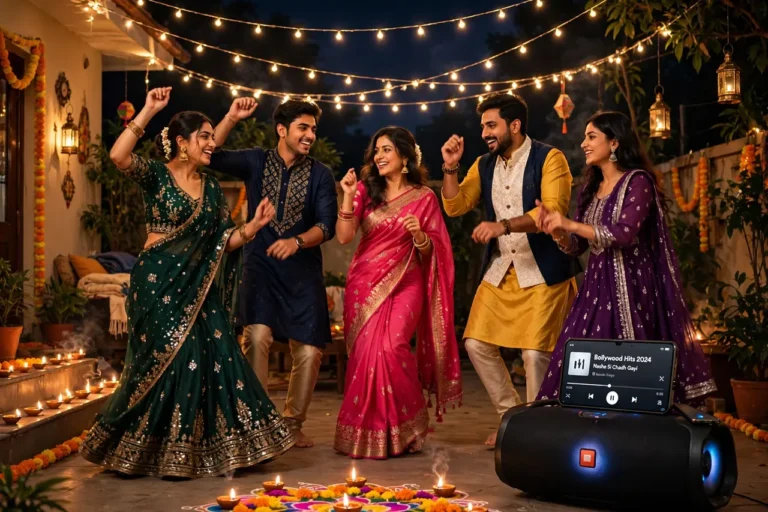
Dhoti pants with crop tops, palazzo sets with long jackets, saree gowns, and embroidered jumpsuits — indo-western festive wear is perfect for card parties, office Diwali events, and anyone whose personal style leans contemporary. The key is keeping one element traditionally festive (embroidery, silk fabric, ethnic jewelry) so the outfit reads “Diwali” rather than “cocktail party.” A long embroidered jacket over a simple base transforms basics into festive wear instantly.
Salwar suits: the reliable workhorse
Never underestimate a beautiful salwar suit. For Choti Diwali, Govardhan Puja, and daytime events, a well-cut suit in chanderi, cotton silk, or georgette with good embroidery is perfect — comfortable, appropriate, and elegant. Straight-cut suits with palazzos are the most current silhouette; add juttis and jhumkas and you are done.

Diwali Style Guide for Men
The kurta-pajama: foundation of festive menswear
Every man needs at least one excellent kurta-pajama. For Diwali 2026, the move is rich fabrics — silk, raw silk, or fine cotton with subtle texture — in deep colors: maroon, navy, emerald, charcoal, or classic cream. Fit is everything: shoulders clean, sleeves ending at the wrist, length hitting mid-thigh to knee. A plain well-fitted kurta in a luxurious fabric outshines a badly fitted embroidered one every time. For the puja and family photos, add a Nehru jacket — it is the single highest-impact upgrade in menswear.
Sherwanis: for the main event
Reserve the sherwani for Diwali night or the biggest party of the season. Velvet, raw silk, or brocade in deep jewel tones with restrained embroidery reads regal; over-embellished sherwanis read costume. Keep accessories minimal: a simple stole or safa (turban) if it suits the occasion, mojari shoes, and a watch. The sherwani’s structure does the talking — let it.
Bandhgala and Jodhpuri suits
The bandhgala (Jodhpuri) suit is the most versatile formal option — appropriate for Diwali dinners, card parties, and office celebrations alike. In 2026, textured fabrics (matka silk, linen blends) in midnight blue, wine, and forest green are the sharpest choices. It pairs with both mojari and formal shoes, making it the easiest high-impact outfit for men who do not wear ethnic regularly.
Nehru jackets and waistcoats: the shortcut
Own a good Nehru jacket and you own Diwali. Layer it over a simple kurta-pajama for instant festivity, over a shirt and trousers for office parties, or even over a turtleneck for modern events. One well-chosen jacket in silk or brocade multiplies your wardrobe — it is the best cost-per-wear investment in festive menswear.
Indo-western for men
Asymmetric kurtas, kurta-shirt hybrids, dhoti pants with blazers, and embroidered shirts — modern menswear brands offer plenty of options for men who find traditional silhouettes uncomfortable. The rule is the same as for women: keep one element clearly festive so the outfit belongs to the season.
Diwali Outfits for Kids
Children’s Diwali dressing should prioritize comfort, safety, and washability — in that order. For girls: lightweight lehengas or anarkalis in cotton-silk blends (avoid heavy embroidery that scratches), sharara sets for twirl factor, or simple festive frocks with ethnic prints. For boys: cotton kurta-pajama sets, Nehru jackets for photos, dhoti-kurta sets for the traditional look. Critical safety note: keep children’s outfits away from open diya flames — avoid long flowing dupattas, trailing sashes, and synthetic fabrics (which melt rather than burn) near fire. Dress kids in the outfit for photos and the puja, then change them into comfortable play clothes for the rest of the evening — everyone will be happier.
Fabrics and Colors: The 2026 Diwali Palette
Fabrics that work for autumn Diwali
Diwali falls in autumn — evenings can be cool, days can still be warm. Silk, velvet, brocade, and raw silk are the classic evening fabrics with the weight and sheen the festival deserves. Chanderi, organza, and georgette offer festive lightness for daytime. Cotton-silk blends are the practical choice for long days of rituals. Avoid fully synthetic fabrics where possible — they photograph with an unflattering sheen, trap heat, and (importantly) are fire hazards near diyas. If you love a synthetic-heavy outfit, wear it to the card party, not the puja with fifty open flames.
Colors and their meanings
Diwali dressing has a language of color. Red and maroon signify prosperity and are bridal-adjacent — perfect for Diwali night. Gold and yellow represent wealth and the goddess Lakshmi’s blessings. Green symbolizes new beginnings (ideal for Dhanteras). Royal blue and purple bring regal depth to evening events. White and cream, paired with gold, read elegant and modern. Pink and peach suit daytime celebrations beautifully. Black, traditionally avoided at auspicious Hindu occasions, is increasingly worn in modern indo-western looks — if your family is traditional, save the black for the after-party rather than the puja.
Accessorizing: Jewelry, Footwear, and Finishing Touches
Jewelry that elevates
Jewelry should complement the outfit’s neckline and embroidery, not compete with it. Heavy embroidered neckline? Skip the necklace and wear statement earrings. Simple outfit? A layered necklace or a bold choker becomes the centerpiece. Gold remains the Diwali classic, but polki, kundan, pearls, and temple jewelry all have their place. Men: a good watch, simple cufflinks, or a brooch on the sherwani is plenty. For guidance on choosing pieces that last beyond the festival, our jewelry gift guide covers timeless selections that work beautifully as Diwali self-gifts too.
Footwear: beautiful and bearable
You will be on your feet for hours — visiting, hosting, standing for photos. Juttis and mojaris are the festive standard and come in padded comfort versions now. Block heels beat stilettos for long evenings. Break in new footwear a week before Diwali, not on Diwali. And keep a pair of comfortable flats stashed for the late-night portion of any party — your feet will thank you at midnight.
Hair, makeup, and the finishing details
Festive makeup for Diwali 2026 leans luminous: glowing skin, a classic red or deep berry lip, and either defined eyes or a bold lip — not both competing. Hair in soft waves, a low bun with fresh flowers (gajra), or a sleek braid all suit the season. Keep a small touch-up kit in your bag: lipstick, blotting papers, safety pins, and a mini deodorant. These unglamorous items save more evenings than any highlighter.

Handmade Touches: The Pearl Toran Craft
One of 2026’s loveliest trends is handmade festive accessorizing — crafting small decorative pieces that complement your outfit and home. A pearl toran-style belt or kamarbandh, for instance, can be made at home and worn with sarees and lehengas for a unique, personal touch that no store-bought accessory matches. Watch this tutorial for a beautiful DIY pearl craft you can adapt into wearable festive accessories:
Budget Strategies: Look Expensive, Spend Smart
A stunning Diwali wardrobe does not require a stunning budget. Rent instead of buying for one-wear statement pieces — designer lehenga rental services cost a fraction of retail. Re-wear strategically: nobody remembers what you wore two Diwalis ago, and a different blouse or dupatta transforms a saree completely. Invest in separates: an embroidered jacket, a silk skirt, or a great pair of juttis can be mixed across outfits for years. Shop the sales that run through October, and get tailoring done early — a ₹2,000 alteration makes a ₹5,000 outfit look like ₹20,000. Finally, coordinate with family: matching color families in group photos look intentional and expensive regardless of what each outfit cost.
The 5-Day Diwali Wardrobe at a Glance
| Day | Women | Men | Colors | Formality |
|---|---|---|---|---|
| Dhanteras | New silk saree or anarkali | New kurta-pajama | Gold, red, green | Festive smart |
| Choti Diwali | Cotton/chanderi kurta set | Cotton kurta | Yellow, peach, light tones | Relaxed festive |
| Diwali night | Silk saree / embroidered lehenga | Sherwani / bandhgala | Red, maroon, jewel tones | Full formal |
| Govardhan Puja | Banarasi saree / sharara | Kurta + Nehru jacket | Mustard, maroon, orange | Traditional |
| Bhai Dooj | Bright lehenga / indo-western | Festive kurta / bandhgala | Brights, pinks, blues | Celebratory |
Styling Tips for Picture-Perfect Diwali Photos
Steam, don’t iron, delicate fabrics. Silk, velvet, and embroidered pieces should be steamed, never pressed directly — a handheld steamer is the best pre-Diwali investment.
Plan the full look the night before. Lay out the outfit, jewelry, footwear, and bag together. Morning-of decisions lead to forgotten earrings and mismatched shoes.
Photograph in warm light. Diya light and golden-hour sun flatter festive wear enormously. Take your outfit photos near the diyas before the party peaks — the glow does half the styling work.
Carry a mini emergency kit. Safety pins, double-sided fashion tape, a needle and thread, stain remover pen, and band-aids for new-shoe blisters. Tuck it in your potli or clutch.
Coordinate, don’t match exactly. Family photos look best when everyone is in the same color family with varied shades and textures — not identical outfits, which read as uniforms.
Mistakes to Avoid
Wearing synthetics near open flames. This is a safety issue, not a style one. Nylon, polyester, and net fabrics melt onto skin when they catch fire. Around the Lakshmi puja’s many diyas, choose natural fibers or keep synthetics for flame-free events.
New shoes on Diwali day. Blisters by 8 p.m. ruin the whole evening. Break footwear in for at least a week, or bring backup flats.
Over-accessorizing. Heavy embroidery plus heavy jewelry plus heavy makeup equals visual noise. Pick one hero element per outfit and let the rest support it.
Ignoring the weather. Autumn evenings get chilly — a beautiful shawl or embroidered jacket is both practical and stylish. Shivering in a sleeveless blouse at midnight helps no one’s photos.
Forgetting comfort. If you cannot sit, eat, or hug your grandmother in the outfit, it is the wrong outfit. Diwali is a festival of togetherness — dress to participate, not just to pose.
Regional Diwali Dressing Traditions Across India
Diwali is celebrated across every corner of India, and each region brings its own textile heritage to the festival wardrobe. Drawing on these traditions is both a style choice and a way of honoring the diversity of the festival itself.
North India: opulence and embroidery
The North Indian Diwali look is defined by rich embroidery and luxurious fabrics — Banarasi silk sarees from Varanasi with their gold zari work, chikankari kurtas from Lucknow in delicate white-on-white threadwork, and Phulkari dupattas from Punjab bursting with colorful floral motifs. Men in the North favor the classic kurta-pajama with a Nehru jacket, or the full sherwani for the main night. The palette runs deep: maroon, royal blue, emerald, and gold. If you want one investment piece with Northern roots, a Banarasi saree never goes out of style and works for every Diwali for decades.
South India: silk and temple gold
South Indian Deepavali dressing centers on the Kanjeevaram silk saree — with its distinctive contrasting border and pallu, temple-inspired motifs, and unmistakable sheen. Women pair them with traditional temple jewelry: jhumkas, vanki (armlets), and layered gold necklaces. Men wear the veshti (dhoti) with an angavastram and silk shirt, or a silk kurta for evening events. The look is regal through simplicity — the saree’s weave carries everything. Colors trend toward deep reds, greens, and golds, often with the characteristic checked or temple-border patterns that mark a true Kanjeevaram.
East India: elegance in white-and-red and tant
Bengal’s Kali Puja, which coincides with Diwali, brings the iconic laal-paar (red-bordered) white saree — understated, striking, and deeply traditional. Tant and Baluchari silks offer more ornate options, with Baluchari’s woven narrative panels depicting mythological scenes. Men wear the dhoti-kurta or panjabi with elegant simplicity. Gold jewelry in the Bengali style — chunky bangles (shakha-pola for married women), long haar necklaces — completes the look. The Eastern aesthetic proves that restraint can be the most powerful festive statement.
West India: Bandhani, Patola, and mirror work
Gujarat and Rajasthan contribute some of Diwali’s most joyful textiles. Bandhani (tie-dye) sarees and dupattas in brilliant dots of red, yellow, and green are festive by definition. Patola sarees from Patan, with their double-ikat geometric precision, are heirloom investments. Mirror-work lehengas and kediyu-style kurtas bring Rajasthani flair, while Maharashtrian women wear the distinctive Nauvari (nine-yard) saree or elegant Paithani silks with their peacock-motif borders. Men in the West favor the kediyu-dhoti or bandhgala with Mojari footwear. The Western palette is the brightest of all — a celebration of color itself.
Mixing regions respectfully
You do not need to belong to a region to wear its textiles — Indian festive fashion has always been delightfully cross-pollinated. The key is wearing them with knowledge and respect: learn the name of the weave, buy from authentic sources rather than cheap imitations, and drape or style it the traditional way. A Kanjeevaram draped properly honors the weavers of Kanchipuram far more than a “Kanjeevaram-style” polyester print ever could. When you invest in authentic regional textiles, you are also supporting artisan clusters and handloom livelihoods — your Diwali outfit becomes a small act of cultural patronage.
Frequently Asked Questions About Diwali Outfits
What should I wear to Lakshmi Puja?
Wear your finest traditional outfit in an auspicious color — a silk saree, embroidered lehenga, or anarkali for women; a sherwani, bandhgala, or silk kurta with Nehru jacket for men. Avoid black if your family is traditional, choose natural fabrics near the puja flames, and keep jewelry classic rather than trendy for this sacred occasion.
Can I wear western clothes to Diwali parties?
For casual card parties and modern celebrations, indo-western fusion works beautifully — but pure western formals can feel out of place at traditional events. When in doubt, add one festive ethnic element (an embroidered jacket, jhumkas, a silk stole) to bridge the gap. Always check the dress code on the invitation.
What colors should I avoid wearing on Diwali?
Black and white are traditionally associated with mourning in Hindu culture, so many families avoid them at auspicious occasions. That said, modern styling often incorporates black elegantly, especially for parties rather than pujas. When celebrating with elders or at religious ceremonies, stick to the festive palette of reds, golds, greens, and jewel tones.
How do I dress kids safely for Diwali?
Choose comfortable cotton or cotton-silk outfits without trailing fabric, avoid synthetics near diyas, and skip long dupattas or sashes on small children around open flames. Dress them up for photos and the puja, then change into play clothes for the rest of the evening.
What is the best budget approach to five days of outfits?
Invest in one showstopper for Diwali night, re-wear previous years’ outfits with new accessories for the other days, rent statement pieces, and use separates (jackets, dupattas, jewelry) to transform basics. Coordinating colors across the family makes every outfit look intentional regardless of cost.
How should I accessorize a heavily embroidered outfit?
Let the embroidery be the hero: skip necklaces with heavy necklines, choose statement earrings instead, keep the clutch simple, and go for either bold eyes or a bold lip — not both. The goal is one focal point, with everything else in a supporting role. A line from our Diwali wishes collection makes a lovely caption when you post the final look.
Conclusion: Dress for the Joy of It
Diwali dressing, at its heart, is about honoring the festival’s spirit of renewal — new clothes for new beginnings, bright colors for the triumph of light, your best self presented to the people you love most. The five-day wardrobe is not a burden or a fashion exam; it is five opportunities to feel wonderful.
Plan ahead, prioritize fit and comfort, respect the occasion each day brings, and remember that the best-dressed person in any Diwali photo is always the one who is genuinely smiling. Choose fabrics you can move in, colors that make you glow, and at least one outfit that makes you feel like the festival itself. Shubh Deepavali — and may your Diwali wardrobe be as bright as the diyas.