10 Vegan Thai Recipes: Curries, Noodles & Street Food Classics
Thai food is a masterclass in balance — hot, sour, salty, and sweet in every single bite — and remarkably little of that balance depends on animal products. The cuisine’s soul lives in its aromatics: lemongrass, galangal, kaffir lime, Thai basil, and chilies. Swap fish sauce for a well-seasoned soy-lime blend, use tofu and mushrooms for substance, and the entire Thai repertoire opens up to plant-based cooks.
These ten recipes cover the greatest hits and a few deeper cuts: a properly tangy pad thai, a fragrant green curry, a fiery tom yum, street-style basil tofu, and the incomparable mango sticky rice. Each includes guidance on the Thai flavor-balancing act — taste, adjust, taste again — because no two limes or chili batches are identical, and great Thai cooking is always tuned, never just followed.
The Vegan Thai Pantry
Thai cooking moves fast once the wok is hot, so mise en place is everything — but the pantry behind it is compact. Coconut milk (full-fat, well-shaken), rice noodles, jasmine rice, and tofu form the base. The flavor kit: lemongrass, galangal (or ginger in a pinch), kaffir lime leaves, Thai basil, cilantro, limes, chilies, garlic, and shallots. For the salty-savory backbone without fish sauce, keep soy sauce or tamari, a vegan fish sauce if you can find one, and fermented soybean paste.
Curry pastes deserve a note: many commercial red and green curry pastes contain shrimp paste. Read labels and choose brands marked vegan, or make a quick homemade paste — the recipes below tell you exactly when it matters. Palm sugar is traditional for its caramel depth; brown sugar or coconut sugar substitute well.
10 Vegan Thai Recipes
From weeknight noodles to celebration desserts, these ten recipes bring Thailand’s bold, balanced flavors to your plant-based kitchen.
1. Vegan Pad Thai with Crispy Tofu
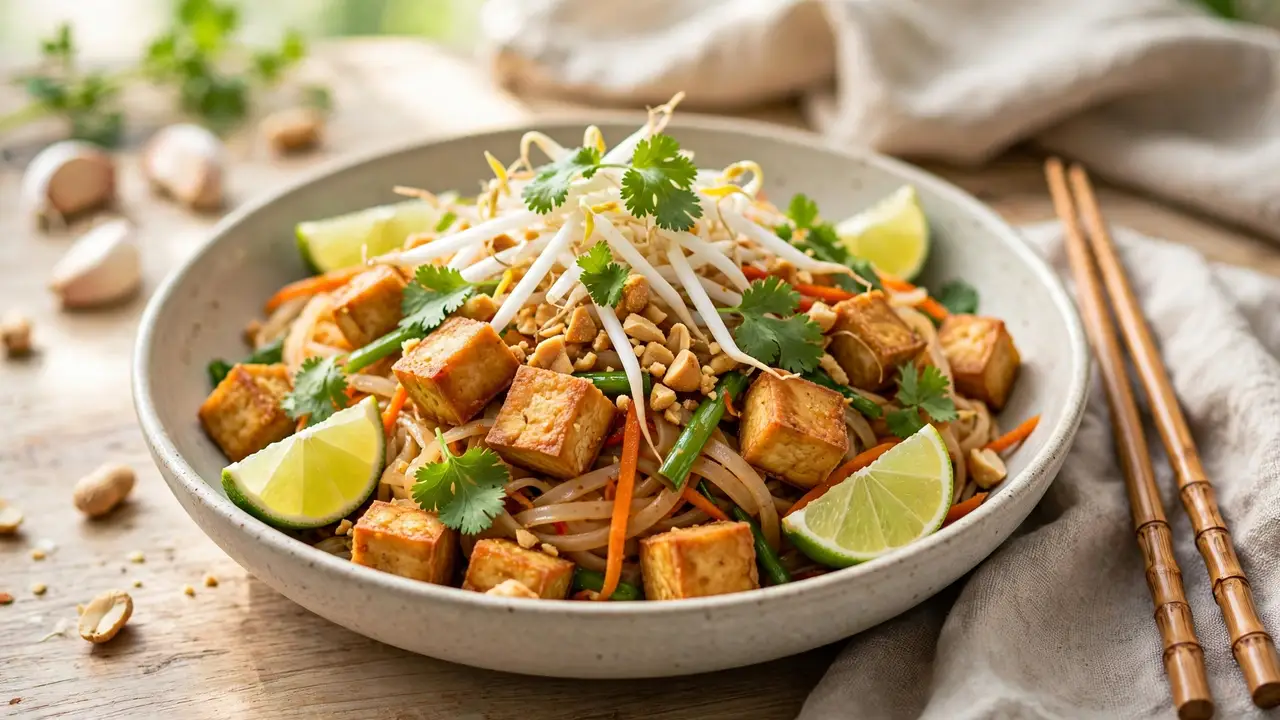
The national dish, done right: chewy rice noodles in a tamarind-palm sugar sauce that hits sour, sweet, and salty at once, tossed with crispy tofu, bean sprouts, and scallions. The sauce balance is everything — mix it before the noodles hit the pan, because once stir-frying starts there’s no time to adjust.
Time: 30 minutes | Serves: 4 | Calories: 560 | Protein: 20g
Ingredients:
- 8 ounces flat rice noodles
- 1 block (14 ounces) extra-firm tofu, pressed and cubed
- 3 tablespoons neutral oil, divided
- 3 garlic cloves, minced
- 2 shallots, thinly sliced
- 3 tablespoons tamarind paste
- 3 tablespoons palm sugar or brown sugar
- 3 tablespoons soy sauce or tamari
- 1 tablespoon lime juice, plus wedges
- 1 teaspoon sriracha or chili flakes
- 2 cups bean sprouts
- 4 scallions, cut into 2-inch pieces
- 1/2 cup crushed roasted peanuts
- 1/4 cup chopped cilantro
- Lime wedges, to serve
Method:
- Soak the noodles in hot water 20 minutes until pliable but still firm; drain.
- Whisk the tamarind paste, palm sugar, soy sauce, lime juice, and sriracha into the sauce.
- Crisp the tofu in 2 tablespoons oil in a wok over high heat, 6 to 8 minutes; remove.
- Stir-fry the garlic and shallots 30 seconds, add the noodles and sauce, and toss 2 to 3 minutes until the noodles absorb the sauce.
- Return the tofu with the bean sprouts and scallions; toss 1 minute until the sprouts just wilt.
- Serve with peanuts, cilantro, and lime wedges.
Pro tip: Taste the sauce before it hits the pan — it should make you pucker slightly. The noodles mellow it, so bold sauce now means balanced dish later.
Variations: Swap the tofu for mushrooms or seitan — both absorb the tamarind sauce beautifully. Add bean sprouts and garlic chives for authenticity. For a spicier version, increase the chili or serve with chili oil on the side. The sauce recipe doubles well for meal prep.
Storage: Best eaten fresh — rice noodles go gummy when stored. If prepping ahead, store the sauce, protein, and vegetables separately and cook noodles fresh (they take 5 minutes). The tamarind sauce keeps 2 weeks refrigerated.
Serving suggestions: Serve on a large platter with lime wedges, crushed peanuts, bean sprouts, and chili flakes on the side. Everyone customizes their own — that’s the Thai way.
2. Vegan Green Curry with Tofu and Vegetables
Fragrant, fiery, and creamy: green curry paste fried in coconut cream until the oil separates — the traditional sign it’s ready — then simmered with vegetables and tofu. Frying the paste is the step most home cooks skip and the one that matters most.
Time: 35 minutes | Serves: 4 | Calories: 480 | Protein: 16g
Ingredients:
- 2 cans (14 ounces each) coconut milk, divided
- 3 to 4 tablespoons vegan green curry paste
- 1 block (14 ounces) extra-firm tofu, cubed
- 1 Japanese eggplant, cut into chunks
- 1 red bell pepper, sliced
- 1 cup bamboo shoots
- 1 tablespoon palm sugar or brown sugar
- 2 tablespoons soy sauce or tamari
- 4 kaffir lime leaves, torn
- 1 cup Thai basil leaves
- 1 red chili, sliced
- Cooked jasmine rice, to serve
- Lime wedges, to serve
Method:
- Spoon the thick cream from the top of the coconut milk cans into a wok; heat until it bubbles and the oil separates, 3 to 4 minutes.
- Fry the curry paste in the coconut oil 2 minutes until deeply fragrant and darker.
- Add the tofu and eggplant; toss to coat, then pour in the remaining coconut milk.
- Add the bell pepper, bamboo shoots, palm sugar, soy sauce, and kaffir lime leaves; simmer 12 to 15 minutes until the vegetables are tender.
- Stir in half the Thai basil, then serve over jasmine rice topped with the remaining basil, chili, and lime.
Pro tip: If your curry tastes flat, it needs salt or lime — add soy sauce a teaspoon at a time, then lime, tasting after each addition.
Variations: Swap the vegetables with the seasons — Thai eggplant and bamboo shoots are traditional. Add crispy tofu puffs that soak up the curry. For a milder version, use less curry paste and more coconut milk; for fiery, add sliced Thai chilies.
Storage: Refrigerate 4 days; the curry actually improves overnight as the flavors meld. Reheat gently — hard boiling can split the coconut milk. Freezes for 2 months, though the vegetables soften.
Serving suggestions: Serve over jasmine rice with Thai basil, lime wedges, and chili oil on the side. The curry-to-rice ratio should be generous — you want plenty of sauce.
3. Vegan Tom Yum Soup
Hot, sour, and electrifying: the famous Thai soup built on a lemongrass-galangal broth, loaded with mushrooms and tofu. Straw mushrooms are traditional and worth seeking out; their slippery crunch is half the experience.
Time: 30 minutes | Serves: 4 | Calories: 180 | Protein: 10g
Ingredients:
- 4 cups vegetable broth
- 3 lemongrass stalks, bruised and cut into 2-inch pieces
- 4 slices galangal or ginger
- 4 kaffir lime leaves, torn
- 3 Thai chilies, smashed
- 8 ounces straw mushrooms or cremini, halved
- 1 block (14 ounces) soft tofu, cubed
- 2 tomatoes, cut into wedges
- 3 tablespoons lime juice
- 2 tablespoons soy sauce or tamari
- 1 teaspoon chili oil, plus more to serve
- 1/4 cup chopped cilantro
- 2 scallions, sliced
Method:
- Simmer the broth with the lemongrass, galangal, lime leaves, and chilies 10 minutes to infuse.
- Strain out the aromatics or push them aside; add the mushrooms and simmer 5 minutes.
- Add the tofu and tomatoes; simmer 3 minutes more until heated through.
- Off the heat, stir in the lime juice, soy sauce, and chili oil.
- Serve with cilantro, scallions, and extra chili oil.
Pro tip: Add the lime juice off the heat — boiling dulls its brightness, and tom yum lives or dies on that fresh sour note.
Variations: Add straw mushrooms and cherry tomatoes for the classic tom yum goong profile (without the goong). For a creamy version, stir in coconut milk at the end — that’s tom kha territory. Extra lemongrass and galangal intensify the aromatics.
Storage: The broth keeps 4 days refrigerated and freezes for 2 months. Add fresh mushrooms and herbs when reheating — they don’t hold well. The aromatic base (lemongrass, galangal, lime leaves) can be simmered and strained for a clean broth.
Serving suggestions: Serve steaming hot with jasmine rice on the side and plenty of lime. It’s the soup that wakes up your whole palate — sour, spicy, fragrant.
4. Thai Basil Tofu (Pad Krapow, Vegan)
Thailand’s beloved street-food stir-fry: crumbled tofu fried until golden, tossed with chilies, garlic, and a mountain of holy basil in a savory-sweet sauce. Traditionally served over rice with a fried egg — here a crispy tofu ‘yolk’ of seasoned silken tofu is optional but delightful.
Time: 25 minutes | Serves: 4 | Calories: 420 | Protein: 22g
Ingredients:
- 2 blocks (14 ounces each) extra-firm tofu, pressed
- 3 tablespoons neutral oil
- 6 garlic cloves, minced
- 3 Thai chilies, minced
- 1 red bell pepper, diced
- 3 tablespoons soy sauce or tamari
- 1 tablespoon dark soy sauce
- 1 tablespoon palm sugar or brown sugar
- 2 teaspoons vegan oyster or mushroom sauce
- 2 cups holy basil or Thai basil leaves, packed
- Cooked jasmine rice, to serve
- Sliced cucumber, to serve
Method:
- Crumble the tofu into pea-size pieces with your hands.
- Fry in the oil in a wok over high heat, undisturbed 3 minutes, then tossing, until golden and crisp at the edges, 8 to 10 minutes total.
- Push aside; fry the garlic and chilies 30 seconds until fragrant.
- Add the bell pepper, soy sauces, palm sugar, and mushroom sauce; toss 2 minutes.
- Off the heat, fold in the basil until just wilted.
- Serve over jasmine rice with cucumber slices.
Pro tip: Don’t skimp on the basil — two packed cups looks like too much and cooks down to exactly right.
Variations: Swap the tofu for mushrooms or tempeh — both work with the basil-chili treatment. Add green beans or baby corn for extra vegetables. For the authentic Thai experience, serve with a fried egg on top (skip for vegan, or use a tofu ‘egg’).
Storage: Best eaten fresh — Thai basil blackens within hours. If prepping, cook everything except the basil and add it fresh when reheating. The sauce base keeps 3 days refrigerated.
Serving suggestions: Serve over jasmine rice with sliced cucumber on the side to cool the heat. A fried egg on top is traditional for the non-vegan version.
5. Vegan Papaya Salad (Som Tum)
Crunchy, fiery, and addictive: shredded green papaya pounded with chilies, garlic, long beans, and tomatoes in a lime-peanut dressing. A mortar and pestle is traditional and genuinely better — pounding bruises the ingredients so they drink up the dressing.
Time: 20 minutes | Serves: 4 | Calories: 160 | Protein: 4g
Ingredients:
- 1 small green papaya (about 1 pound), shredded
- 2 Thai chilies
- 3 garlic cloves
- 1/2 cup roasted peanuts, plus more to serve
- 4 long beans or green beans, cut into 2-inch pieces
- 1 cup cherry tomatoes, halved
- 3 tablespoons lime juice
- 2 tablespoons soy sauce or tamari
- 1 tablespoon palm sugar or brown sugar
- Lettuce leaves or cabbage wedges, to serve
Method:
- Pound the chilies, garlic, and half the peanuts in a mortar until a coarse paste forms.
- Add the long beans and pound lightly to bruise.
- Add the shredded papaya and pound-and-turn 1 to 2 minutes until slightly softened.
- Stir in the tomatoes, lime juice, soy sauce, and palm sugar; toss well.
- Taste and adjust — it should be boldly sour, salty, sweet, and hot all at once.
- Serve with lettuce or cabbage wedges and extra peanuts.
Pro tip: No mortar? Use a large bowl and the end of a rolling pin — the bruising action matters more than the vessel.
Variations: Swap the green papaya for green mango or cucumber if papaya isn’t available. Add long beans for authenticity, or cherry tomatoes for sweetness. For a fruitier version, add diced pineapple — it’s not traditional but it’s delicious.
Storage: Dress just before serving — the papaya wilts within 30 minutes of dressing. Prep all components ahead (shredded papaya keeps 2 days refrigerated) and pound the dressing fresh. This is a last-minute salad.
Serving suggestions: Serve immediately with sticky rice — the traditional accompaniment that tempers the heat. It’s also excellent alongside grilled proteins as part of a Thai spread.

6. Vegan Pineapple Fried Rice
Thai-style fried rice with caramelized pineapple, cashews, and curry powder — sweet, savory, and studded with colorful vegetables. Day-old rice is the key; fresh rice steams and clumps instead of frying into separate, chewy grains.
Time: 25 minutes | Serves: 4 | Calories: 520 | Protein: 14g
Ingredients:
- 4 cups day-old cooked jasmine rice
- 2 cups fresh pineapple chunks
- 1 block (14 ounces) extra-firm tofu, cubed and crisped (or 1 cup edamame)
- 1 red bell pepper, diced
- 1/2 cup frozen peas, thawed
- 3 scallions, sliced
- 3 tablespoons neutral oil
- 1 tablespoon curry powder
- 3 tablespoons soy sauce or tamari
- 1 tablespoon palm sugar or brown sugar
- 1/2 cup roasted cashews
- 1/4 cup chopped cilantro
- Lime wedges, to serve
Method:
- Fry the pineapple in 1 tablespoon oil in a wok over high heat until caramelized at the edges, 3 to 4 minutes; remove.
- Add the remaining oil, then the rice, breaking up clumps; fry 3 minutes until the grains separate and toast lightly.
- Sprinkle over the curry powder and toss 1 minute until fragrant.
- Add the tofu, bell pepper, peas, soy sauce, and palm sugar; toss 2 minutes.
- Return the pineapple with the scallions; toss 1 minute.
- Serve topped with cashews, cilantro, and lime wedges.
Pro tip: Spread freshly cooked rice on a tray and refrigerate uncovered for a few hours if you don’t have day-old rice — drying the surface is what counts.
Variations: Add cashews for crunch, or diced mango for sweet contrast. Swap the tofu for tempeh or edamame. For a spicier version, add sliced Thai chilies with the vegetables. The curry powder is the non-traditional secret — don’t skip it.
Storage: Refrigerate 3 days; the rice dries out slightly, so sprinkle with water when reheating. It’s actually excellent cold as a rice salad the next day — the flavors meld beautifully.
Serving suggestions: Serve warm with lime wedges, cucumber slices, and extra cilantro. It’s a complete meal in a bowl — colorful, sweet, savory, satisfying.
7. Vegan Khao Soi (Chiang Mai Curry Noodle Soup)
Northern Thailand’s legendary dish: egg-style wheat noodles in a rich coconut curry broth, topped with a tangle of crispy fried noodles. For the vegan version, use wheat noodles without egg (most dried ramen-style noodles qualify — check labels) and fry a portion until golden for the signature crunch.
Time: 45 minutes | Serves: 4 | Calories: 620 | Protein: 20g
Ingredients:
- 12 ounces dried wheat noodles (eggless)
- 1/3 cup neutral oil, for frying
- 2 cans (14 ounces each) coconut milk
- 3 tablespoons vegan red curry paste
- 1 tablespoon curry powder
- 1 block (14 ounces) extra-firm tofu, cubed
- 2 cups vegetable broth
- 1 tablespoon palm sugar
- 2 tablespoons soy sauce
- 1 teaspoon turmeric
- Pickled mustard greens or kimchi-style pickles, to serve
- 1 red onion, diced
- 1 lime, cut into wedges
- Chili oil, to serve
- 1/4 cup chopped cilantro
Method:
- Boil two-thirds of the noodles until tender; drain. Fry the remaining noodles in the hot oil until golden and crisp; drain on paper.
- Fry the red curry paste and curry powder in the thick coconut cream 2 minutes until fragrant.
- Add the tofu, remaining coconut milk, broth, palm sugar, soy sauce, and turmeric; simmer 15 minutes.
- Divide the boiled noodles among bowls and ladle over the curry broth and tofu.
- Top with the crispy noodles, pickled greens, red onion, cilantro, chili oil, and lime wedges.
Pro tip: The crispy noodle topping isn’t garnish — it’s essential texture contrast. Fry them just before serving so they stay shatteringly crisp.
Variations: Swap the coconut curry broth for a lighter turmeric-ginger broth for a different Chiang Mai style. Add crispy wonton strips on top for the traditional crunch contrast. For extra richness, use coconut cream instead of coconut milk.
Storage: Store the broth, noodles, and toppings separately — all keep 3 days refrigerated. Assemble fresh with hot broth; the noodles go mushy if stored in liquid. The curry paste base freezes for 3 months.
Serving suggestions: Serve with the full topping bar: pickled mustard greens, shallots, lime, chili oil, and crispy noodles. The customization is half the experience.
8. Thai Peanut Noodles
The weeknight hero: chewy noodles slicked in a creamy peanut-lime sauce with crunchy vegetables. It hits every craving — salty, sweet, tangy, spicy — and comes together faster than delivery.
Time: 20 minutes | Serves: 4 | Calories: 580 | Protein: 18g
Ingredients:
- 12 ounces rice noodles or linguine
- 1/2 cup creamy peanut butter
- 1/4 cup soy sauce or tamari
- 3 tablespoons lime juice
- 2 tablespoons maple syrup
- 1 tablespoon sriracha, plus more to serve
- 1/2 cup hot water
- 2 cups shredded red cabbage
- 1 cup shredded carrots
- 1 red bell pepper, thinly sliced
- 1/2 English cucumber, julienned
- 1/2 cup chopped peanuts
- 1/4 cup chopped cilantro
- 2 scallions, sliced
Method:
- Cook the noodles until just tender; reserve 1 cup of the cooking water and drain.
- Whisk the peanut butter, soy sauce, lime juice, maple syrup, sriracha, and hot water into a smooth sauce.
- Toss the hot noodles with the sauce, loosening with reserved cooking water until glossy.
- Fold in the cabbage, carrots, bell pepper, and cucumber.
- Serve topped with peanuts, cilantro, scallions, and extra sriracha.
Pro tip: Toss the sauce with the noodles while both are hot — the heat loosens the peanut butter into a silky coating that cold noodles can’t achieve.
Variations: Swap the peanut sauce for almond butter sauce, or add a squeeze of lime for brightness. Add shredded carrots and cabbage for crunch. For a cold noodle salad version, chill everything and serve at room temperature — it’s excellent for picnics.
Storage: The peanut sauce keeps a week refrigerated and actually improves as the flavors meld. Cooked noodles keep 3 days tossed with a little sesame oil. Combine just before serving for the best texture.
Serving suggestions: Serve warm or at room temperature, topped with crushed peanuts, cilantro, and lime wedges. It’s the ultimate crowd-pleasing noodle dish.
9. Mango Sticky Rice
Possibly the world’s most perfect dessert: warm coconut-infused sticky rice with slices of honey-sweet mango, finished with salted coconut cream and sesame seeds. The contrast of warm rice, cool mango, and salty-sweet cream is unforgettable.
Time: 40 minutes (plus 4 hour soak) | Serves: 4 | Calories: 480 | Protein: 6g
Ingredients:
- 1 1/2 cups glutinous (sweet) rice, soaked 4 hours or overnight
- 1 can (14 ounces) coconut milk, divided
- 1/3 cup sugar
- 1/2 teaspoon fine sea salt, divided
- 2 ripe mangoes, sliced
- 1 tablespoon toasted sesame seeds
- 1 pandan leaf (optional)
Method:
- Drain the rice and steam in a cheesecloth-lined steamer 25 minutes until translucent and tender.
- Meanwhile warm 1 cup coconut milk with the sugar, 1/4 teaspoon salt, and pandan leaf until the sugar dissolves; do not boil.
- Fold the hot coconut milk into the hot rice; cover and rest 20 minutes to absorb.
- Simmer the remaining coconut milk with the remaining 1/4 teaspoon salt 2 minutes for the salted cream topping.
- Serve mounds of warm rice with mango slices, drizzled with the salted cream and scattered with sesame seeds.
Pro tip: Only glutinous/sweet rice works — regular rice won’t turn sticky no matter how you cook it. Look for bags labeled ‘sweet rice’ or ‘glutinous rice.’
Variations: Swap the mango for durian if you’re adventurous (it’s traditional in some regions). Add a pinch of salt to the coconut cream — it intensifies the sweetness. For a fun twist, layer it in glasses as a parfait with toasted coconut.
Storage: Assemble just before serving — the rice hardens in the fridge and the mango weeps. Cook the sticky rice fresh; it takes 25 minutes and the texture is incomparable. Leftover components keep 2 days separately.
Serving suggestions: Serve slightly warm with the coconut cream drizzled over and sesame seeds sprinkled on top. It’s the perfect ending to a Thai meal — sweet, creamy, tropical.
10. Vegan Thai Iced Tea Panna Cotta
A fusion dessert worth making: the spiced, vanilla-orange flavor of Thai iced tea set into a silky coconut panna cotta. Agar agar replaces gelatin — boil it fully to activate, then cool to set.
Time: 25 minutes (plus 4 hour chill) | Serves: 6 | Calories: 280 | Protein: 3g
Ingredients:
- 2 cups full-fat coconut milk
- 1/2 cup Thai tea mix (or 4 Thai tea bags)
- 1/3 cup sugar
- 1 1/2 teaspoons agar agar powder
- 1 teaspoon vanilla extract
- Pinch of fine sea salt
- Coconut whipped cream, to serve
- Crushed ice (optional, for fun)
- Mint sprigs, to serve
Method:
- Simmer the coconut milk with the Thai tea 5 minutes; steep off the heat 10 minutes, then strain.
- Return to the pan with the sugar, agar, and salt; bring to a full boil, whisking, and boil 2 minutes to activate the agar.
- Off the heat, stir in the vanilla. Pour into 6 glasses or molds.
- Chill at least 4 hours until firmly set.
- Serve with coconut whipped cream and mint — over crushed ice for a playful nod to the original drink.
Pro tip: Agar sets much firmer than gelatin — measure precisely, and remember panna cotta should tremble, not bounce.
Variations: Swap the Thai tea for chai spices for an Indian-inspired version, or matcha for a Japanese twist. Add a coconut whipped cream topping for extra indulgence. For a firmer set, increase the agar by half a teaspoon.
Storage: Refrigerate 3 days covered — the panna cotta holds its shape well. It doesn’t freeze well (the texture goes grainy). Make it a day ahead for dinner parties; it’s the ideal make-ahead dessert.
Serving suggestions: Serve chilled in glasses with a dusting of Thai tea powder and fresh berries. It’s elegant enough for guests but easy enough for weeknights.
Mastering the Thai Balance
Every Thai dish is tuned at the end, and the tuning follows a pattern: taste, then ask what’s missing. Flat? Add salt (soy sauce) or sour (lime). Too sharp? Add sweet (palm sugar). Too rich? Add sour or heat. The order matters — salt first, then sour, then sweet, then heat — because each changes how you perceive the others. Keep lime wedges, sugar, and chilies on the table; in Thailand, diners finish seasoning their own bowls, and you should too.
- Prep everything before heating the wok — Thai stir-fries cook in minutes and there’s no pausing to chop mid-cook.
- Use full-fat coconut milk and don’t shake the can; the thick cream on top is for frying curry paste, the thin milk for the broth.
- Taste your curry paste — heat levels vary enormously between brands, so start with less and add more.
- Thai basil and holy basil are different herbs; either works here, but holy basil’s peppery bite is the street-food authentic choice.
- Save pasta water-style: a splash of noodle cooking water helps sauces cling to rice noodles beautifully.
Recipe Comparison: Time, Heat Level & Nutrition
Chili heat is personal — use this table to pick your adventure, from mild mango sticky rice to fiery som tum.
| Recipe | Time | Serves | Calories | Protein |
|---|---|---|---|---|
| Vegan Pad Thai with Crispy Tofu | 30 minutes | 4 | 560 | 20g |
| Vegan Green Curry with Tofu and Vegetables | 35 minutes | 4 | 480 | 16g |
| Vegan Tom Yum Soup | 30 minutes | 4 | 180 | 10g |
| Thai Basil Tofu (Pad Krapow, Vegan) | 25 minutes | 4 | 420 | 22g |
| Vegan Papaya Salad (Som Tum) | 20 minutes | 4 | 160 | 4g |
| Vegan Pineapple Fried Rice | 25 minutes | 4 | 520 | 14g |
| Vegan Khao Soi (Chiang Mai Curry Noodle Soup) | 45 minutes | 4 | 620 | 20g |
| Thai Peanut Noodles | 20 minutes | 4 | 580 | 18g |
| Mango Sticky Rice | 40 minutes (plus 4 hour soak) | 4 | 480 | 6g |
| Vegan Thai Iced Tea Panna Cotta | 25 minutes (plus 4 hour chill) | 6 | 280 | 3g |
Watch: Vegan Thai Cooking in Action
Watch a skilled cook balance sweet, sour, salty, and heat in real time — the techniques in this video will sharpen every Thai recipe you make.

Frequently Asked Questions
What is a substitute for fish sauce in vegan Thai cooking?
A mix of soy sauce or tamari with a squeeze of lime juice approximates fish sauce’s salty-sour punch in most cooked dishes. For dipping sauces, look for commercial vegan fish sauce made from seaweed and mushrooms — it captures the umami funk remarkably well.
Is Thai curry paste vegan?
Not always — many red and green curry pastes contain shrimp paste. Check ingredient labels for shrimp paste, fish sauce, or dried shrimp, and choose brands explicitly labeled vegan. When in doubt, the recipes above note where homemade paste is worth the effort.
How do I control the heat in Thai food?
Start with fewer chilies than the recipe calls for — you can always add heat via chili oil, fresh sliced chilies, or dried chili flakes at the table. Remove chili seeds and membranes for milder heat, and balance excess fire with coconut milk, sugar, or lime rather than water.
What rice should I serve with Thai food?
Jasmine rice for most central and southern dishes; sticky (glutinous) rice for northeastern-style meals and mango sticky rice. Cook jasmine rice with a 1:1.25 rice-to-water ratio for fluffy, fragrant grains.
Can I make Thai recipes gluten-free?
Mostly yes — rice noodles, rice, and coconut milk are naturally gluten-free. Swap soy sauce for tamari, check curry paste labels for wheat, and use gluten-free vegan oyster or mushroom sauce. Wheat noodles (in khao soi) can be replaced with rice noodles.
How long do Thai leftovers keep?
Curries and stir-fries keep 3 to 4 days refrigerated; the flavors often improve overnight. Noodle dishes are best fresh but reheat acceptably with a splash of water. Mango sticky rice is best eaten the day it’s made — refrigerated sticky rice hardens.
Keep Exploring DayZora’s Kitchen
More weeknight-friendly ideas from DayZora’s kitchen guides.
For more inspiration, check out our guide to Turkey Fried Rice: Quick 20-Minute Skillet Dinner.
If you enjoyed these ideas, you’ll love our High-Protein Vegetarian Meals collection.
Planning more meals? Don’t miss Meal Planning for Beginners for extra ideas.
Taste, Adjust, Repeat
Thai cooking rewards the curious palate more than the obedient one. Learn the balance — salty, sour, sweet, heat — and these ten recipes become ten thousand, because you’ll season by taste instead of by teaspoon. Keep coconut milk and limes stocked, and Thailand is never more than 30 minutes away.