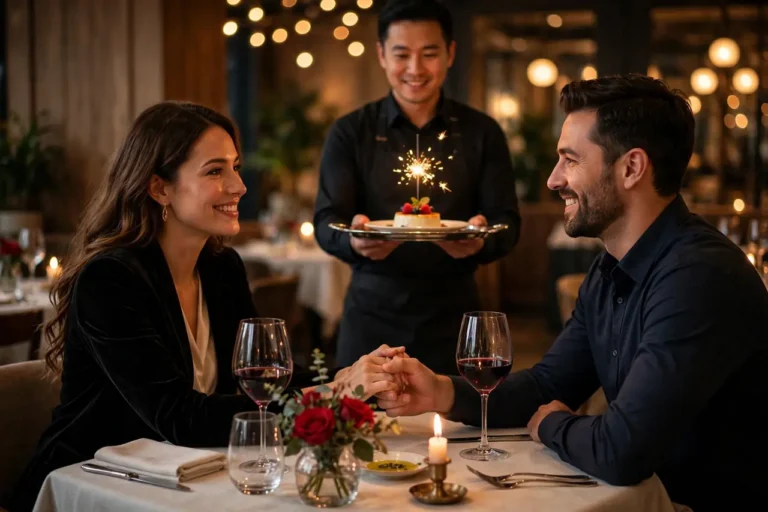
Few countries have a more complicated relationship with Valentine’s Day than India. In Mumbai and Delhi, Bengaluru and Pune, February 14 is one of the biggest retail events of the year — florists sell out of red roses, restaurants are booked solid, and young couples celebrate with an enthusiasm that rivals anywhere in the world. India even invented an entire Valentine’s Week, eight themed days from Rose Day to Kiss Day, that turns mid-February into a fortnight of romance. And yet, every year, the same date brings protests, moral-policing threats, and heated national debate about Western influence, tradition, and public morality.
This is the paradox of Valentine’s Day in India: a holiday that is simultaneously one of the country’s most beloved celebrations and one of its most contested. To understand it, you have to hold both realities at once — the genuine affection millions of Indians feel for the day, and the genuine discomfort it provokes in others. This guide covers the full picture, factually and without taking sides: how India celebrates, why some oppose it, how the controversies have evolved, and what the modern customs actually look like on the ground.
| Fact | Detail |
|---|---|
| How it’s celebrated | Gifts, dinners, proposals; Valentine’s Week runs Feb 7–14 |
| Valentine’s Week | Rose Day (7th) → Propose Day (8th) → Chocolate Day (9th) → Teddy Day (10th) → Promise Day (11th) → Hug Day (12th) → Kiss Day (13th) → Valentine’s Day (14th) |
| Anti-Valentine’s Week | Feb 15–21: Slap Day → Kick Day → Perfume Day → Flirt Day → Confession Day → Missing Day → Breakup Day |
| Opposition | Some Hindu nationalist and conservative groups protest the day as Western cultural influence |
| Alternative observance | Some groups promote Feb 14 as a day honoring parents or remembering fallen soldiers |
| Commercial scale | One of India’s biggest gifting occasions; major sales for florists, jewelers, restaurants, e-commerce |
How India Celebrates: Romance, Indian Style
For millions of urban Indians — especially the young — Valentine’s Day is celebrated much as it is worldwide, with a few local inflections. Couples exchange roses, chocolates, teddy bears, jewelry, and handwritten notes. Restaurants in the metros offer special Valentine’s menus. Parks and malls fill with couples. Proposals spike: the week is considered an auspicious time to pop the question, and “Propose Day” (February 8) exists specifically for it.
What makes India unusual is the scale of the buildup. Valentine’s Week — the eight-day sequence from Rose Day (February 7) through Valentine’s Day (February 14) — is a genuinely mainstream phenomenon, amplified by social media, Bollywood, and the gifting industry. Each day has its own gift logic (roses, then a proposal, then chocolates, then a teddy bear, then promises, hugs, kisses, and finally the grand day itself), and couples document the whole arc online. It is, in effect, a serialized romance — and it has made mid-February India’s most gift-intensive fortnight outside the Diwali season. Our dedicated guide to Valentine’s Week in India walks through each day in detail.
The celebration skews young and urban, but it is not confined to the metros. Tier-2 and tier-3 cities participate enthusiastically, and e-commerce has carried Valentine’s gifting deep into small-town India — flower delivery networks, gift portals, and same-day courier services do some of their best business of the year in the second week of February. Surveys have repeatedly found a substantial share of urban Indians planning to celebrate, and the day’s commercial footprint — from Archies greeting cards (a fixture of Indian Valentine’s since the 1990s) to online jewelry sales — is enormous.
Indian Valentine’s culture also has its own social rituals. College campuses buzz in the week leading up to the 14th. “Secret admirer” notes circulate. Friend groups organize Valentine’s parties that are as much about friendship as romance — a dynamic familiar from Mexico’s Day of Love and Friendship. And the gifting is often performative in the most joyful sense: giant teddy bears, elaborate balloon decorations, public proposals in malls. Subtlety was never the point.
The Controversies: Why February 14 Divides India
Now the other half of the story. Since the 1990s, Valentine’s Day in India has faced organized opposition from Hindu nationalist and socially conservative groups, who view the holiday as an emblem of Western cultural corruption. The objections, as stated by the groups themselves, typically run along these lines: that public displays of affection offend Indian cultural values; that the holiday’s commercialism exploits young people; and that celebrating a Western saints’ day represents a form of cultural submission.
The most visible opponents have historically included the Shiv Sena and the Bajrang Dal, whose activists have in past years threatened couples celebrating in parks and restaurants, staged protests, and engaged in what critics call “moral policing” — confronting young couples in public spaces on February 14. In 2015, the Hindu Mahasabha drew national headlines by announcing that its activists would “punish” couples seen celebrating Valentine’s Day by marrying them off on the spot — a threat widely covered in Indian and international media and widely mocked online, including in a viral comedy sketch. Whether or not such threats were ever carried out at scale, their annual repetition became a ritual of its own: every February, newspapers run the “will they or won’t they” stories, and every February, most celebrations proceed anyway.
It is important to keep the scale of the opposition in perspective. India is a country of 1.4 billion people, and the groups that protest Valentine’s Day represent a small — if vocal — minority. The overwhelming trend over three decades has been toward greater acceptance: each year’s celebrations are bigger than the last, the retail data grows, and the moral-policing incidents, while real and sometimes ugly, have not reversed the holiday’s popularity. Many Indians, including many who are culturally conservative in other respects, simply ignore the protests. The market has voted, and it voted for roses.
The opposition has also evolved. In recent years, some groups have shifted from confrontation to alternative observance: promoting February 14 as Matru-Pitru Pujan Diwas (a day for honoring parents, an idea associated with the spiritual leader Asaram Bapu), or as a day of remembrance for the soldiers killed in the Pulwama terror attack of February 14, 2019, in which more than 40 CRPF personnel died. These reframings are sincerely observed by many — the Pulwama anniversary, in particular, is a genuine day of national mourning — and they add a layer of solemnity to the date that coexists, sometimes uneasily, with the celebrations.
A note on tone: this is a live cultural debate in the world’s largest democracy, and reasonable Indians disagree about it passionately. This guide takes no position beyond the facts: Valentine’s Day in India is hugely popular, genuinely contested, and both of those things at once. Travelers should simply be aware that public displays of affection, unremarkable in many countries, can attract unwanted attention in India on February 14 — discretion is the practical advice, whatever one’s views.
Modern Customs: What February Actually Looks Like
Strip away the debate, and the lived reality of Valentine’s season in India is exuberant, commercial, and deeply social. Here is how the fortnight actually unfolds for the millions who celebrate.
The season opens on February 7 with Rose Day, and the flower markets of every major city shift into overdrive. In Delhi’s Ghazipur flower market and Mumbai’s Dadar market, wholesalers report some of their heaviest volumes of the year; red roses command premium prices, and the color-coded rose language (red for love, yellow for friendship, white for peace) is widely observed. Florists run 24-hour operations in the final days, and online flower delivery — a category that barely existed two decades ago — is now central to the celebration.
Each subsequent day of Valentine’s Week has its own micro-economy: chocolates on the 9th, teddy bears and soft toys on the 10th, and a general crescendo of gifting that peaks on the 14th itself. Jewelry brands launch Valentine’s collections. Fashion retailers push red. Restaurants — from five-star hotels to college-town cafés — offer prix-fixe Valentine’s menus, and the better tables book out days ahead. Hotels report strong occupancy from couples booking Valentine’s stays, a trend that itself has occasionally fed the moral-policing narrative.
Social media is the week’s nervous system. Couples post daily updates through Valentine’s Week — the Rose Day bouquet, the Propose Day moment, the Chocolate Day haul — and the performative dimension is embraced rather than hidden. Valentine’s proposals staged in malls, flash mobs, and drone-camera moments are a genre unto themselves. The week is also prime time for India’s massive wedding-adjacent industries: photographers, event planners, and decorators all ride the romantic wave.
And then, on February 15, the tone flips. Anti-Valentine’s Week — Slap Day (15th), Kick Day (16th), Perfume Day (17th), Flirt Day (18th), Confession Day (19th), Missing Day (20th), Breakup Day (21st) — is the internet’s irreverent answer to the fortnight of romance. It is celebrated mostly as humor: memes about exes, self-love posts, singles’ parties. The days are symbolic rather than literal (Slap Day means slapping away negativity, not people), and the week functions as a pressure valve — a way for the uncoupled, the heartbroken, and the romance-skeptical to participate in the season on their own terms. It is, in its way, as Indian as Valentine’s Week itself: maximalist, meme-driven, and impossible to ignore.

The Commercial Machine: Who Profits from Love
It is impossible to discuss Valentine’s Day in India without discussing the money. The holiday is a commercial juggernaut, and its growth tracks the rise of India’s consumer economy with almost perfect fidelity.
The pioneers were the greeting-card companies. Archies — the Indian card-and-gift chain — built much of its brand on Valentine’s Day in the 1990s and 2000s, and its stores remain synonymous with the holiday for a generation of Indians. The florists followed, then the chocolatiers (Cadbury’s Indian campaigns made chocolate a Valentine’s staple), then jewelers, then the entire e-commerce sector. Today, online marketplaces report Valentine’s-season spikes across categories: flowers, jewelry, watches, perfume, soft toys, personalized gifts.
Critics — including some of the holiday’s cultural opponents — argue that Valentine’s Day in India is essentially a manufactured occasion, a “structured marketing funnel” (as one recent video essay put it) in which emotions are broken into daily product prompts. There is truth in the critique: Valentine’s Week’s day-by-day gift logic maps suspiciously well onto retail categories. But the critique misses something important: Indians were not passive recipients of this marketing. They took the imported framework and made it their own — the week, the memes, the anti-week, the proposals — with a creativity that no marketing department could have scripted. The commercial machine provides the raw material; Indian celebrants supply the meaning.
The economics also explain the holiday’s resilience against opposition. Too many livelihoods now depend on it — florists, gift-shop owners, restaurant workers, delivery drivers, event planners — for the protests to do more than dent the edges. Every moral-policing incident is, in a sense, outvoted by the market long before it happens.
Regional Notes: One Country, Many Valentines
India’s size and diversity mean Valentine’s Day wears different clothes in different regions. In Mumbai, the celebration is Bollywood-scale: grand gestures, seafront promenades at Marine Drive and Bandstand, and a nightlife scene that goes all out. Delhi’s version is more sprawling — mall culture, farmhouse parties, and the monument-backed romance of Lodhi Gardens and India Gate. Bengaluru, with its young tech workforce and pleasant February weather, leans toward café culture and pub celebrations; Pune, the college town, toward campus-adjacent festivities.
In the south, the holiday coexists with strong regional cultural identities — and in states like Tamil Nadu, it has occasionally faced sharper political opposition, with fringe groups making headlines for threats against celebrants. In the northeast, the celebration tends to be more relaxed, folded into the region’s vibrant music and café scenes. And everywhere, the small-town version is growing: e-commerce delivery has made Valentine’s gifting possible far beyond the metros, and the social-media template (post your Rose Day flowers, tag your valentine) works identically in Patna and Pune.
The through-line is youth. Valentine’s Day in India is, above all, a young person’s holiday — driven by college students and twenty-somethings, amplified by Instagram and YouTube, and increasingly detached from the Western origins that bother its critics. For the generation that grew up with it, February 14 is not an import at all. It is just what February looks like.
The Generational Shift: How Attitudes Are Changing
Perhaps the most important fact about Valentine’s Day in India is its direction of travel. Every measurable indicator — retail sales, social-media participation, survey responses, the sheer visibility of the celebrations — points the same way: up. The holiday that was a niche urban novelty in the 1990s is now a mainstream national event, and the trend shows no sign of reversing.
The driver is demographics. India is an extraordinarily young country, and the generation that came of age with Valentine’s Week, Instagram, and e-commerce does not experience February 14 as a foreign import. For Indians under thirty, the holiday has no “before” — it has simply always been there, as much a part of the calendar as Diwali or Holi, albeit a smaller one. The cultural opponents of Valentine’s Day are, in effect, arguing with a generation that never got the memo that the day was supposed to be controversial.
The opposition has adapted, in its way. The shift from confrontation (threats against couples) to alternative observance (parents’ worship days, remembrance framings) suggests an implicit acknowledgment that the holiday cannot be stopped — only supplemented. And the rise of Anti-Valentine’s Week shows that even the holiday’s skeptics would rather participate in the season ironically than sit it out. When your critics invent their own week-long counter-festival, you have won the culture war.
None of this means the debate will disappear. India will continue to argue about Valentine’s Day — about Westernization, commercialism, public morality — because India argues about everything, gloriously and at volume. But the argument increasingly happens against a backdrop of settled fact: millions of Indians love this holiday, they will celebrate it next year and the year after, and no amount of protest will change the flower markets of Dadar in the second week of February. The roses have already won.
Watch: Valentine’s Day in India — The Real Story vs. Today’s Reality
This video explores how Valentine’s Day is actually celebrated in India today — the history, the hype, the commercialism, and the controversies:
Navigating Valentine’s Season in India: Practical Notes
Whether you are celebrating in India or simply curious, a few practical notes help. If you are a traveler, book restaurants and hotels well ahead — Valentine’s Week is peak season for romantic dining in the metros. If you are buying gifts, the day-by-day logic of Valentine’s Week gives you a natural calendar: roses on the 7th, chocolates on the 9th, something personal on the 14th. Our guides to Valentine’s Day gifts for her and Valentine’s Day gifts for him work as well in Mumbai as anywhere.
If you are budget-conscious, take heart from the Indian street-market version of the holiday: some of the most joyful Valentine’s celebrations in India happen on modest budgets — a single red rose from a street vendor, chai at a favorite stall, a walk through a decorated market. The thoughtful Valentine’s on a budget playbook translates perfectly. And for the full day-by-day breakdown, our Valentine’s Week guide covers each of the eight days with celebration ideas — while China’s take on February 14 offers a fascinating contrast in how Asia adapts the holiday. For the global panorama, see Valentine’s Day traditions around the world.
Frequently Asked Questions
Why is Valentine’s Day controversial in India?
Some Hindu nationalist and socially conservative groups — historically including the Shiv Sena and Bajrang Dal — have opposed Valentine’s Day as a symbol of Western cultural influence, objecting to public displays of affection and the holiday’s commercialism. Activists have in past years threatened couples and staged protests on February 14. However, these groups represent a small minority, and the holiday’s popularity has grown steadily for three decades despite the opposition.
What is Valentine’s Week in India?
Valentine’s Week is the eight-day celebration running February 7–14: Rose Day (7th), Propose Day (8th), Chocolate Day (9th), Teddy Day (10th), Promise Day (11th), Hug Day (12th), Kiss Day (13th), and Valentine’s Day (14th). Each day has its own gift theme, and the week is a major retail and social-media event. See our complete Valentine’s Week guide for details on each day.
What is Anti-Valentine’s Week?
Anti-Valentine’s Week runs February 15–21, immediately after Valentine’s Day: Slap Day (15th), Kick Day (16th), Perfume Day (17th), Flirt Day (18th), Confession Day (19th), Missing Day (20th), and Breakup Day (21st). It is a lighthearted, meme-driven celebration of self-love and singlehood — the days are symbolic (Slap Day means slapping away negativity, not people) and function as a humorous counterpoint to the romance fortnight.
Is Valentine’s Day banned in India?
No. Valentine’s Day is not banned in India and is celebrated openly by millions. While some groups protest it and there have been isolated incidents of moral policing, the holiday is fully legal and enormously popular, particularly among young urban Indians. Travelers should simply exercise the usual discretion about public displays of affection.
What happened on February 14, 2019 in India?
On February 14, 2019, a terror attack in Pulwama, Jammu and Kashmir, killed more than 40 CRPF (Central Reserve Police Force) personnel — one of the deadliest attacks on Indian security forces in decades. The anniversary is observed across India as a day of national mourning and remembrance, with tributes, memorial events, and moments of silence. Some groups promote February 14 as a day to honor the fallen soldiers rather than — or in addition to — celebrating Valentine’s Day, and many Indians observe both: remembrance in the morning, romance in the evening. The two observances coexist on the same date, each deeply felt.
How do most Indians actually feel about Valentine’s Day?
Surveys consistently show strong participation, especially among urban youth: a substantial share of young Indians plan to celebrate each year, and the retail data — flowers, jewelry, dining, e-commerce — grows annually. The controversy is real but involves a vocal minority; for most celebrants, February 14 is simply a joyful occasion shared with partners, friends, and family. India’s relationship with the holiday is best described as enthusiastic and contested at the same time — a combination the country seems entirely comfortable sustaining indefinitely.