Holidays / Valentine’s Day
A thoughtful Valentine’s Day starts with what your partner would enjoy, not with a shopping list. Agree on the kind of celebration you want, set a total spending limit and choose one personal detail that makes the day feel intentional.
Planning order: expectations, total budget, one shared experience, food and a personal touch.
Talk about the plan without giving away every detail
Ask whether your partner would prefer time together, a small gift, a meal out or a quiet evening. This is especially useful if you have different ideas about the holiday. A surprise works best when the basic expectations are already understood.
Agree on a spending range if money is tight or one person tends to spend more. Include transport, food and any ticket costs, not just the gift. You can keep the details personal while avoiding the pressure of matching an unexpected expensive gesture.
Choose one thing to make special
Pick the part of the celebration that matters most to both of you. It might be cooking a favorite meal, revisiting a meaningful place, listening to music together or setting aside an uninterrupted afternoon. Put most of your effort there and simplify the rest.
A useful test is whether you would still enjoy the activity without a Valentine’s label. If the answer is no, it may be a purchase driven by the date rather than your relationship. A modest plan that fits your interests is easier to enjoy than an elaborate one you feel obliged to complete.
Use a total budget rather than separate small limits
Small extras can add up: delivery charges, parking, drinks, decorations and a last-minute card. Write down the total amount you are comfortable spending and reserve a little flexibility inside it. Avoid treating each purchase as harmless because it looks inexpensive on its own.
As an illustrative plan, a $50 budget could allocate $30 to a home-cooked meal, $10 to a personal item and $10 to transport or a contingency. Those figures are not price quotes. Adjust the categories to what you already own and the real costs where you live.
Make the personal detail specific
Write a note about a particular memory, something you appreciate or an experience you would like to share. Specificity does more work than length. A few sincere sentences can feel more personal than a generic message copied from a greeting card.
If you choose a gift, connect it to an actual interest or need rather than guessing at a grand gesture. A book someone mentioned, a printed photograph you have permission to use or supplies for a shared hobby can support the celebration without becoming its entire purpose.
Keep the meal manageable
If cooking, choose a dish you can prepare confidently and do most of the work in advance. The point is time together, so avoid a menu that leaves one person in the kitchen for the evening. Share the preparation if that is something you both enjoy.
If eating out, check the actual menu and booking terms for the date. A restaurant may offer a special format that differs from its usual service. Compare the complete cost before committing, and consider celebrating on another day if that suits your schedule and budget better.
Protect the time you planned
Set a start time, put routine chores aside and decide which parts of the plan are optional. A walk can be replaced by music at home if the weather changes; the meaning of the day does not depend on one activity working perfectly.
Avoid turning the celebration into a performance for photographs or social media unless you both enjoy that. The most useful measure is whether each person felt considered. A comfortable, personal evening is a complete plan even when it includes very few purchases.
Explore more
Browse Holidays and Valentine’s Day for related planning guides.
Gifts by Price Tier: What $10, $25, and $50 Actually Buy
A total budget only works if you know what the money can become. Below are three tiers with concrete gift ideas that feel personal rather than cheap, based on prices at ordinary US retailers in 2026.
| Tier | Gift ideas that land well | Typical cost |
|---|---|---|
| Under $10 | A $5–$8 paperback they mentioned, a single rose from a grocery florist ($3–$5), a framed printed photo ($1 print + $3 frame from a dollar store) | $4–$10 |
| $10–$25 | Their favorite coffee beans or tea sampler, a small houseplant ($12–$18), a used copy of a meaningful vinyl or book, a quality chocolate bar assortment | $12–$25 |
| $25–$50 | A shared cooking class on Groupon ($30–$45 for two), a puzzle or board game for a shared hobby, a nice bottle of wine plus two glasses | $28–$50 |
The tier that works is the one you can spend without checking your bank account the next day. A $10 gift tied to an inside joke will beat a $50 generic gift every time — the table is there so the number stops being abstract, not so you climb to the top row.
Three Free Date Blueprints (Morning, Afternoon, Evening)
A free date still needs a plan, or it becomes an afternoon of scrolling. Pick one blueprint and commit to the sequence.
The $0 Morning Walk Date
Start at a park or trailhead you both like, arrive by 9:30 a.m., and walk for 45–60 minutes. Bring coffee from home in travel mugs. The one personal detail: each person names three things they are looking forward to this spring. Total cost: $0.
The $0 Afternoon Library Date
Most public libraries stay open until at least 5 p.m. Give each other 30 minutes to pick one book, album, or magazine for the other person, then trade and spend an hour reading together in the quiet room. Libraries also carry board games and free museum passes in many cities — ask at the desk.
The $0 Evening Home Tasting
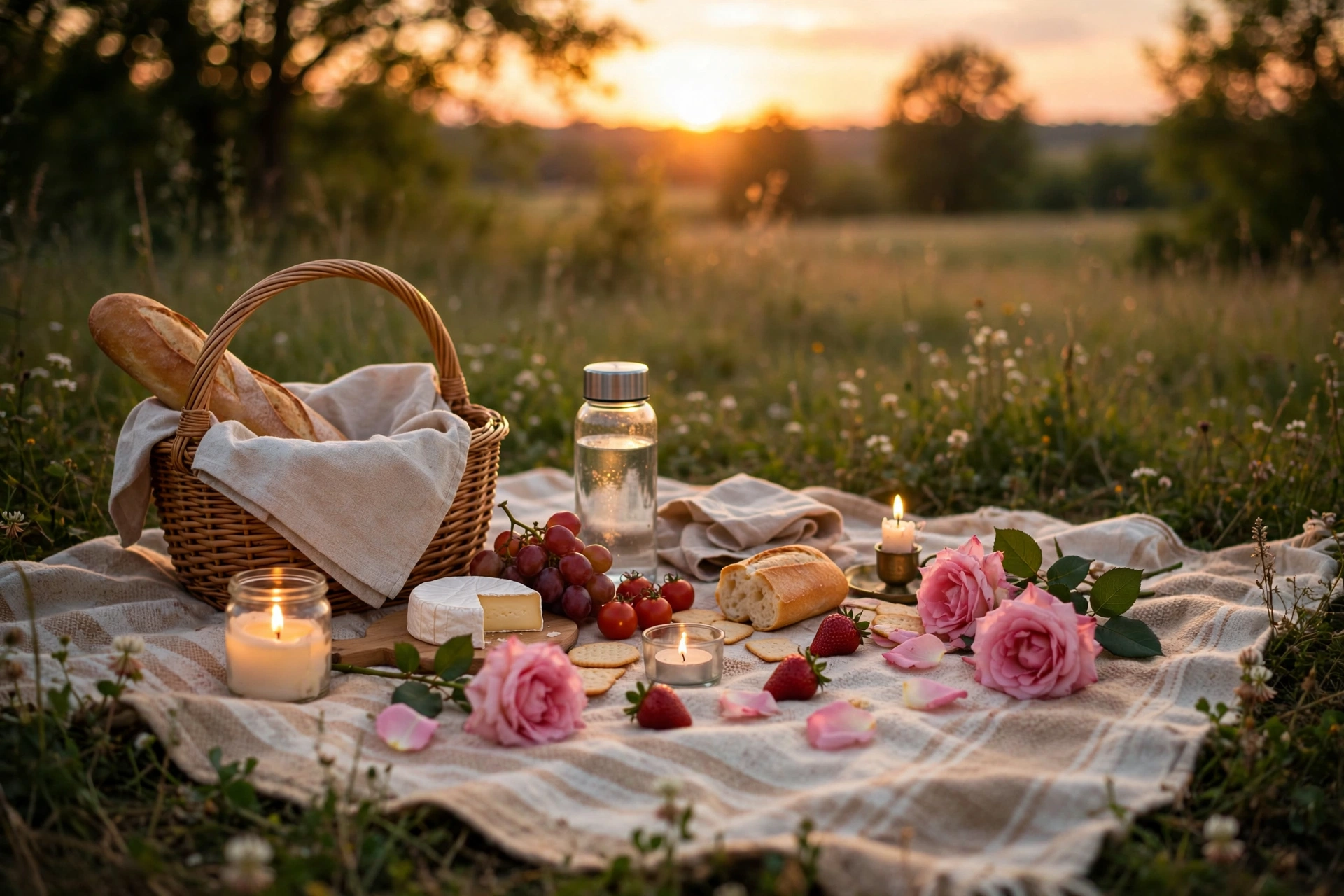
Use what is already in the pantry: line up three cheeses, three crackers, or three chocolates you own and score them together like judges. Add a playlist of songs from the year you met. It feels like an event because it has structure, not because it cost anything.
DIY Details That Cost Almost Nothing
Three specifics that consistently read as thoughtful:
- Handmade chocolate truffles. Melt 8 oz of chocolate chips with 1/3 cup warm heavy cream, chill, roll into balls, dust with cocoa. Cost: about $5 for 20 pieces. Package in a small box lined with parchment.
- A coupon book with real promises. Five to seven coupons, each one specific and redeemable: “One Saturday morning sleep-in, I handle everything,” not “one free hug.” Date each with a 90-day expiry so they feel real.
- The letter. One page, handwritten, naming two specific moments from the past year and one thing you admire. Use plain paper and a pen — the plainness is the point.
Mistakes That Blow a Small Budget
- Buying the card at the drugstore on February 13. Cards run $5–$7; a blank card plus your own words costs $2. The markup is pure deadline tax.
- Ordering delivery on the night itself. Surge pricing and delivery fees can add $15–$25 to a $30 order. Pick up takeout, or cook.
- Treating each small purchase as “only a few dollars.” This is the biggest one: $6 card + $12 flowers + $18 takeout upgrade + $9 parking = $45 you never planned. That is why the total-budget rule from the main guide matters more than any single tip.
- Celebrating on February 14 because the calendar says so. Shifting to February 13 or 15 can cut flower prices by 30–50% and remove every reservation constraint. Nothing about the romance requires the 14th.
FAQ
How much do couples actually spend on Valentine’s Day in 2026?
National Retail Federation surveys have hovered around $170–$190 per person in recent years, but that average is pulled up by a minority of big spenders. Most couples celebrating at home spend $40–$80 total. A $50 total budget puts you well within what most thoughtful couples actually do.
What is the cheapest impressive Valentine’s gift?
A framed printed photo ($4 total) paired with a handwritten note. It is personal, costs almost nothing, and does not look like a compromise. The letter is doing the work — the frame just gives it a place to live.
Can you celebrate Valentine’s Day well with zero spending?
Yes, if you plan it like an event rather than defaulting to a normal evening. A structured free date — the walk with questions, the library trade, the pantry tasting above — feels intentional. What kills a $0 Valentine’s Day is not the lack of money but the lack of a plan.
When should you start planning a budget Valentine’s Day?
Two weeks out is enough. That gives you time to order a $5 gift online without rush shipping, buy groceries for the meal on a normal shopping trip, and shift the celebration to a nearby date if restaurants are booked. Last-minute planning is the most expensive version of every Valentine’s plan.
Is it awkward to agree on a spending limit with your partner?
It feels awkward for about thirty seconds and then becomes a relief. Frame it as protecting the day from money stress: “Let’s keep it under $50 so we can just enjoy it.” Couples who agree on a number almost always report less stress than couples who guess.