Here is the honest answer to anyone searching for a Thanksgiving parade in Columbus 2026: the city does not currently stage one. But that simple fact hides a fascinating story, because Columbus once hosted one of the great holiday parades of the Midwest, a spectacle that drew an estimated 200,000 spectators to downtown, filled the sky with helium balloons, and sent “elves” through the crowd collecting donations for charity. The parade is gone, but its legacy, and the archival footage of it, survives. This guide tells the full story of Columbus’s lost Thanksgiving parade tradition, shows you the historic 1991 broadcast, and points you to the holiday celebrations that fill the gap today.
The Lost Thanksgiving Parade of Columbus
Columbus’s parade story begins in 1981, when the Columbus Area Chamber of Commerce launched the Secret Santa Parade. It was an immediate sensation. Featuring helium balloons, floats, marching bands, and costumed “elves” who moved through the crowds collecting donations for the Secret Santa charity drive, the debut parade drew an estimated 200,000 spectators to downtown Columbus. For a city that had never seen anything like it, the parade was a revelation: a big-city spectacle with a charitable heart.
The event soon moved to the Sunday before Thanksgiving and became known as The Holiday Parade, cementing its place as the city’s official opening of the holiday season. Through the 1980s and into the early 1990s, the parade was a fixture of Columbus life. Families planned their Thanksgiving weeks around it. Downtown merchants decorated for it. Local television covered it as a major civic event, with WBNS-TV (10TV) broadcasting the parade to viewers across central Ohio.
The 1991 edition, broadcast by WBNS-TV with hosts Bob Orr, Carol Costello, and Tom Sorrells, captures the parade at its peak: the balloons, the bands, the floats, and the unmistakable energy of a city that had embraced its parade. That broadcast survives on video today and remains the best window into what Columbus’s parade tradition felt like.
Why the Parade Ended
The Holiday Parade’s run ended in 1993, when funding challenges led to its cancellation. Like many civic parades of the era, it depended on a delicate balance of corporate sponsorship, city support, and volunteer energy, and when that balance tipped, the parade could not continue. The loss was felt keenly: a generation of Columbus children had grown up with the parade as the start of their holiday season, and its absence left a hole in the city’s Thanksgiving traditions.
Efforts to bring it back surfaced in 2001, when downtown revitalization tied to City Center Mall sparked talk of reviving a holiday parade. The revival never materialized, and Columbus has been without a parade tradition ever since. It is one of the notable quirks of American parade culture: a major city, a proven audience of hundreds of thousands, and no parade to show for it.
The story carries a lesson that parade lovers in every city understand. Parades look effortless from the curb, but they are complex civic productions. They require sponsors, street closures, police coordination, float builders, band directors, and thousands of volunteers. When any part of that machinery fails, even a beloved tradition can vanish. Columbus’s experience is a reminder to support the parades you have, while you have them.
What the Parade Was Like: A Portrait From the Archive
Piecing together contemporary accounts and the surviving 1991 broadcast, a vivid picture of the Columbus Holiday Parade emerges. The helium balloons were the signature: giant character balloons drifting above High Street, guided by teams of handlers, with the downtown towers as a backdrop. Marching bands from across Ohio brought the sound, from precise drumlines to full brass sections playing holiday arrangements. Floats built by local businesses and community groups added color and craft, and the Secret Santa “elves” working the crowd gave the parade its distinctive charitable character.
The timing, the Sunday before Thanksgiving, was inspired. It turned the parade into the starting gun for the holiday season: families watched the parade, then went home to plan Thanksgiving, then returned downtown in December for the holiday shopping season. The parade did not compete with Thanksgiving; it launched it.
For longtime Columbus residents, the memories are specific and fond: the cold November air, the smell of hot chocolate from street vendors, the particular sound of a marching band approaching down a downtown canyon, and the moment when Santa’s float rounded the final corner. Traditions like that do not really die; they go dormant, living on in family stories and archival video.
How Columbus Celebrates the Holidays Today
Without a parade, Columbus has built its Thanksgiving and holiday season around other traditions. The city leans into lights, zoo nights, conservatory displays, and neighborhood celebrations that fill the weeks from Thanksgiving through New Year’s.
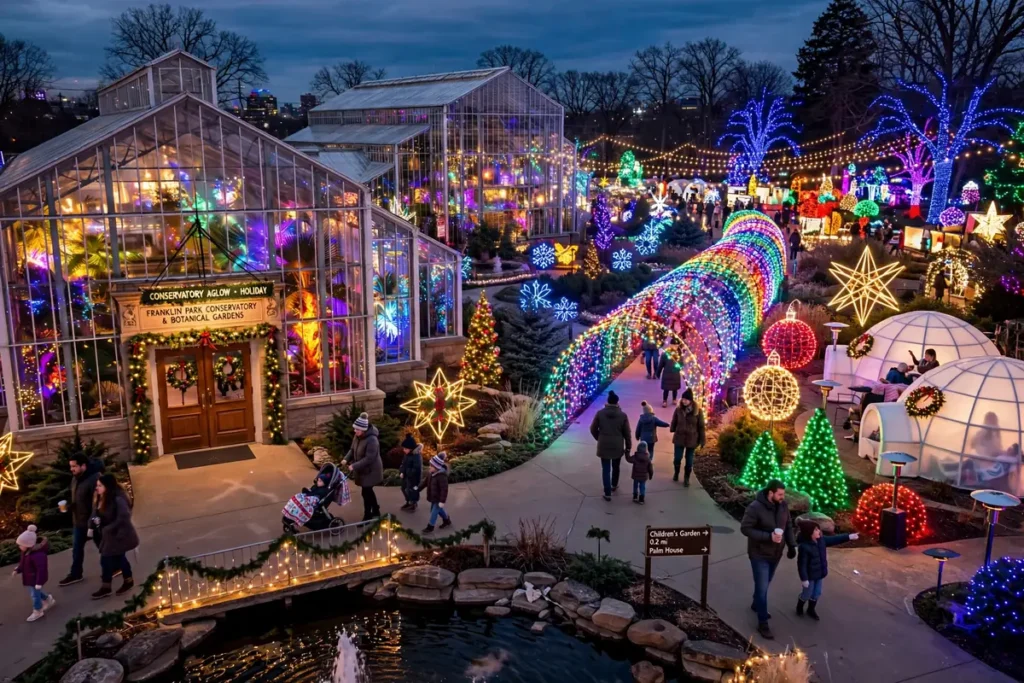
Holiday lights displays are the centerpiece of the modern Columbus season. The Columbus Zoo and Aquarium’s Wildlights is among the best-known holiday light events in the Midwest, transforming the zoo into millions of lights with animated displays. The Franklin Park Conservatory dresses its glasshouses and gardens for the season with luminous installations. These are longstanding traditions; confirm 2026 dates and ticketing on official listings.
Downtown and neighborhood events fill the calendar from late November onward. Holiday markets, tree lightings, and festive shopping districts give Thanksgiving-week visitors plenty to do. Our guide to Thanksgiving events in Columbus covers turkey trots, dining, and family activities across the city.
Thanksgiving morning television remains the parade connection for most Columbus households. The Macy’s Thanksgiving Day Parade broadcast is the shared national ritual, and in Columbus it carries an extra layer of nostalgia: older viewers remember when their own city had a parade worth broadcasting.
Nearby parade cities offer the in-person experience. Detroit’s America’s Thanksgiving Parade, one of the oldest and grandest Thanksgiving parades in the country, is a driveable trip for dedicated parade fans; see our guide to Thanksgiving in Detroit. Closer to home, Thanksgiving in Cleveland covers Northeast Ohio’s holiday options. And for the full seasonal picture, browse our Thanksgiving collection.
In Pictures: Remembering the Parade
There are no new photographs of the Columbus Holiday Parade, because there has been no parade since 1993. What survives are memories, newspaper clippings, and the 1991 television broadcast. The second image in this guide is an evocative tribute to that era: a classic American holiday parade scene with helium balloons above a downtown street, the way Columbus looked on those Sunday mornings before Thanksgiving. It is a reminder of what the city once had, and of what a community can build when it decides to celebrate together.
Watch: The 1991 Columbus Holiday Parade Broadcast
This is the real thing: the 1991 Holiday Parade in downtown Columbus, Ohio, as broadcast on WBNS-TV (10TV). Watch the balloons, the bands, and the floats that defined the city’s parade tradition at its peak, hosted by Bob Orr, Carol Costello, and Tom Sorrells. For anyone who marched in it, watched it from the curb, or simply wonders what Columbus lost, this footage is a time capsule. For younger viewers, it is a glimpse of a tradition worth remembering, and perhaps, one day, worth reviving.
At a Glance: Timeline of Columbus’s Parade Tradition
| Year | Milestone | Details |
|---|---|---|
| 1981 | Secret Santa Parade debuts | Launched by the Columbus Area Chamber of Commerce; helium balloons, floats, marching bands, charity “elves”; ~200,000 spectators |
| Mid-1980s | Becomes The Holiday Parade | Moves to the Sunday before Thanksgiving; established as the city’s official holiday kickoff |
| 1980s–1993 | Peak years | Annual downtown spectacle; broadcast locally by WBNS-TV (10TV); a fixture of Columbus Thanksgiving weeks |
| 1991 | Historic broadcast | WBNS-TV telecast hosted by Bob Orr, Carol Costello, and Tom Sorrells; survives as the definitive video record |
| 1993 | Parade cancelled | Funding challenges end the tradition after more than a decade |
| 2001 | Revival effort stalls | Downtown revitalization tied to City Center Mall sparks revival talk; a new parade never materializes |
| 2026 | No active parade | Columbus celebrates with holiday lights, zoo and conservatory displays, and televised national parades |
Frequently Asked Questions About the Thanksgiving Parade in Columbus
Is there a Thanksgiving parade in Columbus in 2026?
No. Columbus does not currently stage a Thanksgiving or holiday parade. The city’s parade tradition, the Secret Santa Parade and later The Holiday Parade, ran from 1981 until its cancellation in 1993, and a revival effort in 2001 never materialized. Columbus celebrates the season with holiday lights displays, zoo and conservatory events, and neighborhood festivities instead.
What was the Columbus Holiday Parade?
The Holiday Parade was Columbus’s flagship holiday procession, launched in 1981 as the Secret Santa Parade by the Columbus Area Chamber of Commerce. It featured helium balloons, floats, marching bands, and costumed “elves” collecting donations for the Secret Santa charity drive. It moved to the Sunday before Thanksgiving and drew crowds estimated at 200,000 at its peak.
Why did the Columbus parade end?
Funding challenges led to the parade’s cancellation in 1993. Like many civic parades, it depended on corporate sponsorship, city support, and volunteer energy, and when that support eroded, the parade could not continue. A 2001 effort to revive it as part of downtown revitalization never came to fruition.
Can I watch footage of the old Columbus parade?
Yes. The 1991 Holiday Parade was broadcast on WBNS-TV (10TV), and that broadcast survives on video, embedded above. It is the best available record of the parade at its peak, hosted by Bob Orr, Carol Costello, and Tom Sorrells.
What holiday events replace the parade in Columbus today?
The Columbus Zoo’s Wildlights and the Franklin Park Conservatory’s holiday displays are the centerpieces of the modern season, joined by downtown and neighborhood tree lightings, holiday markets, and festive shopping districts. Confirm 2026 dates and ticketing on official listings. Our Thanksgiving events in Columbus guide has the full rundown.
Where is the nearest real Thanksgiving parade to Columbus?
Detroit’s America’s Thanksgiving Parade is one of the nation’s oldest and grandest Thanksgiving Day parades and is the closest major Thanksgiving morning parade to Columbus. Our Thanksgiving in Detroit guide covers it, and Thanksgiving in Cleveland covers Northeast Ohio’s holiday season.
Conclusion: A Parade Worth Remembering, and Perhaps Reviving
The search for a Thanksgiving parade in Columbus 2026 ends with a story rather than a schedule, but it is a story worth telling. For more than a decade, Columbus had what every city wants in November: a parade that brought hundreds of thousands of people downtown, that gave children their first sight of a helium balloon drifting above the rooftops, and that turned the Sunday before Thanksgiving into the official start of the holidays. The Secret Santa Parade and the Holiday Parade deserve their place in the city’s memory.
Whether Columbus will ever parade again is an open question. The ingredients are all still there: a vibrant downtown, a proven audience, and a generation of residents who remember what it felt like. Until then, the 1991 broadcast keeps the tradition alive, the holiday lights carry the season, and the story itself is a reminder of what a community can create when it decides to march together. If you are a Columbus resident who remembers the parade, share this guide and keep the memory alive. Traditions have been revived on less.
Could the Parade Ever Come Back?
It is the question every Columbus parade nostalgist asks: could the Holiday Parade return? The honest answer is that it is possible but not currently planned. The 2001 revival effort, tied to downtown revitalization around City Center Mall, showed that civic interest exists, but interest alone does not stage a parade. A modern revival would need what the original had and eventually lost: committed corporate sponsors, city cooperation on street closures and logistics, a professional organizing body, and the volunteer army that every parade depends on.
The case for a revival is stronger than it has been in decades. Downtown Columbus is more vibrant than at any point since the parade ended, with a residential population, a thriving riverfront, and a proven appetite for large civic events. Social media has made parade nostalgia visible in a way that was impossible in 2001; the surviving 1991 broadcast footage circulates online and regularly draws comments from viewers who remember the parade or wish they had seen it. Other cities have successfully revived dormant parades when the civic will aligned. Columbus has the audience; it would need the organizers.
What would it take from you? If you want the parade back, the path runs through civic engagement: supporting downtown events, patronizing the businesses that would sponsor a parade, and making your voice heard with city leaders and the chamber of commerce. Parades are built by communities that show up. Columbus showed up for 12 years. There is no reason it could not again.
A Self-Guided Walk Through Parade History
You cannot watch the parade anymore, but you can walk where it marched. Downtown Columbus still holds the bones of the parade route, and a self-guided stroll is a lovely way to connect with the tradition on a Thanksgiving weekend.
Start at Capitol Square, the civic heart of downtown, and walk south along High Street, the city’s great main street and the natural corridor for any downtown parade. Picture the helium balloons rising above the storefronts, the bands echoing between the buildings, the crowds ten deep on streets that look much as they did in 1991. Continue toward the riverfront parks along the Scioto, where the city’s modern green spaces now host the festivals and gatherings that fill the parade’s old role in civic life.
Pause at the site of the old Lazarus department store downtown, once the anchor of Columbus holiday shopping and home to the beloved Santaland display that outlived the parade by two decades. The building’s history is intertwined with the city’s holiday memories: generations of Columbus children visited Santaland at Lazarus as part of the same seasonal ritual that included the parade. End your walk with hot chocolate from a downtown cafe, and you have paid proper respects to a tradition that deserves remembering.
Columbus Holiday Lights Worth Planning Around
While the parade is gone, Columbus’s holiday lights scene is genuinely excellent and well worth building a Thanksgiving trip around. The Columbus Zoo and Aquarium’s Wildlights is the flagship: millions of lights, animated displays, and themed areas that transform the zoo into one of the Midwest’s great holiday destinations. It is a longstanding tradition that draws visitors from across Ohio; confirm 2026 dates and ticketing on the zoo’s official site, as popular nights sell out.
The Franklin Park Conservatory and Botanical Gardens dresses its historic glasshouses and outdoor gardens in luminous installations for the season, creating a more intimate, garden-scale counterpart to the zoo’s spectacle. Downtown Columbus itself glows through December, with decorated streetscapes and the riverfront parks lit for the season. Together, these displays give Thanksgiving-week visitors a full holiday experience; the only thing missing is the parade, and now you know its story.
More Answers About Columbus’s Parade Past
What was Santaland at Lazarus?
Santaland was the beloved holiday display at the Lazarus department store in downtown Columbus, a multi-generational tradition where children visited Santa in a elaborately decorated wonderland. It remained a cherished feature of the Columbus holiday season for two decades after the parade ended, and for many residents, Santaland and the parade are intertwined memories of the same golden era of downtown holidays.
Where can I find more photos and footage of the old parade?
The 1991 WBNS-TV broadcast embedded above is the best video record. For photographs and newspaper coverage, the Columbus Metropolitan Library’s local history collections and the Ohio History Connection archives are the natural places to look. Local historical societies and longtime residents’ personal collections also hold pieces of the parade’s visual history; community history groups online are a good place to ask.
Keeping the Memory Alive: How You Can Help
Traditions survive because people refuse to let them go. If the story of Columbus’s Holiday Parade moved you, there are concrete ways to keep it alive. Share the 1991 broadcast video with friends and family, especially younger Columbus residents who never saw the parade. Post your own memories and photographs in local history groups; every personal snapshot adds to the collective record. Support the downtown events and holiday celebrations that carry the torch today, from Wildlights to the conservatory displays to the neighborhood tree lightings.
And if you believe Columbus deserves a parade again, say so. Write to your city council representative, mention it to the chamber of commerce, and talk about it at community meetings. Civic traditions are not handed down from above; they are demanded from below by residents who show up. The Secret Santa Parade began because a group of Columbus business and civic leaders decided their city deserved something special. The next chapter, if there is one, will begin the same way: with people who remember what a parade feels like and decide to build one again.
Until then, this guide stands as a record: of the balloons over High Street, the bands on the Sunday before Thanksgiving, the elves collecting for charity, and the 200,000 spectators who proved, year after year, that Columbus is a parade town at heart.
Why This Story Matters Beyond Columbus
Columbus’s lost parade is not just a local curiosity; it is a case study in how American cities celebrate, and what they lose when they stop. Every Thanksgiving, millions of people line parade routes in New York, Philadelphia, Chicago, Detroit, and dozens of smaller cities, participating in a ritual that is part entertainment and part civic glue. Parades turn a collection of residents into a community, if only for a morning. They give a city a shared story to tell about itself.
Columbus once had that story, and the fact that people still talk about it, still share the 1991 footage, still ask whether it could come back, proves that the need it filled never went away. Whether or not the Holiday Parade ever marches again, its legacy is a reminder to every city: the traditions that matter most are the ones ordinary people build together, one November morning at a time. And for visitors searching for a Thanksgiving parade in Columbus in 2026, the honest answer comes with an invitation: come for the lights, walk the old route, watch the 1991 broadcast, and imagine what 200,000 people cheering on High Street sounded like. Some echoes never quite fade.