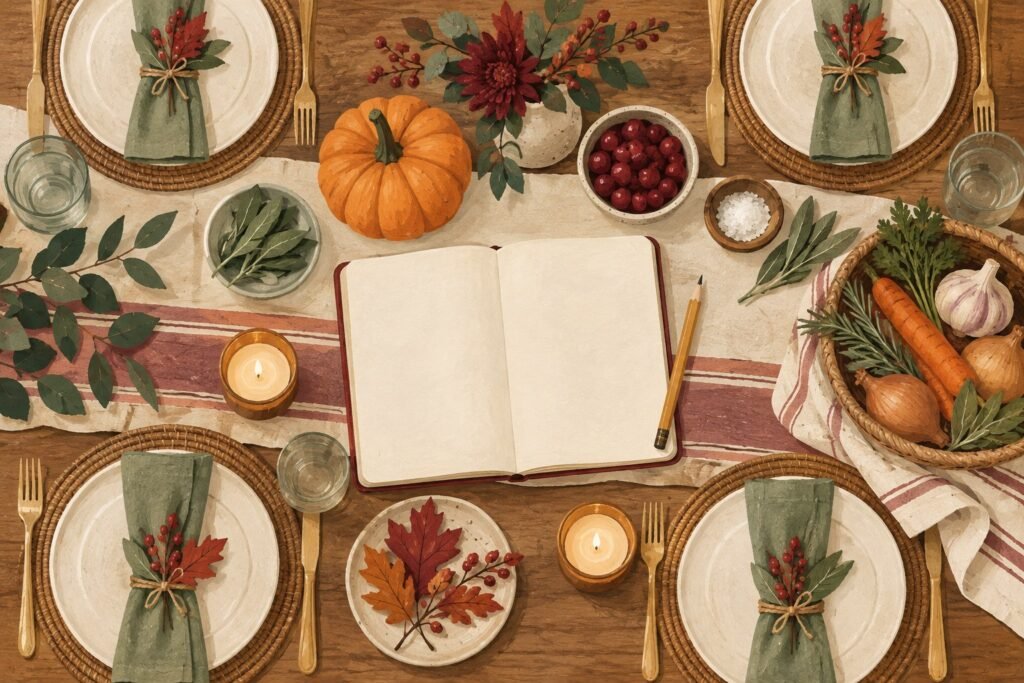
Thanksgiving mantel decor turns your fireplace into the living room’s holiday headline. Long after the dinner plates are cleared, the mantel is where the evening’s second act happens — coffee, pie, conversation, and photos — and a thoughtfully styled mantel makes that space feel as celebratory as the dining room. This complete guide covers everything: four style directions, garland-building tutorials, layering techniques, color palettes, budget breakdowns, safety rules for decorating around a working fireplace, and storage tips.
Whether your mantel is a grand stone fireplace or a simple apartment shelf styled like one, the principles are the same: build in layers, anchor with a hero piece, mind the heat, and let the mantel echo — not duplicate — the rest of your holiday decor. No design experience required; every tutorial below assumes a first-timer with basic supplies.
Why the Mantel Matters at Thanksgiving
The mantel is the living room’s natural focal point — the architectural feature every eye lands on when entering the room. At Thanksgiving, when the living room hosts pre-dinner cocktails, post-dinner lounging, and the inevitable group photos, an undecorated mantel reads as an unfinished room. Decorating it is also one of the highest-visibility, lowest-effort holiday moves: one styled surface transforms the entire room’s feel, and most mantel designs take under an hour.
The mantel also solves a practical decorating problem. Unlike the dining table, which must stay functional for the meal, the mantel can be fully decorative — tall elements, delicate pieces, and layered designs that would never survive a dinner service. It is where you can go bigger, taller, and more elaborate than anywhere else in the house.
The Anatomy of a Styled Mantel: 5 Layers
Professional stylists build mantels in five layers, back to front. Understanding the layers makes any design feel intentional.
Layer 1: The Backdrop (Wall Art or Mirror)
Start with what hangs above the mantel — a mirror, framed art, or a wreath. This is the visual anchor everything else relates to. A mirror doubles candlelight and makes the room feel larger; seasonal art (a harvest print, a framed botanical) sets the theme. If you have nothing, a DIY Thanksgiving wreath hung above the mantel is the classic solution.
Layer 2: The Garland Base
A garland running the mantel’s length is the foundation of most Thanksgiving designs. Fresh or faux eucalyptus, cedar, or mixed fall garland, draped with a gentle swag in the center (let it dip 6–8 inches) and cascading slightly over each end. The garland should be full enough to hide the mantel’s edge from straight-on viewing.
Layer 3: Tall Anchors (The Ends)
Place your tallest elements at the mantel’s ends: lanterns, tall candlesticks, vases with branches, or stacks of books topped with a pumpkin. End anchors frame the composition and give it height. They should be roughly the same visual weight on each side, though not identical — symmetry in weight, asymmetry in detail.
Layer 4: Medium Fillers (The Middle)
Between the anchors, place medium-height items: pumpkins, candles, small framed signs, pinecone clusters. Work in odd-numbered groupings and vary heights. This layer is where your color story lives — the pumpkins, berries, and metals that carry the palette.
Layer 5: Small Details (The Front Edge)
Finish with small items along the mantel’s front edge: tea lights, acorns, mini pumpkins, dried orange slices. These catch the eye up close and reward guests who wander over. Keep them stable — the front edge is bump territory.
Four Thanksgiving Mantel Styles
Rustic Harvest Mantel
Natural, abundant, and warm: a cedar or mixed-fall garland, wood-slice accents, mini pumpkins and gourds in orange and cream, pillar candles in mason jars, pinecones scattered along the front edge. Palette: burnt orange, deep red, brown, cream. The rustic mantel should look gathered rather than arranged — let the garland drape naturally and cluster produce asymmetrically. A burlap runner under the garland adds texture and protects the mantel surface.
Modern Minimalist Mantel
One statement garland (all eucalyptus, or all dried grasses), three to five white or matte-black pumpkins, and a row of black or brass tapered candles. Nothing else. The modern mantel’s power is negative space — resist filling every inch. A single oversized piece of art or a round mirror above completes the look. This style suits contemporary homes and anyone who finds traditional fall decor too busy.
Cozy Farmhouse Mantel
Cream and white pumpkins, cotton stems in mason jars, a “give thanks” or “grateful” wood sign as the centerpiece, plaid or gingham ribbon woven through the garland, warm-white fairy lights. Palette: ivory, oatmeal, sage, warm wood tones. The farmhouse mantel feels collected and personal — mix in a family photo in a fall frame or heirloom pieces. Fairy lights woven through the garland make it glow after dark.
Elegant Traditional Mantel
Symmetrical and polished: matching urns or topiaries at each end, a lush garland with berries and metallic accents, gold or brass candlesticks in graduated heights, a framed mirror or classic art above. Palette: deep red, gold, forest green, ivory. The traditional mantel suits formal living rooms and pairs beautifully with a formal dining room — echo the dining table’s metals and florals for a cohesive whole-house look.
Step-by-Step Tutorial: The Classic Garland Mantel
Materials
- Fall garland, 6–9 feet (one strand per 4 feet of mantel, plus a second for fullness)
- Floral wire or clear zip ties
- 3–5 pumpkins in varied sizes
- 5–7 candles in holders (pillars, tapers, or votives)
- Filler: pinecones, berry sprigs, dried leaves
- Command hooks or a mantel garland hanger (no nails needed)
- Optional: battery fairy lights
Steps
Step 1: Secure the base. Attach Command hooks or a garland hanger to the mantel’s top or front edge — two hooks for mantels under 5 feet, three for longer. Never nail into a stone or brick fireplace; adhesive hooks hold garlands securely and remove cleanly.
Step 2: Hang the garland. Drape the garland across the hooks with a gentle center swag (6–8 inch dip) and 4–6 inches cascading over each end. If using two strands, lay the second slightly forward and offset for fullness, wiring them together at intervals.
Step 3: Weave in lights. If using fairy lights, weave them through the garland now, tucking the battery pack behind one end. Test the lights before continuing.
Step 4: Place end anchors. Set your tallest items at each end — lanterns, candlesticks, or branch vases. Step back and confirm they are balanced in visual weight.
Step 5: Fill the middle. Nestle pumpkins into the garland, largest near the center, then add candles in varied heights, then tuck fillers (pinecones, berries) into every visible gap.
Step 6: Detail the front edge. Line the mantel’s front edge with tea lights, acorns, or mini pumpkins. Step back from across the room — the mantel should read as one cohesive composition, not separate items.
Total time: 45–60 minutes. Total cost: $30–$80 depending on fresh versus faux garland.
Step-by-Step Tutorial: No-Mantel Fireplace Styling
No mantel shelf? Style the fireplace surround and hearth instead. Lean a large wreath or framed art against the wall above the firebox, flank the fireplace with tall lanterns or branch-filled vases on the hearth, and line the hearth edge with pumpkins and candles in graduated sizes. A basket of firewood (even decorative birch logs) beside the fireplace adds instant coziness. The hearth becomes the “mantel” — apply the same layering principles at floor level.
Color Palettes for Thanksgiving Mantels
Classic Harvest
Burnt orange, cranberry, gold, cream, brown. The foolproof traditional palette — matches any dining room and photographs warmly.
Moody and Modern
Deep plum, black, brass, ivory, dark greenery. Dramatic for evening entertaining; the metallics catch firelight beautifully.
Soft Neutrals
Ivory, oatmeal, sage, warm wood, champagne. Calm and sophisticated; lets the fireplace itself be the star.
Orchard Bright
Apple red, golden yellow, green, natural linen. Cheerful and abundant; great for daytime gatherings and homes with kids.
Budget Breakdown
| Item | Budget (~$25) | Mid-Range (~$90) | Splurge (~$200+) |
|---|---|---|---|
| Garland | One faux garland ($12) or yard clippings (free) | Two quality faux garlands ($50) | Fresh custom garland ($100+) |
| Pumpkins | Grocery-store minis ($6) | Mixed sizes ($20) | Heirloom varieties ($40) |
| Candles | Tea lights you own + jars ($3) | Pillars and tapers ($25) | Designer holders + candles ($60) |
| Accents | Pinecones, yard finds (free) | Berry sprigs, ribbon ($15) | Statement sign or art ($50) |
The best budget mantel trick: invest in one great garland (it is the foundation everything else sits on) and go free or cheap on everything else. A $25 faux garland reused for five years costs $5 per Thanksgiving. For whole-house cheap decorating, our budget Thanksgiving decorations guide covers every room.
Fireplace Safety: Non-Negotiable Rules
Decorating around a working fireplace demands respect for heat and flame. Keep all decor — especially garlands, dried materials, and candles — at least 12 inches from the firebox opening, and never drape anything into or across the opening. Dried wheat, pampas grass, dried leaves, and faux greenery are flammable: keep them well clear of the fire and never use them on a mantel above a fireplace you plan to light.
If you will light the fire on Thanksgiving, use only non-flammable decor on the mantel (ceramic, metal, glass, fresh pumpkins — which are mostly water) and move anything dried or faux before lighting. Better yet, decorate the mantel fully but plan to enjoy the fire at a different time, or use the fireplace’s gas starter only briefly. Never leave a lit fire unattended, keep a screen in front of the firebox, and keep candles on the mantel unlit while the fire burns — competing flames near a firebox are a bad idea. Battery-operated candles on the mantel give the glow with zero risk.
Small-Space and Apartment Mantel Ideas
No fireplace? Create a “faux mantel” moment: style a console table, bookshelf top, or even a wide windowsill with the same five layers at smaller scale. A leaning mirror or large frame on a console, a short garland, two candlesticks, and a few pumpkins create a convincing focal point. Floating shelves can carry a mini garland and candles. The principles scale down perfectly — what matters is the layered composition, not the architecture.
Kid-Friendly Mantel Decor
Keep breakables and lit candles off mantels in homes with small children — or rather, keep them high and pushed back, since mantels are at adult eye level and naturally out of toddlers’ reach, which is their great advantage. Let kids contribute safely: painted mini pumpkins for the front edge, paper-leaf garlands they cut themselves, or a “thankful tree” branch in a vase where they hang paper leaves. Flameless candles only in kid zones. And secure anything top-heavy — a curious child’s tug on a garland end should not bring down a lantern.
Coordinating the Mantel with the Rest of the House
The mantel should echo your other decor, not compete with it. Pull one color and one material from your dining table into the mantel design — if the table has brass candlesticks and eucalyptus, the mantel gets brass and eucalyptus too. The front porch can be bolder and more rustic (it is viewed from farther away), while the mantel stays refined. Think of the house as one composition: porch (welcome), living room/mantel (gather), dining table (feast) — each space related, each with its own intensity.
Storage and Reuse
Photograph the finished mantel from straight-on and from the side — next year’s setup becomes a paint-by-numbers. Store garlands loosely coiled in large bags or bins (never compressed, or they lose fullness), candles upright in a cool place, and small fillers in labeled ziplock bags. Faux pumpkins nest inside each other; real ones compost. A labeled “mantel” bin with garland, candles, and fillers means next Thanksgiving’s mantel takes 20 minutes.
7 Mantel Styling Mistakes to Avoid
Mistake 1: Everything at the same height. A mantel where every item is 8 inches tall looks flat and dull. Vary heights deliberately — tall anchors at the ends, medium fillers, small details at the front. Height variation is the single biggest difference between amateur and professional styling.
Mistake 2: Spreading items evenly like a fence. Even spacing reads as a row of soldiers. Cluster in odd-numbered groups with breathing room between clusters — the eye needs rest stops.
Mistake 3: Forgetting the wall above. A decorated mantel under a bare wall looks unfinished. The backdrop (mirror, art, wreath) is layer one for a reason — it completes the composition vertically.
Mistake 4: Too-small art or mirror. A tiny frame centered over a wide mantel looks lost. The above-mantel piece should span roughly two-thirds of the mantel’s width. When in doubt, go bigger.
Mistake 5: Ignoring scale from across the room. Mantels are viewed from 10–15 feet away. Details smaller than a tennis ball disappear at that distance. Design for the far view first, then add close-up details.
Mistake 6: Matchy-matchy symmetry. Perfect mirror symmetry looks stiff and dated. Aim for balanced asymmetry — equal visual weight on each side, different objects. One lantern left, a stack of books with a pumpkin right: balanced, not mirrored.
Mistake 7: Decorating only the mantel shelf. The hearth, the firebox surround, and the wall all belong to the composition. A styled shelf over a bare hearth looks top-heavy — ground the design with pumpkins, lanterns, or a basket at floor level.
Your Thanksgiving Mantel Timeline
Three weeks before: Decide the style and palette. Shop for the garland (the foundation) and any pieces you need to buy. Order online now — shipping delays are real in November.
Two weeks before: Build the non-perishable structure: hang the garland, place anchors and vessels, arrange dried elements. Photograph the layout.
Week of Thanksgiving: Add fresh elements — fresh greenery sprigs, real pumpkins, fresh eucalyptus. Do a final fluff and check from across the room.
Thanksgiving morning: Light test (then extinguish), place any fresh flowers, wipe dust off the shelf front, and step back for the final review. Total day-of time: 15 minutes.
After Thanksgiving: Decide what transitions to winter decor before disassembling — many mantel foundations (garland, lanterns, neutral vessels) work for December with swapped accents. Photograph first, then transition or store.
In Pictures: Thanksgiving Mantel Decor
The mantel is the living room's stage — watch it dressed for Thanksgiving alongside the table for one cohesive holiday look.
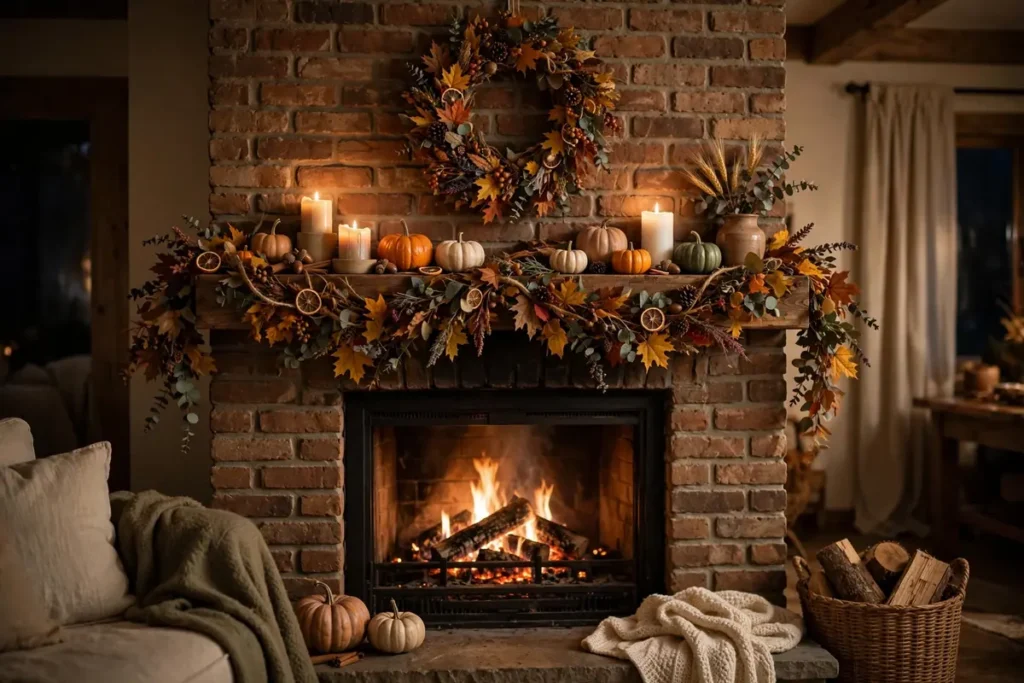
A fireplace mantel dressed for Thanksgiving with autumn garland, pumpkins, candles, and a fall wreath.
Watch: Thanksgiving Mantel Decor
'Decorating the Mantel & Setting the Thanksgiving Table' — festive touches, ribbons, and a fully set table in one cozy video.
At a Glance: Thanksgiving Mantel Decor
The building blocks of a beautiful Thanksgiving mantel.
| Element | Purpose | Tip |
|---|---|---|
| Garland base | The foundation | Drape fall-leaf garland across the full width, letting ends trail |
| Focal sign or mirror | Center anchor | A 'Give Thanks' sign or mirror grounds the arrangement |
| Pumpkins | Seasonal color | Mix sizes and colors — white, orange, and green together |
| Candles | Warmth and glow | Amber glass holders and flameless pillars are safest near garland |
| Natural texture | Depth | Pinecones, wheat stalks, and dried berries fill gaps beautifully |
| Balance rule | Mirror larger items on both ends and keep the center tallest for symmetry | |
Frequently Asked Questions
How do I hang a garland without damaging my mantel?
Use removable adhesive hooks rated for the garland’s weight, a tension-style mantel garland hanger that grips the shelf, or simply lay a heavy garland on top and let gravity and the decor’s weight hold it. Never nail or staple into stone, brick, or finished wood — adhesive hooks remove cleanly with no marks.
Can I decorate the mantel if I plan to use the fireplace?
Yes, with precautions: keep everything at least 12 inches from the firebox, use only non-flammable materials (ceramic, metal, glass, fresh produce), remove dried and faux-flammable items before lighting, and use battery candles on the mantel while the fire burns. When in doubt, enjoy the decor during the day and the fire in the evening — or vice versa.
What do I put above the mantel?
A mirror (doubles light, enlarges the room), seasonal art, or a wreath. The piece should be roughly two-thirds the mantel’s width — too small looks lost, too large overwhelms. A handmade fall wreath is the classic Thanksgiving choice and costs little.
How full should the garland be?
Full enough that you cannot see through it to the wall behind from straight-on. One cheap garland rarely suffices — plan on two strands for a standard 5-foot mantel, layered slightly offset. Fluff every branch outward; garlands arrive compressed and need 10 minutes of fluffing to look real.
Should the mantel match the dining table?
Coordinate, don’t duplicate. Share a palette and one or two materials, but let each space have its own character — the mantel can be taller and more elaborate, the table lower and more functional. Matching exactly looks staged; coordinating looks designed.
How early can I decorate the mantel?
With faux garlands and dried elements, weeks ahead. With fresh garland, 5–7 days before (mist it every couple of days). With fresh pumpkins, 2–3 weeks is fine indoors. Assemble the full design the weekend before Thanksgiving, then just light the candles on the day.
What is the best garland for a Thanksgiving mantel?
For most homes: a mixed fall garland with eucalyptus, maple leaves, and berries — full, colorful, and versatile. Cedar garland suits rustic and farmhouse styles; all-eucalyptus suits modern. Buy two strands for a standard mantel and layer them offset for professional fullness.
How do I decorate a very wide mantel?
Treat it as three zones: two end compositions and a center feature. Repeat one element across all three zones (the same candle holders, the same pumpkin variety) to unify the width. A single long garland running the full length is the essential unifier — without it, wide mantels look like separate displays.
Can I put stockings on a Thanksgiving mantel?
Save stockings for December — but the stocking holders themselves can stay. Use the holders for small fall swags or simply leave them as part of the mantel’s architecture. Swapping the hanging elements is the easiest seasonal transition there is.
How do I transition the mantel from Thanksgiving to Christmas?
Keep the foundation — garland, lanterns, candle holders, neutral vessels — and swap the accents: remove pumpkins and fall leaves, add evergreen sprigs, red berries, and pinecones (which work for both holidays). Swap the “give thanks” sign for a winter one, change orange candles to red or white, and the mantel is Christmas-ready in under 30 minutes.
Conclusion
A styled Thanksgiving mantel is the living room’s way of saying “we’re celebrating” — and it asks so little: a garland, some candles, pumpkins, and an hour of layering. Build in five layers, mind the firebox, echo your dining room’s palette, and photograph the result for next year. For the table that sits beneath the holiday’s main event, see our Thanksgiving table settings guide, and for the door that welcomes everyone in, our Thanksgiving wreath DIY. Happy decorating.