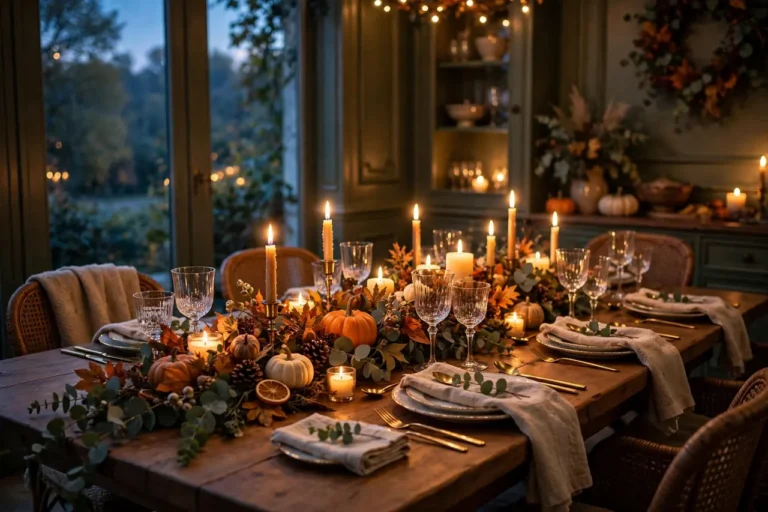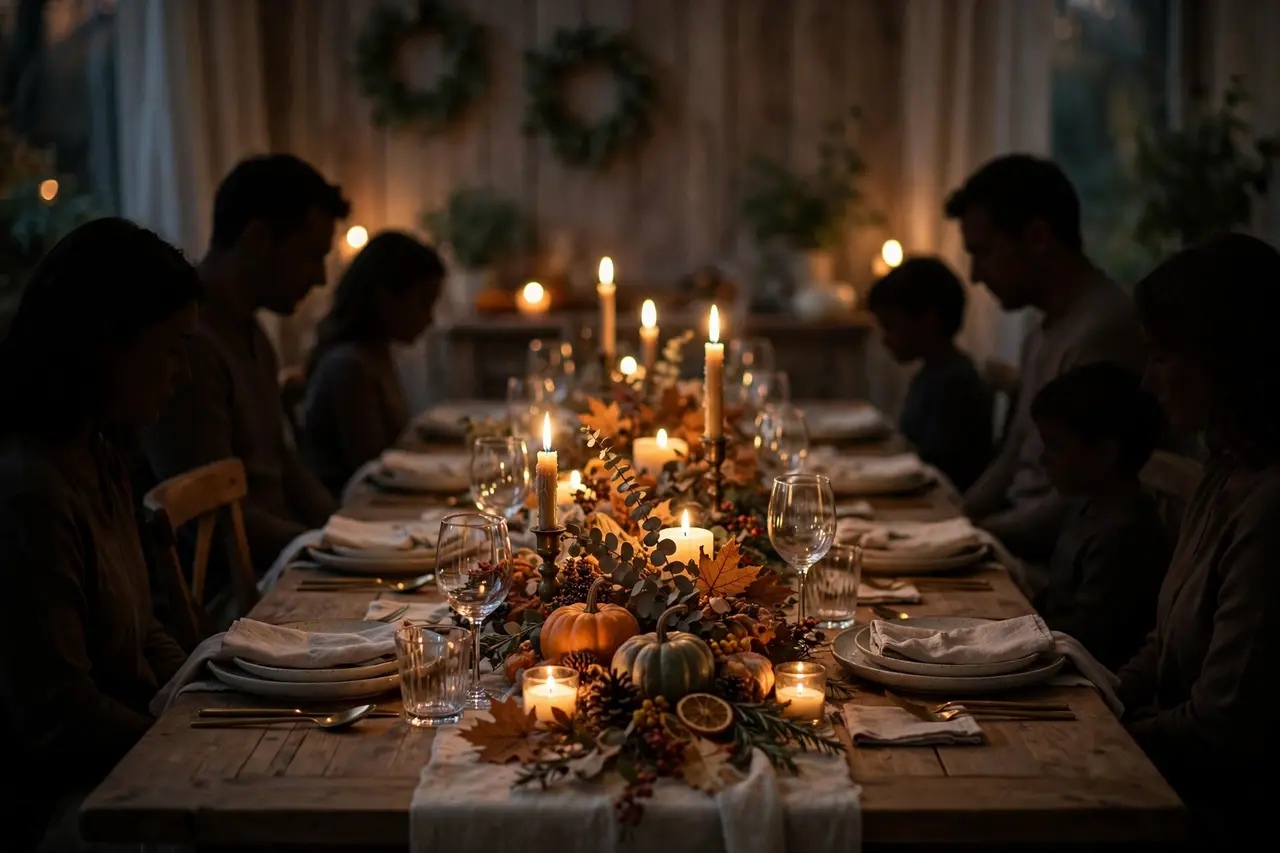
The turkey is resting, the candles are lit, everyone is seated — and all eyes turn to you. “Would you say the prayer?” It is one of the holiday’s great honors and, for many, one of its great anxieties. What do you actually say? How long should it be? What if the table holds three faiths and two skeptics? This collection of Thanksgiving dinner prayer examples exists for exactly that moment: 25 complete, ready-to-read dinner prayers for every kind of table — traditional, modern, short, funny, heartfelt, interfaith, and kid-led — plus a quick chooser guide so you can find the right one in sixty seconds.
Every prayer here is written to be read aloud as-is. Pick one, print it or pull it up on your phone, and read it with confidence. The table will not be grading your delivery — they will be grateful someone spoke. That someone is you.
The 60-Second Chooser: Which Prayer for Your Table?
| If your table is… | Use… | Find it in… |
|---|---|---|
| Traditional Christian family | The Classic Table Grace | Traditional Prayers |
| Mixed faiths or beliefs | The Welcoming Table | Interfaith & Inclusive |
| Short on patience (kids, cold food) | Thirty-Second Graces | Short & Sweet |
| Going through a hard year | Gratitude in the Valley | For Difficult Years |
| Full of laughter | The Joyful Noise | Warm & Lighthearted |
| Missing someone | The Empty Chair | For Difficult Years |
| Letting a child lead | The Little Voices collection | Kid-Led Prayers |
| Formal / multi-generational | The Heritage Blessing | Traditional Prayers |
| Friends, not family | The Chosen Family | Modern Prayers |
| On a video call | Across the Miles | Modern Prayers |
Traditional Dinner Prayers
1. The Classic Table Grace
“Bless us, O Lord, and these Thy gifts which we are about to receive from Thy bounty, through Christ our Lord. Amen.”
The most-said dinner prayer in American history. If your family has always said it, say it — tradition is the point. If the table knows it, invite everyone to say it together; unison prayer is powerful.
2. The Heritage Blessing
“Heavenly Father, on this day set apart for thanksgiving, we gather as generations before us have gathered — around a table of Your provision. We thank You for the harvest of the field and the harvest of our lives: for health, for home, for the bonds of family that time cannot break. Bless this food to our bodies and us to Your service. Bless those who are absent, comfort those who mourn, and keep us ever mindful of the poor. In Jesus’ name we pray. Amen.”
For formal, multi-generational tables that want the full weight of the occasion. Best delivered slowly by the eldest present.
3. The Psalm 100 Prayer
“Shout for joy to the Lord, all the earth. Worship the Lord with gladness; come before him with joyful songs. Know that the Lord is God. It is he who made us, and we are his; we are his people, the sheep of his pasture. Enter his gates with thanksgiving and his courts with praise; give thanks to him and praise his name. For the Lord is good and his love endures forever; his faithfulness continues through all generations.”
Reading Psalm 100 aloud is the prayer — no improvisation needed. It has been the church’s thanksgiving psalm for three thousand years; it will not let you down.
4. The Moravian Table Blessing
“Come, Lord Jesus, our guest to be, and bless these gifts bestowed by Thee. Amen.”
Four lines, one breath, centuries of use. The image of Christ as guest — welcomed, not merely invoked — gives this short prayer unusual warmth.
5. The Harvest Home Prayer
“O Lord of the harvest, who hast brought us through another year, we thank Thee for seedtime and harvest, for sun and rain, for the labor of hands and the fruit of the earth. As Thou hast fed our bodies, feed our souls with gratitude; as Thou hast filled our barns, fill our hearts with generosity. Amen.”
Connects the meal to its agricultural roots — especially meaningful for families with farming heritage or rural tables.
Short & Sweet: Thirty-Second Graces
For tables where the food is getting cold, the kids are vibrating, or brevity is simply the house style. Each is complete; each is under thirty seconds:
6. The Three Thanks
“For the food before us, the family beside us, and the love between us — we give thanks. Amen.”
7. The Cook’s Blessing
“Bless the hands that made this meal, bless the hearts around this table, bless this food to our bodies. Amen.”
8. The Simple Abundance
“We have so much, Lord — more than enough. Thank You. Amen.”
9. The Grateful Minute
“In this minute, before we eat, we notice: we are fed, we are together, we are loved. Thank You, God. Amen.”
10. The Classic Short
“God is great, God is good, let us thank Him for our food. Amen.”
The one most Americans learned first. There is no shame in the classics — there is a reason they survived.
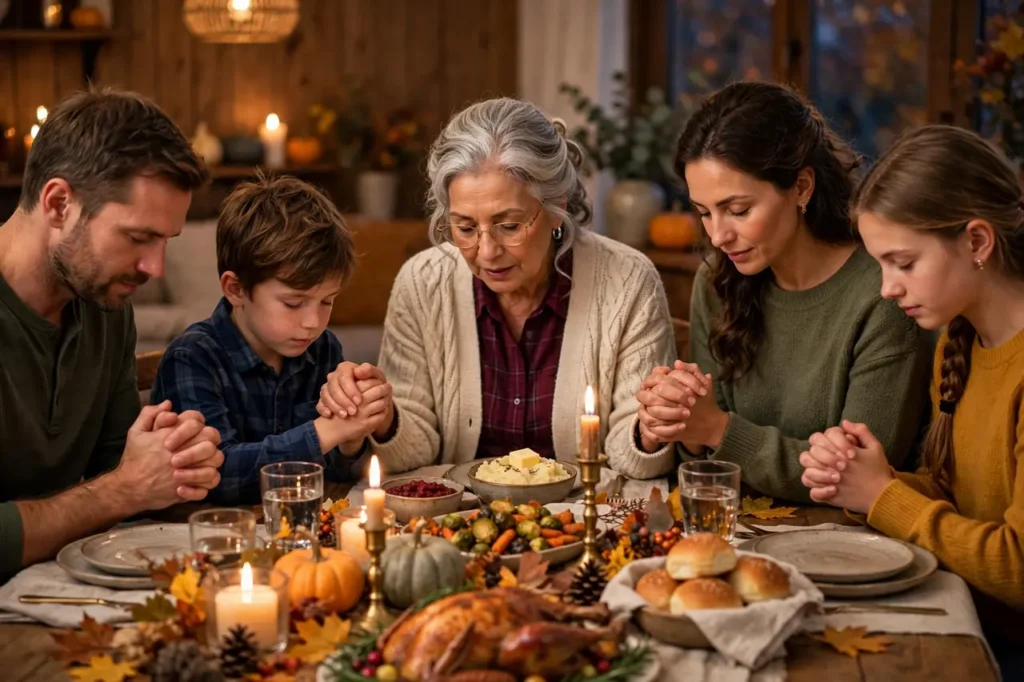
Modern Dinner Prayers
11. The Chosen Family
“We are here because we chose each other — friends who became family, family who became friends. We give thanks for the beautiful accident of this table: for the food we made together, the laughter we are about to share, and the rare gift of people who show up. May we never take each other for granted. Let us eat.”
For Friendsgiving tables and found-family gatherings. Warm, specific, and gloriously un-churchy.
12. The Honest Table
“We are not going to pretend this year was easy — it was not. But we are here, the food is hot, and we have each other, which is more than a lot of people have. So thank You for the good that survived the hard, for the people in these chairs, and for this meal that none of us made alone. Amen.”
For tables that value honesty over polish. Acknowledging the hard year in the prayer gives everyone permission to feel both things.
13. Across the Miles
“Bless every table represented on this call — the ones we can see and the ones we cannot. Though we eat in different kitchens, we give thanks as one family: for the technology that carries our voices, for the love that crosses every distance, and for the day, next year or someday, when these squares become seats around one table. Until then — cheers, and amen.”
For video-call Thanksgivings. Raise glasses on camera at “cheers” — it is the screenshot moment.
14. The Gratitude Inventory
“Before we eat, a quick inventory: we are breathing. We are fed. We are together. The house is warm. The pie exists. Whatever else is true today, these things are true — and they are enough to build a prayer on. Thank You for enough, and then some. Amen.”
Concrete, grounded, and quietly funny (“the pie exists” always gets a laugh). Good for tables that distrust flowery language.
15. The New Beginning
“This table looks different than it used to — new faces, new places, new stories. We give thanks for the courage it took to build this: for second chances, for blended families, for the brave act of starting over. Bless this new tradition in its first year, and all the years to come. Amen.”
For first Thanksgivings in new homes, new marriages, new configurations. Names the newness as a blessing, not a loss.
Warm & Lighthearted Prayers
16. The Joyful Noise
“Thank You for turkey and trimmings, for gravy without lumps (mostly), for the cook who pretended it was easy, for the kids’ table chaos, for the dog waiting under it, and for all of us — loud, loving, and slightly overfed. Bless this beautiful mess of a family. Amen.”
For tables where laughter is the love language. The parenthetical “(mostly)” is doing heavy lifting — keep it.
17. The Pie Priority
“Lord, we thank You for this feast — for the turkey, the sides, the rolls — and we thank You especially for pie, which is the real reason we are all here. Bless the bakers, bless the whipped cream, and bless us with the wisdom to save room. Amen.”
Best delivered with total sincerity. The table will laugh; the pie makers will feel seen.
18. The Football Blessing
“Thank You for this food, this family, and the four hours of football that await us. Bless our team (whichever one needs it most), bless the nap that follows, and bless this day of rest, food, and togetherness. Amen.”
For the sports-loving table. Acknowledging the afternoon’s real schedule in the prayer is honesty, and honesty is holy.
Prayers for Difficult Years
19. The Empty Chair
“Lord, we feel the empty chair today. We thank You for the life that filled it — for the laughter, the love, the Thanksgivings we shared — and we ask Your comfort for every heart here that aches. They are with You; we are with each other; love holds us all. Bless this meal, bless this family, seen and unseen. Amen.”
Say the person’s name if the family is ready — “we miss you, [name]” — or keep it general if the grief is fresh. Either way, naming the absence is kinder than avoiding it.
20. Gratitude in the Valley
“We come to this table from a hard year, Lord — and we come anyway. That is the prayer: we came. Thank You for what endured: for each other, for this food, for the small mercies we almost missed. We do not thank You for the hard things, but we thank You that we did not face them alone. Amen.”
The distinction in the middle — not for the hard things, but through them with company — is what makes this prayer work for suffering tables.
21. For the Worried
“Some of us came to this table carrying heavy things — diagnoses, debts, decisions, fears we have not said out loud. We lay them down for this hour, Lord, and pick up only gratitude: for this meal, for these people, for this pause. Give us strength for what comes next, and peace for what is now. Amen.”
For tables where people are quietly struggling. It names the worry without demanding disclosure — a gift to everyone carrying something.
Kid-Led Prayers
22. The ABC Thanks
“A is for apple pie, B is for the bird, C is for the cranberries — the best you ever heard! D is for dessert (we saved you some!), E is for everyone — now let us eat! Amen!”
Have the child point to each dish as they go. The table’s job: cheer after every letter.
23. The Tiny Theologian
“Dear God, thank You for making turkeys delicious and pie even more delicious. Thank You for my family, even when they are silly. Please bless the food so it makes us strong and happy. Amen.”
Let the child add one personal line (“thank You for my new bike”) — the improvised line is always the best part.
24. The Echo Prayer
Leader: “Thank You, God, for…” — Table echoes: “Thank You, God, for…” — then the child names things, one at a time, with the table echoing each: “…turkey!” “…Grandma!” “…pie!” End together: “Amen!”
The echo format means the child is never alone — the whole table carries the prayer with them. Foolproof and adorable.

Interfaith & Inclusive Prayers
25. The Welcoming Table
“We gather from different faiths, different families, different stories — and one shared table. In every tradition represented here, gratitude is sacred, so we offer ours together: for this food, grown and gathered and cooked with love; for the hands that prepared it; for the earth that provided it; for each person here — present, remembered, or far away. May this meal nourish our bodies and this gathering nourish our bonds. In gratitude, we eat.”
The closing — “in gratitude, we eat” instead of “amen” — welcomes those for whom “amen” does not fit. Read slowly; let the inclusivity land.
Bonus: The Silent Thanks
“Let us take thirty seconds of silence — each in our own way, in our own words or wordlessness — to give thanks.” (Thirty seconds of quiet.) “Amen.”
Not numbered, because it is not a prayer so much as a container for everyone’s prayer. At the most diverse tables, this is often the most powerful option: thirty seconds of shared silence, and then the meal. For more on navigating mixed tables, see Thanksgiving blessings and prayers.
How to Deliver the Prayer Like You Mean It
Having the words is half the battle; delivering them is the other half. Five rules from people who do this every year:
- Stand or sit — but be still. Either is fine; fidgeting is the enemy. Plant yourself, take one breath, begin.
- Read it. Seriously. Print it large or pull it up on your phone. Reading a beautiful prayer well beats improvising a mediocre one. No one has ever thought less of a reader.
- Slow down by 20%. Nerves accelerate speech; consciously pace yourself. Pause after each sentence. Let the words land.
- Make eye contact once. At the start, look around the table and smile. Then drop your eyes or close them. That one glance says: I am glad you are here.
- End with conviction. “Amen” should sound like a period, not a question. Then smile, sit, and let the meal begin — you just did the hardest and most important sixty seconds of the day.
If you get emotional
It happens — especially with the Empty Chair or Gratitude in the Valley. Pause, breathe, continue. No one minds; in fact, the table will love you more for it. Tears in a prayer are not a failure of composure; they are proof of sincerity. If you cannot continue, simply say “Amen” — the table will understand, and someone will squeeze your hand.
If a child is “helping”
The toddler narrating your prayer (“and pie! and pie!”) is not a disruption; it is the best part. Incorporate it — “yes, and pie, thank You for pie” — and the table will remember that prayer forever. Rigidity ruins prayers; flexibility sanctifies them.
Pairing Prayers With Toasts
The prayer and the toast are siblings — the sacred and the celebratory. A natural flow: prayer first (the solemn moment), then the meal, then toasts with dessert (the joyful moment). If you are leading both, keep them distinct in tone — the prayer reverent, the toast warm. For toast wording that matches any of these prayers, Thanksgiving toast ideas has 56 scripts, and short Thanksgiving quotes work beautifully as toast openers. The classic dedicated collection remains Thanksgiving dinner prayer: 40 graces for the table.
Dinner Prayers for Special Tables
Not every Thanksgiving dinner happens around a dining table. These prayers are for the tables that do not look like the picture — and need the words just as much:
For the deployed or far-from-home table
“Lord, we eat this meal far from home, in the company of people who have become family by circumstance and choice. Thank You for this food in this place, for the hands that prepared it under hard conditions, and for the loved ones waiting for us at tables we cannot see. Keep them safe; keep us safe; bring us home. Until then, we are grateful — for each other, right here, right now. Amen.”
For military tables, missionary tables, and work-crew tables far from home. The line “we are grateful — for each other, right here, right now” anchors the prayer in presence rather than absence.
For the hospital or bedside table
“Great Physician, we give thanks in this unlikely place — for the meal before us, for the caregivers around us, for the gift of another day together. We do not take this gathering for granted; we know its cost. Bless the hands that heal, comfort the hearts that worry, and let this small feast be a foretaste of wholeness. Amen.”
For families spending the holiday in a hospital room or recovery bed. A tray table is still a table; grace still applies.
For the restaurant table
“Thank You for this meal we did not have to cook, this table we did not have to set, and these dishes we do not have to wash. Bless the cooks and servers who work this holiday so we can rest in it. We are grateful for the gift of ease — and for each other. Amen.”
For the no-cook Thanksgiving. Say it before the appetizers arrive; tip generously after — the prayer and the tip are the same gratitude, expressed twice.
For the table of two
“Just us, Lord — and that is enough. Thank You for this quiet feast, for the person across from me, for a love that does not need a crowd to be complete. Bless this food, bless this day, bless us. Amen.”
Intimate tables deserve intimate prayers. Short, direct, and true — like the best conversations.
For the Friendsgiving table (second helpings of gratitude)
“We chose this table, and we would choose it again. Thank You for friends who cook like family, for the beautiful chaos of too many dishes and too much laughter, and for the rare, ridiculous luck of finding your people. Bless this feast and every one after it. Amen.”
Because the friends’ table gets a prayer too — and “we would choose it again” is the whole theology of Friendsgiving in six words.
Watch: A Thanksgiving Prayer to Read Along With
Hear a beautiful Thanksgiving dinner-table prayer read aloud — perfect for finding the tone and pace for your own:
Thanksgiving Dinner Prayer Examples: FAQs
What is a good example of a Thanksgiving dinner prayer?
“Bless us, O Lord, and these Thy gifts which we are about to receive from Thy bounty, through Christ our Lord. Amen.” — the classic. For a fuller example: “Heavenly Father, we thank You for this food, for the hands that prepared it, and for everyone gathered here. Bless those who are absent and comfort those who mourn. Amen.”
How long should a Thanksgiving dinner prayer be?
Thirty to sixty seconds is ideal; ninety seconds is the ceiling. The food is getting cold and attention spans are finite. One address, two or three specific thanks, “Amen” — that is the whole architecture.
What do you say when asked to pray at Thanksgiving?
Say yes, pick a prayer from a collection like this one, and read it. Keep it under a minute, name specific things (the food, the people, the day), speak slowly, and end with a clear “Amen.” The table wants you to succeed.
What is a non-religious dinner prayer example?
“Whatever we each believe, we agree on this: we are lucky to be here, together, with more than enough. We are grateful for the farmers and the cooks, for the good luck and hard work that filled this table, and for being family — by blood or by choice. Let us eat.”
How do you pray at Thanksgiving when someone died this year?
Name them gently: “Lord, we feel the empty chair today. We thank You for the life that filled it and ask Your comfort for every heart that aches.” Acknowledging the absence directly comforts more than avoiding it.
Can a child say the Thanksgiving dinner prayer?
Absolutely — it is often the highlight of the meal. Give them a short rhyming prayer to read, or use the echo format where the table repeats each line after them. If they freeze, the whole table saying it with them is the sweetest backup plan.
What is the difference between a prayer and a toast?
The prayer comes before the meal and is reverent — addressed to God, focused on gratitude and blessing. The toast comes with or after the meal and is celebratory — addressed to the people, focused on love and humor. Do the prayer first, the toast at dessert.
Should you hold hands during the dinner prayer?
It is a beautiful tradition that physically expresses unity — but read the room. At familiar tables, yes; at mixed or formal tables, bowed heads suffice. The prayer leader’s gentle squeeze at “Amen” is the traditional release signal.
Is it okay to read a prayer from your phone?
Completely. Reading a good prayer well always beats improvising nervously. Print it large if you can (easier to read than a phone), but no one at the table minds — they are just glad someone is doing it.
What if I get emotional during the prayer?
Pause, breathe, and continue — or simply say “Amen” and sit down. Tears during a prayer are proof of sincerity, not a failure. The table will love you more for the emotion, not less. Someone will squeeze your hand; let them.
Sixty Seconds That Make the Meal
Long after the turkey is forgotten and the pie plates are washed, people remember the prayer — who said it, what they said, how the whole noisy table went quiet for one minute. It is the smallest part of the day and the largest: sixty seconds that say what the entire holiday means. So when the eyes turn to you, do not panic. Pick one of these Thanksgiving dinner prayer examples, read it slowly, mean every word, and end with a clear amen. Then sit down, serve yourself first (you earned it), and enjoy the feast with a full and thankful heart. You just gave the table its soul.