Packing for a trip alone is a different discipline than packing with a partner, and a purpose-built solo travel packing list is the difference between gliding through your trip and wrestling your luggage at every train station. When you travel solo, there is no one to share the load: no splitting toiletries, no borrowing a charger, no second pair of hands for the heavy bag. Everything you bring, you carry, guard, and manage entirely by yourself. That reality changes what “essential” means.
This guide is the complete solo travel packing list I have refined over years of solo trips across four continents: 60+ items organized by category, with solo-specific reasoning for each choice. You will learn the capsule wardrobe system that fits two weeks of outfits in a carry-on, the safety gear that matters more when you are alone, the documents strategy that protects you if your bag disappears, and the common overpacking traps that weigh solo travelers down. Use it as a checklist before every trip, and adjust the quantities to your destination and travel style.
The Solo Packing Philosophy: Less, Lighter, Smarter
Before a single item goes in the bag, internalize the three rules that govern everything on this solo travel packing list. Rule one: if you cannot comfortably carry everything you own up three flights of stairs, you have packed too much. Solo travelers navigate stairs, cobblestones, crowded metros, and long walks to budget accommodation far more than resort travelers, and every extra kilo compounds across a trip. Rule two: you can buy almost anything you forget in almost any destination. The world has pharmacies, clothing stores, and electronics shops. Pack for the likely, not the paranoid. Rule three: every item should earn its place by serving your safety, comfort, or independence as a solo traveler. If it does none of those, it stays home.
The goal is a bag you can manage alone in the worst moment of your trip: arriving exhausted, in the rain, with no taxi in sight. Pack for that person, not for the relaxed version of you browsing at home.
Documents, Money, and the Backup System
Documents are the one category where redundancy is mandatory, because losing your passport alone in a foreign country is a crisis with no travel buddy to bail you out.
- Passport (valid 6+ months beyond your travel dates) plus any required visas. Check entry requirements months ahead; some countries require blank pages or proof of onward travel.
- Government photo ID as a secondary identification, kept separate from your passport.
- Travel insurance policy: printed summary plus the emergency assistance number saved in your phone. Solo travelers should never skip insurance; there is no companion to handle logistics if you are hospitalized. Medical evacuation coverage is worth the premium.
- Credit cards (two, from different networks): one Visa, one Mastercard, ideally with no foreign transaction fees. Keep them in separate places so losing your wallet does not strand you.
- Debit card for ATM withdrawals, from a bank that reimburses foreign ATM fees.
- Emergency cash: $100-200 USD in small bills, hidden separately from your wallet. US dollars are accepted or easily exchanged almost everywhere.
- Digital backups of everything: photograph or scan your passport, visas, insurance, prescriptions, and booking confirmations. Store copies in cloud storage and email them to yourself and a trusted contact.
- Physical photocopies of your passport data page, kept in a different bag from the original. Old school, but invaluable if your phone dies too.
- Emergency contact card: your name, blood type, allergies, insurance details, and two emergency contacts, written on paper in your daypack. First responders look for this.
- Booking confirmations: hotel addresses and transport tickets saved offline. Screenshot them; do not rely on apps loading without data.
The golden rule: never keep all documents, cards, and cash in one place. Split them across your person, your daypack, and your main bag. A money belt or neck pouch for your passport and backup card, worn under clothing in high-risk areas, is cheap insurance that experienced solo travelers swear by.
Clothing: The Capsule Wardrobe System
Clothing is where solo travelers overpack most, usually from anxiety about being underdressed with no one to reassure them. The capsule wardrobe solves this: a small set of versatile, mix-and-match pieces in a neutral palette that creates many outfits from few items. Choose fabrics that are lightweight, quick-drying, wrinkle-resistant, and odor-resistant. Merino wool and synthetic blends outperform cotton dramatically for travel; they wash in a sink, dry overnight, and resist smelling after long travel days.
The 5-4-3-2-1 formula for a 1-2 week trip
- 5 tops: mix of short-sleeve, long-sleeve, and one slightly dressier option. Stick to navy, black, white, and gray so everything matches.
- 4 bottoms: two pairs of pants or jeans, one pair of shorts or a skirt, one versatile option for your activities (hiking pants, swim shorts).
- 3 pairs of shoes: broken-in walking shoes (non-negotiable), lightweight sandals or flip-flops (doubles as shower shoes in hostels), and one dressier or activity-specific pair.
- 2 layers: a light fleece or sweater plus a packable rain shell or puffer. Layering beats bulky coats for variable weather.
- 1 hat: for sun protection or warmth, depending on destination.
Undergarments and sleepwear
- 5-7 pairs of underwear and socks: merino or synthetic for odor resistance. ExOfficio-style quick-dry underwear can be washed nightly, letting you pack just 3-4 pairs.
- 1-2 sets of sleepwear: lightweight and modest enough for hostel dorms. A t-shirt and shorts covers most situations.
- 1 swimsuit: even if you are not planning beach time, hotel pools and spontaneous hot springs happen.
Destination adjustments
For conservative regions, add lightweight long pants, tops with sleeves, and a large scarf that doubles as a head covering for religious sites. For cold climates, add thermal base layers, a warm mid-layer, insulated waterproof boots, gloves, and a beanie; the layering principle matters even more when you are generating all your own body heat on long solo walks. For tropical destinations, prioritize sun protection: a wide-brim hat, UV-protective clothing, and breathable fabrics.
The laundry strategy
Pack for seven days maximum, regardless of trip length, and plan to do laundry weekly. Hostels often have machines or sink-washing areas; pack a universal sink stopper and a few packets of travel detergent, and your capsule wardrobe becomes infinite. This single mindset shift, from “pack for the whole trip” to “pack for a week and wash,” is what separates 15kg bags from 8kg ones.
Toiletries and Health Kit
When you are alone, a minor health issue can derail a day, so the health kit earns more space on a solo travel packing list than on a shared one. Go travel-size for everything, and decant into small reusable bottles rather than carrying full-size products.
- Toothbrush, toothpaste, floss: the non-negotiable trio.
- Deodorant, moisturizer, lip balm with SPF: travel wreaks havoc on skin; these three prevent most of it.
- Shampoo, conditioner, body wash: solid bars save space, never leak, and last for weeks. A game-changer for carry-on-only travel.
- Razor and small shaving kit if applicable.
- Contact lens supplies and spare glasses: losing your only pair of glasses alone abroad is a special kind of misery. Pack backups.
- Prescription medications in original labeled containers, plus copies of prescriptions. Pack more than you need; refills abroad are complicated.
- Mini first-aid kit: adhesive bandages, antiseptic wipes, blister patches (moleskin), pain relievers, antihistamines, anti-diarrhea tablets, motion sickness pills, and any personal essentials. Blisters from walking 20,000 steps a day are the most common solo travel injury; treat them early.
- Sunscreen and insect repellent: destination-dependent but critical where relevant. Dengue and sunburn do not care that you are traveling alone.
- Hand sanitizer and wet wipes: for street food, public transport, and questionable restrooms.
- Menstrual products: pack enough for the trip plus backup; preferred brands may be unavailable abroad.
- Melatonin or sleep aids: jet lag hits harder when you must navigate alone the next morning. A few nights of assisted sleep during adjustment is worth it.
- Reusable water bottle with filter: saves money, reduces plastic, and protects you where tap water is unsafe.
Tech and Electronics
Your phone is your map, translator, camera, bank, and emergency beacon. Protect its ability to function, and pack light on everything else.
- Smartphone and charger: your lifeline. Consider a cheap backup phone for high-risk destinations.
- High-capacity power bank (10,000-20,000mAh): the single most important tech item after the phone itself. Dead phone equals no maps, no translation, no emergency calls.
- Universal travel adapter: one quality adapter with multiple USB ports beats a tangle of single-country plugs.
- Noise-canceling earbuds or headphones: for flights, noisy dorms, and buses. Also a social signal: headphones in means “recharging,” headphones out means “open to chat.”
- E-reader or tablet: books without weight, movies for long journeys, and a larger screen for planning. Far lighter than a laptop for most travelers.
- Laptop: only if you are working remotely. Otherwise, leave it; it is heavy, valuable, and a theft magnet.
- Camera and accessories: only if photography is a priority. Modern phones handle most travel photography; a compact tripod with Bluetooth remote solves the solo selfie problem elegantly.
- Cable organizer and spare cables: cables fail at the worst moments. Pack one spare charging cable.
- Portable Wi-Fi hotspot or eSIM: arrange connectivity before departure so you land connected.
- Small flashlight or headlamp: for dorm beds, power outages, and night walks. Your phone flashlight drains the battery you are trying to protect.
Safety Gear Solo Travelers Should Not Skip
These items weigh almost nothing and address risks that are specifically worse when you are alone.
- Portable door lock or doorstop alarm: adds a layer of security to hotel and hostel doors with questionable locks. Weighs grams, costs little, sleeps better.
- Personal safety alarm: a keychain device that emits a piercing shriek when the pin is pulled. More effective than shouting in many situations.
- Small padlock or cable lock: for hostel lockers and securing your bag to fixed objects on overnight buses and trains.
- Whistle: weighs nothing, carries far. Useful for emergencies on hikes as well as personal safety.
- Reflective gear or clip-on light: if you walk or cycle at night, being visible is being safe.
- Money belt or hidden pouch: for passport, backup card, and emergency cash in high-risk areas.
None of this is about paranoia; it is about stacking small advantages so you can relax and enjoy the trip. Confidence comes from preparation, and these items are the physical form of that preparation. Pair them with knowledge from our solo travel safety tips guide.
Bags and Organization
- Main bag: 40-50L backpack or carry-on suitcase. Backpacks win for cobblestones, stairs, and rough terrain; rolling suitcases win for airports and smooth cities. Choose based on your itinerary, not your habits.
- Daypack (15-25L): for daily exploring. Must be comfortable for all-day wear and ideally have a hidden pocket for valuables. This is your constant companion; choose well.
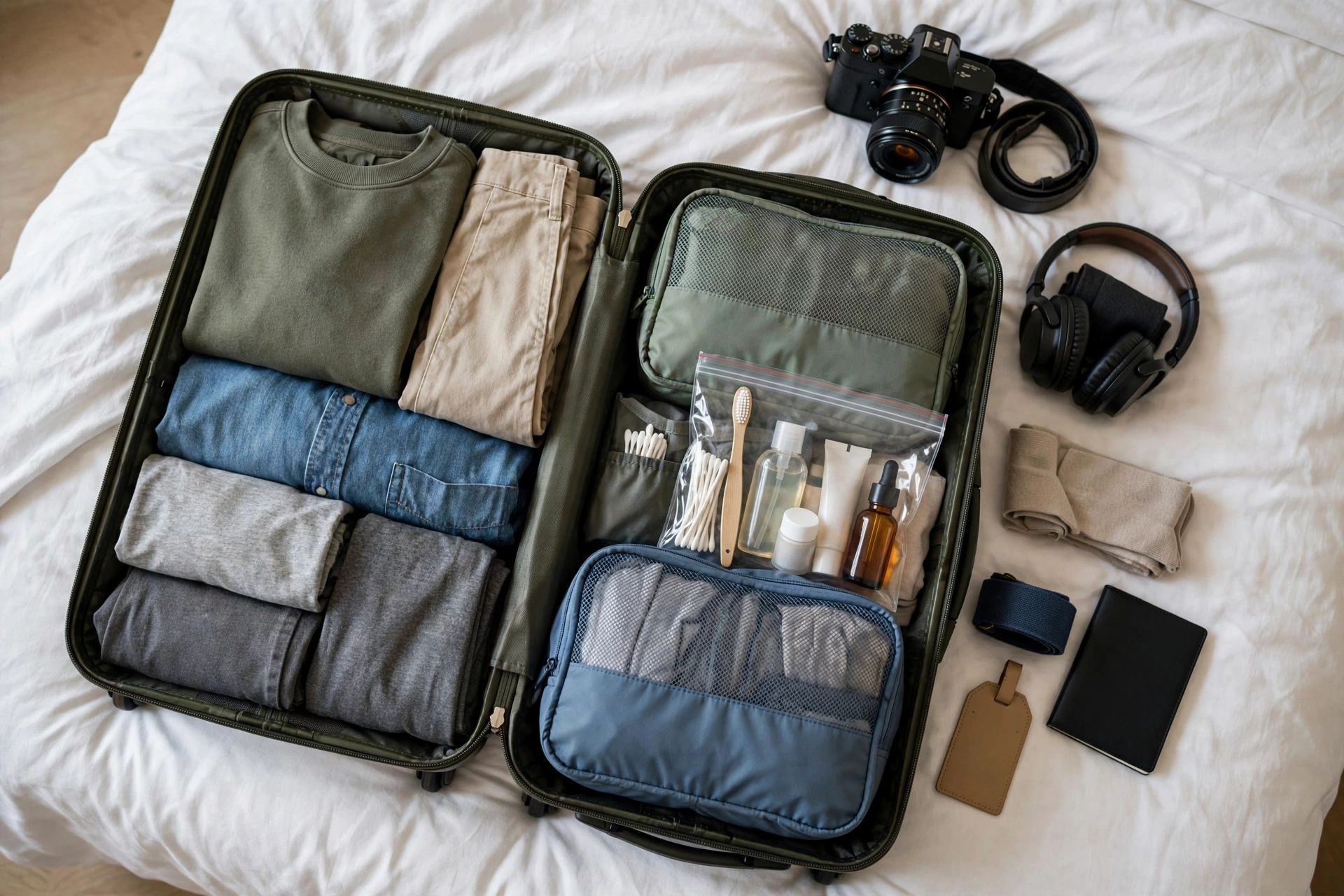
- Packing cubes: the organization system that makes living out of a bag civilized. One cube per clothing category; compression cubes save real space.
- Laundry bag: separates dirty from clean and doubles as a beach or grocery bag.
- Dry bag or ziplock bags: protect electronics from rain, boat splashes, and leaky toiletries. A few large ziplocks weigh nothing and solve many problems.
- Hanging toiletry bag: keeps toiletries organized and accessible in bathrooms with zero counter space, which describes most budget accommodation.
- Small crossbody bag or money pouch: for daily essentials, worn in front in crowded areas. Harder to snatch than a backpack pocket.
Comfort Items Worth Their Weight
A few small luxuries make solo travel dramatically more pleasant, especially on long transit days when there is no companion to pass the time with.
- Travel pillow (compressible): memory foam compressible pillows pack small and transform overnight buses and red-eyes.
- Eye mask and earplugs: dorm rooms, thin hostel walls, and early-morning street noise. Sleep quality determines trip quality.
- Microfiber travel towel: quick-drying, compact, and essential since budget accommodation often charges for towel rental or provides threadbare ones.
- Sarong or large scarf: beach cover-up, blanket, pillow, curtain, picnic mat, temple cover. The most versatile item you can pack.
- Journal or notebook: solo travel generates thoughts worth capturing. Some travelers prefer a notes app; either way, record the trip.
- A few photos from home: small, light, and surprisingly comforting on lonely evenings. Also a great conversation starter with new friends.
- Snacks for transit days: protein bars or nuts for the inevitable delayed bus or missed meal. Hunger plus solo stress is a bad combination.
Carry-On vs. Checked: The Solo Traveler’s Decision
| Factor | Carry-On Only | Checked Bag |
|---|---|---|
| Mobility | Unbeatable: stairs, metros, cobblestones all manageable alone | Heavy and awkward without help |
| Speed | Skip baggage claim; catch earlier connections | Waiting at the carousel after every flight |
| Lost luggage risk | Zero: your bag is always with you | Real risk, and devastating when traveling alone |
| Liquids limit | 3-1-1 rule restricts toiletries (solids help) | No restrictions |
| Trip length | Works indefinitely with weekly laundry | Easier for 3+ weeks without laundry access |
| Budget airlines | Avoids checked-bag fees ($30-60 per flight) | Fees add up fast on multi-flight itineraries |
| Best for | Most solo trips: city hopping, hostels, flexible plans | Special gear trips: skiing, diving, formal events |
For the vast majority of solo trips, carry-on only is the right call. The mobility and peace of mind outweigh the packing constraints, and the constraints themselves force the discipline that makes solo travel easier. If you must check a bag, keep a complete survival kit in your personal item: documents, medications, valuables, one change of clothes, and basic toiletries.
Common Solo Packing Mistakes to Avoid
Packing for fears instead of the forecast. “Just in case” items multiply: the extra jacket for weather that will not happen, the formal outfit for events you will not attend. Check the actual forecast and pack for the 90 percent case.
Bringing valuables you cannot afford to lose. Expensive jewelry, irreplaceable items, and excessive electronics turn every hostel dorm into a source of anxiety. If losing it would ruin your trip, leave it home.
No laundry plan. Packing three weeks of clothes instead of one week plus detergent is the most common weight mistake. Embrace the sink wash.
Forgetting the solo-specific safety gear. The door lock, safety alarm, and document backups are easy to skip and painful to need. They weigh almost nothing; there is no excuse.
Overpacking entertainment. Three books, a tablet, and a laptop for a week-long trip is too much. One e-reader covers it. You will spend more time exploring and socializing than you expect.
Ignoring the “carry it alone” test. Before you zip up, lift the packed bag, carry it up and down your stairs, and walk around the block. If you struggle at home, you will suffer abroad. Remove items until it feels easy.
The Printable Solo Travel Packing Checklist
Use this condensed version of the full solo travel packing list as your final check before zipping the bag:
- Documents: passport, ID, visas, insurance, 2 credit cards, debit card, emergency cash, digital + paper backups, emergency contact card, booking confirmations
- Clothing: 5 tops, 4 bottoms, 3 shoes, 2 layers, 1 hat, undergarments, sleepwear, swimsuit, destination-specific additions
- Toiletries and health: basics, solid toiletries, contacts/glasses backup, prescriptions, first-aid kit, sunscreen, sanitizer, water filter bottle
- Tech: phone, power bank, universal adapter, earbuds, e-reader, cables, flashlight, connectivity plan
- Safety: door lock, safety alarm, padlock, whistle, money belt
- Bags: main bag, daypack, packing cubes, laundry bag, dry bags, toiletry bag, crossbody pouch
- Comfort: travel pillow, eye mask, earplugs, microfiber towel, sarong, journal, snacks
Frequently Asked Questions
How much should I pack for a solo trip?
Pack for seven days regardless of trip length, using the capsule wardrobe system and planning weekly laundry. Most solo travelers do best with a 40-50 liter bag weighing under 10kg (22 lbs). The complete solo travel packing list above fits comfortably in a carry-on for most destinations.
What do solo travelers forget most often?
The most commonly forgotten items are power adapters, prescription backups, sunscreen, a laundry plan, and offline copies of documents. Safety gear like portable door locks is rarely forgotten twice: travelers who skip it once tend to buy it at the first opportunity abroad.
Should I bring a laptop when traveling solo?
Only if you are working remotely. For pure leisure travel, a phone plus an e-reader covers navigation, entertainment, and planning at a fraction of the weight and theft risk. Laptops add kilos and anxiety in hostel dorms; leave yours home unless it earns its place.
How do I keep my belongings safe in hostels?
Use the lockers provided with your own padlock, keep valuables in a small bag you carry always, split cash and cards across locations, and use a portable door lock for extra peace of mind. Our solo travel safety tips guide covers accommodation security in detail.
What is the best bag for solo travel?
A 40-50 liter travel backpack for rough terrain and multi-stop itineraries, or a carry-on rolling suitcase for smooth city travel. Either way, pair it with a 15-25 liter daypack for daily exploring. The “carry it up three flights of stairs alone” test is the ultimate judge.
How do I pack light but still look good in photos?
The capsule wardrobe in a neutral palette with one or two statement accessories, a colorful scarf, interesting jewelry, a great hat, photographs better than a stuffed suitcase of options. Accessories weigh grams and transform outfits. Also: confidence and good light matter more than clothes in every travel photo.
What should I pack differently as a solo female traveler?
The core list is the same, with extra emphasis on safety gear (door lock, safety alarm), modest clothing options for conservative regions, and a well-planned document backup system. Our best solo travel destinations for women guide pairs destination advice with these packing principles.
The Bottom Line
A great solo travel packing list is not about having everything; it is about having the right things and the confidence that comes from preparation. Pack light enough to move freely, back up everything that matters, carry the small safety tools that let you relax, and leave room, in your bag and your itinerary, for the spontaneous. The best-packed solo travelers are not the ones with the most gear; they are the ones who can grab their bag and say yes to whatever the road offers. Now that you know what to bring, make sure you know where you are going: our best solo travel destinations in the USA is a great place to start planning, and solo travel for beginners covers everything else about your first trip alone.