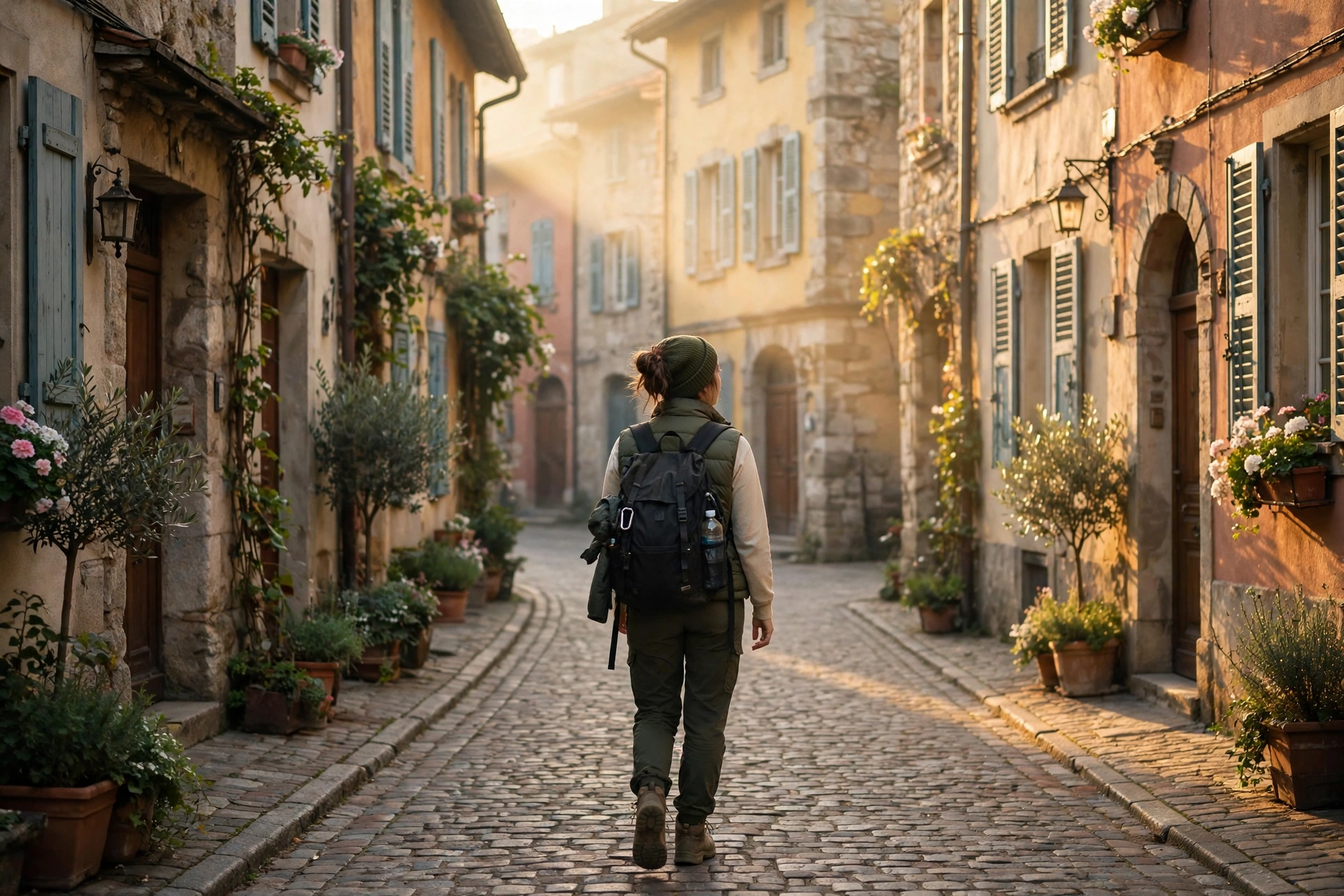
Europe might be the finest continent on earth for traveling alone, which makes choosing the best solo travel destinations in Europe both a delight and a dilemma. Nowhere else combines this density of extraordinary cities with infrastructure so perfectly tuned for independent travelers: high-speed trains that erase borders, hostel networks in every major city, free walking tours on every corner, and a cafe culture that treats a table for one as completely normal. Whether it is your first solo trip or your fiftieth, Europe meets you where you are.
This guide ranks twelve destinations that excel specifically for solo travelers, judged on the criteria that matter when you are on your own: safety, ease of navigation, social infrastructure for meeting people, affordability, and the sheer joy of exploring at your own pace. Each destination includes practical solo-specific advice: where to stay to meet people, how to get around, what to eat alone without awkwardness, and the experiences that are actually better solo. Prices and logistics are current for 2026.
How We Chose These Destinations
A great solo destination is not just a great destination. Cities that are wonderful for couples can feel isolating alone if they lack social infrastructure, while unassuming cities with great hostels and walking tours can become trip highlights. We scored each destination on five factors: safety (including how safe it feels walking alone at night), navigability (can you get around without a car or fluent local language?), social scene (hostels, tours, meetups, and general openness to strangers), value (because solo travelers pay single supplements everywhere), and solo-specific magic (experiences that are genuinely better alone, from thermal baths to long museum afternoons). The twelve below scored highest across the board.
1. Lisbon, Portugal
Lisbon might be the perfect first solo trip in Europe. It is affordable by Western European standards, remarkably safe, endlessly walkable, and blessed with 300 days of sunshine a year. The city’s famous hills, tiled facades, and miradouro viewpoints reward aimless wandering, which is the solo traveler’s natural state. English is widely spoken, the metro and trams are simple to navigate, and the food scene, from tasca counters to Time Out Market, is built for eating alone without a second thought.
The social infrastructure is outstanding: Lisbon’s hostels consistently rank among Europe’s best for meeting people, with rooftop bars, surf shuttles, and nightly events. Day trips to Sintra’s palaces and Cascais’s beaches are easy solo excursions by train. Budget travelers can eat well for 10-15 euros, and a bed in a top-rated hostel runs 20-35 euros. Stay in Alfama for atmosphere or Bairro Alto for nightlife. Do not miss: sunset at Miradouro da Senhora do Monte with a supermarket vinho verde, the trams at golden hour, and a fado performance in a tiny Alfama tavern, an experience that is somehow more powerful alone.
2. Amsterdam, Netherlands
Amsterdam is the rare city that is simultaneously a great first solo trip and a great fiftieth. Nearly everyone speaks excellent English, the city is compact and flat, and the infrastructure for independent travelers is flawless. The museum density is staggering: the Rijksmuseum and Van Gogh Museum alone can fill two blissful solo days, and wandering the canal belt with no agenda is a pleasure that needs no companion.
Dutch directness extends to social life: locals and expats are genuinely open to conversation, and the city’s huge international community means meetups, language exchanges, and social events run constantly. Stay in a social hostel near Leidseplein or in the Jordaan for a quieter vibe. Rent a bike, it is the local way and the fastest route to feeling like you belong. Budget note: Amsterdam is not cheap, with hostel beds at 35-55 euros, but free walking tours, park picnics, and market lunches keep daily costs manageable. The city’s safety record is excellent, though standard big-city awareness applies around Centraal Station late at night.
3. Prague, Czech Republic
Prague delivers maximum fairytale per euro, making it one of the best solo travel destinations in Europe for budget-conscious travelers. The Old Town, Charles Bridge at dawn, and Prague Castle are genuinely breathtaking, and prices for food, beer, and accommodation run roughly half of Paris or London. A filling Czech meal with a world-class lager costs less than a sad sandwich in many Western capitals.
The solo infrastructure is mature: excellent hostels with buzzing common areas, highly-rated free walking tours (including alternative and food-focused options), and a compact center you can navigate on foot within days. Czech beer culture is inherently social; nursing a pint in a centuries-old beer hall is a legitimate cultural activity, and communal tables make conversation natural. Stay in Old Town for first-timers or Zizkov for local flavor and lower prices. Safety is very good, with the usual tourist-area pickpocketing the main concern. Visit in shoulder season (April-May, September-October) to dodge the summer crowds that can make the center feel like a theme park.
4. Barcelona, Spain
Barcelona runs on social energy, which makes it ideal for solo travelers who want connection. The beach, the late dinners, the vermouth bars, the spontaneous street life of Gracia and El Born: this is a city designed for lingering, and lingering alone here feels natural rather than lonely. Gaudi’s architecture gives you days of solo wandering material, from the Sagrada Familia to Park Guell to the Casa Batllo interiors.
The hostel scene is among Europe’s liveliest, with beach hostels running surf lessons, paella nights, and pub crawls that turn strangers into friends within hours. Food is a social event: do the tapas crawl through El Born, take a paella cooking class, and embrace the Spanish schedule where dinner at 10 p.m. means the night is young. Budget 25-40 euros for hostel beds and 15-25 for excellent meals. Watch for pickpockets on Las Ramblas and the metro; Barcelona’s beauty comes with the standard big-city caveat. Pair it with Madrid for a two-city Spain itinerary connected by a 2.5-hour high-speed train.
5. Reykjavik, Iceland
Iceland is routinely ranked among the safest countries on earth, and Reykjavik extends that safety to solo travelers in a way few capitals can match. Walking alone at night feels unremarkable here, which is itself remarkable. The city is small, walkable, and English-fluent, with a quirky creative scene, excellent coffee culture, and the world’s most sociable swimming pools: Iceland’s geothermal pools are communal gathering places where conversation with strangers is the norm, not the exception.
The real magic is beyond the city: Golden Circle tours, glacier hikes, black sand beaches, and northern lights hunts (September-March) are all structured group experiences where solo travelers are the majority, not the odd ones out. Tour operators are built for independents, with hotel pickup and small groups. The catch is cost: Iceland is brutally expensive, with hostel beds at 40-60 euros and restaurant mains at 25-40. Mitigate with supermarket shopping, hostel kitchens, hot dog stands (a genuine culinary institution), and happy-hour hunting. For safety plus otherworldly landscapes, nothing in Europe touches it.
6. Budapest, Hungary
Budapest is where budget meets beauty. The Hungarian capital pairs imperial grandeur, the Parliament building glowing across the Danube at night is unforgettable, with prices that let solo travelers live well: hostel beds at 15-25 euros, hearty meals under 10, and thermal baths for the price of a coffee back home. The ruin bars of the Jewish Quarter are the social heart of the city, sprawling eclectic courtyards where meeting fellow travelers requires zero effort.
The Szechenyi thermal baths deserve special mention for solo travelers: floating in 38-degree outdoor pools under a winter sky, surrounded by chess-playing locals, is a peak solo travel experience. Free walking tours are excellent, the metro is simple, and English is widely spoken in tourist areas. Stay near the Jewish Quarter for nightlife or across the river in Buda for quiet charm. Safety is good; standard awareness applies in party districts late at night. Budapest pairs beautifully with Vienna (2.5 hours by train) and Prague for a classic Central Europe circuit.
7. Rome, Italy
Rome rewards the solo traveler with something no companion can provide: the freedom to stand in the Pantheon as long as you want, getting lost in Trastevere without negotiation, and eating when and where hunger strikes. Italy’s food culture is deeply solo-friendly; counter dining, standing espresso at the bar, and long lunches with a book are all completely normal. No one pities the solo diner in Rome because Romans understand that good food deserves full attention.
The social side runs through hostels near Termini and Trastevere, excellent free walking tours, and cooking classes that double as social events. Pasta-making classes in particular attract solo travelers and turn flour-covered strangers into dinner companions. Budget 25-40 euros for hostels and 12-20 for trattoria meals away from tourist traps (the golden rule: never eat with a view of a major monument). Rome is very safe for solo travelers, with pickpocketing on crowded buses and at Termini the main concern. Visit major sites at opening time to experience them in near-solitude, a luxury groups can never arrange.
8. Berlin, Germany
Berlin is Europe’s capital of “come as you are,” which makes it deeply comfortable for solo travelers. The city’s history, from the East Side Gallery to the Memorial to the Murdered Jews of Europe to world-class museums on Museum Island, is best absorbed at your own pace with time to reflect. Few cities reward solitary contemplation like Berlin. Then the other Berlin emerges: legendary nightlife, street food markets, canal-side bars, and a creative scene that welcomes outsiders.
English is widely spoken, public transport is superb, and the hostel and alternative accommodation scene is huge and varied. Free walking tours cover everything from Third Reich history to street art to alternative culture. Food is affordable and diverse, with doner kebabs, Vietnamese, and Turkish cuisine reflecting the city’s multicultural soul. Safety is very good. Stay in Kreuzberg or Neukolln for local energy, Mitte for sightseeing convenience. Berlin’s unpretentiousness is its gift to solo travelers: nobody cares what you are doing, wearing, or eating alone, which is profoundly freeing.
9. Dublin, Ireland
Ireland’s legendary friendliness is not a stereotype; it is a social infrastructure. Dublin’s pubs are the original social network, and a solo traveler with a pint and an open expression will be in conversation within minutes. Traditional music sessions, storytelling culture, and the general Irish delight in chatting with strangers make Dublin one of the easiest cities in the world to meet people alone.
Beyond the pubs, Dublin offers literary history (the Book of Kells, the James Joyce Centre), walkable Georgian streets, and easy day trips to Howth’s cliff walks and the Wicklow Mountains. English is obviously no barrier, safety is excellent, and the compact center is navigable on foot. The downside is cost: Dublin is expensive, with hostel beds at 30-50 euros and pints around 6-7. Mitigate with free attractions (St. Stephen’s Green, the National Gallery, Phoenix Park) and supermarket breakfasts. Stay near Temple Bar for nightlife or in Portobello for a local feel.
10. Copenhagen, Denmark
Copenhagen is the Scandinavian solo travel sweet spot: all of the region’s safety, design, and quality of life at slightly less punishing prices than Oslo or Stockholm. The city is made for independent exploration, with harbor baths for summer swimming, the Torvehallerne food market for solo grazing, and neighborhoods like Norrebro and Vesterbro that reward wandering. Danish hygge culture means cozy cafes on every corner where nursing a coffee with a book is a respected activity.
Safety is exceptional; Copenhagen regularly ranks among the world’s safest cities, and cycling infrastructure makes the whole city accessible on two wheels. The social scene runs through hostels with excellent common areas, free walking tours, and the city’s huge international community. Costs are high (hostel beds 35-55 euros, restaurant mains 20-35), but the Copenhagen Card bundles transport and attractions, and street food at Reffen keeps eating affordable. English fluency is near-universal. Visit in summer for endless daylight and harbor swimming, or in December for storybook Christmas markets.
11. Athens, Greece
Athens surprises solo travelers. Beyond the Acropolis, which genuinely lives up to the hype at sunrise before the crowds, the city has a raw, creative energy: anarchist-chic Exarchia, the food markets of Evripidou Street, rooftop bars with Parthenon views, and a cafe culture where hours pass unnoticed. Greece’s philoxenia, love of strangers, is real; taverna owners and shopkeepers routinely treat solo visitors like honored guests.
Athens is also the gateway to the islands, and island-hopping solo is a rite of passage: ferries are cheap, hostels on islands like Santorini, Ios, and Paros are social hubs, and beach life needs no companion. In the city, stay in Plaka or Koukaki for charm, or Exarchia for edge and value. Food is affordable and superb; a gyro costs a few euros and a taverna dinner runs 12-18. Safety is good in tourist areas with standard big-city awareness. Combine 3-4 days in Athens with a week of island hopping for the classic Greek solo itinerary.
12. Madrid, Spain
Madrid was named the top European city for solo travelers in the 2026 Solo Travel Index, and it is easy to see why: top safety scores, excellent affordable public transport, the continent’s densest hostel scene, and a local culture that stays out until 3 a.m. talking. Madrid is less tourist-saturated than Barcelona, which means more authentic encounters and lower prices. The Prado, Reina Sofia, and Thyssen museums form a golden triangle of art that can fill blissful solo days.
The city’s social life revolves around its plazas, vermouth bars, and late-night tapas crawls. Retiro Park is the solo traveler’s living room: rowboats, picnics, street performers, and endless people-watching. Day trips to Toledo and Segovia are easy by train. Hostel beds run 20-35 euros, and the menu del dia (three-course lunch) at 12-15 euros is Spain’s gift to budget travelers. Madrid’s combination of safety, sociability, and value makes it arguably the single best answer to “where should I go alone first?”
Comparing the Best Solo Travel Destinations in Europe
| Destination | Best For | Daily Budget | Safety | Social Scene |
|---|---|---|---|---|
| Lisbon | First-timers, sunshine, value | $70-110 | Excellent | Outstanding |
| Amsterdam | Museums, easy navigation | $110-160 | Excellent | Very good |
| Prague | Budget, fairytale beauty | $60-100 | Very good | Very good |
| Barcelona | Beach, nightlife, food | $85-130 | Good | Outstanding |
| Reykjavik | Safety, otherworldly nature | $150-220 | Exceptional | Good |
| Budapest | Budget, baths, ruin bars | $55-95 | Very good | Outstanding |
| Rome | History, food culture | $90-140 | Very good | Very good |
| Berlin | History, alternative culture | $80-125 | Very good | Very good |
| Dublin | Pubs, friendliness, literature | $110-160 | Excellent | Outstanding |
| Copenhagen | Design, safety, quality of life | $120-170 | Exceptional | Good |
| Athens | History, islands gateway | $65-105 | Good | Very good |
| Madrid | Overall best first solo trip | $75-115 | Excellent | Outstanding |
Best European Solo Destinations by Travel Style
First solo trip ever: Madrid, Lisbon, or Amsterdam. Maximum safety, English fluency, and social infrastructure with minimal stress.
Tightest budget: Budapest, Prague, or Athens. Full European experience at Southeast Asia prices.
Meeting people: Barcelona, Dublin, Budapest, or Lisbon. Hostel scenes and local cultures built for socializing.
Maximum safety: Reykjavik or Copenhagen. Walk alone at night without a second thought.
Food-focused: Rome, Barcelona, or Athens. Solo dining cultures where eating alone is an art form.
Off the beaten path: Combine Athens with Greek island hopping, or pair Budapest with Vienna and Prague for a Central Europe circuit most first-timers miss.
Solo Travel Tips Specific to Europe
Europe’s train network is the solo traveler’s superpower. Book high-speed trains in advance for the best prices, consider rail passes for multi-country itineraries, and always validate tickets where required to avoid fines. Night trains are back in a big way across Europe and save both a hotel night and a travel day; book sleeper cabins early as they sell out.
Eat the menu del dia in Spain, the plat du jour in France, and fixed-price lunches everywhere: Europe’s best food deal is lunch, when restaurants serve multi-course meals at a fraction of dinner prices. In Italy, stand at the bar for coffee at half the table price. In Scandinavia, supermarket picnics in beautiful parks beat expensive restaurants for both budget and experience.
For safety, Europe is generally excellent, but pickpocketing in tourist zones of Barcelona, Rome, Paris, and Prague is genuinely common: front pockets, crossbody bags, and situational awareness solve 95 percent of it. Our solo travel safety tips guide covers the rest. Finally, learn ten words of the local language. In an era of universal translation apps, the effort still opens doors and smiles that technology cannot.
Frequently Asked Questions
What is the safest country in Europe for solo travelers?
Iceland consistently ranks as the world’s safest country, making Reykjavik arguably the safest solo city in Europe. Scandinavia (Denmark, Norway, Sweden, Finland) and Portugal also rank exceptionally well. That said, all twelve of the best solo travel destinations in Europe listed here are safe for independent travelers with standard urban awareness.
What is the cheapest European country for solo travel?
Of the destinations on this list, Hungary (Budapest), the Czech Republic (Prague), and Greece (Athens) offer the best value, with comfortable solo daily budgets of $55-105. Portugal is the best-value Western European option. Traveling in shoulder season and staying in hostels cuts costs dramatically everywhere.
Is Europe good for solo female travelers?
Europe is one of the best regions in the world for solo female travel thanks to strong safety records, excellent infrastructure, and cultures where women traveling independently is unremarkable. See our best solo travel destinations for women for detailed women-specific guidance.
How many days do I need for a solo Europe trip?
Seven to twelve days is ideal for a first solo Europe trip: enough for two to three cities without rushing. A good rule is three to four days per major city, plus travel days. Shorter trips should stick to one country; longer ones can string cities together by train.
Do I need to speak the local language to travel solo in Europe?
No. English is widely spoken in all twelve destinations, especially in tourist infrastructure. Learning basic greetings and food words enriches the experience enormously, and a translation app handles the rest. The Netherlands, Scandinavia, and Portugal have the highest English fluency.
When is the best time to travel solo in Europe?
Shoulder seasons, April to June and September to October, offer the best combination of pleasant weather, lower prices, and thinner crowds. Summer brings festivals and long days but peak prices and crowds. Winter is cheapest and most atmospheric in cities with Christmas markets, while southern Europe stays mild.
Should I stay in hostels when traveling solo in Europe?
If meeting people matters to you, yes: Europe’s hostels are world-class, with private rooms available if dorms are not your style. They offer the best social infrastructure, local advice, and value for solo travelers. Our solo travel for beginners guide explains how to choose the right hostel for your travel style.
The Bottom Line
The best solo travel destinations in Europe share a simple quality: they make traveling alone feel not just safe and easy, but like the obviously correct choice. Whether you choose Madrid’s plazas, Lisbon’s miradouros, Budapest’s baths, or Reykjavik’s otherworldly landscapes, Europe rewards the solo traveler with a freedom that is hard to find anywhere else: the freedom to follow your curiosity at exactly your own pace, through cities built over centuries for wandering. Pick the destination that speaks to you, book the flight, and trust that the continent that invented the Grand Tour knows how to host a party of one. For more trip-planning help, see our budget solo travel destinations guide and our best solo travel destinations in the USA for the domestic counterpart to this list.