In Turkey, February 14 is Sevgililer Günü — literally “Lovers’ Day” or “Day of the Sweethearts.” The name is the first clue that this is not quite the Valentine’s Day you know. There is no Saint Valentine in the Turkish telling — no martyred priest, no Chaucer, no Lupercalia. There is simply the day itself: sevgili (sweetheart, lover) + günü (day). A secular, modern, thoroughly Turkish occasion for romance, celebrated with red roses and heart-shaped chocolates in a predominantly Muslim country where conservative voices periodically denounce it as a Western imposition — and where, despite the denunciations, it grows more popular every year.
Sevgililer Günü sits at the intersection of Turkey’s great cultural negotiations: East and West, secular and religious, traditional and modern. For urban youth in Istanbul, Izmir, and Ankara, it is a joyful, uncomplicated celebration of love — Bosphorus dinners, Cappadocia balloon rides, hashtags trending in Turkish. For conservative critics, it is an unnecessary import that undermines Turkish values. For most Turks, it is simply February 14: a day for flowers, a nice dinner, and telling someone they matter.
This guide covers how Turkey celebrates Sevgililer Günü: what the day means in a Muslim-majority country, the traditions (and the debates), the Izmir flower trade that supplies the nation’s roses, where Turkish couples go for romance, and how to celebrate the day whether you are on the Bosphorus or far from it. For the region’s other love days, see our guides to Valentine’s Day in Greece and Egypt’s November 4 love day.
Sevgililer Günü in Turkey: Key Facts
| Fact | Detail |
|---|---|
| Name | Sevgililer Günü — “Lovers’ Day” / “Day of Sweethearts” (February 14) |
| Character | Secular and commercial; a cultural import focused on emotional expression |
| Core symbols | Red roses, heart-shaped chocolates, handwritten notes |
| Flower capital | Izmir — one of Turkey’s most significant flower production centers (~20% of Valentine’s flowers) |
| Romantic hotspots | Bosphorus shores, Beyoğlu rooftops, Cappadocia balloon rides |
| Social media | #SevgililerGünü trends annually on Instagram and X |
| The debate | Some conservative groups criticize it as a Western imposition; mainstream observance continues undiminished |
What Sevgililer Günü Means in Turkey
The first thing to understand is what Sevgililer Günü is not: it is not a religious holiday, not a saints’ day, and not — in the Turkish telling — particularly about Saint Valentine at all. It is a secular celebration of romantic love, imported through global media and retail, and naturalized into Turkish culture. In a predominantly Muslim country, the holiday is generally accepted precisely because it makes no religious claims: it is about emotional expression between partners, not about theology.
This secular framing is what allows Sevgililer Günü to thrive where a more religiously-marked import might struggle. Couples use the occasion to strengthen their bonds through thoughtful gestures — handwritten notes, surprise dinners, weekend getaways — without any sense of religious transgression. The day’s commercial infrastructure is fully developed: florists, chocolatiers, restaurants, and fashion retailers launch special campaigns weeks in advance, and February 14 is one of the retail year’s peaks.
But the secularism is also what draws fire. Conservative critics argue that the day is an unnecessary Western imposition that undermines traditional Turkish values around courtship and family. There have been occasional calls for boycotts and proposals of alternative, “native” celebrations. These movements have had limited impact on mainstream observance — particularly among urban youth, who see the day as a harmless and joyful expression of love — but they are a real part of the holiday’s context. Sevgililer Günü is celebrated, in other words, with a background hum of cultural debate that the Western Valentine’s Day largely lacks.
How Turkey Celebrates: The Traditions
Red Roses — From Izmir to Everywhere
The red rose is the undisputed symbol of Sevgililer Günü, and Turkey grows its own. The city of Izmir is one of the country’s most significant flower production centers, and florists across Turkey stock up in the week before February 14 — reports suggest a substantial share of the nation’s Valentine’s flowers move through Izmir’s growers. Flower shops arrange elaborate Valentine’s displays, and the week before the day is a frenzy of preparation.
The giving ritual follows the international script with Turkish warmth: men present red roses (often in elaborate arrangements), frequently hand-delivered; couples exchange heart-shaped chocolates; and the quality of presentation matters enormously. Turkish gift culture values generosity and thoughtfulness — a modest gift given beautifully outperforms an expensive one given carelessly.

Chocolates, Notes, and Sweet Words
Heart-shaped chocolates are the day’s confectionery staple, alongside Turkish delights (lokum) dressed up in Valentine’s packaging — a local twist on the global script. Handwritten notes remain cherished: Turkish romantic culture values eloquence, and a well-written card carries real weight. The Turkish language of love is rich — sevgilim (my darling), aşkım (my love), canım (my dear/soul) — and February 14 is the day to deploy it.
Dinners, Getaways, and the Grand Gesture
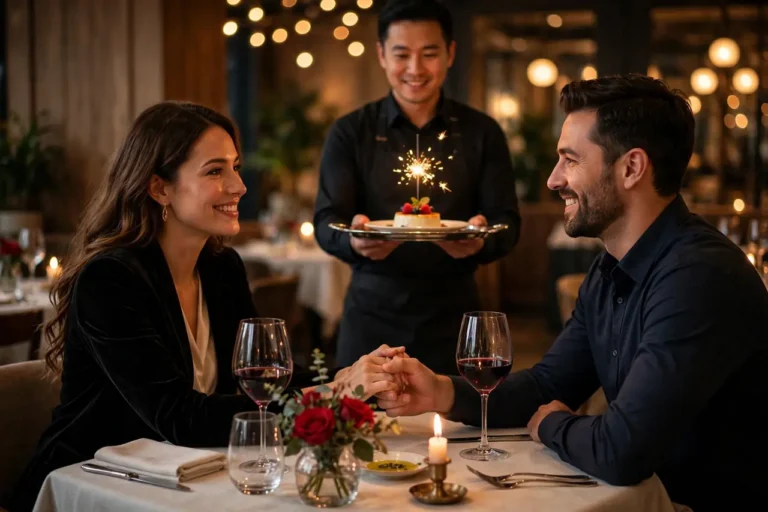
The Sevgililer Günü evening centers on the romantic dinner — restaurants across Istanbul, Ankara, and Izmir offer special menus, and reservations are essential. But Turkish couples also love the grand gesture: the weekend getaway is a major part of the holiday. Cappadocia’s hot air balloon rides at dawn — floating over the fairy chimneys as the sun rises — have become the iconic Turkish romantic experience, and they are especially popular around February 14. Closer to home: Bosphorus-side restaurants, rooftop cafes in Beyoğlu, and the historic streets of Sultanahmet all fill with couples.
Social Media: #SevgililerGünü
Social media is central to the modern Turkish Valentine’s. The hashtag #SevgililerGünü trends annually on Instagram and X, with couples posting photographs, declarations, and carefully staged romantic moments. For younger Turks, the public declaration is part of the ritual — love, performed and shared. The commercial side follows: brands run Valentine’s campaigns, influencers post gift guides, and the day’s aesthetics are negotiated online as much as in the flower shops.
Romantic Turkey: Where Couples Go
Istanbul: The Bosphorus
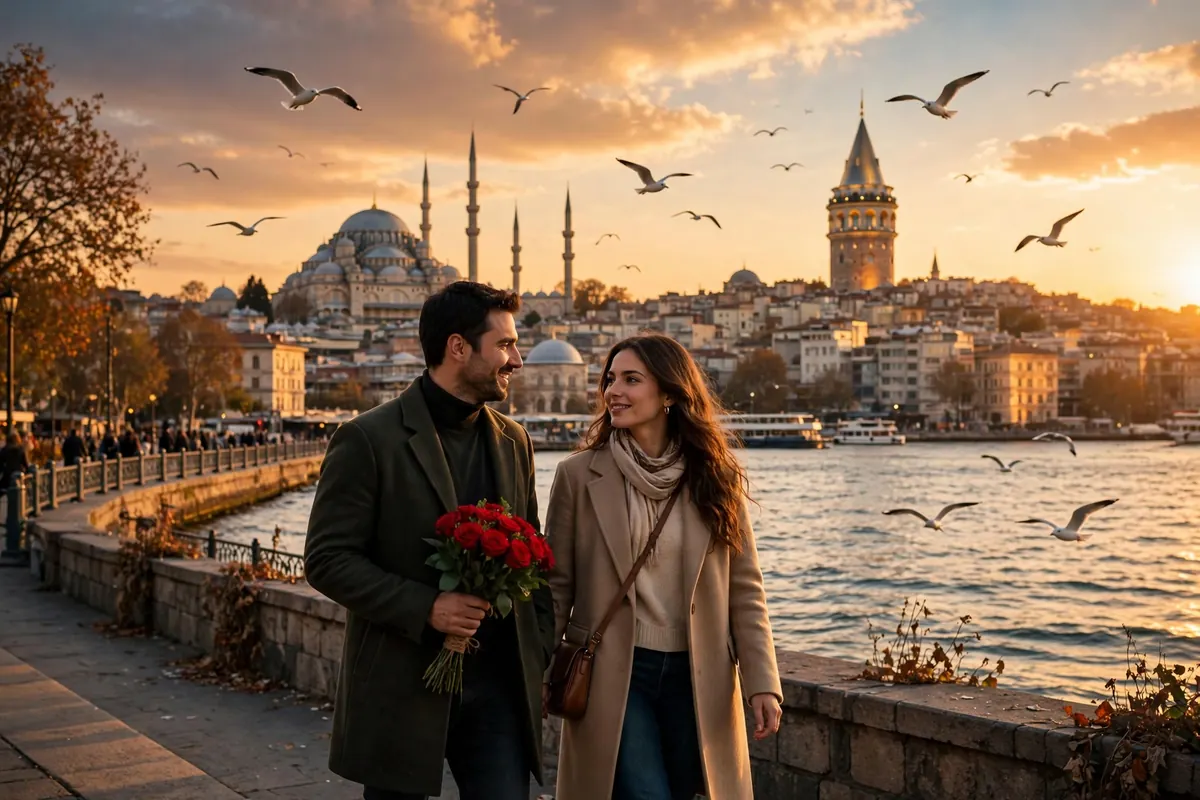
Istanbul is Turkey’s romantic capital, and the Bosphorus is its romantic artery. The classic Sevgililer Günü: dinner at a waterfront restaurant in Bebek or Arnavutköy, the strait glittering, the bridges lit. Or the rooftop bars of Beyoğlu and Galata, with the old city’s domes and minarets as backdrop. For the full fairy tale, a Bosphorus dinner cruise — the city sliding past on both sides, two continents at once.
Cappadocia: Balloons at Dawn
The hot air balloon ride over Cappadocia’s valleys at sunrise is Turkey’s signature romantic experience — and one of the world’s. Couples book it for proposals with remarkable frequency; on and around February 14, the dawn sky fills with balloons carrying lovers. Book far ahead: Valentine’s season is peak season.
Antalya, Bodrum, and the Coast
For a warmer February 14, the Mediterranean and Aegean coasts offer mild weather and off-season quiet. Antalya’s old town (Kaleiçi), Bodrum’s harbor, and the villages of the Turquoise Coast make fine romantic escapes — Turkey’s summer playgrounds, unexpectedly peaceful in winter.
Sevgililer Günü, Hour by Hour
What does February 14 actually look like in Turkey? Here is the day as it unfolds in Istanbul:
Morning: Florists open early to armies of men buying roses — the week’s crescendo. Offices see the first deliveries: elaborate bouquets arriving at reception desks, colleagues watching with interest. Social media fills with “good morning” love posts.
Midday: The lunch-hour gift exchange. Couples who can’t do dinner meet for long lunches; the Grand Bazaar and Istiklal Street bustle with last-minute shoppers. #SevgililerGünü begins trending.
Afternoon: Cafes fill with couples lingering over Turkish coffee and dessert. In Cappadocia, the next morning’s balloon baskets are already fully booked. Gift boxes change hands in parks and promenades.
Sunset: The Bosphorus promenades fill — Bebek, Arnavutköy, Üsküdar on the Asian side. Photographers do brisk business. The city, straddling two continents, performs its daily golden-hour miracle for an audience of lovers.
Evening: Restaurants hit full service — the special menus, the candles, the proposals (February 14 is prime proposal season). Rooftop bars in Beyoğlu glitter. The night belongs to the couples.
Late night: Social media peaks — the posts, the stories, the declarations. And the conservative commentators post their critiques, as they do every year, to a fraction of the audience. The day ends as it began: Turkey, celebrating love, on its own terms.
The Debate: A Western Import?
No honest account of Sevgililer Günü can ignore the controversy — but it should be described carefully, because it is a live cultural argument, not a settled fact. The critical position, voiced by some conservative commentators and religious groups, holds that Valentine’s Day is a Western cultural import with no roots in Turkish tradition, that its commercialism cheapens genuine affection, and that its model of public romantic display sits uneasily with traditional Turkish values around modesty and courtship. From this perspective, the day is at best unnecessary and at worst corrosive.
The mainstream response — from the millions who celebrate — is equally straightforward: it is a day for telling your partner you love them, and there is nothing un-Turkish about that. Celebrants note that the holiday makes no religious claims, that gift-giving and romantic expression have ample Turkish precedent, and that joy needs no imported pedigree. The debate, in practice, resolves itself every February 14: the florists sell out, the restaurants fill, the hashtags trend, and the boycotts fizzle.
Visitors should simply be aware of the context. In Istanbul, Izmir, Ankara, and the coastal cities, Sevgililer Günü is celebrated openly and enthusiastically. In more conservative areas, public romantic display is less common — a general Turkish social norm, not specific to the holiday. Respect the local register wherever you are, and you will be fine.
The Sevgililer Günü Gift Guide
- Red roses — the essential; elaborate arrangements from a good florist, hand-delivered.
- Heart-shaped chocolates — plus lokum (Turkish delight) in Valentine’s packaging for the local touch.
- Jewelry — gold is traditional in Turkish gift culture and carries weight on February 14.
- Perfume — a classic, chosen with care.
- Handwritten notes — eloquence matters; write something real in Turkish if you can.
- Experiences — the Bosphorus dinner, the Cappadocia balloon ride, the weekend escape.
For more ideas in the same spirit, see our Valentine’s Day gifts for her and Valentine’s Day gifts for him guides — and if budget matters more than grandeur, our thoughtful Valentine’s on a budget guide proves thoughtfulness travels.
From İsteme to Henna Night: Love and Marriage in Turkish Culture
Sevgililer Günü celebrates romance; Turkish wedding tradition shows what romance is for. The courtship customs are elaborate, family-centered, and full of rituals that make February 14 look simple.
İsteme: The Formal Asking
Traditional Turkish courtship culminates in the isteme — the groom’s family formally visiting the bride’s family to ask for her hand. The ritual’s famous centerpiece is the coffee: the bride-to-be prepares Turkish coffee for the guests, and tradition holds she may serve the groom a cup laced with salt instead of sugar. If he drinks it without flinching, he proves his devotion (and his composure). It is a test, a joke, and a rite of passage in one cup — and it tells you everything about how Turkish culture views love: as something proven, witnessed, and sweetened by family.
Söz and Nişan: Promise and Engagement
After the asking comes söz (the promise) and nişan (the engagement) — the couple exchange rings, often tied together with a red ribbon cut by an elder, in ceremonies that gather both families. The engagement is itself a major celebration, with gifts, music, and feasting. In Turkish culture, the path from dating to marriage is marked, staged, and shared — love made visible at every step.
Kına Gecesi: Henna Night
The night before the wedding belongs to the bride: kına gecesi, henna night — an emotional, women-centered celebration where the bride’s hands are decorated with henna, songs are sung (traditionally melancholic ones about leaving home), and the bride’s mother and friends gather close. It is the tender counterpart to the wedding’s public joy: love as farewell as well as arrival. Modern couples sometimes hold joint henna celebrations, but the night’s emotional core — the beauty and gravity of the transition — remains.
The Wedding: Two Ceremonies, One Feast
Turkish weddings typically combine the civil ceremony (nikah, legally required) with celebratory festivities that can run for days. Gold is the traditional wedding gift — bracelets and coins pinned to the couple — a custom that makes Turkish weddings glitter literally as well as figuratively. The halay line dances pull everyone in; the food is abundant; the joy is uninhibited.
What It Means for Sevgililer Günü
Against this backdrop, February 14 is a light, modern grace note — the imported prelude to a deeply traditional symphony. Turkish couples who exchange roses on Sevgililer Günü may, a year or two later, be drinking the salty coffee. The holiday’s critics miss this: the Western import hasn’t displaced Turkish love culture; it has been absorbed into it, as one more occasion in a culture that already celebrates love elaborately and well. Celebrate February 14 the Turkish way — and understand that the real ceremony, with the gold and the henna and the dancing, is still to come.
An Istanbul Valentine’s Itinerary: The Perfect Sevgililer Günü
For couples spending February 14 in Istanbul, here is the definitive day — tested against the city’s romantic logic:
Morning: The Grand Bazaar and Breakfast. Start with a proper Turkish breakfast (kahvaltı) — the full spread of cheeses, olives, honey, menemen — in Karaköy or Kadıköy. Then wander the Grand Bazaar for a small gift: jewelry, ceramics, a scarf. The bargaining is flirtation by other means.
Afternoon: Sultanahmet and the Galata Tower. Walk the historic peninsula — Hagia Sophia, the Blue Mosque, the Basilica Cistern’s underground romance — then cross to Galata. Climb the Galata Tower for the panoramic view; legend says the first couple to climb it together will marry. (No pressure.)
Sunset: The Bosphorus. Take the ferry from Karaköy to Kadıköy at golden hour — the cheapest romantic cruise in the world — or book the dinner cruise for the evening. Watch the city light up from the water, two continents glowing.
Evening: Dinner in Bebek or Beyoğlu. A waterfront table in Bebek for the classic; a rooftop in Beyoğlu for the dramatic. End with lokum and Turkish coffee. Say sevgililer günün kutlu olsun — and mean it.
Don’t overlook the Valentine’s breakfast. Turkish kahvaltı culture — the sprawling, hours-long breakfast of cheeses, olives, eggs, honeycomb, and endless tea — has been drafted into Sevgililer Günü service, and it may be the day’s most underrated ritual. A growing number of Turkish couples now start February 14 with a special Valentine’s breakfast: heart-shaped touches on the traditional spread, a Bosphorus-view table, the whole morning unhurried. It sidesteps the dinner-rush chaos, costs less, and — in a culture that treats breakfast as a social institution — feels authentically Turkish. For couples who find the candlelit dinner script tired, the Valentine’s kahvaltı is the fresh alternative hiding in plain sight.
Watch: How Turks Celebrate Valentine’s Day
This podcast episode explores how Turks celebrate Valentine’s Day — the customs, the culture of love in Turkey, and what Sevgililer Günü means to the people who mark it:
How to Celebrate Sevgililer Günü: A Practical Guide
1. Buy the Roses Early
Florists are overwhelmed in the final days. Order a week ahead, choose a reputable Izmir-supplied florist if you can, and hand-deliver. Red roses, generous count, beautiful wrapping.
2. Write in Turkish
A few words go far: Sevgililer Günün kutlu olsun (happy Valentine’s Day), seni seviyorum (I love you), aşkım (my love). Put them in a handwritten card.
3. Book the Dinner — or the Balloon
Restaurant reservations for February 14 disappear early in Istanbul. For the grand gesture, book Cappadocia’s dawn balloons weeks ahead. Our Valentine’s Day dinner ideas will help you plan the table.
4. Mind the Local Register
In cosmopolitan areas, celebrate openly. In conservative settings, keep public displays modest — warmth, not spectacle. The feeling is what matters.
5. Make It Turkish
Add the local touches: lokum with the chocolates, a Bosphorus walk, Turkish coffee for two. Sevgililer Günü is an import — make it yours.
Frequently Asked Questions
What is Sevgililer Günü?
Sevgililer Günü (“Lovers’ Day”) is the Turkish name for Valentine’s Day, celebrated on February 14. It is a secular, modern occasion for romantic expression — red roses, chocolates, dinners, and getaways — with no religious content.
Do Turks celebrate Valentine’s Day?
Yes, widely — especially among urban youth. It is one of the retail and restaurant year’s peak occasions. Some conservative groups criticize it as a Western import, but mainstream observance is enthusiastic and growing.
What does “Sevgililer Günü” literally mean?
“Day of the Sweethearts” or “Lovers’ Day” — from sevgili (sweetheart/lover) + günü (day of). Unlike the Western name, it references no saint.
What gifts do Turkish couples exchange?
Red roses (often from Izmir’s flower growers), heart-shaped chocolates, Turkish delight, jewelry (gold is traditional), perfume, handwritten notes, and experiences like Bosphorus dinners or Cappadocia balloon rides.
Is Valentine’s Day controversial in Turkey?
Some conservative voices criticize it as a Western imposition undermining traditional values, with occasional boycott calls. These have had limited effect on mainstream celebration, but the debate is part of the holiday’s context.
Where is the most romantic place in Turkey for February 14?
Istanbul’s Bosphorus waterfront and Beyoğlu rooftops; Cappadocia’s dawn hot air balloons (the iconic choice); or the Mediterranean coast (Antalya, Bodrum) for mild winter weather.
One final note for the romantics: Turkey’s Valentine’s rewards the bold. The grand gesture — the surprise trip, the public dedication, the question popped at sunset on the Bosphorus — lands differently here than in more reserved cultures. Turkish love culture appreciates gösteriş (display) when it’s sincere: love, shown beautifully and without embarrassment. On February 14, don’t hold back. Book the cruise, write the long letter, say it loudly. Sevgilim, seni seviyorum — and mean it. That needs no import license.