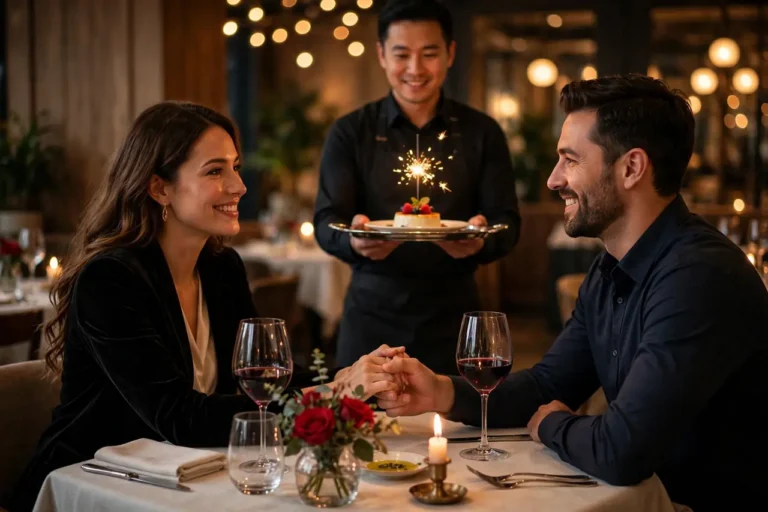
Greece invented the language of love — quite literally. Eros, agape, philia, storge: the ancient Greeks needed four words where English makes do with one, and their mythology gave the world the original love stories, from Eros and Psyche to the divine soap opera of Zeus and Hera. So it is only fitting that Valentine’s Day in Greece comes with a mythological backdrop, a surprising religious twist, and some of the most romantic real estate on the planet.
The surprise is this: Greece may have the most legitimate claim to Saint Valentine of any country celebrating February 14. For the past 120 years, the holy relics of Saint Valentine himself have been housed in the Catholic “Frankish Church” in Mytilene, on the island of Lesvos — and every February, the island holds a Saint Valentine Festival with a litany of the relics through the streets, love song contests, poetry readings, and horse-drawn carriage tours. It is a Valentine’s celebration with actual bones behind it.
Modern Greek Valentine’s Day is a more familiar affair: red roses, perfumes, candlelit dinners in Athens and Thessaloniki, gift baskets assembled at home. But surveys suggest Greeks are characteristically cool about the whole thing — most call it just another day, and a majority find it more commercial than romantic. This guide covers all of it: the myths, the relics, the festival, how Greece actually celebrates, and where to go for the most romantic February 14 in the Mediterranean. For the region’s other love stories, see our guides to Sevgililer Günü in Turkey and Egypt’s November 4 love day.
Valentine’s Day in Greece: Key Facts
| Fact | Detail |
|---|---|
| Date | February 14 (unofficial; not a public holiday) |
| Unique claim | St. Valentine’s relics housed in Mytilene, Lesvos for ~120 years |
| Lesvos festival | Litany of the relics; love song, poetry, and correspondence contests; carriage tours |
| Classic gifts | Red roses, perfumes, chocolates, jewelry; homemade gift baskets with photo collages |
| Typical evening | Candlelit dinner, movie, or spa visit; rooftop bars and seaside promenades |
| Public mood | Skeptical — surveys find most Greeks call it just another day; ~1 in 3 celebrate |
| Top romantic spots | Santorini, Mykonos, Athens (Plaka/Kolonaki), Thessaloniki’s White Tower |
The Mythological Roots of Greek Romance
No country can talk about love without tripping over Greek mythology, and Valentine’s Day in Greece inherits the whole complicated legacy. Eros — the original Cupid, though the Greek version is considerably less chubby and more dangerous — is the personification of love itself, son of Aphrodite, the goddess of love and beauty. The tale of Eros and Psyche, the mortal princess whose love for the god survives trials, monsters, and the underworld, remains the West’s foundational love story: love tested, love vindicated, love made immortal.
The myths are not all tender. Zeus’s celebrated infidelities make him an odd patron of fidelity, though the Greeks revered his union with Hera as the divine marriage. The lesson of the mythology for Valentine’s Day is richer than simple romance: the Greeks understood love as a force — powerful, double-edged, divine and dangerous at once. Modern Greek couples sometimes nod to this heritage with gifts inspired by mythical love stories: jewelry with Greek key patterns, Aphrodite motifs, or visits to ancient sites as romantic pilgrimages. A sunset at the Temple of Poseidon at Cape Sounion, an hour from Athens, is arguably the most mythologically charged date in Europe.
The Lesvos Surprise: Saint Valentine’s Relics in Greece
Here is the fact that surprises even many Greeks: the holy relics of Saint Valentine — the actual saint behind the holiday — have been housed for about 120 years in the Catholic Church of the Metastasis of the Theotokos in Mytilene, the so-called “Frankish Church” near the central market of Lesvos’s capital. How the relics traveled from Rome to a Greek island is a story of 19th-century Catholic networks; what matters is that they are there, venerated, and central to one of Europe’s most distinctive Valentine’s celebrations.
Every year around February 14, the Catholic community of Lesvos organizes a series of religious events culminating in a litany — a solemn procession — of Saint Valentine’s relics through the streets and along the waterfront of Mytilene. It is a genuine religious observance, presided over by clergy, and a remarkable sight: the patron saint of love processed through a Greek island town.
The Municipality of Lesvos builds a full cultural festival around it: love song contests, love correspondence and poetry competitions, horse-drawn carriage tours of the historic center, concerts, poetry readings, musical performances, and art exhibitions — all on the theme of romantic love and love in general. For travelers, it is an extraordinary alternative Valentine’s destination: the holiday with the relics, the processions, and the poetry contests, on an island of olive groves and ouzo, far from the February crowds of Santorini.

How Greece Celebrates Today: The Modern Valentine’s
Outside Lesvos, Greek Valentine’s Day is a modern, urban affair — most visible in Athens, Thessaloniki, and the tourist hubs. The rituals will sound familiar: red roses (flower shops sell out days in advance), heart-shaped chocolates, greeting cards, and dinners at upscale restaurants offering special Valentine’s menus. In Athens, Kolonaki and Plaka buzz on February 14; in Thessaloniki, couples gather at the White Tower overlooking the Thermaic Gulf for evening strolls. Rooftop bars, seaside promenades, and historic sites all do brisk romantic business.
Greek gift culture has its own accents. Perfumes are in especially high demand — Greek tradition holds that fragrance “sings the hymns of love,” and women are thought to have a particular connection to scent. Men give flower bouquets, chocolates, soft toys, and jewelry (diamond and platinum chains appear in the aspirational repertoire); women give perfumes, bracelets, and accessories. A distinctive Greek custom is the homemade gift basket: chocolates and cookies made at home, arranged with gift cards and photo collages — given by parents to children, children to teachers, and between partners. Young people make “love maps” and photo collages; couples book spa visits or movie nights; candlelit dinners are in high demand.
Men, Greek sources note with amusement, tend to prefer useful gifts over purely romantic ones — watches, books, gadgets — and are perfectly happy if their partner simply arranges a dinner or buys movie tickets. It is not materialism, the tradition insists; it is practicality. The sentiment counts more than the wrapping.
And the national mood? Decidedly cool. A Greek national survey found that for two out of three Greeks, Valentine’s Day is “just another day”; about one in three celebrate with a romantic dinner or a cozy evening at home. More than two-thirds find the pressure of the “perfect day” too much, and a majority consider the holiday more commercial than romantic — while almost everyone agrees love should be celebrated every day. Most Greeks don’t post about it on social media, though humorous memes about love and singledom amuse the majority. Greece celebrates Valentine’s Day the way it does most imported enthusiasms: with style, with irony, and without losing its head.
Romantic Greece: A Valentine’s Destination Tour
Greece in February is a contrarian romantic choice — cooler, quieter, cheaper than summer, and all the more atmospheric for it. Here is where to go:
Santorini: The Icon
The caldera at sunset needs no introduction. In February, Santorini is nearly empty — the cruise ships are gone, the crowds are gone, and the island’s white villages and blue domes belong to you. Book a cave suite with a caldera view, watch the sun drop into the Aegean, and have the most photographed sunset in Europe all to yourselves. Many hotels offer winter rates at a fraction of summer prices.
Mykonos and the Islands
Mykonos in winter is a local’s island — quiet, authentic, romantic in a windswept way. For seclusion, consider Crete (Chania’s Venetian harbor), Rhodes (the medieval Old Town), or indeed Lesvos itself, combining the Valentine’s festival with the island’s olive groves and ouzo culture.
Athens: The City Option
Athens does February 14 with urban energy: dinner in Plaka under the Acropolis lights, drinks in a Kolonaki rooftop bar, a walk through the National Garden. Add the mythological pilgrimage — sunset at Cape Sounion’s Temple of Poseidon — for a date with 2,500 years of backstory.
Thessaloniki: The Understated Romantic
Greece’s second city is arguably its most romantic: the White Tower on the waterfront, the old town (Ano Poli) with its views over the Thermaic Gulf, and a food scene that rivals Athens. Less touristed, more authentic, and excellent value.
The Greek Wedding: Love’s Grandest Stage
If Valentine’s Day is love’s rehearsal, the Greek wedding is its opening night — and Greek wedding traditions reveal what the culture truly believes about love: that it is communal, sacred, joyful, and meant to be witnessed.
The Stefana: Crowns of Union
The centerpiece of the Greek Orthodox wedding is the stefana — two crowns, traditionally of orange blossom, joined by a ribbon, which the priest places on the couple’s heads and exchanges three times. The crowning symbolizes the couple’s new status as king and queen of their own household — and the martyrdom of self-sacrifice that marriage asks. It is one of Christianity’s most beautiful wedding rituals, and witnessing it explains why Greeks take the idea of union so seriously, even when they’re ironic about Valentine’s Day.
Shoe Names and Rice: The Folk Customs
Around the ceremony cluster folk customs of great charm. The bride writes the names of her single friends on the sole of her shoe; the name that fades most by evening belongs to the next to marry. Guests pin money to the couple’s clothes during the first dance. Sugared almonds (koufeta) — white for purity, odd-numbered for indivisibility — are given as favors. Each custom is a small spell: for fertility, prosperity, continuity.
The Celebration: Eating, Dancing, Dawn
The Greek wedding reception is legendary: hours of food, the circle dances (kalamatianos, syrtos) that pull every guest onto the floor, plate-breaking (now more symbolic than literal in most venues), and celebration that runs until morning. It is love as the Greeks understand it at full volume — not a private sentiment but a public festival. A Valentine’s dinner in Greece borrows this spirit in miniature: the best Greek February 14ths feel like small weddings, with the couple as the entire guest list.
What It Means for Valentine’s Day
The wedding tradition reframes the holiday. Greeks may shrug at February 14’s commercial script, but they invest enormously in love’s real milestones — the engagement, the crowning, the feast. The lesson for celebrants: borrow the wedding’s values for Valentine’s Day. Make it communal (include family and friends), make it witnessed (don’t hide your joy), and make it last (an evening, not an hour). The Greeks know that love is a festival, not a transaction — which is precisely why they’re skeptical of the transaction dressed as a festival.
The Sound of Greek Love: Music for Valentine’s Day
Every Greek Valentine’s needs a soundtrack, and Greece offers one of the world’s richest. Start with the rebetiko love songs — the “Greek blues” of the early 20th century, all longing and late nights, with masters like Vassilis Tsitsanis writing songs of love and loss that still fill Athenian tavernas. Move forward to the great popular composers: Mikis Theodorakis and Manos Hadjidakis wrote love songs that are essentially Greek standards, known by every generation.
For the modern Valentine’s, contemporary Greek laïko and pop offer endless romantic ballads — the kind that fill the bouzoukia (live music clubs) where Greeks celebrate everything, including February 14. A Valentine’s night that ends at the bouzoukia — table by the stage, flowers thrown at the singers (a real custom: λουλούδια, showering performers with carnations), the whole room singing along — is the most Greek celebration imaginable. It is communal, musical, and gloriously excessive: love as the Greeks have always understood it, loud and shared.
Build your playlist: rebetiko for the candlelit dinner, Hadjidakis for the drive, and the bouzoukia for the finale. And learn the essential phrase: “S’agapo” (Σ’αγαπώ) — “I love you.” Say it like you mean it; in Greek, there is no other way to say it.
Watch: A Greek Couple’s Valentine’s Day
This Valentine’s Day special from a Greek-Filipino couple captures the day’s spirit — spending time with your love and treasuring the small moments. A sweet, personal window into how the holiday feels:
How to Celebrate Valentine’s Day, Greek Style
1. Lead With Fragrance
Perfume is the Greek Valentine’s gift par excellence. Choose carefully — scent is personal — and present it well. The tradition holds that fragrance sings love’s hymns; pick a hymn your partner will want to hear.
2. Build a Gift Basket
Embrace the homemade Greek custom: assemble a basket with homemade (or bakery) chocolates and cookies, a small photo collage, a handwritten card, and a bottle of something good. It is personal, generous, and unmistakably Greek in spirit. For basket inspiration, see our last-minute Valentine’s Day gifts.
3. Dine With a View
The Greek Valentine’s dinner is about setting as much as food: a rooftop, a waterfront table, a taverna under the Acropolis lights. Book ahead — the best tables go first. Our Valentine’s Day dinner ideas translate beautifully to a Greek table.
4. Consider Lesvos
For a Valentine’s with genuine historical depth, time a trip to Mytilene for the Saint Valentine Festival: the litany of the relics, the poetry contests, the carriage tours. It is the most distinctive February 14 in the Mediterranean.
5. Keep It Light
Take the Greek attitude: celebrate with style, but don’t lose your head. Love every day; roses on February 14. Chronia polla — many happy returns — to you and yours.
Greek Valentine’s by the Numbers: What the Surveys Say
Greece’s coolness toward February 14 isn’t just anecdote — it’s measured. A national survey on Valentine’s attitudes found that for two out of three Greeks, the day is simply “just another day.” Only about one in three celebrate with a romantic dinner or a cozy evening at home. Among those who do mark it, average spending runs modest — around €30 — reflecting the day’s low-pressure character.
The survey’s most Greek finding concerns the “perfect day” pressure: more than two-thirds of respondents find it excessive, and a clear majority consider the holiday more commercial than romantic. Yet — and this is the twist that makes the data charming rather than cynical — almost all Greeks agree that love should be celebrated every day. The objection isn’t to love; it’s to the calendar telling them when.
Social media behavior confirms the mood: most Greeks say they post nothing on Valentine’s Day. What amuses them instead are humorous memes about love and singledom — self-deprecation over sentimentality, irony over idealization. The “ideal couple” post, all perfection and filters, makes most Greek users uncomfortable. In other words: Greece has collectively decided that Valentine’s Day is fine, as long as nobody takes it too seriously. It is perhaps the healthiest relationship with the holiday in Europe.
Myth vs Fact: Greek Valentine’s Edition
Myth: Valentine’s Day comes from Greek mythology.
Fact: The holiday’s origins are Roman and Christian. But Greece’s mythological heritage — Eros, Aphrodite, Psyche — gives the modern celebration a deeper cultural backdrop than most countries can claim.
Myth: Saint Valentine’s relics are all in Rome.
Fact: Relics attributed to the saint are scattered across Europe — and Mytilene, Lesvos has housed its portion for about 120 years, with an annual festival to prove it. (Like all relic claims, this rests on church tradition.)
Myth: Greeks go all-out for Valentine’s Day.
Fact: Most don’t. Surveys show two-thirds of Greeks treat it as just another day. The celebration is real but cool — stylish, ironic, and concentrated in the cities.
Frequently Asked Questions
Do Greeks celebrate Valentine’s Day?
Yes, but selectively — about one in three Greeks celebrate, mostly in cities. The day involves roses, perfumes, chocolates, and candlelit dinners, but the national mood is skeptical of the holiday’s commercialism.
Are Saint Valentine’s relics really in Greece?
According to church tradition, relics of Saint Valentine have been housed for about 120 years in the Catholic “Frankish Church” in Mytilene, Lesvos, which holds an annual Saint Valentine Festival with a procession of the relics.
What do Greeks give on Valentine’s Day?
Red roses, perfumes (especially popular), chocolates, jewelry, and homemade gift baskets with photo collages. Men often receive practical gifts — watches, books, gadgets — or simply a well-planned dinner.
Where is the most romantic place in Greece for Valentine’s Day?
Santorini for the iconic caldera sunset; Lesvos for the Saint Valentine Festival; Athens for urban romance under the Acropolis; Thessaloniki for understated waterfront charm.
What is the Greek attitude toward Valentine’s Day?
Cool and ironic: most Greeks say love should be celebrated every day, find the “perfect day” pressure excessive, and consider the holiday more commercial than romantic — while still buying the roses.
When is the Saint Valentine Festival in Lesvos?
Around February 14 each year, in Mytilene — with religious services, the litany of the relics, and municipal cultural events (love song and poetry contests, carriage tours, concerts).
Greece’s Valentine’s Day is a study in balance: ancient myths and modern irony, genuine relics and cheerful commercialism, world-famous sunsets and a national shrug. It may not be the most enthusiastic February 14 in Europe — but it might be the most interesting. Between the procession in Mytilene, the sunset in Santorini, and the perfume counter in Kolonaki, Greece offers a Valentine’s Day with 3,000 years of love stories behind it. Kali mera tou Agiou Valentinou — happy Valentine’s Day, the Greek way: beautifully, and without taking it too seriously. After all, a culture that gave the world four words for love can be forgiven for declining to squeeze them all into one commercial day — and for insisting, correctly, that the best Valentine’s gift is simply loving well, every day, in the Greek way.