This Seattle Travel Guide 2026 is your complete trip planner for the Emerald City — the place where mist rolls off Puget Sound, the Space Needle needles the clouds, and the coffee is strong enough to justify the rain. Seattle blends big-city culture with jaw-dropping Pacific Northwest nature better than almost anywhere in America: you can tour Pike Place Market in the morning, kayak past houseboats at noon, and watch the sun drop behind the Olympics from a rooftop at night. In 2026, the city is riding a tourism wave — ranked the country’s top domestic destination in recent travel data — with a revitalized waterfront, booming food halls, and easy access to mountains, islands, and rainforests.
Below you will find the best time to visit, how to get around, the unmissable sights, the coffee and food scene that built legends, the neighborhoods to explore, where to stay, the best day trips in the region, a three-day itinerary, and answers to first-timer questions. Bring a light rain shell and a sense of curiosity — Seattle rewards both.
Why Visit Seattle in 2026
Seattle has quietly become one of America’s most in-demand city breaks. The pitch is simple and nearly unbeatable: a thriving downtown of glass towers and public markets, water on two sides (Puget Sound and Lake Union), and wilderness — real wilderness, with alpine peaks and old-growth forest — within an hour or two in nearly every direction.
- The waterfront renaissance is complete. The removal of the old Alaskan Way Viaduct opened a sweeping new waterfront promenade with parks, piers, and uninterrupted Elliott Bay views.
- Coffee culture capital. Beyond the famous global chain that started here, Seattle’s independent coffee scene — roasters, tasting rooms, and century-old cafes — is deeper than anywhere in the US.
- Festival city. From Bumbershoot’s music-and-arts takeover of Seattle Center to the Seattle International Film Festival, the calendar stays full.
- Gateway to adventure. Mount Rainier, the San Juan Islands, Olympic National Park, and the Cascade foothills all sit within easy day-trip range.
- Sports and spectacle. Between the Seahawks, Mariners, Sounders, and the Kraken, there is almost always a game worth catching downtown.
Best Time to Visit Seattle
The rain reputation is real but oversold — summers are glorious. Here is the honest seasonal breakdown:
| Season | Months | Weather | Crowds & Prices | Best For |
|---|---|---|---|---|
| Summer | July–September | Sunny, 70–80°F, almost no rain | Peak crowds, highest prices | Everything — hiking, islands, festivals, patios |
| Fall | October–November | Cool, drizzly, 50–60°F | Thinning crowds, deals appear | Museums, coffee shops, fall color in the Cascades |
| Winter | December–February | Gray, rainy, 40–50°F | Lowest prices | Cozy indoor Seattle, holiday markets, ski trips nearby |
| Spring | March–June | Variable, blooming, 55–65°F | Shoulder season | Wildflowers, waterfalls at peak flow, fewer tourists |
July through September is the classic window: Seattle’s summers are famously dry and mild, with daylight stretching past 9 p.m. — locals joke that summer starts on July 5th, and they are not far off. June can still be drizzly (“Juneuary”), so aim for mid-July onward for the best odds. Winter visitors should embrace the gloom: this is the season of moody waterfront walks, steaming chowder bowls, and having the museums to yourself.
Getting to Seattle and Getting Around
Flying in
Seattle-Tacoma International Airport (Sea-Tac) sits about 14 miles south of downtown. The Link light rail runs from the airport to downtown in roughly 40 minutes for a few dollars — it is the easiest airport-to-city ride on the West Coast and beats any traffic jam. It also continues north to the University District and beyond.
Public transit
- Link light rail: The north–south spine connecting Sea-Tac, downtown, Capitol Hill, and the University District. The fastest way across town.
- Monorail: The retro 1962 World’s Fair monorail still zips between downtown and Seattle Center (Space Needle) in two minutes — more fun than practical, but ride it once.
- Buses: King County Metro covers the gaps; downtown has a free-ride area history but check current fare rules.
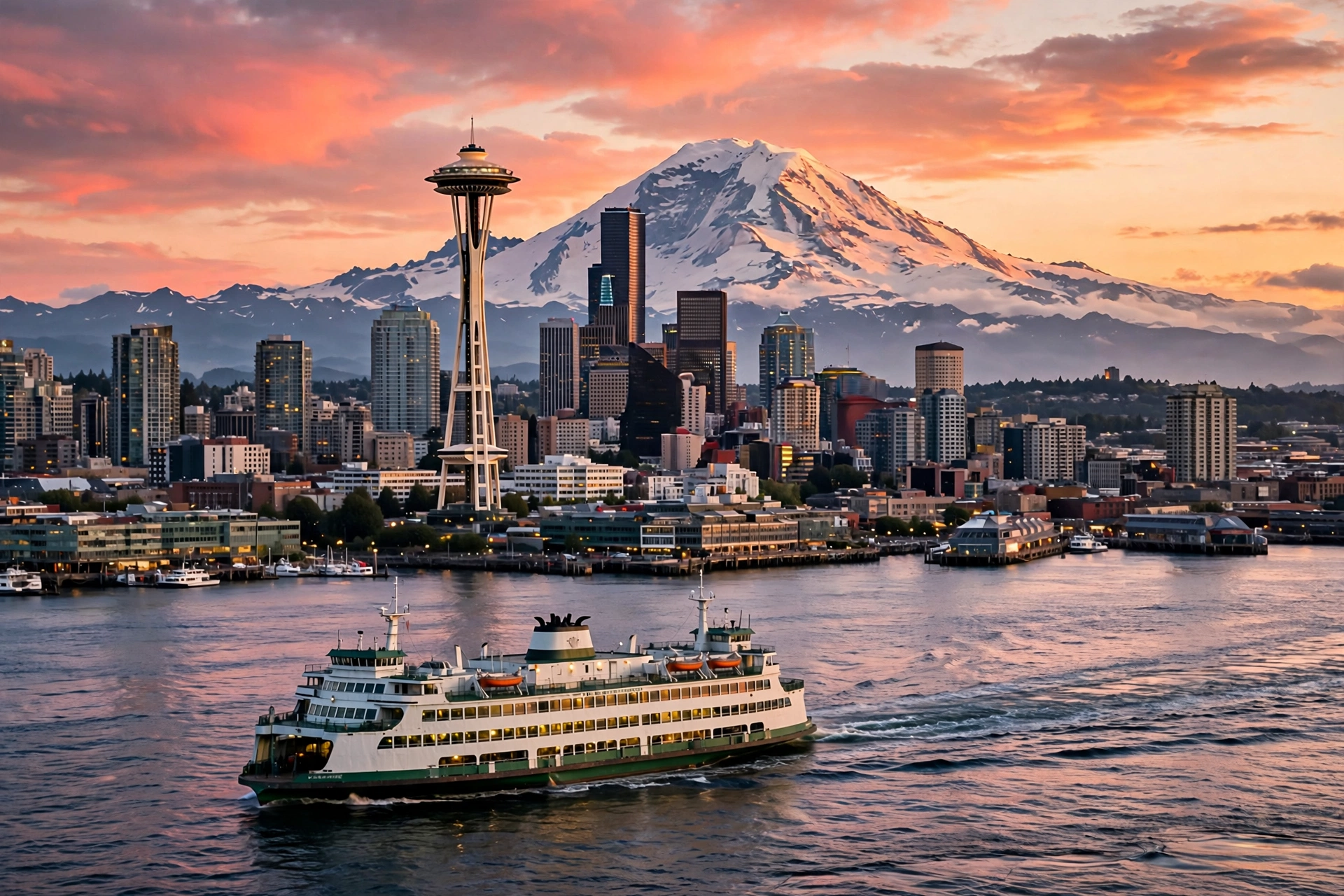
- Washington State Ferries: Not just transit — the Bainbridge Island ferry from downtown is one of America’s great cheap boat rides, with skyline views the whole way.
Walking, biking, and rideshares
Downtown, Pike Place, the waterfront, and Belltown are compact and walkable, though the hills are no joke (Pike Street will test your calves). Lime and other bike-share e-bikes help. Seattle is also one of the easiest US cities to explore by kayak or paddleboard — Lake Union’s flat water is made for it.
Top Attractions in Seattle
Pike Place Market
Nine acres of sensory overload above Elliott Bay: flying fish, flower stalls, the original Starbucks (expect a line), the famous gum wall in Post Alley, and Rachel the bronze pig. Go on a weekday morning to dodge crowds, and eat your way through — piroshky, chowder in a bread bowl, and fresh doughnuts are the holy trinity. The market’s lower levels hide quirky shops most tourists never see.
Space Needle and Seattle Center
The 605-foot icon got a full modernization with floor-to-ceiling glass and The Loupe, the world’s first revolving glass floor, 500 feet up. Time your visit for golden hour. The surrounding Seattle Center campus — built for the 1962 World’s Fair — also hosts the Museum of Pop Culture (MoPOP), the glass-blown wonders of Chihuly Garden and Glass, and the Seattle Children’s Museum. Our guide to the Bumbershoot festival at Seattle Center covers the city’s biggest arts takeover.
Chihuly Garden and Glass
Dale Chihuly’s fantastical glass sculptures — towering red reeds, floating Persian ceiling pieces, a 100-foot suspended glass flower installation — inside a dark gallery and sunlit garden, with the Space Needle looming behind. Book a combined ticket with the Needle.
Museum of Pop Culture (MoPOP)
The crumpled-metal Frank Gehry building holds Nirvana and Pearl Jam artifacts, a science-fiction hall of fame, fantasy exhibits, and an interactive Sound Lab where you can play real instruments. Music fans can spend half a day here easily.
Kerry Park
The tiny Queen Anne viewpoint with the postcard shot: downtown skyline, Space Needle, Elliott Bay, and Mount Rainier floating behind it all on clear days. Come at sunrise for the fewest people and the best light.
Seattle Waterfront and the Great Wheel
The rebuilt waterfront promenade stretches from the stadiums to Belltown with new parks, the Seattle Aquarium (recently expanded), and the 175-foot Seattle Great Wheel with climate-controlled gondolas. Sunset rides are worth every penny.
Fremont and the Troll
Seattle’s self-declared “Center of the Universe” is an artsy enclave of vintage shops, the Sunday market, and the 18-foot Fremont Troll clutching a real Volkswagen Beetle under the Aurora Bridge. Weird, free, and very Seattle.
Seattle’s Coffee and Food Culture
Yes, that global coffee giant was born here — but Seattle’s real coffee story is the hundred-plus independent roasters that came before and after. Victrola, Milstead, Storyville (in Pike Place), and Caffè Ladro are local legends. The city’s cafe culture is a social institution: on gray mornings, half the city seems to be in a coffee shop.
The food scene mirrors the region — Pacific Northwest cuisine built on salmon, Dungeness crab, oysters, foraged mushrooms, and Washington apples, as our Pacific Northwest cuisine guide explores. Must-tries:
- Cedar-plank salmon — the signature dish of the region, smoky and rich.
- Seattle-style chowder — a roux-based clam chowder that locals defend fiercely against New England’s.
- Teriyaki — Seattle has an entire homegrown teriyaki-shop culture unlike anywhere else in the US.
- Dick’s Drive-In — the no-frills burger institution; cash or card, no substitutions, no indoor seating, beloved since 1954.
- Pike Place eats — the market alone could feed you for a weekend.
The best neighborhoods in Seattle each eat differently: Ballard’s Nordic-tinged breweries, the International District’s dumpling houses, Capitol Hill’s late-night everything.
Best Day Trips from Seattle
- Bainbridge Island (35-min ferry): Walk on the ferry downtown, browse Winslow’s shops and wineries, and sail back at sunset. No car needed.
- Mount Rainier National Park (2 hrs): The 14,411-foot volcano dominates the horizon on clear days; Paradise’s wildflower meadows (July–August) are bucket-list hiking.
- San Juan Islands (2.5 hrs + ferry): Whale watching, lavender farms, and Friday Harbor’s charm — best as an overnight.
- Snoqualmie Falls (45 min): A 268-foot curtain of water through old-growth forest — Twin Peaks fans will recognize it instantly.
- Woodinville wine country (30 min): 130+ wineries and tasting rooms in the Sammamish Valley, including Chateau Ste. Michelle.
- Olympic National Park (2.5–3 hrs): Rainforest, alpine ridges, and wild Pacific beaches — needs a full day minimum.
Where to Stay in Seattle
| Area | Best For | Vibe & Price |
|---|---|---|
| Downtown / Pike Place | First-timers, sightseers | Central, walkable; $$–$$$ |
| Capitol Hill | Nightlife, LGBTQ+ scene | Energetic, dense; $$ |
| Belltown | Waterfront, dining | Trendy, high-rise; $$–$$$ |
| Queen Anne | Views, Space Needle access | Residential hill; $$ |
| Ballard | Breweries, local flavor | Former fishing town; $$ |
| University District | Budget, campus vibe | Affordable, youthful; $–$$ |
Perfect 3-Day Seattle Itinerary
Day 1: Downtown icons
Start at Pike Place Market (arrive before 10 a.m.), ride the monorail to Seattle Center for the Space Needle and Chihuly Garden and Glass, then descend for the waterfront promenade and a Great Wheel ride at sunset. Dinner in Belltown.
Day 2: Neighborhoods and water
Morning coffee crawl on Capitol Hill, afternoon in Fremont (troll, vintage shops), then kayak Lake Union past the houseboats and seaplanes. Evening: ferry to Bainbridge Island for dinner with the skyline glittering on the ride back.
Day 3: Choose your adventure
Option A — Mount Rainier: drive to Paradise for wildflower trails. Option B — stay urban: MoPOP, Kerry Park at sunrise, Ballard Locks and brewery crawl. Either way, end with cedar-plank salmon and a nightcap on a rooftop.
Practical Tips for Visiting Seattle
- Pack for drizzle, not downpour. Seattle rain is usually a mist; a water-resistant shell beats an umbrella (locals never use them).
- Mount Rainier is shy. “The mountain is out” is local code for a clear day — if you hear it, drop everything and look south.
- Coffee order matters. Ask for a “12-ounce” not a “tall” at indie shops unless you want the tourist treatment.
- Hills are serious. Downtown’s steep grades plus rain-slicked sidewalks demand good shoes.
- Ferry strategy: Walk onto the Bainbridge ferry (no reservation needed for foot passengers); driving requires booking ahead in summer.
- Sales tax: Around 10% in Seattle — factor it into shopping and dining budgets.
Seattle’s Arts, Music & Geek Culture
Seattle’s creative streak runs deeper than the Space Needle selfies suggest. The city gave the world grunge — and the MoPOP galleries make a strong case it never really left. But the scene keeps evolving: Capitol Hill hosts dozens of live-music rooms from punk basements to the storied Neumos, while Belltown and Ballard split the difference between indie rock and jazz. For classical tastes, the Seattle Symphony at Benaroya Hall and the Seattle Opera punch well above a city this size.
The geek culture is equally strong. PAX West turns the convention center into gaming’s biggest fan festival every Labor Day weekend, and the Seattle International Film Festival — among the largest in North America — screens hundreds of films each spring. Book lovers should pilgrimage to the Seattle Central Library’s glass-and-steel Rem Koolhaas building downtown, and the Elliott Bay Book Company in Capitol Hill remains one of America’s great independent bookstores, with creaky wooden shelves and a cafe made for rainy afternoons.
Theater and performing arts
The 5th Avenue Theatre stages Broadway-bound musicals, ACT Theatre and the Seattle Repertory Theatre anchor the serious drama scene, and the Paramount and Moore theatres host touring concerts in gorgeously restored historic rooms. Check listings before your trip — there is almost always something worth an evening.
Seattle with Kids
Seattle is a sneaky-great family destination. The Seattle Children’s Museum at Seattle Center, the Pacific Science Center’s butterfly house and IMAX, and the Woodland Park Zoo cover rainy days. The Seattle Aquarium’s touch pools and sea otters are toddler catnip, and the ferry ride to Bainbridge Island doubles as a whale’s-eye boat adventure. Older kids love MoPOP’s Sound Lab and the Fremont Troll. Pro tip: the monorail between downtown and Seattle Center feels like a ride in itself.
Seattle Travel Guide 2026: FAQs
Does it really rain all the time in Seattle?
No — but it is cloudy often. Seattle gets less total rainfall than New York, Miami, or Houston; it just drizzles more days. Summers (July–September) are reliably sunny and gorgeous.
How many days do you need in Seattle?
Three days covers downtown, the neighborhoods, and one signature experience. Add a fourth or fifth day for Mount Rainier or the San Juan Islands.
What is Seattle known for?
Coffee culture, the Space Needle, Pike Place Market, grunge music, tech giants (Microsoft, Amazon), Puget Sound scenery, and as the gateway to the Pacific Northwest’s mountains and islands.
Is Seattle expensive to visit?
Moderately. Hotels and dining cost less than San Francisco or New York, but downtown lodging in summer is pricey. The ferry, parks, markets, and viewpoints are cheap or free.
Can you see Mount Rainier from Seattle?
Yes — on clear days the 14,411-foot volcano looms over the southern skyline, best seen from Kerry Park or the Bainbridge ferry. “The mountain is out” days happen most often in summer and after winter storms clear.
How Much Does a Seattle Trip Cost?
Seattle sits in the mid-range for US city breaks — cheaper than San Francisco, pricier than Portland. A realistic daily budget per person:
| Category | Budget | Mid-Range | Splurge |
|---|---|---|---|
| Hotel (per night) | $120–$160 | $200–$320 | $400+ |
| Food & drink | $50–$70 | $90–$140 | $200+ |
| Attractions | $20–$40 | $50–$80 | $100+ |
| Transport | $10–$15 | $20–$30 | $50+ (rideshares) |
Money savers: the Seattle CityPASS bundles five top attractions at roughly half price; the Bainbridge ferry walk-on fare is one of the cheapest boat rides in America; and Pike Place Market makes a delicious, affordable lunch. Summer hotel rates spike — book 2–3 months ahead or consider the shoulder months of May and October.
Is Seattle good for a weekend trip?
Excellent. Two to three days covers Pike Place, the Space Needle, a neighborhood or two, and a ferry ride. The compact downtown means you waste almost no time in transit.
What should I pack for Seattle?
Layers and a light rain shell year-round, comfortable walking shoes for the hills, and sunglasses — summer days are bright. Leave the umbrella; locals consider them a tourist tell.
What is the best area to stay in Seattle for first-timers?
Downtown near Pike Place Market — you can walk to the waterfront, the market, and the monorail to Seattle Center. Capitol Hill is better for nightlife; Queen Anne for views.
Do I need a car in Seattle?
Not for the city itself — light rail, buses, ferries, and walkable downtown cover it. Rent one only for Mount Rainier, the San Juan Islands, or Olympic National Park day trips.
Can you see whales near Seattle?
Yes — orca and gray whale watching tours run from downtown piers and the San Juan Islands, with peak orca season roughly May through September. Book with a responsible operator that follows wildlife-viewing guidelines.
What is Seattle’s most famous food?
Cedar-plank salmon and Dungeness crab top the list, followed by the city’s beloved teriyaki-shop culture, Dick’s Drive-In burgers, and Pike Place Market’s endless grazing — piroshky, chowder bowls, and fresh doughnuts.
Seattle’s magic is in its layers: the working waterfront below the tech towers, the rainforest at the edge of downtown, the music history humming under the coffee shops. Use this guide for the essentials, then let the city’s mist and light do the rest — it has a way of making ordinary moments feel cinematic.