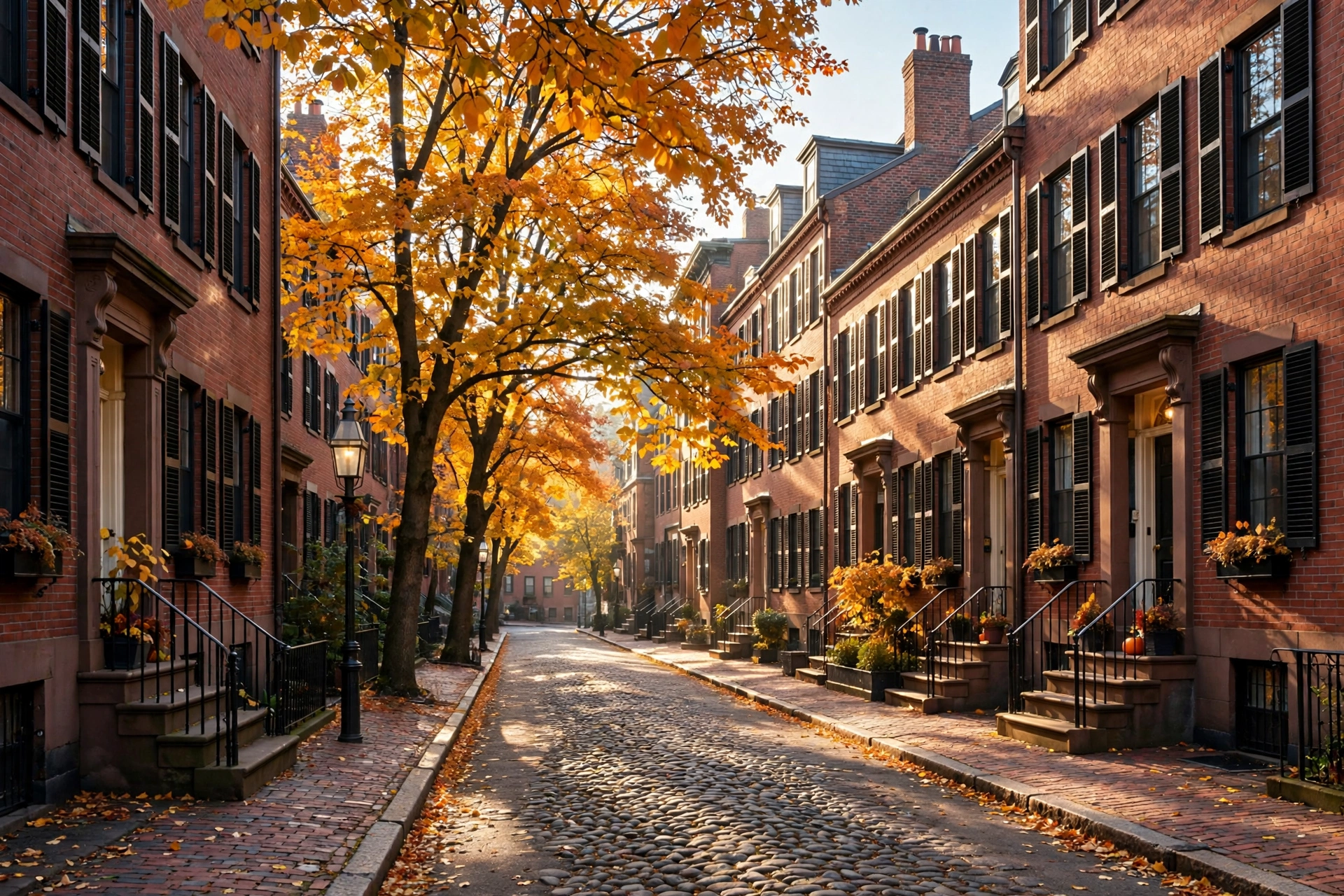
This Boston Travel Guide 2026 is your complete trip planner for America’s most walkable big city — where the Freedom Trail threads 2.5 miles of revolution through brick sidewalks, where Fenway Park has hosted baseball since 1912, and where a bowl of clam chowder and a lobster roll can settle any debate about lunch. Boston is small enough to explore on foot and layered enough to fill a week: colonial history, world-class universities, championship sports, and a harbor that shaped a nation. And 2026 is a banner year — with seven World Cup matches (the most of any US host city), America’s 250th birthday celebrations, and a packed events calendar, there has never been a better time to walk these streets.
Below you will find the best time to visit, how to get around (hint: the subway is older than the New York one), the historic sights, the universities, the food you cannot skip, the best day trips, where to stay, a three-day itinerary, and answers to first-timer questions. Lace up comfortable shoes — Boston is a city you experience at street level.
Why Visit Boston in 2026
- World Cup fever. Boston hosts seven FIFA World Cup 2026 matches — more than any other American host city — bringing global fans, fan zones, and an electric summer atmosphere.
- America at 250. The nation’s semiquincentennial puts Boston — the cradle of the Revolution — at the center of the country’s birthday celebrations, with special programming at historic sites all year.
- Unmatched walkability. From the Common to the Harbor, Boston’s compact core means you can cover three centuries of history in a single afternoon on foot.
- Four seasons of character. Spring blooms on the Esplanade, summer sailboats on the Charles, fall foliage along the Freedom Trail, and winter charm in Beacon Hill’s gas-lit streets.
- Brains and culture. The highest concentration of universities on earth feeds a year-round calendar of concerts, lectures, museums, and ideas.
Best Time to Visit Boston
| Season | Months | Weather | Crowds & Prices | Best For |
|---|---|---|---|---|
| Summer | June–August | Warm, 75–85°F, humid spells | Peak crowds, highest prices (World Cup 2026!) | Harbor cruises, outdoor concerts, World Cup matches |
| Fall | September–October | Crisp, 55–70°F, spectacular foliage | High (leaf-peepers + students) | Fall color, walking tours, harvest food |
| Winter | December–February | Cold, 25–40°F, snowy | Lowest prices, fewest crowds | Holiday lights, museums, cozy pubs |
| Spring | March–May | Variable, 45–65°F, blooming | Shoulder season | Marathon (April), flowers, fewer tourists |
Late May through October is the prime window, with September arguably perfect: warm days, golden light, and the Back-to-School crowds settling in. Note that summer 2026 will be exceptionally busy and expensive due to the World Cup — book hotels far in advance if you are coming June–July. Winter is cold but magical: Beacon Hill under snow looks like a Dickens set, and you will have the museums nearly to yourself.
Getting to Boston and Getting Around
Flying in
Logan International Airport (BOS) is remarkably close — just across the harbor from downtown. The free Silver Line bus connects terminals to South Station in about 20 minutes; the Blue Line subway (via a shuttle bus to Airport station) reaches downtown even faster. Water taxis to the Seaport are the scenic splurge.
The “T” — America’s oldest subway
Boston’s MBTA subway, universally called the “T,” opened in 1897 — the first in America. Four color-coded lines (Red, Orange, Blue, Green) plus buses and commuter rail cover the metro. Buy a CharlieCard or use contactless tap. The Green Line is a streetcar in places and runs right through the sightseeing corridor: Park Street, Boylston, Copley, Kenmore (Fenway).
Walking and biking
This is the real answer: walk. Downtown Boston, Beacon Hill, the North End, Back Bay, and the waterfront are all within a couple of miles of each other. Bluebikes (bike-share) covers the flat corridors like the Charles River Esplanade. Commuter rail reaches Salem, Plymouth, and Cape Cod for day trips.
The Freedom Trail: Boston’s Essential Walk
The Freedom Trail is a 2.5-mile red-brick (or painted red) line connecting 16 sites of the American Revolution. You can do the highlights in half a day or the full walk in a full day. Key stops:
- Boston Common — America’s oldest public park (1634); start here at the Visitor Center.
- Massachusetts State House — the golden-domed seat of state government on Beacon Hill.
- Park Street Church & Granary Burying Ground — final resting place of Paul Revere, Samuel Adams, and John Hancock.
- Old South Meeting House — where the Boston Tea Party was planned in 1773.
- Old State House — the 1713 building where the Declaration of Independence was first read to Bostonians; the Boston Massacre happened on its doorstep.
- Faneuil Hall & Quincy Market — the “Cradle of Liberty” plus the bustling food hall next door.
- Paul Revere House — the patriot’s 1680 home in the North End, Boston’s oldest house.
- Old North Church — “one if by land, two if by sea”: the lanterns that launched Revere’s ride.
- USS Constitution — “Old Ironsides,” the world’s oldest commissioned warship still afloat, in Charlestown Navy Yard.
- Bunker Hill Monument — the 221-foot obelisk (climb the 294 steps for harbor views).
Guided tours in colonial costume run from the Common — worth it for the storytelling alone.
Top Attractions Beyond the Trail
Fenway Park
America’s oldest active ballpark (1912) and home of the Red Sox. The Green Monster — the 37-foot left-field wall — is a pilgrimage site even for non-fans. Tours run year-round and visit the press box, the Monster seats, and Pesky’s Pole. If the Sox are in town, a bleacher ticket under the lights is pure Boston.
Museum of Fine Arts & Isabella Stewart Gardner Museum
The MFA holds 500,000+ works from ancient Egypt to contemporary art, with a superb Art of the Americas wing. Steps away, the Isabella Stewart Gardner Museum is a Venetian palazzo built around a flower-filled courtyard — and the scene of the largest unsolved art heist in history (empty frames still hang). Visit both; they are a ten-minute walk apart.
Harvard and Cambridge
Cross the Charles to Harvard Yard (student-led tours are free and funny), the Harvard Art Museums, and the glass flowers at the Natural History Museum. Wander through Harvard Square’s bookshops and buskers, then walk the MIT campus for its wild architecture. Cambridge’s food scene punches above its weight.
Boston Harbor and the Seaport
The revitalized Seaport District mixes the Institute of Contemporary Art, the Boston Tea Party Ships & Museum (throw your own tea overboard), and a dense restaurant row. Harbor cruises — including whale watches in season and sunset sails — depart from Long Wharf.
New England Aquarium
The four-story Giant Ocean Tank with its spiral walkway anchors this waterfront favorite, home to sea turtles, penguins, and a hands-on touch tank kids love.
Boston Public Garden & Swan Boats
America’s first botanical garden (1837), famous for the Make Way for Ducklings statues and the pedal-powered Swan Boats gliding the lagoon since 1877. The adjacent Common hosts Shakespeare in summer and ice skating in winter.
What to Eat in Boston
- Clam chowder: Creamy New England-style, served in a sourdough bowl at Quincy Market or refined at spots like Union Oyster House (operating since 1826).
- Lobster roll: The eternal debate — Maine-style (cold, mayo) vs. Connecticut-style (warm, butter). Try both; James Hook & Co. is a classic.
- Boston baked beans & brown bread: The dish behind the “Beantown” nickname, best at old-school taverns.
- North End Italian: Hanover Street’s red-sauce institutions and legendary pastry shops (Mike’s vs. Modern is the cannoli rivalry).
- Oysters: Wellfleet and Duxbury oysters on the half shell at raw bars across the city.
- Fenway Frank: Mandatory ballpark fuel.
For broader inspiration, see our roundup of the best events in the USA 2026 — many of the year’s biggest food festivals touch down in Boston.
Best Day Trips from Boston
- Salem (30 min by train): The witch-trial history, the Peabody Essex Museum, and — in October — the Halloween capital of America. Our Boston Halloween events guide covers the spooky season across the region.
- Cambridge & Lexington/Concord (30–40 min): “The shot heard round the world” — Minute Man National Historical Park plus Walden Pond.
- Cape Cod (1.5–2 hrs): Dunes, lighthouses, and lobster shacks; the fast ferry from Boston to Provincetown is a trip highlight itself.
- Plymouth (1 hr): Plimoth Patuxet living-history museums and the Mayflower II.
- Newport, Rhode Island (1.5 hrs): Gilded Age mansions on the Cliff Walk.
Where to Stay in Boston
| Area | Best For | Vibe & Price |
|---|---|---|
| Downtown / Financial District | First-timers, Freedom Trail | Central, historic; $$–$$$ |
| Back Bay / Copley | Shopping, elegance | Brownstones, upscale; $$$ |
| Beacon Hill | Romance, charm | Gas-lit streets; $$$ |
| North End | Food lovers | Cozy, Italian; $$–$$$ |
| Seaport | Modern, harbor views | New, sleek; $$$ |
| Cambridge | Budget, universities | Lively, cheaper; $–$$ |
Summer 2026 demand will be extreme — book refundable rates early, especially around World Cup match dates.
Perfect 3-Day Boston Itinerary
Day 1: Revolution day
Walk the Freedom Trail from Boston Common to Faneuil Hall (lunch at Quincy Market), continue through the North End (Paul Revere House, Old North Church, cannoli), and finish at the Charlestown Navy Yard for the USS Constitution.
Day 2: Culture and campuses
Morning at the MFA or Isabella Stewart Gardner Museum, afternoon across the river at Harvard (free student tour) and Harvard Square, evening back in Back Bay for Newbury Street shopping and dinner.
Day 3: Harbor and baseball
Boston Tea Party Ships in the morning, a harbor cruise or the New England Aquarium at midday, Fenway Park tour in the afternoon, and — if the Red Sox are home — a night game under the lights.
Practical Tips for Visiting Boston
- Walk everywhere. The T is great, but distances downtown are short and the streets are the attraction.
- Mind the cobblestones. Beacon Hill and the North End demand comfortable, flat shoes.
- Book World Cup travel now. Summer 2026 hotels near match dates are already tightening.
- Layer up. Coastal weather shifts fast; even summer evenings can turn cool.
- Student discounts: Many museums offer free or reduced admission — and college-town prices beat downtown. Our free things to do while traveling guide has more budget strategies.
Boston Sports: A Fan’s Pilgrimage
Boston’s sports obsession is a civic religion, and even non-fans should sample it. Fenway Park (Red Sox, since 1912) is the cathedral; TD Garden hosts the Celtics (NBA) and Bruins (NHL) under one roof; Gillette Stadium in Foxborough is the Patriots’ fortress (commuter rail runs game-day trains); and the New England Revolution play MLS soccer there too. Can’t get tickets? Every neighborhood bar becomes a roaring watch party on game night — the Bleacher Bar under Fenway’s center-field bleachers lets you watch through a garage-door window with a beer.
April brings the Boston Marathon, the world’s oldest annual marathon, run every Patriots’ Day. Even if you’re not running, staking out a spot on Beacon Street in Brookline or at the Boylston Street finish line is a bucket-list spectator experience — a million fans line the course. The Head of the Charles Regatta each October is the world’s largest rowing event, turning the Charles River into a three-mile festival of boats, food stalls, and fall color.
Boston’s Literary Trail
America’s literary history was largely written within a few miles of Boston Common. Louisa May Alcott’s Orchard House in Concord (where Little Women was written), Walden Pond (Thoreau’s cabin site), the Longfellow House in Cambridge (Washington’s headquarters, then the poet’s home), and the Boston Athenaeum — one of America’s oldest libraries, with a stunning fifth-floor reading room — trace the city’s outsized role in American letters. Bookstores like the Brattle Book Shop (three floors of used books) and Harvard Book Store keep the tradition alive.
How Much Does a Boston Trip Cost?
Boston is one of America’s pricier city breaks, driven by hotel rates. A realistic daily budget per person:
| Category | Budget | Mid-Range | Splurge |
|---|---|---|---|
| Hotel (per night) | $150–$200 | $250–$400 | $500+ |
| Food & drink | $50–$75 | $100–$150 | $200+ |
| Attractions | $0–$25 (many free) | $40–$70 | $100+ |
| Transport | $10–$15 (T pass) | $20–$30 | $50+ (rideshares) |
Money savers: the Freedom Trail, the Common, the Public Garden, and the Esplanade are all free; many museums have free or pay-what-you-wish hours; and staying in Cambridge or near an outer T stop cuts lodging costs dramatically. The Go Boston sightseeing pass pays off if you are hitting multiple paid attractions. In summer 2026, World Cup demand will push prices higher than usual — lock in refundable rates early.
Boston Travel Guide 2026: FAQs
How many days do you need in Boston?
Three full days covers the Freedom Trail, the big museums, Cambridge, and Fenway. Four to five days adds Salem, Cape Cod, or a slower food-focused pace.
Is Boston walkable?
Extremely — it is arguably America’s most walkable major city. Downtown, Beacon Hill, the North End, Back Bay, and the waterfront all connect on foot.
What is Boston known for?
American Revolution history, Harvard and MIT, the Red Sox and Fenway Park, clam chowder and lobster rolls, championship sports culture, and prestigious universities.
When is the Boston Marathon?
Every Patriots’ Day — the third Monday in April. It is the world’s oldest annual marathon and a city-wide celebration.
Is Boston expensive?
Yes, especially lodging. Save by staying in Cambridge or near a T stop outside downtown, eating in the North End and Cambridge, and leaning on the many free sights — the Common, the Public Garden, and the Esplanade cost nothing.
What is the Freedom Trail and how long does it take?
The Freedom Trail is a 2.5-mile marked path connecting 16 Revolutionary War sites from Boston Common to Charlestown. The highlights take half a day; the full walk with museum stops takes a full day.
Can you do Boston as a day trip from New York?
Yes — Amtrak’s Acela and Northeast Regional trains run Boston–NYC in 3.5–4 hours, making a long day trip feasible. But Boston deserves at least two days; a day trip only scratches the Freedom Trail.
What food is Boston famous for?
New England clam chowder, lobster rolls, Boston baked beans, North End Italian pastry (cannoli wars included), fresh oysters, and Fenway Franks at the ballpark.
Is Boston family-friendly?
Very — the Children’s Museum, the New England Aquarium, the Swan Boats, Fenway tours, and the Freedom Trail’s storytelling all work beautifully for kids. The compact, walkable core means less transit meltdown.
What is the T and how do I use it?
The T is Boston’s subway (America’s oldest, opened 1897). Four color-coded lines cover the metro — buy a CharlieCard or tap contactless. The Green Line serves most tourist stops; the Red Line reaches Cambridge and Harvard.
What souvenirs should I bring home from Boston?
Harvard or MIT gear from the campus shops, a bag of Boston-baked beans or local coffee, a Red Sox cap from Fenway, saltwater taffy from the North End, and — for the culinarily brave — a jar of real New England clam chowder base.
Do I need cash in Boston?
Mostly no — cards are accepted nearly everywhere, including the T. A little cash helps for farmers markets, food trucks, and tipping street performers on the Freedom Trail.
Boston is a city that wears its history on its sleeve and its intellect on its bumper sticker. Walk the brick line, eat the chowder, catch a game — and in 2026, with the world coming to town, you will be part of the biggest chapter the old town has written in a long time.