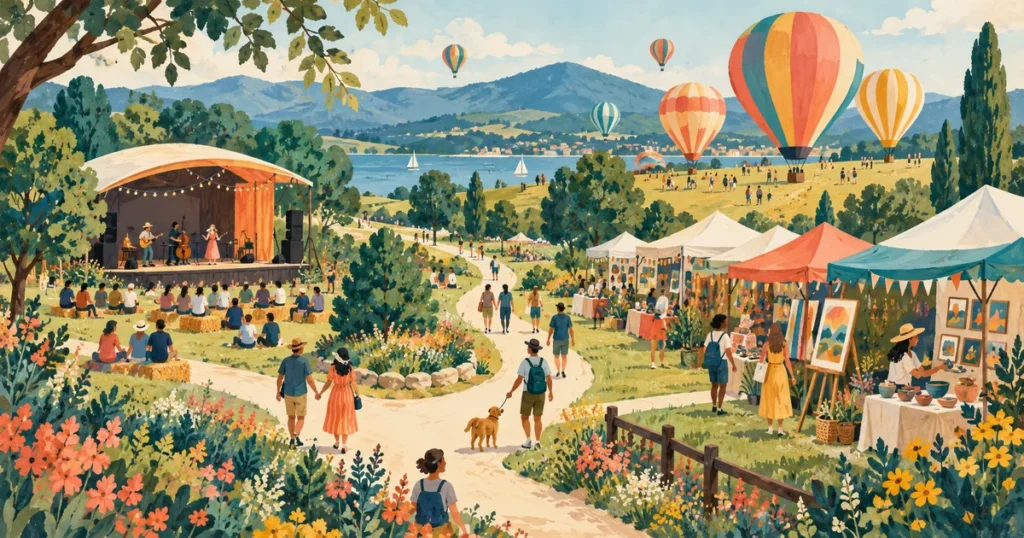
Last checked: October 3, 2026.
This Northwest Folklife Festival guide explains how to enjoy Seattle Center’s community-powered celebration of music, dance and living traditions without trying to race between every stage. The 55th festival ran May 22–25, 2026 and is complete. A confirmed 2027 schedule was not established by the official sources reviewed, so future dates and stage assignments should be checked when the organizer publishes them.
Quick facts and edition dates
| Completed edition | May 22–25, 2026 |
|---|---|
| Venue | Seattle Center, Seattle, Washington |
| Campus orientation | 305 Harrison Street |
| Admission model | No admission charge; supported by donations |
| Best planning approach | Two priority performances plus time for discovery |
| Future edition | Confirm new dates, map and schedule before travel |
What makes Northwest Folklife distinctive
The organizer describes a festival sustained by donations, sponsors and volunteers, with performers contributing their work and communities sharing cultural expression. Its history page emphasizes that there are no headliners. That makes discovery a central part of the visit rather than a gap before one famous closing act.
Arrive with curiosity about the people and practices behind the performance. Read how artists describe their own work and avoid assuming that a single set represents every tradition within a community. A short introduction or workshop can add context that makes the music or dance more meaningful.
Donation-supported admission also means you can plan a short visit. If you are able, include a contribution in your outing budget alongside food and transport. There is no need to treat a suggested donation as a compulsory ticket price.
Dates and the importance of the correct edition
Seattle Center confirms May 22–25 for the completed 2026 festival. The date range covered Memorial Day weekend, but an annual holiday pattern is not a substitute for the next official announcement. This guide does not assign unverified 2027 dates.
When the new schedule appears, check the day as well as the stage. A performer may appear only once, and a program category may move between spaces. Keep the current edition’s map and schedule together so you are not matching a new performance to an old stage layout.
Seattle Center’s ordinary campus hours are separate from individual festival performance times. Use the organizer’s actual program to decide when to arrive and when your final activity finishes.
How to choose stages and sessions
Think in terms of experiences: a seated performance, participatory dance, a demonstration, a jam or time browsing makers. The organizer’s program overview emphasizes the breadth of community involvement across the campus. The right route depends on what you want to do, not simply on the number of stage names you can fit into a day.
A primary account from Western Washington University’s participating music group describes a 2026 set at Fisher Green and a separate session at the Jam Tent. This illustrates why the same musicians can offer different experiences in different spaces. It is a completed-edition example, not a future booking.
Choose two anchors that leave a comfortable gap. Find their exact locations on the new map, then identify one nearby optional session. If a discovery holds your attention, you can stay without sacrificing the performance that mattered most.
A relaxed first-visit route
Begin with your first chosen performance and stay long enough to hear a meaningful part of the set. Afterward, take a short walk to explore another format, then pause for food. Finish with the second anchor or a participatory activity if one suits your interests.
This is an original suggested sequence, not an official itinerary. Reverse the order around actual times and crowd conditions. Keep at least one portion of the visit unbooked so the campus itself can lead you toward something unexpected.
When moving between stages, leave exits and accessible routes clear. If you stop for an informal performance, stand where others can still pass. Ask before making close-up photographs or recordings, and follow any artist or venue instructions.
Joining in respectfully
Read a workshop’s description before entering and listen to the facilitator’s guidance. Some sessions are designed for beginners; others may assume experience or have limited space. Participation should match the session’s invitation, rather than an assumption that every performance welcomes audience involvement.
If a tradition is new to you, start by observing and asking a thoughtful question when there is an appropriate opportunity. You do not need to master a dance or technique to appreciate it. Paying attention to how participants explain their work is part of the experience.
For families, let children choose one activity and leave room for them to watch before joining. Keep a shorter alternative available if a room, crowd or sound level becomes uncomfortable. A whole-campus festival does not imply that every session has identical age or access guidance.
Meals, breaks and practical spending
Plan a meal before the busiest part of your personal schedule, and choose a backup so a long queue does not force you to miss an anchor performance. Ask vendors directly about ingredients when dietary requirements matter. Do not infer a specific accommodation from the name of a cuisine.
Set a spending amount for food, crafts and donations before browsing. If buying handmade work, ask about materials, care and how to carry it safely for the rest of the visit. A large or delicate purchase can change what is comfortable to do afterward.
Check the forecast and current visitor rules before packing. A manageable bag, comfortable shoes and a clear meeting point help more than a crowded checklist. Ask the organizer about the specific facility or route you need for an accessible visit.
Getting there and leaving comfortably
Seattle Center can be reached by transit, monorail, walking, cycling or car. Choose the method that works for the return journey as well as the arrival. Our Northwest Folklife parking and transportation guide compares the current garage options and explains the monorail fare detail that can affect a budget.
For a first visit, arrive with time to find the initial stage instead of aiming for the first note. At the end, allow for the walk across campus and any queue at transit. A relaxed departure makes the full day easier, especially with children or visitors who need a slower pace.
Before leaving home, confirm the next edition’s date, the two sessions you chose and the current transport alerts. Keep the remaining plan flexible and give yourself permission to discover less in greater depth.
Venue location
Venue orientation only; use the organizer’s map for event entrances and viewing areas. Open the venue in Google Maps.
Frequently asked questions
Is Northwest Folklife free to attend?
The organizer describes no admission charge and support through donations, sponsors and volunteers. Food, purchases and transport are separate expenses.
What dates does this guide verify?
May 22–25, 2026, the completed 55th edition. It does not claim a confirmed 2027 schedule.
Is there one headline act to plan around?
The organizer's history page emphasizes a community festival without headliners. Choose performances based on your interests.
Should I try to visit every stage?
A few priorities with room for discovery usually make a more workable plan. Use the current map and allow time between locations.
Official sources and edition notes
- Seattle Center's completed 2026 festival listing
- Northwest Folklife history and donation-supported admission
- Northwest Folklife programs
- Participating musicians' 2026 Fisher Green and Jam Tent account
- Seattle Center transportation
- Current Seattle Center parking details
- Monorail fares and ORCA rules
Edition dates are identified above. Confirm current organizer notices before traveling; retained prices, promotions and access arrangements require verification for a future visit.