You are thirty-something, you have a job, maybe kids, definitely a to-do list — and somewhere between the group chat memes and the Sunday scaries, you caught yourself thinking: I wish I played video games. Then the doubt arrived right on schedule. Am I too old? Where would I even find the time? Everyone else has been playing for twenty years — how do I catch up? Here is the truth nobody told you: you do not need to catch up. Learning how to start gaming as an adult is not about closing a two-decade skill gap; it is about finding the games that fit the life you actually have, on a schedule that respects it. Adults are, in many ways, the ideal gamers — you know what you like, you can afford the hobby, and you have the discipline to stop (or the wisdom to know when not to). This playbook walks you through six phases: the mindset shift that removes the intimidation, finding your gaming “why,” a time-boxed approach that fits a busy week, gateway games matched to your mood, building a setup without overspending, and a 30-day plan that turns curiosity into a genuine hobby. No reflexes required. No forty-hour epics. Just a clear path from “I’ve always wondered” to “this is my favorite part of the week.”
Phase 1: Fix the Mindset First
Every adult beginner carries the same three mental blocks, and they are all wrong in instructive ways. Clearing them is genuinely the first step in how to start gaming as an adult — because the barrier was never your thumbs. It was the story you told yourself about who games are for.
“I’m too old to start.” The average gamer is in their mid-thirties, and a huge share of players are over forty. Game designers know this: modern games ship with assist modes, adjustable difficulty, and generous tutorials precisely because the audience includes busy adults, not just teenagers with lightning reflexes. You are not late to the party. You are the party’s target demographic.
“I don’t have the time.” You do not need twenty hours a week. Many of the best modern games are designed in 20–45 minute sessions — one cozy evening chapter, one roguelike run, one puzzle level before bed. Adults who start gaming often find that 2–3 hours a week is plenty to feel genuinely engaged. The trick is picking games that respect short sessions (Phase 3 covers exactly how).
“Everyone else is already good.” Gaming is not a single ladder everyone climbs together. A person with 5,000 hours in competitive shooters is a total beginner at a farming sim, and vice versa. You are not competing with anyone. Single-player and co-op games — where most adult beginners thrive — do not care about your rank, your reaction time, or your history. There is no entrance exam.
Give yourself permission to be bad at first. Every hobby has a clumsy phase; gaming’s is just more visible because it happens on a screen. It passes faster than you think — usually within the first two weeks.
Phase 2: Find Your “Why” — Gaming by Mood
Adults do not game to “git gud.” They game for a feeling: unwinding after work, a small adventure before bed, something absorbing for a rainy Sunday, a way to hang out with a partner or an old friend across the country. Naming your why is the most underrated step in how to start gaming as an adult, because it determines everything downstream — which games to buy, which hardware makes sense, even when you play.
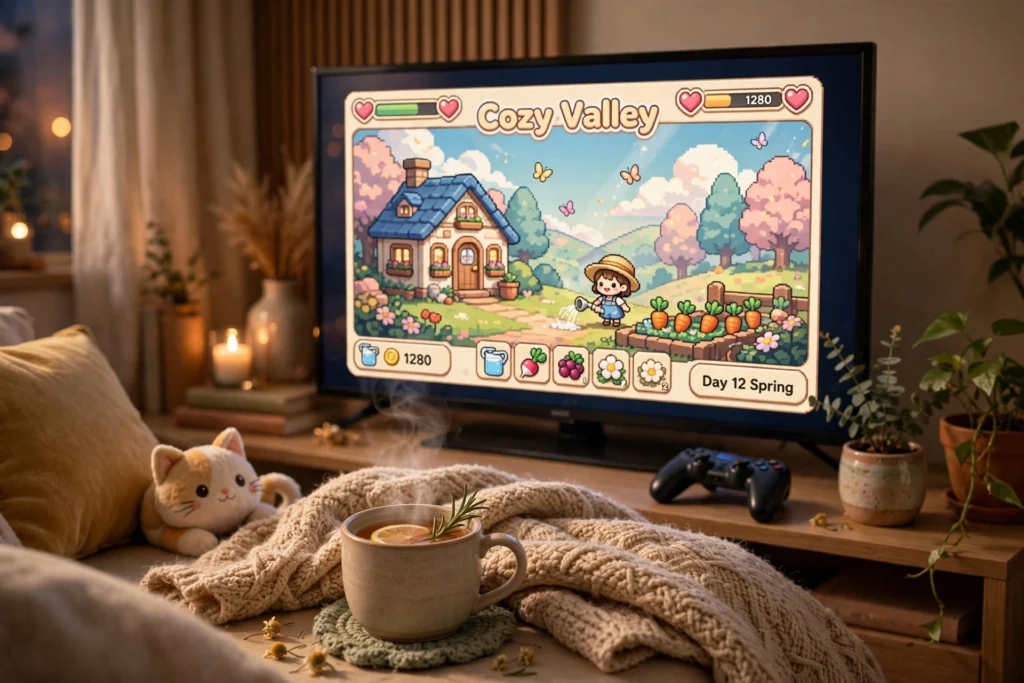
To decompress: you want low stakes, no fail states, gentle pacing. Think cozy farming, exploration, creative building. These games lower your heart rate; they never raise it.
To feel capable: you want clear goals and satisfying progression — leveling up, unlocking abilities, finishing quests. RPGs and adventure games deliver the “look how far I’ve come” hit that work sometimes withholds.
To be absorbed: you want a world that pulls you in — a mystery to unravel, a story to follow, a puzzle box that rewards focus. Great for people who miss getting lost in a good book.
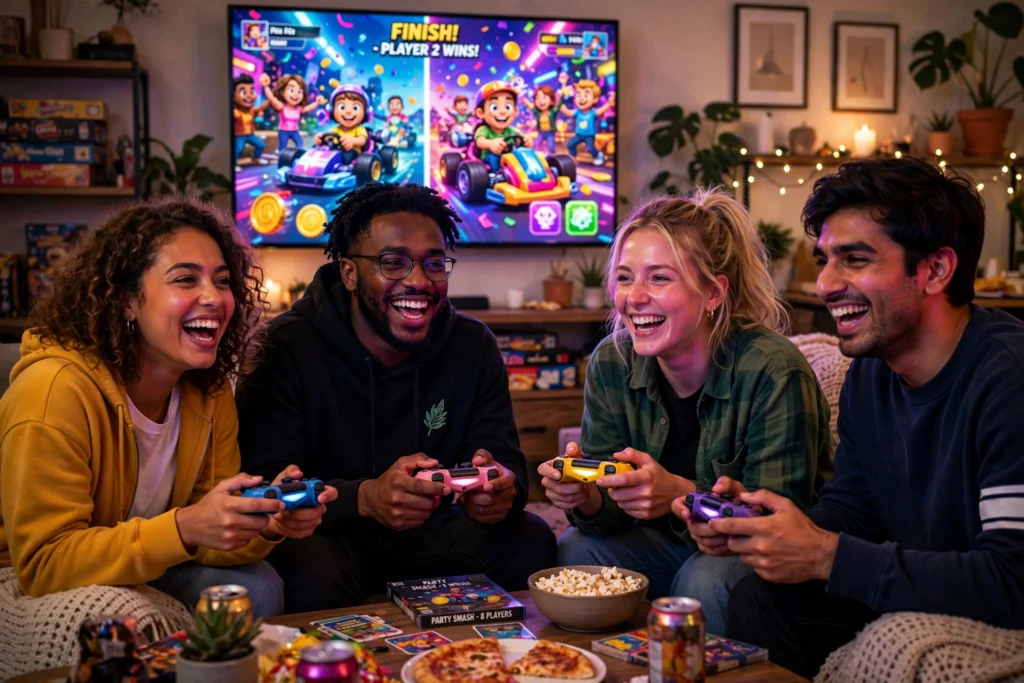
To connect: you want shared experiences — co-op adventures with a partner, a chill multiplayer game with friends, a party game for family night. Gaming becomes social time, not screen time.
To be challenged (gently): you want puzzles and strategy that make you think without punishing you. Turn-based games and puzzle adventures respect a thoughtful pace.
Write down your top two. When a game recommendation crosses your path, ask: does this serve my why? If not, skip it guilt-free. The adult gamer’s superpower is curation — you do not have to play what the internet is shouting about.
Phase 3: The Time-Boxed Play Method
Here is where most “how to start gaming as an adult” advice fails: it treats time as something you find. You will not find it. You schedule it, the same way you schedule workouts, date nights, and dentist appointments. The Time-Boxed Play Method is simple, and it is the difference between gaming becoming a hobby and gaming becoming another thing you feel guilty about.
Pick your windows, not your hours. Choose 2–3 recurring slots per week — say, Tuesday and Thursday 9:00–9:45 PM, plus Sunday morning. Put them on your calendar like anything else. A defined end time is the magic: it removes the “just one more hour” spiral and, paradoxically, makes starting easier because the commitment is small.
Match game length to window length. This is the operational secret. Favor games with natural 20–45 minute loops: one in-game day, one mission, one puzzle chapter. Avoid games whose core loop is “three-hour raid” or “one more turn until 2 AM” until you know your own discipline. When you finish a session at a clean stopping point, you end satisfied instead of bleary.
Use the 10-minute rule. On days you do not feel like playing, commit to ten minutes. If you are not enjoying it after ten, stop — no guilt. Nine times out of ten, you will keep going, because starting was the hard part. This rule also protects you from sessions that feel like obligations rather than treats.
Keep a “next session” note. When you stop, jot one line about what to do next (“talk to the blacksmith,” “try the water temple”). Future-you will thank present-you: nothing kills a busy adult’s momentum like spending twenty minutes remembering what you were doing.
Protect the ritual, not the streak. Missed a week? The hobby is still there. Adult gaming works precisely because it bends around real life — travel, deadlines, sick kids. The goal is a standing invitation, not a streak to defend.
Two to four hours a week, scheduled and guilt-free, will take you further in a month than any binge. Consistency beats intensity; that is as true for gaming as it is for exercise.
Phase 4: Gateway Games by Mood
Now the fun part. These gateway picks are chosen for adult beginners specifically: gentle learning curves, respectful session lengths, zero assumed gaming literacy, and — critically — they match the “whys” from Phase 2. Each mood gets two to three starters so you can follow your curiosity.
To decompress: cozy and calm
Stardew Valley — inherit a farm, grow crops, befriend townsfolk, explore at your own pace. There is no way to lose, no timer that matters, and a full in-game day takes about 15 real minutes: the perfect session unit. It is inexpensive, available on everything including phones, and quietly one of the most beloved games ever made. If your why is decompression, start here.
Animal Crossing: New Horizons (Switch) — life on your own island in real time. Fish, decorate, chat with animal neighbors. Sessions can be twenty minutes of pleasant routine, and the game never punishes you for taking a week off. Ideal for the “cup of tea and twenty minutes of peace” gamer.
To feel capable: satisfying progression
The Legend of Zelda: Breath of the Wild / Tears of the Kingdom (Switch) — vast, beautiful adventure where curiosity is the main mechanic. You climb, glide, solve shrines, and grow steadily stronger. It respects your intelligence, never rushes you, and delivers constant “I did that!” moments. A landmark pick for adults learning how to start gaming as an adult because it teaches modern game controls better than any tutorial.
Hades — a fast, gorgeous action game built in short runs: each attempt lasts 20–30 minutes, and dying just makes your next run stronger. It is the rare action game that welcomes beginners, with a “God Mode” assist that gently reduces difficulty the more you struggle. Proof that exciting games can respect a busy schedule.
To be absorbed: stories and mysteries
Firewatch — a four-hour first-person story set in a Wyoming forest, told through radio conversations. No combat, no fail states, just a beautifully written mystery you can finish in two evenings. The perfect “I want to feel something” starter.
Outer Wilds — explore a tiny solar system stuck in a 22-minute time loop, piecing together an ancient mystery purely through curiosity. No combat, no upgrades — just knowledge as progression. Profound, strange, and unforgettable; best for the reader-turned-gamer who wants a world to get lost in.
To connect: shared play
It Takes Two — a co-op adventure designed for two players (partner, friend, kid) that constantly reinvents itself. It won Game of the Year, only one copy is needed for two players, and it is essentially a masterclass in “games are better together.” If your why involves another person, this is the single best answer.
Stardew Valley (multiplayer) — yes, again: the farm supports co-op, making it a wonderful low-pressure shared ritual. Tending a farm together is the gaming equivalent of a standing coffee date.
To be challenged (gently): thinky games
Portal / Portal 2 — first-person puzzle games with a wicked sense of humor. The mechanics are simple (two portals, momentum), the puzzles are brilliant, and Portal 2’s co-op is a fantastic couples’ game. Short, funny, and endlessly quotable.
Slay the Spire — a card-based roguelike where runs take 30–60 minutes and every loss teaches you something. Deeply strategic, zero reflexes required, and dangerously moreish in the best way. The “one more run” pull, tamed by short sessions.
A note on what to skip for now: competitive online shooters and sprawling 100-hour epics are wonderful — later. In your first month, they demand time and tolerance for losing that beginners rarely enjoy. Build your foundation first; the big worlds will wait.
Phase 5: Hardware Without Overspending
The gaming industry would love you to believe you need a $500 console, a 4K TV, and a headset on day one. You do not. The smartest move in how to start gaming as an adult is to spend as little as possible until you know what you actually enjoy — then invest with confidence. Here is the budget-conscious path.
Start with what you own. Your phone already plays excellent gateway games — Stardew Valley, Slay the Spire, and countless puzzle adventures run beautifully on mobile. A laptop or even a modest PC handles a huge library through storefronts like Steam, which runs regular deep sales. Play for a month on existing hardware before spending a dollar; you will learn your tastes for free.
If you buy one thing, make it count. For most adult beginners, the Nintendo Switch (or its successor) is the strongest single purchase: affordable, portable for travel and couch alike, and home to the friendliest beginner library in gaming — Animal Crossing, Zelda, Mario titles, and indie gems. The Switch Lite costs even less if you will only ever play handheld. Buy refurbished or previous-generation models to save more; game libraries carry forward, and last year’s hardware plays this year’s best beginner games just fine.
The used and refurbished market is your friend. Consoles hold up well, and certified refurbished units from major retailers come with warranties. Game discs and cartridges can be resold or bought pre-owned at steep discounts. Avoid buying a big digital library at full price on day one — sales are constant, and patience routinely cuts game prices in half.
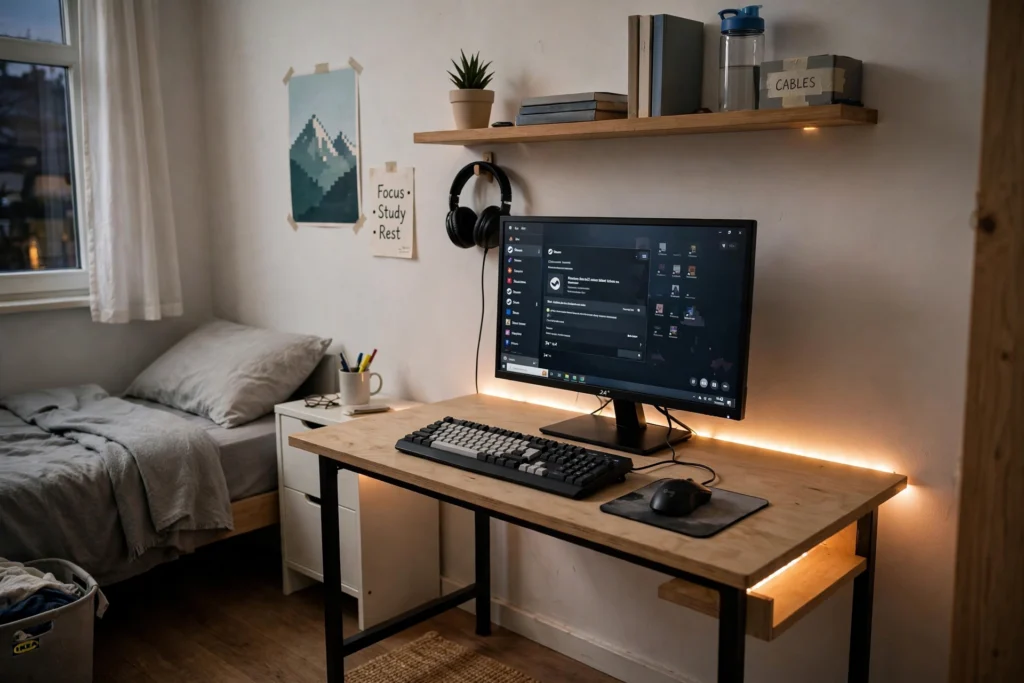
Skip the accessories (for now). You need: the device, one controller (usually included), and somewhere to sit comfortably. You do not need a gaming chair, a 144Hz monitor, a mechanical keyboard, or surround sound. Add comfort upgrades only after the hobby sticks — a decent headset for story games is the first worthwhile luxury, months in, not week one.
Set a starter budget and stick to it. A reasonable adult-beginner budget: $0–50 for the first month (existing devices + a sale-priced game or two), then $200–350 if you decide to buy a console. That is less than many people spend on streaming subscriptions in a year — and the entertainment hours per dollar are absurdly favorable.
Phase 6: Your First 30 Days
Theory is nice; momentum is better. Here is a week-by-week plan that turns “how to start gaming as an adult” from a question into a habit.
Week 1 — Explore. Pick one gateway game from Phase 4 that matches your why. Play three 30-minute sessions using the Time-Boxed Method. Do not research builds, watch guides, or optimize anything — just play, fumble, and notice what delights you. Write down one thing you liked after each session.
Week 2 — Settle in. Keep your scheduled slots. Learn one new mechanic or area per session. If the game is not clicking by session four, switch — quitting a game that does not fit is a skill, not a failure. The right game feels like curiosity, not homework.
Week 3 — Expand slightly. Try a second game from a different mood category, or invite someone into a co-op session. Notice how different genres feel. This is also the week to decide whether your current hardware is enough or whether a console purchase makes sense.
Week 4 — Make it yours. By now you know your why, your windows, and at least one game you love. Formalize the ritual: same slots, same cozy setup, the “next session” note ready. Tell a friend what you are playing — shared enthusiasm is the hobby’s best retention mechanic. You are no longer someone wondering how to start gaming as an adult. You are a gamer with a schedule that respects your life.
Beyond day 30: follow your curiosity. Finish a game (a deeply satisfying adult-gamer milestone), try a genre you dismissed, join a chill community for your favorite title. The playbook got you started; your taste takes it from here.
Frequently Asked Questions
Am I too old to start gaming as an adult?
No — and the data backs it up. The average gamer is in their mid-thirties, and millions of players are in their forties, fifties, and beyond. Modern games are designed with this audience in mind: adjustable difficulty, assist modes, tutorials, and save-anywhere systems all exist because busy adults are a core market. Learning how to start gaming as an adult is about finding games that fit your life, not about competing with people who started younger.
How much time do I need to game as a busy adult?
Two to four hours a week is plenty. The key is choosing games with 20–45 minute session loops and scheduling fixed windows (the Time-Boxed Play Method in Phase 3). Many of the best beginner games — Stardew Valley, Hades, Slay the Spire — are built around short sessions. Consistency matters far more than total hours.
What is the cheapest way to start gaming as an adult?
Start on hardware you already own: your phone or laptop plays excellent beginner games, many free or under $10 during sales. If you buy hardware, a refurbished Nintendo Switch or Switch Lite offers the friendliest beginner library at the lowest entry price. A sensible starter budget is $0–50 for month one, expanding to $200–350 only if you commit to a console. Avoid accessories entirely until the hobby sticks.
Which console is best for adult beginners?
For most beginners, the Nintendo Switch is the strongest pick: affordable, portable, and home to the most beginner-friendly library (Animal Crossing, Zelda, Stardew Valley, and countless indies). If you prefer story-driven blockbusters on the TV, a PlayStation 5 works well; if you want the best value subscription library, Xbox Series S with Game Pass is excellent. But honestly, the “best” console for learning how to start gaming as an adult is whichever one gets you playing the games that match your why.
What are good first games for someone who has never played?
Match the game to your mood: Stardew Valley or Animal Crossing for relaxation, Zelda: Breath of the Wild for adventure, Firewatch for story, Portal 2 for puzzles, It Takes Two for playing with a partner. All have gentle learning curves and respect short sessions. Avoid competitive online shooters and 100-hour epics until you have your footing — they demand time and losing-tolerance that beginners rarely enjoy.
How do I avoid gaming taking over my schedule?
Use time-boxing: fixed sessions with defined end times, scheduled like any other appointment. The 10-minute rule (commit to ten minutes; stop guilt-free if it is not fun) prevents obligation creep, and ending sessions at natural stopping points keeps things satisfying. Gaming becomes a problem when it is unstructured; a scheduled 45-minute session is no different from a scheduled TV episode or workout.
Is it weird to game alone as an adult?
Not at all — single-player gaming is one of the most popular ways adults play, and many describe story and cozy games as their version of reading or solo hiking. That said, if you want social connection, co-op games like It Takes Two and Stardew Valley multiplayer, or chill online communities around cozy titles, make gaming genuinely social. Solo or social, the hobby molds to your preference.
Will I be bad at games forever if I start late?
No. The “clumsy phase” typically lasts one to two weeks of regular short sessions — modern games teach you as you play, and assist modes smooth the curve. More importantly, most beginner-friendly games reward curiosity, creativity, and strategy far more than reflexes. Adults often progress faster than they expect because they are better at reading systems, managing resources, and learning from mistakes. You are starting with a fully developed brain; use it.
Conclusion
Here is the whole secret of how to start gaming as an adult: there is no catch-up to play, no exam to pass, and no “real gamer” card to earn. There is only a person with a busy life discovering that an hour with a good game — scheduled, guilt-free, matched to their mood — might be the best part of the week. Fix the mindset, name your why, time-box your sessions, start with a gateway game that respects your evenings, spend little until you know what you love, and give it thirty days. A month from now, you will not be wondering whether you belong in this hobby. You will be the one recommending Stardew Valley to a friend, defending your Tuesday-night Zelda slot like a standing dinner reservation, and wondering why you waited so long. The controller is already in your hands. Press start.