Every year, Diwali arrives with the same quiet question: will this one feel special, or will it just pass by? Between work deadlines, school runs, and the general noise of life, it is easy for the festival of lights to become another item on the to-do list, another round of shopping and cleaning that leaves you exhausted rather than uplifted. But it does not have to be that way.
Making Diwali special at home is not about spending more or decorating like a magazine spread. It is about intention: choosing a handful of moments, rituals, and sensory details that tell your brain and your heart that this week is different. A single diya lit with full attention can feel more special than a hundred strung up in a hurry. This complete guide shows you exactly how.
Inside you will find fifty ideas organized by the senses and the soul, a practical week-before timeline, budget-friendly decorating strategies, food planning that actually works, rituals worth starting, and advice for every situation: kids, elders, guests, small apartments, and celebrating far from home. Let us make this Diwali the one you remember for all the right reasons.
What “Special” Actually Means
Before the ideas, a reframe. Psychologists who study ritual and celebration keep finding the same thing: what makes an occasion feel special is not extravagance but markedness, the sense that this time is set apart from ordinary time. You create markedness through sensory contrast (different lights, different smells, different food), through shared attention (everyone doing one thing together), and through meaning (connecting actions to stories and values).
This is liberating. It means a small apartment can host a more special Diwali than a mansion, if the small apartment is lit with intention, filled with the smell of cardamom, and shared with people who are truly present. Special is a decision, not a budget. Keep that in mind as you read, and choose the ideas that resonate rather than trying to do all fifty, because a few done beautifully will always beat many done hurriedly.
“A single diya lit with full attention outshines a hundred strung up in a hurry. Presence is the real decoration.”
The Week Before: A Timeline That Prevents Panic
Most Diwali stress comes from doing everything at the last minute. Spread the work across the week and the festival itself stays joyful.
| When | Do This | Why It Matters |
|---|---|---|
| 7 days before | Deep clean one room per day; finalize guest list | Cleaning early means decorating later feels like fun, not labor |
| 5 days before | Shop for decor, diyas, and non-perishable food | Stores empty out closer to Diwali; early shopping is calmer |
| 3 days before | Put up lights and major decorations | Enjoy your own decor for days, not hours |
| 2 days before | Prep mithai and snacks that keep; charge cameras | Batch cooking beats day-of chaos |
| 1 day before | Fresh flowers, rangoli base, set the puja corner | The house should feel festive before the festival |
| Diwali morning | Final rangoli, fresh diyas, get dressed early | Being ready early lets you savor the day |
| Diwali evening | Light diyas at dusk, puja, then celebrate | The main event, unhurried |
50 Ways to Make Diwali Special at Home
The ideas, grouped by the dimension of the celebration they elevate. Pick ten that speak to you and you will have a transformed Diwali.
Light: The Soul of the Festival
- Light diyas at dusk together. Gather everyone as the sun sets and light the first diyas as a family. The shared moment matters more than the number of lamps.
- Create a diya trail. Line diyas along the path from your entrance to the puja corner, guiding guests and energy through your home.
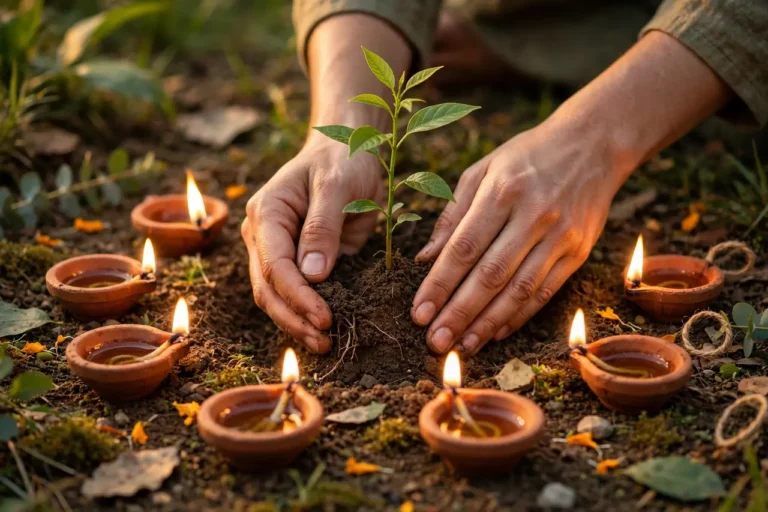
- Float diyas in water. A wide brass urli or bowl filled with water, flower petals, and floating diyas is the single most beautiful Diwali decoration that exists.
- Try a candle-only evening. One year, skip the electric lights after the puja and let the house glow with only flames. The atmosphere is unforgettable.
- Light a diya for someone absent. A small lamp for a loved one who is far away or gone turns decoration into remembrance.
- Give every child their own diya to light. Supervised, of course. Owning one flame makes children feel part of the magic.
Decor: Making Home Feel Different
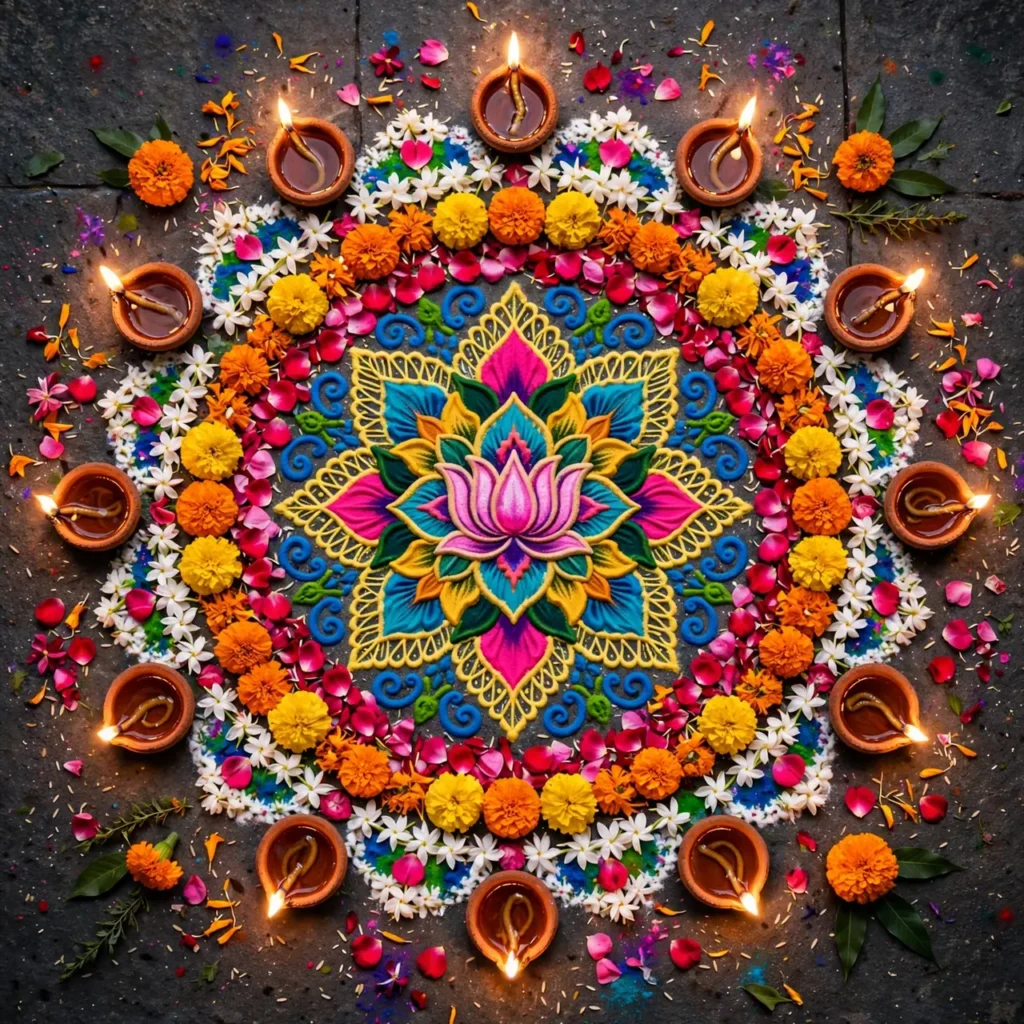
- Make a fresh flower rangoli. Petals instead of powder: easier, fragrant, and stunning. Marigolds, roses, and chrysanthemums are traditional for a reason.
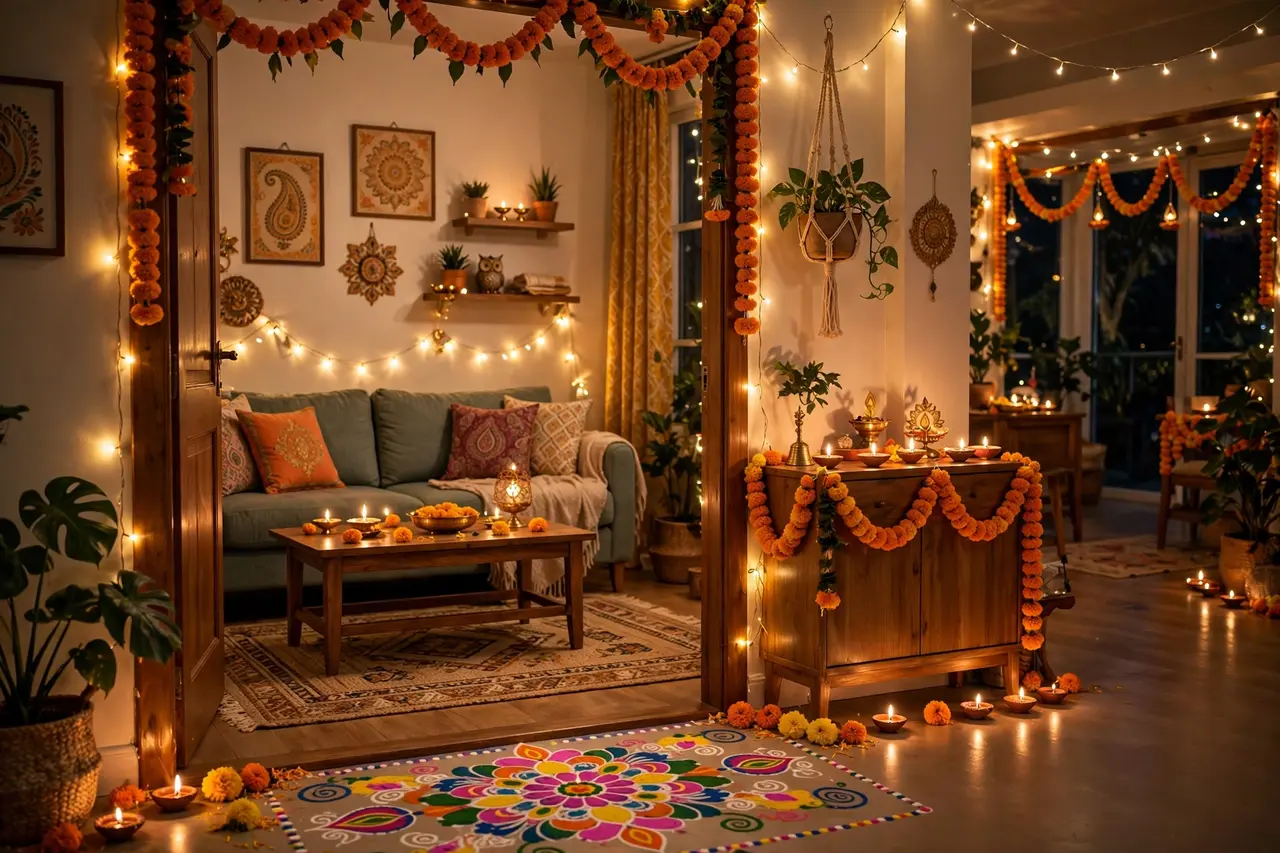
- Hang marigold torans on every doorway. The classic marigold garland instantly signals festival. Fresh ones smell incredible.
- Drape fairy lights in unexpected places. Inside glass jars, along the staircase railing, behind sheer curtains. Small placements beat big displays.
- Create a photo corner. One well-decorated wall with lights, fabric, and diyas becomes the backdrop for every family photo.
- Use what you have, differently. Move lamps, rearrange cushions in festive colors, drape a saree as a wall hanging. Novelty reads as special.
- Decorate the puja corner like a shrine. Fresh cloth, flowers, polished idols or images, and abundant light. This corner anchors the whole celebration.
” alt=”Rangoli of flower petals with lit diyas around it”>
Scent and Sound: The Invisible Decorations
- Simmer a festive pot. Water with orange peels, cloves, cinnamon, and cardamom on low heat perfumes the whole house naturally.
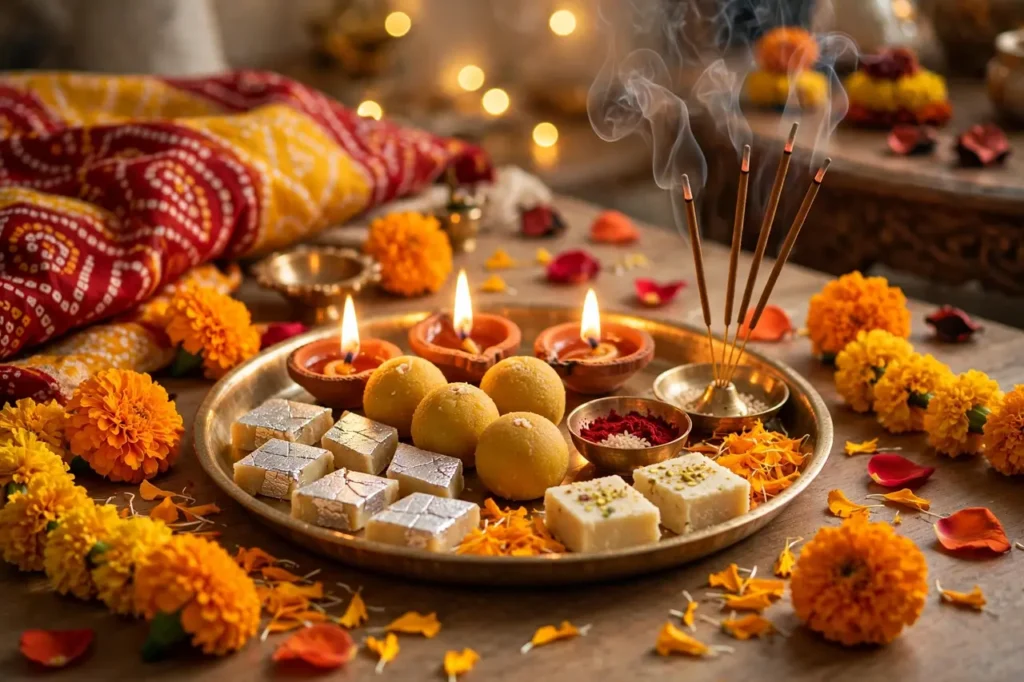
- Burn dhoop or incense during the puja. Sandalwood or mogra incense marks the sacred time with scent memory.
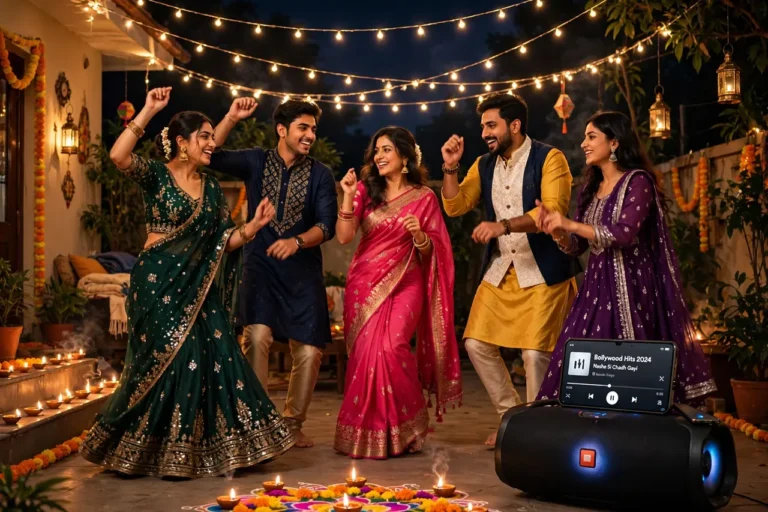
- Play a Diwali playlist all day. Festive music running softly transforms the home’s energy. Our wedding day decoration ideas at home guide has more ambiance tricks that work beautifully for Diwali.
- Ring a bell to begin. Start the evening’s celebration with a temple bell or singing bowl. The sound signals: now it begins.
- Read the Diwali story aloud. The tale of Rama’s return, told to children by firelight, connects the lights to their meaning.
Food: The Taste of Celebration
- Cook one dish together as a family. Rolling ladoos or shaping gujiyas with children creates the festival’s best memories and its best sweets.
- Make something you have never made before. One new recipe a year keeps the tradition alive and evolving. Pick something ambitious and laugh through it.
- Set a proper festive table. A tablecloth, real plates, flowers, and diyas turn dinner into an event. Paper plates are for ordinary days.
- Prepare a midnight feast. After the fireworks and festivities, a late-night spread of snacks and chai for the family is pure joy.
- Share food with neighbors. Packing mithai boxes for neighbors, especially those celebrating alone, is the festival’s spirit in action.
- Try a themed menu. One region’s cuisine each year, a color-themed dessert table, or a street-food night. Themes make meals memorable.
Togetherness: People Make It Special
- Call the people you cannot visit. Schedule video calls with distant family during the diya-lighting so they are present for the glow.
- Write gratitude notes. Each family member writes what they are thankful for and reads it aloud. Simple, profound, unforgettable.
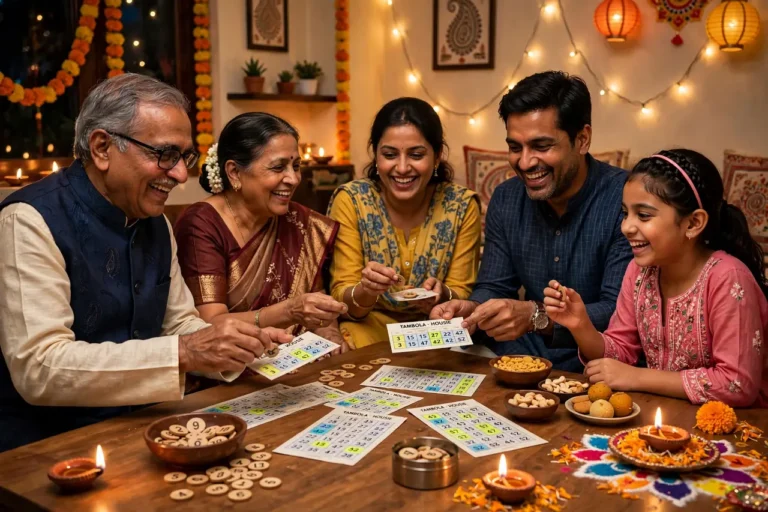
- Play one family game. Cards, tambola, or a Diwali quiz. Shared laughter is the fastest route to “special.”
- Take the annual family photo early. Before the night wears everyone out, gather for the portrait. Future you will treasure it.
- Invite someone who would be alone. A colleague far from home, an elderly neighbor, a new friend. Inclusion is the festival’s oldest tradition.
- End the night together. After guests leave, the household gathers for chai and the day’s stories. The quiet epilogue matters.
” alt=”Diwali puja thali with diyas, sweets and flowers”>
Meaning: Rituals That Resonate
- Begin with intention. Before the festivities, sit quietly for five minutes and set an intention for the new year. Diwali marks new beginnings; honor that.
- Forgive one thing. The festival celebrates the victory of light over darkness. Releasing one grudge is the most Diwali thing you can do.
- Donate before you celebrate. Give clothes, food, or money before buying new things. Generosity first sets the festival’s tone.
- Light the first diya with a prayer. Speak your hope aloud as you light it. Voiced intentions carry weight.
- Create a family tradition. One new ritual a year: a special dish, a particular song, a walk to see the neighborhood lights. Traditions are built, not found.
For the Senses of Children
- Let kids decorate their own corner. A small table they arrange themselves, with their diyas and drawings, gives them ownership of the festival.
- Tell the stories. Rama and Sita, Lakshmi and the lamps, the meaning of each day. Stories turn lights into legends.
- Make diya painting a craft day. Plain clay diyas, paint, and glitter, an afternoon of creativity that decorates the whole house.
- Count down with a Diwali calendar. Five small treats or activities, one per day, building anticipation like an advent calendar.
- Stargaze after the fireworks. When the sky quiets, lie back and look up together. Wonder is the best bedtime story.
Quiet Luxury: Special for Yourself
- Dress up even if staying home. Wearing your festive best for a home celebration signals to yourself that the day matters.
- Take a festive bath. The traditional oil bath or simply a long, scented soak before dressing marks the transition into celebration.
- Write in a journal. Record the year’s highs, release its lows, and write hopes for the new year. Diwali is a natural journaling milestone.
- Sit with the diyas alone. After everyone sleeps, spend ten minutes with the remaining flames. This quiet is the festival’s gift to you.
- Sleep in festive sheets. Fresh bedding in warm colors extends the celebration into rest. Small, lovely, yours.
Hosting: Special for Your Guests
- Greet with aarti. Welcoming guests with a small aarti and tilak makes arrival feel ceremonial and honored.
- Prepare take-home boxes. Mithai boxes for departing guests extend your celebration into their homes.
- Set up a drinks station. Festive mocktails, masala chai, or thandai in a self-serve corner keeps hosting effortless.
- Create a kids’ activity table. Coloring, diya painting, or simple crafts keep young guests happy and parents relaxed.
- End with sparklers together. A group sparkler moment before goodbyes sends everyone home glowing.
Decorating on Any Budget
| Budget | Biggest Impact Moves | Skip This |
|---|---|---|
| Under $25 | Clay diyas in bulk, marigold garlands, fairy lights you own | Expensive centerpieces; candles and flowers do more |
| $25 to $75 | Fresh flower rangoli, torans, floating diyas in a bowl | Single-use plastic decor that looks cheap by day two |
| $75 to $150 | Quality lanterns, brass urli, good fairy light strands | Overbuying; restraint photographs better |
| $150+ | Statement pieces: a beautiful urli, silk drapes, real brass diyas | Trendy items that will not suit next year’s taste |
The honest secret of festive decorating: light and flowers do 90 percent of the work. Everything else is garnish. A home with abundant diyas, fresh marigolds, and warm fairy lights feels special at any budget, while expensive decor in poor light falls flat.
For room-by-room inspiration, our guide on how to celebrate a marriage anniversary at home shares table-setting and ambiance ideas that translate perfectly to Diwali hosting.
The Food Plan That Actually Works
Festival cooking collapses under ambition. The plan that works has three tiers: make-ahead items (ladoos, namkeen, chutneys) prepared 2 to 3 days early; day-before items (doughs, marinated dishes, chopped vegetables); and day-of items only (fresh frying, reheating, assembling). Never plan more than two day-of dishes. Assign one dish per family member to distribute both work and pride. And always, always make extra: Diwali guests multiply, appetites expand, and take-home boxes are a feature, not a bug.
Rituals Worth Starting This Year
Traditions do not need centuries; they need repetition with love. Consider adopting one of these: the gratitude circle before dinner, where each person names one good thing from the year; the intention diya, where each family member lights one lamp for a hope; the neighborhood walk after dinner to see everyone’s lights; or the Diwali letter, where each person writes a short letter to the family to be read next Diwali. In five years, these will feel ancient. That is how traditions are born.
Understanding the festival deepens the celebration. Our Diwali festival of lights guide tells the stories behind the rituals, perfect for sharing with children.
Making It Special When You Are Far From Home
Celebrating Diwali away from family, in a new city or country, carries its own ache, and its own opportunity. Recreate the sensory anchors: cook one dish from home, light diyas even if they are LED, play the music of your childhood Diwalis. Video-call during the puja so you are present for the glow. Invite friends, especially fellow expats, and start a Friends Diwali tradition; chosen family celebrations often become the most cherished. And be gentle with the homesickness. It is proof of how much the festival means, and next year’s homecoming will be sweeter for it.
The Five Senses of Diwali: A Sensory Checklist
Specialness lives in the senses. Run through this checklist and make sure each sense gets its Diwali moment:
- Sight: diyas at varying heights, fairy lights, marigolds, a rangoli, everyone in festive color. The visual shift from ordinary days should be unmistakable.
- Smell: simmering spices, fresh marigolds, incense during puja, the distinct aroma of ghee from the kitchen. Scent is memory’s strongest trigger.
- Sound: festive music, the temple bell, laughter, the soft crackle of sparklers, mantras during the puja. Curate the soundtrack deliberately.
- Taste: the first ladoo of the season, chai at midnight, the specific mithai of your childhood. Taste anchors nostalgia like nothing else.
- Touch: new clothes, the warmth of a diya cupped in hands, flower petals, the embrace of arriving guests. Texture makes moments physical.
When all five senses signal “festival,” the brain has no choice but to feel it. This is why a fully engaged small celebration beats a distracted grand one.
Diwali for Elders: Comfort and Inclusion
Grandparents are often the heart of Diwali, and small considerations make the festival joyful rather than tiring for them. Seat them comfortably near the action rather than expecting them to move around; a good chair by the puja corner with a clear view is perfect. Keep pathways clear of diyas and wires to prevent trips, and use LED diyas in high-traffic spots. Involve them in ways that honor their role: asking grandmother to light the first diya, having grandfather tell the Diwali story, requesting their blessing formally. These moments of honor mean more to elders than any gift. Keep the music at a comfortable volume, offer seating during long rituals, and check in quietly. An included elder is a happy elder, and their blessings are the festival’s true wealth.
Hosting Overnight Guests During Diwali
Diwali often means a full house. Make overnight guests feel celebrated, not accommodated. Prepare the guest room with fresh festive bedding, a small diya or LED candle, and a welcome note. Lay out towels, toiletries, and phone chargers so nobody has to ask. Plan a relaxed morning-after breakfast, because the best Diwali conversations happen over slow chai the next day. Give guests a role in the celebration, lighting diyas, helping with the rangoli, so they feel like family rather than visitors. And build in downtime: a house full of people needs quiet corners and unscheduled hours. The hosts who rest are the hosts who enjoy.
Keeping It Special and Sustainable
Special does not have to cost the earth, literally. Choose clay diyas over plastic ones, fresh flowers over synthetic garlands, and LED fairy lights over power-hungry alternatives. Skip firecrackers or choose the quietest options; the money saved buys better mithai. Wrap gifts in cloth or newspaper, compost flower waste after the festival, and donate leftover food. A Diwali that honors Lakshmi, the goddess of abundance, should not impoverish the planet. Children notice these choices, and the lesson lasts longer than the festival.
After Diwali: Closing the Festival Beautifully
How Diwali ends shapes how it is remembered. Do not let the festival dissolve into laundry and leftovers. On the last evening, gather the household once more among the remaining diyas. Share one favorite moment each from the week. Blow out the last diya together with gratitude. Pack decorations with care, labeling boxes for next year, and save one marigold to press in a book. Write down the new tradition you started so you remember to repeat it. Endings with intention turn a good Diwali into a beloved memory, and set the stage for an even better one next year.
Diwali Morning: Starting the Day Right
The main Diwali day begins long before the diyas. An intentional morning sets the beautiful tone for everything after. Wake a little earlier than usual and start with the traditional oil bath or a long warm shower, washing off the ordinary week. Dress in your festive best before breakfast, not after; being dressed early makes the whole day feel ceremonial. Visit the puja corner first, before the chaos, for a quiet moment of prayer or reflection. Eat a proper festive breakfast together, because the day will get busy and this may be your calmest hour. Step outside to see your rangoli in daylight and your home with fresh eyes. Mornings are when Diwali feels most like a promise, and keeping the morning unhurried protects that feeling all day.
A Letter to Your Future Diwali Self
Here is a final idea, and perhaps the most special of all. Tonight, after the diyas are lit and before the celebration peaks, take five minutes to write a short letter to yourself to be opened next Diwali. Note what made this year special, what you would do differently, what you hope for in the coming year. Seal it and put it with the Diwali decorations. Next year, when you unpack the lights and the laughter begins again, read last year’s letter first. You will be amazed at what changed, what stayed, and how much the small intentional things mattered. This is how ordinary festivals become family legends, one letter at a time.
Watch: A Heartfelt Diwali Celebration at Home
See a real family’s warm Diwali celebration, from decorating with diyas and marigolds to the puja and festive food, full of ideas you can borrow:
Frequently Asked Questions
How can I make Diwali special without spending much money?
Focus on light, scent, and togetherness, which cost little. Clay diyas, a simmering pot of spices, fairy lights you already own, a family-cooked meal, and one shared ritual will make the day feel special at almost no cost.
What are the most important Diwali decorations?
Diyas, fresh flowers (especially marigolds), and warm fairy lights do most of the work. A rangoli at the entrance and a well-arranged puja corner complete the essential set. Everything beyond this is enhancement.
How do I celebrate Diwali in a small apartment?
Concentrate decoration in one or two zones rather than spreading thin. A decorated entryway, a glowing windowsill visible from outside, floating diyas in a bowl, and scented air make small spaces feel abundantly festive.
What food should I prepare for Diwali at home?
Plan three tiers: make-ahead sweets and snacks, day-before prep, and only one or two day-of dishes. Assign dishes across family members, always make extra for guests and take-home boxes, and include one new recipe each year.
How can I make Diwali special for kids?
Give them ownership: their own diya to light, a corner to decorate, diya painting as a craft, the festival stories told with drama, and a countdown calendar. Children remember participation far more than perfection.
What if I am celebrating Diwali alone?
Recreate sensory anchors from home: cook a familiar dish, light diyas, play festive music, video-call family during the puja, and consider inviting friends for a small celebration. Solo Diwali can be deeply peaceful with intention.
How early should I start preparing for Diwali?
Begin a week ahead: deep clean gradually, shop five days out, decorate three days out, and prep food two days out. Spreading the work keeps the festival itself joyful rather than exhausting.
What is a meaningful new Diwali tradition to start?
Try a gratitude circle before dinner, an intention diya per family member, a neighborhood lights walk, or annual letters to be read next Diwali. Repeat with love for a few years and it becomes your family’s tradition.
This Diwali, Choose Special
You do not need all fifty ideas. You need five that you will actually do, with full attention and an open heart. Light the diyas at dusk together. Cook one dish as a family. Call the people you miss. Sit with the flames when the house goes quiet. Write the letter to your future self. That is a special Diwali, and it costs almost nothing except the attention you were going to give your phone anyway. The festival has survived thousands of years not because of grand displays but because ordinary families chose, year after year, to mark these days as different. Now it is your turn to carry the light forward. Happy Diwali to you and everyone you love.