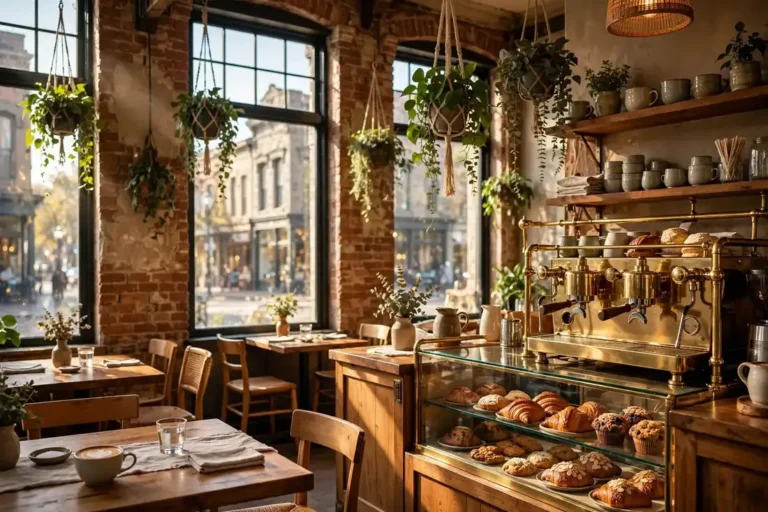
Learning how to become a regular at a coffee shop is one of life’s quietest upgrades. There’s a moment every cafe regular can describe — the morning the barista looks up, grins, and starts your drink before you reach the counter. You slide into “your” seat, and the room exhales the way a place does when someone who belongs walks in.
You don’t need years of visits or a fortune in lattes. Becoming a regular is one of life’s quietest upgrades, open to anyone who shows up with warmth, consistency, and patience. This guide walks the journey level by level — from anonymous first visit to the golden day the staff saves you a muffin because they knew you were coming.
Think of it as a gentle game with no losers and excellent coffee — Level 1 is the New Face, Level 5 the Beloved Regular, and between them a handful of visits, a few learned names, and one of life’s deepest small pleasures: a place where everybody knows your order.
Why Being a Regular Is One of Life’s Small Joys
We spend our lives bouncing between home and work. The sociologist Ray Oldenburg argued that humans need a third place — a public, low-pressure hangout that is neither — to feel fully rooted. For some it’s a bar or a gym. For a growing number of us, the third place smells like espresso and sounds like steaming milk.
A cafe where you’re a regular turns the most routine part of your morning into a small ritual. The barista who asked about your interview remembers to ask how it went; the retiree at the next table starts saving you the sports page. Over weeks, these micro-interactions braid into something that feels like community — because it is.
Then there are the perks, which arrive unannounced and feel like gifts because nobody promised them: the free pastry at closing time, the heads-up that your favorite seasonal drink returns next week, the slightly larger size “because you look like you need it today.” None of it can be bought. It can only be earned — and the currency is showing up.
There’s also the version of you a cafe reveals. Somewhere between your second and twentieth visit, you stop performing and start settling — book, journal, wandering thoughts in tow. A coffee shop you belong to becomes a witness to your life, and there is something quietly anchoring about being witnessed, one latte at a time.
Choosing YOUR Cafe: The Vibe Checklist
Before climbing the levels, you need a mountain — a cafe worth claiming. Not every shop is a good candidate, so date around a little. Visit three or four neighborhood spots before committing your mornings to one. Here’s the vibe checklist:
- The drinks are genuinely good. Regulars are built on a drink you crave. Order your standard — the one you’d get anywhere — and judge honestly. If the espresso is bitter and the oat milk always scalds, no amount of charm will keep you coming back.
- The staff seems happy to be there. Watch the baristas when they think nobody’s looking. Do they joke with each other? Make eye contact with customers? A crew that likes each other is a crew that will welcome you in.
- The seating invites lingering. Are there outlets? A mix of laptop tables and conversation corners? Does anyone look rushed out the door? A cafe that wants you to stay has chairs that say so.
- The rhythm fits your life. If you need coffee at 7 a.m. and the shop opens at 8, that’s a non-starter. Check the hours, the rush pattern, and whether a calm window matches your schedule.
- It feels like your people. Some cafes hum with freelancers, some buzz with strollers, some are quiet sanctuaries with jazz and newspapers. Sit for twenty minutes and ask: could these be my people? Trust your gut.
- It’s close enough to become a habit. Regular status runs on frequency, and frequency runs on convenience. A 10–15 minute walk or drive is the sweet spot.
One more tip: independent shops beat big chains for regular status, because the person making your drink today will likely be making it six months from now. When you find your place, commit. Loyalty is the entire game.
The Five Levels: From New Face to Beloved Regular
Here’s the journey, laid out as the progression it is. Every regular you’ve ever envied — the one whose drink appears like magic — walked this exact path. No shortcuts, no gates. Just show up, and climb.
Level 1: The New Face (Visits 1–3)
Everyone starts here: anonymous, reading the menu board like it’s a test. Your only job is to be a pleasant, observant customer. Order clearly and decisively — “small oat milk latte, please” beats five minutes of umming — and say thank you like you mean it. Notice staff names on tags. Watch how the crew treats the regulars; you’re looking at your future.
The key Level 1 skill is decisiveness at the register. If unsure, step aside, study the menu, and return ready. Make brief, warm eye contact when you order and when your drink arrives — you’re planting a flag in someone’s memory: “the friendly one.” That’s the seed of everything.
Barista-Perspective Tips: What the People Behind the Counter Wish You Knew
Regular status is a two-way relationship. Here’s what baristas — its gatekeepers — actually notice, from behind the espresso machine.
Learn names, and use them. This is the number-one tip, and it’s not close. Baristas serve hundreds of faces a week; most blur together. A customer who learns a name and greets them with it becomes a person instantly. “Morning, Priya!” costs nothing and buys more goodwill than a month of silent tipping. Forgot a name? Just ask again — “remind me of your name? I’m terrible with names” is endearing, not insulting.
Keep your order consistent — and order it the same way. Baristas memorize orders by sound as much as content. “Medium oat milk latte, extra hot,” said the same way each time, becomes a key that unlocks your file in their brain. Vary the phrasing every visit and you stay a stranger longer. Consistency is a gift to the people serving you.
Tip well, and tip every time. In the United States, tipping is the clearest signal of a customer a barista wants to see again: a dollar on drip coffee, 15–20% on crafted drinks, every single visit. The most beloved regulars are rarely the biggest per-visit tippers; they’re the reliable ones. Cash in the jar hits different — visible, immediate — but card-reader tips count, too.
Visit with rhythm, not just frequency. Three visits in one week followed by a month of silence builds less recognition than one steady weekly visit. Baristas work shifts — your Tuesday-morning person needs to see you on Tuesday mornings, repeatedly. Pick your days and keep them.
Be kind during the rush. Anyone can be pleasant at 2 p.m. on a sleepy Wednesday. Character shows at 8:15 a.m. when the line is twelve deep. The customers baristas adore smile, wait patiently, and say “no rush at all” — and mean it. Tell a stressed barista “you’re doing great” and watch their whole shift change. Service workers hear complaints all day; one sincere compliment carries weight.
Don’t hover at the handoff. When your drink is ready, grab it with a smile and clear the pickup area. Hovering and staring while they work is one of the job’s great unspoken stressors. Trust that your drink is coming.
Ask questions when it’s slow. Curious about the new single-origin? Wondering what separates a cortado from a flat white? Baristas love talking coffee — it’s why most took the job. But read the room: a quiet afternoon is an invitation, a Saturday rush is not. Time your curiosity well and you’ll get the full passionate coffee-nerd download.
Tip at Level 1 as if you’re already a regular — because tipping well from day one is the single fastest accelerator in this guide. The tip jar is the barista’s first impression of you, and it lasts.
Level 2: The Familiar (Visits 4–8)
Around visit four or five, something lovely happens: a flicker of recognition. The barista’s face lifts — I know you — even if they can’t place you yet. Welcome to Level 2.
This is the conversation level — keep it short, warm, and low-pressure. “Busy morning today?” works. In a quiet moment, ask a barista their name and then use it next time. Names are magic; they convert a transaction into a relationship in a single syllable.
Start locking in your order. Regulars aren’t mysterious; they’re consistent. Pick your honest favorite and order it the same way most visits. Barista brains are pattern-matching machines — give them a pattern to match.
Frequency matters enormously here. Aim for two to three visits a week. Regularity is literally in the name: you cannot become a regular irregularly. Find your rhythm — the Tuesday/Thursday stop, the slow Saturday morning — and keep it.
Level 3: The Known Order (Visits 9–15)
This is the level everyone dreams about, and it arrives like a small coronation. You walk in, and before you reach the counter someone calls out: “The usual?” Say yes — with the full joy it deserves.
At Level 3, deepen deliberately but naturally. Remember details and follow up — “How did the wedding go?” People remember who remembers. Extend warmth to the whole staff, not just your favorite barista.
Learn the shop’s ecosystem, too — the novelist in the corner, the Saturday crossword dad. A nod and a “good morning” is plenty. Over time, nods become conversations, and conversations become the community fabric.
One caution: don’t let the Known Order become a cage. Occasionally try the seasonal special or ask your barista what they’re drinking. “Surprise me — something cozy” is one of the most delightful sentences a regular can say.
Level 4: The Fixture (The Rhythm Sets In)
Level 4 doesn’t arrive with a single moment; it settles in like weather. You’re simply there — part of the shop in the best way. The staff notices when you don’t come in. “We missed you Tuesday — everything okay?” That question, asked with genuine warmth, is the sound of Level 4.
Your presence has a shape now — the 7:15 a.m. laptop person, the Saturday crossword regular — and the staff plans around you in tiny ways. Your table is free because they knew you were coming.
Lean in graciously. Small generosities start flowing both ways at this level — a box of donuts for the crew now and then, remembered birthdays, cookies if you bake. These cost almost nothing and mean everything in a job where most customers are a blur.
This is also where quiet privileges appear: a warning that the Wi-Fi is flaky, a stash of the last almond croissant when they see your car. Accept these gifts with visible delight. Nothing kills a perk faster than taking it for granted.
Level 5: The Beloved Regular
Level 5 is rare air, and it can’t be grinded — it’s bestowed. The Beloved Regular is the customer the staff genuinely loves, the one whose absence on a holiday week is felt. You’ll know you’ve arrived when the relationship stops being about coffee at all.
The Beloved Regular gets invited to things: the staff holiday party, the new roast tasting, the second location’s soft opening. When you travel, you bring back beans for the crew.
What separates Level 5 from Level 4 isn’t frequency or spending — it’s care. The Beloved Regular cares about the shop as a place and the staff as people, and it shows in a hundred tiny ways: the unprompted glowing review, the friend dragged in with “you HAVE to try this place,” the patience during a chaotic rush. Level 5 regulars make the cafe better just by being in it.
Here’s the beautiful secret: by the time you arrive, the free drinks feel almost incidental next to the real prize — belonging somewhere. A place where you are known, missed, and welcomed. In an increasingly virtual, transactional world, that’s not a small thing. That’s just about everything.
The Regulars’ Hall of Shame: What NOT to Do
Becoming beloved has an evil twin: becoming notorious. Every cafe has one — the customer new hires get warned about. The goal is to be known for warmth, never infamy. Tour the Hall of Shame, affectionately, and steer clear.
The Camper. Buys one small coffee at 9 a.m. and holds the best four-top until closing, spreading laptops and eventually lunch across the table through the lunch rush. Lingering is lovely, but read the room: one drink buys roughly 60–90 minutes in busy times. In a rush, buy another or free up prime real estate.
The Phone Shouter. The full-volume business call. The speakerphone FaceTime. The video meeting with no headphones. A cafe is a shared soundscape, and one loud caller ruins it for twenty people. Take calls outside or keep them brief and hushed. Headphones are non-negotiable.
The Order Complicator. Customization is fine; cafes expect it. But there’s a line where a drink becomes a chemistry experiment, and crossing it during a rush — every single day — earns a reputation. Keep it to two or three modifications. If your order takes longer to say than to make, simplify.
The Discount Detective. The regular whose whole personality is extracting value: fishing for unearned loyalty punches, hunting a “regular discount” that doesn’t exist. Cafes run on thin margins — nickeling-and-diming the people who make your coffee is the fastest route to being smiled at politely and dreaded privately.
The Boundary Blurrer. Friendly chat: wonderful. Trauma-dumping during the morning rush: not wonderful. Flirting with staff: never wonderful — they’re at work and can’t leave. Keep warmth professional-adjacent and let the barista set the depth. If genuine friendship develops organically over months, beautiful.
The Ghost Tipper. Orders the most complicated drink on the menu daily and has never once tipped. The staff knows. Oh, they know. You don’t need to overtip to avoid this wing — just consistently contribute something.
The throughline is simple: every inductee treats the cafe as existing for them. Flip that — you’re a citizen of this little coffee republic, not its monarch — and you’ll never end up on the wall.
The Unwritten Perks of Regular Status
Nobody hands you a brochure on day one, because the perks aren’t a program — they’re a relationship’s natural overflow. But they’re real. Here’s what’s quietly waiting:
The pre-made drink. You push open the door and your drink is already on the counter, timed to your arrival. It feels like magic every time, even the fiftieth.
The off-menu experiment. “I made something new — want to try it?” Baristas test recipes on customers they trust, so regulars drink things that don’t exist yet. Some are transcendent. Some are… educational. Both are fun.
The saved table and the held pastry. Your corner table stays free on busy mornings. The last cardamom bun gets tucked behind the counter when they see your car. Tiny acts of looking-out-for-you, and the purest expression of regular status.
Giving Back to Your Cafe Community
Here’s what nobody tells you at Level 1: the relationship eventually asks something of you — the way any community does. You’ve received months of warmth, saved tables, and belonging. Giving back is the natural next chapter, and it’s what turns a great regular into a legend.
Leave the review. The single highest-leverage thing you can do, in four minutes. A thoughtful Google or Yelp review from a genuine regular — favorite drink named, staff mentioned by first name — is marketing gold for an independent cafe. Small shops live and die by reviews. An occasional “my happy place” latte photo on your socials is a gift, too.
Bring people in. The greatest compliment you can pay a cafe is a new customer. Bring the visiting friend. Suggest it for book club. Host your casual work coffee there instead of the chain down the street. Cafe owners notice who their ambassadors are — and you get maximum smugness when you say “I told you this place was amazing.”
Show up for their things. Open mic night. The local artist’s work on the walls. The anniversary party. The fundraiser for the barista’s marathon. Community events only work if the community shows up, and your presence at the weird Tuesday poetry slam means more to the owner than a hundred lattes.
Spend a little extra sometimes. Buy the bag of beans for home. Grab the branded mug. Add the Friday pastry to your usual order. Independent cafes run on thin margins, and regulars who occasionally expand their order are quietly keeping the lights on. Think of it as a membership fee paid in croissants.
Be kind on the hard days. There will be a morning when the machine breaks, the line is out the door, and your favorite barista is near tears. Smile, say “no rush,” and mean it. The brightest regulars aren’t the ones who show up for perfect mornings — they’re the ones who bring grace to imperfect ones.
Respect the staff as people. Learn what they’re working toward — the nursing degree, the band, the novel. Celebrate their wins; say a real goodbye when someone leaves. These small human acknowledgments transform a commercial transaction into a community. Honestly? This is the whole point. The coffee was always just the excuse.
Frequently Asked Questions
How long does it take to become a regular at a coffee shop?
With two to three visits per week, most people reach “known order” status within a month or two and genuine regular standing within three to six months. Consistency beats volume — one visit every week for six months builds a stronger bond than fifteen visits crammed into two weeks. Think rhythm, not volume.
Do I need to spend a lot of money to become a regular?
Not at all. Baristas remember faces, names, warmth, and tipping consistency — not receipts. A regular who buys a simple drip coffee every morning and tips a dollar is far more beloved than someone who orders a seven-dollar concoction monthly and never tips. Regularity of presence beats size of purchase every time.
How much should I tip at a coffee shop?
A good rule: $1 on simple drinks (drip coffee, tea), 15–20% on crafted espresso drinks. The amount matters less than the consistency — tipping something every visit builds your reputation fastest. Cash in the jar is especially visible and appreciated, though card-reader tips absolutely count.
What if I’m shy? Can an introvert become a regular?
Absolutely — some of the most beloved regulars are quiet people. You don’t need to be chatty; you need to be warm: a genuine smile, a remembered name, a sincere thank-you. Even nods compound over time.
Should I stick to one coffee shop or spread my visits around?
Commit to one primary cafe. Splitting visits across five shops makes you a stranger everywhere instead of a regular somewhere. Nothing wrong with an occasional backup for variety — just give one shop the lion’s share of your loyalty. That’s where the magic happens.
Is it weird to go to a coffee shop alone?
Not even slightly — solo cafe-goers are the backbone of coffee shop culture. Bring a book, a journal, your laptop, or just your thoughts. Nobody thinks you’re lonely; the other solo regulars will recognize you as one of their own. Some of the deepest cafe friendships start with two people who both always came alone.
What should I do if “my” barista leaves?
Say a warm goodbye and wish them well — a card if you were genuinely close. Then give the new person a chance. The fastest way to honor what you had is extending the same openness to whoever’s behind the counter now. Regular status belongs to the relationship with the place, and new baristas are often hoping a friendly regular will adopt them.
Can I become a regular at a big chain coffee shop?
You can become recognized at a chain, and that’s still nice — but true regular status thrives where turnover is low and the team has latitude to be human. Independent cafes and small local chains are simply better soil. That said, if you love a chain location with a stable, friendly crew, go for it — warmth works everywhere.
Conclusion: Your Third Place Is Waiting
Becoming a regular is one of those rare pursuits where the journey genuinely is the reward. No certificate, no title, no formal induction — just a slow accumulation of mornings that starts feeling like belonging. One day you’re the new face squinting at the menu board; the next, you’re the person the staff waves at through the window, already reaching for your cup.
So pick your cafe. Learn a name. Tip the jar. Show up on Tuesdays. Be patient in the rush, curious in the lull — and remember the people behind the counter are people first, baristas second.
Your corner table is out there — good light, maybe a charmingly wobbly leg. The seat with your name on it, metaphorically speaking. All it takes to claim it is showing up, warmly and often, until showing up feels like coming home.
Because that’s what a third place really is: a home you don’t have to clean. Go find yours.
The intel. You’ll hear about the seasonal drink before the Instagram announcement and learn there’s a goodbye gathering for the afternoon barista. You’re an insider; information flows to insiders.
The grace. Bad morning and a little short? Forgot your wallet? Regulars get the benefit of the doubt, because the relationship holds goodwill to draw on. (Spend it sparingly — grace is a savings account, not a credit card.)
The community itself. The deepest perk: birthday wishes from the staff, introductions that become real friendships, the anniversary party invitation. A place that feels like an extension of your living room, staffed by people genuinely glad you exist. You can’t buy that. You can only belong to it.