

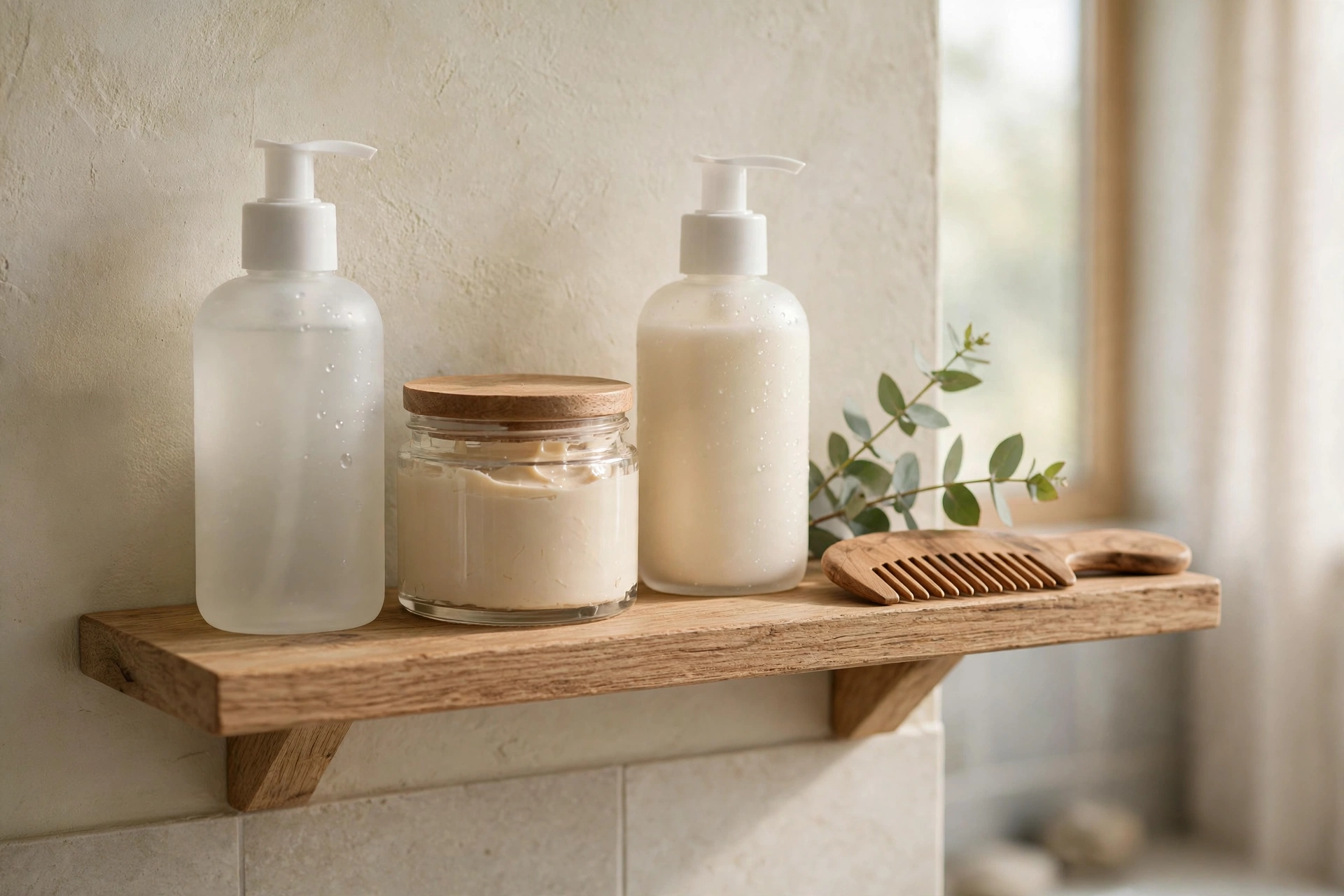
A hair care routine for beginners is simpler than the internet makes it look — and that is good news, because most hair damage beginners experience comes from doing too much, not too little. Over-washing, daily heat styling, rough towel-drying, and piling on products your hair never asked for cause more harm than any skipped treatment ever could. This guide builds your hair care routine for beginners from the ground up: how to identify your hair type, the five steps that cover every routine, a weekly schedule by hair type, and the habits that quietly wreck hair so you can drop them now.
The core idea: hair care is mostly about not damaging your hair, with a smaller part about actively nourishing it. Hair is dead protein once it leaves your scalp — it cannot heal, only be protected. Every good routine is therefore a protection strategy first.
Know Your Hair: The Beginner’s Hair-Type Decoder
Product recommendations are meaningless without hair type, because fine straight hair and thick coily hair have nearly opposite needs. Identify yours with this quick decoder.
Step 1: Your texture (strand thickness)
Pluck a single shed strand and roll it between your fingers:
- Fine: barely feel it; strand is almost invisible against your finger
- Medium: clearly feel it, like a piece of thread
- Thick/coarse: very distinct, wiry feel
Step 2: Your pattern (shape)
- Straight (type 1): no bend from root to tip; tends to get oily fastest because scalp oils travel straight down
- Wavy (type 2): loose S-shape; frizz-prone, somewhere between straight and curly needs
- Curly (type 3): defined spirals or corkscrews; drier by nature because oils cannot travel the curves easily
- Coily (type 4): tight coils or zigzag pattern; driest and most fragile — needs the most moisture and gentlest handling
Step 3: Your porosity (how your hair absorbs moisture)
Drop a clean, product-free shed strand into a glass of water and watch for two minutes:
- Floats on top: low porosity — cuticle lies flat, resists moisture but retains it well once in; use lightweight products and warm water to help absorption
- Sinks slowly: medium porosity — the balanced middle; most products work fine
- Sinks quickly: high porosity — absorbs fast but loses moisture fast; needs richer creams, oils, and sealing products
Write down your three results (for example: “fine, wavy, medium porosity”). Every product choice in this guide maps back to this profile.
The 5 Steps of Every Hair Care Routine
Step 1: Cleanse — shampoo the scalp, not the hair
Shampoo exists to clean your scalp. Massage it into the scalp with your fingertips (never nails) for 30–60 seconds; the runoff cleans the lengths on its way down. Scrubbing the lengths directly creates tangles and frizz for no benefit.
How often? This is the most personal variable in hair care:
| Hair type | Typical wash frequency | Notes |
|---|---|---|
| Fine / straight / oily | Every 1–2 days | Scalp oils travel fast on straight hair; a gentle shampoo used often beats a harsh one used rarely |
| Medium / wavy | Every 2–3 days | The most flexible category — adjust by how your scalp feels, not the calendar |
| Thick / curly | Every 3–5 days | Less frequent washing preserves natural oils curls desperately need |
| Coily | Every 5–7 days (or co-wash between) | Consider conditioner-only washing between shampoos to refresh without stripping |
Choose a sulfate-free shampoo as your default — sulfates are not evil, but they are stronger cleansers than most beginners need, and gentler formulas reduce the dryness complaints beginners report most. Use lukewarm water; hot water swells the hair shaft and roughs the cuticle.
Step 2: Condition — mid-lengths to ends only
Conditioner goes on the lengths, never the scalp (scalp application causes buildup and weighs roots down). Squeeze excess water out first — conditioner cannot penetrate hair that is dripping. Leave it for two to five minutes; that waiting time is when the conditioning agents actually work. Rinse with cool water to help seal the cuticle for shine.
Step 3: Treat — weekly, not daily
Treatments are concentrated nourishment: hair masks, deep conditioners, scalp scrubs, protein treatments. Once a week is the beginner frequency. Match the treatment to your main concern:
- Dry, rough hair: hydrating mask with shea butter, argan oil, or glycerin
- Weak, stretchy, breakage-prone hair: protein treatment (use monthly, not weekly — too much protein makes hair brittle)
- Itchy or flaky scalp: gentle exfoliating scalp scrub or a salicylic-acid scalp serum
- Dull hair: a glossing treatment or apple-cider-vinegar rinse for shine
Step 4: Protect — leave-in and heat protectant
After washing, apply a leave-in conditioner or serum to damp hair, focusing on the ends — the oldest, most fragile part of every strand. If you use any heat tool, even occasionally, a heat protectant is non-negotiable; it is the cheapest insurance in all of hair care. No heat protectant means no heat styling — that is the rule.
Step 5: Maintain — the between-wash habits
What you do between washes matters as much as wash day: sleep on a satin or silk pillowcase (cotton creates friction that causes breakage and frizz), use silk scrunchies instead of tight elastics, detangle gently from ends upward with a wide-tooth comb, and give hair regular trims every 8–12 weeks to stop split ends traveling up the strand.
Your Weekly Hair Care Schedule (by Hair Type)
Fine / straight hair week
| Day | What to do |
|---|---|
| Wash days (2–3x/week) | Shampoo scalp, condition ends, apply lightweight leave-in to damp ends |
| Between washes | Dry shampoo at roots if needed (apply at night for best absorption); light serum on ends |
| Weekly | Lightweight hydrating mask instead of regular conditioner, 10 minutes |
| Ongoing | Satin pillowcase; wide-tooth comb on dry hair; heat protectant before any styling |
Fine-hair warnings: heavy oils and butters will flatten your hair — choose “weightless” or “volumizing” formulas. Conditioner on the scalp is the number one cause of limp, greasy-looking fine hair.
Wavy hair week
| Day | What to do |
|---|---|
| Wash days (2x/week) | Shampoo, condition, scrunch in a curl cream or light mousse while damp |
| Between washes | Refresh waves with a water + leave-in spray mist; pineapple (loose high pony) overnight |
| Weekly | Hydrating mask; gentle scalp exfoliation if buildup-prone |
| Ongoing | Microfiber towel or cotton T-shirt to dry (never terry cloth); avoid brushing dry waves |
Curly / coily hair week
| Day | What to do |
|---|---|
| Wash day (1x/week) | Shampoo scalp thoroughly, deep-condition 15–20 minutes with heat cap if available, apply leave-in + cream + oil/gel in layers (the LOC/LCO method) |
| Mid-week | Co-wash or refresh with leave-in spray; re-twist or re-braid sections as needed |
| Nightly | Pineapple, braid, or twist hair; satin bonnet or scarf — non-negotiable for curl preservation |
| Ongoing | Detangle only when damp and conditioned, in sections, ends to roots; trim every 10–12 weeks |
10 Habits That Quietly Damage Hair (Stop These First)
- Washing with very hot water — swells the shaft and lifts the cuticle; lukewarm cleans just as well.
- Rough towel-drying — terry cloth friction causes frizz and breakage; squeeze with a microfiber towel or old T-shirt instead.
- Brushing wet hair aggressively — wet hair stretches and snaps; detangle damp, conditioned hair gently with a wide-tooth comb, ends first.
- Daily high-heat styling without protectant — flat irons at maximum heat on unprotected hair is the fastest route to breakage.
- Tight hairstyles every day — constant tension causes traction damage at the hairline; vary styles and keep them loose.
- Skipping trims — split ends travel upward and force bigger cuts later; small regular trims preserve length.
- Overlapping chemical treatments — coloring over recently relaxed or bleached hair without professional guidance.
- Sleeping with wet hair loose on cotton — friction plus damp fragility; dry mostly, then protect overnight.
- Using too much protein — protein treatments strengthen, but weekly protein on healthy hair makes it stiff and brittle; balance with moisture.
- Ignoring the scalp — healthy hair grows from a healthy scalp; itchiness, heavy flaking, or pain are signals to address, not ignore.
Hair Care Myths vs. Facts
Myth: “Trimming makes hair grow faster.”
Fact: Hair grows from the scalp at roughly half an inch per month regardless of trims. Trimming prevents split ends from traveling up and breaking off — so it preserves length, which looks like faster growth. The distinction matters.
Myth: “You should brush 100 strokes a day.”
Fact: Excessive brushing causes mechanical damage, especially on wet or curly hair. Brush or comb only as needed to detangle and style.
Myth: “Oily hair should be washed with the strongest shampoo daily.”
Fact: Harsh daily stripping can trigger rebound oil production. A gentle shampoo used as often as needed — even daily for very oily scalps — keeps things balanced better than a harsh one.
Myth: “Natural oils should never be washed out.”
Fact: Scalp oils go rancid and trap buildup, dead skin, and pollution. Regular cleansing is hygiene, not harm — the key is matching frequency and gentleness to your hair.
Myth: “Expensive salon products are always better.”
Fact: Formulation matters more than price tier. Many affordable products share key ingredients with luxury ones. Find formulas that suit your hair type and porosity; the logo is secondary.
Building Your Product Lineup: What to Buy First
As a beginner, buy in this order — each item earns its place before the next:
- Gentle shampoo matched to your scalp (not your ends). This is the product worth choosing most carefully.
- Conditioner matched to your lengths’ needs — moisture for dry hair, lightweight for fine hair.
- Leave-in conditioner or serum — the daily protection layer for ends.
- Heat protectant — before you ever plug in a heat tool, not after.
- Weekly mask — one treatment for your main concern.
- Wide-tooth comb + microfiber towel + satin pillowcase — the unglamorous tools that prevent the most damage.
Everything else — scalp serums, bond builders, glosses, dry shampoo varieties — is a future upgrade. For a curated starting point of effective formulas, see our roundup of the best hair care products covering shampoos, conditioners, masks, and treatments.
Frequently Asked Questions
How often should a beginner wash their hair?
It depends on your hair type: fine or straight hair typically needs washing every one to two days, wavy hair every two to three days, curly hair every three to five days, and coily hair weekly. Let your scalp guide you — itchiness, visible oil at the roots, or odor mean it is time, regardless of the schedule.
What is the correct order for a hair care routine for beginners?
Shampoo the scalp, condition the mid-lengths to ends, apply treatments weekly, then use leave-in and heat protectant on damp hair. Between washes: protect hair overnight and detangle gently. The principle mirrors skincare — cleanse first, treat, then seal and protect.
Should beginners use conditioner every time they shampoo?
Yes. Shampoo cleanses and slightly raises the hair cuticle; conditioner smooths it back down, restores moisture, and reduces tangling. Skipping conditioner after every shampoo is one of the most common beginner mistakes and a direct cause of frizz and breakage.
Is it better to air-dry or blow-dry hair?
Both are fine when done right. Air-drying avoids heat damage but leaves hair damp and fragile for longer; blow-drying on medium heat with protectant, held at a distance, can actually be gentler than hours of dampness. The enemy is high heat without protection, not the dryer itself.
How do I know my hair porosity, and does it matter?
The float test above gives a rough read: low-porosity hair resists moisture (use lightweight products, warm water), high-porosity hair loses it fast (use richer creams and sealing oils). It matters most when choosing product weight — it is the difference between products that sit on your hair and products that actually absorb.
Can I repair split ends without cutting?
No. Split ends cannot be fused back together despite what some product marketing claims — “split end sealers” temporarily glue them cosmetically at best. The only real fix is trimming above the split. Regular small trims prevent splits from traveling and forcing a big cut later.
Why is my hair frizzy even though I condition?
Common causes: rough towel-drying, brushing dry wavy/curly hair, skipping leave-in, humectant products in very dry or very humid weather without sealing, and heat damage. Fix the handling habits first — they cause more frizz than any product deficiency.
When should I see a professional about hair loss?
Shedding 50–100 hairs daily is normal. See a dermatologist for sudden heavy shedding, visible thinning or bald patches, a widening part, or scalp pain, redness, or scaling. Hair loss has many causes — stress, hormones, nutrition, medical conditions — and early professional assessment leads to better outcomes than months of guessing with products.
Seasonal Adjustments: Your Routine Across the Year
Hair does not experience January and July the same way, and your routine should not be identical either. These are the adjustments beginners should make:
Winter: fight dryness and static
Cold air holds little moisture and indoor heating makes it worse. Switch to a richer conditioner, add a weekly deep-conditioning mask if you were not masking before, and consider a leave-in with light oils on the ends. Static is a dryness signal — a tiny amount of serum smoothed over the canopy tames it. Wear hats with a satin lining, or tuck a silk scarf under wool hats, since coarse fabrics create friction breakage.
Summer: protect from sun, salt, and chlorine
UV rays degrade hair protein and fade color just as they damage skin. Wear a hat for long sun exposure, wet hair with clean water before swimming (saturated hair absorbs less chlorinated or salt water), and rinse immediately after. A clarifying shampoo once every week or two removes sunscreen, salt, and pool-chemical buildup that regular gentle shampoo leaves behind.
Humid seasons: manage frizz at the source
Frizz in humidity is hair absorbing moisture from the air and swelling unevenly. Anti-humidity serums and light sealing oils work by creating a barrier — apply to damp hair before going out. This is also when the LOC method (leave-in, oil, cream) earns its keep for curly and coily hair: sealed hair cannot drink the humid air.
Hair Care on a Budget: Where to Spend and Where to Save
Beginners often assume good hair requires expensive products. The truth is more encouraging: technique and consistency matter far more than price, and a smart budget allocation beats an expensive shelf of random products.
| Worth spending on | Why | Safe to save on | Why |
|---|---|---|---|
| Shampoo matched to your scalp | It is the foundation product you use most; the wrong one causes the most complaints | Weekly masks | Many affordable masks share key conditioning ingredients with luxury ones |
| Heat protectant | Cheap insurance against the most expensive damage to fix | Styling creams and gels | Technique (damp application, sectioning) matters more than formula prestige |
| Satin pillowcase | A one-time purchase that protects hair every night for years | Shine serums | A few drops of a basic silicone or oil serum performs the core job |
| Regular trims | Prevents the split-end damage that no product can reverse | Specialty scalp gadgets | Fingertips massage just as effectively for beginners |
The highest-value beginner upgrade is not a product at all: it is the satin pillowcase, microfiber towel, and wide-tooth comb trio, which together cost less than one luxury serum and prevent more damage than any serum repairs.
The Bottom Line
A hair care routine for beginners is a protection strategy: cleanse the scalp at the right frequency for your hair type, condition the lengths every wash, treat weekly, protect the ends daily, and maintain gently between washes. Drop the damaging habits — hot water, rough towels, unprotected heat, skipped trims — and your hair will improve before you spend another dollar. Once the foundation is solid, targeted upgrades from our hair care product guide can address specific concerns. Healthy hair is not bought; it is maintained.


