

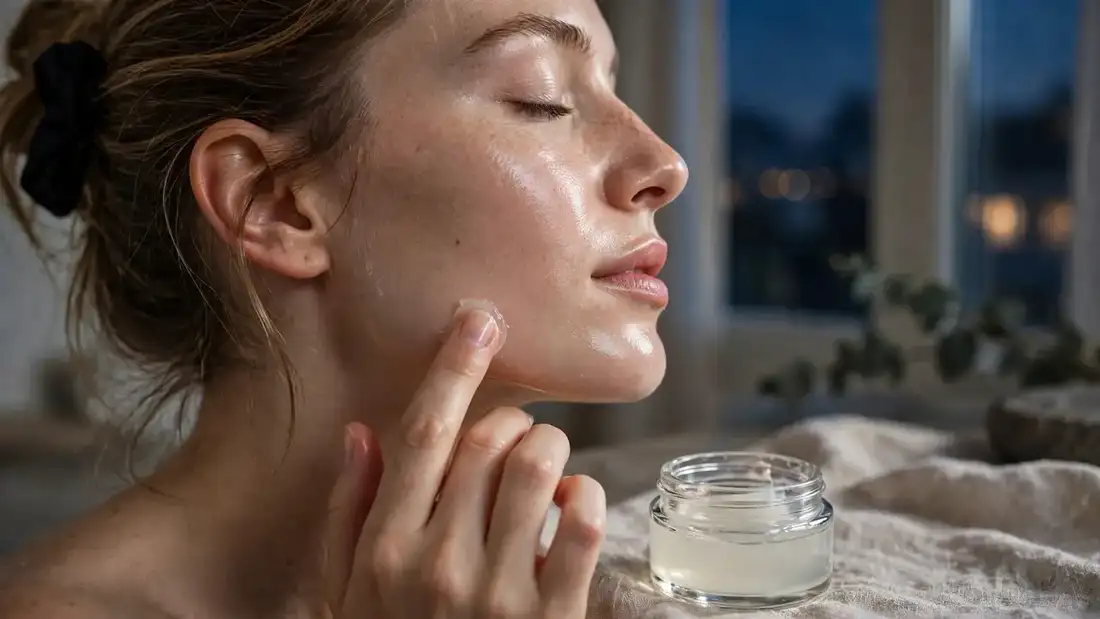
Slugging — sealing the nighttime routine with a thin layer of petrolatum (or a similarly occlusive balm) — went from the K-beauty insider technique to the viral skincare phenomenon, promising the glazed, glass-like morning skin. Beneath the trend’s hype lies the genuine dermatological mechanism: occlusion, the most effective way to prevent the overnight transepidermal water loss, enhancing the absorption of everything beneath it while the skin sleeps.
The trend’s polarizing reputation (the miraculous morning glow versus the breakout complaints) reflects the technique’s misuse more than its nature: slugging done correctly on the suitable skin with the proper layering is the powerful hydration tool; done incorrectly (over dirty skin, on the acne-prone, with the comedogenic layering) it causes the problems the viral critics report. The method matters as much as the product.
This guide covers slugging completely: the mechanism (why occlusion works), the correct step-by-step technique, who benefits most (and who should skip it), the product options, the breakout-prevention rules, the variations (the slug-adjacent methods), and the honest assessment of the trend — the complete manual for the occlusive method done right.
How Slugging Works: The Occlusion Mechanism
Transepidermal water loss (TEWL) is the continuous evaporation of the skin’s moisture — peaking overnight in the heated, dry bedroom air. Petrolatum is the most effective occlusive known: it reduces TEWL by up to 98%, forming the near-impermeable seal that traps the skin’s moisture and everything applied beneath it. The morning’s plump, glazed skin is the visible result of the moisture that stayed instead of evaporating — the hydration preserved, not the hydration added.
The penetration enhancement: the occlusion increases the absorption of the products beneath it — the hydrating serums, the moisturizers, the treatments sealed under the petrolatum penetrate more effectively in the occluded environment. This is the double benefit (the moisture kept in, the actives driven deeper) and the double caution (the irritating actives also penetrate more — the strong retinoids or acids under the slug intensifying beyond the intended). The layering beneath the slug must be the deliberate choice, not the thoughtless seal-over-everything.
The barrier support: the occluded night is the barrier’s recovery shift — the protected environment letting the barrier rebuild without the continuous water-loss stress, the ceramides and the lipids beneath working in the optimal conditions. For the dry, the compromised, and the winter-stressed skin, the regular slugging nights measurably improve the barrier function over the weeks — the mechanism that the dermatologists have recommended (under the clinical name of occlusion therapy) long before the trend’s name existed.
The Correct Slugging Technique: Step by Step
Step 1 — The complete routine beneath: the gentle double cleanse (the slug seals in whatever is on the skin — the clean canvas is the prerequisite; sealing over the dirty skin traps the debris and the bacteria, the breakout cause the critics report), the hydrating layers (the toner, the hyaluronic acid serum on the damp skin — the moisture the slug will preserve; slugging over the dry skin seals in the dryness), and the moisturizer (the barrier-supporting cream — the nourishing layer the occlusion will enhance). The beneath-layers are the slug’s purpose; the thin dry routine slug adds little.
Step 2 — The thin occlusive layer: the pea-sized amount of petrolatum (or the occlusive balm) warmed between the palms, pressed gently over the face — the thin uniform film, not the thick mask. The slug is the sheer veil, not the heavy coat; the excess (the thick white layer) wastes the product, stains the pillow excessively, and risks the milia and the congestion. The thin layer occludes effectively — the petrolatum’s efficacy does not require the thickness.
Step 3 — The overnight and the morning after: the pillow protected (the old pillowcase, the towel over the pillow — the practical slug hygiene), the sleep undisturbed (the seal working through the night), and the morning’s gentle cleanse (the lukewarm water or the gentle cleanser removing the residual — the fresh canvas for the morning routine). The morning’s glazed skin (the plump hydrated — the trend’s promised result) is the correctly slugged night’s signature. The frequency: 1–3 nights weekly for most (the dry and the winter-stressed possibly more; the oily and the acne-prone rarely or never — the suitability below).
Who Benefits Most (and Who Should Skip)
The ideal sluggers: the dry skin (the moisture-preserving — the slug’s primary beneficiary), the compromised barrier (the recovery environment — the rebuilding supported), the winter-stressed (the dry season’s intensive — the seasonal slug), the mature skin (the moisture-retention declining — the occlusive’s compensation), and the retinoid users with the dryness (the slug over the buffered retinoid nights — the tolerability enhanced, with the penetration caution noted). These skins transform with the regular slugging — the morning plumpness, the improving barrier, the comfort.
The cautious and the skipping: the acne-prone (the occlusion trapping the sebum and the bacteria — the breakout risk; the video below addresses exactly this failure mode), the very oily (the unnecessary seal — the congestion without the benefit), the milia-prone (the occlusive encouraging the tiny cysts), and the hot humid climates (the seal’s sweat-trapping — the discomfort and the congestion). The fungal-acne-prone (the malassezia thriving in the occluded warm environment — the condition worsened). The suitability is the individual assessment; the trend’s universality is the myth.
The patch-test wisdom: the new slugger tests the method (the single night, the small area or the full face observed, the morning’s assessment — the breakouts, the milia, the comfort noted) before the regular adoption. The skin’s response (the glazed plumpness versus the congested protest) determines the frequency and the continuation. The trend tried intelligently (the test, the observation, the honest assessment) rather than the viral-imitation (the nightly slug regardless of the response) — the method serving the skin, not the trend serving the content.
Product Options: Beyond the Petrolatum
Pure petrolatum (the original): the most effective occlusive, the most affordable, the minimally reactive (the highly refined — the non-comedogenic despite the reputation; the molecules too large to clog the pores, though the trapped sebum beneath can congest the acne-prone). The fragrance-free, the pure — the slug’s gold standard for the mechanism’s sake. The jar’s hygiene (the clean hands or the spatula — the bacterial contamination prevented).
The occlusive balms (the formulated alternatives): the ceramide-containing healing ointments (the barrier-supporting plus the occluding — the dual action), the squalane-rich balms (the lighter occlusive — the less intense seal for the slug-curious), and the wax-based salves (the beeswax and the plant waxes — the natural-leaning occlusive). These offer the occlusion plus the additional benefits (the barrier ingredients, the pleasant textures) at the higher price — the enhanced slugging for those wanting more than the pure seal.
What not to slug with: the comedogenic oils (the coconut oil’s pore-clogging — the breakout risk under the seal), the active-heavy products as the final layer (the irritating intensified — the strong acids or the retinoids sealed without the buffering intention), and the fragranced products (the sealed fragrance — the irritation amplified by the occlusion). The slug’s final layer is the inert occlusive (the pure, the simple) — the seal, not the treatment. The treatments go beneath, chosen deliberately; the seal goes last, chosen inertly. Our product guide covers the suitable options.
Avoiding Breakouts: The Slug-Safe Rules
Rule 1 — The clean canvas: the thorough double cleanse before every slug (the debris, the sunscreen, the day’s accumulation removed — the seal trapping only the intended layers). The most common breakout cause is the slug over the inadequately cleansed skin — the sealed-in congestion erupting. The cleansing diligence is the slug’s prerequisite; the lazy cleanse plus the slug is the breakout recipe.
Rule 2 — The suitable skin: the non-acne-prone (the assessment honest — the actively breaking out pausing the slug until the clarity returns; the congestion-prone testing cautiously). The slug does not cause the breakouts in the suitable skin (the petrolatum’s non-comedogenicity), but it amplens the unsuitable skin’s tendencies (the trapped sebum, the occluded bacteria). The suitability respected is the breakouts prevented.
Rule 3 — The deliberate beneath-layers: the hydrating and the barrier-supporting (the intended), not the comedogenic or the strongly active (the unintended intensification). The heavy oils beneath (the congestion risk), the strong actives unbuffered (the irritation amplified) — the beneath-layers curated for the occlusion. Rule 4 — the frequency discipline: the 1–3 nights weekly (the measured), not the nightly regardless of the response (the excessive). The skin’s feedback (the morning’s assessment — the glow versus the congestion) governing the frequency. The rules honored, the slug is the safe powerful tool; the rules ignored, it is the breakout vector the critics describe.
Slugging Variations and Adjacent Methods
The targeted slug (the zone method): the occlusive applied only to the dry zones (the cheeks, the under-eyes, the dry patches — the U-zone slug) while the oily T-zone remains unsealed. The combination skin’s solution — the dry areas’ intensive, the oily areas’ breathability. The precision slugging (the method adapted to the facial geography) outperforms the whole-face for the mixed skin.
The body slug (the neglected expanse): the occlusive over the moisturized body (the legs, the arms — the winter’s flaking zones sealed after the rich cream), the hand slug (the cotton gloves over the cream-and-occlusive — the intensive hand repair), the foot slug (the socks over the urea cream and the occlusive — the heel fissures’ overnight treatment), and the lip slug (the petrolatum over the lip treatment — the nightly lip seal). The occlusion principle extends beyond the face; the body’s dry zones benefit equally.
The slug-adjacent (the lighter seals): the facial oil as the final layer (the less intense occlusion — the slug-lite for the mildly dry or the slug-cautious), the silicone-rich moisturizer (the breathable seal — the modern occlusive alternative), and the humidifier-plus-moisturizer (the environmental occlusion — the bedroom’s humidity doing the seal’s work). The occlusion spectrum (from the light oil to the full petrolatum) offers the graduated options; the individual’s position on the spectrum is the personal calibration. The moisturizer guide details the seal-worthy options.
The Honest Assessment: Trend vs Treatment
What slugging genuinely is: the occlusion therapy (the dermatological principle — the TEWL prevention, the penetration enhancement, the barrier recovery) repackaged with the catchy name and the viral visuals. The mechanism is the real (the petrolatum’s 98% TEWL reduction — the measured), the results are the genuine (the morning plumpness, the barrier improvement — the observed), and the dermatologists’ prior recommendation (the clinical occlusion — the pre-trend practice) validates the principle. The trend’s core is the legitimate skincare.
What the trend exaggerates: the universality (the suitable-for-all implication — the acne-prone’s breakouts contradicting), the miraculousness (the overnight transformation — the genuine but the incremental, not the magical), and the necessity (the routine’s requirement — the helpful option, not the essential step). The viral framing (the glazed-donut skin as the achievable nightly — the filter-assisted) oversells the realistic (the plump hydrated morning — the genuine but the unfiltered). The trend’s marketing exceeds the method’s claims; the method’s reality remains the worthwhile.
The balanced verdict: the slugging is the valuable technique for the suitable skin (the dry, the compromised, the winter-stressed — the transformative), the inadvisable for the unsuitable (the acne-prone, the very oily — the problematic), and the optional for the rest (the helpful but the non-essential). Adopt it with the technique’s correctness (the clean canvas, the thin layer, the deliberate beneath, the frequency discipline), assess it honestly (the test night, the morning’s verdict), and keep it or discard it on the skin’s evidence. The trend evaluated as the tool — the intelligent adoption, not the viral imitation. Our beginner’s guide establishes the routine the slug seals.
Slugging Through the Seasons
Winter (the slug’s prime season): the dry air’s maximum TEWL meeting the occlusion’s maximum prevention — the seasonal synergy. The frequency increases (the 2–4 nights weekly — the dry season’s demand), the beneath-layers richen (the ceramide creams, the hydrating serums — the winter’s nourishing), and the body slug joins (the limbs’ flaking sealed). The winter slug is the year’s most impactful — the method and the season aligned.
Summer (the slug’s minimal season): the humidity’s natural occlusion (the air’s moisture doing the seal’s work), the heat’s sweat-trapping (the discomfort and the congestion risk), and the reduced frequency (the occasional — the air-conditioned dry nights, the post-sun recovery — the selective). The summer slug is the exception, not the routine — the season’s conditions largely replacing the method’s function.
The transitional intelligence: the fall’s slug introduction (as the heating starts and the dryness emerges — the proactive), the spring’s slug tapering (as the humidity returns — the gradual), and the personal seasonal pattern (the diary’s data — the individual’s slug calendar). The method’s seasonality honored; the year-round nightly slug (the trend’s implication) replaced by the seasonal wisdom. The slug serves the seasons; the seasons dictate the slug’s schedule.

Slugging Quick Reference
The occlusive method done correctly — mechanism, technique, and suitability.
| Aspect | Correct approach | Avoid |
|---|---|---|
| Mechanism | Petrolatum reduces overnight water loss ~98%; enhances beneath-layer absorption | Expecting added hydration — it preserves, not adds |
| Technique | Clean double-cleanse → hydrating layers → moisturizer → thin petrolatum film | Thick mask layer; slugging over uncleaned skin |
| Frequency | 1–3 nights weekly; more in winter for dry skin | Nightly regardless of skin’s response |
| Best for | Dry, compromised barrier, winter-stressed, mature skin | Acne-prone, very oily, milia-prone skin |
| Beneath layers | Hydrating + barrier-supporting (deliberate choices) | Comedogenic oils; strong unbuffered actives |
| Morning after | Gentle cleanse; assess: glow (continue) vs congestion (pause) | Ignoring the skin’s feedback |
The through-line: the clean canvas, the hydrating beneath, the thin inert seal, the suitable skin, the honest assessment — the trend as the correctly applied tool.
Slugging Tips
The occlusive method, done right:
- Double cleanse thoroughly before every slug; never seal in debris.
- Layer hydrating products on damp skin beneath; the slug preserves moisture.
- Use a thin film of petrolatum; the sheer veil, not the thick mask.
- Slug 1–3 nights weekly; adjust to your skin’s response.
- Choose pure fragrance-free petrolatum or a simple occlusive balm.
- Protect your pillow with an old case or towel.
- Cleanse gently in the morning; assess glow versus congestion.
- Skip slugging during active breakouts; resume when clear.
- Try zone slugging for combination skin (dry areas only).
- Extend the method to body, hands, feet, and lips in winter.
- Do not seal strong unbuffered actives; the occlusion intensifies them.
- Reduce frequency in humid summer; increase in dry winter.
Slugging Myths
Myth: petrolatum clogs pores (so slugging causes the breakouts inherently). Reality: the petrolatum molecules are too large to penetrate the pores (the non-comedogenic) — the breakouts come from the sealed-in debris, the unsuitable skin, or the trapped sebum in the acne-prone, not the petrolatum’s pore-clogging. The correctly applied slug on the suitable clean skin does not clog; the incorrectly applied on the unsuitable does congest. The distinction (the method and the suitability, not the ingredient’s guilt) is the accurate framing.
Myth: slugging works for everyone (the viral universality). Reality: the acne-prone, the very oily, and the milia-prone often react poorly — the trend’s one-size-fits-all is the marketing, not the dermatology. The suitability assessment (the skin type, the current state, the test night) precedes the adoption. The method’s value is the targeted (the suitable skin’s transformation), not the universal.
Myth: the thicker the slug, the better (the mask-like application). Reality: the thin film occludes effectively (the 98% TEWL reduction not requiring the thickness) — the excess wastes the product, stains the bedding, and risks the milia without the added benefit. The pea-sized pressed thin is the correct dose; the tablespoon mask is the wasteful error. Myth: slugging replaces the moisturizer (the seal alone suffices). Reality: the slug preserves the moisture; the beneath-layers provide it — the slug over the unmoisturized skin seals in the dryness. The hydrating beneath is the method’s essential half; the seal without it is the incomplete.
The Dermatologist’s View of Slugging
The professional’s recognition: the occlusion therapy (the clinical practice — the petrolatum’s wound-healing, the post-procedure occlusion, the eczema’s wet-wrap — the long-standing dermatological tool). The trend’s name is the new; the principle is the established. The dermatologists’ general assessment (the mechanism validated, the suitable-patient recommendation, the unsuitable-patient caution) aligns with this guide’s framing — the tool’s legitimacy confirmed, the viral exaggeration tempered.
The clinical nuances: the post-procedure slugging (the professional-directed occlusion after the lasers and the peels — the healing enhanced, the protocol specific); the eczema’s supportive slugging (the barrier’s recovery aided — within the medical management); and the caution for the self-directed (the strong actives under the occlusion — the professional’s warning about the intensified penetration; the acne-prone’s breakouts — the suitability screening). The professional’s view is the measured endorsement: the valuable technique within the appropriate bounds.
When to consult: the persistent breakouts from the slugging (the suitability question — the professional’s assessment); the desire to combine the slug with the prescription treatments (the sequencing and the buffering — the professional’s direction); and the underlying conditions (the eczema, the rosacea, the perioral dermatitis — the occlusion’s interaction with the condition, the professional’s guidance). The trend tried with the professional’s input where the complexity warrants — the intelligent adoption’s final safeguard.
Building the Slug Night Routine
The template (the standard slug night): the oil cleanser (the 60-second massage — the day’s thorough dissolving), the gentle water cleanser (the deep clean — the canvas prepared), the hydrating toner (the palm-pool, the patting — the moisture foundation), the hyaluronic serum (the dime-sized, the damp-skin — the reservoir), the treatment (the buffered retinoid or the peptide — the deliberate choice, the occlusion-aware), the moisturizer (the nickel-sized ceramide cream, the pressing — the nourishing seal’s base), and the petrolatum (the pea-sized, the warmed palms, the thin pressing — the final veil). The 7-step slug night — the comprehensive occluded restoration.
The minimalist’s slug night (the 4-step): the gentle cleanser, the hydrating toner, the moisturizer, the petrolatum. The essential slug (the clean, the hydrate, the nourish, the seal) — the method’s core without the elaboration. The beginner’s slug (the test night) uses this minimalist version; the complexity adds only after the suitability confirmed. The simple slug done correctly outperforms the elaborate slug done carelessly.
The personalization: the beneath-layers matched to the goals (the brightening, the anti-aging, the barrier-repair — the deliberate selection), the frequency matched to the response (the glow’s maintenance schedule), and the seasonal adjustment (the winter’s increase, the summer’s decrease). The slug night designed, tested, refined — the personal occlusive ritual within the routine’s larger system. The method mastered is the tool kept; the trend’s hype fades, the technique’s value endures.

Watch: The Correct Slugging Method
The technique’s failure mode is instructive — the video below explains why slugging broke one person out and demonstrates the correct Vaseline method, showing the proper thin application and the suitability considerations. Watch it to learn from the mistakes before making them, then slug correctly with this guide’s step-by-step technique.
Slugging FAQ
What is slugging in skincare?
Sealing the nighttime routine with a thin layer of petrolatum (or a similarly occlusive balm) as the final step. The occlusive layer reduces overnight transepidermal water loss by up to 98%, trapping the skin’s moisture and enhancing the absorption of the products beneath it. You wake to plump, glazed, hydrated skin. It is the dermatological principle of occlusion therapy (long used clinically) repackaged as the viral trend — the mechanism is legitimate; the hype needs the tempering.
How do you slug correctly?
Double cleanse thoroughly (never seal in debris), apply your hydrating layers on damp skin (toner, hyaluronic serum), then moisturizer — the moisture the slug will preserve. Warm a pea-sized amount of pure petrolatum between palms and press a thin uniform film over the face. Protect the pillow, sleep, and cleanse gently in the morning. Slug 1–3 nights weekly, adjusting to your skin’s response. The thin film (not a thick mask) over the deliberate hydrating beneath-layers is the correct technique.
Does slugging cause breakouts?
It can — in the unsuitable situations: slugging over inadequately cleansed skin (sealing in debris and bacteria), on acne-prone skin (the occlusion trapping sebum), with comedogenic products beneath, or done nightly regardless of the skin’s protest. Petrolatum itself is non-comedogenic (molecules too large to clog pores). The breakout prevention rules: thorough double cleanse, suitable (non-acne-prone) skin, deliberate non-comedogenic beneath-layers, and honest response assessment (pause if congestion appears). Done correctly on suitable skin, it does not break out.
Who should not slug?
Those with acne-prone, very oily, or milia-prone skin; those prone to fungal acne (malassezia thrives in the warm occluded environment); and generally in hot humid climates where the seal traps sweat uncomfortably. These skin types often react with congestion or breakouts. If you are unsure, do the test night (one slug night, assess the morning honestly) before adopting it regularly. The trend’s universality is the myth; the suitability assessment is the reality.
Can I slug every night?
Most people should not — 1–3 nights weekly is the typical effective frequency, with more in dry winter for dry skin types. Nightly slugging regardless of the skin’s response risks the congestion, milia, and the diminished returns. Let the morning’s assessment guide the frequency: the consistent glow supports continuing; the emerging congestion signals reducing. The method serves the skin’s feedback, not the calendar’s rigidity — the responsive frequency, not the rigid nightly.
What should I put under the slug?
Hydrating and barrier-supporting products: hydrating toner, hyaluronic acid serum on damp skin, niacinamide or peptide serums, and a ceramide moisturizer — the moisture and nourishment the occlusion will preserve and enhance. Avoid comedogenic heavy oils beneath, and be cautious with strong actives (retinoids, acids) — the occlusion intensifies their penetration, so buffer them (sandwich method) or choose the gentler beneath-layers on slug nights. The beneath is the deliberate selection; the slug is the inert seal.
The Seal Done Right
Slugging is the occlusion principle applied: the thin petrolatum veil over the deliberate hydrating routine, preserving the night’s moisture and enhancing the beneath-layers’ absorption — the dermatological mechanism behind the viral name. Done correctly (clean canvas, hydrating beneath, thin film, suitable skin, honest assessment), it delivers the glazed morning plumpness and the improving barrier; done carelessly, it delivers the breakouts the critics report.
Test it, assess honestly, adopt it if your skin loves it, skip it if it does not. The trend fades; the technique — correctly applied to the suitable skin — endures as the valuable tool in the routine’s arsenal.
Keep Reading
Explore more beauty guides from DayZora:


