

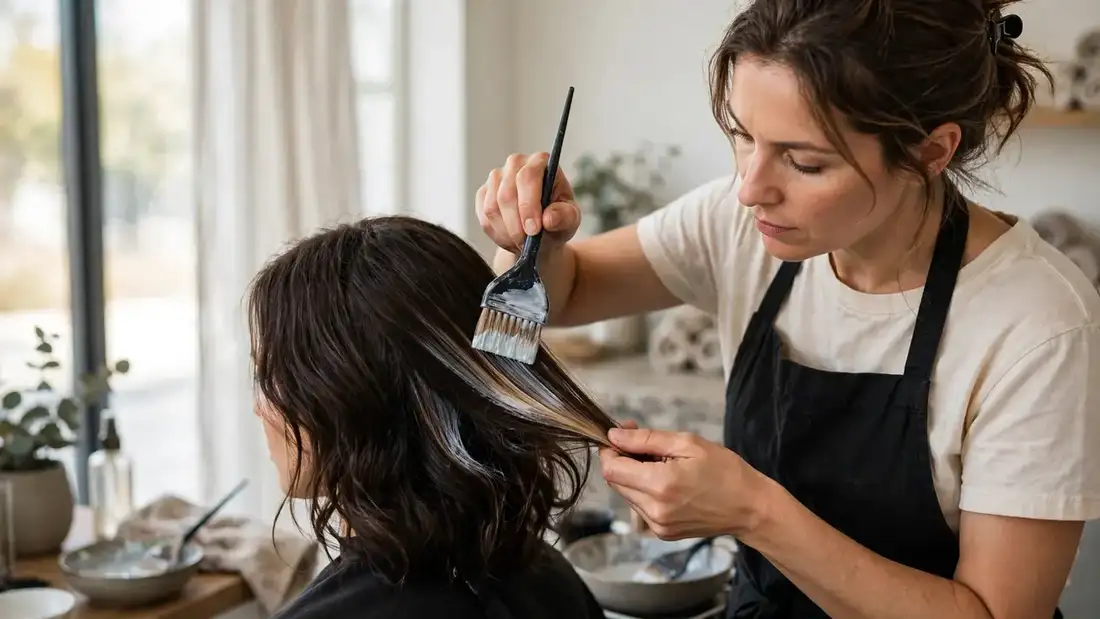
Balayage vs highlights is one of the most searched hair-color comparisons — and one of the most misunderstood. People use the terms interchangeably, ask for one while describing the other, and end up surprised at the salon when the result or the maintenance does not match their expectations. The confusion is understandable: both add lighter dimension to the hair, and the finished looks can overlap significantly.
The real distinction is technical, not visual: highlights (traditionally foiled) are a placement method that saturates sections from root to tip for defined, even lightness, while balayage is a hand-painting technique that creates a soft, graduated, sun-kissed effect with depth at the roots. They are different tools that can produce related results — and understanding which tool does what is the key to asking for the right service and getting the color you actually want.
This guide breaks down the genuine differences: the techniques, the looks each produces, maintenance and grow-out, cost and appointment time, which suits different hair types and lifestyles, and how to communicate with your colorist so there is no gap between the inspiration photo and the mirror.
The Technical Difference: Painting vs Foiling
Balayage is a freehand painting technique — the colorist literally paints lightener onto the hair’s surface with a brush, without foils, working in sweeping motions. Because there is no foil to trap heat and accelerate processing, balayage lifts more gradually and softly, creating a diffused, blended result with no harsh lines. The colorist controls the placement artistically, concentrating lightness on the mid-lengths and ends while leaving depth at the roots — the signature sun-kissed gradient.
Traditional highlights use foils: sections of hair are woven out, saturated with lightener from root to tip, and wrapped in foil. The foil traps body heat, which processes the lightener faster and more powerfully, producing brighter, more uniform lightness with defined dimension. Foil highlights give that classic dimensional blonde look — distinct ribbons of lightness woven through the base color, consistent from roots to ends.
The hybrid you will hear about — foilyage — combines both: the painted, blended placement of balayage with foils used to achieve brighter lift. It exists because classic balayage sometimes cannot lift dark hair bright enough on its own; the foils give the extra power while the painting keeps the soft grow-out. When someone says they want balayage brightness on dark hair, foilyage is often what the colorist actually does.
The Visual Difference: What Each Look Like
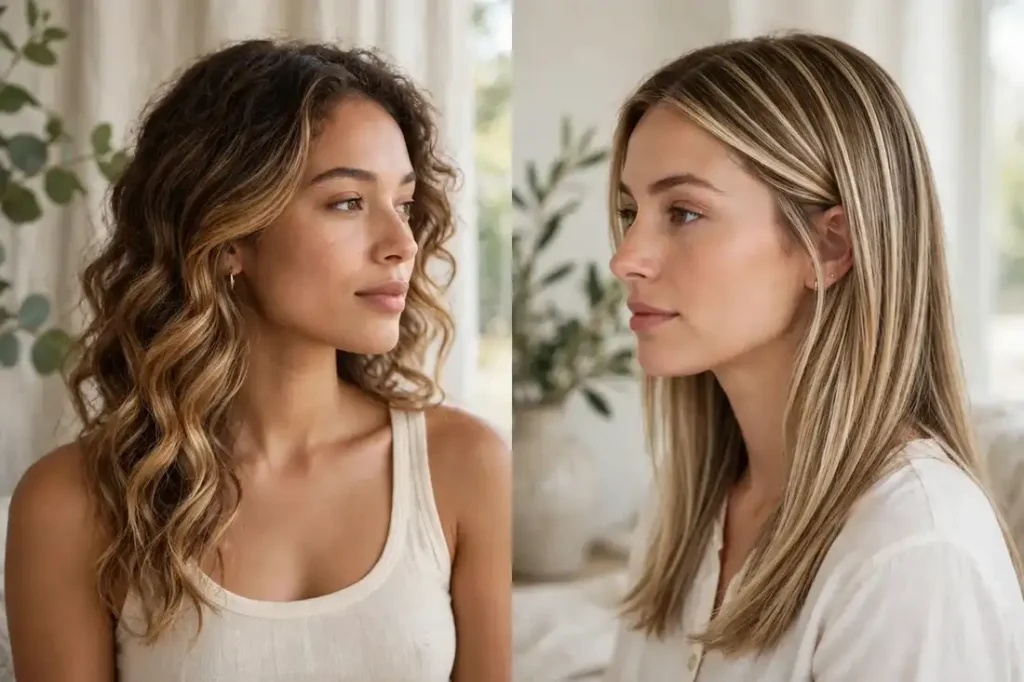
Balayage looks like the sun did it: soft, lived-in, with the lightest pieces framing the face and through the ends, melting seamlessly into the natural base. There is no visible line where the color starts — it graduates. The overall impression is dimensional but natural, with depth at the roots that makes regrowth invisible. It is the look behind the effortless French-girl hair aesthetic: expensive-looking precisely because it does not look done.
Foil highlights look more deliberately colored: brighter, more defined ribbons of lightness with visible dimension and contrast. The lightness starts at the root (or very near it), so the dimension is present throughout the whole head, not concentrated at the ends. It reads as a proper color service — polished, intentional, with that classic salon-blonde brightness that balayage’s softness does not deliver.
In practice the lines blur: a heavily painted balayage with bright face-framing can approach highlight brightness, and soft, fine-weave babylights (a foil technique) can look as natural as balayage. The inspiration photo matters more than the terminology — bring pictures of the exact effect you want, because what you call it matters less than what it looks like. A good colorist will identify whether your photo shows painted softness or foiled brightness regardless of the label you use.
Maintenance and Grow-Out: The Biggest Practical Difference
This is where balayage wins decisively for most people: because the lightness is concentrated away from the roots with a soft, diffused transition, regrowth is nearly invisible. Balayage clients typically return every 3–4 months for a refresh, and the in-between period looks intentional rather than grown-out. The grow-out is the feature, not a bug — the style was designed to evolve gracefully.
Foil highlights show regrowth as a visible line: since the lightness starts at the root, new growth creates a demarcation that becomes noticeable at 6–8 weeks. Highlight clients typically need appointments every 6–8 weeks to keep the look fresh, though lived-in highlight techniques (root shadowing, lower-contrast placement) can stretch this. The maintenance commitment is roughly double that of balayage — a significant factor in both cost and calendar over a year.
The toner factor applies to both: any lightened hair needs periodic toning (every 4–6 weeks, often as a quick gloss appointment) to keep the tone from going brassy or dull. Purple shampoo at home extends the time between toners for blondes. But the full highlight or balayage service itself — the expensive, hours-long appointment — happens far less often with balayage, which is the core of its low-maintenance appeal.
Cost and Time: What to Expect at the Salon
Balayage typically costs more per appointment than partial highlights — often 20–50 percent more — because it is a highly skilled, artistic, time-intensive service. The colorist is painting freehand, which demands experience and judgment that foil work, while skilled, systematizes more. Expect to pay a premium for the technique itself, and expect the appointment to run 2.5–4 hours including toning and styling.
Foil highlights (partial) are generally less expensive per visit and faster (1.5–2.5 hours), but the twice-as-frequent schedule means the annual cost often exceeds balayage. Do the yearly math, not the per-visit math: two balayage appointments per year versus five to six highlight appointments. For many people, balayage is cheaper annually despite the higher sticker price — plus dramatically fewer hours in the salon chair.
Pricing varies enormously by market, salon tier, and hair length/thickness (more hair means more product and time). Always get a consultation quote for your specific hair rather than relying on menu prices, and ask what is included — toner, treatment, haircut, blowout — because the all-in cost is what matters. And budget for maintenance products: quality color-safe shampoo, purple shampoo for blondes, and regular treatments protect the investment either way.
Which Is Right for Your Hair Type and Goals
Choose balayage if: you want low maintenance and natural-looking dimension, you like the sun-kissed lived-in aesthetic, you have darker hair and want brightness without harsh regrowth, you cannot commit to salon visits every 6–8 weeks, or you are trying lighter color for the first time and want a forgiving grow-out. Balayage is also excellent for curly hair — the painted placement follows the curl pattern beautifully and the soft grow-out suits texture.
Choose foil highlights if: you want maximum brightness and defined dimension, you love the classic salon-blonde look with lightness at the roots, you have gray you want blended (foils cover regrowth patterns more precisely), you want dramatic transformation in one appointment, or you prefer the polished, intentional aesthetic over the undone one. Highlights are also better for very dark hair going very light — the foils’ extra lifting power achieves brightness balayage alone cannot.
Consider your lifestyle honestly: the best technique is the one you will maintain. Balayage you refresh twice a year always looks better than highlights you meant to refresh two months ago. And consider your hair’s health — both involve lightener, both need bond builders and good aftercare, but the less frequent processing of balayage is gentler over time. Discuss your hair history (previous color, bleach, keratin treatments) at the consultation; it determines what is safely achievable. For keeping color-treated hair healthy, our beginner hair care routine guide covers the essential aftercare.
How to Ask Your Colorist (Without the Terminology Trap)
Bring photos — multiple, of the exact effect you want, on hair similar to yours in color and texture. Photos eliminate the terminology problem entirely: your colorist can see whether you want painted softness or foiled brightness, rooty grow-out or lightness at the scalp, warm golden tones or cool ash. Three photos showing the look from different angles beats any verbal description.
Describe the maintenance you want, not just the look: I want to come in twice a year versus I do not mind every six weeks is the single most useful thing you can tell a colorist. It immediately narrows the technique — low-maintenance requests point to balayage or lived-in color; high-polish frequent-visit requests point to foils. Also mention your budget comfort and your hair history honestly.
Ask what they are actually doing: a good colorist will explain their plan (balayage, foilyage, babylights, root shadow — or a combination) in terms you understand. If they just nod at your photo without discussing technique, ask directly: how will you achieve this, how will it grow out, when should I come back, and what will it cost today and over the year? The answers tell you whether you are in skilled hands — and they prevent the surprise of a highlight maintenance schedule when you wanted balayage freedom.
Aftercare: Protecting the Investment
Lightened hair is compromised hair — lightener removes pigment by breaking down the hair’s structure, leaving it more porous, drier, and more fragile than before. Aftercare is not optional pampering; it is structural maintenance. Use sulfate-free, color-safe shampoo (sulfates strip toner and fade color faster), wash less frequently and with cooler water, and deep condition weekly. The right products for color-treated hair extend both the color and the health dramatically.
Purple shampoo is essential for blondes (balayage or highlights): the violet pigment neutralizes the yellow/brassy tones that develop as toner fades, keeping the color cool and fresh between salon toners. Use it once a week or as needed — overuse on very light hair can deposit a lavender tint, so follow the product’s guidance. For brunette balayage, blue shampoo serves the same anti-brass function for the darker spectrum.
Heat protection becomes non-negotiable on lightened hair: the already-compromised cuticle damages faster under heat, and heat-fried blonde turns gummy and breaks. Keep hot tools at moderate temperatures, always use protectant, and consider bond-building treatments (salon or at-home) as part of the routine — they genuinely reinforce the internal structure that lightener weakened. And schedule trims every 8–10 weeks: lightened ends split faster, and fresh ends make the color look dramatically better.
Balayage and Highlights on Previously Colored Hair
Previous color changes everything about the appointment: box dye buildup, old highlights, faded fashion colors, and henna all affect how lightener processes and what tones emerge. Dark box dye buildup is the most common complication — the accumulated pigment resists lifting, often revealing warm, uneven undertones that need extra work to neutralize. A colorist needs your complete history to plan accurately; the strand test exists precisely for this situation.
Be honest about everything: every box dye, every gloss, every henna treatment, every keratin service. Colorists are not judging — they are calculating chemistry, and incomplete history leads to surprises mid-processing that range from off-tones to breakage. If you have significant box dye buildup and want balayage brightness, expect the colorist to recommend a gradual plan: possibly a color remover or gentle cleanse first, then the balayage, sometimes across two appointments. This patience protects your hair.
Previously highlighted hair transitioning to balayage is actually the easiest scenario: the existing dimension incorporates naturally, and the colorist paints to blend and soften rather than starting from scratch. Previously balayaged hair getting highlights is similarly straightforward. The difficult transitions involve dark opaque buildup (box dye, henna) going light — these need realistic expectations about the number of sessions and the tones achievable. Dark-to-light is a journey measured in appointments, not a single transformation.
The consultation for previously colored hair should include a strand test whenever the history is complex — it shows exactly how your hair lifts, what undertones emerge, and whether the hair tolerates the planned processing. A colorist who insists on testing before committing is a careful one, not an uncertain one. And budget for the possibility that the plan changes after the test: honest color work adapts to what the hair reveals, rather than forcing a predetermined outcome onto uncooperative hair.
Balayage vs Highlights: Side by Side
The honest comparison across the factors that actually affect your decision.
| Factor | Balayage | Foil highlights |
|---|---|---|
| Technique | Freehand painting, no foils | Woven sections saturated in foils |
| Look | Soft, sun-kissed, graduated | Bright, defined, dimensional |
| Lightness at roots | No — depth at roots, lightness on ends | Yes — lightness from root to tip |
| Grow-out | Seamless; 3–4 months between visits | Visible line; 6–8 weeks between visits |
| Per-visit cost | Higher (20–50% more) | Lower |
| Annual cost | Often lower (fewer visits) | Often higher (frequent visits) |
| Appointment time | 2.5–4 hours | 1.5–2.5 hours |
| Best for | Low maintenance; natural look; dark hair going lighter | Maximum brightness; gray blending; polished look |
The yearly math usually favors balayage on cost and always favors it on time — but the right choice is the one matching the look you want and the maintenance you will actually do.
Balayage vs Highlights Tips
What to know before you book:
- Bring photos, not terminology — the picture matters more than what you call it.
- State your desired maintenance schedule upfront; it determines the technique.
- Do the annual cost math, not per-visit: balayage is often cheaper yearly.
- Ask what technique they will actually use and how it will grow out.
- Disclose your full hair history — previous color affects what is safely possible.
- Budget for aftercare: color-safe shampoo, purple shampoo, weekly treatments.
- Book a consultation separately from the appointment for major color changes.
- For dark hair going light, ask about foilyage — painted placement with foil power.
- Toner appointments every 4–6 weeks keep either technique looking fresh.
- Do not wash for 48 hours after coloring; let the color settle fully.
- Heat protectant is non-negotiable on lightened hair — it damages faster.
- Judge the grow-out at 8 weeks, not day one — lived-in color improves with time.
Babylights, Foilyage, and Other Terms You Will Hear
The color vocabulary has expanded, and knowing the terms helps you navigate consultations. Babylights are ultra-fine, delicate foil highlights that mimic the natural lightness in children’s hair — subtle, soft, and natural-looking despite being a foil technique. They are the choice when you want brightness without obvious highlighting, and they grow out more softly than traditional foils because the sections are so fine.
Foilyage, as mentioned, is balayage placement with foils for extra lift — the answer for dark hair that wants balayage brightness. Root shadowing (or root melting) is a technique where the colorist applies a slightly darker toner at the roots after highlighting, blurring the regrowth line and extending the time between appointments — it makes foils behave more like balayage on grow-out. Lived-in color is the umbrella aesthetic: deliberately low-maintenance, soft-grow-out color regardless of technique.
You do not need to master this vocabulary — that is the colorist’s job. But recognizing the terms means you understand what is being proposed and why. If a colorist suggests foilyage with a root shadow for your dark hair inspiration photo, you will know they are combining brightness power with soft grow-out — which is exactly the right call for that goal.
Balayage and Highlights on Different Hair Textures
On curly and coily hair, balayage’s painted technique is naturally advantageous: the colorist paints on the curls where they fall, so the lightness lands exactly where the eye sees it, creating beautiful dimensional curls. Foils on very curly hair can be trickier — the weaving disrupts the curl pattern during processing and the regrowth line behaves differently on texture. Many curl specialists prefer painted techniques for this reason, and the soft grow-out suits textured hair’s lower manipulation routine.
On fine hair, highlights add perceived thickness — the dimensional ribbons create the illusion of density, similar to how dimensional color helps fine hair generally. But fine hair processes faster and damages more easily, so the lightener formulation and timing need adjustment; communicate your hair’s fragility. Balayage on fine hair works beautifully too, with the caveat that the painted lightness should stay subtle — heavy balayage can look sparse on very fine hair.
On thick, coarse hair, either technique works structurally, but the appointment runs longer and costs more (more hair, more product, more time). Thick hair shows off dimensional color spectacularly — the depth and movement are unmatched. The main consideration is maintenance commitment: thick highlighted hair growing out shows the line across a lot of hair, so the 6–8 week schedule matters more. Balayage’s forgiving grow-out is often the practical winner for thick hair for this reason alone.
When to Switch From One to the Other
Switching from highlights to balayage is the most common direction: people love their brightness but tire of the 6-week schedule. The transition is straightforward — the colorist paints balayage over the grown-out highlights, often with a root shadow to blend the old foil line, and within one or two appointments you are on the low-maintenance cycle. It is one of the most satisfying color corrections because the improvement in lifestyle is immediate.
Switching from balayage to highlights usually means wanting more brightness or more root lightness — the painted softness was not delivering the impact you wanted. This transition is also simple: foils placed through the balayage add the defined brightness, and the existing dimension incorporates naturally. Some people alternate — balayage most of the year, a full foil before summer or events for extra pop — which is a legitimate strategy, not indecision.
The wrong reason to switch is boredom without a plan: changing techniques without a clear goal often produces a result that is neither the old look nor the new one, just muddled. Know what you want more of (brightness? softness? less maintenance? more impact?) and let the colorist recommend the technique. The technique serves the goal — never choose the technique first and hope the goal follows.

Watch: Balayage vs Highlights Explained
Hearing a colorist explain the difference while showing the techniques makes it concrete — the video below breaks down balayage versus highlights in detail, showing how each is applied and what the results look like. Watch it before your consultation so you arrive speaking the same language as your stylist.
Balayage vs Highlights FAQ
What is the main difference between balayage and highlights?
The technique: balayage is freehand painting without foils, creating a soft graduated sun-kissed effect with depth at the roots; traditional highlights use foils to saturate sections from root to tip, creating brighter, more defined dimension. The practical difference is maintenance — balayage grows out seamlessly over 3–4 months, while foils show a regrowth line at 6–8 weeks. Same goal (lighter dimension), different tools and very different upkeep.
Which is cheaper, balayage or highlights?
Per visit, highlights are usually cheaper (balayage costs 20–50% more per appointment due to the skill and time involved). Per year, balayage is often cheaper because you need 2–3 appointments versus 5–6 for highlights. Do the annual math for your situation, including toner appointments, and factor in the value of your time — the hours saved with balayage’s schedule are significant.
Does balayage damage hair less than highlights?
Somewhat, in practice: both use lightener, which compromises the hair’s structure. But balayage is processed less frequently (the low-maintenance schedule means fewer lightener applications per year), and the painted technique often uses lower-volume developer since there is no foil heat accelerating the process. Over years, the cumulative difference is meaningful — less frequent lightening plus gentler processing adds up to healthier hair.
Can you get balayage on dark hair?
Absolutely — balayage is excellent on dark hair, creating beautiful caramel, honey, and bronze dimension. The caveat: classic painted balayage without foils may not lift very dark hair as bright as you want in one session. For brighter results on dark hair, ask about foilyage (painted placement with foils for extra lift). Multiple sessions may be needed for dramatic brightness — a good colorist will plan the journey honestly rather than over-processing in one visit.
How long do balayage and highlights last?
Balayage: the painted effect lasts 3–4 months before needing a refresh, and it grows out gracefully throughout. Highlights: the brightness lasts until regrowth shows, typically 6–8 weeks for a crisp look. Both need toner refreshes every 4–6 weeks to maintain tone (a quick gloss appointment, not a full service). With good aftercare — color-safe shampoo, less washing, heat protection — both last at the longer end of their ranges.
Which should I choose for my first color service?
Balayage is usually the safer first step: the soft grow-out means no harsh regrowth if you decide color is not for you, the natural look is forgiving, and the low maintenance lets you experience colored hair without the appointment treadmill. Choose highlights first only if you specifically want the bright, defined, root-to-tip dimension look and are prepared for the 6–8 week maintenance rhythm from the start.
Choose the Maintenance, Not Just the Look
Balayage and highlights are different tools for related goals — painted softness with effortless grow-out versus foiled brightness with defined dimension. The looks overlap more than the terminology suggests, which is why photos matter more than labels. But the maintenance difference is real and permanent: it shapes your budget, your calendar, and your hair’s health for as long as you color.
Choose based on the look you love and the upkeep you will actually do. Bring photos, state your maintenance preference honestly, and let a skilled colorist match the technique to your goal. Get that right, and the balayage-versus-highlights question answers itself — in the mirror, every day.
Keep Reading
Explore more beauty guides from DayZora:


