

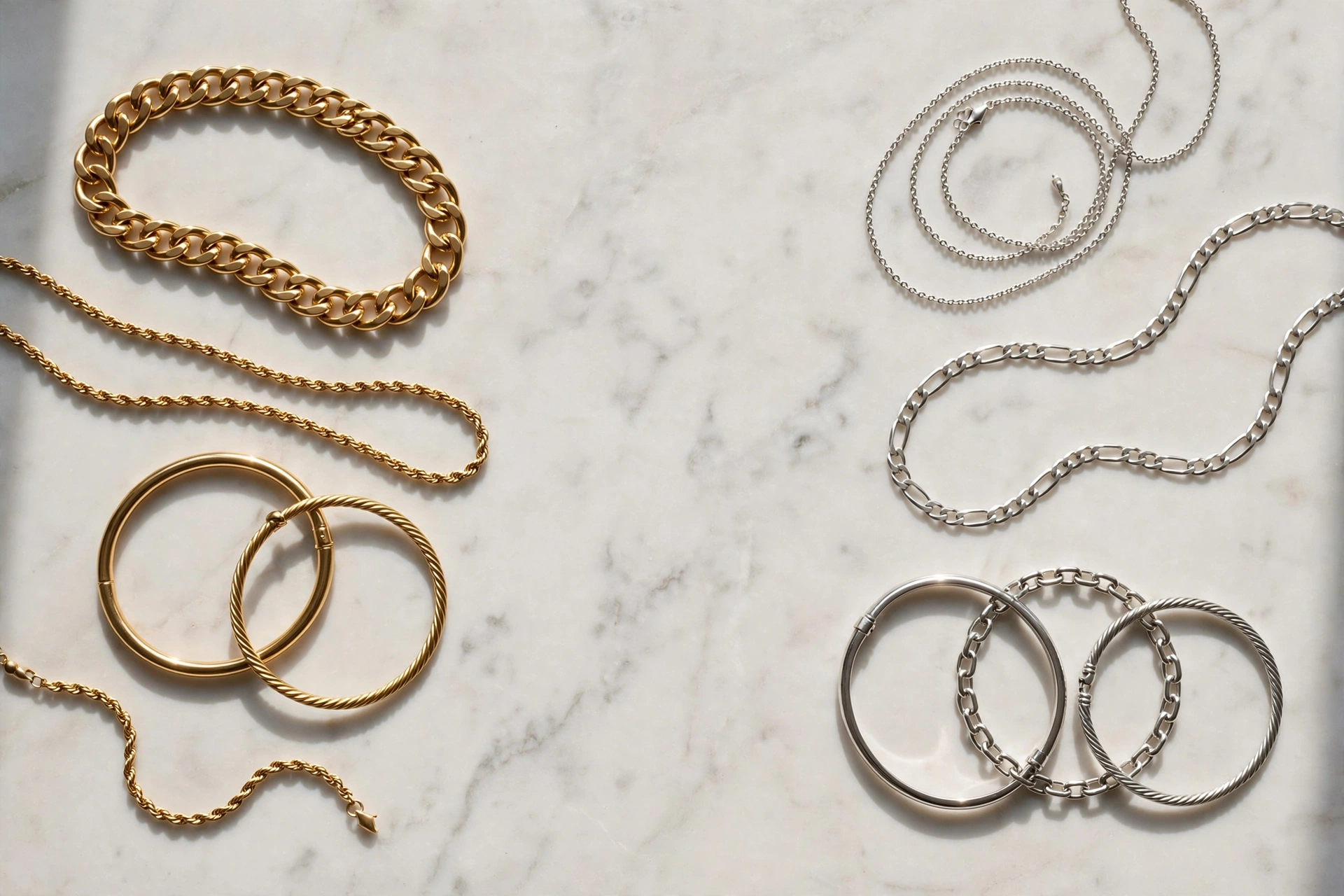
Walk into any jewelry store and the first big decision — after what to buy — is which metal to buy it in. The gold vs silver jewelry debate is really a question about budget, lifestyle, skin tone, and how much maintenance you are willing to do. Gold is warm, prestigious, and historically the more expensive metal; silver is cool, versatile, and far easier on the wallet. But the details matter: karat numbers, tarnish, allergies, and resale behavior all differ in ways that should influence your choice.
This guide compares gold and silver jewelry head to head — composition and karats, cost, durability, how each metal treats your skin, maintenance demands, style versatility, and long-term value. Whether you are buying an everyday chain, choosing a metal for an engagement ring, or just deciding which pieces deserve a place in your jewelry box, you will finish this article knowing exactly which metal fits your life and your budget. Prices given here are typical ranges to help you compare; precious-metal prices move with the market, so verify current retail prices before you shop.
Gold vs Silver Jewelry at a Glance
| Factor | Gold Jewelry | Silver Jewelry |
|---|---|---|
| Typical look | Warm tones in yellow, rose, and white gold | Cool, bright white shine |
| Relative cost | Significantly higher — gold is the premium metal | Much more affordable for the same weight of metal |
| Everyday durability | 14k and lower karats are quite durable; 18k+ is softer | Sterling silver is reasonably durable but scratches more easily |
| Tarnish | Resists tarnish well (especially 14k+) | Tarnishes with air and moisture exposure; needs regular polishing |
| Skin reactions | Pure gold rarely causes reactions; nickel in white gold can | Nickel in some silver alloys can irritate sensitive skin |
| Maintenance | Low — occasional cleaning | Moderate — regular polishing to fight tarnish |
| Resale value | Holds intrinsic value tied to gold’s market price | Low resale; silver’s market value is modest |
What “Gold Jewelry” Actually Means: Karats Explained
Pure gold (24 karat) is too soft for everyday jewelry — it dents and bends easily. So gold jewelry is made from alloys, and the karat number tells you the gold content: 24k is 99.9% pure gold, 18k is 75% gold, 14k is 58.3% gold, and 10k is 41.7% gold (the legal minimum to be sold as “gold” in the United States). The remaining percentage is alloy metals like copper, silver, nickel, or zinc, which add strength and create the different gold colors.
For daily-wear pieces like rings and bracelets, 14k gold hits the sweet spot for most buyers: durable enough for constant wear, rich in color, and significantly less expensive than 18k. Eighteen-karat gold has a deeper, richer color and higher intrinsic value, making it popular for fine jewelry and heirloom pieces, but it scratches more easily. Ten-karat gold is the most durable and affordable option, though its paler color and lower gold content make it less prized. White gold — gold alloyed with white metals and usually plated with rhodium — gives the look of platinum at a lower price, but the rhodium plating wears off and typically needs re-plating every 12–24 months.
What “Silver Jewelry” Actually Means: Sterling Silver
Like gold, pure silver is too soft for jewelry, so nearly all silver jewelry is sterling silver — 92.5% silver alloyed with 7.5% other metals (usually copper). Look for the “925” stamp, which is the international mark of sterling silver. This is the standard you want; unmarked “silver” jewelry of unknown purity is a gamble.
Sterling silver’s biggest weakness is tarnish: exposure to air, moisture, and sulfur compounds (present in everything from eggs to rubber bands to certain lotions) causes a dark layer of silver sulfide to form on the surface. Tarnish is cosmetic and reversible — it polishes off — but it means silver jewelry needs more attention than gold. On the plus side, silver’s affordability means you can own more pieces, experiment with bold statement designs, and not worry much if a piece gets lost on a trip.
Cost Comparison: What Your Money Buys
The price gap between gold and silver is dramatic because the raw metals themselves differ enormously in value — gold typically trades at dozens of times the price of silver per ounce, and that gap flows directly into retail pricing. A simple chain that costs roughly $40–$80 in sterling silver might cost $400–$1,200 or more in 14k gold, depending on weight and craftsmanship. These are rough typical ranges, not quotes, and finished jewelry pricing also reflects design, brand, and labor.
What does this mean practically? If your budget is under a few hundred dollars, silver buys you substantial, well-made pieces, while gold at that price means delicate, lightweight designs — or gold-filled and gold-plated pieces rather than solid gold. If your budget stretches into the thousands, solid gold becomes realistic and offers the prestige, durability, and value retention that justify its cost. A useful middle path is buying fewer, better gold pieces for daily wear (a chain, a ring) and using silver for trend-driven or statement pieces you may not wear for decades.
Gold-Filled and Gold-Plated: The Budget Alternatives
You will also encounter gold-filled, gold vermeil, and gold-plated jewelry. Gold-filled pieces have a thick layer of gold mechanically bonded to a base metal — they look and wear like gold for years and are a genuine bargain. Gold vermeil is sterling silver with a thick gold plating (a nice hybrid), while standard gold plating is a thin layer that wears through faster. These options let you get the gold look on a silver budget, which is worth knowing when the gold vs silver jewelry decision comes down to money.
Durability for Daily Wear
For pieces worn every day — wedding bands, everyday chains, stud earrings — durability matters more than prestige. Fourteen-karat gold is harder than sterling silver and resists scratching and denting better, which is why it dominates the bridal market. Sterling silver is perfectly fine for daily wear too, but it will show wear faster: fine silver chains kink more easily, silver rings develop scratches sooner, and soft silver prongs holding stones need more frequent inspection.
That said, durability is not just about the metal — design matters enormously. A chunky sterling silver cuff will outlast a whisper-thin 14k gold chain. And gold’s softness at higher karats is real: 18k and especially 22k gold (common in South Asian and Middle Eastern jewelry) dent and deform more readily, which is why such pieces are often worn for occasions rather than daily.
Which Metal Suits Your Skin?
Skin Tone Matching
The old guidance still works as a starting point: warm skin tones (golden, olive, or tan undertones) tend to glow in yellow and rose gold, while cool skin tones (pink or blue undertones) tend to shine in silver, white gold, and platinum. Neutral undertones can wear everything. But treat this as a suggestion, not a rule — personal style and what you already own matter more. The most reliable test is to hold each metal against your wrist in natural daylight and see which one makes your skin look healthier.
Sensitive Skin and Metal Allergies
Nickel allergy is the most common metal allergy, and it is the hidden issue in the gold vs silver debate. White gold is frequently alloyed with nickel, and lower-quality silver jewelry may contain it too. If you get itchy, red skin under jewelry, nickel is the likely culprit. The fix: choose nickel-free options — yellow or rose gold (ask specifically), platinum, palladium, or certified nickel-free sterling silver. Higher-karat yellow gold (18k) contains less alloy overall and is gentler than 10k. If skin sensitivity is a recurring issue, it is worth reading up on gentle skincare routines as well — our self-care ideas on a budget guide covers skin-friendly daily habits that pair well with choosing hypoallergenic jewelry.
Maintenance: How Much Work Each Metal Needs
Gold is the low-maintenance winner. A quick soak in warm water with mild dish soap, a soft brush, and a rinse keeps gold jewelry looking new — white gold needs re-plating every year or two, but that is a quick jeweler visit. Silver demands more: regular polishing with a silver cloth, proper storage to limit air exposure (more on that in our jewelry storage guide), and keeping pieces away from household chemicals, which accelerate tarnish.
Be honest with yourself about maintenance habits. If you are the type to toss jewelry in a drawer and forget it, gold will forgive you; silver will punish you with tarnish. If you enjoy the ritual of caring for your things, silver’s maintenance is a minor chore with satisfying results — a tarnished piece restored to brightness is genuinely gratifying.
Style and Versatility
Silver’s cool brightness pairs naturally with casual, modern, and minimalist styles — it looks at home with jeans, office wear, and evening black alike. It is also the metal of choice for bold, artistic, and Southwestern-style statement pieces, where large-scale designs would be prohibitively expensive in gold. Gold reads warmer and more traditional, though that is changing: layered delicate gold necklaces are a defining modern look, and mixed-metal styling (wearing gold and silver together) has moved from fashion faux pas to deliberate trend.
Do not be afraid to mix metals. The old rule against it is dead; what matters is intention. Mixed-metal pieces — two-tone watches, gold-and-silver layered necklaces — look deliberate when the metals are balanced. If you are building a jewelry wardrobe from scratch, consider starting with the metal that matches most of what you already wear daily, then adding the other for variety.
Long-Term Value and Resale
Let us be clear: jewelry is rarely an investment in the financial sense. Retail markups mean you will almost never resell a piece for what you paid. But the metals behave very differently on the secondary market. Gold jewelry retains meaningful intrinsic value because gold itself is valuable — a heavy 14k gold chain will always be worth something close to its melt value, which provides a floor under its resale price. Silver jewelry’s melt value is modest, so resale depends almost entirely on design, brand, and craftsmanship.
This matters most for high-value purchases. A solid gold bangle is a store of value as well as an accessory; a sterling silver bangle is purely an accessory. Neither is wrong — but buy gold with an eye on lasting value, and buy silver for the joy of wearing it now.
How to Verify What You Are Buying
Regardless of which metal you choose, buy from sellers who disclose exactly what they are selling. In the United States, the FTC requires jewelry sellers to accurately disclose metal content and to tell you when stones are lab-grown or treated — their jewelry shopping guide explains your rights as a buyer. Look for these marks:
- Gold: Stamps like 10K, 14K, 18K, 585 (14k in European notation), 750 (18k). “GP” or “EP” means plated — worth far less than solid.
- Silver: “925” or “Sterling” for sterling silver. “Silver plate” or “EPNS” means plated.
- Platinum: “Plat,” “Pt950,” or “950Plat.”
If a deal seems too good to be true — a “solid gold” chain at a silver price — it is. Buy from established jewelers with clear return policies, and for expensive pieces, ask for an appraisal or verification from an independent jeweler.
When to Buy: Timing Your Purchase
Precious metal prices fluctuate daily with global markets, but retail jewelry prices move more slowly. The best time to buy is usually during major retail sale events rather than trying to time the metals market. Jewelry — both gold and silver — is heavily discounted during the winter holiday season and the big online sale events. Our guide to Cyber Monday fashion deals breaks down what jewelry discounts typically look like, and when Cyber Monday deals start helps you plan. Buying during a sale can easily save you more than any clever metals-market timing.
Frequently Asked Questions
Is gold jewelry better than silver jewelry?
Neither is objectively better — they serve different purposes. Gold is more prestigious, more durable for daily wear, and holds value better. Silver is far more affordable, versatile for bold designs, and easier to replace. Most jewelry lovers eventually own both.
Why does my silver jewelry turn black?
That is tarnish — silver reacting with sulfur compounds in the air to form silver sulfide. It is normal, cosmetic, and reversible with a silver polishing cloth. Storing silver in airtight bags or anti-tarnish pouches dramatically slows it.
Can I wear gold and silver together?
Absolutely. Mixed-metal styling is a current trend. The key is balance — for example, a two-tone watch or layered necklaces in both metals — so it looks intentional rather than accidental.
Is white gold the same as silver?
No. White gold is gold alloyed with white metals (and usually rhodium-plated); silver is an entirely different, much less expensive metal. They look similar at a glance, which is why white gold is sometimes confused with silver or platinum, but their value and properties differ greatly.
Which is better for sensitive skin, gold or silver?
It depends on the alloy, not just the metal. High-karat yellow gold (14k–18k) without nickel is usually the gentlest common option. Nickel-free sterling silver is also fine for many people. Always ask specifically about nickel content if you have a known sensitivity.
Does gold jewelry need less care than silver?
Yes, generally. Gold resists tarnish and needs only occasional cleaning. Silver needs regular polishing and careful storage to stay bright. White gold is the exception — it needs periodic rhodium re-plating.
The Bottom Line
Choose gold when you want lasting value, maximum durability for daily wear, and low maintenance — and when the budget allows solid pieces rather than whisper-thin ones. Choose silver when you want versatility, bold design freedom, and more jewelry for your money, and you are willing to do a little polishing. And remember the third option: there is no rule against owning both. A small collection of well-chosen gold staples plus a rotating cast of silver statement pieces gives you the best of both metals — which, for most people, is exactly the right answer to the gold vs silver jewelry question.
Gold vs Silver by Jewelry Category
The metal decision also varies by what you are buying. Different jewelry categories stress metals differently:
- Rings: Take the most abuse of any jewelry. Gold (14k) is the better daily-wear choice — it resists the dents and scratches that silver accumulates. Silver rings are fine for occasional wear but show their age faster on active hands.
- Necklaces and chains: Both metals work well. Silver’s affordability shines here — a substantial silver chain costs a fraction of its gold equivalent. For fine, delicate chains worn daily, gold’s resistance to kinking and breaking gives it an edge.
- Earrings: Low-stress wear makes earrings ideal for silver — studs, hoops, and drops all thrive. This is also where metal allergies show up most (earlobes are sensitive), so prioritize nickel-free alloys in whichever metal you choose.
- Bracelets: Bangles and cuffs take knocks, favoring gold’s hardness; but silver’s low cost makes it the natural choice for stackable bracelet sets where you want quantity and variety.
- Watches: The watch case endures daily contact — gold (or gold-tone) and steel dominate for good reason. Silver watch cases exist but are uncommon; most “silver-colored” watches are stainless steel, a different metal entirely.
The Recycled and Ethical Angle
Both gold and silver are among the most recycled materials on earth — precious metals are routinely refined and reused without quality loss, and a large share of jewelry gold comes from recycled sources. If ethical sourcing matters to you, ask jewelers about recycled metals and responsibly sourced stones; many reputable jewelers now disclose this. For diamonds specifically, look for Kimberley Process compliance on natural stones, or consider lab-grown. Neither metal has an inherent ethical edge — the difference is in the specific supplier’s practices, so ask direct questions and favor jewelers who answer them clearly.
Building a Two-Metal Collection
Here is a practical strategy for getting the most from both metals. Anchor your collection with gold in the pieces you wear daily and want to last decades — a wedding band, an everyday chain, classic studs. Then use silver for everything experimental: trend pieces, oversized statement jewelry, colorful artisan designs, and travel jewelry you would not cry over losing. This division plays to each metal’s strengths: gold where durability and lasting value matter, silver where variety and freedom matter.
Over time, most collectors drift toward a personal ratio — often something like 60/40 or 70/30 — and that is fine. The goal is not metal loyalty; it is a collection where every piece earns its place. And when your taste evolves (it will), silver’s low cost makes experimenting painless, while gold’s retained value means yesterday’s staples can fund tomorrow’s.


