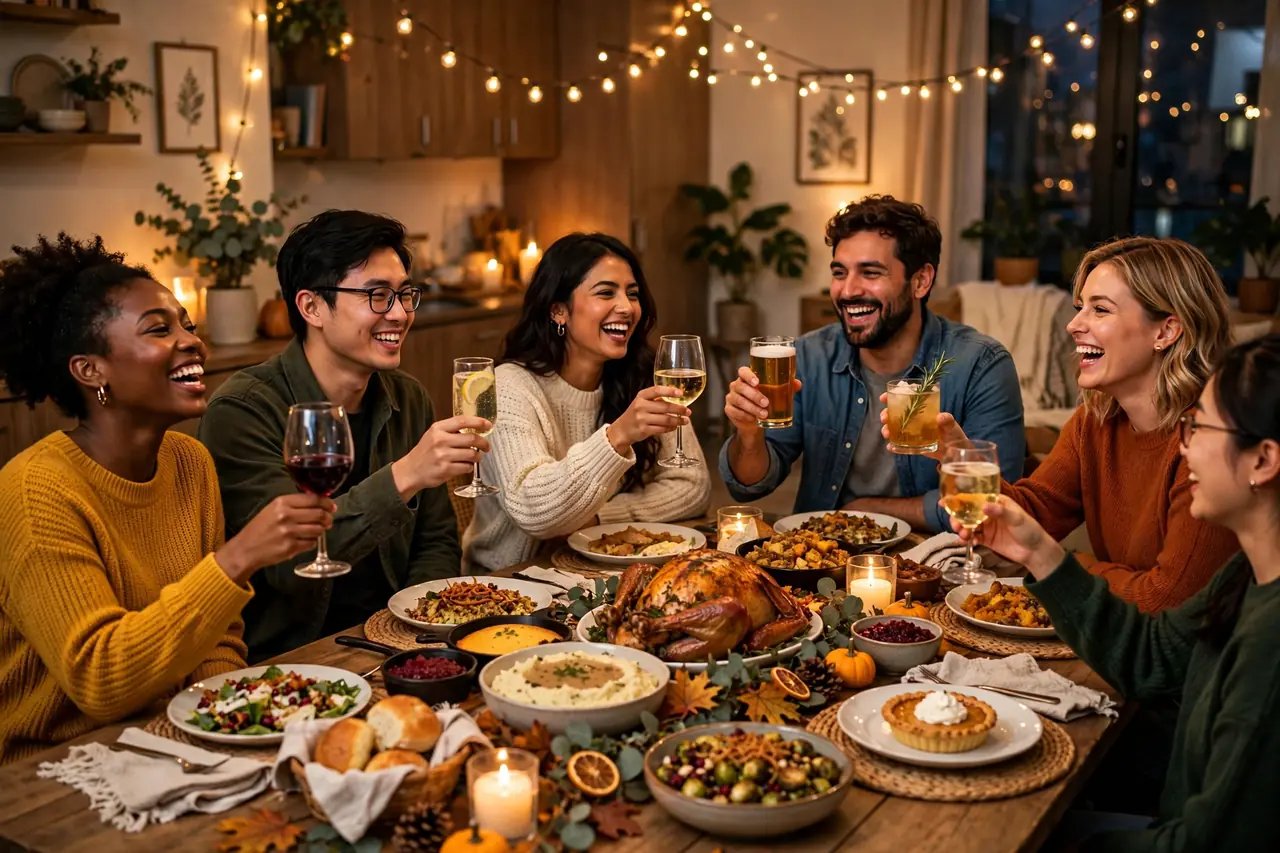
Friendsgiving is the best Thanksgiving. There, I said it. No family politics, no 6 a.m. turkey anxiety inherited from your mother, no uncle with opinions — just your chosen people, a table full of food everyone actually helped make, and the particular joy of friends who show up because they want to, not because they have to. But Friendsgiving has its own planning challenge: without a matriarch running the show, the menu needs a system, or you end up with six desserts and no turkey.
This guide gives you complete Friendsgiving menu ideas built for how friends actually celebrate: three full menus (the classic potluck, the elevated dinner party, and the casual grazing night), a potluck coordination system that guarantees a balanced spread, dish assignments by guest count, a timeline that respects everyone’s work schedule, budget decor ideas, and games that keep the night alive after dessert. Whether it is your first time hosting or your tenth, here is how to throw the Friendsgiving people talk about all year — from the sign-up sheet to the last slice of pie.
What Makes Friendsgiving Different (and Better)
Friendsgiving runs on different rules than family Thanksgiving, and understanding them is the key to planning one that works. First, it is collaborative by default — everyone cooks, everyone contributes, and the host is a coordinator, not a short-order cook. Second, the guest list is self-selected, which means the vibe is uniformly enthusiastic; nobody is there out of obligation, so the energy starts high. Third, Friendsgiving is traditionally more casual: paper plates are fine, the dress code is sweaters, and nobody cares if the gravy has lumps.
But the differences create specific failure modes. Without assigned dishes, you get the infamous all-dessert table. Without a firm start time, friends drift in over three hours and the hot food dies. Without a plan for dietary needs, the vegan friend eats rolls. And without an end-of-night plan, someone is doing dishes alone at 1 a.m. while everyone else evaporates. Every section below addresses one of these failure modes directly — Friendsgiving is easy when it is organized, and only when it is organized.
Three Complete Friendsgiving Menus
Menu 1: The Classic Potluck (8–12 friends)
The traditional Friendsgiving: everyone brings one dish, the host handles the turkey and the space. This is the format that built the holiday.
- Host provides: Roast turkey breast (easier than a whole bird for a crowd of friends) or a glazed ham; gravy; dinner rolls; all drinks (batch cocktail + beer + zero-proof); plates, napkins, and serving utensils
- Guest dish assignments: Two starches (mashed potatoes, mac and cheese), two vegetables (roasted Brussels sprouts, green bean casserole), stuffing/dressing, cranberry sauce, salad, two desserts (pumpkin pie + one wild card)
- The rule: Dishes arrive ready to serve or needing only oven-warming. Nobody cooks from scratch in the host’s kitchen — the oven is reserved for reheating on a schedule.
Menu 2: The Elevated Dinner Party (6–8 friends)
For the foodie friend group that treats Friendsgiving like a supper club — coursed, intentional, and a little fancy.
- First: Butternut squash soup shooters with fried sage, or a shaved Brussels sprout salad with pomegranate
- Main: Herb-roasted turkey breast roulade (rolled with stuffing inside — dramatic and delicious), or duck breasts with cherry gastrique for the adventurous
- Sides (family-style): Truffle mashed potatoes; wild mushroom bread pudding; charred carrots with harissa honey; creamed greens
- Dessert: Individual pumpkin pots de crème with gingersnap crumble, plus a cheese course for the lingering
- Drinks: A proper cocktail to start (apple cider old fashioneds), wine with dinner, espresso and amaro after
Menu 3: The Casual Grazing Night (10–20 friends)
For the big, chaotic, wonderful crowd — no sit-down dinner, just abundant food all evening. Perfect when half the guest list has “maybe” energy.
- The board: An epic grazing table — cheeses, cured meats, crackers, nuts, dried fruit, honey, olives, crudités with three dips
- Hot station: Slow-cooker turkey meatballs in cranberry-barbecue sauce; mac and cheese bites; pigs in a blanket
- Sweet station: Mini pies (pumpkin, pecan, apple) — handheld, no plates required; donut holes with cider glaze
- Drinks: Self-serve: a big-batch punch, beer and wine in a tub of ice, sparkling water with citrus
- The genius move: Everything is finger food. No carving, no seating chart, no stress — people graze, mingle, and the party runs itself.

The Potluck Coordination System
The potluck is Friendsgiving’s engine and its biggest risk. Run it with a system and it is flawless; wing it and you get six bags of rolls. Here is the system that works:
- Four weeks out: Create a shared sign-up sheet (a simple online doc) with categories and slots, not a blank list. Categories: appetizer (2 slots), starch (2), vegetable (2), stuffing, cranberry, salad, dessert (2), drinks/ice (1). Blank lists produce duplicates; slotted categories produce balance.
- Three weeks out: The host claims the centerpiece protein and all infrastructure (plates, napkins, serving spoons, trash bags — the unglamorous stuff nobody volunteers for).
- Two weeks out: Check the sheet. Fill gaps by direct-asking specific friends (“Can you own the mashed potatoes?”) rather than group-pleading. Direct asks get yeses; group messages get silence.
- Three days out: Confirm oven and fridge logistics: who needs oven time and when, who needs fridge space, what arrives in disposable pans (insist on disposable or labeled dishes — dish return is where friendships go to die).
- Day of: Post a reheating schedule on the fridge. Dishes needing the oven get 20-minute windows; everything else is room-temp or slow-cooker.
| Guests | Appetizers | Sides | Desserts | Host provides |
|---|---|---|---|---|
| 6–8 | 1–2 | 4–5 | 2 | Turkey breast, gravy, rolls, drinks |
| 9–12 | 2–3 | 6–7 | 2–3 | Whole turkey or ham, gravy, rolls, drinks, all paper goods |
| 13–18 | 3–4 | 8–9 | 3–4 | Turkey + ham, gravy, rolls, drinks, extra seating |
| 19+ | Switch to grazing-night format — stations, not courses | Boards, hot stations, drinks, zero formal dinner | ||
The Friendsgiving Timeline (for People With Jobs)
Unlike family Thanksgiving, Friendsgiving happens around work schedules — usually the weekend before the holiday. Plan accordingly.
| When | What |
|---|---|
| 1 month before | Pick the date (poll the group; Saturday before Thanksgiving wins most votes). Send the sign-up sheet. |
| 2 weeks before | Confirm the menu balance. Buy non-perishables, paper goods, and drinks. Plan the playlist. |
| Friday evening | Clean the apartment (the 80/20 clean: bathrooms, kitchen, living room — nobody inspects closets). Set up tables and chairs. Chill drinks. |
| Saturday morning | Cook the turkey/ham. Set the table. Arrange the reheating schedule on the fridge. |
| 2 hours before | Shower, dress, breathe. Put out the welcome snacks and the first drinks. |
| Party time | Greet, direct dishes to their stations, and then — this is the hard part — stop working and enjoy your friends. |
Decor on a Friend Budget
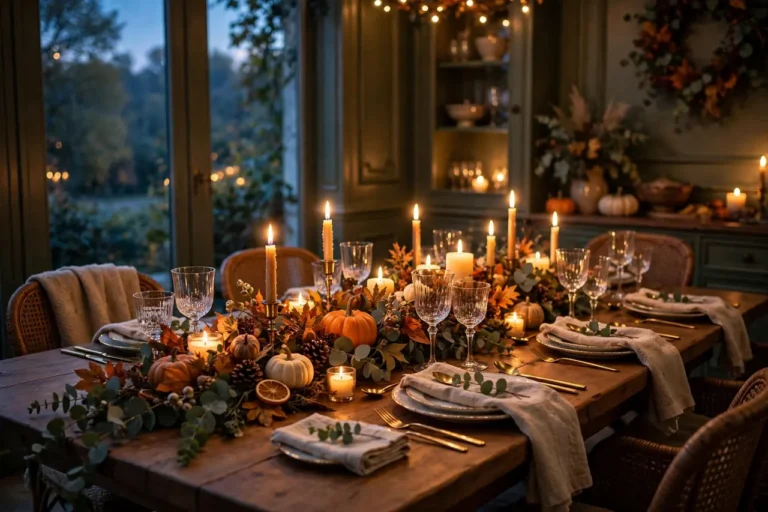
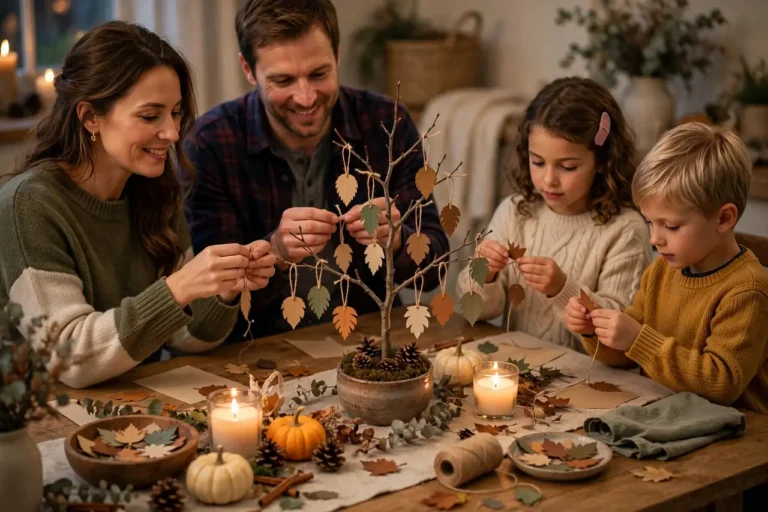
Friendsgiving decor should cost under $30 and take under an hour, because the money and effort go to food. The formula: candles (unscented tea lights in jars — a dozen costs almost nothing and transforms a room), one natural element (a bag of mini pumpkins, a bunch of eucalyptus from the grocery store, or branches from outside), and one personal touch (a kraft-paper table runner where everyone writes what they are thankful for — it becomes the night’s activity and the decor at once).
Lighting does 80 percent of the work: turn off overheads, light every candle, and string one set of warm fairy lights somewhere. Instant atmosphere. For the table, mix and match what you own — Friendsgiving is the one dinner where mismatched plates are charming rather than embarrassing. If you need extra seating, floor cushions and ottomans around a low table create a cozy, Moroccan-ish vibe that guests love. Our 50 Friendsgiving party ideas collection has dozens more decor concepts when you want to go bigger.
Games and Activities That Keep the Night Alive
After dessert, Friendsgiving needs a second act or it dissolves into phone-scrolling. Plan one structured activity — just one — and the night takes care of itself.
- Thankful roast: Everyone writes an anonymous compliment and one gentle roast of another guest; the host reads them aloud. Hilarious, heartwarming, and the compliments get kept.
- The pie betting pool: Before dessert, everyone bets (a dollar each) on which pie will disappear first. The winner takes the pot or donates it to a chosen cause.
- Friendsgiving awards: Vote on superlatives — best dish, most likely to take leftovers, best-dressed, latest arrival. Print silly certificates or just announce them dramatically.
- Two truths and a thanks: Each person shares two true stories and one thing they are thankful for about someone at the table; the group guesses which is which. It gets deep fast, in the best way.
- The leftover draft: At night’s end, hold a fantasy-style draft for leftovers — each guest picks one container in turn. It is fair, funny, and nobody fights over the last of the mac and cheese.
Drinks: The Self-Serve Bar
Friendsgiving drinks should be self-serve — the host cannot bartend and host simultaneously. Set up one big-batch cocktail in a dispenser (apple cider sangria, cranberry bourbon punch, or spiked hot cider in a slow cooker), a tub of beer and wine on ice, and a zero-proof option with equal ceremony (sparkling apple-pomegranate punch with rosemary sprigs). Label everything, including the zero-proof option, so nobody has to ask. Provide real glasses if you have them; if not, sturdy compostable cups in autumn colors are completely fine.
The coffee and tea station appears with dessert — a full pot of coffee, a kettle with tea options, and the fixings. Friendsgiving runs late, and the 10 p.m. coffee round is when the best conversations happen. Do not skip it.
10 Friendsgiving Theme Ideas
A theme gives guests a creative constraint that makes the party memorable — and gives the group chat something to buzz about for weeks. Pick one that fits your crowd:
- Childhood Throwback: Everyone brings the dish their family made growing up, with the story behind it. The menu becomes a storytelling session — mac and cheese with four different origin stories.
- Iron Chef: Mystery Ingredient: The host provides a mystery ingredient (cranberries, sweet potatoes, apples) that must appear in every dish. Competitive, hilarious, and the results are surprisingly good.
- Around the World: Each guest brings a Thanksgiving-inspired dish from a different cuisine — turkey tacos, stuffing dumplings, pumpkin curry, cranberry empanadas. The fusion feast is unforgettable.
- Decades Party: The food and outfits match a decade — ’70s fondue Friendsgiving, ’90s pizza-roll Friendsgiving. The photos alone are worth it.
- Pie Championship: Everyone brings a pie; blind tasting; trophies for best overall, most creative, and best crust. Democracy in action.
- Cozy Cabin: Flannel dress code, fireplace YouTube video on the TV, comfort food only. Maximum hygge, minimum effort.
- Murder Mystery: A Thanksgiving-themed murder mystery kit structures the whole evening. Assign characters with the invitations.
- Potluck Passport: Each dish gets a “passport stamp” card with the cook’s name and story; guests collect stamps by trying everything. Gamifies the grazing.
- Fancy-Pants: Black-tie dress code, coursed dinner, real china (borrowed or thrifted). The contrast between the formality and the friend group is the entire joke — and it is wonderful.
- Leftovers Remix: Held the weekend after Thanksgiving, everyone brings a dish made from their family’s leftovers. Turkey tetrazzini competitions get fierce.
Hosting Friendsgiving in a Small Apartment
Most Friendsgivings happen in apartments, not dining rooms — and small spaces host beautifully with the right setup. The principles: vertical food, flexible seating, and ruthless flow management.
Serve buffet-style along one counter or table pushed against the wall — never try a sit-down dinner for twelve in a 600-square-foot apartment. Guests fill plates and scatter: some at the table, some on the couch, some on floor cushions. This is not a compromise; the mingling energy of a scattered crowd beats a cramped formal table every time. Use the bed as a coat room (cover it with a clean sheet), the bathroom as the only no-go zone, and every other surface as fair game.
Seating math for small spaces: you need about 60 percent as many seats as guests, because at any moment a third of people are standing, refilling, or on the balcony. Borrow folding chairs, deploy every ottoman and pouf, and put a blanket box in the living room as a bench. For the table itself, a door on sawhorses or a folding table with a floor-length tablecloth looks intentional and seats eight where your regular table seats four.
Manage the kitchen bottleneck by moving everything possible out of it: drinks station in the living room, desserts on the bookshelf, the trash can somewhere obvious (guests will not ask — they will stack plates on the counter). Open a window or run the fan; twelve people and a hot oven in a small apartment becomes a sauna by 8 p.m. And warn the neighbors with a plate of pie the day before — it is diplomacy that pays for itself in noise tolerance.
The Morning After: Leftover Friendsgiving Brunch
The best Friendsgiving hosts plan a second act: the leftover brunch. Invite the core group back (or just do not make the overnight guests leave) and transform last night’s feast into morning food. Turkey and stuffing become a strata; mashed potatoes become potato pancakes; cranberry sauce becomes pancake topping; pie becomes breakfast (no judgment — it is the weekend).
Keep it dead simple: coffee, one egg dish assembled from leftovers, and everything else reheated as-is. The vibe is pajamas, paper plates, and reliving last night’s highlights. Some friend groups consider the leftover brunch the real event — lower pressure, funnier stories, and the rare pleasure of a second celebration with zero planning. If your Friendsgiving has overnight guests, the brunch is not optional; it is hospitality. And if it does not, consider making it a tradition anyway — it is the easiest party you will ever throw, because the food is already made.
Friendsgiving Invitations: Setting the Tone Early
The invitation sets the entire party’s tone — and for Friendsgiving, the group chat is the invitation. Send it four weeks out with five pieces of information: the date and time (with a firm start time, not “around 6”), the address, the sign-up sheet link, the theme if there is one, and one line of vibe-setting (“casual, cozy, bring your appetite and your best story”). The firm start time matters more than anything — “dinner at 6:30” gets people there; “come by whenever” gets a three-hour arrival window and dead food.
Follow up twice: once at two weeks (menu check, plus-ones confirmed) and once three days before (arrival time, what to bring, parking or transit notes, and the critical “text me when you’re downstairs” for apartment buildings). For plus-ones, welcome them but ask for a dish assignment — a plus-one who contributes is a guest; a plus-one who does not is a stranger eating your food. And create a shared photo album link in advance, dropped in the chat the morning of the party, so the night’s photos collect in one place instead of scattering across twelve camera rolls.
Watch: How Pro Chefs Host Friendsgiving
Want to see a Friendsgiving menu come together at a professional level? America’s Test Kitchen’s chefs build an entire elevated Friendsgiving feast — turkey thigh confit, cheesy mashed potato casserole, cranberry cocktails — with ideas you can steal for your own table.
Friendsgiving Menu Ideas: Frequently Asked Questions
When should Friendsgiving be held?
The Saturday before Thanksgiving is the sweet spot — it does not compete with family obligations, out-of-town friends are often already traveling, and it kicks off the holiday week with momentum. The weekend after Thanksgiving works too, built around leftovers. Avoid Thanksgiving Day itself unless your whole group is family-free; competing with real Thanksgiving is a losing game.
How do I handle dietary restrictions at a potluck?
Add a “dietary notes” column to the sign-up sheet and ask everyone to list major allergens in their dish. The host should guarantee that at least three substantial dishes work for each restriction — that may mean the host personally covers the vegan main or gluten-free starch rather than hoping a guest does. Label every dish with a tent card naming the dish and flagging common allergens. Our Thanksgiving potluck guide has the full coordination playbook.
What should the host provide vs. guests?
The host provides the centerpiece protein, gravy, all infrastructure (plates, napkins, serving utensils, trash bags, ice), all drinks, and the space. Guests provide everything else via the sign-up sheet. This division works because the protein is the hardest, most expensive single item — it is the host’s gift to the party — while sides distribute naturally. Never make guests bring infrastructure; “bring your own plate” is not a party, it is a chore.
How much turkey do I need for Friendsgiving?
Friendsgiving crowds eat heartily — plan 1½ pounds per person (bone-in) because young appetites plus leftovers-as-party-favor is the culture. For 10 friends, a 15-pound bird or two turkey breasts (easier to cook evenly). If half your group prefers ham, do both a turkey breast and a ham — variety beats volume, and the two proteins cook on different timelines, which actually helps oven logistics.
What if someone’s dish is terrible?
It will happen, and the system absorbs it: with 8+ dishes, one miss is invisible. Never comment on it. Quietly ensure there is plenty of everything else, and compliment the cook’s effort genuinely — they tried, and trying is the whole point of Friendsgiving. If you are worried about a specific critical dish (the only starch, say), the host should have a backup plan: a box of quality store-bought rolls in the pantry costs $5 and saves the meal.
Should Friendsgiving be a surprise or planned?
Planned, always. Surprise Friendsgivings sound fun and end in chaos — half the group has plans, nobody brings food, and the host cries into the stuffing. The magic of Friendsgiving is not spontaneity; it is the feeling of being chosen and expected. Plan it well, communicate clearly, and the warmth takes care of itself.
How do I keep costs fair?
The potluck model is inherently fair — everyone spends roughly the same on their dish. The host spends more (protein + infrastructure), which is the traditional host’s contribution. If costs feel lopsided, suggest a price comfort zone on the sign-up sheet (“aim for $15–25 dishes”) so nobody feels pressured into a $60 beef Wellington. For drinks, a group fund or BYOB-plus-host-provided-batch-cocktail both work — just decide in advance, not at the door.
What about friends who can’t cook?
Give them non-cooking slots: drinks and ice, the cheese board (assembly, not cooking), store-bought pie (there is no shame — some bakeries do it better), paper goods and decorations, or the playlist and photography duties. “Can’t cook” friends often become the best contributors when given the right job — the friend who curates the playlist shapes the whole night. Everyone contributes; nobody is judged.
How late should Friendsgiving go?
Plan for it to run late — Friendsgiving does not end, it dissolves, usually between 11 p.m. and 1 a.m. Embrace it: the late-night phase, with pie and coffee and honest conversation, is often the best part. Set out the coffee at 9:30, have a loose plan for the after-dinner activity, and do not start cleaning while guests are still there — it signals the party is over and kills the vibe. Clean tomorrow.
What is the difference between Friendsgiving and Thanksgiving dinner?
Thanksgiving is family, tradition, and often obligation — the same menu, the same rituals, the same seating politics. Friendsgiving is chosen family, collaboration, and reinvention — a potluck where everyone contributes, themes are welcome, and the rules are made up by the group. Many people do both: family Thanksgiving on Thursday, Friendsgiving the weekend before or after. They serve different needs — one honors roots, the other celebrates the life you built yourself.
Can I combine Friendsgiving with Thanksgiving Day?
Only if your entire circle is genuinely family-free that day — otherwise you are asking people to choose, and choosing breeds resentment. The separate-weekend Friendsgiving exists precisely to avoid the conflict. If a few friends are orphaned on the actual day, invite them to your family dinner instead of building a competing event. For more hosting inspiration, our Friendsgiving dinner ideas guide covers menus, decor, and timelines in depth.
Friendsgiving works because it is built on the radical idea that family is chosen, not assigned — and chosen family deserves a feast. Pick your menu, send the sign-up sheet, and trust the system: assign the dishes, set the timeline, light the candles, and let your friends do the rest. The night will be imperfect — a dish will arrive late, someone will spill the punch, the playlist will glitch — and none of it will matter, because the people around the table are the ones you chose. That is the whole secret of Friendsgiving: the menu brings everyone together, but the friendship is the real feast. For the words to say when you raise that first glass, our Thanksgiving wishes for friends has 70 messages ready — because the best Friendsgiving menu in the world still needs a toast.