This guide collects 75 genuinely free things to do with kids — no admission fees, no rentals, no “free*” with an asterisk — organized by where and how you’ll do them, so you can pick what fits your day.
It’s written for budget-conscious families who want weekends, school breaks, and ordinary Tuesdays to feel like adventures for $0. Each activity includes what it is, a general age range, and time needed; the comparison table helps you scan by age and effort, and the free-events section shows how to keep new ideas coming.
What can I do with my kids for free? Visit parks, playgrounds, and splash pads; attend library storytimes and free museum days; go hiking, stargazing, or geocaching; and enjoy home-based fun like fort building and scavenger hunts. Most libraries and parks departments run free kids’ events year-round — check their online calendars.

Quick Picks
- Best overall free activity: Your local library — storytimes, books, crafts, and often free museum passes, all on one card.
- Best free outdoor activity: Nature scavenger hunt at a local park or trail.
- Best free indoor / rainy-day activity: Living-room fort city plus an indoor obstacle course.
- Best free creative activity: Sidewalk chalk murals and hopscotch courses.
- Best free activity for toddlers: Playground circuit plus a splash pad on hot days.
- Best free weekend outing: A free museum day or community festival, with a packed lunch.
- Best free community resource: Library museum-pass programs — free attraction tickets you check out like books.
Free Family Activities, Compared
Match an activity to your kids’ ages, your space, and your energy level — every entry is free.
| Activity | Best Age | Cost | Indoor/Outdoor | Time Needed | Setup Level |
|---|---|---|---|---|---|
| Library storytime | 0–5 | Free | Indoor | 30–45 min | Easy |
| Nature scavenger hunt | 3–10 | Free | Outdoor | 45–90 min | Easy |
| Backyard campout | 4–12 | Free | Outdoor | Evening+ | Moderate |
| Sidewalk chalk art | 2–10 | Free | Outdoor | 30–60 min | Easy |
| Free museum day | 5–14 | Free ($ optional) | Indoor | 2–4 hrs | More Planning |
| Geocaching | 6–14 | Free | Outdoor | 1–3 hrs | Moderate |
| Stargazing | 4–14 | Free | Outdoor | 30–60 min | Easy |
| Kitchen science experiments | 5–12 | Free | Indoor | 30–60 min | Easy |
| Community concert or festival | All | Free ($ optional) | Outdoor | 2–3 hrs | Easy |
| Splash pad visit | 2–10 | Free | Outdoor | 1–2 hrs | Easy |
| Fort building | 3–10 | Free | Indoor | 1–2 hrs | Easy |
| Local trail hike | 4–14 | Free | Outdoor | 1–3 hrs | Moderate |
| Home talent show | 4–14 | Free | Indoor | 1–2 hrs | Easy |
Free Fun at Home
These free kids activities use blankets, boxes, and kitchen staples — home is the cheapest venue there is.
1. Blanket Fort City
Drape blankets over chairs and couches to build connected “rooms,” then move in with flashlights and books. Generally suitable for ages 3–10; 1–2 hours. Make it more fun: declare a fort sleepover.
2. Indoor Scavenger Hunt
Hide clues leading room to room, ending with a prize like choosing tonight’s dinner. Generally suitable for ages 4–10; 30–60 minutes. Make it a challenge: use riddles instead of direct clues.
3. Shadow Puppet Theater
Hang a sheet, put a lamp behind it, and act out stories with hand shadows or cut-out figures on sticks. Generally suitable for ages 3–8; 30–45 minutes. Best for: rainy afternoons.
4. Living-Room Campout
Sleeping bags on the floor, a “campfire” of pillows, stories by flashlight — all the coziness, none of the bugs. Generally suitable for ages 3–10; an evening.
5. Cardboard Box Creations
Turn big boxes into cars, castles, or rocket ships with markers and tape. Generally suitable for ages 3–9; 1–3 hours. Make it easier: pre-cut doors and windows for little kids.
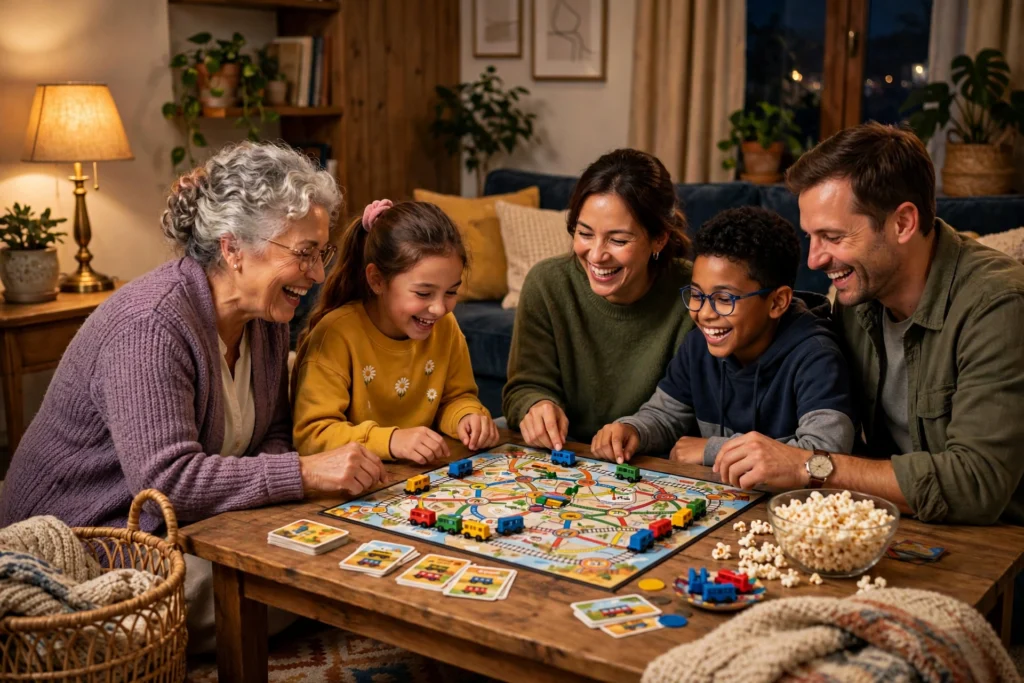
6. Family Board Game Tournament
Run a bracket-style tournament with games you own; the winner picks the next family movie. Generally suitable for ages 5+; 1–3 hours. Free upgrade: make paper medals from foil.
7. Dance Party Freeze Game
Dance until someone pauses the music — last one moving is out. Needs nothing but a phone or radio. Generally suitable for ages 3–12; 20–40 minutes.
8. Home “Restaurant” Night
Kids write a menu, take orders, and “serve” a simple dinner they helped make, like tacos. Generally suitable for ages 4–12; 1–2 hours including cooking.
9. Story Chain Writing
Each person adds one sentence until the story gets wonderfully weird, then read it aloud. Generally suitable for ages 6+; 20–40 minutes.
10. Sock Puppet Show
Turn old socks into characters with buttons and yarn, then stage a show behind the couch. Generally suitable for ages 3–8; 45–90 minutes including crafting.
Free Outdoor Adventures: Parks, Trails, and Nature
Fresh air is free, and most neighborhoods have more of it than families use.
11. Nature Scavenger Hunt
Hunt a list — a smooth rock, something red, a Y-shaped stick — at a local park or trail. Generally suitable for ages 3–10; 45–90 minutes. Make it a challenge: add bird or leaf ID for older kids.
12. Playground Tour
Visit every nearby playground and let kids rank them: best slide, best swings, best climbing. Generally suitable for ages 2–10; 1–3 hours. Free upgrade: picnic at the winner.
13. Bike or Scooter Parade
Decorate bikes with streamers and handmade signs, then parade around the block. Generally suitable for ages 4–12; 45–90 minutes. Use helmets; stick to quiet streets.
14. Cloud and Bug Watching
Find shapes in the clouds, then hunt ants and beetles in the grass. Slow, calm, absorbing. Generally suitable for ages 3–8; 30–60 minutes.
15. Stick and Rock Art
Arrange sticks, stones, and leaves into pictures on the ground — or paint rocks to hide around the neighborhood. Generally suitable for ages 3–10; 45–90 minutes.
16. Puddle Stomping Walk
After rain, boot up and investigate every puddle on the route. Generally suitable for ages 2–7; 20–40 minutes. Bring a towel and dry socks.
17. Backyard Bird Count
Tally every bird you see or hear in 20 quiet minutes, then look them up in a library book. Generally suitable for ages 5–12; 30–60 minutes.
18. DIY Obstacle Course
Build a timed course from pool noodles, chalk lines, and couch cushions in the yard or park. Generally suitable for ages 4–12; 45–90 minutes.
19. Kite Flying
A breezy day and an open field are all it takes if you own a kite. Generally suitable for ages 5+; 1–2 hours. Keep clear of power lines and roads.
20. Sunset or Sunrise Picnic
Pack a meal from home and eat it at a park with a good sky view — an ordinary dinner feels special at an unusual hour. Generally suitable for all ages; 1–2 hours.
21. Neighborhood Walking Tour
Let kids navigate a never-walked route with a hand-drawn map, spotting murals, gardens, and interesting houses. Generally suitable for ages 5–12; 45–90 minutes.
22. Nighttime Firefly or Star Walk
Spot fireflies on warm evenings or constellations on clear nights along a familiar route. Generally suitable for ages 4+; 20–45 minutes. Bring flashlights.
Free Community Resources: Libraries, Museums, and Local Events
Your tax dollars already fund great free family activities — most families just never check the calendar.
23. Library Storytime
Weekly storytimes with books, songs, and rhymes, usually grouped by age from babies to preschoolers. Generally suitable for ages 0–5; 30–45 minutes. Check your library’s online calendar.
24. Library Museum-Pass Programs
Many libraries let you check out free passes to museums, zoos, and attractions like books. Ask at the front desk or search the catalog for “museum pass” — participating venues vary, so confirm with your library.
25. Free Museum Days
Many museums offer free admission days or free evening hours, some monthly, some on set weekdays. Days and terms differ, so check the official website before you go, and pack a lunch for a full $0 outing. The Smithsonian’s museums in Washington, D.C., for example, are always free.
26. Parks and Recreation Classes
City and county parks departments often run free kids’ programs: nature walks, craft hours, and sports clinics. Registration may be required and spots fill fast. Generally suitable for ages 4–14. Bookmark your city’s parks and rec events page.
27. Community Concerts and Movie Nights
Free outdoor concerts and movies on the lawn run in warmer months in many towns. Bring a blanket and snacks from home. Check your city events calendar; schedules are seasonal.
28. Fire Station Open Houses
Some fire stations hold open houses where kids can see engines up close and meet firefighters, usually announced on city or department pages. Generally suitable for ages 3–10. Confirm it’s public and free first.
29. Farmers Market Browsing
Treat the market as an outing, not a shopping trip: free samples, buskers, and a favorite-vegetable scavenger hunt. Set the “just looking” rule up front. Generally suitable for all ages; 45–90 minutes.
30. Community Center Events
Churches, mosques, synagogues, temples, and neighborhood centers often host free family events — fall festivals, game nights, holiday programs — open to everyone. Check bulletin boards and local listings.
Free Seasonal Activities
Every season brings its own free fun.
31. Spring Wildflower Walk
Walk a trail or meadow slowly, photographing favorites and counting colors. Generally suitable for ages 4+; 45–90 minutes. Look, don’t pick, in parks and preserves.
32. Puddle-Boat Races
Fold paper boats and race them down a gutter stream after spring rain. Generally suitable for ages 4–10; 20–40 minutes. Supervise near moving water.
33. Summer Splash Pad Circuit
Most cities run free splash pads in summer. Visit a different one each week and rank them. Generally suitable for ages 2–10; 1–2 hours. Bring sunscreen and towels.
34. Backyard Water Games
A sprinkler, sponges, and buckets make a water relay or sponge tag in the yard. Generally suitable for ages 3–10; 30–60 minutes.
35. Free Summer Reading Programs
Libraries run summer reading challenges with logs, stickers, and prizes, plus free kickoff and finale events. Sign up in late May or June. Generally suitable for ages 4–12; all summer.
36. Fall Leaf Collecting and Art
Gather colorful leaves, press them in books, then glue them into collages or garlands. Generally suitable for ages 3–10; 45–90 minutes.
37. Fall Foliage Walk
You don’t need an orchard — any tree-lined street or trail delivers crunch-underfoot joy in peak color. Generally suitable for all ages; 1–2 hours.
38. Halloween Costume Parade
Organize a neighborhood costume parade before Halloween: kids show off costumes, neighbors applaud. Generally suitable for ages 2–10; 30–60 minutes.
39. Winter Sledding Hill
The nearest snowy hill becomes a free amusement park: sledding, snowman contests, snow angels. Generally suitable for ages 3+; 1–3 hours. Dress in layers and confirm the hill is public.
40. Holiday Lights Walk
Walk or drive a decked-out neighborhood and vote for favorites; many downtowns light up for free too. Generally suitable for all ages; 30–60 minutes. Bring cocoa from home.
41. First-Day Hikes
Many state parks host free guided hikes on New Year’s Day. Check your state parks site in December. Generally suitable for ages 5+; 1–2 hours.
42. Spring Photo Challenge
Hand kids a phone or old camera: best puddle reflection, first buds, a robin’s nest. Generally suitable for ages 6–14; 45–90 minutes.
Free Creative Projects
These use household and recycled materials, and each ends with something kids made themselves. More ideas: indoor activities for kids.
43. Sidewalk Chalk Murals
Turn the driveway into a gallery: murals, hopscotch, mazes, or roads for toy cars. Rain supplies a fresh canvas. Generally suitable for ages 2–10; 30–90 minutes. Make it more fun: trace shadows and decorate them.
44. Recycled Sculpture Building
Save tubes, boxes, and bottle caps for a week, then build the tallest tower or weirdest creature. Generally suitable for ages 4–12; 1–2 hours. Make it a challenge: it must hold a book.
45. Nature Weaving
Wrap yarn around a forked stick to make a loom, then weave in leaves and flowers from a walk. Generally suitable for ages 5–12; 45–90 minutes.
46. Homemade Playdough
Flour, salt, water, and oil make playdough in ten minutes on the stove. Generally suitable for ages 2–8; 30–60 minutes of play after making.
47. Comic Strip Drawing
Fold paper into panels and draw a comic starring the family pet or an invented hero. Generally suitable for ages 5–12; 30–60 minutes. Best for: quiet afternoons.
48. Rock Painting and Hiding
Paint rocks with designs or kind messages and hide them around the neighborhood for others to find. Generally suitable for ages 3–12; 45–90 minutes.
49. DIY Board Game
Kids invent a game — board, rules, pieces from paper and bottle caps — then the family playtests it. Generally suitable for ages 6–12; 1–2 hours.
50. Junk Mail Collage Art
Old magazines and catalogs plus scissors and glue become collages: dream houses, silly monsters, vision boards. Generally suitable for ages 4–12; 30–60 minutes.
51. Backyard “Art Gallery”
Clip drawings to a clothesline “gallery” and hold a grand opening with the artists giving tours. Generally suitable for ages 3–10; 30–45 minutes.
52. Story Stones
Paint simple pictures on flat stones, draw three from a bag, and invent a story around them. Generally suitable for ages 4–9; 20–40 minutes.
53. Window Art With Washable Markers
Draw on windows or glass doors with washable markers — it wipes off with a damp cloth. Generally suitable for ages 3–8; 20–40 minutes. Test one spot first.
Free Learning Adventures
These build science, reading, and observation skills while kids play. More: screen-free activities for kids.
54. Kitchen Science Experiments
Baking soda volcanoes, sink-or-float tests, and ice-melting races from pantry staples. Generally suitable for ages 5–12; 30–60 minutes. Make it more fun: predict results and keep score.
55. Geocaching
Use a free geocaching app to hunt hidden containers in parks and public places — a GPS treasure hunt. Generally suitable for ages 6–14; 1–3 hours. Stick to easy, well-reviewed caches.
56. Stargazing and Constellation Spotting
Find the Big Dipper or Orion with a free star chart from the library. Generally suitable for ages 4+; 30–60 minutes. Free upgrade: many libraries lend telescopes.
57. Library Reading Challenge
Many libraries run year-round reading challenges with prizes — reading with a goal, zero books bought. Generally suitable for ages 4–12; ongoing. Ask the children’s desk.
58. Nature Journaling
A notebook for drawing and writing about what’s outside: a weird mushroom, today’s weather. Generally suitable for ages 6–12; 20–40 minutes per session.
59. Self-Guided Walking Tours
Pick a theme — murals, old buildings, bridges — and explore your town like detectives. Many downtowns post free tour maps online. Generally suitable for ages 7–14; 1–2 hours.
60. Interview a Grandparent
Kids prepare questions about a grandparent’s childhood, then write up or record the answers — family history plus listening practice. Generally suitable for ages 6–14; 30–60 minutes.
61. Map Skills Practice
Print a free neighborhood map; kids plan a walking route, estimate distances, and navigate while you follow. Generally suitable for ages 7–12; 45–90 minutes.
62. Free Educational Documentaries
Library streaming services and free channels offer nature and science films for kids. Pair a film with a related activity. Generally suitable for ages 4–14; 45–90 minutes. Preview for age fit.
Free Weekend Outings
Weekends are when free shines — communities schedule their best free programming for Saturdays and Sundays. Pack food from home and these stay at $0. Planning a national park trip? Check the National Park Service’s free entrance days.
63. Hike a New Trail
Try a trail you’ve never walked — state parks, county preserves, and rail-trails are often free. Generally suitable for ages 4+; 2–4 hours. Bring water and snacks; tell someone your route.
64. Beach or Lake Day
A public beach or lake day costs nothing but the trip: sandcastles, wading, shell collecting. Generally suitable for all ages; 3–5 hours. Watch kids near water constantly.
65. Free Day at the Zoo or Aquarium
Some zoos and aquariums offer free days or free hours a few times a year, announced on their official sites. Plan ahead — they draw crowds. Generally suitable for all ages; 2–4 hours. Arrive early.
66. University Campus Exploring
College campuses are open and walkable: art installations, gardens, historic buildings, plus occasional free public performances. Generally suitable for ages 7–14; 1–3 hours.
67. Landmark Road Trip
Pick a quirky landmark within an hour — a covered bridge, a giant roadside statue, a historic main street — and make the drive the adventure with car games and a picnic stop. Generally suitable for ages 5–14; half a day. Verify public access first.
68. Volunteer as a Family
Park cleanups, community garden workdays, and trail maintenance welcome families. Generally suitable for ages 6+; 1–3 hours. Check age minimums when signing up.
69. Attend a Free Festival or Fair
Street fairs, cultural festivals, and art walks are often free to attend — music, parades, and demos cost nothing. Generally suitable for all ages; 2–4 hours.
70. Explore a New Neighborhood
Pick an unfamiliar part of town and explore on foot: playgrounds, window-shopping, architecture. It feels like travel without leaving home. Generally suitable for ages 5–14; 2–3 hours.
71. Botanical Garden Free Hours
Many botanical gardens offer free admission days or free morning hours — check official sites. Generally suitable for ages 4+; 1–3 hours.
72. Historic Site Grounds
Battlefields, missions, and monuments often have free outdoor grounds even when tours cost money. Generally suitable for ages 6–14; 1–3 hours.
73. Free Fishing Days
Some states offer no-license free fishing days; check your state’s fish and wildlife site for dates and rules. Generally suitable for ages 6+; 2–3 hours. Supervise near water.
74. Outdoor Movie Nights
Communities and libraries run free movies in the park in warmer months. Bring blankets and popcorn from home; arrive early for a good spot. Generally suitable for all ages; 2–3 hours.
75. “Tourist in Your Town” Day
Do everything a visitor would: the overlook, the historic district, the famous mural — with a packed lunch between stops. Generally suitable for ages 5–14; a full day.
Free Activities by Age
Pick from the 75 above by age band.
| Age Band | Top Picks (by activity number) |
|---|---|
| Toddlers (1–3) | #23 Library storytime, #16 Puddle stomping, #12 Playground tour, #33 Splash pads, #46 Playdough |
| Preschoolers (3–5) | #1 Blanket fort city, #11 Scavenger hunt, #43 Sidewalk chalk, #3 Shadow puppets, #52 Story stones |
| Elementary (6–10) | #55 Geocaching, #54 Kitchen science, #49 DIY board game, #63 New trails, #18 Obstacle course |
| Tweens & teens (11–14) | #56 Stargazing, #59 Walking tours, #60 Grandparent interviews, #68 Volunteering, #75 Tourist day |
For more ideas organized by age and interest, browse our family activities guide and the pillar roundup of things to do with kids.
How to Find FREE Events Near You
The real skill is finding new free things to do with kids every week. Here’s the system:
Start with the library calendar. Storytimes, craft hours, LEGO clubs, and movie afternoons — nearly all free, most with an online calendar you can filter by age. The American Library Association offers resources for finding libraries and programs near you.
Check your city or county parks and recreation page. Free concerts, nature programs, and seasonal festivals live here. Join their email list — limited-spot events go to subscribers first.
Follow community boards and local parenting groups. Towns often keep a community events calendar, and parents share free happenings constantly on social media.
Verify free days on official sites. For any museum, zoo, garden, or park, check the official website for “free days” or “free hours” — policies change, so confirm close to your visit.
Find one recurring series. A summer concert series, movies in the park, or a monthly art walk gives you a whole season of outings from a single discovery.
A note on “free”: truly free means no admission, no required purchase, no rental fee. Pack your own food and check parking ahead of time, and a free event stays free.
The Bigger Master List
For hundreds more ideas at every budget, our pillar guide to things to do with kids covers free, cheap, and worth-the-splurge family activities.
FAQ: Free Things to Do With Kids
What are some completely free things to do with kids?
Visit parks, playgrounds, and splash pads; attend library storytimes; hike public trails; picnic; build forts; run scavenger hunts; stargaze; and check your city’s calendar for free concerts, festivals, and museum days. All 75 ideas in this guide cost $0.
How can I entertain my kids without spending money?
Build a weekly rhythm around free anchors: one library visit, one park or trail outing, one at-home project day. Add seasonal freebies (splash pads in summer, light walks in winter) and scan community calendars each Sunday for the week’s free events. Kids respond more to novelty and your attention than to spending.
Do museums really have free days?
Yes — many museums offer free admission days, free evenings, or free hours on a rotating schedule. Terms vary, so always confirm on the museum’s official website before visiting. Also ask your library about museum-pass programs, which let you check out free attraction passes like books.
How do I find free family events in my area?
Check your library’s events calendar, your city or county parks and recreation page, your town’s community calendar, and local parenting groups on social media. Join the parks-department email list for announcements about limited-capacity free events.
Are “free” events actually free, or are there hidden costs?
Most are genuinely free to attend, but watch for optional costs: parking, food vendors, and gift shops. Pack your own food and drinks, check parking in advance, and set expectations with kids beforehand (“we’re here for the music, not the funnel cake”). Then free stays free.
What is a fun free birthday idea for kids?
Host a park birthday: claim a picnic table early, bring homemade food, and run freeze dance and scavenger hunts. Other $0 wins: a backyard campout sleepover, a library party room, or a splash pad gathering.
What free activities are best for a rainy day?
Fort building, indoor scavenger hunts, shadow puppets, homemade playdough, and kitchen science experiments fill rainy hours at home. Libraries are the best rainy-day refuge outside home. More: indoor activities for kids.
What can I do for free with tweens or teens who think everything is boring?
Give them ownership: let them plan a geocaching route, lead a photo challenge, or interview a grandparent for a “documentary.” Teens engage when they’re creating or in charge — game design, nature photography, volunteering, and stargazing work because they don’t feel like “kid activities.”
The $0 Bottom Line
Free doesn’t mean boring — it means creative. Pick one idea for this weekend, pack a lunch from home, and go.