These fun family activities will fill your calendar with connection. The best family memories come from ordinary evenings — a competitive card game, a walk where everyone talked, a kitchen covered in flour. This guide gives you 75 family activities built around one idea: doing things together, not side by side.
Organized by at-home family nights, outdoor adventures, creative projects, learning together, weekend traditions, seasonal rituals — plus activities by age, with ideas even teens won’t roll their eyes at. Every entry tells you what it takes: ages, time, cost, and setup. Whether you have a free Saturday, a rainy afternoon, or 30 minutes after dinner, you’ll find something here.
Quick answer: What are good family activities?
Good family activities are simple, interactive things everyone can join: board game nights, cooking together, hiking a local trail, picnics, stargazing, a family book club, or volunteering. The best need little planning, cost little, and give everyone a role.

Quick Picks: The Best Family Activities at a Glance
- Best overall: Weekly game night — zero cost, all ages, the easiest tradition to start tonight.
- Best free: Nature scavenger hunt at a local park — just make a checklist together.
- Best rainy-day: Themed movie night with a blanket fort and a snack everyone helped make.
- Best outdoor: A family hike or picnic — easy, flexible, good for toddlerough grandparents.
- Best for toddlers: Bubble parades and nature texture walks — short, sensory, silly.
- Best with teens: A “Chopped”-style cooking challenge or family video project — they get control, you get connection.
- Best tradition-starter: A New Year time capsule or weekly Sunday pancake breakfast.
Family Activities at a Glance
| Activity | Best Age | Cost | Indoor/Outdoor | Time Needed | Setup Level |
|---|---|---|---|---|---|
| Family game night | 4+ | Free | Indoor | 30–90 min | Easy |
| Cook a meal together | 5+ | $ | Indoor | 45–90 min | Easy |
| Family hike | 3+ | Free | Outdoor | 1–3 hrs | Easy |
| Backyard campout | 4+ | Free–$ | Outdoor | Evening | Moderate |
| Nature scavenger hunt | 3–12 | Free | Outdoor | 30–60 min | Easy |
| Paint night | 5+ | $ | Indoor | 1–2 hrs | Easy |
| Stargazing | 5+ | Free | Outdoor | 30–90 min | Easy |
| Family book club | 8+ | Free | Indoor | 30 min weekly | Easy |
| Chopped-style cooking challenge | 10+ | $ | Indoor | 1–2 hrs | Moderate |
| Volunteer together | 6+ | Free | Either | 2–3 hrs | More Planning |
At-Home Family Nights
You don’t need to leave the house — these turn ordinary evenings into the moments kids remember.
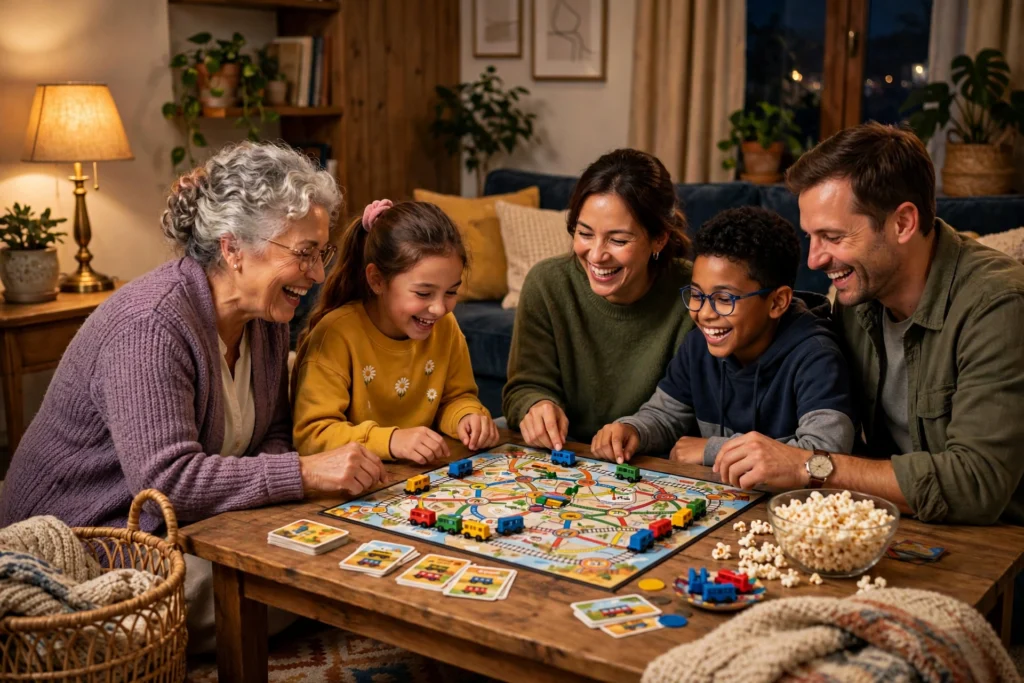
1. Family Game Night
Pull out board games, card games, or party games everyone can play. Cooperative games (the family plays against the game) work well when ages vary widely, and team play lets little ones pair up with older siblings.
Generally suitable for: ages 4 and up • Time: 30–90 minutes • Cost: Free (use what you own) • Setup: Easy — just clear the table.
- Best for: a weekly tradition; rotate who picks the game.
- Make it a challenge: run a month-long tournament with a silly trophy.
2. Themed Movie Night
Pick a movie and build the evening around it — matching food, decorations, even closet costumes. Watching a cooking movie? Make the dish from the film. An adventure film? Build a blanket fort and “camp” through the credits.
Generally suitable for: all ages • Time: 2–3 hours • Cost: Free–$ • Setup: Easy.
- Budget tip: library DVDs and free streaming options keep this at zero cost.
3. Cook Dinner Together
Assign real roles — chopper, stirrer, taste-tester, table-setter — so everyone contributes. Kids who help cook are far more likely to eat the result, and the conversation around a cutting board beats any dinner-table interrogation.
Generally suitable for: ages 5 and up (toddlers can wash vegetables and stir) • Time: 45–90 minutes • Cost: $ (your normal grocery budget) • Setup: Easy.
- Make it easier: start with assembly meals — tacos, personal pizzas, sandwich bars.
4. DIY Pizza Night
Set out toppings buffet-style and let everyone design their own pizza. Vote on the most creative.
5. Living-Room Fort + Read-Aloud
Build a blanket fort, pile in with flashlights, and take turns reading a family book aloud.
6. Family Trivia or Quiz Night
Take turns writing questions — family memories, movies, random facts. Keep score on a whiteboard.
7. Dance Party
Make a shared playlist, dim the lights, and dance it out — three songs per person.
8. Indoor Scavenger Hunt
Write clues that send the family racing around the house. Older kids can write the clues for younger ones.
9. Bake-Off Challenge
Everyone decorates the same base — sugar cookies, cupcakes. Judge on creativity, not skill.
10. Puzzle Marathon
Leave a big puzzle out on a card table for a week. Everyone adds pieces when they walk by.
11. Karaoke Night
Sing along to lyric videos or a free karaoke app. Duets get the shy ones involved.
12. Backyard Campout
Pitch a tent in the backyard, roast marshmallows, and tell stories. Safety: fires only in a proper fire pit, never unattended; check local rules.
Want more ideas for days stuck inside? See our guide to indoor activities for kids.
Outdoor Family Adventures
Fresh air changes the energy of a family day. These outdoor family activities range from lazy picnics to full-day adventures, and most cost nothing.
13. Family Hike
Choose a trail that matches your youngest hiker — short loops with something to look at (a waterfall, a viewpoint, a cool bridge) beat long slogs. Let kids take turns being “trail leader” with the map.
Generally suitable for: ages 3 and up • Time: 1–3 hours • Cost: Free • Setup: Easy — water, snacks, sturdy shoes.
- Safety: stay on marked trails, bring more water than you think you need, and check the weather first.
14. Picnic in the Park
Pack sandwiches, a blanket, and a ball or frisbee. The food is almost beside the point — it’s the unhurried togetherness that matters.
Generally suitable for: all ages • Time: 1–2 hours • Cost: $ • Setup: Easy.
- Make it easier: pick up food locally instead of packing.
15. Family Bike Ride
Ride a local bike path or quiet neighborhood loop — tagalong bikes and trailers let even preschoolers join.
Generally suitable for: ages 4 and up • Time: 30–90 minutes • Cost: Free (with your own bikes) • Setup: Easy. Safety: helmets for everyone, every time.
16. Nature Scavenger Hunt
Make a checklist together — something smooth, something noisy, a heart-shaped leaf — then hunt at a local park.
17. Stargazing
Spread a blanket in the backyard or a dark park and find constellations — a free stargazing app turns phones into star maps.
Generally suitable for: ages 5 and up • Time: 30–90 minutes • Cost: Free • Setup: Easy.
- Best for: warm, clear nights and winding down before bed.
18. Geocaching
Use a free geocaching app to hunt hidden containers nearby — any walk becomes a treasure hunt.
19. Backyard Olympics
Set up silly events — spoon races, water balloon toss, hula hoop contests — with cardboard medals.
20. Water Games
Sprinklers, water balloons, sponge relays. On hot days, nothing beats it.
21. Fly a Kite
Simple, cheap, and thrilling when it catches the wind. Open parks and beaches work best.
22. Paint Rocks and Hide Them
Paint rocks with messages or pictures, then hide them around your neighborhood or a park trail.
23. Birdwatching Walk
Borrow binoculars from the library and see how many species you can spot. Keep a running list on the fridge.
24. Community Cleanup
Join or organize a park or beach cleanup — kids get surprisingly into it.
If budget is the deciding factor, browse our list of free things to do with kids for more zero-cost ideas.
Creative Projects Together
Making something side by side — especially something imperfect — is one of the fastest ways to bond. These creative family activities give everyone a role and leave you with something to show for it.
25. Family Paint Night
Set up canvases or thick paper, put on music, and paint the same subject — a sunset, the family pet, your dream house. Acrylics are cheap, dry fast, and wash out of brushes with soap and water.
Generally suitable for: ages 5 and up • Time: 1–2 hours • Cost: $ (a basic acrylic set goes a long way) • Setup: Easy — cover the table first.
- Budget tip: use cardboard or the back of old posters instead of canvases.
26. Build Something Together
Pick a small woodworking or assembly project — a birdhouse, a garden planter — and build it as a team. Kids handle sanding, painting, and measuring; adults handle saws and drills.
Generally suitable for: ages 6 and up • Time: 2–3 hours • Cost: $–$$ • Setup: Moderate — gather materials and tools first. Safety: adults handle all cutting and drilling.
- Make it easier: start with a kit with pre-cut pieces and instructions.
27. Family Comic Strip
Everyone draws one panel of a family comic and passes it on — the story surprises you.
28. Memory Scrapbook or Photo Wall
Print favorite photos, add ticket stubs and doodles, and build a scrapbook or photo wall together.
29. Cardboard City
Save boxes for a week, then build a cardboard town — houses, cars, marker-drawn roads.
30. Family Bracelets
Make matching bracelets for the whole family — simple for young kids, wearable for teens.
31. DIY Photo Booth
Hang a sheet, gather props, and take ridiculous family photos. Print the best for the fridge.
32. Tie-Dye Day
Old white shirts, a tie-dye kit, and a backyard. Everyone designs their own — wear them on the next family outing.
33. Make a Family Music Video
Choreograph a dance or lip-sync to a favorite song, film it, and edit together. Teens lead the editing.
34. Family Recipe Book
Collect favorite recipes, have everyone decorate a page, and assemble a handwritten cookbook. Interview grandparents for theirs.
Learning Together
The trick: everyone is a beginner. When parents learn too, kids relax — and the shared struggle becomes the bonding.
35. Kitchen Science Experiments
Baking-soda volcanoes, walking-water rainbows, homemade slime — messy, fascinating, and genuinely educational. Let kids predict what will happen before each experiment.
Generally suitable for: ages 5–12 • Time: 30–60 minutes • Cost: Free–$ (pantry staples) • Setup: Easy.
- Safety: keep experiments food-safe and age-appropriate; adults supervise anything heated.
36. Family Book Club
Pick a book everyone reads (or listens to as an audiobook), then discuss it over a special snack. Graphic novels and adventure series work brilliantly.
Generally suitable for: ages 8 and up • Time: 30 minutes a week • Cost: Free (library!) • Setup: Easy.
- Best for: families with different reading levels — audiobooks level the playing field.
37. Learn a Skill Together
Pick something nobody knows — juggling, basic Spanish, watercolor, chess — and learn it side by side for a month. Libraries often offer free classes.
38. Museum Day
Children’s museums, science centers, and art museums are built for exploring together — many offer free or discounted family days.
39. Library Visit
Most libraries run free story times, craft hours, and summer reading programs. Make it a weekly outing.
40. Nature Journal
Give everyone a notebook to sketch or write about walks — leaves, bugs, clouds. It’s about noticing, not art.
41. Family History Night
Call a grandparent on speakerphone and ask about their childhood, or dig through old photo albums together.
42. Map Night
Plan a dream trip together on a big map — where you’d go, what you’d eat, what you’d see.
43. Start Seedlings
Plant herb or vegetable seeds in cups on a windowsill and track their growth. Regrowing scraps like green onions feels like magic.
Weekend Family Traditions
Traditions are activities you repeat on purpose. These are designed to become rituals your kids will someday pass on.
44. A Fixed Weekly Family Night
Pick one evening and protect it: Friday game night, Saturday movie night, Sunday cooking night. Put it on the calendar like any other appointment — consistency matters more than the activity.
Generally suitable for: all ages • Time: 1–2 hours weekly • Cost: Free • Setup: Easy — the only setup is saying no to other plans.
- Best for: busy families who need togetherness on autopilot.
45. Weekend Breakfast Ritual
Pancakes, waffles, or a big egg spread — make one breakfast a week an event. Let kids take over more cooking as they grow.
46. After-Dinner Family Walk
A 20-minute walk after dinner. No destination, no agenda — this is when kids open up.
47. Monthly Choice Rotation
Each month, a different family member plans one outing (within reason). Kids learn planning; everyone feels heard.
48. Seasonal Bucket List
Each season, write 10–15 things you want to do before it ends. Post it on the fridge and check them off.
49. One Photo a Week
Photograph the whole family weekly — same spot, silly poses encouraged. At year’s end, you have a flipbook of the year.
50. Sunday Gratitude Circle
Go around the table naming one good thing from the week. Five minutes that trains everyone to notice the good.
Seasonal Family Rituals
Marking the seasons gives your family rhythm and something to look forward to.
51. Spring Planting Day
Plant flowers or vegetables together — garden bed, balcony pots, or a community plot. Kids who plant it will eat it.
Generally suitable for: ages 3 and up • Time: 2–3 hours • Cost: $ • Setup: Easy.
52. Summer Day Trip
Pick a destination within an hour or two — a lake, a small town, a state park — and explore like tourists. Let the kids navigate.
53. Fall Apple Picking or Leaf Walk
Visit an orchard for apple picking, or collect the best-colored leaves for pressing. Bake something with your haul.
54. Winter Holiday Baking
Pick one baking day in December — cookies, gingerbread, whatever you love. Play music, make a mess, give half to neighbors.
Generally suitable for: ages 4 and up • Time: 2–3 hours • Cost: $ • Setup: Easy.
- Make it more fun: everyone decorates their own batch and votes on the best.
- Best for: kicking off the holiday season as a family.
55. Thanksgiving Gratitude Activity
Before the big meal, have everyone write what they’re thankful for on paper leaves and hang them on a branch “gratitude tree.”
56. New Year Time Capsule
Each person adds something to a box — a letter to their future self, a favorite photo, a small memento. Seal it and open it the next New Year.
Generally suitable for: ages 6 and up • Time: 1 hour • Cost: Free • Setup: Easy — any box or jar works.
- Make it more fun: include predictions for the coming year and see who was closest.
- Best for: starting a tradition that gets better every year.
57. Seasonal Festival Outing
Fall fairs, winter light displays, spring flower festivals, summer concerts — pick one per season and make it your thing.
Family Activities by Age
Match the activity to who’s at the table — including the notoriously tricky teen years.
For Toddlers (Ages 1–3)
Keep it short, sensory, and silly — toddlers are happiest doing something near you that you do with them.
58. Bubble Parade
March around the yard or park blowing bubbles while music plays. Twenty minutes of pure joy.
59. Sensory Play Together
Set out bins of water, rice, or playdough and explore together. Narrate what you feel.
60. Nature Texture Walk
Walk slowly and touch everything: rough bark, smooth stones, soft moss. Collect treasures in a bucket.
61. Dance Freeze Party
Play music, dance together, freeze when it stops. Toddlers find this endlessly funny.
For Kids (Ages 5–12)
This is the golden age of family activities — kids are old enough for real games and projects but still think family time is cool.
62. Family LEGO Challenge
Give everyone the same pile of bricks and a theme — tallest tower, funniest animal, dream house — then vote on winners.
63. Board Game Tournament
Run a bracket over several nights with games of increasing complexity. Crown a family champion.
64. DIY Escape Room
Lock “treasure” in a box with a combination lock, then hide clue-puzzles around the house.
For Teens (Ages 13+)
Teens don’t hate family time — they hate feeling like props in it. The activities that work give them autonomy, a real challenge, or a skill they actually want.
65. “Chopped”-Style Cooking Challenge
Give everyone the same mystery ingredients and 45 minutes. Teens get to show off, everyone eats the results, and the judging is half the fun.
Generally suitable for: ages 10 and up • Time: 1–2 hours • Cost: $ • Setup: Moderate — shop for surprise ingredients.
- Best for: competitive families and teens who like being in charge.
66. Family vs. Teens Sports Match
Basketball, soccer, mini-golf — parents versus kids. Teens bring energy; parents bring comedy. Keep it light.
67. Photo or Video Project
Give everyone a prompt — “a day in our life” — and edit a short video together. Teens teach the tech.
68. Volunteer Together
Food banks, park cleanups, animal shelters. Teens who resist “family time” often say yes to something that matters.
69. Night Hike or Late Stargazing
A short night walk with flashlights or a late stargazing session feels grown-up — independence with the family still there.
70. Join Their Hobby
Ask your teen to teach you something they’re into — a video game, skateboarding, their music. Being the student flips the dynamic.
For the Whole Extended Family
Grandparents, aunts, uncles, cousins — multigenerational family activities work best when every age has a way to contribute.
71. Grandparent Interview Night
Have kids interview a grandparent on video — childhood memories, first jobs, family stories. You’ll treasure the recording.
72. Teach and Learn Across Generations
Grandparents teach a skill (knitting, fishing, an old card game); kids teach one back (phone tricks, a dance).
73. Big Family Game Tournament
Go for party games that handle crowds — trivia teams, charades, Pictionary — in mixed-age teams.
74. Story Night
Everyone shares one memory — funniest, scariest, proudest. With grandparents in the room, the stories get better every round.
75. Family Talent Show
Everyone performs something: a song, a magic trick, a dramatic reading, a comedy bit. Applause is mandatory; talent is optional.
Budget-Friendly Family Fun
Almost everything above costs little or nothing — togetherness takes intention, not a budget. For even more zero-cost ideas, see our free things to do with kids guide.
Screen-Free Family Time
Many of these are naturally screen-free — phones away (parents too) for even an hour changes everything. For a deeper dive, see our screen-free activities for kids.
Indoor Days Together
Rainy days, heat waves, snow days — being stuck inside doesn’t have to mean separate screens. Find more cozy-day ideas in our indoor activities for kids guide.
The Big Master List
Want more ideas organized by age, interest, and occasion? Browse the master collection in our things to do with kids pillar guide.
How to Find Family Activities Near You
Beyond your living room and backyard, your community is full of family activities. Search for activity types, not specific businesses:
- Local parks and trails — city or county parks sites list trail maps, nature programs, and free events.
- Public libraries — story times, craft hours, and summer reading programs, almost always free.
- Museums — many offer free or discounted family days; children’s and science museums are built for hands-on exploring.
- Community and recreation centers — family swim times, open gyms, and low-cost classes.
- Community calendars — your city’s website, local parent groups, and library boards list festivals, concerts, and free events.
- Seasonal festivals — fall fairs, holiday light displays, summer concert series, and farmers markets.
- National and state parks — the National Park Service runs free entrance days several times a year, and junior ranger programs give kids a mission.
A quick search for “family events this weekend” plus your town name is often all it takes.
Frequently Asked Questions
How do we start family traditions when our schedule is already packed?
Start embarrassingly small — a tradition needs repetition, not grandeur. Anchor one 20-minute ritual to something that already happens: pancakes every Saturday, a walk after Sunday dinner. Protect it on the calendar for a month. Once it’s automatic, it stops feeling like an obligation and becomes the part of the week everyone looks forward to.
What family activities do teens actually enjoy?
Teens engage when they have autonomy and a real role. Cooking challenges they run, video projects they edit, matches they can genuinely compete in, volunteering for causes they care about — all work. Let them plan an outing or teach you something.
How can we have family time without screens?
Set the boundary together — “phones in a basket during dinner” beats a lecture. Fill the gap with something active: a board game, a walk, cooking. The first 15 minutes feel awkward; after that, nobody misses the phone. Start with short windows rather than a full digital detox.
What are good family activities for a wide age range, like toddlers to grandparents?
Choose activities where everyone contributes at their level: cooking (toddlers stir, teens chop, grandparents direct), gardening, group art, nature walks, team trivia. Cooperative games and mixed-age teams level the playing field. Avoid winner-takes-all formats with wide age gaps — shared goals keep it fun instead of frustrating for the youngest.
How often should we do family activities together?
Aim for one protected block a week plus small daily moments — more sustainable than an ambitious monthly outing that keeps getting postponed. A weekly game night becomes a tradition; daily micro-moments keep the connection warm. Regularity matters most: kids trust what repeats.
What if one child never wants to join in?
Don’t force it — forced fun breeds resentment. Lower the barrier: invite them for just 15 minutes, give them a specific job (photographer, DJ), or let them choose next time. Sometimes opting out means the activity doesn’t fit — useful information. And let them see the family having fun without them; the door stays open.
Are expensive outings better for bonding than simple activities at home?
No — regular, interactive time together matters far more than spending. A weekly card game builds more connection than one big annual vacation, because bonding comes from repeated shared experience. Kids remember how it felt — laughing, included, your full attention — not what it cost.
How do we make family activities work with grandparents or extended family?
Plan around the least mobile person and give every generation a role. Seated activities — cooking, storytelling, group games, photo projects — include everyone. Ask grandparents to contribute what only they can: family stories, a recipe, a skill. When elders feel like contributors rather than guests, visits become real togetherness.
Start Tonight
You don’t need a plan, a budget, or a free Saturday. You need one evening, one activity, and everyone in the same room. Pick something from this list — a card game, a walk, a pizza night — and do it tonight. Then do something again next week. That’s how 75 ideas become a family that actually spends time together.