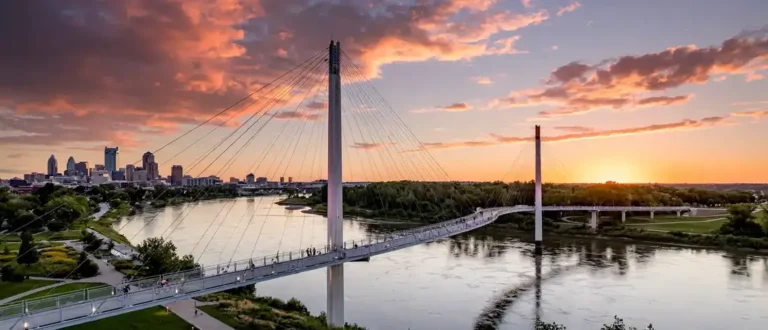
Free Things to Do in Minneapolis: 13 Ways to Love the Twin Cities for $0
Minneapolis is the northernmost great American city — all lakes and waterfalls, world-class free art museums, and a riverfront that built an empire on flour — and its free experiences are the city’s best face. The Sculpture Garden, the Stone Arch Bridge, Minnehaha Falls, the free art museums. Free things to do in Minneapolis are not the budget version; they are the Minneapolis version: cultured, outdoorsy, and quietly spectacular.
This guide rounds up 13 free experiences in Minneapolis, Minnesota, from the Sculpture Garden to the Stone Arch Bridge, Minnehaha Falls, the Chain of Lakes, and the city’s remarkable free museums. Everything below is genuinely free — no admission, no tour fee, no catch. Whether you are visiting the Twin Cities, road-tripping the North, or exploring Minnesota on a budget, start here. For more no-cost ideas, see our 50 best free attractions in the USA.
How We Chose the Best Free Things to Do in Minneapolis
Minneapolis’s free scene is built on public goods: the parks, the lakes, the riverfront, and the university and foundation-funded museums that keep their doors open to all. We prioritized experiences that are both free and first-rate — the MIA’s world-class collection, the Sculpture Garden’s iconic status, the falls’ natural drama.
We also accounted for seasons, because Minneapolis transforms completely between summer and winter. The list leans on year-round experiences with notes on seasonal peaks. For general free-travel tactics, our best art walks and First Friday events guide pairs well with this list.
1. Minneapolis Sculpture Garden — Downtown
The Minneapolis Sculpture Garden — 11 acres of free art park anchored by the iconic Spoonbridge and Cherry — is the city’s signature free experience. The garden’s 40-plus sculptures, set among pines and lawns with the downtown skyline behind, make it one of America’s great outdoor museums.
The Spoonbridge — the giant spoon bridging a pond with a cherry on top — is the most photographed sculpture in the Midwest, but the garden’s depth surprises: works by international artists, the Cowles Conservatory’s greenhouse, and the Walker Art Center’s hillside setting. It is free, it is beautiful, and it rewards repeat visits.
Visit in the morning for the softest light and the thinnest crowds. The garden is stroller-friendly and wheelchair-accessible. Allow one to two hours; combine with the Walker area for a full free art outing.
2. Stone Arch Bridge — Riverfront
The Stone Arch Bridge — the 1883 railroad bridge turned pedestrian crossing over St. Anthony Falls — is Minneapolis’s great free walk. The bridge’s 23 stone arches span the Mississippi with the skyline on one side and the falls on the other, offering the definitive Twin Cities panorama.
The bridge is the centerpiece of the riverfront’s historic district — the old mill buildings, the Guthrie Theater, the parklands all radiate from it. Walking the bridge at sunset, with the city glowing and the river rolling beneath, is one of the great free experiences in the Midwest.
The bridge is open daily; allow 45 minutes to an hour for the round trip, longer if you linger. Combine with Mill Ruins Park and the Guthrie’s Endless Bridge for the full free riverfront.
3. Minnehaha Falls — South Minneapolis
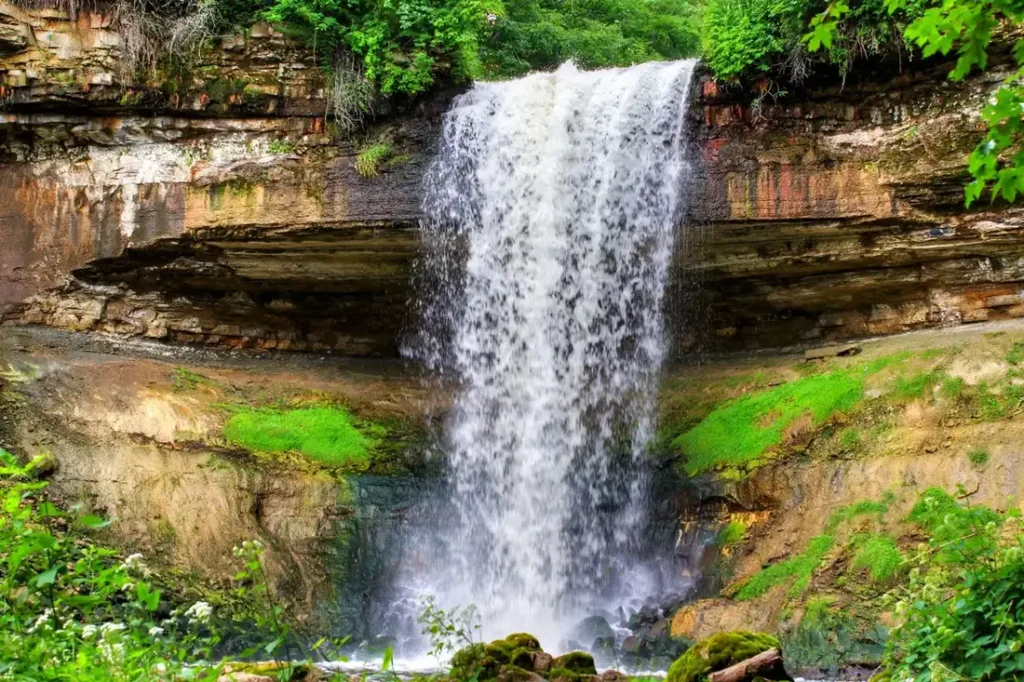
Minnehaha Falls — the 53-foot waterfall plunging over limestone in Minnehaha Park — is free and spectacular: Longfellow’s famous falls, a curtain of water in summer, a frozen cathedral in winter. The park around it offers trails, gardens, and river overlooks, all free.
The falls are the centerpiece, but the park rewards exploration: the trails along Minnehaha Creek, the limestone bluffs, the historic pavilion. In winter, the frozen falls — a wall of blue ice — draw photographers from across the region. In summer, the wading pool and the park’s bustle make it a family favorite.
Visit in the morning for the best light on the falls. The park is at its most dramatic after spring rains, when the water roars. Allow one to two hours. For more waterfall-country ideas, see our best hiking trails in the USA guide.
4. Chain of Lakes — Southwest Minneapolis
The Chain of Lakes — Harriet, Calhoun (Bde Maka Ska), Isles, Cedar, and Brownie — is Minneapolis’s great free playground: miles of paved trails around urban lakes, with beaches, gardens, and skyline views. The lakes are the city’s backyard, and the trails are free to all.
The full loop around the main lakes is a classic Minneapolis outing — walking, running, or cycling with the water always in view. Lake Harriet’s bandshell hosts free concerts in summer; the bird sanctuary at Roberts offers quiet. Each lake has its own character, from Harriet’s bustle to Cedar’s calm.
The lakes are at their best in summer, when the beaches and the bandshell are in full swing. The trails are plowed in winter for year-round use. Allow two to three hours for the full loop, or enjoy a single lake for a shorter outing.
5. Minneapolis Institute of Art — South Minneapolis
The Minneapolis Institute of Art — the MIA — offers free admission to one of America’s great encyclopedic museums. The collection spans 5,000 years and six continents: European masters, Asian art, African art, American art, photography, and decorative arts, all free.
The MIA’s free status is a civic treasure — a world-class museum open to all, always. The collection’s depth rivals paid institutions: the Japanese galleries, the European paintings, the modern wing. It is the kind of museum that rewards multiple visits; you cannot see it all in one trip.
Allow two to three hours minimum; art lovers will want a full day. The museum is fully accessible and a perfect rainy-day option. Check for free lectures and special programs.
6. Weisman Art Museum — University of Minnesota
The Weisman Art Museum — the University of Minnesota’s museum in Frank Gehry’s gleaming steel building — offers free admission to modern and contemporary collections. The building itself — all curves and angles overlooking the Mississippi — is worth the trip.
The Weisman’s collection focuses on American modernism, ceramics, and contemporary work, with the building’s galleries framing river views. The museum’s riverside setting, on the university’s East Bank, makes it a natural stop on a campus-riverfront day.
Combine with the Stone Arch Bridge area for a full free riverfront outing. The museum is compact — 60 to 90 minutes suffices — and fully accessible.
7. Guthrie Theater’s Endless Bridge — Riverfront
The Guthrie Theater’s Endless Bridge — the cantilevered lobby extending toward the Mississippi — is free to visit and offers the best indoor view in Minneapolis: floor-to-ceiling windows framing the Stone Arch Bridge, the falls, and the river. You do not need a theater ticket; the bridge is open to the public.
The bridge’s amber-lit interior and the panoramic river view make it a favorite for photographers and romantics. The Guthrie’s public spaces — the lobbies, the riverfront terraces — are free to explore, making the theater a cultural landmark you can enjoy without a ticket.
Visit at sunset for the golden light on the river. The bridge is open during the theater’s public hours; check ahead. Allow 30 minutes — though the view invites lingering.
8. Nicollet Mall — Downtown
Nicollet Mall — the downtown pedestrian and transit mall — is free to stroll, with its public art, gardens, and the city’s commercial energy. The mall’s recent redesign added green spaces, public art, and gathering spots that make it downtown’s living room.
The mall runs the length of downtown, connecting the riverfront to the convention center. The public art — sculptures, installations, and the seasonal plantings — rewards a slow walk. In summer, the mall hosts free events and the farmers market.
Walk the full length or just the central section. The mall is at its liveliest on weekday afternoons. Combine with the riverfront for a full free downtown day.
9. Mill Ruins Park — Riverfront
Mill Ruins Park — the archaeological park preserving the ruins of the flour mills that built Minneapolis — is free and fascinating: stone foundations, mill races, and interpretive signs telling the story of the Flour City. The park’s ruins frame the river and the Stone Arch Bridge beautifully.
The park is an open-air museum of industry — the mills that made Minneapolis the flour-milling capital of the world, now romantic ruins along the falls. The interpretive signs explain the engineering and the history; the setting explains the ambition.
Combine with the Stone Arch Bridge and the Guthrie for the full free riverfront history outing. The park is small; 30 to 45 minutes suffices, but the views invite lingering.
10. St. Anthony Falls — Riverfront
St. Anthony Falls — the only natural waterfall on the Mississippi, now tamed by locks and dams — is free to view from multiple overlooks. The falls’ power built Minneapolis; the viewing areas tell the story of the river’s industrial transformation.
The best views are from the Stone Arch Bridge and the overlooks in Mill Ruins Park and the surrounding parklands. The locks themselves — with their massive gates — are fascinating to watch in operation. The falls area is the historic heart of the city.
Visit in spring when the river runs high and the falls are most dramatic. The area is walkable from downtown; combine with the full riverfront circuit.

11. Boom Island Park — Northeast Riverfront
Boom Island Park — the riverfront park on the Mississippi’s east bank — offers free skyline views, the historic lighthouse, and the park’s trails along the water. The park’s name recalls the logging-boom era, when the river ran thick with timber.
The park’s centerpiece is the view: downtown Minneapolis across the river, framed by the Stone Arch Bridge. The lighthouse — a small, charming structure — adds to the scenery. The park’s trails connect to the broader riverfront system.
Visit at sunset for the skyline glowing across the water. The park is quieter than the west-bank riverfront, making it a favorite for locals. Allow 45 minutes to an hour.
12. Midtown Global Market — South Minneapolis
The Midtown Global Market — the indoor international market — is free to enter, with vendors representing dozens of cultures. Browsing is the free pleasure: the foods, the crafts, the music, and the people-watching make it one of the Twin Cities’ great indoor experiences.
The market’s vendors — from Somali sambusas to Mexican tamales to Scandinavian baked goods — reflect Minneapolis’s diversity. If you buy, prices are fair and the food is outstanding; if you just browse, the market is still worth the trip.
Visit at lunchtime for the fullest vendor lineup and the liveliest atmosphere. The market is open daily; check hours. Combine with the MIA for a full free south-Minneapolis day.
13. Northeast Minneapolis Arts District — Northeast
Northeast Minneapolis — the city’s historic arts district — is free to explore, with its galleries, studios, murals, and the creative energy that has made it the Twin Cities’ cultural edge. The neighborhood’s industrial buildings house hundreds of artists.
The district’s galleries are generally free to browse, and the area hosts Art-A-Whirl each spring — the largest open-studio tour in America, all free. The murals and public art reward a camera-carrying wander year-round.
Visit during Art-A-Whirl for the full experience, or any weekend for the galleries. The district is walkable and very explorable. For more art-district ideas, see our best art walks guide.
Free Things to Do in Minneapolis: At-a-Glance Comparison
| Activity | Type | Best For | Good to Know |
|---|---|---|---|
| Sculpture Garden | Art park | Everyone | Free; Spoonbridge icon |
| Stone Arch Bridge | Historic bridge | Views, sunsets | 1883; river panorama |
| Minnehaha Falls | Waterfall/park | Nature | 53 ft; frozen in winter |
| Chain of Lakes | Lakes/trails | Walkers, cyclists | Miles of trails; beaches |
| MIA | Art museum | Art lovers | Free; world-class |
| Weisman Museum | Art museum | Architecture | Free; Gehry building |
| Endless Bridge | Viewpoint | Photographers | Free; Guthrie lobby |
| Nicollet Mall | Downtown stroll | People-watching | Public art; gardens |
| Mill Ruins Park | History park | History buffs | Flour-mill ruins |
| St. Anthony Falls | Waterfall | Views | Only Miss. waterfall |
| Boom Island Park | Riverfront park | Sunsets | Skyline views |
| Midtown Global Market | Market | Food lovers | Free entry; diverse |
| Northeast Arts | Arts district | Art lovers | Galleries; Art-A-Whirl |
How to Do Minneapolis for Free: Budget Tips
Minneapolis’s free experiences cluster in three zones: downtown/riverfront (Sculpture Garden, Stone Arch Bridge, Mill Ruins, Guthrie, Nicollet), south (MIA, Minnehaha Falls, Chain of Lakes, Midtown Market, Weisman), and northeast (Boom Island, Arts District). One day for each zone covers the essentials.
The riverfront is the free centerpiece — plan a full day around it. Stone Arch Bridge, Mill Ruins Park, the Guthrie’s Endless Bridge, St. Anthony Falls, and Boom Island Park form a walkable circuit that tells the city’s story. Sunset on the bridge is the definitive free Minneapolis moment.
Embrace the seasons. Summer is peak — the lakes, the falls, the Sculpture Garden, the free concerts. Fall brings foliage on the riverfront. Winter has its own stark beauty: the frozen falls, the skyway system, the free indoor museums. The MIA and the Weisman shine in every season.
Picnics are the move. The Sculpture Garden’s lawns, Minnehaha Park’s meadows, and the Chain of Lakes’ shores all invite a blanket and a takeout spread. The Midtown Global Market is the perfect picnic supplier — the definitive cheap Minneapolis meal. Our farmers markets guide has more local-food ideas.
Best Free Things to Do in Minneapolis for Every Occasion
Best free date idea
Sunset on the Stone Arch Bridge followed by the Guthrie’s Endless Bridge — the river, the skyline, the romance. For a daytime date, the Sculpture Garden followed by the MIA is the art-lover’s perfect free day.
Best free family outing
Minnehaha Falls’ trails and wading pool plus the Sculpture Garden’s playful art make a full free family day. Add the Chain of Lakes’ beaches for the summer-perfect finish.
Best free solo adventure
The Chain of Lakes’ full loop is perfect solo — miles of water at your own pace. Follow with the Northeast Arts District’s galleries for a full day of immersion.
Best free photo spots
The Spoonbridge at sunrise, the Stone Arch Bridge at sunset, Minnehaha Falls in full flow, and the skyline from Boom Island Park. Four iconic shots, zero dollars.
Best free rainy-day option
The MIA’s vast galleries are the best free indoor option — you could spend a day and not see it all. Or explore the skyway system, downtown’s climate-controlled second story.
Free Minneapolis Through the Seasons: Your $0 Year
Spring: the thaw
Spring is Minneapolis’s free rebirth. The lakes thaw, the trails emerge, and the city’s outdoor life returns with visible relief. The cherry blossoms, the returning birds, and the first patio days make every $0 outing feel earned. The city’s parks come alive.
Summer: the city of lakes
Summer is Minneapolis’s free glory — the Chain of Lakes at their best, the swimming beaches, the trails, the free outdoor theater and concerts. The lakes are the $0 centerpiece: the paddling, the biking, the sunsets. This is the Minneapolis that locals wait all winter for.
Fall: the golden city
Fall brings the spectacular foliage, the harvest markets, and the perfect walking weather. The river’s autumn views, the parks’ golden canopies, and the crisp air make October the $0 month. The free experiences shine brightest in the fall light.
Winter: the bold north
Winter is Minneapolis’s famous test — and its free reward. The frozen lakes’ skating, the ski trails, the winter festivals, and the skyway system’s warm wandering. The city’s winter culture is a point of pride, and the $0 version — the ice, the snow, the lights — is magical.
3 Free Weekends in Minneapolis: Themed $0 Itineraries
Can’t decide how to spend your free days? These three themed weekends each string Minneapolis’s free highlights into a perfect two-day arc — pick your passion, spend nothing on admission, and see the city properly.
Weekend 1: The River
Day one starts on the Stone Arch Bridge — the sunrise over St. Anthony Falls, the skyline behind — then explores Mill Ruins Park’s archaeological mills and the river’s industrial story. Walk to the Guthrie Theater’s Endless Bridge in the afternoon (the cantilevered views are free), and end at Boom Island Park for the sunset lighthouse views. Day two follows the river south to Minnehaha Falls — the 53-foot cascade, the creek trails, the limestone glen — for a full morning, then returns via the riverfront trails.
Weekend 2: The Art Lover
Day one opens at the Minneapolis Sculpture Garden — the Spoonbridge and Cherry, the free grounds — then the Minneapolis Institute of Art’s vast free galleries for the afternoon (give it hours; it deserves them). Day two visits the Weisman Art Museum’s Frank Gehry building on campus, then the Northeast Minneapolis Arts District’s studios and galleries. The Midtown Global Market’s free browsing (the food hall’s samples are the joy) fits the margins.
Weekend 3: The Lakes
Day one bikes or walks the Chain of Lakes — Harriet, Calhoun (Bde Maka Ska), Isles — the full Minneapolis ritual, free. Swim at the beaches, picnic at the bird sanctuary’s edges, and watch the sunset sailors. Day two returns to Minnehaha’s creek trails and ends on Nicollet Mall’s downtown energy. Three weekends, thirteen free experiences, zero admission dollars — the City of Lakes, free.
More Free Minneapolis: Honorable Mentions
Lake Harriet Bandshell Concerts — Southwest (Seasonal)
The Lake Harriet Bandshell’s free summer concerts are a Minneapolis institution — the bandshell’s lakeside stage, the blanket-covered lawn, the sunset over the water. The concert series spans genres, and the setting — the historic bandshell, the lake, the sailboats — is unbeatable. Bring a picnic, claim your lawn spot, and enjoy one of America’s great free music traditions. The concerts run through the summer; check the schedule. Arrive early for the best lawn spots — locals know, and they come.
Basilica of St. Mary — Downtown
The Basilica of St. Mary — the first basilica in America — is free to visit, and its Beaux-Arts interior is stunning: the marble, the stained glass, the baldachin. The basilica’s downtown siting and the surrounding grounds make it a peaceful stop, and the building’s architectural significance rewards even non-religious visitors. The basilica hosts free concerts through the year. Visit with respect; check hours. Allow 30 to 45 minutes.
Watch: Best Things To Do In Minneapolis, Minnesota (OUR TOP 10)
Want the video highlights? This guide walks through the top things to do in Minneapolis, including several free highlights from this list:
Frequently Asked Questions About Free Things to Do in Minneapolis
Is the Minneapolis Institute of Art really free?
Yes — the MIA charges no admission, ever. It is one of America’s great free museums, with a collection spanning 5,000 years. Special exhibitions are occasionally ticketed, but the permanent collection — the vast majority of the museum — is always free.
What is free to do in Minneapolis with kids?
Plenty: the Sculpture Garden’s playful art, Minnehaha Falls’ trails, the Chain of Lakes’ beaches, the Midtown Global Market’s sensory adventure, and Boom Island Park’s views. Minneapolis is one of the most kid-friendly free cities in America.
When is the best time to visit Minneapolis?
Summer (June-August) is peak — the lakes, the falls, the gardens, the free concerts. Fall brings spectacular riverfront foliage. Winter is starkly beautiful and crowd-free, with the frozen falls as the attraction. Spring brings the trails back to life.
Can you walk across the Mississippi in Minneapolis?
Yes — the Stone Arch Bridge is a pedestrian crossing with the best views in the city. The riverfront’s bridges and the Boom Island area offer multiple free crossings. Walking the Stone Arch at sunset is the definitive free Minneapolis experience.
Is Minneapolis walkable?
Downtown and the riverfront are very walkable; the Chain of Lakes and south Minneapolis are bikeable. The skyway system connects downtown indoors in winter. A car helps for the full circuit, but the core free experiences are car-free.
Are there free things to do in Minneapolis in winter?
Yes: the MIA and Weisman museums, the skyway system, the frozen Minnehaha Falls, and the winter riverfront’s stark beauty. Winter Minneapolis is quiet and crowd-free — the free indoor options shine. For more winter ideas, see our art walks guide for year-round programming.
One Perfect Free Day in Minneapolis
Morning: Start at the Sculpture Garden as it opens — the Spoonbridge in morning light, the garden nearly empty. Walk to the riverfront for the Stone Arch Bridge.
Afternoon: Mill Ruins Park and St. Anthony Falls, then the Guthrie’s Endless Bridge for the river panorama. Lunch from the Midtown Global Market, eaten on the river.
Evening: Minnehaha Falls in the golden light, then the MIA’s galleries as the day cools. Or the Chain of Lakes at sunset — the water, the skyline, the free Minneapolis evening.
The Bottom Line
Minneapolis is the North’s generous host: the lakes, the falls, the free museums, the riverfront — all open, all maintained with pride. The free things to do here are not the budget version; they are the Minneapolis version.
Walk the bridge, wander the garden, stand before the falls, and leave understanding why the Twin Cities inspire such loyalty. The best of Minneapolis has always been free.