

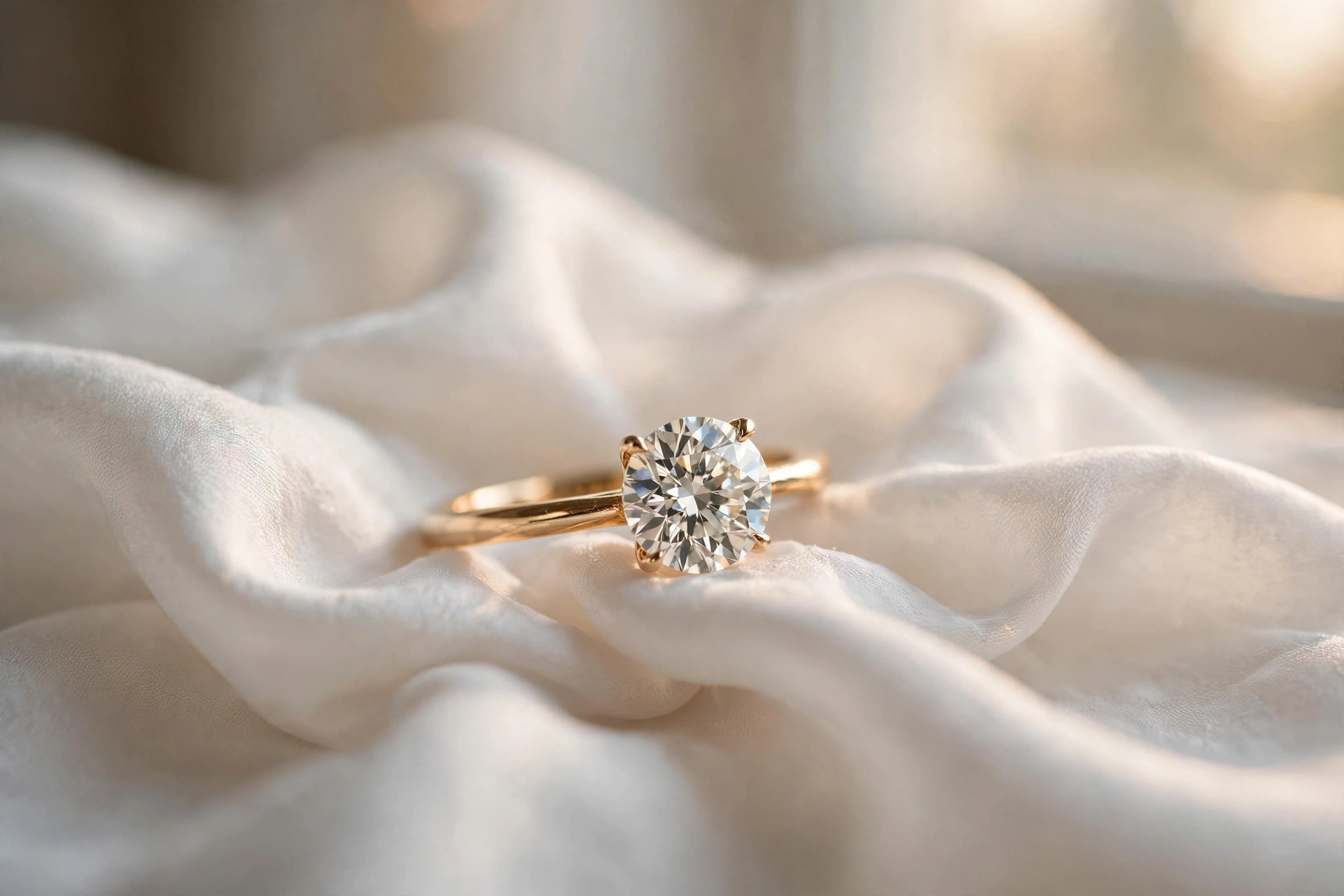
Buying an engagement ring can feel like stepping into a world with its own language — carats, clarity, pavé, bezel — and price tags that range from a few hundred dollars to the cost of a car. This engagement ring buying guide is designed to cut through the jargon and the sales pressure so you can make a confident, informed decision. Whether you are shopping with a strict budget or an open checkbook, the fundamentals are the same: understand what drives price, learn where you can save without sacrificing beauty, and know how to protect your purchase once the ring is on your finger.
The stakes feel high because this is not an ordinary purchase. An engagement ring is worn daily, photographed constantly, and meant to last a lifetime. The good news is that you do not need to be a gemologist to buy well. A little knowledge about diamond quality, ring settings, and metal choices puts you ahead of most shoppers — and can save you thousands. This guide covers budgeting, the famous 4Cs of diamond quality, popular shapes and settings, metal options, lab-grown versus natural diamonds, where to shop, certifications, and insurance, plus practical tips for the proposal itself. By the end, you will know exactly what to ask a jeweler and exactly which details matter most for your money.
Set Your Budget Before You Shop
Before you look at a single diamond, decide what you can comfortably spend. Forget the old “three months’ salary” rule — that was a marketing invention from the mid-20th century, not financial advice. A sensible budget is one you can pay off quickly (or pay in full) without straining your savings or going into high-interest debt. Many jewelers and financial planners suggest keeping the ring within a range you could rebuild in savings within a few months.
Engagement rings with natural diamonds typically range from around $3,000 to over $10,000 depending on stone size and quality, while lab-grown diamond rings with comparable looks often cost 60–80% less. Simple solitaires with smaller stones can start under $1,000, and elaborate halo or three-stone designs with large center stones can climb well past $20,000. These are broad ranges, not quotes — prices vary by retailer, region, and current market conditions, so always verify current retail prices at the time you shop.
A useful way to think about the budget is to work backward from priorities. If the diamond’s size matters most to the wearer, allocate more to the stone and less to the setting. If intricate design matters more, a slightly smaller stone in a beautiful setting can look spectacular. Write down your total budget first, then split it roughly: most buyers spend 70–90% on the center stone and the rest on the setting and any side stones. Also budget a little extra for the practicalities — resizing (usually modest), insurance (often 1–2% of the ring’s appraised value per year), and an appraisal.
Understand the 4Cs of Diamond Quality
Diamond quality is graded on four characteristics: cut, color, clarity, and carat weight. Together, the 4Cs determine both a diamond’s beauty and its price. Understanding them lets you spend on the characteristics that are visible to the eye and save on the ones that are not. The Gemological Institute of America (GIA) created this grading system and remains the most respected independent grading laboratory — when in doubt, trust a diamond graded by the GIA or another major independent lab. You can read their explanation of the 4Cs on the GIA gem encyclopedia.
| The 4Cs | What It Measures | Where the Sweet Spot Usually Is |
|---|---|---|
| Cut | How well the diamond is shaped and faceted — this controls sparkle more than anything else | Excellent or Very Good cut; never compromise here |
| Color | How white the diamond is, graded D (colorless) to Z (noticeable yellow) | G–H looks colorless to most eyes in a white-metal setting and costs far less than D–F |
| Clarity | How free the diamond is of internal flaws (inclusions) and surface marks (blemishes) | VS2–SI1 is typically “eye-clean” — no visible flaws without magnification — at a big discount versus VVS and IF grades |
| Carat weight | The diamond’s weight (one carat = 0.2 grams), closely tied to visible size | Buying just under “magic sizes” (e.g., 0.90 instead of 1.00 carat) can save 15–25% with barely visible difference |
Cut Matters Most
If you remember one thing from this guide, make it this: cut quality affects a diamond’s beauty more than any other factor. A well-cut diamond with slightly lower color or clarity grades will out-sparkle a poorly cut diamond with “perfect” grades. Cut is the only one of the 4Cs directly controlled by human craftsmanship, and grading reports rank it from Excellent down to Poor. Prioritize Excellent or Very Good cut and treat it as non-negotiable.
Color and Clarity: Where Smart Savers Shop
The color and clarity scales have wide price steps that are often invisible to the naked eye. A G-color diamond looks white in a normal setting; paying extra for D or E is buying a difference you need a loupe to see. Similarly, SI1 and VS2 clarity diamonds are typically eye-clean — meaning no inclusions visible without magnification — yet cost substantially less than flawless grades. Unless you plan to admire the diamond under a jeweler’s loupe daily, spend the difference on cut quality or carat weight instead.
Carat Weight and “Magic Sizes”
Prices jump sharply at psychologically round weights: 0.50, 1.00, 1.50, and 2.00 carats. A 0.95-carat diamond can cost 15–25% less than a 1.00-carat stone of identical quality while looking essentially the same on the finger. This is one of the easiest savings in diamond buying — ask your jeweler to show you stones just under the magic sizes and compare them side by side.
Choose the Diamond Shape
“Shape” and “cut” are different things — shape is the outline (round, oval, cushion), while cut is the quality of the faceting. Shape is purely a matter of taste, but it affects price: round brilliants are the most popular and the most expensive per carat because cutting them wastes more of the rough stone. Fancy shapes — everything that is not round — typically cost 10–40% less per carat for the same quality.
| Shape | Character | Relative Cost per Carat | Best For |
|---|---|---|---|
| Round brilliant | The classic; maximum sparkle from 58 facets | Highest | Traditional tastes, maximum brilliance |
| Oval | Elongated, elegant; looks larger per carat than round | Moderate | Flattering on the finger, modern-classic style |
| Cushion | Soft square with rounded corners; romantic glow | Moderate | Vintage-inspired looks, softer sparkle |
| Emerald | Rectangular step cut; hall-of-mirrors flash rather than sparkle | Lower–moderate | Understated elegance; shows clarity, so buy VS or better |
| Princess | Sharp-cornered square; brilliant faceting | Moderate | Modern, geometric style |
| Pear | Teardrop; combines round and marquise | Lower–moderate | Distinctive, elongating look |
| Radiant | Square or rectangular with brilliant facets | Moderate | Sparkle of a round in a squarer outline |
| Marquise | Football shape; maximum apparent size per carat | Lower | Dramatic, vintage glamour on a budget |
Pick a Setting That Fits Your Life
The setting holds the diamond and defines the ring’s style — and it affects how large the center stone appears and how well the ring stands up to daily wear. Here are the most popular styles:
- Solitaire: A single diamond on a plain band. Timeless, maximizes the stone’s presence, and the most affordable setting style. The classic choice that never dates.
- Halo: Small diamonds encircle the center stone, making it look larger and adding sparkle. Beautiful, but the small stones add cost and require more maintenance.
- Pavé: The band is lined with tiny diamonds set close together. Gorgeous and sparkly, but resizing can be difficult and prongs need occasional checking.
- Three-stone: A center diamond flanked by two side stones, symbolizing past, present, and future. Elegant and meaningful, with moderate cost.
- Bezel: The diamond sits inside a metal rim rather than prongs. Extremely secure and low-profile — ideal for active lifestyles — with a modern look.
- Cathedral: The band’s shoulders arch up to meet the center stone, adding height and presence. Works with many stone shapes.
Practical tip: if the wearer works with their hands, plays sports, or is generally hard on jewelry, favor low-profile, secure settings like bezels or six-prong solitaires over high-set halos and delicate pavé bands. The most beautiful ring is the one that survives real life.
Choose the Metal
The metal affects the ring’s look, durability, maintenance, and price. Platinum is the premium choice: naturally white, hypoallergenic, and extremely durable, though it costs more and develops a soft patina over time. White gold offers a similar look for less money but needs re-plating with rhodium every year or two to stay bright. Yellow gold is classic and warm — and trending again — while rose gold’s pinkish tone is romantic and flatters many skin tones. Yellow and rose gold in 14k are durable and require little maintenance.
A quick rule of thumb: match the metal color to the wearer’s existing jewelry. If she wears mostly silver-toned pieces, white gold or platinum is the safe bet; if her jewelry box is full of yellow gold, follow that lead. When in doubt, yellow gold is the most universally flattering and the easiest to maintain. For a deeper dive into how the two most popular precious metals compare — cost, durability, skin-tone matching, and care — see our companion comparison (coming soon in this series).
Lab-Grown vs. Natural Diamonds: An Honest Comparison
Lab-grown diamonds are chemically, physically, and optically identical to mined diamonds — they are real diamonds, grown in a laboratory instead of formed underground. They typically cost 60–80% less than natural diamonds of the same size and quality, which means a lab-grown stone lets you buy a noticeably larger or better-quality diamond for the same money.
So why would anyone buy natural? A natural diamond has inherent scarcity and tends to hold resale value better, though engagement rings are rarely good investments either way — expect to recover only a fraction of retail if you ever resell. Some buyers also attach sentimental value to a stone formed over billions of years. Neither choice is wrong; it depends on what matters to you. If maximum beauty per dollar is the goal, lab-grown is hard to beat. If the idea of a natural stone matters to you or your partner, that is worth paying for. One caution: always buy lab-grown diamonds with a grading report from a reputable lab (GIA, IGI) too, since quality varies just as it does with natural stones.
| Factor | Natural Diamond | Lab-Grown Diamond |
|---|---|---|
| Appearance and durability | Identical | Identical — same hardness (10 on the Mohs scale) |
| Typical price | Higher — scarcity premium | 60–80% less for the same 4Cs |
| Resale value | Holds value better, though still well below retail | Lower resale; technology keeps improving |
| Environmental and ethical angle | Mining has an environmental footprint; look for responsibly sourced stones | Smaller footprint, though growing diamonds uses significant energy |
Where to Buy (and When)
You have three main options: local independent jewelers, national chain jewelers, and online retailers. Local jewelers offer personal service, in-person viewing, and often free lifetime maintenance like cleanings and prong checks — valuable perks. Online retailers typically offer lower prices and a much wider selection of certified diamonds with detailed grading reports, videos, and 360-degree views, plus generous return windows. Chains sit in between. There is no single best answer; many smart shoppers research online, then buy from a trusted local jeweler who can match or come close on price.
Timing can matter too. Jewelry retailers run their biggest promotions around predictable sale seasons — the winter holidays, Valentine’s Day, and the big online sale events. If your timeline is flexible, our guide to Cyber Monday fashion deals explains what kinds of jewelry discounts typically appear during the year’s biggest online sale, and when Cyber Monday deals actually start so you can plan your purchase. For broader seasonal sale strategy, the Father’s Day sales and deals guide shows how mid-year promotions work for jewelry and watch gifts.
Wherever you buy, the U.S. Federal Trade Commission’s guide to shopping for jewelry is worth reading — it explains your rights, what disclosures sellers must make (including whether a diamond is lab-grown or treated), and how to comparison-shop with confidence.
Insist on Certification and Get It Appraised
Never buy a significant diamond without an independent grading report from a respected laboratory — GIA and AGS are the gold standards for natural diamonds; IGI is widely used for lab-grown. A grading report (often called a “certificate”) documents the 4Cs as measured by an impartial lab, so you know exactly what you are paying for. Be wary of in-house “certificates” from the seller itself; independent grading is what protects you.
After purchase, get an independent appraisal for insurance purposes. An appraisal documents the ring’s characteristics and replacement value — what it would cost to replace with a like-kind item at current retail prices. Many insurers require one for scheduling valuable jewelry on a homeowner’s or renter’s policy. Expect an appraisal to cost roughly $50–$150 per item, and have it updated every few years since diamond and gold prices move over time.
Insure the Ring Before the Proposal
An engagement ring is one of the most commonly lost or stolen valuable items people own — it is worn daily, taken off at gyms and sinks, and travels everywhere. Insure it from day one. You have two main routes: add a scheduled jewelry rider to your homeowner’s or renter’s insurance, or use a specialized jewelry insurer. Specialized insurers often cover mysterious disappearance (the ring simply vanishes), which standard policies may not.
Jewelry insurance typically costs about 1–2% of the ring’s appraised value per year — so a $6,000 ring might cost roughly $60–$120 annually to insure. That is a small price for peace of mind. Get the coverage in place before the proposal, keep the appraisal and grading report in a safe place (a photo of them in the cloud works), and understand the claims process before you need it. Also ask about coverage during travel, since many policies have territorial limits.
Common Mistakes to Avoid
- Buying for the certificate, not the eye: Two diamonds with identical grades can look different. Always look at the actual stone — in person or via high-quality video — before committing.
- Ignoring the setting’s practicality: A sky-high cathedral setting looks dramatic but snags on everything. Match the setting to the wearer’s lifestyle.
- Skipping the return policy check: Even confident buyers should know the return window. Reputable sellers offer at least 30 days; know whether returns are full refunds or store credit.
- Paying for invisible upgrades: The jump from H to F color or SI1 to VVS2 clarity is invisible on the finger but very visible on the price tag. Spend where the eye can see the difference.
- Forgetting the wedding band: The engagement ring and wedding band are worn together for life. Check that your chosen setting sits flush (or acceptably) with typical band styles, or plan to buy a curved or custom band.
- Not shopping around: Get quotes from at least three sources — including at least one online retailer — for comparable stones. Price spreads of 20–30% on identical specs are common.
Proposal-Day Practicalities
A few logistical tips that jewelers see buyers forget: get the ring sized as close as possible beforehand (a slightly loose ring is safer than one that will not go on), but know that most rings can be resized afterward — typically within about two sizes up or down. Keep the ring box out of your pocket during the day if the proposal is a surprise; a flat ring holder or a sock works better. Photograph the ring and keep receipts separate from the box. And plan the insurance call for the day after — proposals have a way of generating adrenaline that makes paperwork seem optional, but this is the one piece of admin worth doing immediately.
Frequently Asked Questions
How much should I spend on an engagement ring?
Spend what fits your finances without debt stress — not a fixed multiple of your salary. Most buyers land somewhere between $3,000 and $10,000 for natural diamond rings, with lab-grown options delivering similar looks for far less. The right number is the one you can afford comfortably.
Is a lab-grown diamond a “real” diamond?
Yes. Lab-grown diamonds have the identical chemical composition, crystal structure, and hardness of mined diamonds. The only difference is origin. They are graded on the same 4Cs scale and require the same care.
What is the most popular engagement ring style?
The round brilliant solitaire remains the most popular choice in the United States, followed closely by oval and cushion halo designs. Trends cycle — halos and pavé bands have had strong runs — but the solitaire has never gone out of style.
Can I negotiate the price of an engagement ring?
Often, yes — especially at independent jewelers. Asking for a better price on the setting, free services (lifetime cleanings, prong inspections, resizing), or an upgraded warranty is standard practice. Online retailers compete mostly on published pricing, so compare their listed prices across sites instead.
Should the ring be a surprise, or should we shop together?
There is no wrong answer, but shopping together — or at least getting clear input on style, shape, and metal — dramatically reduces the odds of a miss. Many couples compromise: the buyer picks the exact ring after learning the partner’s preferences, keeping the timing a surprise.
How long does it take to get an engagement ring?
In-stock rings can be ready in days. Custom or made-to-order designs typically take 3–6 weeks, longer around the winter holidays. If you are proposing on a deadline, confirm the timeline in writing before you pay a deposit.
Your Engagement Ring Buying Checklist
- Set a firm budget you can afford without high-interest debt.
- Learn the 4Cs and prioritize cut quality above all.
- Choose a shape you love — consider fancy shapes for savings.
- Pick a setting that suits the wearer’s lifestyle and daily activities.
- Match the metal to their existing jewelry.
- Decide between natural and lab-grown diamonds with eyes open.
- Compare at least three sellers on identical specifications.
- Buy only certified stones with independent grading reports.
- Get an independent appraisal and insure the ring immediately.
- Confirm the return policy, resizing terms, and warranty in writing.
An engagement ring is ultimately a symbol, not a status competition. The couples who are happiest with their purchase are the ones who bought within their means, prioritized what actually shows on the finger, and chose a design that fits the life they live — not the life in a jewelry ad. Do that, and the ring will be perfect regardless of its carat weight.


