The diya, a small clay oil lamp, is the soul of Diwali. When hundreds of these little flames flicker together on doorsteps, windowsills, and rangolis, they create the festival’s unforgettable glow. But a plain clay diya is also a blank canvas, and decorating diyas has become one of Diwali’s most beloved creative traditions. Whether you are preparing for a diya decoration competition, adorning your home, or making handmade gifts, this guide to diya decoration ideas covers everything: the materials you need, more than twenty design ideas organized by style, detailed step-by-step tutorials, display inspiration, and practical tips on buying, lighting, and storing your creations. Grab some clay diyas, paints, and embellishments, and let’s turn simple earthen lamps into miniature works of art.
The Significance of the Diya
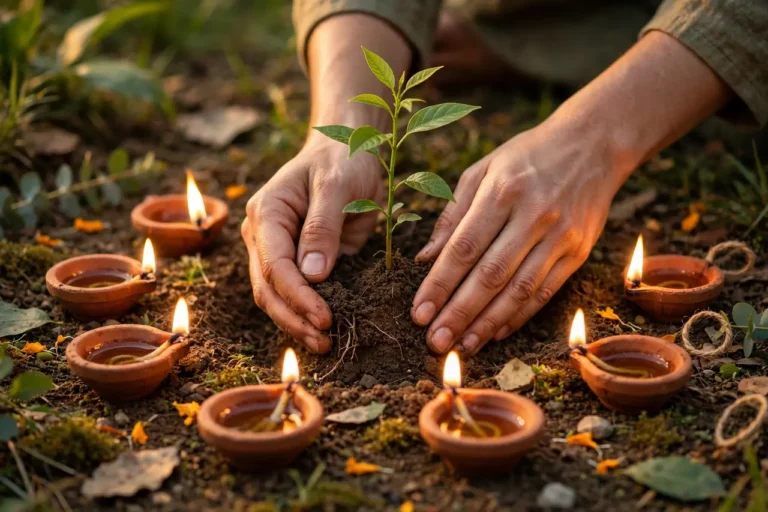
Before decorating, it helps to understand what you are decorating. The diya represents the triumph of light over darkness and knowledge over ignorance; its flame is considered a manifestation of divine light. In the Ramayana tradition, rows of diyas welcomed Lord Rama home to Ayodhya, and lighting them reenacts that welcome each year. Diyas are lit during Lakshmi Puja to invite the goddess of prosperity, and the Yama Deepam on Dhanteras is lit facing south for protection. Traditionally made of clay by kumhars (potters), the earthen diya connects the festival to the earth itself. Buying clay diyas from local potters also supports artisan livelihoods, a meaningful choice many families make deliberately. When you decorate a diya, you are not just crafting; you are participating in a tradition thousands of years old, adding your own creativity to an ancient symbol.
Materials Guide: Everything You Need
Most diya decoration projects use inexpensive, widely available craft supplies. The table below covers the essentials and what each is best for.
| Material | Best For | Tips |
|---|---|---|
| Plain clay diyas | Every project | Buy in bulk (50-100); choose smooth, evenly shaped ones; soak briefly and dry before painting |
| Acrylic paints | Base coats and designs | Use 2-3 thin coats; metallic gold, silver, and copper look festive |
| Fine paintbrushes | Detail work | Round brushes size 0-2 for dots and lines; flat brushes for base coats |
| Kundan stones and rhinestones | Royal and bridal looks | Stick with craft glue or hot glue; plan the pattern before gluing |
| Glitter and glitter glue | Sparkle accents | Apply over wet paint or glue; shake off excess; seal to reduce shedding |
| Mirror pieces (shisha) | Traditional mirror work | Use pre-cut craft mirrors; press firmly into glue |
| Lace, gota patti, ribbon | Borders and trims | Wrap around the diya’s rim; secure with hot glue |
| Fresh or artificial flowers | Floral diyas | Marigolds and roses; attach with floral wire or glue |
| Beads and pearls | Elegant borders | String on thread for garland-style borders around the rim |
| Decoupage paper and glue | Patterned designs | Cut motifs, apply with decoupage medium, seal with varnish |
| Clear varnish or mod podge | Sealing finished diyas | Protects paint from oil and moisture; apply 1-2 thin coats |
| Cotton wicks and oil | Lighting | Mustard, sesame, or ghee; trim wicks to 1 inch for a steady flame |
You likely own half of these already. For competition-worthy diyas, invest in kundan stones, mirrors, and metallic paints; for kids’ projects, washable paints and stickers are safer and simpler.
Painted Diya Designs: 7 Ideas
Paint is the most versatile decorating medium, and these seven painted styles range from beginner-friendly to show-stopping.
1. Classic Red and Gold
Paint the diya deep red, then add gold dots around the rim and a gold band at the base. This timeless combination matches traditional Diwali decor and takes under twenty minutes per diya. Use a cotton swab for perfectly round dots.
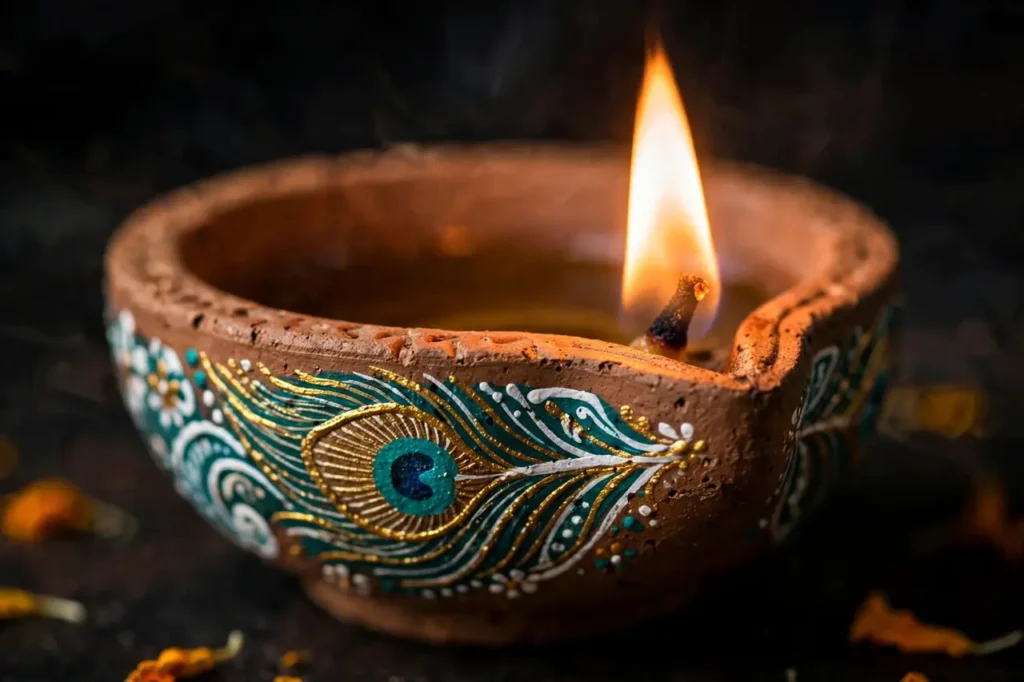
2. Peacock Feather Motif
Paint the diya teal or royal blue, then add a peacock feather eye design in green, gold, and white on one side. The peacock is India’s national bird and a symbol of beauty; this design always draws compliments. Practice the feather shape on paper first.
3. Madhubani and Warli Art
Use traditional Indian folk art styles: Madhubani’s intricate fish, flower, and geometric patterns in bold colors, or Warli’s simple white tribal figures on a terracotta background. These designs celebrate Indian heritage and stand out in competitions for their cultural depth.
4. Ombre and Gradient
Blend two colors, like orange melting into yellow or pink into purple, for a modern ombre effect. Apply the darker color at the base and blend upward while wet. Metallic ombre (copper to gold) looks especially luxurious.
5. Floral Vine Patterns
Paint delicate vines with leaves and small flowers winding around the diya. Use a fine brush and steady hand; white vines on a deep blue or black base create striking contrast. This design suits elegant, understated decor schemes.
6. Glitter Galaxy
Paint the diya dark navy or black, sponge on purple and teal nebula effects, then add silver glitter stars with a toothbrush flick technique. A cosmic diya is unexpected and memorable, great for modern homes.
7. Monogram and Message Diyas
Paint diyas in wedding or festive colors and add initials, “Shubh Diwali,” or “Om” in elegant script. These make thoughtful personalized gifts; pair two monogrammed diyas in a gift box for couples.
Embellished Diya Designs: 7 Ideas
When paint alone is not enough, embellishments add dimension, texture, and sparkle.
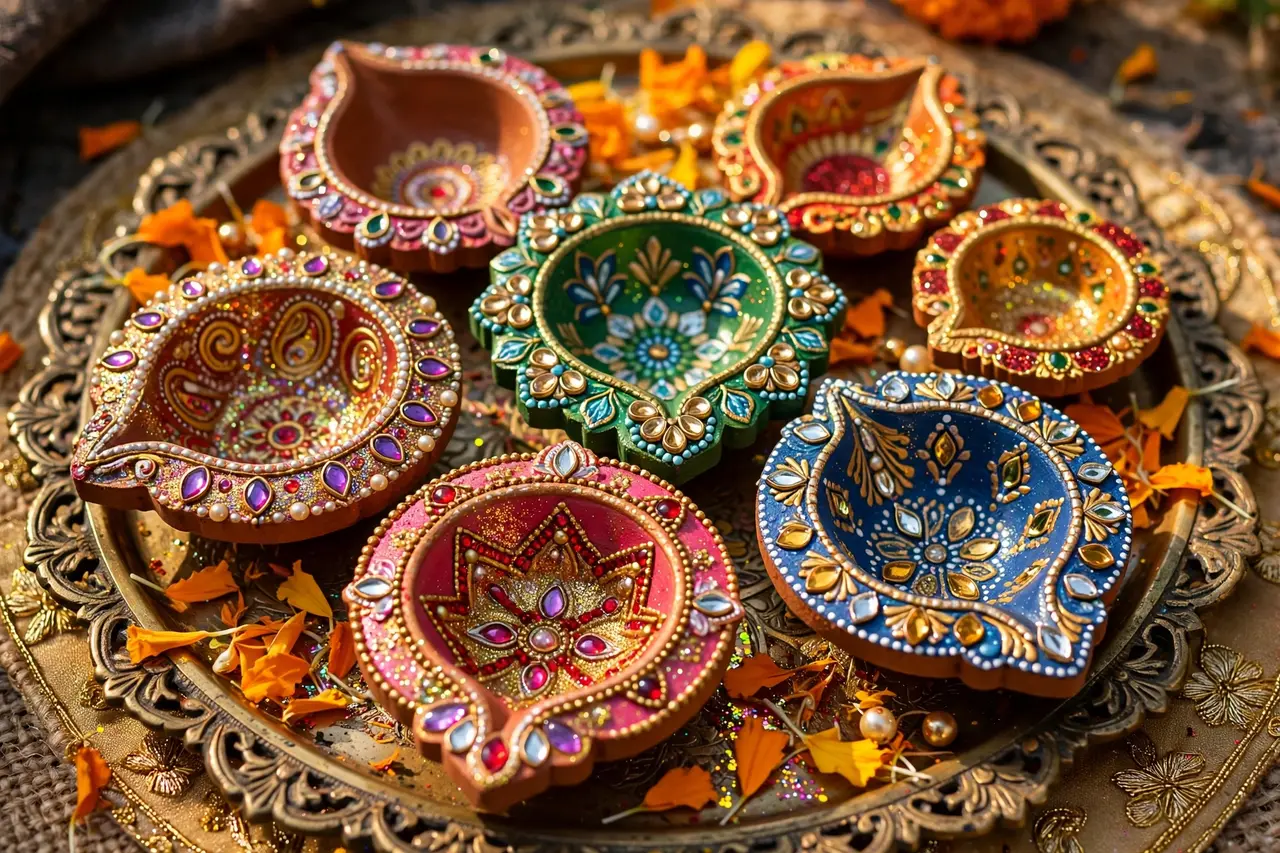
8. Kundan-Studded Royal Diyas
Cover the diya with rows of kundan stones in red, green, and gold, set in patterns radiating from the center. Outline with gold paint or tiny gold beads. These look like jewelry and are competition favorites. Work on a small section at a time so the glue does not dry before stones are placed.
9. Mirror Work Diyas
Press small craft mirrors into the diya in geometric patterns, filling gaps with glitter. Mirror work catches candlelight beautifully, multiplying the glow. This Gujarati-inspired technique is traditional yet dazzling.
10. Lace and Gota Patti Borders
Wrap the rim with golden gota patti lace or delicate fabric lace, securing with hot glue. Add a row of pearls below the lace. This is one of the fastest ways to make plain diyas look expensive; a dozen can be finished in an hour.
11. Beaded Fringe Diyas
String small beads on thread and drape them around the diya’s rim like a fringe, or glue bead strands in vertical lines from rim to base. Pearl beads give an elegant bridal look; colorful beads suit festive playfulness.
12. Quilled Paper Diyas
Roll thin paper strips into coils, teardrops, and marquise shapes, then glue them onto the diya in floral patterns. Quilling adds intricate, lace-like detail that looks far more difficult than it is. Use festive colors and add a gold edge with a marker.
13. Fabric-Wrapped Diyas
Wrap the diya in small pieces of silk or brocade fabric, securing with glue, then add a trim of lace or stones at the rim. This is perfect for using up fabric scraps from festive outfits, and the texture is wonderfully rich.
14. Bangle Diyas
Stack old glass bangles in decreasing sizes, gluing them into a tower, and place a tea light or small diya in the center. This “waste to wow” project turns broken or mismatched bangles into stunning candle holders. Decorate the bangles with paint or stones first for extra flair.
Natural and Floral Diya Designs: 6 Ideas
Nature provides the most beautiful decorating materials, and these designs smell as good as they look.
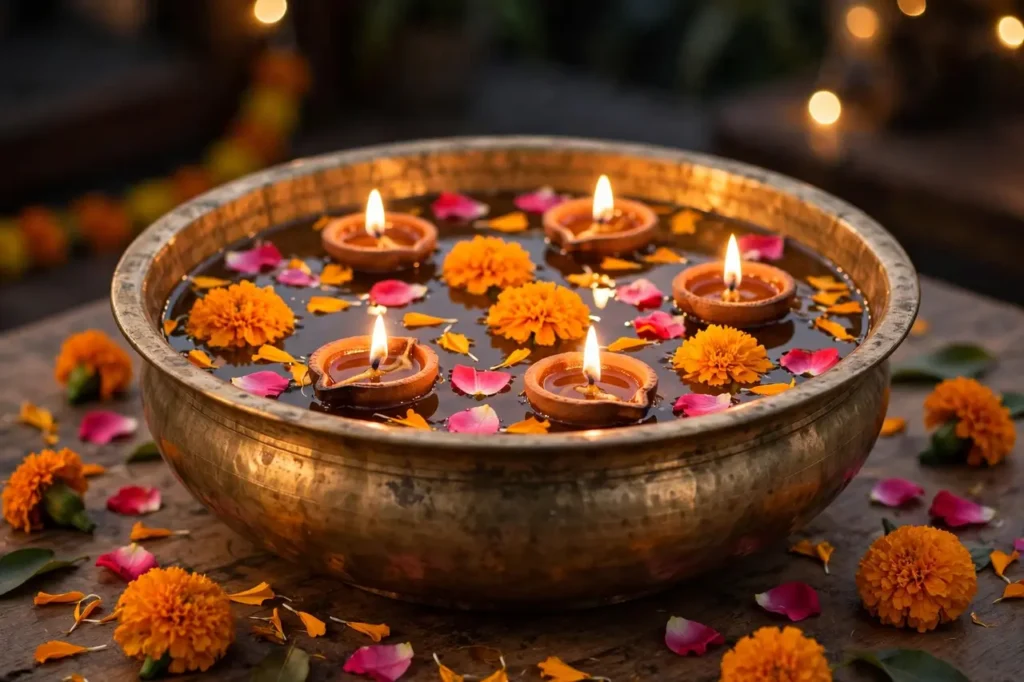
15. Floating Diyas in Urli Bowls
Fill a wide brass urli with water, scatter marigold and rose petals, and float small diyas or tea lights on top. Add a few drops of essential oil for fragrance. This centerpiece is the single most photographed Diwali decoration; place it where guests enter.
16. Marigold-Rimmed Diyas
Glue a ring of small marigold heads around the diya’s base or rim. Use fresh flowers on Diwali day itself; they last the evening beautifully. For longer-lasting versions, use high-quality artificial marigolds.
17. Leaf and Petal Decoupage
Press real dried leaves and flower petals onto the diya with decoupage glue, then seal. Each diya becomes a tiny botanical specimen. This eco-friendly technique is lovely for nature-loving decorators.
18. Coconut Shell Diyas
Halve coconut shells, clean and sand them, decorate the outside with paint or carving, and place a tea light inside. The natural bowl shape holds the flame beautifully, and the rustic look suits earthy decor themes.
19. Terracotta and Twig Rustic Diyas
Leave the clay natural and wrap the outside with twine, small twigs, or dried wheat stalks tied with raffia. This farmhouse-style diya fits modern rustic homes and costs almost nothing.
20. Fruit and Spice Diyas
Surround plain diyas with dried orange slices, cinnamon sticks, star anise, and cloves arranged on a tray. The diyas stay simple while the styling does the work; the spicy fragrance is pure festive warmth.
Themed Diya Sets: 5 Ideas
Coordinated sets make stunning gifts and table decorations.
21. Chakra (Wheel) Set of Seven
Paint seven diyas in the colors of the rainbow and arrange them in a circle or row. The vibrant gradient is cheerful and modern, perfect for children’s rooms or casual celebrations.
22. Bridal Gold Set
Paint diyas metallic gold, add pearl borders and tiny kundan accents. Present in a decorative box with a “Shubh Diwali” card. This elegant set is a premium gift for hosts and elders.
23. Blue Pottery Jaipur Set
Imitate Rajasthan’s famous blue pottery with white floral patterns on a turquoise-blue base. This distinctive style looks artisanal and sophisticated; it pairs beautifully with silver decor.
24. Mini Diya Thali Set
Decorate a small steel or brass plate to match a set of four diyas, creating a complete gift thali with space for sweets. This ready-to-gift presentation is ideal for Diwali gifting.
25. Kids’ Animal Diyas
Paint diyas as ladybugs, bees, turtles, or owls with simple faces and patterns. Children love making and receiving these; they are perfect for school Diwali fairs and young cousins.
Step-by-Step Tutorials
Tutorial 1: Kundan-Studded Diya (60 minutes)
Paint the diya with two coats of deep maroon acrylic and let dry completely. Plan your stone pattern lightly in pencil: a central large kundan surrounded by rings of smaller stones works well. Apply craft glue to one small section at a time. Place stones with tweezers, pressing gently. Fill gaps between stones with gold glitter glue. Add a row of tiny gold beads around the rim with hot glue. Let dry for two hours, then seal the painted areas (avoiding the stones) with clear varnish. Result: a jewel-like diya worthy of gifting.
Tutorial 2: Floating Floral Diya Bowl (20 minutes)
Choose a wide, shallow brass or ceramic bowl. Fill two-thirds with water. Scatter a handful of marigold petals and a few rose petals on the surface. Gently place three to five small floating diyas or tea lights on the water. Add two drops of rose or sandalwood essential oil. Light just before guests arrive. Refresh petals daily; the arrangement lasts three to four days.
Tutorial 3: Lace-Rimmed Elegant Diya (15 minutes per diya)
Paint the diya ivory or champagne gold and let dry. Cut golden lace trim to fit around the rim. Apply a thin line of hot glue just below the rim and press the lace on, overlapping the ends at the back. Glue a string of small pearls along the bottom edge of the lace. Add three tiny kundan stones evenly spaced on the lace. Let cool and set. These look boutique-bought and take minutes.
Tutorial 4: Bangle Tower Diya Holder (30 minutes)
Select six to eight glass bangles in graduating sizes. Paint or decorate them if desired and let dry. Starting with the largest, stack them with hot glue between each layer, forming a tower. Glue a cardboard circle to the bottom for stability. Place a tea light candle inside the top opening. Surround the base with flower petals. This dramatic holder becomes a table centerpiece.
Displaying Your Decorated Diyas
Beautiful diyas deserve thoughtful display. Line entrance steps with alternating decorated and plain diyas for rhythm. Create a diya “river” along a hallway or balcony edge, spacing them evenly for maximum visual impact. Group odd numbers (three, five, seven) on trays with petals and fairy lights for table centerpieces. Place a single statement diya, like a kundan or mirror-work piece, on the puja altar as the main lamp. Hang small decorated diyas (with LED tea lights, never real flames) from a branch or frame to create a floating diya installation. For staircases, place one diya per step along the outer edge, a classic look that photographs beautifully. Remember safety: keep real flames away from curtains, paper, and foot traffic; use LED tea lights in high-traffic or kid-accessible spots. For more seasonal styling ideas, our Christmas decoration ideas guide covers light layering that works for any festival of lights.
Buying, Lighting, and Storing Diyas
Buy clay diyas from local potters or markets in bulk; a hundred plain diyas typically cost very little and give you plenty for decorating, gifting, and the inevitable breakage. Choose diyas with smooth surfaces and even shapes for painting; rough handmade ones have rustic charm for natural designs. Before painting, wipe diyas with a dry cloth; soaking is only needed if they are very dusty. For lighting, use mustard oil, sesame oil, or ghee with cotton wicks trimmed to about an inch; longer wicks smoke, shorter ones drown. Place a pinch of rice or a small coin in the oil cup to steady the wick, an old trick that works. After Diwali, clean reusable decorated diyas gently with a dry cloth (never soak painted ones), wrap each in tissue, and store in a sturdy box with dividers. With care, decorated diyas last for years, and unpacking them each Diwali becomes its own little celebration.
Diya Decoration Competitions: Winning Strategies
Diya decoration competitions are a highlight of Diwali in schools, offices, housing societies, and community centers. Winning takes more than pretty materials; it takes planning, technique, and presentation. Start by understanding the judging criteria, which typically include creativity and originality, neatness and finishing, use of materials, theme relevance, and overall presentation. Choose a clear theme rather than a random assortment of decorations: a peacock theme, a Madhubani art theme, a “royal palace” theme with kundan work, or an eco-friendly theme using only natural materials all give judges something to remember. Plan your design on paper first, sketching the pattern and listing materials; competitors who plan beat those who improvise. Practice the complete diya at least once before the competition day so you know exactly how long each step takes and where the tricky parts are. On competition day, organize your materials in the order you will use them, keep your workspace clean (judges notice mess), and manage your time: allocate the first ten percent to setup, seventy percent to decorating, and the final twenty percent to finishing touches and presentation. Neatness matters enormously: wipe away visible glue, ensure symmetrical placement of stones, and clean the diya’s edges. For the presentation, bring a decorated base: a small mirror, a painted cardboard circle, or a bed of petals elevates your diya instantly. Finally, be ready to explain your design and theme to judges; a confident two-sentence description (“This is a peacock-motif diya inspired by Madhubani art, using only natural clay and hand-painted details”) can tip a close decision. Even if you do not win, competitions are wonderful for learning new techniques by observing fellow participants.
Regional Diya Styles of India
Diya decoration varies beautifully across India, and exploring regional styles can inspire your own designs. In Bengal, diyas for Kali Puja are often simple earthen lamps adorned with alta (red dye) patterns and marigolds, emphasizing devotion over ornamentation. In Gujarat and Rajasthan, mirror work and kundan-studded diyas reflect the region’s love of vibrant embellishment; the more sparkle, the better. In Tamil Nadu, the traditional kuthuvilakku (brass lamp) is polished to a mirror shine and decorated with flowers rather than paint, a reminder that the lamp itself can be the decoration. In Maharashtra, diyas are often arranged in geometric patterns with rangoli, the collective display mattering more than individual ornamentation. In Punjab, diyas share the stage with candles and fairy lights in a joyful mix. In the Northeast, bamboo and cane diya holders showcase local craft traditions. Understanding these styles helps you choose decorations that resonate with your family’s roots, or deliberately blend styles for a pan-Indian celebration. When decorating for a diverse gathering, a display featuring several regional styles becomes a conversation piece and a celebration of India’s diversity.
Gift Packaging and Presentation
Decorated diyas make wonderful Diwali gifts, but presentation transforms them from craft projects into premium presents. For a single statement diya, nestle it in a small decorative box lined with tissue paper and dried petals, and add a handwritten tag. For sets, arrange four to six matching diyas in a compartmentalized gift box or on a decorated thali, wrapping the whole thing in sheer fabric tied with ribbon. Include a small card explaining the design’s theme or the care instructions (“use with LED tea lights” or “clean with dry cloth”). For corporate or large-scale gifting, pair two decorated diyas with a box of sweets or dry fruits; the combination of handmade and edible is always appreciated. Eco-friendly packaging, cloth bags, recycled paper boxes, and natural twine, aligns with the values of the festival and appeals to environmentally conscious recipients. If shipping diyas, wrap each individually in bubble wrap, use a sturdy box with padding, and mark it fragile; decorated diyas are surprisingly shippable with proper packing. A beautifully presented diya gift communicates care far beyond its material cost.
Watch: Easy DIY Diwali Decoration Ideas
See diya and Diwali decoration ideas come to life in this video, including quick DIY projects you can make from waste materials at home.
Frequently Asked Questions
What paint is best for decorating clay diyas?
Acrylic paints are best: they adhere well to clay, dry quickly, and come in festive metallic shades. Apply two to three thin coats rather than one thick coat. Seal with clear varnish to protect the paint from oil and moisture.
Can I light a painted diya with real oil and flame?
Yes, but keep paint away from the interior oil cup, as paint chemicals should not contact the flame or hot oil. For the safest and most worry-free option, use LED tea lights in decorated diyas; modern flickering LEDs look remarkably like real flames and eliminate all fire risk, which is especially valuable in homes with children, pets, or fabric decorations nearby.
How do I decorate diyas for a competition?
Competition diyas should show skill and originality: combine techniques (painting plus kundan plus mirror work), use a clear theme (peacock, Madhubani, royal), ensure neat finishing with no visible glue, and present on a decorated base or thali. Practice the design once before making the final piece.
Where can I buy plain clay diyas in bulk?
Local potters, Diwali markets, and craft wholesalers sell plain diyas inexpensively in bulk. Buying from local kumhars supports artisan livelihoods and often gets you sturdier, better-shaped diyas than mass-produced ones. Online marketplaces also sell them, but check reviews for breakage rates and order early to allow for shipping delays during the festive rush.
How do I make diyas last longer?
Soak new clay diyas in water for a few hours before first use (for undecorated ones), use quality oil, trim wicks properly, and shield them from wind. Decorated diyas used with LED tea lights last indefinitely with gentle storage.
What are floating diyas and how do I arrange them?
Floating diyas are small, lightweight lamps designed to float on water. Arrange them in a wide brass urli with water, flower petals, and optionally essential oil. They create a stunning centerpiece; refresh petals daily.
How do I keep kids safe while decorating diyas?
Use washable paints for young children, supervise hot glue gun use (or do the gluing yourself), keep small embellishments away from toddlers, and use only LED tea lights in kids’ finished diyas. Aprons protect festive clothes.
Can I decorate diyas with fresh flowers?
Yes, and they look gorgeous. Glue small marigold heads or rose petals around the diya on the day of use, as fresh flowers wilt within a day. For lasting decorations, use high-quality artificial flowers instead.
What is the Yama Deepam?
The Yama Deepam is a diya lit on Dhanteras evening at the main entrance, traditionally facing south, to honor Yama and seek protection. It is usually a simple sesame-oil diya, often left undecorated as a mark of reverence.
How should I store decorated diyas after Diwali?
Clean gently with a dry cloth, wrap each diya individually in tissue paper, and store in a sturdy box with dividers or padding. Keep the box in a dry place. Properly stored, decorated diyas last for many Diwalis.
Keep Exploring Festival Ideas
For more handmade festive inspiration, see our DIY Christmas ornaments for ornament techniques that adapt to diya decorating, our Christmas decoration ideas for light-layering tips, and our gingerbread house decorating tips for detailed decorating techniques that transfer beautifully to diya art.