Of all the things humans have ever worshipped, celebrated, and written about, light is the oldest. Before language, there was the sunrise. Before philosophy, there was the flame. And once a year, on Diwali, hundreds of millions of people formalize humanity’s ancient romance with illumination — lighting small clay lamps against the dark and saying, in every language of the subcontinent, the same thing: light wins.
Diwali quotes about light are therefore not just festival greetings. They belong to one of the deepest wells in human thought — the metaphor of light as hope, knowledge, goodness, courage, and truth. This collection goes deeper than the standard festival lines. You will find forty original quotes about light organized by theme, each paired with a brief reflection on what it means; an exploration of why light captivates us across every culture; the surprising science behind light metaphors; how the world’s wisdom traditions use the same symbol; and seven small, practical ways to live these quotes after the festival ends.
Read slowly. These are meant to be savored, not skimmed — and the best of them are meant to be lived, carried, and shared widely with absolutely everyone you love.
Why Light Is Diwali’s Eternal Subject
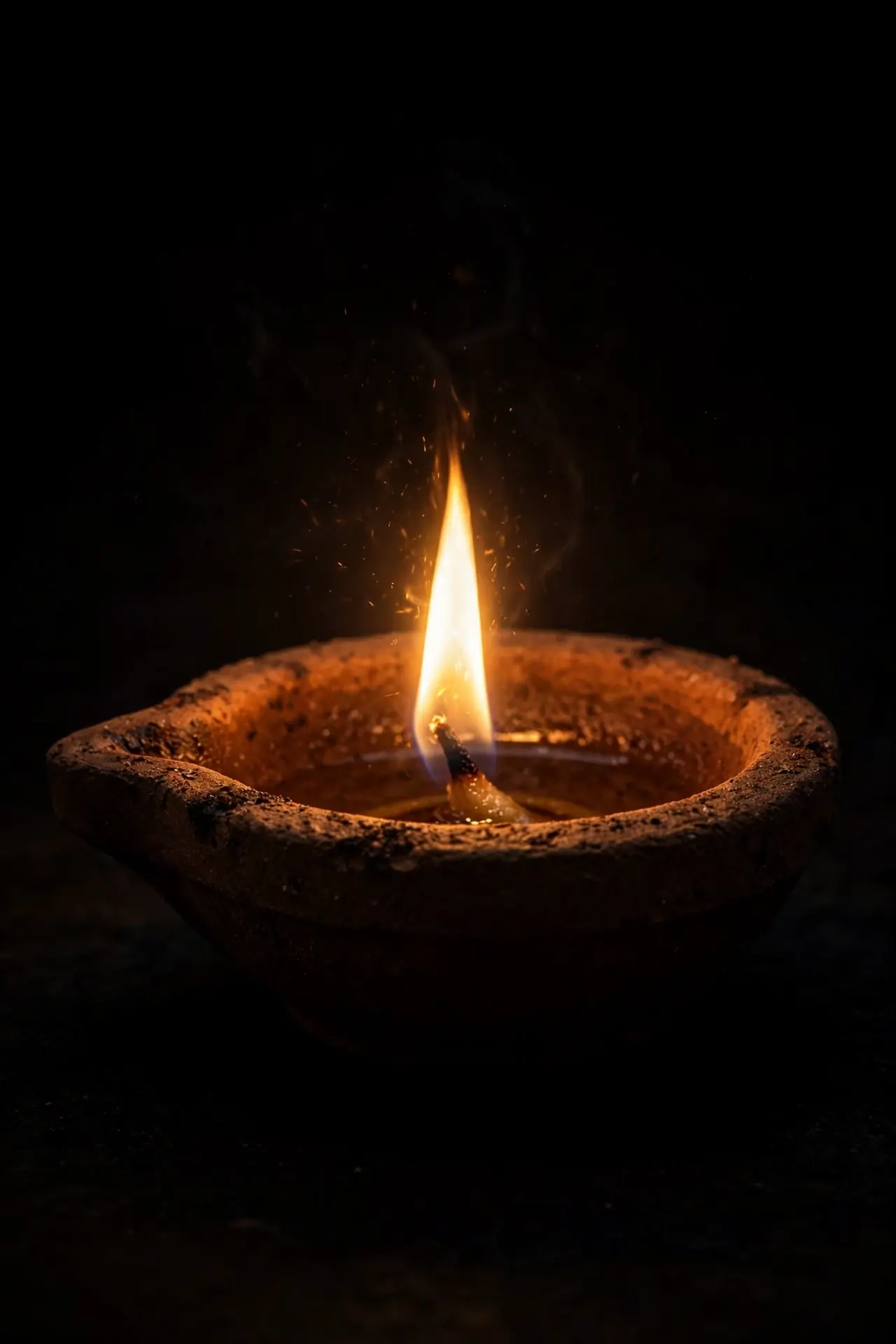
Light is the only metaphor that has never worn out. Poets have compared love to everything from roses to battlefields, and most of those comparisons now feel dusty — but “light in the darkness” still lands, every time, in every culture. The reason is biological as much as poetic: humans are diurnal creatures whose brains associate light with safety and darkness with danger. A lit diya does not just symbolize hope; it triggers the ancient neural circuitry that says you are safe now. Diwali’s genius was to take that hardwired response and build a festival around it.
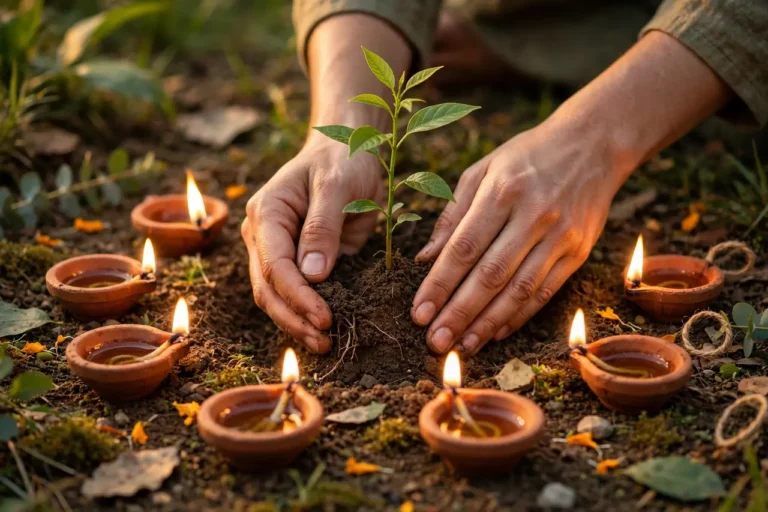
But Diwali adds something to the universal metaphor: agency. The sun rises on its own; the diya must be lit by a hand. Every Diwali quote about light carries this quiet insistence that illumination is not something that happens to us — it is something we do. We buy the oil, we shape the wick, we strike the match, we shield the flame from the wind. The festival’s deepest teaching is that hope is manual labor, and the quotes that endure are the ones that remember the hand behind the flame.
The Diya-Maker’s Lesson: On Craft and Patience
Before the flame, there is the clay. In villages across India, diya-makers — kumhars — spend the weeks before Diwali shaping thousands of small lamps by hand: wedging the clay, centering it on the wheel, pulling up the walls, trimming the lip, drying them in the sun. Each diya takes minutes; a season’s worth takes weeks. It is repetitive, unglamorous, essential work — and it is a parable the festival hides in plain sight.
The lesson: light requires preparation. The glorious moment of the lit diya — the one photographed and quoted — is the last five percent of a long process of shaping, drying, and filling. So it is with every worthwhile thing: the visible glow is built on invisible craft. The student who shines at the exam prepared in silence for months. The family that glows at Diwali spent the year tending each other. The quotes about light are the flame; the life behind them is the clay, the oil, the wick. This Diwali, honor the makers — of diyas and of everything else. “Behind every flame is a hand that shaped the clay.” “Glory is just preparation that caught fire.” “The diya-maker never sees the lit lamp; she trusts it will shine.”
40 Diwali Quotes About Light
On Light Overcoming Darkness
“Darkness is not the opposite of light; it is the absence of someone willing to kindle it.” — The dark is not an enemy to be fought but a vacancy to be filled. This reframes every struggle: the question is never how big the darkness is, but whether someone will light the lamp.
“A single diya does not curse the night; it simply outshines it.”
“The night is long, but every night in history has ended.” — Perspective as comfort: no darkness, however total it feels, has ever survived the morning.
“Light does not need to defeat darkness. It only needs to arrive.”
“Even the smallest flame is visible from the farthest dark.” — On being seen: your efforts matter more than you know, especially to those watching from far away.
“Diwali proves annually what physics knew all along: darkness cannot extinguish light, but light always dispels darkness.”
“The stars do not compete with the night; they complete it.” — A gentler take: perhaps darkness exists so that light has something to adorn.
“One lit window can change the whole street’s mood.”
“Courage is just fear that lit a diya anyway.”
“The dawn does not ask permission of the night.”
On the Inner Light
“Everyone carries a diya; most people just forget to light it.” — The inner-light tradition in one line: the resource is already yours; the festival is the reminder.
“Your inner flame does not need an occasion. But occasions help.”
“Tend your own light first; you cannot share what you have not kindled.”
“The brightest people are not the loudest; they are the steadiest flames.”
“Doubt is wind. Discipline is the glass chimney.” — On protecting your inner fire: the flame is natural, the shelter is built.
“You do not find your light; you make it, daily, like the diya-maker shapes clay.”
“Anxiety is a dark room. Action is the match.”
“The soul, like the diya, is small, fragile, and astonishingly bright.”
“No one can dim a light that is lit from within — they can only look away.”
“Be the lamp you wish to see in the world.” — The festival’s golden rule, restated for the modern reader.
On Sharing Light
“A lit diya loses nothing by lighting another.” — The economics of generosity: unlike money or time, light shared is light multiplied.
“Kindness is arson in reverse: it sets hope ablaze.”
“Light your neighbor’s diya; the street gets brighter for everyone.”
“The best way to keep your flame alive is to use it to light others.”
“Generosity is just light with somewhere to go.”
“No one ever went dark from giving away too much light.”
“Mentorship is handing someone a lit diya in their dark hallway.”
“Share your oil, share your wick, share your flame — abundance is the nature of light.”
“A compliment is a struck match in a dark room.”
“The festival ends when we stop sharing the flame. So do not stop.”
On Light as Knowledge and Truth
“Education is a diya; ignorance is just an unlit room.” — The classical Indian metaphor, refreshed: the guru is literally the dispeller of darkness.
“Truth does not shout; it shines.”
“Curiosity is the wick; questions are the oil.”
“Read one page, light one corner.” — On the slow illumination of learning: knowledge, like Diwali, is built lamp by lamp.
“The brightest light in any room is an open mind.”
“Wisdom is knowing which darkness is worth lighting.”
“A book is a diya that never burns out.”
“The examined life is the well-lit one.”
“Understanding is the sunrise of the mind.”
“Light the lamp of learning, and the whole world reads by it.”
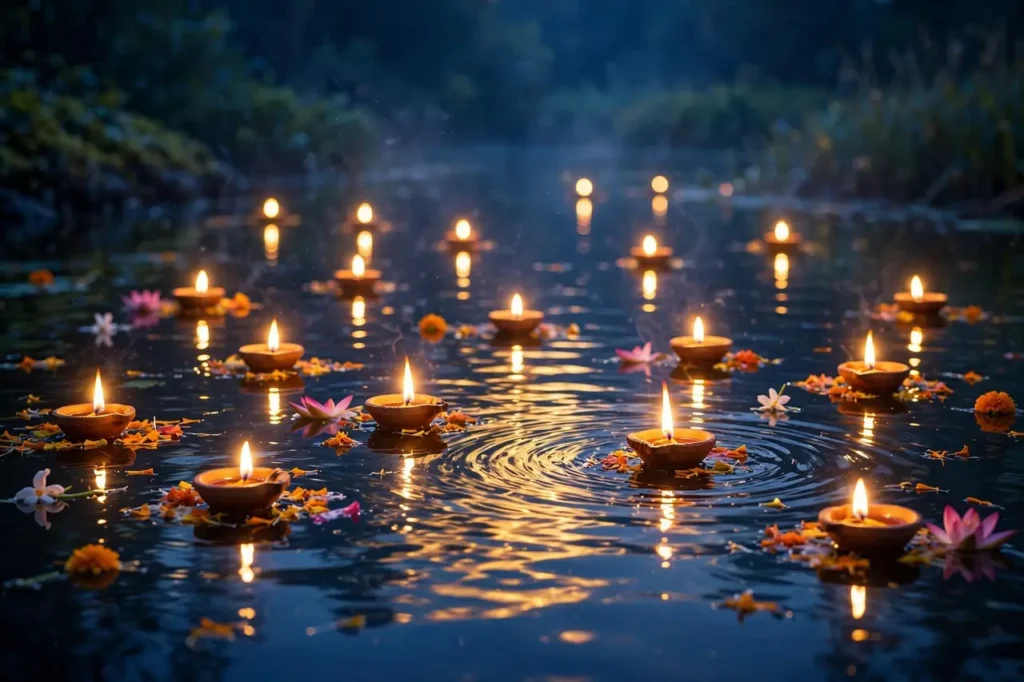
Light Quotes for the Five Days of Diwali
Each day of the festival has its own relationship with light — and its own quotes.
Dhanteras: The Light of Intention
“Begin with light, and the rest follows.” “Intention is the first flame.” “Light the lamp of purpose before the lamp of celebration.” “What you illuminate with intention, you attract with clarity.”
Choti Diwali: The Light of Anticipation
“The brightest flame is the one you are about to light.” “Anticipation is light’s rehearsal.” “Tomorrow’s glow casts today’s shadow of joy.” “Savor the almost-lit.”
Diwali: The Light of Fulfillment
“Tonight, the metaphor becomes real.” “Every lamp lit is a promise kept to hope.” “This is the night the dark surrenders.” “Behold: a million small suns, lit by hand.”
Govardhan Puja: The Light of Gratitude
“Thank the light by reflecting it.” “Gratitude is the flame’s favorite fuel.” “The fed soul shines brighter.” “Count blessings; they multiply like flames.”
Bhai Dooj: The Light of Bonds
“The brightest light is the one between two people.” “Sibling bonds: the eternal flame.” “Love, tended like a diya, never goes out.” “End the festival as you began it: together, in light.”
When the Flame Flickers: Quotes for Hard Diwalis
Not every Diwali arrives in a bright season. Some come in years of grief, illness, financial strain, or loneliness — when the festival’s joy feels like it belongs to other people. The light quotes have special work to do in those years: not to deny the dark, but to keep a pilot light burning until the season turns.
“A flickering flame is still a flame.” “It is okay if your Diwali is quiet; quiet light still counts.” “Grief and gratitude can share the same diya.” “Light what you can; forgive what you cannot.” “The festival does not require your happiness — only your presence.” “Some years we light the diyas; some years the diyas light us.” If this is your hard Diwali, be gentle with yourself. Light one lamp, not fifty. Accept the mithai. Let someone else be the bright one this year. The festival will wait for you — it has waited thousands of years; it can wait one more.
The Shadow Side: Why We Need Darkness to See Light
Here is the paradox the festival quietly teaches: Diwali needs the night. Without darkness, the diyas would be invisible — pretty clay cups, nothing more. The festival is deliberately placed on the new moon, the darkest night of the lunar month, because light means most when the dark is deepest. This is not just staging; it is philosophy.
The same is true of the quotes. “Light wins” means nothing without an honest acknowledgment of what it wins against — grief, failure, cruelty, despair. The most powerful light quotes do not pretend darkness does not exist; they position light as the answer to it. That is why toxic positivity (“just be happy!”) feels hollow while “the night is long, but every night in history has ended” feels true: the second honors the dark before transcending it. “Do not resent the darkness; it is the canvas.” “The deeper the night, the brighter the diya.” “Shadow is just light, interrupted — not defeated.” “We do not love light despite the dark; we love it because of the dark.” Next time you light a diya, notice the shadows it casts — they are part of the beauty. The festival is not the denial of darkness. It is the decision, renewed annually, to answer it with flame.
Light in the World’s Wisdom Traditions
Diwali does not own the light metaphor — it shares it with every major tradition, and the parallels are beautiful. In Christianity, Christmas candles and the Christmastide services of lessons and carols use flame to mark the arrival of light into the world; the Advent wreath literally counts down darkness into light. In Judaism, the Hanukkah menorah commemorates oil that burned eight days on one day’s supply — light as miracle, light as persistence. In Buddhism, the Buddha is called the “light of Asia,” and Vesak lanterns carry the same hope-skyward symbolism as Diwali’s. Chinese Lunar New Year lanterns, the Loi Krathong floating lights of Thailand, the bonfires of Midsummer — humanity keeps inventing festivals of flame because the metaphor keeps working.
What distinguishes Diwali’s version is scale and democracy. It is not one ceremonial flame but millions of household ones; not the priest’s light but everyone’s light. The festival democratizes illumination: every child with a match participates in the metaphysics. That is why Diwali quotes about light feel personal rather than theological — they belong to whoever lights the lamp. For a deeper look at how the festival’s symbolism developed, our guide to Diwali as the Hindu New Year festival of lights traces the diya from ancient ritual to modern celebration.
The Physics and Poetry of Light
Here is a delightful fact: the metaphors are scientifically accurate. Darkness is not a thing — it is the absence of a thing. Light, meanwhile, is relentlessly positive: it travels, it reflects, it refracts into color, it warms what it touches. A single photon, given no obstacles, will travel forever. The poets intuited what physics confirms: light is active, darkness is passive; light gives, darkness only takes away the opportunity to see.
This is why “be the light” works as life advice and not just decoration. It is a strategy, not a sentiment: in any dark situation — a grieving friend, a struggling team, a divided community — the effective move is almost always additive (bring light) rather than combative (fight dark). You cannot argue with grief, but you can sit with it, which is a form of illumination. You cannot defeat cynicism, but you can outlast it with steady warmth. The diya’s wisdom is tactical: small, steady, shared beats big, brief, solitary. A bonfire impresses for an hour; a diya, tended, burns all night.
| Tradition | Light Symbol | Core Meaning |
|---|---|---|
| Diwali (Hindu, Jain, Sikh) | Clay diya flame | Good over evil; knowledge over ignorance |
| Christmas (Christian) | Candles, Advent wreath | Divine light entering the world |
| Hanukkah (Jewish) | Menorah | Miracle, persistence, dedication |
| Vesak (Buddhist) | Lanterns | Enlightenment, the Buddha’s wisdom |
| Lunar New Year (Chinese) | Red lanterns | Prosperity, warding off darkness |
| Loi Krathong (Thai) | Floating krathongs | Letting go, gratitude, renewal |
| St. Lucia Day (Swedish) | Candle crown | Light in the darkest season |
| Kwanzaa | Kinara candles | Principles, community, heritage |
Living the Quotes: 7 Small Acts of Light
Quotes unpracticed are just decoration. Here are seven small ways to be the light this week — each takes under ten minutes. One: text someone going through a hard time and say you are thinking of them — a struck match in a dark room. Two: thank a teacher, nurse, or helper specifically — light your neighbor’s diya. Three: donate the sweets you will not eat to a shelter — shared light multiplies. Four: call the family member you have been meaning to call — the lit window changes the street. Five: learn one new thing today — read one page, light one corner. Six: compliment a stranger sincerely — arson in reverse. Seven: forgive one small thing you have been carrying — put down the darkness you have been holding, and feel how light your hands become.
None of these will trend. All of them will matter — to someone, which is to say, to the only audience that counts. The diya does not perform; it simply burns, and the room changes. Be like the diya.
Watch: Diwali, the Festival of Lights
To see the light metaphor made real on a grand scale, this National Geographic film on Diwali — the festival of lights — captures the celebration’s luminous beauty and the deep meaning behind every flame:
Light Quotes for Journaling and Morning Pages
Some quotes are for sharing; others are for sitting with. Copy one of these into your journal and write beneath it for five minutes — the quote is the prompt, your thoughts are the flame.
“What darkness am I being asked to illuminate?” “Where is my light most needed today?” “What would I do if I trusted my inner flame?” “Which of my habits is oil, and which is wind?” “Who lit my way this year, and have I thanked them?” “What is one small light I can kindle today?” “If my life were a diya, what shape would the clay be?” “What am I carrying that dims my glow?” The practice is simple: quote at the top, honesty below. Do it for the five days of Diwali and you will have a map of your inner festival — where the light is strong, where it flickers, and where a little tending would change everything.
Diwali Quotes About Light: FAQs
What is the most famous Diwali quote about light?
“Lead me from darkness to light” — from the ancient Upanishads — is the oldest and most revered, compressing the entire festival into seven words. Among modern lines, “Light a diya, and you light a little of the darkness in the world” is the most shared. The most useful test is not fame but resonance: the best light quote is the one that makes you reach for a match.
Why is light the central symbol of Diwali?
Light symbolizes the victory of good over evil, knowledge over ignorance, and hope over despair — the core narratives of Diwali, from Rama’s return to Ayodhya to the triumph of the goddess Lakshmi’s blessings. Biologically, humans associate light with safety; culturally, the diya’s flame represents agency — light we create with our own hands. Our Diwali festival of lights guide explores this symbolism in full.
How can I use light quotes in a Diwali speech?
Open with one strong quote — it gives the audience an anchor — then connect it to something specific: your family, your team, your year. “They say a single diya can light a thousand others. This year, this team was that diya for me.” Close by repeating the opening line. Keep the whole speech under two minutes; light quotes are potent in small doses.
What is a short quote about light for Instagram?
“Light wins.” “Shine on.” “Be the lamp.” “Glow with the flow.” Two to four words, paired with a diya photo, is the highest-performing format — the image carries the beauty, the caption carries the meaning. For more caption-ready lines, our New Year Instagram captions collection applies the same light metaphors to January.
Are Diwali light quotes only for Hindus?
No — the metaphor of light over darkness is universal, appearing in Christianity, Judaism, Buddhism, and nearly every wisdom tradition. Appreciating Diwali’s light symbolism respectfully is welcomed; the festival’s themes of hope and new beginnings belong to everyone. Keep the tone appreciative rather than appropriative, and the universal lines (“light wins”) are always appropriate.
What is the difference between a light quote and a Diwali wish?
A light quote states a general truth (“Darkness cannot extinguish light”); a Diwali wish directs goodwill at someone (“Wishing you light and joy”). Quotes are for reflection, captions, and speeches; wishes are for greetings and cards. The most powerful Diwali messages combine both — a personal wish illuminated by a universal truth.
How do I write my own quote about light?
Start with the formula: [small light thing], [big meaning]. “A match is small; the morning it promises is enormous.” Or invert it: [darkness truth], [light answer]. “The night is vast, but my diya is lit.” Keep it under twenty words, read it aloud — quotes are spoken things — and cut every word that does not earn its place. The best test: would you forward it? If yes, it is a quote.
What are some light quotes for someone going through a hard time?
“No darkness is so deep that a single diya cannot challenge it.” “The night is long, but every night in history has ended.” “Carry your light gently; someone is navigating by it.” Choose hope over cheer — acknowledge the dark while pointing at the flame. Avoid “everything happens for a reason” energy; the diya quotes work because they offer light, not explanations.
Can children understand Diwali light quotes?
The simplest ones, absolutely: “Light wins.” “Be the lamp.” “Share your flame.” Children grasp the core metaphor intuitively — they know what it feels like to be afraid of the dark and comforted by a nightlight. The diya is the rare symbol that needs no translation across ages; the quotes just need to stay short and concrete for young minds.
How do other cultures celebrate with light?
Christmas candles, Hanukkah menorahs, Vesak lanterns, Lunar New Year lanterns, Loi Krathong floating lights, St. Lucia crowns, Kwanzaa kinaras — nearly every culture has a festival of flame. The table in this article compares eight traditions. The universality is the point: humanity keeps rediscovering that light, shared, is the best answer to darkness we have. For quote collections from other celebrations, see our famous New Year quotes.
Carry the Light Forward
Diwali ends, as all festivals do. The diyas cool, the decorations come down, the ordinary year resumes. But the quotes remain — not as decorations for a week, but as instructions for a lifetime. Be the lamp. Share the flame. Tend your light daily. Do not curse the dark; light more lamps. Remember the diya-maker’s patience, the shadow’s necessity, and the hand behind every flame.
Pick one quote from this collection — just one — and make it your practice for the coming year. Write it where you will see it: the bathroom mirror, the phone wallpaper, the first page of the journal, the inside of the kitchen cabinet you open every single morning. Act on it when you can, forgive yourself when you cannot, and return to it when the nights get long. And next Diwali, when the diyas are lit again, notice how the festival feels different: not just brighter, but more yours. Because you did not just celebrate the light this year. You became it, and you will carry it. Happy Diwali.
Frequently Asked Questions
Why is light such a central theme in Diwali quotes?
Diwali literally celebrates light’s victory over darkness — diyas, fireworks, and illuminated homes are the festival’s language. Quotes about light work because they’re both literal (the festival you see) and metaphorical (the hope you feel).
What is a beautiful short quote about light for Diwali?
‘In every flicker, a promise of dawn.’ Short light-quotes suit captions, cards, and toasts — they’re easy to remember and lovely to say aloud.
How do I use a light quote in a Diwali speech?
Open or close with it: begin with the image of a single diya and expand to what it represents for the gathered community. A 15-second quote at the end of a toast gives everyone something to carry home.
What is a good light quote for children?
Keep it concrete and magical: ‘Every diya you light makes the night a little less dark.’ Children connect with the physical act of lighting, so quotes that honor their participation land best.
Can light quotes work for corporate Diwali messages?
Yes — light metaphors translate beautifully to business: ‘May this Diwali light the way to a prosperous year ahead.’ Professional, warm, and free of anything that could misfire across cultures.
What is the difference between a diya quote and a light quote?
Diya quotes are specific to the lamp and its traditions; light quotes are broader and more universal. Use diya quotes for culturally-rooted audiences and light quotes when your audience is mixed.
How do I write an original quote about light?
Start with a sensory detail (the smell of mustard oil, the heat on your palms) and connect it to an emotion (safety, hope, homecoming). Originality comes from your specific memories, not from grand abstractions.
Are there famous quotes about light suitable for Diwali?
Lines like ‘There is a crack in everything, that’s how the light gets in’ pair wonderfully with Diwali when credited properly. Just make sure the attribution is correct — misattributed quotes circulate widely every festival season.