Every Diwali, as the diyas are lit and the mantras rise, millions of people pray for the same thing in different words: prosperity. Not just money — though honest wealth is part of it — but the full, rich meaning of prosperity: enough to live with dignity, enough to share with generosity, work that flourishes, families that thrive, and the wisdom to use abundance well. The Diwali prayer for prosperity is one of humanity’s oldest abundance rituals, refined over centuries into words of remarkable beauty and psychological power.
This guide gathers 25 Diwali prayers for prosperity — traditional mantras with meanings, heartfelt personal prayers, and blessing messages — along with the deeper understanding that makes them work. Because a prosperity prayer is not a lottery ticket. It is a statement of intention, a focusing of the mind, and an alignment of your actions with the abundance you seek. Prayed with understanding, these words have guided merchants, farmers, artists, and families toward flourishing for generations.
What “Prosperity” Really Means on Diwali
The Sanskrit concept behind Diwali prosperity is “samriddhi” — flourishing, thriving, growing in all directions. The goddess Lakshmi’s eight forms cover wealth, food, courage, victory, knowledge, children, power, and spiritual riches. A proper Diwali prosperity prayer therefore asks for much more than cash: it asks for the conditions in which a good life grows.
This matters because it changes how you pray. Instead of “give me money,” the traditional prayers say “make me worthy of abundance and wise in its use.” That shift — from grasping to deserving, from wanting to becoming — is the real engine of the prosperity prayer. The words focus your mind; the focused mind changes your actions; changed actions change your fortunes. The ritual is the beginning, not the magic.
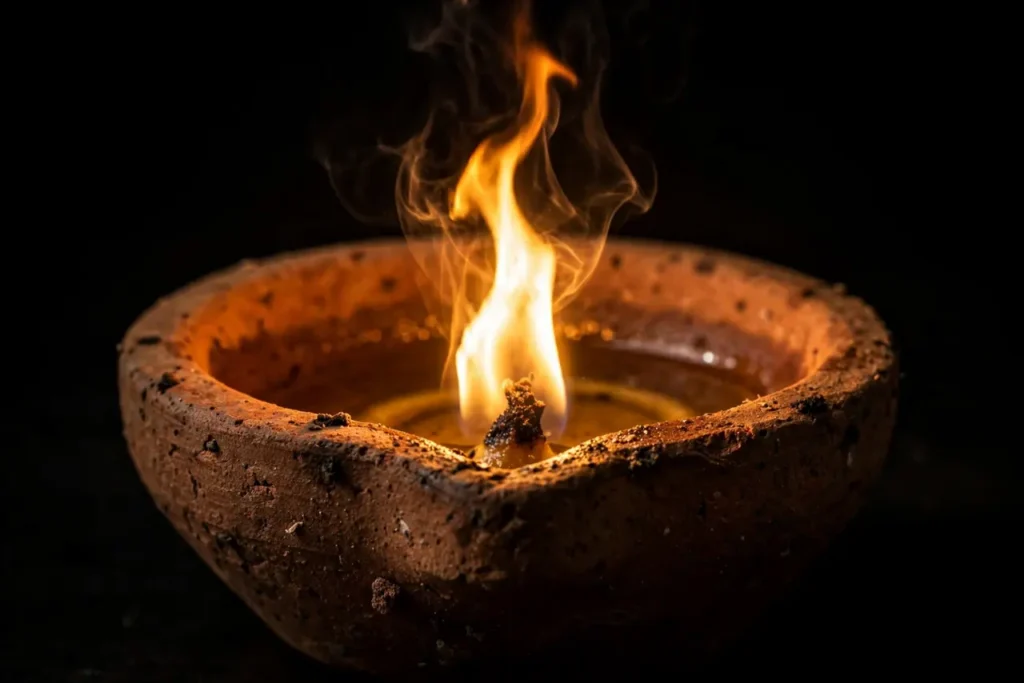
Traditional Prosperity Mantras for Diwali
These are the time-tested mantras chanted for prosperity on Diwali night, with their meanings explained so you chant with understanding.
1. Om Shree Mahalakshmyai Namah. “I bow to the great Goddess Lakshmi.” The foundation mantra of Diwali prosperity. Chant 108 times on Diwali night, or 11 times daily through the festival week. Its power is in its simplicity — a direct address to the source of abundance.
2. The Lakshmi Gayatri. “Om Mahalakshmyai Cha Vidmahe, Vishnu Patnyai Cha Dheemahi, Tanno Lakshmi Prachodayat.” (We contemplate the great Lakshmi, we meditate on Vishnu’s consort, may she enlighten our intellect.) This is prosperity of the mind — the prayer that your intelligence be guided toward wise, fruitful action.
3. Om Shreem Mahalakshmyai Namah. Adding “Shreem” — Lakshmi’s seed syllable, the sound-form of abundance itself — intensifies the mantra. “Shreem” is said to vibrate with the frequency of prosperity; chanting it aligns your energy with receiving.
4. Om Hreem Shreem Lakshmibhyo Namah. “Salutations to Lakshmi, who is Hreem and Shreem.” Combining the seed syllables of divine energy (Hreem) and abundance (Shreem), this mantra invokes both the power to earn and the grace to receive.
5. The Kubera Mantra: Om Yakshaya Kuberaya Vaishravanaya Dhanadhanyadhipataye. “Salutations to Kubera, lord of wealth and grains.” Kubera is the treasurer of the gods and Lakshmi’s companion in Diwali worship. While Lakshmi grants wealth, Kubera protects it — this mantra prays for the preservation of what you earn.
6. Om Shreem Hreem Shreem Kamale Kamalalaye Praseed Praseed. “O Lakshmi, dweller on the lotus, seated on the lotus — be pleased, be pleased with me.” The repetition of “praseed” (be pleased) is a humble, direct plea. Tradition holds that chanting this 108 times on Diwali night with a lotus or lotus image present is especially powerful.
7. The Mahalakshmi Ashtakam verse. “Namastestu Mahamaye, Shreepeethe Surapoojite, Shankha Chakra Gadahaste, Mahalakshmi Namostute.” (Salutations to the great enchantress, worshipped by the gods, wielder of conch, discus, and mace — salutations to Mahalakshmi.) Composed by Indra himself according to tradition, this eight-verse hymn is the heavy artillery of prosperity prayer.
8. Kanakadhara Stotram opening. “Angam Hareh Pulaka Bhooshanam Ashrayanthi.” Adi Shankaracharya’s famous hymn, said to have caused a shower of golden gooseberries for a poor woman. Chanting it on Diwali invokes that same miraculous generosity.
Personal Prayers for Prosperity (In Your Own Words)
Traditional mantras carry power, but personal prayers carry your heart. Speak these aloud on Diwali night, adapting them to your situation.
9. The Merchant’s Prayer. “O Lakshmi, bless the work of my hands. Let my business serve others truly, let my dealings be honest, and let prosperity follow integrity. May every customer leave happier and every employee thrive.”
10. The Farmer’s Prayer. “Mother of abundance, bless the earth that feeds us. Grant good rains, healthy crops, and fair prices. May no family in my village go hungry this year.”
11. The Student’s Prayer. “Goddess of fortune, I pray not for shortcuts but for the prosperity of knowledge. Bless my studies, sharpen my mind, and let my learning become the foundation of a flourishing life.”
12. The Job-Seeker’s Prayer. “O divine, open the doors that are meant for me. Guide me to work that uses my talents, rewards my effort, and serves the world. I am ready to receive.”
13. The Homemaker’s Prayer. “Lakshmi, you who dwell in well-kept homes, bless this household. May there always be food on our table, laughter in our rooms, and enough to share with whoever knocks.”
14. The Artist’s Prayer. “Mother of beauty, bless my creativity. May my art find its audience, my work find its worth, and my passion sustain my life.”
15. The Prayer for Debt Freedom. “O Lakshmi, I pray for the prosperity of freedom — freedom from debt, from worry, from the weight of owing. Guide my spending, bless my earning, and lead me to the peace of a clear ledger.”
16. The Prayer for Generosity. “Make me a channel of abundance, not a reservoir. As you bless me, teach me to bless others. Let my prosperity create prosperity around me.”
The Diwali Night Prosperity Ritual
For maximum meaning, combine your prayers into a simple ritual on the main Diwali night. You will need a diya, a coin or currency note, a flower, and a quiet corner.
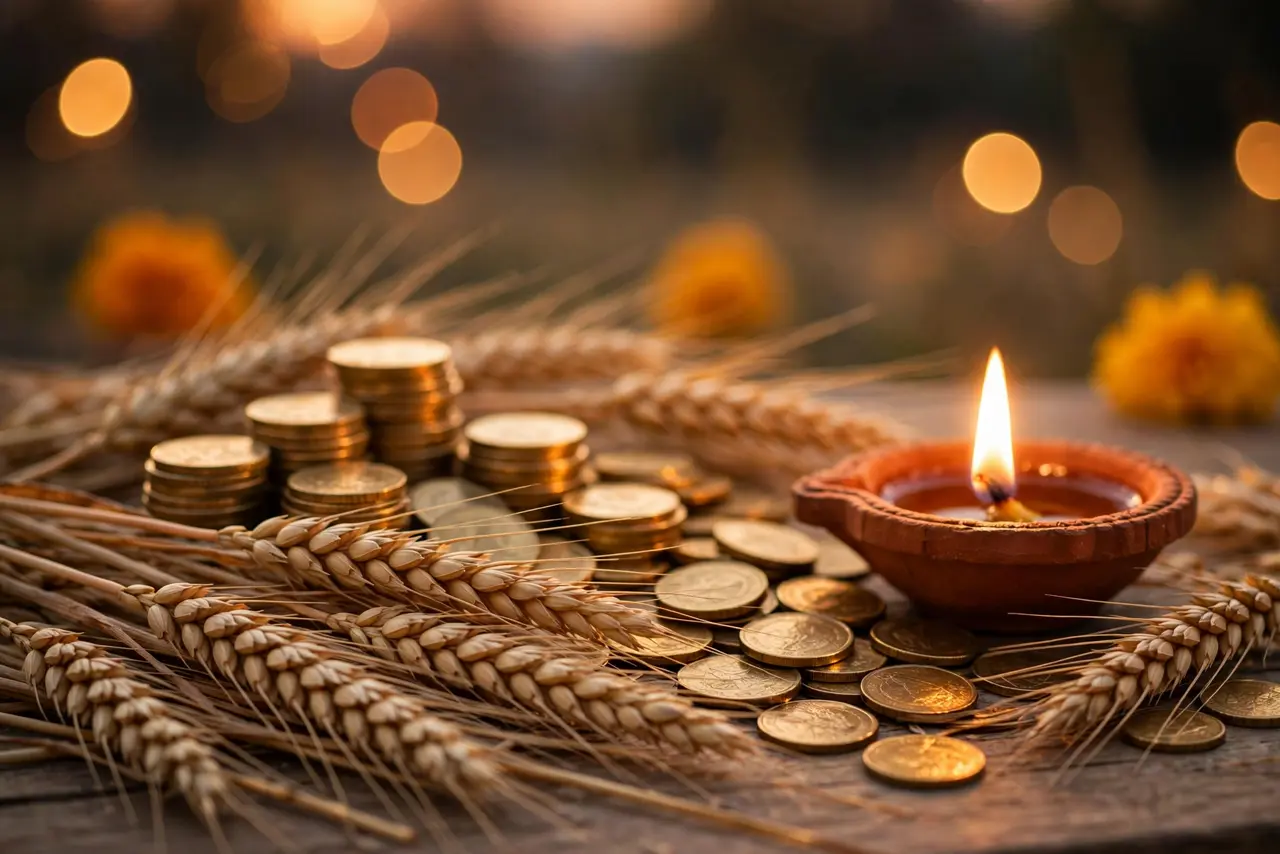
Begin by lighting the diya and placing the coin before it — this symbolizes wealth dedicated to divine purpose. Sit comfortably and chant “Om Shree Mahalakshmyai Namah” eleven times, slowly. Then speak your personal prayer aloud — the one that matches your life right now. Offer the flower. Sit in silence for two minutes, visualizing your goals as already achieved: see the thriving business, the healthy family, the peaceful home.
Close by saying: “I receive with gratitude, I use with wisdom, I share with joy.” Keep the coin in your wallet or place of business through the coming year as a reminder. This is not superstition — it is a psychological anchor, a physical reminder of the intentions you set on the festival’s most powerful night.
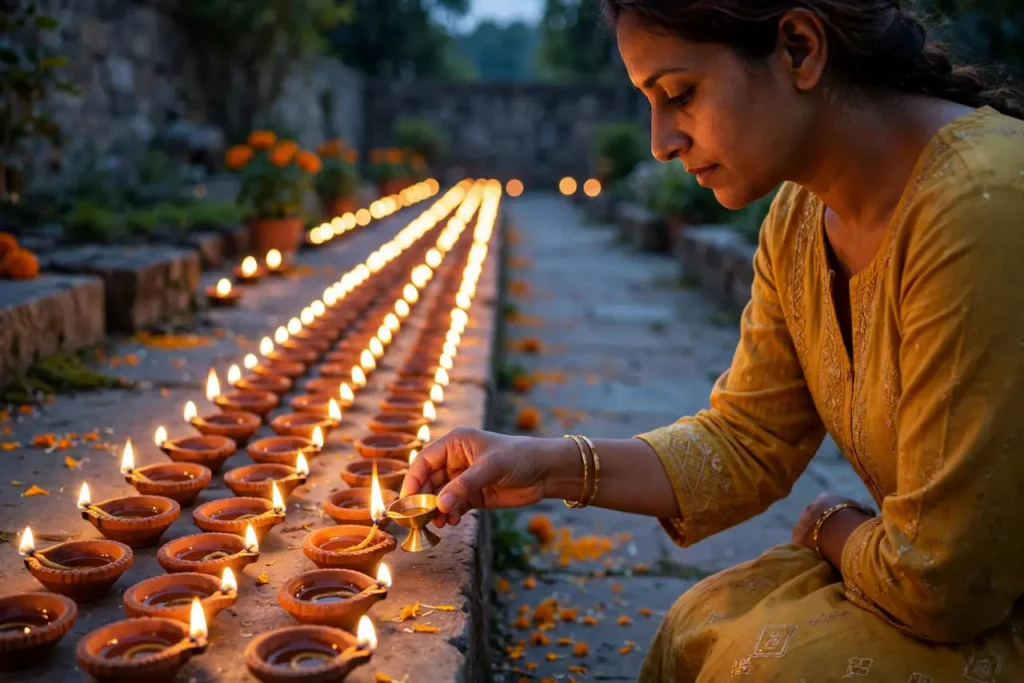
Prosperity Prayers for Others
Blessing others with prosperity is itself a prosperity practice — tradition holds that what you wish for others returns to you.
17. For your family. “May Lakshmi’s blessings fill our home — health for the elders, success for the workers, wisdom for the young, and joy for all.”
18. For a friend’s new business. “May Ganesha clear your path and Lakshmi bless your venture. Your courage deserves its reward — go prosper!”
19. For your employees or team. “May every person who works beside me flourish. Their prosperity is my prosperity.”
20. For your community. “May no one in our neighborhood lack what they need. Bless the shopkeepers, the workers, the elders, the children — let abundance be communal.”
21. For the less fortunate. “O Lakshmi, as you bless me, remember those who have less. Guide my giving, and bless every hand that shares.”
22. For the nation. “May our land prosper — its farms, its industries, its schools, its hospitals. Let abundance serve justice.”
Morning Prosperity Affirmations for the Festival Week
Say one each morning from Dhanteras to Bhai Dooj, looking at your lit diya:
23. “I am worthy of abundance, and I use it wisely.”
24. “Prosperity flows to me through honest work and generous heart.”
25. “Today I open my hands to receive and my heart to give.”
What to Avoid: The Ethics of Prosperity Prayer
Traditional wisdom is clear about what prosperity prayer is not. Never pray for another’s loss as your gain — Lakshmi is said to flee from ill-gotten wealth. Never pray for wealth you intend to hoard; the goddess favors circulation, not stagnation. And never treat the mantra as a transaction — “I chanted 108 times, where is my money?” Devotion is relationship, not commerce.
The texts also warn against praying for prosperity while acting against it: gambling away savings, cheating customers, neglecting work. Prayer aligns the mind, but the hands must follow. The most honest prosperity prayer ends with a commitment: “and I will do my part.”
| Prosperity Prayer | Best Time to Chant | Traditional Count | Focus |
|---|---|---|---|
| Om Shree Mahalakshmyai Namah | Diwali night, evening | 108 times | General abundance |
| Lakshmi Gayatri Mantra | Morning of Diwali | 11 or 21 times | Wise prosperity |
| Om Shreem Mahalakshmyai Namah | During Lakshmi Puja | 108 times | Intensified abundance |
| Kubera Mantra | With Lakshmi Puja | 21 times | Wealth protection |
| Mahalakshmi Ashtakam | Diwali night | Once (8 verses) | Complete grace |
| Kanakadhara Stotram | Morning after Diwali | Once | Miraculous generosity |
The Philosophy Behind the Prosperity Prayer
Hindu philosophy treats wealth (artha) as one of the four legitimate aims of human life, alongside righteousness (dharma), pleasure (kama), and liberation (moksha). This is radical: unlike traditions that view money as spiritually suspect, the Diwali tradition treats honest prosperity as sacred. Lakshmi is not a guilty pleasure — she is a goddess, worthy of worship. The prosperity prayer therefore carries no apology; it is a righteous asking.
But the philosophy adds crucial nuance. Artha must serve dharma — wealth must be earned rightly and used rightly. The texts are explicit: wealth gained through deceit is “alakshmi,” the shadow of Lakshmi, bringing ruin disguised as fortune. This is why the Diwali prosperity prayer always pairs Lakshmi with Ganesha (wisdom) — the tradition’s way of saying that prosperity without wisdom is a curse, not a blessing.
The deepest teaching: Lakshmi is described as “chanchala” — restless, fickle, always moving. Wealth that stagnates rots; wealth that circulates multiplies. The prosperity prayer is therefore also a prayer for generosity — the understanding that holding abundance lightly is what keeps it flowing. The miser loses Lakshmi; the giver keeps her.
Prosperity Prayers from Other Traditions
The human longing for abundance is universal, and Diwali’s prosperity prayers rhyme with sacred economics worldwide. The Jewish prayer for sustenance (the “parnassah” blessings) similarly treats livelihood as divine gift. The Christian “give us this day our daily bread” is a prosperity prayer of elegant simplicity. Islamic tradition holds that charity (zakat) purifies and increases wealth — the same circulation principle as Lakshmi’s chanchala nature.
Buddhist tradition honors Vasudhara and Jambhala as wealth deities, with mantras like “Om Vasudhara Svaha” chanted for abundance to support the dharma. The through-line across all traditions: prosperity is legitimate, gratitude is mandatory, generosity is the mechanism, and right conduct is the foundation. Diwali’s version is among the most elaborate, but the wisdom is humanity’s shared inheritance.
A Daily Prosperity Practice for the Year Ahead
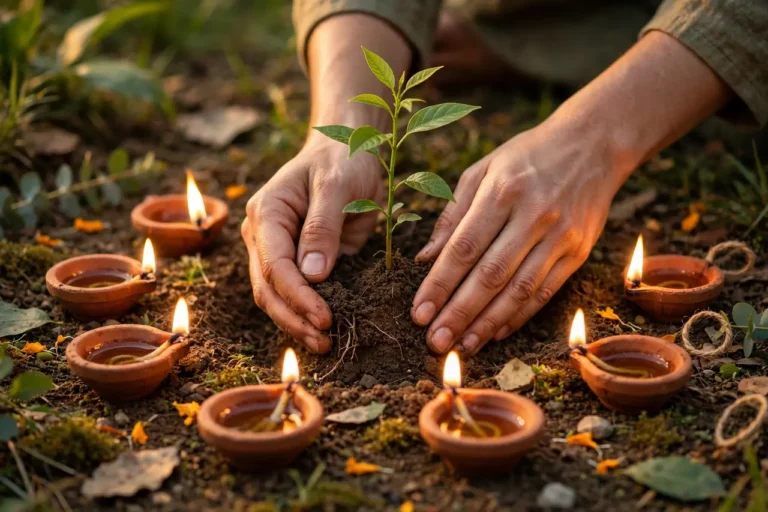
Diwali night plants the seed; daily practice waters it. Here is a simple five-minute morning routine to carry the festival’s prosperity consciousness through the year:
Minute 1 — Light: Light a small diya or candle. Watch the flame and recall Diwali night’s feeling of possibility.
Minute 2 — Mantra: Chant “Om Shree Mahalakshmyai Namah” eleven times, slowly. Let the vibration settle your mind.
Minute 3 — Gratitude: Name three financial blessings you already have — a job, a home, a meal. Gratitude is the soil of abundance.
Minute 4 — Intention: State one concrete prosperity action for today: a call to make, a skill to practice, money to save, generosity to extend.
Minute 5 — Release: Extinguish the flame with the words: “I do my part; I trust the rest.” Then go do your part.
This practice works not through magic but through psychology: daily intention-setting, gratitude priming, and action commitment are among the most evidence-backed drivers of financial behavior change. The diya and mantra are the delivery system for a genuinely effective habit.
Watch: The Secret Diwali Puja for Prosperity
Learn the deeper meaning behind the Diwali prosperity puja — the mantras, the mindset, and the mistakes to avoid.
Continue Your Journey
Prosperity consciousness does not end with Diwali. Carry it forward with DayZora’s New Year blessings and prayers for January’s fresh start, explore the Diwali festival of lights guide for the complete celebration, and reflect with our story behind Auld Lang Syne on how cultures mark new beginnings.
Prosperity and the Five Elements: A Deeper Ritual
For those who want to go deeper on Diwali night, the Pancha Bhuta (five-element) prosperity ritual adds layers of meaning to the simple diya-and-coin practice. Earth: place a small mound of rice or grain before the lamp — honoring Dhanya Lakshmi and the earth’s abundance. Water: a small copper vessel of water — honoring flow, adaptability, and the wealth that moves. Fire: the diya itself — honoring transformation, the energy that turns effort into gold. Air: incense smoke rising — honoring the invisible: reputation, goodwill, blessings that cannot be touched. Space: a moment of silence — honoring the container of all prosperity, the open mind that can receive.
Meditate on each element for one minute, offering a specific gratitude: for the food you ate today (earth), for the opportunities flowing toward you (water), for your own energy and drive (fire), for the people who speak well of you (air), for the possibilities you cannot yet see (space). This is not superstition — it is a structured gratitude practice that trains the mind to recognize abundance, and the mind that recognizes abundance is the mind that creates more of it.
Stories of Prosperity: Tales for Diwali Night
Diwali night is traditionally a time for stories, and prosperity tales are the evening’s entertainment with a moral. The poor Brahmin and the golden gooseberries: Adi Shankaracharya, moved by a destitute woman who gave him her last dried amla fruit, composed the Kanakadhara Stotram on the spot — and golden gooseberries rained from the sky. The moral: generosity in poverty outshines riches in greed.
The merchant’s two purses: A folk tale tells of a merchant who kept two purses — one for earning, one for giving. The giving purse, though constantly emptied, was always full; the earning purse, though constantly filled, always felt empty. Lakshmi, the tale says, lives in the giving purse. Kubera’s lesson: The treasurer of the gods once boasted of his wealth to Shiva, who smiled and showed him that true riches are the devotion of his followers — leaving Kubera humbled and wiser.
Tell these stories after the puja, with children listening wide-eyed. The tales plant the festival’s economic ethics deeper than any lecture: earn honestly, spend wisely, give generously, and hold it all lightly.
The Lakshmi Mindset: Seven Principles for the Year
The festival ends, but its prosperity teachings can shape your whole year. These seven principles distill the Diwali prosperity prayer into daily life.
1. Cleanliness attracts abundance. Lakshmi visits clean homes — and clear minds. Keep your workspace ordered, your finances transparent, your commitments tidy. Disorder is a tax on prosperity.
2. Light dispels fear. The diya’s lesson for money: face your finances honestly. Look at the debts, the savings, the spending — darkness grows what light would shrink. Review your money monthly the way you light diyas nightly.
3. Invite, don’t chase. The puja invites Lakshmi; it does not hunt her. Build skills, serve well, and let opportunity come. Desperation repels; preparation attracts.
4. Pair wealth with wisdom. Ganesha before Lakshmi, always. Every financial decision deserves the pause of wisdom: sleep on big purchases, research investments, seek counsel. The goddess favors the thoughtful.
5. Circulate, don’t stagnate. Lakshmi is chanchala — she flows. Money hoarded in fear rots; money invested, spent wisely, and given generously multiplies. Budget for generosity the way you budget for savings.
6. Protect what you grow. Kubera’s role matters: insurance, emergency funds, honest contracts, and careful records are spiritual practices, not just financial ones. Preservation is half of prosperity.
7. Gratitude compounds. The puja begins with thanks, not asking. Start each financial review by listing what you have. The grateful mind makes better decisions than the anxious one — and better decisions compound faster than interest.
Tape these to your mirror or your ledger. Revisit them each Dhanteras. The Diwali prayer for prosperity is not a once-a-year spell — it is a year-round philosophy with a festival as its annual renewal.
Prosperity for the Self-Employed and Freelancers
Diwali’s prosperity prayers resonate especially with those whose income depends on their own hustle. The traditional merchant’s Diwali — closing old ledgers, opening new ones, praying over the account books — is the original freelancer ritual, and it adapts beautifully to modern independent work.
The annual review ritual: On Dhanteras, review your year honestly — income, clients, skills gained, lessons learned. Write it down. The traditional “closing of accounts” was never just about money; it was about honest reckoning. The new-ledger intention: On the New Year day (Padwa/Bestu Varas), open a fresh page — literally or digitally — and write your intentions: revenue goals, skills to learn, clients to attract, boundaries to set. The Chopda Pujan’s blessing of new books becomes the blessing of new plans.
The client gratitude practice: Diwali week is the ideal time to thank your best clients — a message, a small gift, a genuine note of appreciation. The festival’s economy of gratitude applies to business: the clients you honor return. The investment puja: Before making the year’s big investments — in equipment, education, or marketing — pause for the Ganesha moment: remove obstacles through research, then invite Lakshmi through action. Prayer plus due diligence is the tradition’s formula.
For freelancers, the deepest Diwali prosperity teaching is about worth: Lakshmi favors those who value their own work. Undercharging is not humility; it is a prayer for scarcity. Price honestly, deliver excellently, and let the goddess handle the rest. And remember the freelancer’s Diwali bonus: unlike employees, you can declare your own festival — take the week, light the diyas, and return renewed. Independence is itself a form of prosperity worth celebrating.
The Prosperity Altar: Keeping Diwali Alive All Year
Many families maintain a small prosperity corner year-round — a shelf with a diya, a Lakshmi image, and a coin — lit briefly each Friday (Lakshmi’s weekday) or full moon. This is not superstition but continuity: the Diwali night’s intentions need a home for the other 360 days. The Friday ritual takes five minutes: light the diya, chant the mantra eleven times, review the week’s finances with gratitude, set one intention. The altar becomes a physical reminder that prosperity is a practice, not an event.
Place on it three things: something that represents earning (a coin or your business card), something that represents wisdom (a book), and something that represents generosity (a small donation box). The trio embodies the tradition’s complete formula — Ganesha’s wisdom, Lakshmi’s abundance, and the circulation that keeps both flowing. Tend it weekly, deep-clean it each Dhanteras, and watch how a small ritual reshapes a whole year’s relationship with money.
Frequently Asked Questions
What is the most powerful Diwali prayer for prosperity?
“Om Shree Mahalakshmyai Namah,” chanted 108 times on Diwali night, is the most widely practiced prosperity mantra. For deeper practice, the Lakshmi Gayatri and the Mahalakshmi Ashtakam are considered especially powerful. Sincerity matters more than the specific choice.
How do you pray for wealth on Diwali?
Light a diya, place a coin before it as a symbol of dedicated wealth, chant Lakshmi mantras, speak a personal prayer about your specific goals, and close with gratitude. The traditional framework is invitation, praise, offering, and thanks — adapted to your own words.
Which goddess is prayed to for prosperity on Diwali?
Goddess Lakshmi is the primary deity of prosperity, worshipped on the main Diwali night. Lord Kubera, the treasurer of the gods, is worshipped alongside her for the protection of wealth, and Lord Ganesha is invoked first to remove obstacles to prosperity.
Can prosperity prayers really work?
Prosperity prayers work primarily by focusing the mind: they clarify your goals, strengthen your resolve, and align your daily actions with your intentions. Combined with honest effort, this psychological focusing is genuinely powerful. They are not a substitute for work.
What time should I chant prosperity mantras on Diwali?
The most auspicious time is the evening Lakshmi Puja muhurta (Pradosh Kaal after sunset on the new moon night). Morning chanting at sunrise is also traditional. Consistency through the five days of Diwali amplifies the practice.
Is it wrong to pray for money?
Not in the Diwali tradition — honest wealth (artha) is one of the four legitimate aims of life in Hindu philosophy. What matters is the spirit: pray for the ability to earn well, use wisely, and share generously, not for greed or another’s loss.
What is the Kubera mantra for Diwali?
“Om Yakshaya Kuberaya Vaishravanaya Dhanadhanyadhipataye Namah” — salutations to Kubera, lord of wealth and grains. It is chanted alongside Lakshmi mantras to pray not just for wealth but for its protection and preservation.
How many times should I chant Lakshmi mantras?
Traditional counts are 11, 21, or 108 times, often counted on a rudraksha or lotus-seed mala. On Diwali night, 108 is the classic number. If that feels long, 11 sincere repetitions carry the same devotion.
What should I avoid when praying for prosperity?
Avoid praying for others’ loss, treating mantras as transactions, and praying while acting dishonestly. Lakshmi is said to favor clean homes, honest earnings, and generous hearts — align your conduct with your prayer.