There is a particular electricity in the air when Diwali outfit planning begins. It starts weeks before the festival — a casual scroll through festive collections, a saved reel here, a screenshot there — and builds into a full-scale operation involving tailors, jewelry boxes, group chats, and at least one existential crisis about whether the blouse still fits. Diwali is the one festival where getting dressed is not vanity; it is participation. The silk, the gold, the embroidery — they are how we say the occasion matters.
But “dress up for Diwali” is easier said than done. The options are overwhelming (saree? lehenga? anarkali? sharara? fusion?), the variables are real (budget, body type, weather, multiple events across five days, the office party with its own dress code), and the stakes feel oddly high — because the photos last forever and the aunties notice everything. This guide cuts through the noise with ten complete Diwali outfit ideas for women, covering every style, budget, and body; a fabric guide so you choose materials that look expensive and feel comfortable; a color guide for the season; accessory and styling formulas; and honest advice on rewearing, renting, and shopping smart.
Whether you are dressing for the big Diwali night, the office celebration, or all five days of the festival, your outfit is here. Let us find it.
The Diwali Dress Code, Decoded
Diwali does not have one dress code — it has layers, and dressing right means reading the room. The main Diwali evening (Lakshmi Puja night) is the most formal: silk, embroidery, jewelry, the full look. Family gatherings and card parties are festive but relaxed: a nice kurta set or a simple saree works beautifully. The office Diwali party is its own category — celebratory but professional, so skip the backless blouses and the six-inch heels. Dhanteras and Bhai Dooj tend toward the traditional and the comfortable, since they involve rituals and running around.
The practical rule: match the effort to the event’s photography level. The main night gets photographed the most, so that is where the showstopper goes. Everything else can be beautiful but comfortable — you will enjoy the festival far more in an outfit you can sit, eat, and hug in. And remember the five-day factor: nobody wears five new outfits without planning (or a large budget), so this guide includes rewearing strategies that look intentional, not repetitive.
10 Diwali Outfit Ideas for Women
1. The Silk Saree: The Undisputed Classic
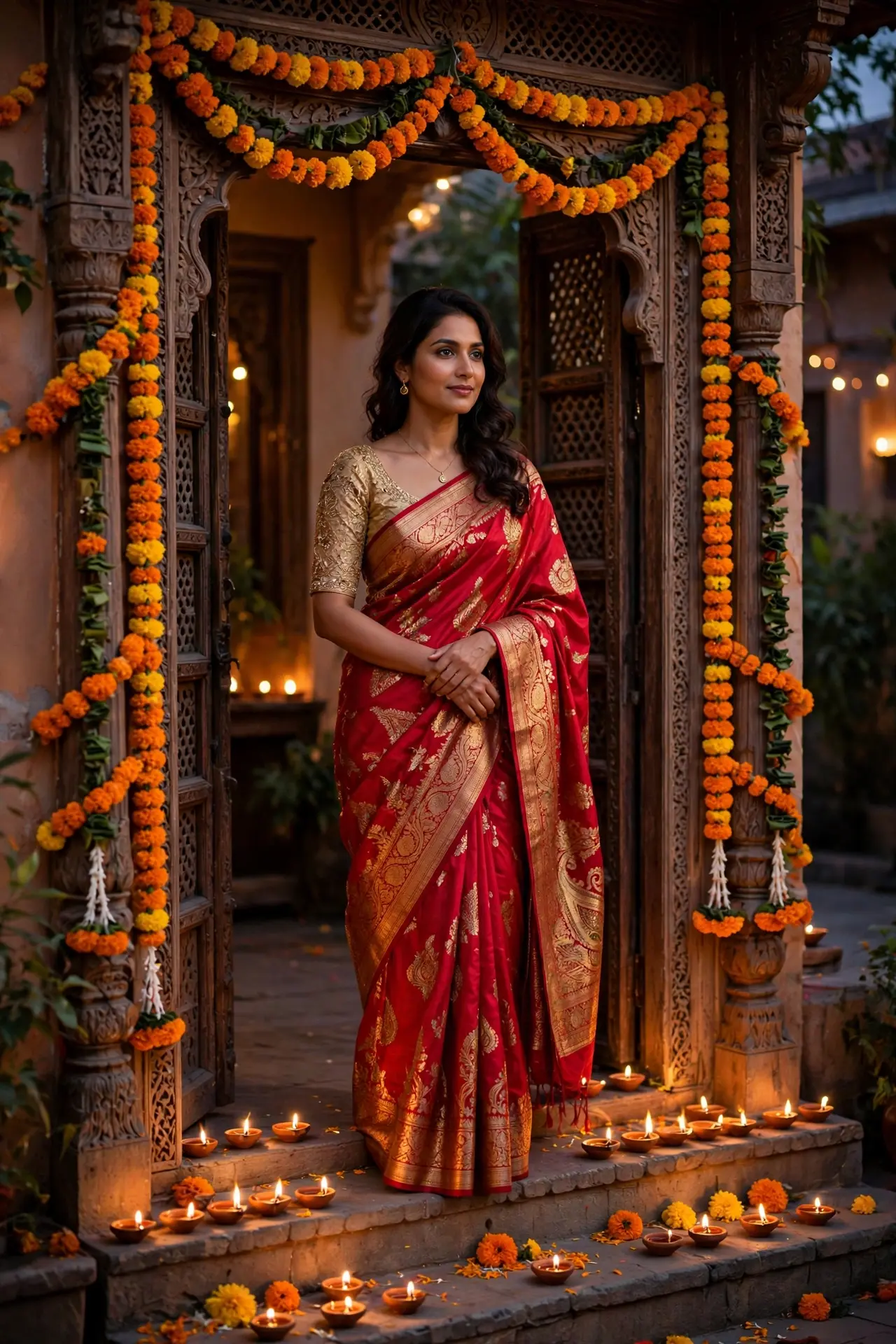
Nothing says Diwali like a silk saree — Kanjeevaram, Banarasi, Mysore silk, or Tussar, in the season’s jewel tones. The silk saree is the most formal option here and the most photographed; it drapes like a dream, catches light beautifully, and carries a gravitas no other garment matches. Style it with a well-fitted blouse (get the fitting done two weeks before, not two days), temple jewelry or kundan sets, and a neat low bun or sleek straight hair to let the saree star. The pre-stitched saree is the modern cheat code — all the grandeur, none of the draping anxiety. Budget tip: a good silk saree is an investment piece; cost-per-wear it across weddings and festivals for years. This is the outfit for the main Diwali night, full stop.
2. The Lehenga: Maximum Celebration
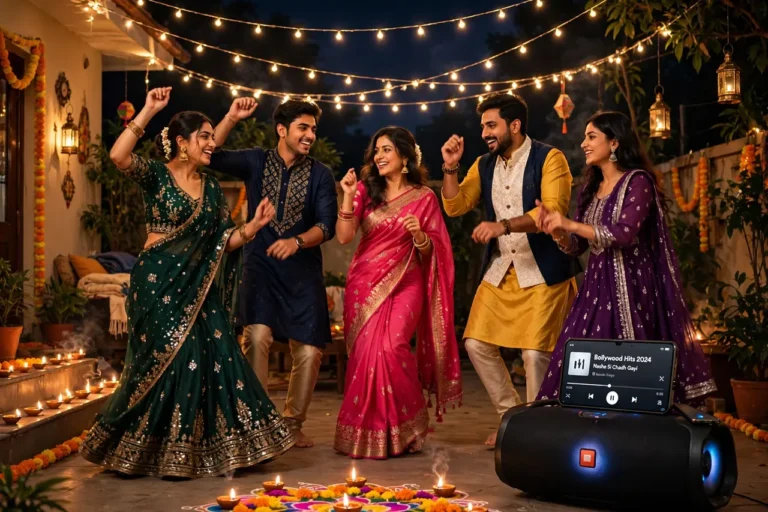
The lehenga is Diwali’s party animal — voluminous, embellished, unapologetic. Choose lighter lehengas (georgette or crepe with sequin work) over heavy bridal ones; you want to dance and eat, not just stand. Crop-top-and-skirt sets in festive prints are the contemporary take, easier to rewear as separates. Style with statement jhumkas, a maang tikka if you are feeling regal, and heels you can actually walk in — the lehenga’s volume hides comfortable block heels beautifully. The twirl factor makes this the most Instagram-friendly option; if your Diwali includes a big party or a sangeet-style gathering, the lehenga earns its keep. Rent one for the night if buying feels excessive — more on renting below.
3. The Anarkali: Grace in Motion
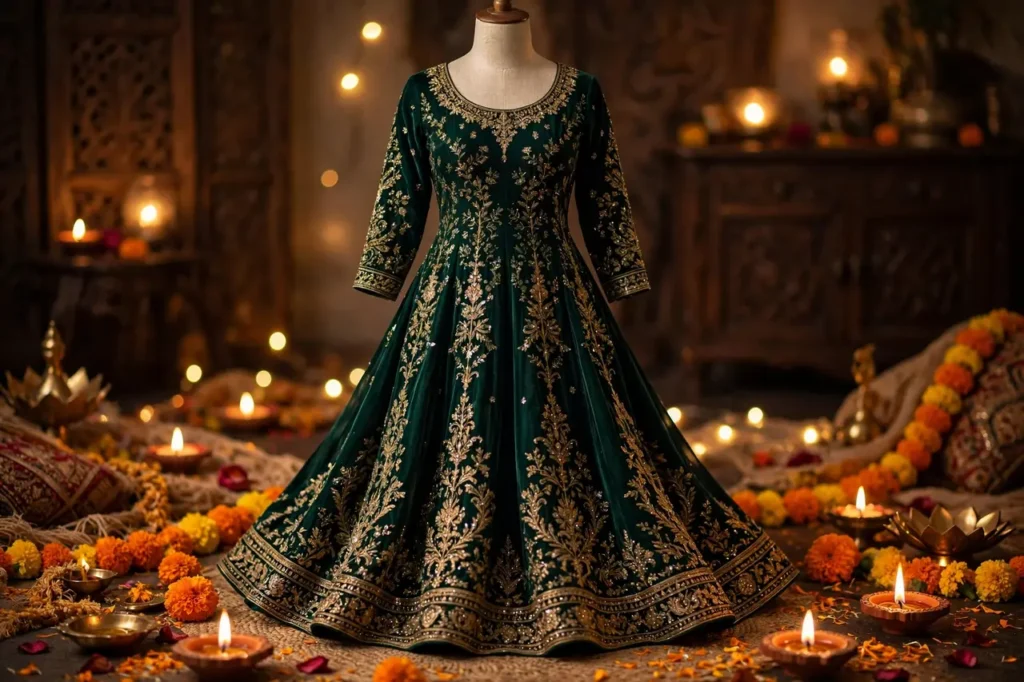
The floor-length anarkali is the diplomat of Diwali fashion — formal enough for the main night, comfortable enough for a long evening, flattering on nearly every body type. The flare skims rather than clings, the silhouette is timeless, and the current styles (jacket anarkalis, cape anarkalis, asymmetric hems) keep it fresh. Choose rich fabrics — velvet for winter Diwalis, georgette for warmer ones — and let one element star: either the embroidery or the jewelry, not both competing. The anarkali is also the best rewear candidate here; change the dupatta and jewelry and it reads as a completely different outfit at the next event.
4. The Sharara and Gharara: Festive Drama
Shararas and ghararas — flared pants with a short kurti — bring Mughal-era drama to the modern Diwali. The silhouette is striking, the movement is gorgeous, and they photograph like a dream. They suit tall frames beautifully and can be tailored to flatter petites (keep the flare moderate and the kurti fitted). Style with a sheer dupatta draped over one shoulder, chandbali earrings, and embellished juttis. This is a statement outfit — wear it to the event where you want to be remembered. One caution: the volume requires confidence in crowded rooms; if your Diwali involves squeezing past buffet tables, the anarkali travels better.
5. The Kurta Set: Effortless Elegance
The elevated kurta set — straight-cut or A-line kurta with palazzos or cigarette pants and a statement dupatta — is Diwali’s workhorse. It is comfortable, affordable, endlessly rewearable, and with the right fabric (chanderi, organza overlays, subtle zari) it looks genuinely festive rather than daily-wear. This is the outfit for office Diwali parties, daytime gatherings, and Dhanteras rituals. The formula for making it read “festival”: one luxe element — an embroidered dupatta, a silk kurta, or real jewelry — against an otherwise simple base. Every woman needs at least one great festive kurta set; it is the outfit you will reach for most.
6. The Fusion Look: Tradition With an Edge
Dhoti pants with a crop top, a saree draped over jeans (yes, really — it works with the right attitude), a cape over a lehenga skirt, a blazer over an anarkali — fusion is Diwali for the fashion-forward. The rules: keep one element traditional and one modern, so the look reads as intentional rather than confused. Fusion suits cocktail-style Diwali parties and younger crowds; it may raise eyebrows at traditional family pujas, so read your audience. The payoff is originality — in a sea of lehengas, the woman in the perfectly executed fusion look is the one people remember. Confidence is the required accessory; without it, fusion looks like a costume malfunction.
7. The Office Diwali Look: Festive but Professional
The office Diwali party has the trickiest dress code: celebrate, but remember you have a 9 a.m. meeting the next day. The winning formula is a silk or chanderi kurta in a rich color with tailored pants, minimal but real jewelry (studs, a delicate necklace), and polished flats or low block heels. Skip: anything backless, anything that needs adjusting every ten minutes, anything you would not want photographed on the company intranet. The goal is “festive colleague,” not “runway.” A small bindi and a swipe of red lipstick do more festive work than any outfit change. For parallel styling logic, our New Year’s Eve outfit ideas for women navigates the same festive-professional balance for December.
8. The Budget Look: Stunning Under $100
A showstopping Diwali look does not require a showstopping budget. The strategy: invest in one hero piece and let styling do the rest. A $40 embroidered dupatta over a plain kurta you own transforms it. Thrifted silk sarees (often $20–30) with a new $15 blouse look indistinguishable from new. Statement jewelry from local markets — big jhumkas, stacked bangles — costs little and photographs like luxury. The real budget secret is grooming: fresh-pressed clothes, neat hair, and confident styling make a $60 outfit look like $600. Nobody at the party knows the price tags; they only see the glow. Spend your money where the camera looks: the dupatta/saree and the jewelry.
9. The Sustainable Look: Rewear, Rent, Restyle
The most modern Diwali statement is not buying anything new. Rewearing is chic now — style last year’s lehenga with a different blouse and jewelry and it is a new outfit. Renting (services for festive wear have exploded) gets you a designer look for a tenth of the price, with zero closet guilt. Restyling — a saree as a lehenga skirt, a dupatta as a cape — is creativity as fashion. And swapping with friends (the Diwali clothing swap is a beloved tradition in many circles) multiplies everyone’s options for free. The sustainable look also happens to be the most complimented: “Is that new?” “No — restyled!” is a conversation starter, not a confession. The planet thanks you; your wallet thanks you; your photos will never know.
10. The Plus-Size Festive Guide: Dress the Body You Have
Festive fashion advice too often pretends only one body exists. Here is the truth: every silhouette above works on every body — the variables are fit and fabric, not permission. Anarkalis with structured bodices and flowing skirts are universally flattering. Sarees draped with the pallu over the shoulder (rather than pleated tightly) create a long, elegant line. Avoid stiff fabrics that add volume where you do not want it; choose georgette, crepe, and soft silks that drape. Get everything tailored — the single biggest upgrade for any body is clothes that actually fit, and festive wear off the rack rarely does. And wear the thing you love, not the thing the world says flatters you: confidence is the best silhouette, and joy is the best accessory. The only rule is that there are no rules — Diwali is for everybody.
The Diwali Fabric Guide
Fabric makes or breaks a festive outfit — it determines how it drapes, how it photographs, and whether you survive the evening. Here is what to choose:
| Fabric | Best For | Drape & Feel | Price Range |
|---|---|---|---|
| Silk (Kanjeevaram, Banarasi) | Sarees, main night | Structured, lustrous, regal | $$$ |
| Velvet | Anarkalis, winter Diwalis | Rich, heavy, dramatic | $$–$$$ |
| Georgette / Crepe | Lehengas, shararas | Flowy, light, twirl-friendly | $$ |
| Chanderi | Kurta sets, daytime | Sheer, elegant, breathable | $$ |
| Organza | Dupattas, overlays | Crisp, modern, statement | $$ |
| Cotton-silk blend | Office, comfort-first | Soft, breathable, easy | $–$$ |
| Net / Tulle | Lehenga skirts, capes | Voluminous, airy | $–$$ |
| Brocade | Blouses, kurtis | Ornate, structured | $$ |
The comfort rule: if you will be sitting on the floor for puja, avoid stiff fabrics and anything that wrinkles badly — georgette and crepe forgive, silk and organza do not. If the evening involves a lot of standing and greeting, prioritize light lehengas over heavy ones; your back will thank you by hour three. And always, always do a sit-test in the trial room: sit, stand, walk, and raise your arms. The outfit that passes the sit-test is the outfit you will actually enjoy wearing.
The Diwali Color Guide
Certain colors own Diwali. Deep red and maroon are the perennial classics — bridal-adjacent, photogenic, and flattering on most skin tones. Emerald green and royal blue are the jewel tones that look expensive in any fabric. Gold and champagne are the metallics that catch diya-light like nothing else. This season’s rising stars: burnt orange (marigold-adjacent, perfectly thematic), deep purple (regal, unusual), and ivory with gold embroidery (understated luxury).
Color strategy by skin tone is simpler than the internet makes it: warm undertones glow in warm colors (red, orange, gold, mustard); cool undertones shine in cool colors (emerald, royal blue, magenta, silver). But the real rule is emotional — wear the color that makes you stand taller. If that is black with gold embroidery at a festival of color, wear it with conviction; confidence outranks every color theory. And for multi-day dressing, plan a color arc: start the week in softer tones, build to the richest color on the main night, and close in comfortable favorites.
Accessories: The Styling Formula
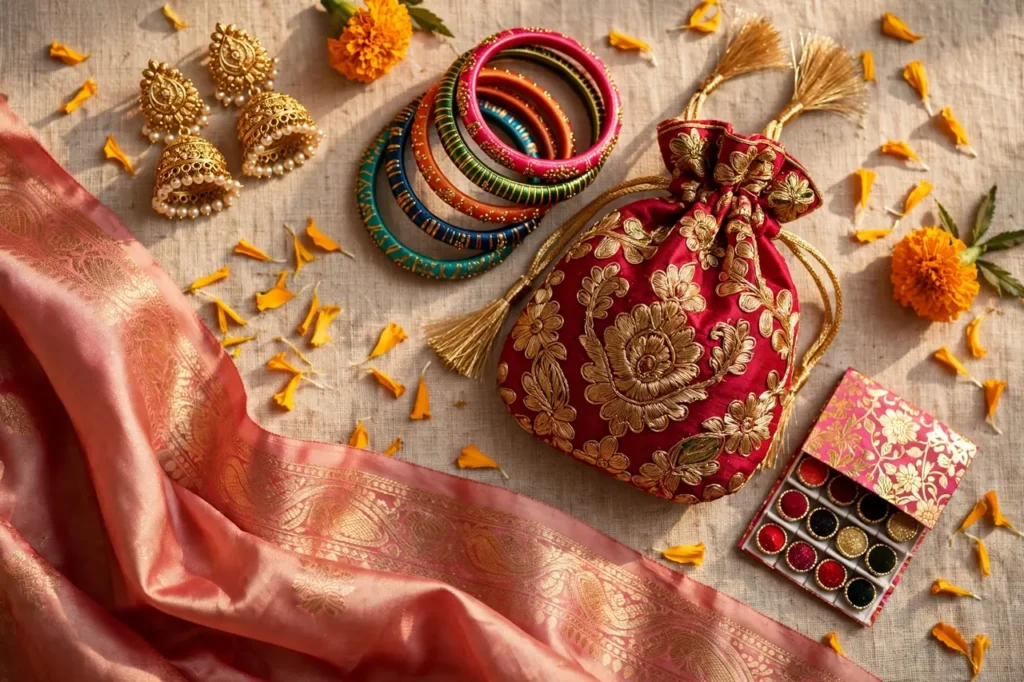
Accessories are where good outfits become great ones, and the formula is simple: one statement, two supporters. The statement is your hero piece — chandelier jhumkas, a polki choker, a maang tikka, an embellished clutch. The supporters are quieter — bangles that complement (not compete), a bindi that ties the look together, juttis or heels in a coordinating tone. The classic mistake is three statements fighting: choker plus chandbalis plus maang tikka plus stacked bangles reads as a jewelry box explosion. Edit ruthlessly.
The non-negotiables: a potli bag or small clutch (you need somewhere for the phone — the photos do not take themselves), comfortable footwear (block heels or embellished flats; the stilettos stay home), and a backup safety pin kit (fashion emergencies are a Diwali tradition). Hair and makeup follow the same one-statement rule: bold lip with soft eyes, or smoky eyes with nude lips — not both. A sleek bun shows off earrings; loose waves soften structured outfits. And the bindi: small and classic for daytime, bolder for the main night. For festive-dress inspiration from another celebration, our Christmas party outfit ideas for women uses the same one-statement styling formula.
The 5-Day Diwali Wardrobe Plan
Dressing for all five days without buying five outfits is a planning exercise, not a shopping one. Here is the matrix: Dhanteras — your best kurta set (comfortable, traditional, ritual-ready). Choti Diwali — the reworn favorite with new accessories (different jewelry transforms it). Diwali main night — the showstopper (silk saree or lehenga, full styling). Govardhan Puja — the comfortable festive (anarkali or a relaxed saree drape). Bhai Dooj — the pretty-casual (a nice kurta set or a simple saree, family-photo ready).
The rewearing tricks that make this work: no one remembers accessories, so change jewelry, bags, and hairstyles between appearances and the outfit reads as new. A different drape style makes the same saree unrecognizable in photos. And strategic scheduling — wear the reworn outfit to the gathering with the least photo overlap. Document the plan in your phone notes with photos of each combination; decision fatigue is the enemy of festive dressing, and a pre-made plan means you enjoy the week instead of agonizing each morning.
Your Diwali Outfit Shopping Timeline
Festive dressing fails most often on timing, not taste. Here is the week-by-week plan. Six weeks out: browse and save inspiration; decide your main-night outfit direction (saree, lehenga, anarkali). Four weeks out: buy or rent the hero pieces; book the tailor — the good ones fill up fast. Three weeks out: buy jewelry and accessories; break in new footwear around the house (blisters on Diwali night are a tragedy). Two weeks out: first tailoring fitting; finalize the five-day plan. One week out: full trial run — outfit, jewelry, shoes, hair, makeup, sit-test, photos in different lights. Two days out: press everything, pack the safety-pin kit, charge the phone. The night of: get dressed early, take photos in good light, and then forget about the outfit and enjoy the festival. The woman who planned is the woman who glows.
Watch: Saree Styling Hacks for Diwali
The saree is Diwali’s most-loved outfit — and these clever hacks make wearing it easier and more stunning. This video shares easy saree styling tricks every woman should know for Diwali, Navratri, and weddings:
Diwali Outfit Care: After the Festival
The festival ends; the outfit’s life should not. Air out everything the night of — festive fabrics trap cooking smells. Spot-treat stains immediately (sindoor, haldi, and mithai syrup are the usual suspects) before they set. Dry-clean silks, velvets, and embroidered pieces promptly; do not let them sit stained in the closet for months. Store sarees folded in muslin with the blouse, not in plastic (which traps moisture). Photograph each outfit combination and save it in a “festive” phone album — next year’s planning starts with this year’s record. A well-cared-for Diwali outfit is not a one-night expense; it is a multi-year asset.
Diwali Outfit Ideas for Women: FAQs
What should a woman wear for Diwali?
The classic choices are a silk saree, lehenga, anarkali, sharara, or festive kurta set — in rich colors and celebratory fabrics. Match formality to the event: silk and embroidery for the main night, comfortable kurta sets for daytime gatherings, festive-professional for the office party. The ten ideas in this guide cover every scenario; start with the dress code section to match your events.
Can I wear Western clothes to a Diwali party?
It depends on the host and the crowd. For traditional family pujas, Indian wear is expected and appreciated. For modern friend-group parties, fusion or elegant Western festive wear (a jewel-toned dress, a silk blouse with statement jewelry) is perfectly fine. When in doubt, ask the host — “What is everyone wearing?” is always a safe question. A good compromise: Western silhouette with Indian accessories, like a solid dress with jhumkas and bangles.
How do I choose a Diwali outfit on a budget?
Invest in one hero piece (an embroidered dupatta, statement jewelry) and style around what you own. Thrift silk sarees, rent lehengas, swap with friends, and let grooming do the heavy lifting — pressed clothes and neat styling make any budget look expensive. The $100 festive look is absolutely achievable; this guide’s budget section shows exactly how.
What colors are best for Diwali outfits?
Deep red, maroon, emerald, royal blue, and gold are the perennial winners — they photograph beautifully in diya-light and suit the festival’s celebratory mood. This season also loves burnt orange, deep purple, and ivory with gold. Match undertones loosely (warm colors for warm skin), but prioritize the color that makes you feel fantastic — confidence beats color theory every time.
How do I rewear a Diwali outfit without looking repetitive?
Change what the camera notices: different jewelry, different hairstyle, different drape, different bag. Accessories are the least-remembered element, so a new jewelry set makes the same outfit read as new. Schedule the rewear for the gathering with the least photo overlap, and consider small alterations (a new blouse for the saree) for a genuinely fresh feel.
What should I wear to an office Diwali party?
Festive but professional: a silk or chanderi kurta with tailored pants, minimal real jewelry, polished low heels. Skip anything backless, fussy, or intranet-regrettable. The goal is “festive colleague” — celebrate, but remember the 9 a.m. meeting. A bindi and red lipstick add festival spirit without changing the outfit’s professionalism.
Are there Diwali outfit ideas for plus-size women?
Absolutely — every silhouette in this guide works on every body. Prioritize fit and drape: structured-bodice anarkalis, softly draped sarees, flowing georgettes over stiff fabrics. Get everything tailored — fit is the great equalizer. And wear what you love: the only real rule is that confidence is the best outfit. Section 10 of this guide is dedicated to festive dressing for every body.
Should I buy new or rent my Diwali outfit?
Buy the pieces you will rewear (kurta sets, silk sarees, good jewelry); rent the one-night showstoppers (heavy lehengas, designer pieces). Renting costs a tenth of buying and eliminates closet guilt — ideal for the outfit you will wear once. For everything else, the sustainable trio of rewear, restyle, and swap covers the five days beautifully.
What jewelry goes with a Diwali outfit?
Follow the one-statement rule: one hero piece (jhumkas, choker, maang tikka) plus two quiet supporters (bangles, bindi, coordinated footwear). Match metal tones loosely — gold with warm colors, and do not be afraid to mix metals deliberately. Temple jewelry suits silk sarees; kundan and polki suit lehengas; delicate pieces suit office looks. For caption ideas once you are dressed, our anniversary Instagram captions show how jewelry close-ups earn their own posts.
How far in advance should I plan my Diwali outfit?
Start browsing four to six weeks out; finalize three weeks out; complete tailoring two weeks out (not two days — tailors are swamped before Diwali). Do a full trial — outfit, jewelry, footwear, sit-test — one week before. Last-minute Diwali shopping is how you end up with a beautiful outfit that does not fit and no time to fix it. The five-day wardrobe plan in this guide makes the whole week effortless.
Dress Up and Shine
Diwali dressing is not vanity — it is ritual, celebration, and self-respect in fabric form. The right outfit does not just photograph well; it changes how you move through the festival — taller, brighter, more present, more yourself. Whether you choose the timeless silk saree, the dramatic lehenga, the comfortable kurta set, or the proudly reworn favorite, wear it with intention and joy.
Plan early, tailor everything, follow the one-statement rule, photograph every combination, pack the safety pins, break in the shoes, and remember the sit-test. Then, on the night itself, forget about the outfit entirely — the best-dressed woman at any Diwali party is the one who is too busy laughing, hugging, and celebrating to think about her clothes. The outfit got you to the party; your joy is what people will remember. Shine on, celebrate fully, and wear every single beautiful moment well. Happy Diwali — and may your festival be as beautiful, bright, and joyful as you are.
Frequently Asked Questions
What should a woman wear for Diwali?
There’s no single answer — sarees, lehengas, anarkalis, shararas, and elegant kurta sets all shine. Choose based on your plans: a rich silk saree for evening puja, a comfortable anarkali for a day of hosting, or chic indo-western for a friends’ party.
Which colors are best for Diwali outfits?
Jewel tones rule the festival: deep maroon, emerald, royal blue, and classic red photograph beautifully against diya-light. Gold accents — embroidery, borders, jewelry — catch the light and read as festive in every photo.
How do I dress for Diwali on a budget?
Repeat and restyle: pair an old saree with a new blouse, rent a designer lehenga for one night, or elevate a simple kurta with statement jhumkas and a silk dupatta. Accessories transform basics more cheaply than a whole new outfit.
What footwear works with Diwali outfits?
Embellished juttis and low-block-heel sandals are the practical classics — pretty, comfortable for long evenings, and safe around diyas and rangoli (avoid stilettos near open flames and powder designs). Break new shoes in before the festival.
How do I style a saree for Diwali differently?
Experiment with draping (gujarati seedha pallu, butterfly pleats), belt the saree for a modern silhouette, or pair a traditional silk with a contrasting contemporary blouse. A fresh drape makes a familiar saree feel brand new.
What jewelry completes a Diwali look?
Pick one hero piece — chandelier jhumkas, a polki choker, or layered gold necklaces — and keep the rest minimal. Festival outfits already carry embroidery and shine; jewelry should complement, not compete.
What should I wear to a Diwali office party?
Elegant but restrained: a silk kurta with palazzos, a simple anarkali, or a saree in muted festive tones. Skip heavy bridal-style embroidery for work events; save the showstoppers for family celebrations.
How do I plan Diwali outfits for all five days?
Map outfits to events, not days: puja mornings get traditional silks, card parties get glam lehengas, and relaxed family dinners get comfortable kurtas. Planning the full run prevents last-minute panic and repeat-outfit regret.