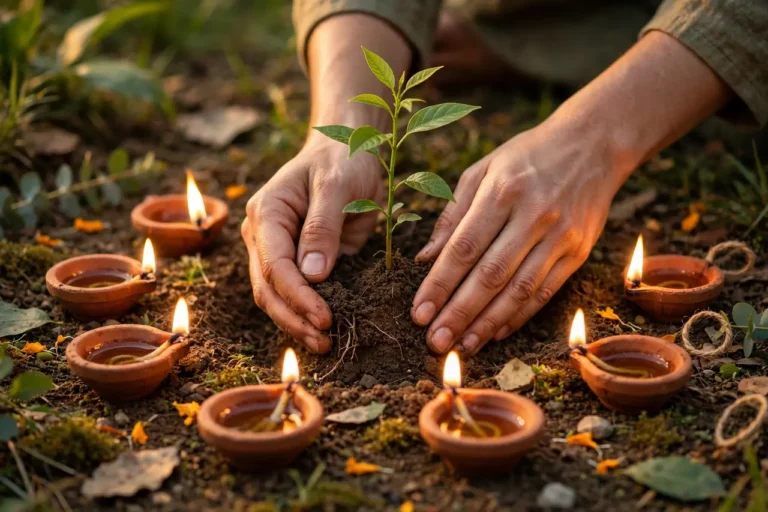
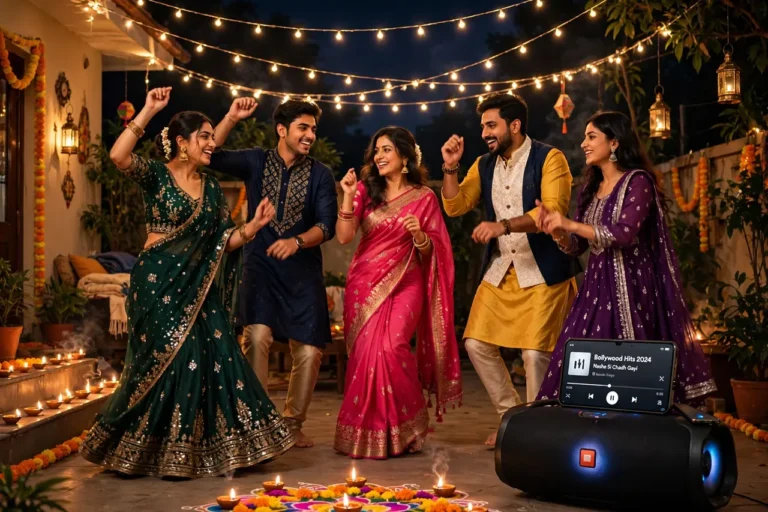
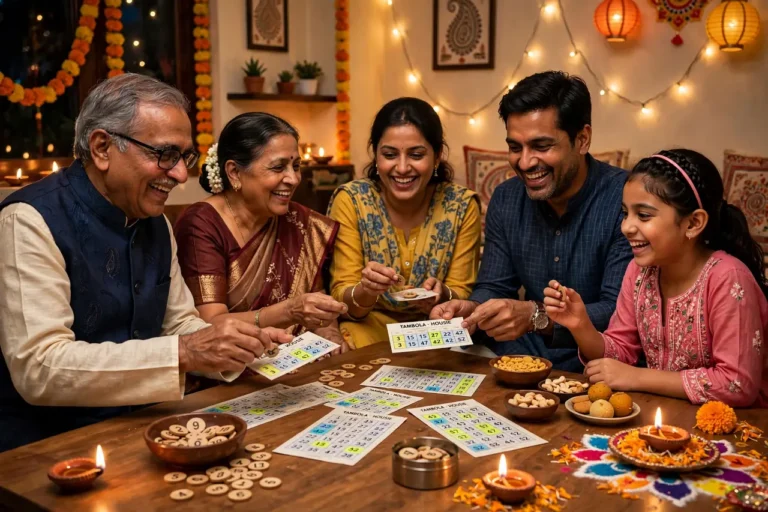
Diwali is the festival of lights, and nothing captures its magic like a home glowing from every corner. From traditional clay diyas flickering on doorsteps to cascades of fairy lights on balconies, from elegant hanging lanterns to creative DIY light installations, the way you light your home defines your Diwali celebration. This complete guide to Diwali lights decoration ideas covers every type of festive lighting, room-by-room lighting plans for indoors and outdoors, creative DIY light projects, electrical safety essentials, energy-saving tips, and troubleshooting for common problems. Whether you love the warm glow of traditional oil lamps, the convenience of modern LEDs, or a harmonious blend of both, you will find ideas to make your home shine brighter this Diwali than ever before.
Why Lighting Is the Heart of Diwali
Light is not just decoration at Diwali; it is the festival’s central symbol. The rows of diyas recall the lamps that welcomed Lord Rama home to Ayodhya; the illumination represents knowledge dispelling ignorance and good triumphing over evil. Psychologically, warm light transforms how a space feels: it makes rooms seem more welcoming, gatherings more intimate, and celebrations more memorable. Studies on ambiance consistently show that warm lighting elevates mood and sociability, which is exactly what a festival gathering needs. Practically, Diwali lighting serves three purposes: ritual (diyas for puja and welcome), decoration (fairy lights, lanterns, installations), and hospitality (a well-lit home signals celebration to guests and neighbors). The best Diwali lighting plans honor all three, blending traditional flames with modern convenience. As you plan, think like a lighting designer: layers of light at different heights and intensities create depth and magic that a single string of lights cannot achieve.
Types of Diwali Lights: Complete Guide
| Light Type | Best For | Pros | Cons |
|---|---|---|---|
| Clay diyas (oil) | Rituals, entrances, altars | Traditional, authentic flame, inexpensive | Fire risk; need refilling; wind-sensitive |
| LED diyas | Kids’ areas, high-traffic spots | Safe, reusable, flicker realistically | Need batteries/charging; less traditional feel |
| Fairy/string lights | Balconies, windows, trees | Versatile, many colors/modes, affordable | Tangle easily; need power outlets |
| Curtain lights | Windows, walls, backdrops | Dramatic waterfall effect; easy to hang | Can look messy if not arranged carefully |
| Akash kandils (lanterns) | Entrances, balconies | Traditional, colorful, festive | Paper ones are fragile; need hanging points |
| Tea light candles | Tables, urlis, bathrooms | Cheap, warm glow, versatile | Fire risk; short burn time |
| Rope lights | Outlining architecture | Define shapes; weather-resistant options | Less delicate look than fairy lights |
| Projector lights | Outdoor walls | Huge impact, minimal effort | Can look gimmicky; needs darkness |
| Solar garden lights | Pathways, gardens | No wiring; eco-friendly; automatic | Depend on daytime charging; dimmer |
| Neon-style LED strips | Modern accents | Contemporary look; color-changing | Less traditional; higher cost |
Most homes use a mix: traditional diyas for ritual spots, fairy lights for overall glow, and lanterns or candles for accents. When buying new lights, choose warm white (2700-3000K) for the most flattering, traditional feel; reserve multicolor for playful areas like kids’ rooms.
Room-by-Room Lighting Plan
Entrance and Doorway
The entrance needs the brightest, most welcoming light. Line steps with diyas on both sides, hang a lantern on each side of the door, and drape fairy lights around the door frame. The goal is a glow visible from the street that says “celebration inside.” Use real diyas here for tradition, but keep them in stable holders away from foot traffic.
Living Room
Layer three light levels: fairy lights along curtain rods and shelves for ambient glow, table diyas or candles at seating height for intimacy, and one statement piece like a lit urli or lantern cluster as the focal point. Dim overhead lights in the evening; Diwali living rooms should glow, not glare. Ensure enough light for the aarti and for elders to move safely.
Dining Room
Keep table lighting low and warm: tea lights in holders, a diya runner, or small lanterns. Avoid tall arrangements that block conversation. A dimmer switch on the dining chandelier is ideal; if unavailable, turn it off and let the table lights carry the mood. Add fairy lights around windows for background sparkle.
Puja Room
Combine ritual and practical light: diyas for the ceremony plus a soft electric light so everyone can see the rituals clearly. Avoid harsh white tube lights; a warm bulb or shaded lamp preserves sanctity. Ensure the main diya is sheltered from drafts so it burns steadily through the puja.
Bedrooms
Gentle and restful: fairy lights around the headboard or mirror, one LED candle on the nightstand. Avoid real flames in bedrooms. The goal is a soft festive glow that does not interfere with sleep.
Balcony
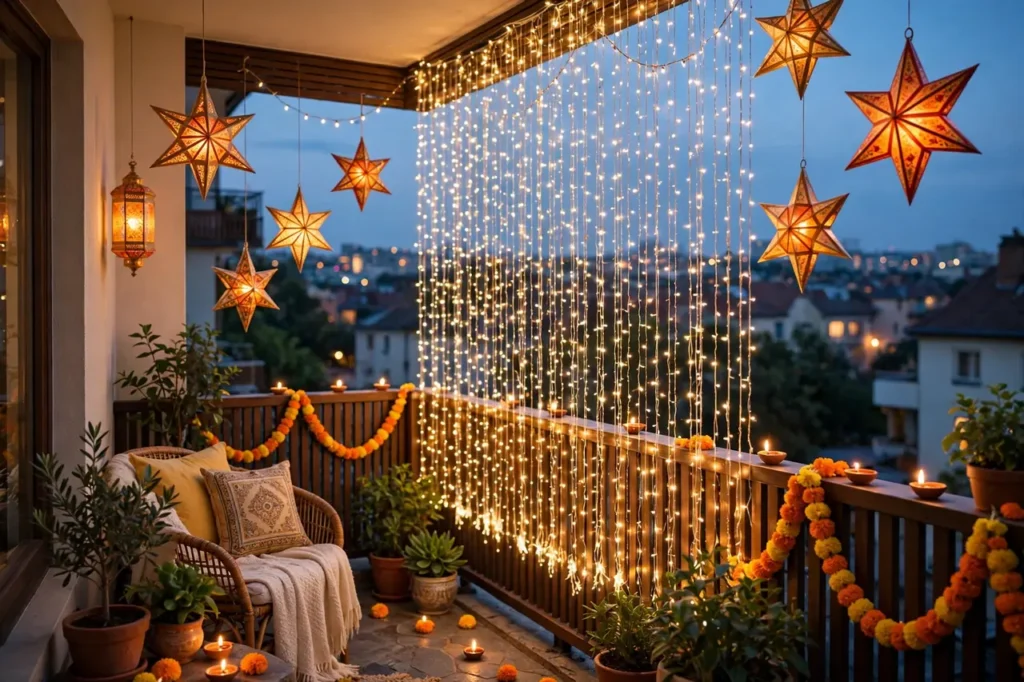
The balcony is your public light display. Outline railings with fairy lights, hang lanterns at varying heights, and line the floor edge with diyas in wind-resistant holders. Curtain lights across the balcony opening create a stunning waterfall effect visible from afar. Use outdoor-rated lights and timers.
Outdoors and Garden
Extend the celebration outside: wrap tree trunks with fairy lights, line pathways with solar garden lights or diyas in jars, hang lanterns from branches, and consider a projector light on a blank wall for festive patterns. Outdoor lighting delights the neighborhood and creates the magical Diwali streetscape. Our outdoor light decoration guide has detailed weather-safe installation techniques, and our roundup of the best Christmas light displays shows how dramatic outdoor lighting can be.
Creative DIY Light Projects: 8 Ideas
1. Fairy Light Bottles
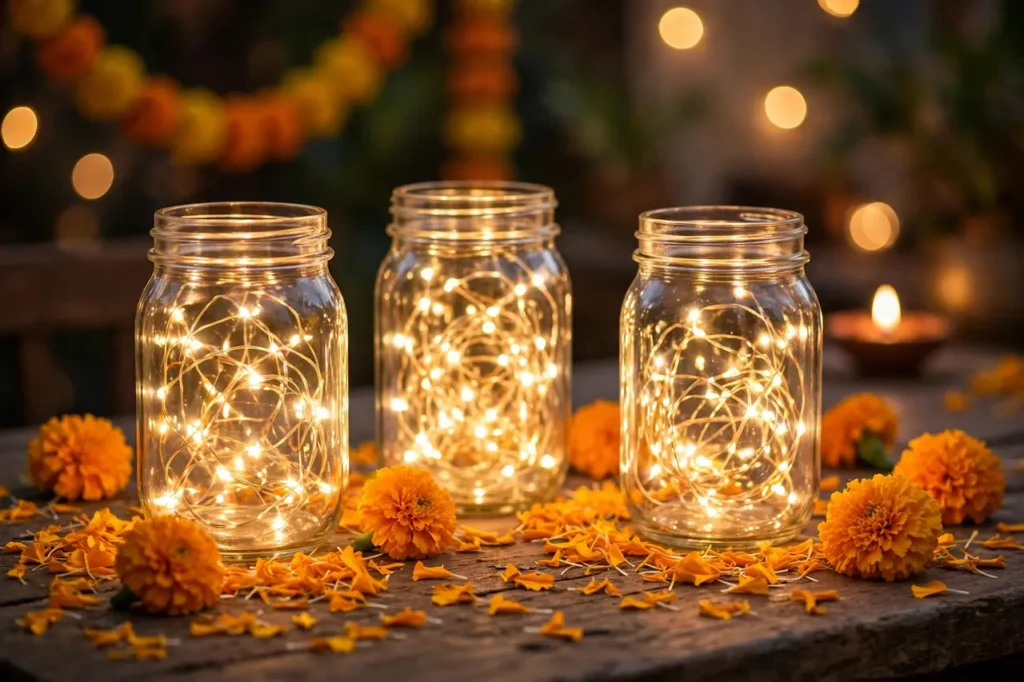
Clean glass bottles or mason jars, coil battery-operated fairy lights inside, and close the lid. Cluster three to five bottles of varying heights on a tray with petals. These glowing bottles suit shelves, tables, and bathrooms; they are endlessly reusable and take ten minutes to make.
2. Paper Lantern Cluster
Make simple paper lanterns (accordion-folded paper cylinders) in festive colors, insert LED tea lights, and hang at varying heights from the ceiling with fishing line. A cluster of seven to nine lanterns over the dining table or in a stairwell is breathtaking.
3. Diya Chandelier
Hang a sturdy branch or wooden hoop from the ceiling with strong cord. Suspend small LED diyas or tea light holders at varying lengths with fishing line. Surround with marigold garlands. This floating diya installation becomes the room’s unforgettable centerpiece.
4. Glowing Rangoli
Create your rangoli as usual, then outline it with a string of fairy lights tucked just outside the powder border, and place LED tea lights at key points within the design. Photograph at dusk; the glowing rangoli is the most-shared Diwali image for good reason.
5. Tin Can Luminaries
Punch patterns (dots, stars, diyas) into clean tin cans with a hammer and nail, place a tea light inside, and line pathways or steps. The punched patterns project magical light shapes. Paint the cans in festive colors first for daytime beauty too.
6. Marigold Light Garland
Weave battery fairy lights through a fresh marigold garland, tucking the tiny bulbs between flowers. Drape over mirrors, doorways, or the puja backdrop. Flowers plus light is the ultimate Diwali combination.
7. Floating Candle Pond
Fill a wide, shallow container with water, add flower petals, and float tea lights or small diyas. Place at the entrance or as a table centerpiece. For a grand version, use a large outdoor tub visible from the street.
8. Shadow Pattern Projector
Cut festive shapes (diyas, stars, “Shubh Diwali”) from cardboard, place in front of a bright flashlight or spotlight aimed at a blank wall. Instant custom light projections for parties; kids love operating the “projector.”
Outdoor Lighting Masterclass
Outdoor Diwali lighting deserves special attention because it faces weather, visibility, and scale challenges. Start with a plan: sketch your home’s front and mark where lights will go (roofline, windows, doorway, pathway, trees). Measure distances to plan how many light strings you need; buy ten percent extra. Choose outdoor-rated lights (look for IP44 or higher waterproof ratings) and keep all electrical connections dry and elevated off the ground. Use a central outdoor timer or smart plugs so lights turn on automatically at dusk. For rooflines, use clip hangers rather than nails to avoid damage. Outline architectural features: windows, arches, pillars, and the roof edge; outlining creates the classic “gingerbread house” glow. Add depth with trees and shrubs wrapped in lights and pathway markers. Balance brightness: the entrance should be brightest, with secondary areas slightly dimmer for hierarchy. Step across the street at night to evaluate; adjust what looks uneven. Respect neighbors: keep lights tasteful, turn off late-night flashing modes, and take down promptly after the festival. Done well, your home becomes a neighborhood landmark for five magical nights.
Electrical Safety: Non-Negotiable Rules
Beautiful lighting must be safe lighting. Follow these rules without exception. Inspect every light string before hanging: discard any with frayed wires, cracked sockets, or loose connections. Do not overload outlets; a single household circuit typically handles about 1800 watts, but keep festive lighting well below that and use multiple circuits for large displays. Use outdoor-rated extension cords and lights for all exterior installations. Keep electrical connections dry: elevate them off the ground, cover with weatherproof boxes, and never run cords through standing water. Do not run cords under rugs or through doorways where they can be pinched. Turn off all electric lights when leaving home or sleeping, unless they are on timers; use timers generously. Keep real flames away from all electrical decorations. Have a fire extinguisher accessible and know your home’s circuit breaker location. If lights trip the breaker, unplug some before resetting; repeated tripping means you are overloading the circuit. When in doubt, hire an electrician for complex installations; professional help costs less than fire damage.
Energy-Saving and Eco-Friendly Lighting
Diwali’s glow need not cost the earth. Switch to LED lights throughout: they use up to 90% less energy than incandescent strings and last for years. Use timers and smart plugs so lights run only during evening hours, not all night. Solar garden lights for pathways eliminate wiring and electricity use entirely; modern ones are bright enough for festive purposes. For traditional flames, choose clay diyas with plant-based oils over paraffin candles; the earthen lamps are biodegradable and support potters. Minimize fireworks, which cause significant air pollution; redirect the budget to better lights or sweets. After the festival, store lights carefully for reuse; the greenest light is the one you do not need to rebuy. These choices do not dim the celebration; LED fairy lights are brighter and more reliable than old incandescent strings, and solar lights add a modern eco-touch guests will admire.
Troubleshooting Common Light Problems
| Problem | Likely Cause | Fix |
|---|---|---|
| Whole string won’t light | Blown fuse, bad plug, or tripped breaker | Check fuse in plug; test outlet; reset breaker |
| Half the string is dark | One bad bulb breaking the series circuit | Replace bulbs one by one from the dark section’s start |
| Lights flicker | Loose bulb or plug; overloaded circuit | Tighten bulbs; reduce load on the circuit |
| Diyas won’t stay lit | Wind, long wick, or poor oil | Shelter from wind; trim wick to 1 inch; use quality oil |
| Timer doesn’t work | Wrong programming or dead battery | Reprogram; replace battery; test during daylight |
| Solar lights are dim | Insufficient daytime charging | Move panel to sunnier spot; clean panel surface |
| Extension cord gets warm | Overloaded cord | Unplug immediately; use heavier-gauge cord; split load |
| LED colors look wrong | Wrong color temperature purchased | Buy 2700-3000K warm white for traditional feel |
Test your entire lighting setup two evenings before Diwali, not on the day. A calm test run with time to fix problems is the difference between a glowing festival and a frustrating one. Keep spare bulbs, fuses, batteries, and one backup light string on hand; something always needs replacing.
Diwali Lighting Through the Five Days
Each of Diwali’s five days has its own lighting character, and planning day-by-day keeps the festival feeling fresh. On Dhanteras, light a single diya at the entrance (the Yama Deepam) and a few in the puja area; the mood is quiet anticipation. On Choti Diwali, expand: light diyas along the balcony and windows as decorations complete, testing your full setup. On Diwali night, go all out: every diya lit, every string glowing, the full display at its peak for the Lakshmi Puja and celebrations. On Govardhan Puja, maintain a warm but calmer display; refresh any burnt-out diyas and enjoy the glow without the frenzy. On Bhai Dooj, light a welcoming arrangement for visiting siblings, a smaller, intimate display centered on the dining and living areas. This progression builds anticipation, peaks at the right moment, and winds down gracefully. It also conserves supplies: you are not burning through all your oil and candles on day one. Photograph your home each evening to capture the evolving glow.
Smart Home Diwali Lighting
Modern smart home technology makes Diwali lighting effortless and impressive. Smart plugs let you schedule all fairy lights to turn on at dusk and off at midnight automatically, no daily remembering. Smart bulbs in existing fixtures can shift to warm festive colors or gentle candle-flicker effects via app. Voice assistants can trigger “Diwali mode”: one command dims overheads, turns on accent lights, and starts the festive playlist. Smart LED strips behind TVs, under cabinets, or along staircases add contemporary glow in any color. For outdoor displays, smart plugs with weatherproof housings handle scheduling reliably. The investment pays off beyond Diwali: the same system serves Christmas, parties, and everyday ambiance. Start small with two or three smart plugs; you do not need a full smart home to enjoy automated festival lighting. One caution: keep smart controls as a convenience layer, not a dependency; ensure someone knows how to operate lights manually if the Wi-Fi fails on Diwali night.
Lighting for Diwali Parties and Events
Hosting a Diwali party demands lighting that is both beautiful and functional. For the arrival phase, make the entrance and pathway brightest so guests feel welcomed from the street. During mingling, keep living areas warmly lit at medium intensity; people need to see each other’s faces and the food. For the puja or ceremonial moment, dim electric lights and let diyas dominate; the contrast creates reverence. For dinner, use low table lighting (tea lights, small lanterns) with soft background fairy lights; avoid overhead glare. For dancing or games afterward, slightly brighter, more colorful lighting energizes the room; this is the moment for color-changing LEDs if you have them. Practical considerations: ensure pathways, stairs, and bathrooms are well-lit for safety; keep serving areas bright enough for guests to see food clearly; and have a designated photo spot with flattering light (fairy light backdrop, no harsh overhead). For large gatherings, our 50 best Christmas party ideas guide has event lighting and layout tips that adapt to Diwali celebrations. End the night by dimming to diya-light only for a magical, intimate close.
Storing Lights After Diwali
Proper storage means your lights work perfectly next year. Before storing, test every string and discard or repair failures now, not next October. Wrap fairy lights around cardboard pieces or dedicated reels to prevent tangling; never stuff them loose into a bag. Label each bundle with its length and where it was used (“balcony railing”). Coil rope lights loosely; tight coils damage them. Store LED diyas with batteries removed to prevent corrosion; recharge rechargeable ones to about half before storing. Keep everything in a cool, dry place; moisture and heat degrade wiring and batteries. Take a photo of your outdoor light layout before taking it down; next year’s installation will take half the time. A single labeled “Diwali Lights” box, unpacked with everything working, turns next year’s decorating from a chore into a pleasure.
Diwali Lights for Different Home Styles
Your lighting should harmonize with your home’s existing aesthetic. For traditional Indian homes with warm woods and rich textiles, lean into classic combinations: brass diyas, marigold-and-light garlands, and warm fairy lights; the goal is abundance and warmth. For modern minimalist apartments, restrain the palette: warm-white fairy lights in clean lines, a few sculptural lanterns, monochrome rangoli with light accents; each piece should feel intentional. For farmhouse and rustic styles, use tin luminaries, mason jar lights, and Edison-style string lights for a cozy, handcrafted feel. For eclectic and bohemian homes, mix freely: colorful paper lanterns, multicolor fairy lights, Moroccan-style metal lanterns, and layered textiles; Diwali’s joyful maximalism suits this style perfectly. For small studios, concentrate light in one or two zones rather than spreading thin; a glowing corner beats a dim whole. The unifying principle across styles is warmth: whatever your aesthetic, warm-toned light (2700-3000K) reads as festive, while cool white reads as office-like. Match the light to the home, and the festival will feel like it belongs.
Budget Lighting: Maximum Glow, Minimum Spend
Spectacular Diwali lighting does not require a big budget. Start with what you own: last year’s fairy lights, candles, and jars. For under $25, buy two warm-white fairy light strings and a bag of tea lights; this alone transforms a living room and balcony. DIY projects multiply impact: tin can luminaries cost pennies, paper lanterns use craft paper you may own, and fairy-light bottles need only jars and one light string. Borrow before buying: neighbors and family often have spare lights. Shop after Diwali for next year; clearance sales discount lights by fifty percent or more. Prioritize high-impact spots: the entrance and balcony give the most visible glow per dollar. Use timers so lights run only when they matter, saving electricity. And remember the cheapest light of all: the clay diya, which costs almost nothing, carries the deepest tradition, and produces the most beautiful flame. A dozen diyas and one string of fairy lights, thoughtfully placed, outshine a hundred dollars of random purchases.
Watch: DIY Diwali Light Decoration Ideas
Watch this video for creative DIY Diwali light decoration ideas, including a handmade hanging lamp and series lights you can craft at home.
Frequently Asked Questions
How many lights do I need for Diwali home decoration?
It depends on your home size, but a good starting point: two to three fairy light strings (each 30-66 feet) for the balcony, one per major window, one curtain light for a feature wall, plus twenty to fifty diyas. Buy ten percent extra; you will always find another spot.
Are LED diyas as good as real ones?
For safety and convenience, yes; modern flickering LEDs look remarkably warm. For ritual authenticity, most families use real diyas at the altar and entrance, and LEDs everywhere else. The combination gives tradition where it matters and safety everywhere.
What color temperature is best for Diwali lights?
Warm white (2700-3000K) creates the traditional cozy Diwali glow and flatters skin tones and decor. Cool white looks stark and modern; multicolor suits playful areas. Stick mostly to warm white for a cohesive, elegant look.
How do I hang outdoor lights safely?
Use outdoor-rated lights (IP44+), keep connections dry and elevated, use clip hangers instead of nails, do not overload circuits, and put everything on timers. The electrical safety section covers the full checklist.
Can I leave Diwali lights on all night?
It is safer and more economical to use timers that turn lights off around midnight. Real diyas should never be left unattended; extinguish or move them before sleeping. LED installations on timers are the worry-free option.
How do I keep diyas lit in windy conditions?
Use deep, heavy diyas; place them in sheltered spots or inside glass hurricanes; trim wicks to one inch; and cluster diyas together so they shield each other. For very windy balconies, LED diyas are the practical choice.
What are akash kandils?
Akash kandils are traditional decorative lanterns hung during Diwali, originally paper and now also fabric or plastic. They symbolize the light that guides and protects the home. Hang them at entrances and balconies; they are among Diwali’s most recognizable and beloved decorations.
How can I make Diwali lighting eco-friendly?
Use LED lights, solar garden lights, timers to limit hours, clay diyas with plant oils instead of paraffin, and minimize fireworks. Reuse quality lights for years; proper storage makes them last a decade.
Why do half my fairy lights go dark?
In series-wired strings, one failed bulb breaks the circuit for everything after it. Replace bulbs one by one starting from the dark section. Modern parallel-wired LEDs avoid this problem; consider upgrading old strings.
When should I put up and take down Diwali lights?
Put lights up a week before Diwali and test them on Choti Diwali. Keep them glowing through Bhai Dooj (the fifth day), then take down the following weekend. Store carefully for next year: wrap strings around cardboard, remove batteries from LED diyas, and keep everything dry. A labeled box with an inventory list halves next year’s setup time.
Keep Exploring Festival Ideas
For more lighting and decoration inspiration, explore our outdoor light decoration guide, our roundup of the best Christmas light displays for large-scale ideas, and our New Year’s Eve decoration ideas for party lighting techniques.