Diwali transforms homes. For five days, ordinary rooms glow with diyas, doorways bloom with marigolds, and every corner feels touched by celebration. This room-by-room guide to Diwali home decoration ideas will help you decorate your entire home with intention: the entrance that welcomes guests and goddesses, the living room where everyone gathers, the dining table for festive feasts, the kitchen that produces the magic, bedrooms that feel special, the balcony glowing for the neighborhood, and the sacred puja corner. You will also find four complete decor themes to choose from, budget plans for every wallet, a lighting master plan, and a two-week decorating timeline. Whether you live in a sprawling house or a studio apartment, these ideas scale to your space, your budget, and your personal style.
Choose Your Decor Theme First
Before buying a single diya, choose an overall theme. A coherent theme makes decorating faster, cheaper (you buy with purpose), and more beautiful (everything harmonizes). Pick the one that matches your taste and existing decor.
Theme 1: Traditional Marigold Classic
The timeless look: abundant marigolds in orange and yellow, mango-leaf torans, rows of clay diyas, brass urlis, red and gold textiles. This theme suits families who love authentic, rich Diwali tradition and homes with warm wood tones. It is also the most affordable theme, as marigolds and clay diyas cost little.
Theme 2: Royal Jewel Tones
Deep emerald, ruby, sapphire, and gold: silk cushion covers, ornate brass diyas, kundan-studded accents, rich drapery. This luxurious theme suits formal living rooms and families who love opulence. Invest in reusable pieces like silk throws and brass items that return every year.
Theme 3: Modern Minimalist Glow
Clean lines, warm-white fairy lights, a few statement pieces: a single dramatic urli centerpiece, monochrome rangoli, elegant LED candles in glass holders, subtle gold accents. This theme suits contemporary apartments and design lovers. Less is more; each piece should earn its place.
Theme 4: Eco-Natural Celebration
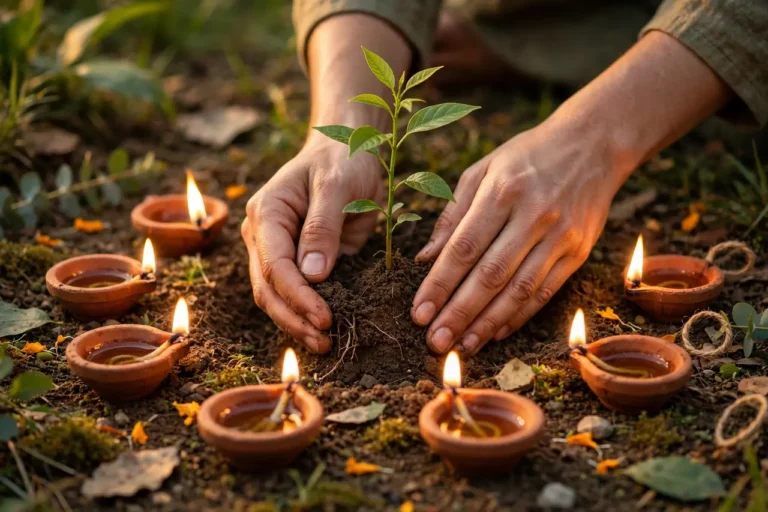
All-natural materials: clay diyas, fresh flowers, banana leaves, jute, cotton, beeswax candles, rangoli from turmeric and petals. This theme suits environmentally conscious families and creates a warm, organic aesthetic. Everything is compostable after the festival.
Once you have chosen, create a simple mood board: save photos you love, note your color palette, and list what you already own that fits. This ten-minute exercise prevents impulse buying and keeps the whole house cohesive.
The Entrance: First Impressions
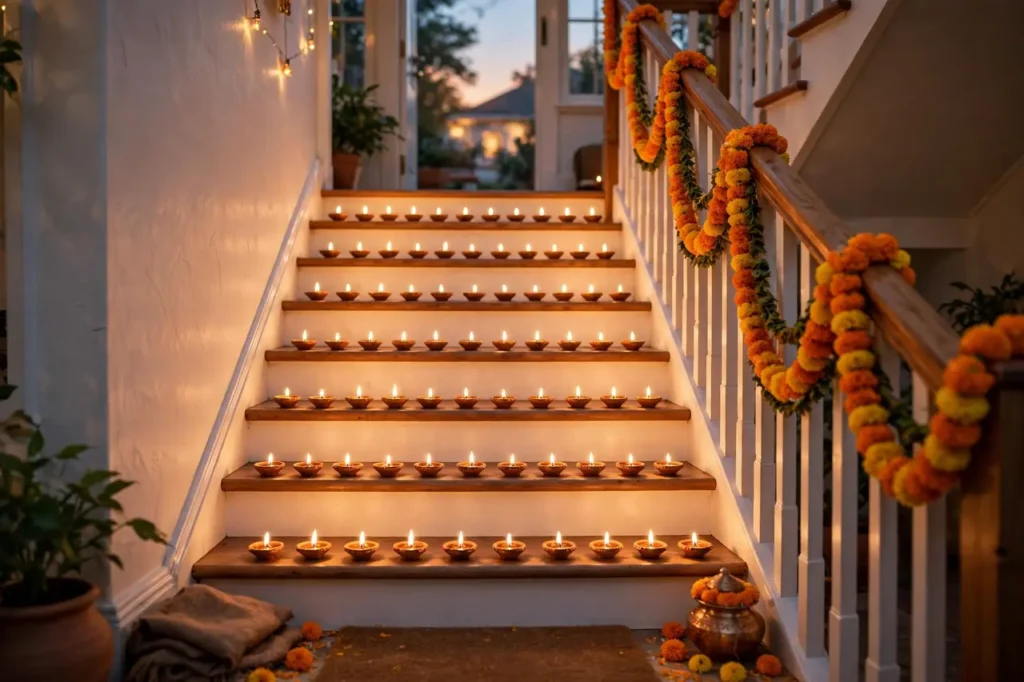
The entrance is Diwali’s most important decorated space: it welcomes guests, it is where the goddess is believed to enter, and it sets expectations for everything inside. Start with the door itself: hang a toran across the top, either traditional marigold-and-mango-leaf or a beaded, fabric, or pom-pom version matching your theme. Place matching rangoli on the floor before the door; a diya motif or floral medallion works beautifully. Flank the doorway with pairs of diyas, lanterns, or potted marigolds in decorative planters. Add a “Shubh Labh” decal or hanging, and polish the door handle and nameplate. If you have steps, line each step’s edge with diyas for a dramatic cascade of light. For apartment dwellers with shared hallways, keep decorations within your doorway area and use LED diyas where building rules require. The entrance should be complete by Choti Diwali so it welcomes the goddess on the main night. For door-decorating techniques that transfer across festivals, see our Christmas wreath ideas for the front door.
The Living Room: The Heart of Gathering
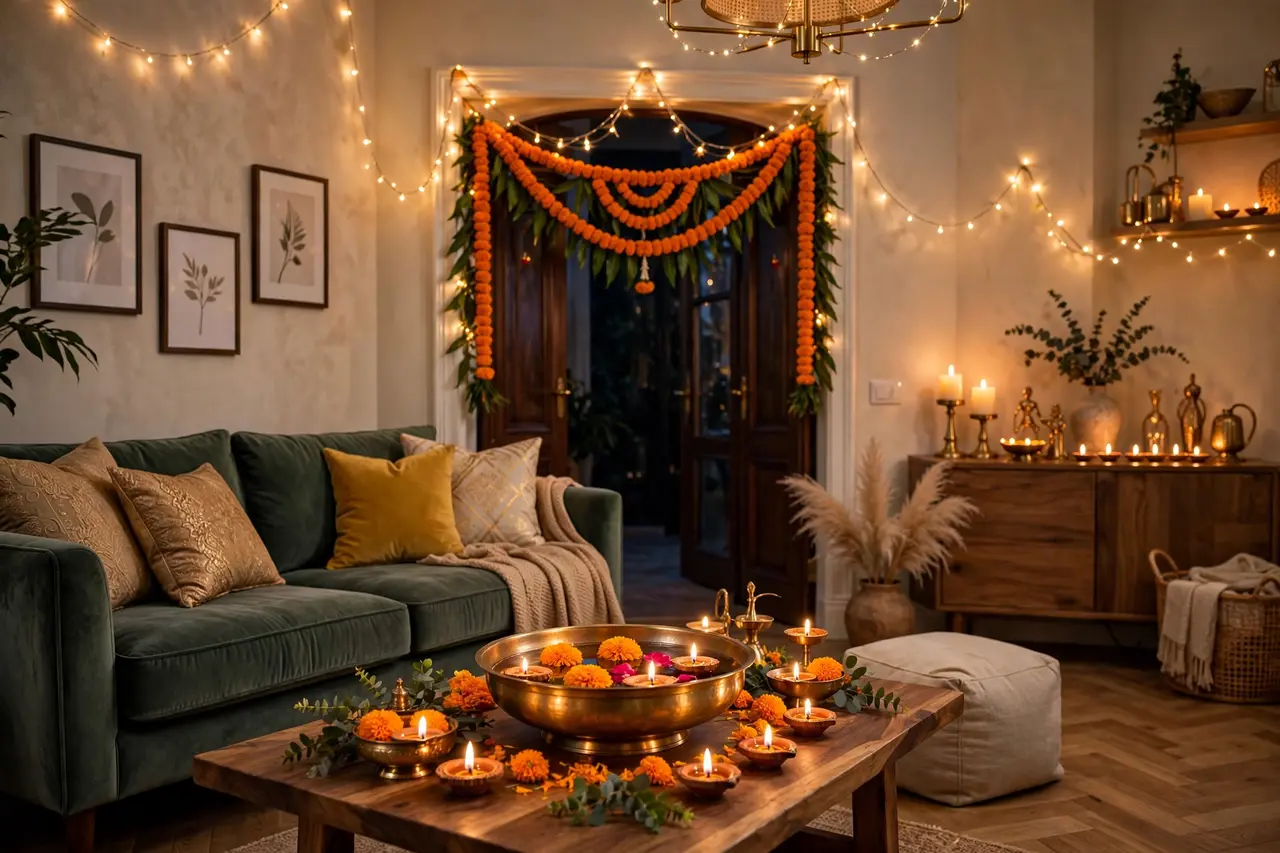
The living room hosts the puja overflow, the gift exchange, the games, and the lingering conversations; decorate it for both beauty and function. Start with lighting layers: fairy lights along curtain rods and bookshelves, diyas or LED candles on the coffee table and side tables, and a statement piece like a large urli with floating flowers and diyas. Swap cushion covers and throws for festive colors matching your theme; this single change transforms the room for very little cost. Drape marigold garlands over mirrors, photo frames, and curtain tie-backs. Clear clutter ruthlessly; festive decor shines in tidy spaces. Arrange seating to facilitate conversation and leave clear paths for the aarti procession and serving. A small side table near the entrance of the room can hold a welcome tray with sweets and water for arriving guests. If you have a fireplace or mantel, it becomes a natural focal point: line it with diyas, garlands, and framed festive art. For general seasonal styling principles, our Christmas decoration ideas guide covers light layering and color coordination that applies to any festival.
The Dining Room: Festive Feasting
The Diwali dinner deserves a table as festive as the food. Start with a tablecloth or runner in your theme colors: deep red, gold, or emerald for traditional; ivory with gold accents for modern. Create a centerpiece that is low enough for conversation across the table: a long tray of diyas interspersed with marigolds and rose petals, or a series of small urlis with floating candles. Add height at the ends with tall brass candle holders or lanterns. Use your best dinnerware; Diwali is the occasion for the good plates. Fold napkins into simple diya or lotus shapes for a delightful detail, or tie each napkin with a marigold head and ribbon. Place cards, even simple handwritten ones, make guests feel honored. Scatter petals down the table runner. Keep the centerpiece flameless or very stable if children are dining; LED tea lights in decorative holders give the glow without the worry. Plan the table a day ahead so Diwali evening is not spent ironing linens.
The Kitchen: The Engine Room
The kitchen works hardest during Diwali, so decorate it lightly and functionally. A small toran or garland on the kitchen doorway marks it as part of the celebration. Place a diya (LED for safety near cooking) on a windowsill. Keep counters clear for the cooking marathon; decoration should never compete with workspace. A bowl of fresh marigolds on the dining counter adds color without clutter. Stock the kitchen for success: sharp knives, enough storage containers for the sweets and snacks you will make, and a designated “prasad” plate kept aside. After the cooking is done and the kitchen is cleaned on Diwali evening, light a real diya near the stove to honor Annapurna, the goddess of nourishment; many families consider this small ritual essential.
Bedrooms: Personal Sanctuaries
Bedrooms are often forgotten in Diwali decorating, but waking up in a festive room extends the celebration. Change to fresh festive bed linens in rich colors or with subtle gold detailing. Drape fairy lights around the headboard or along a mirror; battery-operated strings avoid cord clutter. Place a small diya or LED candle on the nightstand with a marigold. Hang a small toran or garland on the bedroom door. For kids’ rooms, let children decorate their own space with their crafts: paper lanterns, painted diyas (LED), and their rangoli attempts. Keep bedroom decorations simple and flameless for safety; the goal is a gentle festive glow, not a second living room. A sprig of fresh flowers on the dresser and a scented sachet in the closet complete the sensory experience.
Bathrooms and Utility Spaces
Guests will see your bathrooms, so give them ten minutes of festive attention. Replace hand towels with fresh, preferably festive-colored ones. Place a small diya or scented candle (LED if unattended) on the counter with a marigold. A small bowl of potpourri or fresh petals adds fragrance. Ensure good lighting; a dim bathroom feels neglected. In utility areas like the laundry or foyer, a simple garland on the door and a clean, organized appearance suffice. These small touches signal thorough hospitality; guests notice when even the bathroom feels considered.
The Balcony and Outdoor Spaces
Outdoor decorations share your celebration with the neighborhood and create the magical streetscapes Diwali is famous for. String fairy lights along railings, around pillars, and across the ceiling; warm white is classic, multicolor is playful. Hang akash kandils (paper or fabric lanterns) from the ceiling at varying heights. Line the floor edges with diyas in sturdy holders that will not tip in breeze; cluster them in groups for wind resistance. Potted marigolds and chrysanthemums add daytime color. If you have a garden, wrap tree trunks with fairy lights and place lanterns along pathways. For safety, use outdoor-rated lights, keep electrical connections dry and off the ground, and never leave real flames unattended outdoors. Check housing society rules about balcony decorations and fireworks. Our outdoor Christmas light decoration guide has detailed techniques for weather-safe installations that work perfectly for Diwali. Step outside on Diwali night to see your home from the street; the glowing result is worth every minute of effort.
The Puja Corner: Sacred Beauty
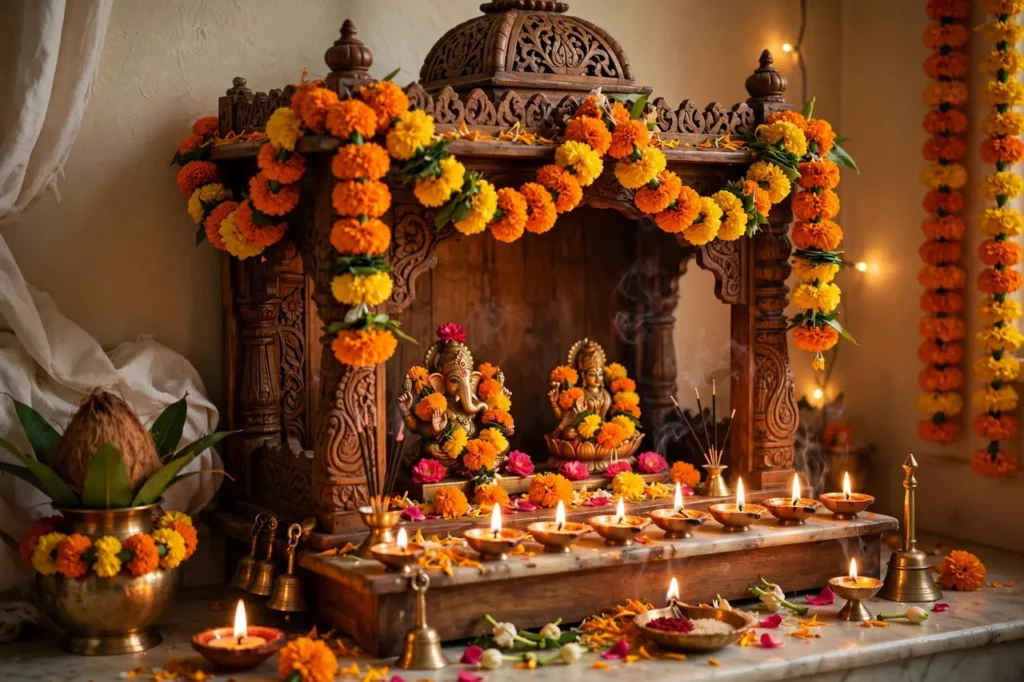
The puja space deserves the most careful decoration in the home. Drape the altar with a clean cloth in red, yellow, or gold. Arrange fresh garlands around the idols or pictures, and place brass diyas on both sides. Create a small rangoli before the altar. Keep the puja thali organized with all ritual items. Add a backdrop: a decorative cloth or toran hung behind the altar creates a temple-like focal point. Ensure good lighting for the evening rituals; a combination of diyas and a soft electric light lets everyone see clearly. Keep the area uncluttered and at a comfortable height for elders who may sit on the floor. Prepare this space on Choti Diwali so Diwali day itself is calm.
The Lighting Master Plan
Great Diwali decoration is really great lighting design. Plan in layers. Layer one, ambient: fairy lights on balconies, windows, and railings create the overall glow visible from outside. Layer two, task and accent: diyas on steps, tables, and altars provide warm points of light at eye level. Layer three, feature: one or two statement pieces, a large urli, a lantern cluster, a dramatic staircase cascade, draw the eye. Use warm white (2700-3000K) for a traditional cozy feel; mix in colored lights sparingly for playfulness. Test all lights two days before Diwali; replace dead bulbs and untangle strings while there is time. Use timers for outdoor lights so they glow every evening without daily effort. Balance real flames and LEDs: real diyas for ritual spots (entrance, altar) and LEDs for high-traffic, kid-accessible, and unattended areas. The goal is a home that glows from every angle without a single safety worry.
Textiles, Color, and Scent
Beyond lights and flowers, three elements complete the sensory transformation. Textiles: swap cushion covers, throws, table runners, and curtains for festive colors and richer fabrics; silk, velvet, and brocade instantly elevate a room. Even one statement textile, like a dramatic throw over the sofa, changes the room’s feel. Color: commit to a palette of three to four colors and repeat them in every room for cohesion; traditional palettes (red-gold-green, orange-yellow-maroon) or jewel tones (emerald-ruby-sapphire-gold) both work beautifully. Scent: Diwali should smell as good as it looks; simmer a pot of water with orange peels, cinnamon, and cloves; use sandalwood or jasmine incense; place fresh marigolds generously. Scent is the most underrated decoration; guests will remember how your home smelled long after they forget the details.
Budget Plans: Three Tiers
| Area | Budget (Under $50) | Mid-Range ($50-$150) | Luxe ($150+) |
|---|---|---|---|
| Entrance | Marigold toran, clay diyas, chalk rangoli | Add beaded toran, lanterns, potted plants | Floral installation, designer diyas, professional rangoli |
| Living room | Fairy lights, cushion covers, marigold garlands | Add urli centerpiece, silk throws, brass accents | Designer lighting, fresh flower arrangements throughout |
| Dining | Petals, diyas, festive runner | Add quality candles, napkin details, place cards | Full tablescape with florist centerpiece |
| Balcony/outdoor | Fairy lights, paper lanterns | Add akash kandils, potted marigolds | Professional light installation, lantern clusters |
| Puja corner | Fresh flowers, clean cloth, polished diyas | Add backdrop drape, brass urlis | Temple-style setup with florist garlands |
The budget tier matters less than coherence and care. A $40 marigold-and-diya home with a clear color palette looks more festive than a $300 random assortment. Spend where guests’ eyes go (entrance, living room) and save where they do not (bedrooms, utility areas). Reuse quality items yearly; the per-Diwali cost of good fairy lights and brass diyas approaches zero over time.
Two-Week Decorating Timeline
Spread the work to avoid the pre-Diwali scramble. Two weeks before: choose your theme, make a shopping list, and order online items. Ten days before: deep-clean rooms and buy fresh supplies (diyas, lights, fabrics). One week before: hang fairy lights and test them; swap textiles; make or buy torans. Five days before: start the entrance (toran, planters); prepare the puja corner backdrop. Three days before: make painted diyas and practice the rangoli design. Choti Diwali: complete the entrance rangoli, place all diyas (unlit), do a full lighting test at dusk. Diwali morning: fresh flowers, fresh rangoli touch-ups, set the dining table. Diwali dusk: light everything. This timeline turns decorating from a frantic chore into a joyful countdown.
Small Spaces: Apartments and Studios
Small homes can celebrate just as richly with scaled strategies. Focus on vertical space: hang lanterns and garlands from ceilings, use wall-mounted diya holders, and drape fairy lights along walls to draw the eye upward. Choose one statement area (the entrance wall or a corner altar) rather than spreading decorations thin across every surface. Use mirrors strategically to multiply light; a mirror behind a cluster of diyas doubles their glow and makes rooms feel larger. Keep pathways clear; in small spaces, safety and easy movement matter more than abundance. Multifunctional decor works best: a decorative tray that holds diyas in the evening and serves sweets during the day, cushions that are both festive and comfortable for everyday lounging. And remember that small spaces glow faster than large ones; a dozen well-placed diyas and one string of fairy lights can make a studio apartment feel utterly magical on Diwali night.
Diwali Decoration Shopping Guide
Smart shopping makes decorating affordable and stress-free. Start with an inventory: photograph what you own from last year (lights, diyas, textiles, torans) before buying anything; most families already own half of what they need. Make a list organized by room, with quantities; vague shopping leads to overbuying. For fresh flowers and marigolds, buy from local flower markets one to two days before Diwali for the best prices and freshness; morning markets are cheapest. For diyas, fairy lights, and rangoli colors, wholesale markets or online retailers offer the best bulk prices; buy lights with extra strings because one always fails. For textiles like cushion covers and runners, home stores run festive sales in October; measure your cushions before shopping. For brass items (urlis, diya stands), consider them investments: quality brass lasts decades and improves with polishing. Shop early for the best selection (two to three weeks before) and late for the best prices (a few days before, when vendors discount); split your list accordingly. Avoid last-minute panic buying on Diwali eve, when prices peak and choices shrink. Keep receipts and note what worked; next year’s shopping list writes itself.
Reusing and Storing Decorations
Diwali decorations are an investment that should serve for years with proper care. After the festival (most families tidy up the weekend after Bhai Dooj), clean everything before storing: wipe fairy lights, wash fabric items, polish brass, and dry clay diyas completely. Wrap fairy lights around cardboard pieces to prevent tangling; label each bundle by length and location (“balcony railing, 30 ft”). Store diyas individually wrapped in tissue inside sturdy boxes with dividers; decorated diyas are fragile and deserve padding. Keep textiles in breathable bags with dried neem leaves or lavender sachets to deter insects. Store toran bases and reusable frames flat. Keep one master box labeled “Diwali Decor” with an inventory list taped inside; future you will be grateful. Proper storage means next year’s decorating starts with unpacking treasures, not rebuying basics, and the per-year cost of quality decorations approaches zero.
Diwali Decor for Offices and Classrooms
Workplaces and schools increasingly celebrate Diwali, and the principles scale down nicely. For offices, focus on the reception and break room: a small rangoli (stencil-based, on a tray to protect floors), a toran on the main door, fairy lights in the break room, and a sweets station. Keep decorations away from workstations and walkways; check building policies on open flames (use LEDs). For classrooms, involve students: paper lantern crafts, a collaborative petal rangoli, and diya coloring pages make the celebration educational. Teachers can use Diwali to discuss light festivals around the world, from Diwali to Hanukkah to Christmas lights, building cultural understanding. Keep school decorations simple, safe (no real flames), and inclusive; explain the festival’s meaning so all students feel welcome. A modest, thoughtful display in shared spaces spreads festive cheer far beyond individual homes.
Diwali Decor Mistakes to Avoid
Even enthusiastic decorators make these common mistakes. First, buying without a plan: impulse purchases in clashing colors create visual chaos; always shop from a list tied to your theme. Second, over-decorating: every surface covered in decor feels cluttered, not festive; leave breathing space so statement pieces shine. Third, ignoring safety: real diyas near curtains, overloaded electrical outlets, and blocked pathways are accidents waiting to happen; do a safety walk-through at dusk when everything is lit. Fourth, decorating only for daytime: Diwali is an evening festival, so evaluate your decor at night with the lights on; what looks good at noon may disappear after dark. Fifth, forgetting the nose: visual beauty without festive scent feels incomplete; add incense, simmering spices, or fresh flowers. Sixth, neglecting the entrance while overdoing interior rooms; guests form their impression at the door. Seventh, leaving decorating to the last minute, which guarantees stress and stock-outs; follow the two-week timeline. Avoid these seven pitfalls and your home will look effortlessly festive, which is always the goal.
Watch: Diwali Home Decoration Ideas
See real Diwali home decorations in this video compilation, full of ideas for every room from entrance to balcony.
Frequently Asked Questions
How early should I start decorating for Diwali?
Start two weeks before with planning and shopping, hang lights and textiles one week before, and complete the entrance and fresh elements (flowers, rangoli) on Choti Diwali and Diwali morning. The timeline in this guide spreads the work enjoyably.
What are the essential Diwali decorations?
Diyas, a toran for the main door, a rangoli at the entrance, marigold garlands, and fairy lights cover the essentials. Everything else, urlis, lanterns, special textiles, builds on this foundation.
How can I decorate for Diwali on a tight budget?
Focus on marigolds, clay diyas, and homemade rangoli, which cost very little but deliver maximum festive impact. Swap textiles you already own, make paper lanterns, and borrow serving pieces. The budget table shows a full home plan under $50.
How do I decorate a small apartment for Diwali?
Use vertical space (hanging lanterns, wall garlands), mirrors to multiply light, one statement area rather than scattered decor, and multifunctional pieces. A dozen well-placed diyas can make a studio magical.
What colors are best for Diwali decoration?
Traditional palettes include red-gold-green and orange-yellow-maroon; jewel tones (emerald, ruby, sapphire, gold) suit luxurious themes; warm whites and gold suit modern minimalist homes beautifully. Pick three to four colors and repeat them throughout for cohesion.
How do I make my home smell festive for Diwali?
Simmer orange peels with cinnamon and cloves, burn sandalwood or jasmine incense, and place fresh marigolds generously. Scent is powerful; guests remember how your home smelled long after the visual details fade.
Are LED diyas acceptable instead of real ones?
Absolutely. Use real diyas for ritual spots (altar, entrance) and LEDs where safety matters: near children, pets, fabrics, and in unattended areas. Modern flickering LEDs look remarkably warm and are reusable for years.
How do I decorate outdoor spaces safely?
Use outdoor-rated lights, keep electrical connections dry and elevated, secure decorations against wind, never leave real flames unattended outside, and check housing society rules. Our outdoor light decoration guide covers weather-safe techniques in detail.
When should I take Diwali decorations down?
Most families keep decorations through Bhai Dooj (the fifth day) and tidy up the following weekend. Store reusable items carefully: wrap fairy lights around cardboard to prevent tangling, box diyas with padding, and keep textiles in breathable bags. A calm, organized takedown makes next year’s decorating a joy rather than a chore. Involve the whole family in putting things away; children who help store the decorations feel ownership of the tradition.
Can I mix Diwali decor with my everyday home style?
Yes, and you should. Choose a theme that complements your existing decor: minimalist homes suit the modern glow theme, traditional homes suit marigold classic. Festive textiles and lighting adapt to any style; the key is a coherent color palette.
Keep Exploring Festival Ideas
For more decorating inspiration, explore our Christmas decoration ideas for year-round styling techniques, our Christmas wreath ideas for the front door for entrance decor, our outdoor light decoration guide for exterior lighting, and our New Year’s Eve decoration ideas for party styling.