Colombia celebrates Valentine’s Day in September. Not as a quirk, not as a joke — as the country’s official, beloved, utterly mainstream Day of Love and Friendship, held on the third Saturday of September every year. While the rest of the world did romance in February, Colombia’s merchants did the math in 1969, moved the holiday, expanded it to include friendship, and accidentally created one of the warmest celebrations in the Americas.
El Día del Amor y la Amistad — the Day of Love and Friendship — is Colombia’s answer to a question most countries never ask: why should Valentine’s Day be only for couples? This guide covers the September tradition, the amigo secreto game that runs the holiday, and how a commercial calendar decision became a cultural treasure.
Why Colombia Celebrates Valentine’s in September
The story begins, unromantically, with a spreadsheet. In the late 1960s, Colombia — a deeply Catholic country — celebrated the Día de los Enamorados in February like everyone else. But the country’s merchant guilds, organized in the Federación Nacional de Comerciantes (FENALCO), noticed a problem: February was terrible for gift sales. The month collided with the regreso a clases — the back-to-school season — when Colombian families were pouring their money into tuition, uniforms, and school supplies. After Christmas spending and school expenses, nobody had anything left for chocolates and flowers.
September, by contrast, was a commercial desert: one of the few months in the Colombian calendar with no major celebration, no holidays, no spending peaks. In 1969, the merchants proposed the fix: move the lovers’ holiday to September — specifically, to the third Saturday of September, guaranteeing a weekend celebration with time for dinners, parties, and gatherings. The date stuck, the sales followed, and a tradition was born.
But the merchants did something smarter than just moving a date. They expanded it. The September holiday wouldn’t be just for lovers — it would be the Día del Amor y la Amistad: the Day of Love and Friendship. The reasoning was inclusive and commercial at once: why limit the gift-buying to couples when you could include friends, family, coworkers, and classmates? The whole month of September became, in effect, Colombia’s season of affection — with the third Saturday as its peak.
There’s a lovely secondary effect the merchants may not have fully anticipated: moving the holiday off February freed Colombia’s enormous flower industry to serve two peaks — February for the international export market (Colombia is one of the world’s great flower exporters, feeding the northern hemisphere’s Valentine’s demand) and September for domestic consumption. The calendar hack worked at every level.
El Día del Amor y la Amistad: More Than Romance
What makes the Colombian September celebration special isn’t the date — it’s the scope. Amor y Amistad is a hybrid of Valentine’s Day and Friendship Day, and the friendship half is taken just as seriously as the romance.
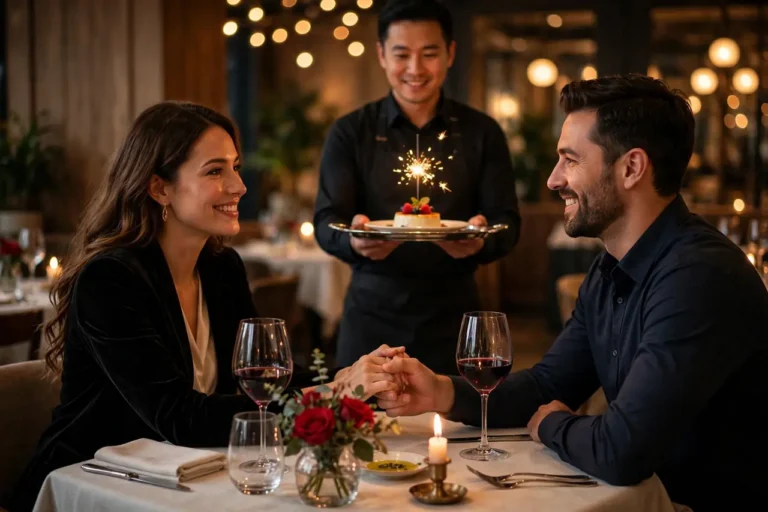
Couples celebrate much as they would on February 14 elsewhere: dinners out (book ahead — restaurants fill), flowers, chocolates, love letters, dancing. Colombian romance is famously expressive — passionate, public, unembarrassed — and the September date gives it a full stage. Some couples cap the night at the discotecas; others keep it to dinner and a walk. The forms are familiar; the month is not.
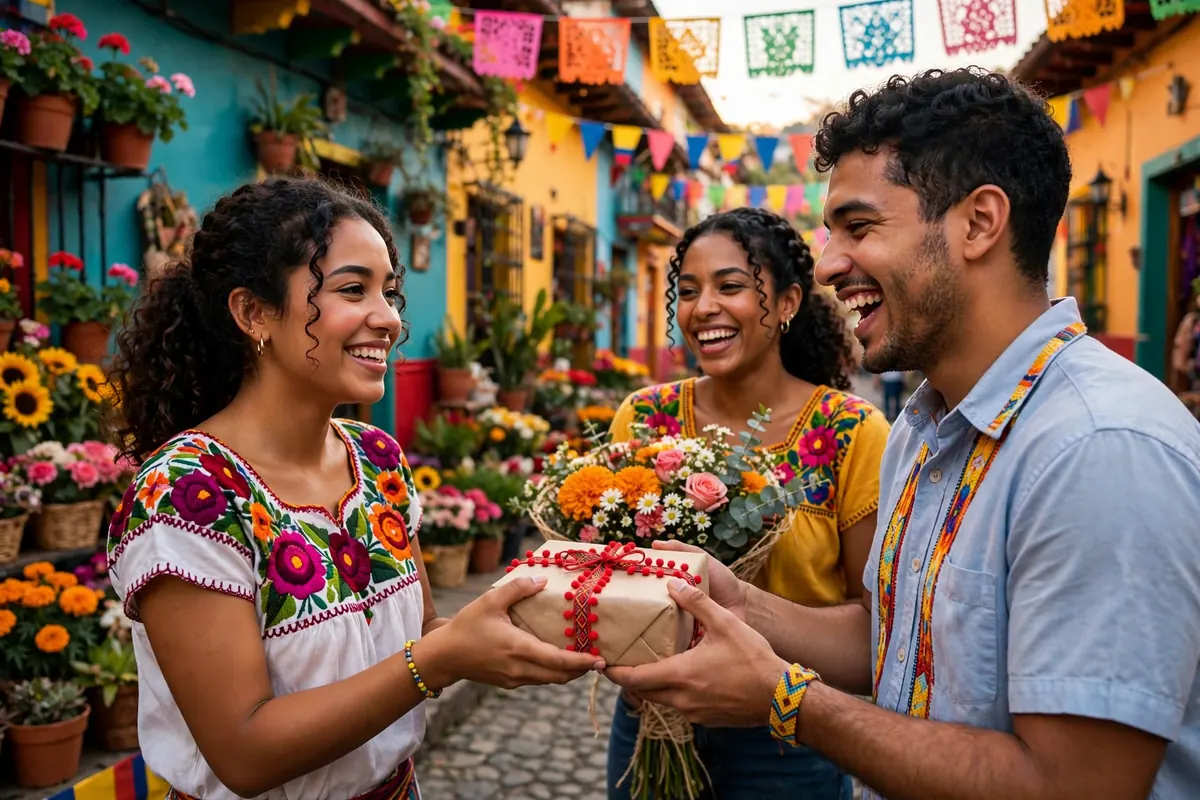
Friends are the holiday’s great innovation. Groups of friends exchange gifts, organize dinners, and — above all — play the amigo secreto game (more on that below). University friends, school classes, and social circles treat the third Saturday as a reunion date. The result is a Valentine’s with no lonely people: if you don’t have a partner, you have the amistad half, and it’s celebrated with equal enthusiasm.
Families join in: parents give to children, siblings to siblings, the whole extended network. Workplaces run their own celebrations — office amigo secreto draws are a September institution, and many companies organize lunches or after-work gatherings. The holiday’s genius is that it scales to every relationship: romantic, platonic, familial, professional. Nobody is outside it.
This inclusivity is the direct answer to Argentina’s July solution — and the two make a fascinating pair. Argentina kept February for couples and invented a separate week for everyone; Colombia moved the whole holiday and expanded it. Our guide to Semana de la Dulzura: Argentina’s Week of Sweetness in July tells the other half of the Latin American story.
Colombia’s Amor y Amistad at a Glance
| Detail | What to Know |
|---|---|
| Date | Third Saturday of September (e.g., September 19 in 2026); celebrations span the month |
| Full name | Día del Amor y la Amistad — Day of Love and Friendship |
| Moved in | 1969, by merchant guilds (FENALCO) — February clashed with back-to-school spending |
| Why September | A “dead” commercial month; gives families economic breathing room after February |
| The game | Amigo secreto (“secret friend”) — anonymous gift exchange, like Secret Santa |
| The buildup | Endulzada — weeks of anonymous sweet treats before the final reveal |
| Who celebrates | Couples, friends, families, coworkers — everyone |
| Key phrase | ¡Feliz Día del Amor y la Amistad! |
Amigo Secreto: The Game That Runs the Holiday
If Amor y Amistad has a beating heart, it’s the amigo secreto — the “secret friend” game, Colombia’s answer to Secret Santa, played not at Christmas but in September, and with a slow-burn structure all its own.
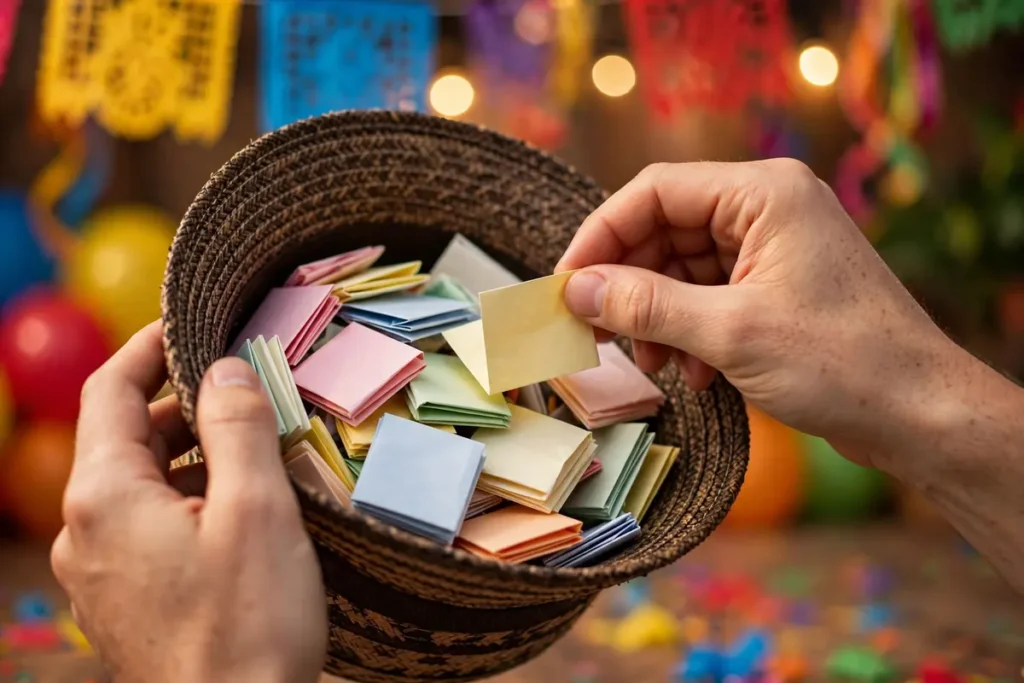
The setup is familiar: a group — friends, coworkers, classmates, family — writes everyone’s names on slips of paper, drops them in a bag or hat, and each person draws one. The name you draw is your amigo secreto, and the iron rule is secrecy: tell no one. The reveal comes later; the fun is in the meantime.
And the meantime is what makes it special. Unlike a one-shot Secret Santa, the Colombian amigo secreto traditionally runs for weeks, through a phase called the endulzada — the “sweetening.” During the endulzada, you anonymously leave your secret friend small treats: a chocolate on their desk, a note in their bag, a flower with no card. Each day brings a new tiny mystery. Some groups formalize it — el lunes algo dulce, el martes algo salado (Monday something sweet, Tuesday something salty) — with themed days for treats, jokes, and surprises.
The finale lands on the third Saturday: the reveal, when everyone gathers, identities are unmasked, and the final gifts are exchanged. The reveal party is the holiday’s emotional peak — weeks of anonymous kindness resolving into laughter, surprise, and sometimes genuine shock at who was behind the treats. Offices, schools, and friend groups across Colombia treat it as the September event of the year.
The game’s brilliance is social, not just festive. In workplaces, it humanizes colleagues; in classrooms, it includes the shy; in families, it gives everyone a secret mission of kindness. Like Denmark’s gaekkebrev game of anonymous letters, it uses secrecy to make affection safe — but where the Danish game is romantic and dyadic, the Colombian one is communal and weeks long. Both understand the same truth: anonymous kindness is the purest kind.
Watch: Amor y Amistad and the Amigo Secreto
An explainer on Colombia’s Day of Love and Friendship — the September date, the amigo secreto tradition, and the messages and phrases of the season.
How Colombia Celebrates: City by City
Amor y Amistad is a national holiday in spirit, but each city gives it a local accent:
Bogotá: Zona Rosa and the high-altitude romance
The capital celebrates big. The Zona Rosa — Bogotá’s nightlife and dining district — fills with couples at gourmet restaurants, live jazz venues, and rooftop bars. At 2,640 meters above sea level, September nights are cool enough for jackets and close dancing; the city’s restaurants run special Amor y Amistad menus, and booking a week ahead is wise. Bogotá’s celebration is the most cosmopolitan in the country — dinner, jazz, and the Andes glittering in the distance.
Medellín: salsa and the eternal spring
The “City of Eternal Spring” celebrates outdoors. Parque Lleras in El Poblado becomes the epicenter — salsa clubs, rooftop drinks, street parties — with the city’s perfect September weather doing half the work. Medellín’s Amor y Amistad is the most dance-forward in Colombia: couples compete, friends hit the floor, and the night runs late. The paisa warmth is real, and strangers get swept into the celebration.
Cali: the salsa capital doubles down
If Medellín dances, Cali — the self-declared world capital of salsa — turns Amor y Amistad into a dance festival. Clubs host couple contests and themed nights; the city’s legendary dance schools run special events. Cali’s September celebration is the most kinetic: less candlelit dinner, more dance floor.
Cartagena: the walled city’s romance
For the premium version, there’s Cartagena: dinner inside the colonial Walled City, walks along the old ramparts at sunset, boat rides in the bay. Cartagena’s Amor y Amistad is the honeymoon-grade edition — beachfront restaurants, Caribbean air, and some of the most beautiful colonial streets in the Americas. It’s the top pick for couples making a trip of the holiday.
Timeline: From Ledger Books to Love Letters
Before 1969: February, like everyone else
Colombia celebrates the Día de los Enamorados on February 14, in the Catholic tradition — but merchants notice the date underperforms commercially, crushed between Christmas spending and back-to-school costs.
1969: The merchants move the holiday
FENALCO and allied merchant guilds shift the celebration to the third Saturday of September — a commercially “dead” month — and expand the concept to the Día del Amor y la Amistad, covering friendship as well as romance. The date enters the national calendar.
1970s–80s: The tradition takes root
The September date becomes genuinely popular. The amigo secreto game emerges as the holiday’s signature ritual in schools, offices, and families. September becomes Colombia’s month of affection.
1990s–2000s: The flower industry blooms twice
Colombia’s flower exporters exploit the calendar split: February for the international Valentine’s market, September for domestic Amor y Amistad consumption. The country becomes one of the world’s great flower powers on the strength of two peaks.
2010s–today: The whole month
The celebration expands beyond the third Saturday to fill September — the endulzada weeks, the office games, the restaurant seasons. Amor y Amistad is now one of Colombia’s defining cultural exports: proof that a commercial decision, given fifty years, can become a beloved tradition.
Myth vs. Fact: Colombia’s September Valentine’s
Myth: Colombians don’t celebrate Valentine’s Day at all.
Fact: They celebrate it enthusiastically — just in September, under a different name, and with friends included. Some bilingual communities and multinationals also nod to February 14, but the September holiday is the real one.
Myth: The date was chosen for romantic reasons.
Fact: It was chosen for commercial ones — September was an empty month, and February was crowded out by school expenses. The romance came later, supplied by the people. There’s something honest about a love holiday that admits it started as a business decision.
Myth: Amor y Amistad is just a copy of Valentine’s Day.
Fact: The friendship dimension, the amigo secreto weeks-long game, the month-long endulzada, and the September date make it structurally distinct. It’s less a copy than a redesign — Valentine’s Day rethought from first principles.
Myth: The amigo secreto is just Secret Santa in September.
Fact: The multi-week endulzada — anonymous treats over days or weeks before the reveal — makes it a different, slower, more suspenseful game than the one-shot Christmas version. The buildup is the point.
Myth: It’s a public holiday.
Fact: No — it’s a working day with the cultural weight of a holiday. The third-Saturday placement means most celebration happens on the weekend anyway, which was the merchants’ plan all along.
How to Celebrate Like a Colombian
1. Expand the guest list
The core Colombian lesson: don’t limit the day to your partner. Invite friends, include family, organize the office. A Valentine’s with no lonely people is simply better. Our Galentine’s Day ideas are the natural companion — the friendship half of the holiday, ready-made.
2. Run an amigo secreto
Gather your group — friends, coworkers, family — draw names from a hat, and run the game properly: weeks of anonymous small treats (endulzada), then a reveal party with final gifts. Set a modest budget so everyone can play. It’s the single best group Valentine’s format ever devised, and it works in any country. For keeping it affordable, our thoughtful Valentine’s on a budget guide has the right tactics.
3. Learn the phrases
¡Feliz Día del Amor y la Amistad! (Happy Day of Love and Friendship!) — the day’s greeting. Gracias por ser parte de mi vida (thank you for being part of my life). Eres un amigo muy especial (you are a very special friend). Use them in cards and toasts; the Spanish carries warmth English can’t quite match.
4. Dance
The Colombian celebration moves. Salsa, broadly defined, is the holiday’s soundtrack — whether you’re in Cali or your living room. A Valentine’s that ends in dancing beats one that ends in front of a screen. This is non-negotiable.
5. Give like a Colombian
Colombian gifts skew personal over pricey: handwritten notes, surprise visits, the endulzada treats, flowers from the world’s best flower country. The principle: thoughtfulness, repeatedly, over time — not one big purchase. It’s the amigo secreto philosophy applied to romance.
The Endulzada: Weeks of Sweet Suspense
The amigo secreto reveal gets the glory, but the endulzada — the weeks-long “sweetening” that precedes it — is where the holiday’s real magic happens. Understanding the endulzada is understanding why Amor y Amistad outshines every other secret-gift tradition.
It works like this: once names are drawn (usually in late August or early September), the game begins — not with the gift, but with the mystery. Every day or two, each participant anonymously leaves something small for their secret friend: a chocolate on a desk, a note slipped into a backpack, a flower with no card, a meme printed and left where only they’ll find it. The treats are tiny; the suspense is enormous. Who’s leaving these? What will come tomorrow? Offices develop a low hum of speculation; classrooms buzz; group chats fill with theories and false accusations.
Many groups formalize the rhythm with themed days — Monday something sweet (algo dulce), Tuesday something salty, Wednesday a joke, Thursday a compliment, Friday a riddle. The structure gives shy participants a script and creative ones a stage. The unwritten rule: never get caught. Getting spotted delivering a treat is the game’s great shame — and its great comedy, because the near-misses become legend.
What the endulzada really builds is attention. For two or three weeks, every participant is thinking daily about another person: what would delight them? What would make them laugh? What’s the perfect tiny surprise? It’s a mindfulness practice disguised as a game — weeks of directed kindness, anonymous and therefore pure. By the time the reveal party arrives, the group has been quietly loving each other for a month. The final gifts are almost beside the point; the endulzada was the gift.
This is the mechanism other countries should steal. A one-day Valentine’s gives you one gesture; the endulzada gives you twenty. If you run one amigo secreto in your life, run it the Colombian way: slow, secret, and sweet — and watch what three weeks of anonymous kindness does to a group of people.
Frequently Asked Questions
When is Día del Amor y la Amistad in Colombia?
The third Saturday of September every year (September 19 in 2026). Celebrations typically span much of the month, with the amigo secreto games and endulzada building up over the preceding weeks.
Why does Colombia celebrate Valentine’s Day in September?
In 1969, merchant guilds (FENALCO) moved the holiday from February — where it clashed with back-to-school spending — to September, a commercially quiet month. They also expanded it from lovers-only to the Day of Love and Friendship. The date stuck and became a beloved national tradition.
What is amigo secreto?
Amigo secreto (“secret friend”) is Colombia’s signature Amor y Amistad game: participants draw names secretly, then spend weeks anonymously leaving their person small treats (the endulzada), culminating in a reveal party with final gifts on the third Saturday. It’s played in offices, schools, families, and friend groups.
Do Colombians also celebrate Valentine’s Day on February 14?
The September holiday is the mainstream celebration. Some bilingual communities and multinational companies acknowledge February 14, but it lacks widespread cultural significance — September is the real Valentine’s in Colombia.
What are typical Amor y Amistad gifts?
Flowers (Colombia is a world flower power), chocolates, handwritten notes, surprise visits, and the amigo secreto gifts. Personal and thoughtful beats expensive — the endulzada tradition favors small, repeated gestures over grand ones.
Is Día del Amor y la Amistad a public holiday?
No — it’s a normal working day, but celebrated with holiday-level enthusiasm. The third-Saturday rule means the main events fall on weekends by design.
The Holiday the Merchants Built and the People Kept
There’s a temptation to be cynical about a love holiday invented by a merchants’ association. Resist it. The FENALCO guilds of 1969 made a calendar decision; the Colombian people made a tradition. They took a commercial transplant and grew it into something the original never had: a Valentine’s for everyone — lovers, friends, families, coworkers — played out over weeks of anonymous sweetness and sealed with a dance.
El Día del Amor y la Amistad is proof that the origin of a tradition matters less than what people do with it. A spreadsheet moved Valentine’s Day to September. Fifty years of amigo secreto games, endulzadas, salsa nights, and September flowers made it one of the warmest days in the Americas — a holiday that leaves no one out and no affection unexpressed. ¡Feliz Día del Amor y la Amistad! — whenever you celebrate it, and whoever you celebrate it with.