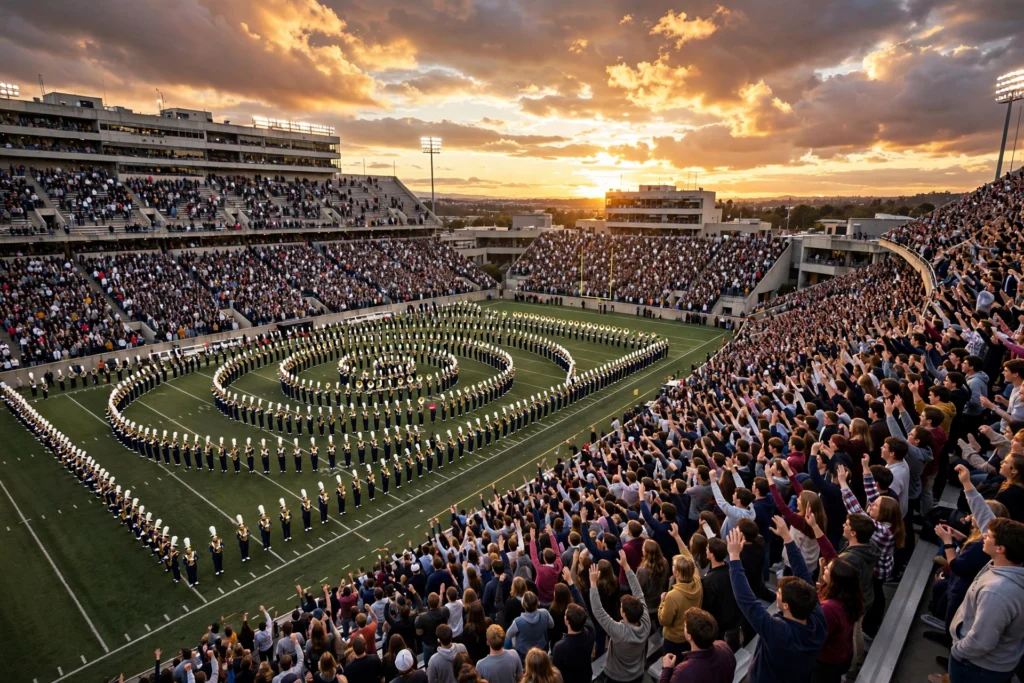
This College Football Bowl Games Guide is your complete tour of the sport’s most distinctive postseason tradition. Every December and January, dozens of bowl games transform warm-weather cities into festival sites: parades, pep rallies, beach parties, and sold-out stadiums, all building toward the College Football Playoff. Whether you are planning a bowl trip, filling out a bowl pick’em sheet, or simply want to understand what the Rose Bowl actually is, this guide covers the history, the major bowls, how teams qualify, bowl season traditions, and how to watch every game.
What Is a Bowl Game?
A bowl game is a postseason college football game played at a neutral site, typically in December or January. The name comes from the bowl-shaped stadiums that hosted the earliest games — most famously the Rose Bowl stadium in Pasadena, California, which gave its name to the entire concept.
The first Rose Bowl Game was played in 1902, making bowl games older than the NFL, the World Series in its modern form, and nearly every other American sports postseason tradition. For most of the 20th century, bowls were exhibitions that rewarded successful seasons rather than steps in a championship tournament. Teams accepted invitations, traveled to destinations like Pasadena, New Orleans, Miami, and Dallas, and played one final game to cap the year.
Today, bowls serve a dual role: most remain celebratory rewards for winning seasons, while the premier bowls — the New Year’s Six — host the College Football Playoff quarterfinals and semifinals. Understanding both roles is the key to understanding bowl season.
How Teams Qualify for Bowl Games
The standard benchmark is bowl eligibility: a team that wins at least six games in a season (with at least five against FBS opponents, under most interpretations) becomes eligible for a bowl invitation. With roughly 130 FBS teams and more than 40 bowl games, most eligible teams receive invitations — bowl season now involves the majority of the FBS.
Bowl selection follows a hierarchy. The College Football Playoff selection committee assigns teams to the playoff and the New Year’s Six bowls first. Then conferences’ contracted tie-ins fill the remaining bowls: each conference has agreements sending its teams to specific games based on standings. For example, the Big Ten and Pac-12 traditions long tied their champions to the Rose Bowl (a tradition the playoff era has modified but not erased).
Players generally embrace bowl invitations. Beyond the game itself, bowls treat teams to gift packages, tourist excursions, and a week of events — a reward for months of work. Opt-outs have become a storyline in the modern era, as some NFL-bound juniors skip non-playoff bowls to protect their draft stock, but most rosters play to win.
The New Year’s Six: College Football’s Premier Bowls
Six bowls sit atop the hierarchy, rotating as hosts of the College Football Playoff quarterfinals and semifinals. These are the games with the deepest history and the biggest stages:
Rose Bowl (Pasadena, California)
“The Granddaddy of Them All.” First played in 1902 and held annually since 1916, the Rose Bowl pairs with Pasadena’s Tournament of Roses Parade on New Year’s Day. Its sunset setting in the Arroyo Seco, with the San Gabriel Mountains behind the stadium, makes it the most visually iconic venue in the sport.
Sugar Bowl (New Orleans, Louisiana)
Played in the Caesars Superdome since 1975 (originating in 1935), the Sugar Bowl anchors New Year’s in New Orleans. The combination of a premier bowl and one of America’s great host cities makes it a bucket-list trip.
Orange Bowl (Miami, Florida)
Dating to 1935, the Orange Bowl brings postseason football to South Florida. Its history includes some of the most famous games ever played, and Miami in late December needs no sales pitch.
Cotton Bowl (Arlington, Texas)
Founded in 1937 and now played at AT&T Stadium, the Cotton Bowl represents Texas football culture at its grandest — a massive modern stadium hosting a game with deep roots.
Peach Bowl (Atlanta, Georgia)
First played in 1968, the Peach Bowl rose from a regional game to the sport’s top tier, now hosted at Mercedes-Benz Stadium in downtown Atlanta. Its charitable mission — it was founded as a fundraiser — remains part of its identity.
Fiesta Bowl (Glendale, Arizona)
Born in 1971, the Fiesta Bowl gave the sport a premier game in the desert Southwest. Played at State Farm Stadium, it has hosted some of the most dramatic finishes in bowl history.
New Year’s Six at a Glance
| Bowl | First Played | City | Signature Feature |
|---|---|---|---|
| Rose Bowl | 1902 | Pasadena, CA | Tournament of Roses Parade, sunset setting |
| Sugar Bowl | 1935 | New Orleans, LA | Superdome atmosphere, French Quarter festivities |
| Orange Bowl | 1935 | Miami, FL | South Florida setting, historic matchups |
| Cotton Bowl | 1937 | Arlington, TX | AT&T Stadium spectacle |
| Peach Bowl | 1968 | Atlanta, GA | Charitable roots, downtown festival |
| Fiesta Bowl | 1971 | Glendale, AZ | Desert setting, dramatic finishes |
The Full Bowl Season Calendar
Bowl season unfolds in three acts:
- Mid-December: the early bowls. Games with playful names and regional flavor kick off the season. These are often the most fun for neutral fans — competitive matchups without playoff pressure.
- Late December: the second wave. More prominent bowls fill the week between Christmas and New Year’s, with games nearly every day. This stretch is a sports fan’s paradise.
- New Year’s and beyond: the showcase. The New Year’s Six games anchor New Year’s Eve and New Year’s Day, followed by the playoff semifinals in early January and the national championship in mid-to-late January.
The full schedule typically includes 40+ games, meaning there is live college football on television almost daily for three weeks. For the playoff-specific schedule, see our breakdown of the College Football Playoff format.
Bowl Season Traditions Worth Knowing
- Bowl gift suites: Players receive gift packages from each bowl — a long-standing tradition that has included everything from electronics to shopping sprees.
- Parades and pep rallies: Host cities stage parades, battle-of-the-bands events, and fan festivals in the days before major bowls.
- Conference pride: Fans track their conference’s collective bowl record as a point of pride, turning every game into a referendum on league strength.
- Bowl pick’em pools: Picking the winner of every bowl game — often with confidence points — is a beloved office and family tradition.
- Senior farewells: For graduating players, a bowl is the final game of their college careers, adding emotional weight to every snap.
- Destination travel: Bowl trips double as winter vacations. Fan bases travel in the tens of thousands, turning host cities into week-long festivals.
The tailgating culture around bowl games rivals anything in the regular season — our college football tailgating guide covers the setup, food, and etiquette that make these parking-lot festivals legendary.
Planning a Bowl Trip: A Fan’s Itinerary
Attending a bowl game is one of the great American sports travel experiences. Here is how to plan one:
- Decide early, book flexibly. Bowl matchups are announced in early December. Hotel prices in host cities spike immediately — book refundable rooms as soon as your team becomes bowl eligible.
- Arrive two days early. The pregame events — parades, pep rallies, fan festivals — are half the experience. Our free outdoor events guide shares the same festival-planning principles for making the most of multi-day events.
- Budget for the full week. Between tickets, travel, meals, and events, a bowl trip is a real vacation. Set the budget before matchups are announced so you can act fast.
- Learn the local traditions. Each bowl has signature events — the Rose Parade, New Orleans’ French Quarter takeovers, beach days in Florida. Build your itinerary around them.
- Pack for the climate, not the calendar. December in Pasadena, Miami, or New Orleans can still be warm. Check forecasts, not assumptions.
How to Watch Bowl Season Like an Expert
With 40+ games, strategy helps. Prioritize the New Year’s Six and your favorite teams’ games, use a bowl pick’em sheet to give every matchup stakes, and keep an eye on opt-out news — star players skipping games changes matchups significantly. Streaming every game is straightforward with a live TV streaming service; our best streaming services guide covers the options that carry bowl season.
For families, bowl season is ideal shared viewing — the pageantry, bands, and festive atmospheres make even blowouts entertaining. Our best family events in the USA guide has more ideas for turning sports into family traditions.
Beyond the New Year’s Six: Bowls Worth Knowing
The New Year’s Six get the spotlight, but bowl season’s depth is its charm. Here are more games with real tradition behind them:
- Citrus Bowl (Orlando): Traditionally the top non-playoff destination for Big Ten and SEC teams — a New Year’s Day fixture with major-conference prestige.
- Alamo Bowl (San Antonio): Known for high-scoring thrillers and one of the best host-city experiences in bowl season, on San Antonio’s River Walk.
- Holiday Bowl (San Diego): A West Coast classic famous for wild fourth-quarter comebacks.
- Gator Bowl (Jacksonville): One of the oldest bowls (dating to 1946), with deep SEC and ACC ties.
- Sun Bowl (El Paso): Played since 1935, the second-oldest bowl game, set against the Franklin Mountains on New Year’s Eve.
- Liberty Bowl (Memphis): A mid-South staple with patriotic pageantry and strong regional followings.
- Music City Bowl (Nashville): Football plus Broadway honky-tonks — a fan-favorite road trip combining the game with live music.
- Las Vegas Bowl: The sport’s Vegas showcase, pairing bowl tradition with the entertainment capital’s spectacle.
Each bowl has a personality shaped by its city, its conference tie-ins, and its history. Part of the fun of bowl season is discovering which games match your taste — traditional pageantry, offensive fireworks, or destination travel.
Bowl Gifts: A Tradition of Their Own
One of bowl season’s quirkiest traditions is the gift suite. Each bowl provides players with gift packages — a practice dating back decades. The NCAA sets per-player value limits, but within those limits bowls compete to impress: electronics, watches, shopping sprees, and experiences have all featured over the years. Unwrapping the gift suite is a rite of passage for players, and the annual reveal of each bowl’s gifts is a minor media event. It is a small but telling symbol of what bowls are: a reward, a celebration, and a thank-you for a season’s work.
Bowl Pick’em Strategy: How to Win Your Pool
Picking all 40+ bowl winners is harder than it looks. A few strategic principles:
- Check opt-outs first. Star players skipping games — especially quarterbacks — swing matchups more than any statistic. News breaks throughout December.
- Motivation matters. A disappointed power-conference team that missed the playoff may sleepwalk; a Group of Five team thrilled to be there often plays its best game.
- Coaching changes count. Teams playing for interim coaches after a head coach’s departure are unpredictable — sometimes inspired, sometimes lost.
- Respect the trenches in December. Teams with strong offensive and defensive lines tend to travel well and handle long layoffs better.
- Use confidence points wisely. In confidence pools, save your biggest points for the most lopsided matchups and playoff games you have researched deeply.
Bowl Season Food and Culture
Each bowl city brings its culinary identity to the festivities: beignets in New Orleans before the Sugar Bowl, barbecue in Memphis and Kansas City-adjacent games, fresh citrus in Orlando, and green chile in El Paso and Arizona. Bowls lean into this with food festivals, tailgate competitions, and local-restaurant showcases throughout bowl week. If you are traveling, arrive hungry and plan at least one meal around the host city’s signature dish — it is as much a part of the bowl experience as the game itself. Our community street fairs guide captures the same festival-food spirit that defines bowl week.
Bowl Records, Trivia, and Lore
- Most Rose Bowl appearances: USC and Michigan lead the all-time appearances list, a testament to decades of conference dominance.
- The longest bowl streaks: Programs like Virginia Tech (27 straight bowls at its peak) turned annual bowl eligibility into a point of pride.
- Highest-scoring bowls: Shootouts in games like the Alamo Bowl have produced point totals that look like basketball scores.
- Bowl MVPs who became stars: Legendary NFL careers have been launched with breakout bowl performances — scouts watch bowl season closely.
- The “New Year’s Day” tradition: For generations, January 1 meant flipping between the Rose, Orange, Sugar, and Cotton Bowls — a ritual older than the Super Bowl.
- Bowl names: Corporate title sponsors have renamed many bowls, but fans stubbornly use the traditional names — a quiet rebellion of nostalgia.
Hosting a Bowl Watch Party
Bowl season is built for watch parties. Set up a bracket-style pick’em board, assign each guest a bowl to “sponsor” with themed snacks from the host city (beignets for the Sugar Bowl, citrus for the Citrus Bowl), and run confidence-point scoring across the full slate. For setup inspiration, our family movie night guide covers the screen, seating, and snack logistics that make any viewing party work, and our best streaming services guide ensures you can catch every game.
Bowl Season for New Fans: Where to Start
If bowl season’s 40+ games feel overwhelming, start here: watch your favorite team’s bowl, then the New Year’s Six games on and around New Year’s Day, then the playoff semifinals and championship. That five-to-eight-game core delivers the season’s essential story. Keep a simple pick’em sheet even if you are not in a pool — having a rooting interest in every game transforms bowl season from background television into a three-week event. And remember the human stakes: for seniors, each bowl is the last game of their college careers, which is why the celebrations — and the tears — run deeper than any exhibition has a right to produce.
Frequently Asked Questions
How many bowl games are there?
There are typically more than 40 bowl games each season, involving the majority of the roughly 130 FBS programs.
What does bowl eligible mean?
A team that wins at least six games in a season is generally considered bowl eligible and can accept an invitation to a postseason bowl game.
What are the New Year’s Six bowls?
The Rose, Sugar, Orange, Cotton, Peach, and Fiesta Bowls. They rotate as hosts of the College Football Playoff quarterfinals and semifinals.
Do bowl games count toward the national championship?
The New Year’s Six bowls that host playoff rounds do. Other bowl games are standalone exhibitions that do not affect the championship race, though they matter enormously to the participating programs.
What is the oldest bowl game?
The Rose Bowl, first played in 1902 and held annually since 1916, is the oldest college football bowl game.
Why do some star players skip bowl games?
NFL-bound players sometimes opt out of non-playoff bowls to avoid injury before the draft. It is a modern development that has sparked ongoing debate about the bowls’ significance.
How are bowl matchups decided?
The playoff committee places teams in the playoff and New Year’s Six first; then conference tie-in contracts fill the remaining bowls based on final standings, with bowls selecting among eligible teams from their contracted conferences.
What happens at bowl week events?
Teams enjoy gift suites, community service outings, tourist excursions, parades, and pep rallies in the days before the game — a full week of programming that makes bowls as much festival as football.