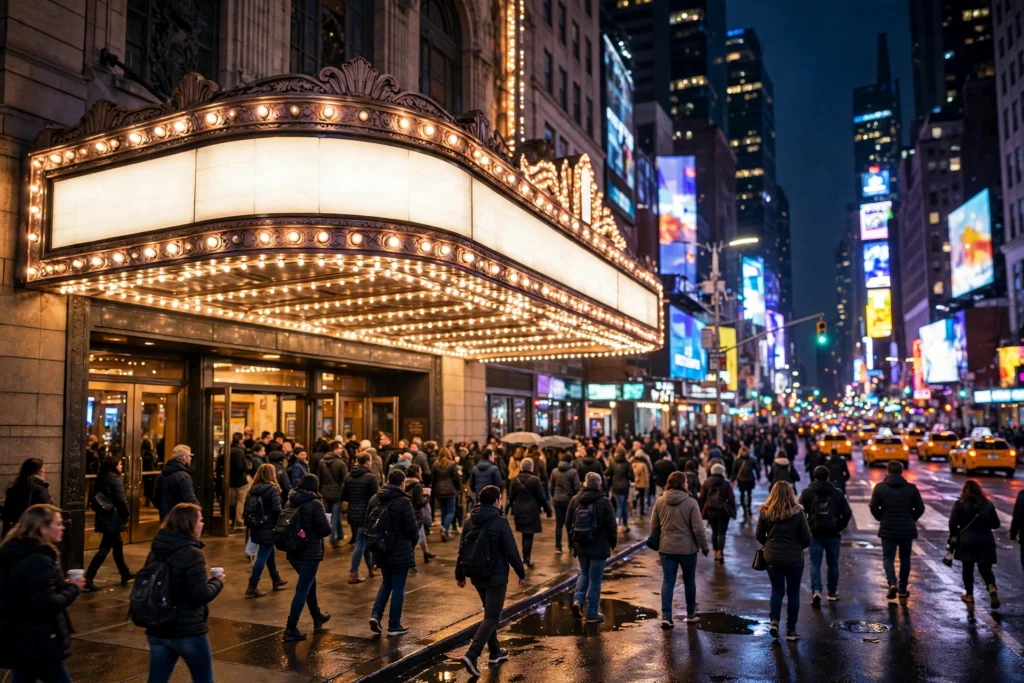
Broadway has a reputation for eye-watering prices — and at face value, it earns it. Premium seats to the biggest hits can top $300, and even standard orchestra tickets often run $150 or more. But here is what the box offices don’t advertise: a huge share of Broadway seats sell every night at a fraction of face value, through lotteries, rush tickets, discount codes, and memberships that anyone can use. How to Get Cheap Broadway Tickets is easier than most people think — this guide covers every legitimate strategy, from the famous $10 Hamilton lottery to the membership that unlocks $11 seats.
One important note before we start: prices and policies shift by show and season, so always confirm details on the show’s official site or the platform’s current terms. But the playbook below has worked for years, and the core strategies — lotteries, rush, TKTS, and timing — are structural features of how Broadway sells tickets, not fleeting loopholes.
Strategy 1: Enter Digital Lotteries (Tickets From $10)
Digital lotteries are the single best deal on Broadway. Dozens of shows run them: you enter online (usually the day before or morning of the performance), winners are drawn randomly, and each winner can buy up to two tickets at a steep discount — typically $30 to $50, with some as low as $10.
How it works in practice: Most lotteries run through the show’s official site or platforms like Lucky Seat and Broadway Direct. Entry windows are usually short (a few hours), and you will typically have 30 to 60 minutes to complete your purchase if you win. The most famous is Hamilton‘s $10 lottery — the odds are long, but people win it every single day.
Maximize your odds:
- Enter every lottery, every day — there is no limit across different shows, and entering takes two minutes per show.
- Wednesday matinees have the best odds (lowest demand of the week).
- Some lotteries let you enter for one or two tickets — requesting a single ticket can improve your odds.
- Set a daily phone reminder. Consistency is the whole game: regular entrants win regularly.
Strategy 2: Rush Tickets (Same-Day Discounts, No Luck Required)
Rush tickets are discounted same-day tickets sold on a first-come, first-served basis — no lottery luck needed. If you are early enough, you are guaranteed a ticket. Prices typically run $35 to $65, a massive discount off face value.
Two types of rush:
- In-person rush: Line up at the box office when it opens (usually 10 a.m.). For hot shows, arrive 1 to 2 hours early. Limits are usually one or two tickets per person. Bring cash — some shows are cash-only for rush.
- Digital rush: Shows release a limited number of discounted tickets online at a set time (often 10 a.m.) through TodayTix or the show’s site. Faster than waiting in line, but they sell out in minutes.
- Student rush: Many shows offer additional discounts with valid student ID — always ask at the box office, even if it is not advertised.
Rush is the most reliable same-day strategy in this guide. If you are flexible about which show you see, you can almost always find rush seats to something excellent. Pair this with our best Broadway shows for first-timers list so you have backup picks ready.
Strategy 3: The TKTS Booth (20–50% Off Same-Day)
The iconic TKTS booth under the red steps in Times Square — run by the nonprofit Theatre Development Fund — sells same-day Broadway tickets at 20 to 50 percent off face value, plus a small per-ticket service fee. It is the classic tourist move for a reason: it works.
Locations and hours:
- Times Square (Broadway & 47th St): Evening tickets Mon–Sat 3 p.m.–8 p.m., Sun 3 p.m.–7 p.m.; matinees Wed & Sat 10 a.m.–2 p.m., Sun 11 a.m.–3 p.m.
- Lincoln Center (David Rubenstein Atrium): Usually shorter lines; Tue–Sat 12 p.m.–7 p.m., Sun 12 p.m.–6 p.m.
- Downtown Brooklyn (MetroTech): Tue–Sat 11 a.m.–6 p.m.; also sells next-day matinee tickets.
TKTS tips: Go early in the selling window for the best selection. Be flexible — the biggest hits rarely appear, but excellent shows always do. Check the boards outside for the day’s offerings before committing to the line. And remember the service fee (a few dollars per ticket) supports theater accessibility programs.
Strategy 4: Discount Codes and BroadwayBox
Many shows quietly offer 20 to 40 percent off through promotional codes distributed via BroadwayBox, Playbill, and theater mailing lists. These are legitimate, show-authorized discounts — not scalper tricks.
- BroadwayBox.com aggregates current discount codes; most require a free membership to reveal the code.
- Playbill Club and show email lists regularly send subscriber-only offers.
- Goldstar sells discounted tickets to shows, concerts, and events, often with solid Broadway inventory.
- Always Google the show name plus “discount code” before paying full price — it takes ten seconds and frequently pays off.
Strategy 5: Join TDF Membership ($11–$60 Tickets)
The Theatre Development Fund’s membership program is the best-kept secret in New York theater. For about $40 a year, qualifying members (students, teachers, freelancers, retirees, veterans, government workers, nonprofit employees, and more — the eligibility list is broad) get access to deeply discounted tickets: Broadway shows from $11 to $60, plus Off-Broadway and Off-Off-Broadway.
The catch: sold-out blockbusters rarely appear, and inventory favors previews, new shows, and productions with seats to fill. But for adventurous theatergoers, it is absurd value — two TDF tickets can cost less than one full-price seat. If you live in or regularly visit New York, join. Full stop.
Strategy 6: TodayTix and Last-Minute Apps
TodayTix is the dominant last-minute theater app — it aggregates lotteries, rush tickets, and discounted inventory in one place, with a clean interface and mobile tickets. It occasionally adds small service fees, but the convenience of entering five lotteries from your phone while eating breakfast is worth it.
Also worth knowing: Theatr, a resale app where tickets sell at face value or less, often has genuine last-minute deals from sellers who can’t use their seats. Unlike traditional resale sites that mark everything up, Theatr’s model favors buyers.
Strategy 7: Buy at the Box Office (Skip the Fees)
This is the simplest tip on the list and one of the most overlooked: buying directly at the theater’s box office eliminates the ticketing service fees that can add $15 to $30 per ticket online. If you are already in the Theater District, walk up and ask. Box offices also know about unadvertised discounts — student, military, senior, and under-35 deals that never appear online. Always ask: “Do you have any discounts available today?” The worst answer is no.
Strategy 8: Time It Right
When you go matters as much as how you buy:
- Weekday evenings (Tue–Thu) are consistently cheaper than weekends, with better lottery odds and shorter rush lines.
- January and September bring Broadway Week — the famous buy-one-get-one-free promotion covering dozens of shows. It is the deepest discount event of the year.
- Kids’ Night on Broadway (usually February) offers a free ticket for under-18s with each full-price adult ticket, plus restaurant deals.
- Previews (performances before official opening night) are often priced lower — and you might see a future hit before the reviews land.
- Avoid holiday weeks (Christmas, Thanksgiving, spring break) when demand — and prices — peak.
Strategy 9: Consider Off-Broadway
Some of the best theater in New York isn’t on Broadway at all. Off-Broadway productions — at venues like the Public Theater, Atlantic Theater Company, and New World Stages — regularly transfer to Broadway after acclaimed runs (Hamilton itself started at the Public). Tickets often run under $40, the houses are intimate, and the work is frequently more adventurous. Our best Off-Broadway shows guide is the place to start.
Strategy 10: Standing Room and Partial View
For sold-out hits, ask about standing room — many shows sell a limited number of standing-room tickets at the back of the orchestra for $30 to $50 once a performance sells out. It is not for everyone (you will stand for the full show), but for a must-see production, it beats not going. Similarly, “partial view” or “limited view” seats — often just a slightly obstructed angle — can discount premium shows by half. For dialogue-driven shows, a partial-view seat is barely a compromise.
Strategy 11: Groups, Memberships, and Subscriptions
- Theater subscriptions: Companies like Roundabout Theatre Company and Manhattan Theatre Club offer membership packages with discounted tickets across a season — excellent value if you will see three or more shows.
- Group sales: Bringing 8 to 12+ people? Group sales departments offer discounts that individuals can’t get. Coordinate with friends.
- Ticket papering services: Services that fill unsold seats offer members cheap tickets (small per-ticket fees) to shows, concerts, and events with soft sales. Availability varies, but the deals are real.
Strategy 12: Follow Shows on Social Media
Follow your target shows and Broadway deal accounts on Instagram and TikTok. Shows announce flash lotteries, promo codes, and last-minute rush releases to followers first. During slow sales weeks, social-exclusive codes appear with surprising frequency. It costs nothing and takes thirty seconds.
Discount Strategy Comparison
| Strategy | Typical Price | Effort | Best For |
|---|---|---|---|
| Digital lottery | $10–$50 | Low (2 min/day) | Biggest hits, flexible planners |
| Rush tickets | $35–$65 | Medium (early arrival) | Reliable same-day deals |
| TKTS booth | 20–50% off | Medium (wait in line) | Spontaneous tourists |
| Discount codes | 20–40% off | Low | Advance planners |
| TDF membership | $11–$60 | Low ($40/year) | NYC locals, frequent goers |
| TodayTix / apps | Varies | Low | Phone-first buyers |
| Box office direct | Saves $15–$30 in fees | Low | Everyone in the district |
| Broadway Week (2x/year) | Buy one, get one free | Low | January & September trips |
| Off-Broadway | Under $40 | Low | Adventurous theatergoers |
| Standing room | $30–$50 | Medium | Sold-out must-sees |
What to Avoid: Ticket Scams
- Never buy from street scalpers outside theaters — counterfeit tickets are common, and you have zero recourse.
- Check resale prices against face value. Some resale sites charge 2–3x face value for tickets you could get at the box office. Always check the official price first.
- Beware fake discount sites. Only use established platforms (TodayTix, BroadwayBox, TKTS, TDF, Goldstar). If a site you’ve never heard of promises 70% off Hamilton, it is a scam.
- Do not buy screenshots of tickets. Mobile tickets must be transferred through the official platform — a screenshot proves nothing.
How Broadway Ticket Pricing Actually Works
To beat the system, it helps to understand it. Broadway ticket prices are not fixed — they are set per performance by the show’s producers, and they move with demand.
Face Value, Dynamic Pricing, and Premium Seats
Face value is the printed price for a seat at a given performance — what the box office charges with no markup. But most shows now use dynamic pricing: the same seat costs more on Saturday night than Tuesday afternoon, more in December than in September, more as a performance sells out. This is why “how much are Broadway tickets?” has no single answer — prices are a moving target by design.
Premium seats are the best orchestra locations, priced far above standard — sometimes double or triple. They exist so high demand converts to revenue rather than scalper profit. You almost never need them: standard orchestra and front mezzanine are superb.
The Fee Problem
Online ticket platforms add service fees, facility charges, and order processing fees that can inflate a $99 ticket to $130+. These fees are largely avoidable: buy at the box office in person (no fees), use the show’s official site rather than aggregators when possible, and beware resale sites that stack their own markups on top. A $150 resale ticket might have a $99 face value — always check the official price first.
Why Discounts Exist at All
Here’s the open secret: Broadway theaters make money on full houses, not full prices. An empty seat earns nothing, so shows would rather sell it at $40 via lottery than leave it empty. Lotteries, rush, TKTS, and discount codes aren’t charity — they’re yield management. Understanding this reframes the whole game: the discounts are structural, reliable, and available to anyone willing to be flexible. The strategies in this guide aren’t loopholes; they’re how the business works.
Planning a Multi-Show Broadway Trip on a Budget
Seeing three or four shows in one trip is the dream — and it’s very doable on a budget with the right structure:
- Anchor one must-see. Buy your top-priority show in advance at the best price you can find (discount code or off-peak performance). This removes stress; everything else can be opportunistic.
- Lottery the rest daily. Enter every digital lottery each morning of your trip. With 3–4 days of entries across a dozen shows, most visitors win at least once.
- Use a matinee-evening double. A Wednesday or Saturday matinee plus an evening show lets you see two productions in one day — matinees are cheaper, and you’ll be amazed how much energy you have.
- Mix Broadway and Off-Broadway. One big Broadway night plus one Off-Broadway discovery delivers the full New York theater experience at a fraction of the two-blockbuster cost.
- Stay near the district. Theater District hotels are pricey, but staying within walking distance saves taxi/subway time between shows — and lets you hit box offices in person for fee-free tickets.
A realistic budget for a 3-day, 4-show trip: one advance ticket ($80–$120 with a discount code), two lottery/rush wins ($30–$65 each), and one Off-Broadway ticket ($40–$60) — roughly $200–$300 total for four shows. That’s less than a single premium Hamilton seat.
More Theater Guides
Now that you know how to pay less, pick what to see: our best Broadway shows for first-timers, the best Off-Broadway shows, and Broadway touring shows if you would rather catch a hit in your hometown.
Frequently Asked Questions
What is the cheapest way to see a Broadway show?
Digital lotteries ($10–$50) are the cheapest legitimate option, followed by TDF membership tickets ($11–$60) for qualifying members and rush tickets ($35–$65). Entering multiple lotteries daily is free and takes minutes.
How far in advance should I buy Broadway tickets?
For blockbusters like Hamilton, book as early as you can commit — premium dates sell out months ahead. For most shows, 2 to 4 weeks out is plenty, and same-day strategies (lottery, rush, TKTS) work best with total flexibility.
Are Broadway lotteries legitimate?
Yes — they are run by the shows themselves (or authorized platforms) as official discount programs. Stick to the show’s official website, TodayTix, Lucky Seat, or Broadway Direct, and never pay anyone to “enter you” in a lottery.
What is Broadway Week?
A twice-yearly promotion (typically late January and September) offering buy-one-get-one-free tickets to dozens of Broadway shows. It is the single deepest discount event on the Broadway calendar — plan trips around it if you can.
Can you get cheap tickets to Hamilton?
Yes. The $10 digital lottery runs daily, and rush/standing-room options exist. It takes persistence — enter every day of your trip — but winners are drawn daily and people win constantly.
Is TKTS worth the wait?
For spontaneous theatergoers, absolutely — 20 to 50 percent off face value for same-day shows, with the Lincoln Center location usually faster than Times Square. Go early in the selling window and stay flexible about which show you see.