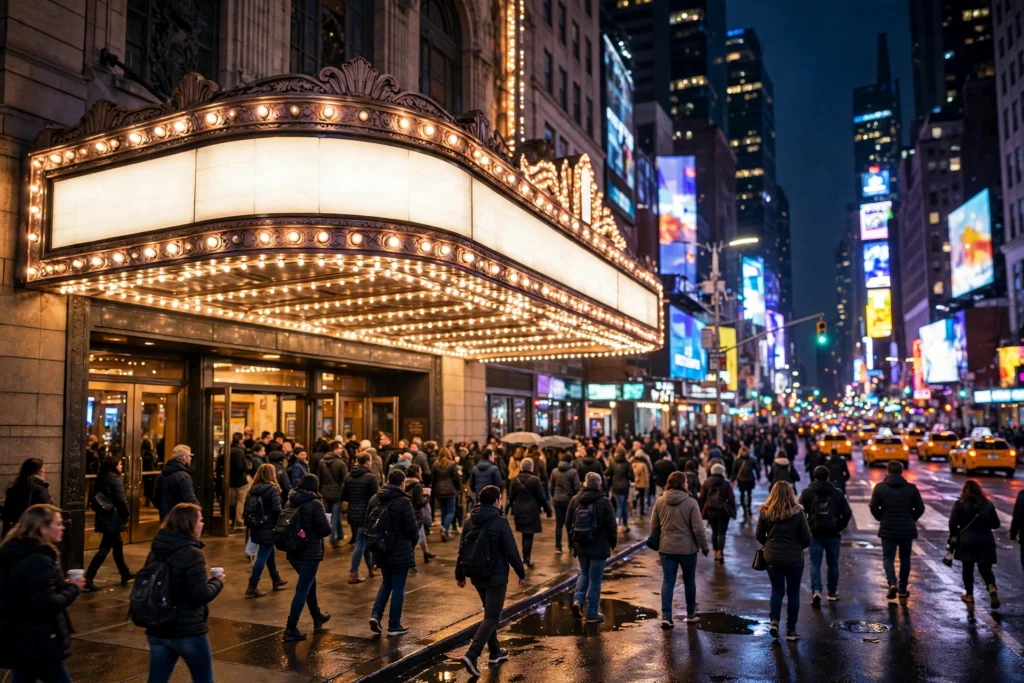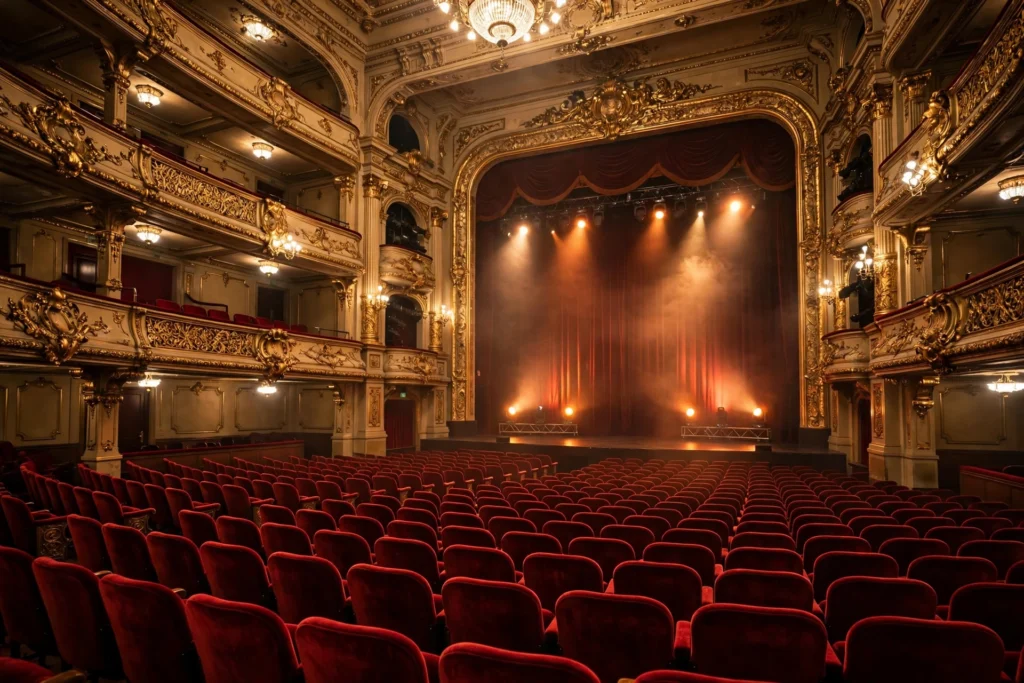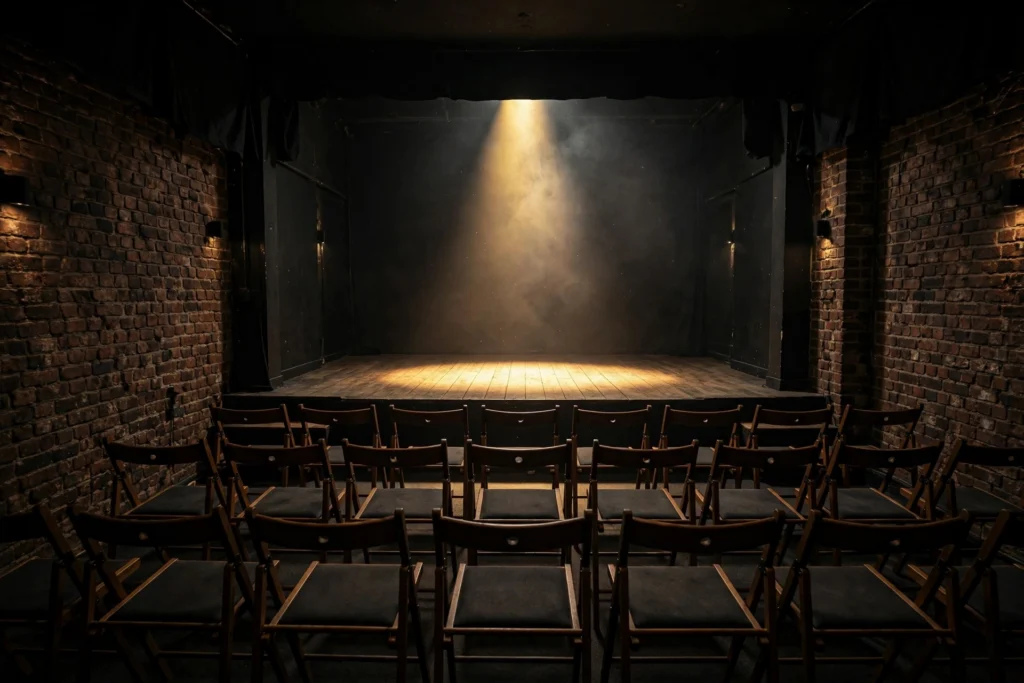
Every legendary comedian you love learned to be funny in front of a live audience — and the best place to watch that happen is an improv comedy club, where the show is invented on the spot from audience suggestions and no two nights are ever the same. From the Chicago stage that launched Tina Fey and Stephen Colbert to the Los Angeles rooms where SNL scouts sit in the back, these Best Improv Comedy Clubs in the USA are where comedy history gets made nightly — usually for less than the price of a movie ticket.
Improv comedy comes in flavors. Short-form improv (think Whose Line Is It Anyway?) is fast games and quick laughs. Long-form improv builds entire plays from a single suggestion — funnier, weirder, and more theatrical. The clubs below do both, plus sketch comedy (written and rehearsed, like SNL). Most offer classes too, if watching makes you want to try it.
Chicago: Where Improv Was Born
1. The Second City — Chicago, IL
Why go: The mothership. Founded in 1959, The Second City invented long-form improv as a theatrical art and launched an absurd share of American comedy: Bill Murray, John Belushi, Dan Aykroyd, Gilda Radner, Tina Fey, Steve Carell, Stephen Colbert, Keegan-Michael Key. The Mainstage revue — sketch plus improv, updated continuously — remains the gold standard. The building on Wells Street houses multiple stages, so several shows run nightly.
Good to know: Tickets are very reasonable for the history involved. The late-night improv sets are looser and often funnier than the polished revues. Book ahead for weekends — it still sells out.
2. iO Theater (formerly ImprovOlympic) — Chicago, IL
Why go: The other pillar of Chicago improv — the long-form laboratory where the Harold (improv’s signature form) was developed. If Second City is the polished revue, iO is the experimental workshop: rawer, stranger, frequently brilliant. Generations of SNL writers came through here.
Good to know: The theater has relocated and evolved over the years — check the current venue before going. Shows are cheap and the talent density is remarkable.
3. The Annoyance Theatre — Chicago, IL
Why go: Chicago’s punk-rock improv theater — the anti-establishment alternative that produced its own wave of stars. The style here is more aggressive, more physical, and more likely to go gloriously off the rails. A favorite of comedy nerds who find the big institutions too polished.
New York: Improv Capital East
4. Upright Citizens Brigade (UCB) — New York, NY
Why go: Founded by Amy Poehler, Matt Besser, Ian Roberts, and Matt Walsh, UCB became the defining improv institution of the 2000s — the pipeline that fed SNL, The Daily Show, 30 Rock, and half of modern TV comedy. The style is fast, smart, game-driven long-form. Shows famously run free to $10, making it the best entertainment deal in New York.
Good to know: UCB’s New York presence has shifted venues over the years — verify the current theater location before planning your night. The classes are as legendary as the shows.
5. The Peoples Improv Theater (The PIT) — New York, NY
Why go: The scrappy downtown rival to UCB — equally talented, slightly weirder, with a beloved community vibe. The PIT’s musical improv and late-night experimental slots are particular highlights. Tickets run free to $15, and the bar downstairs makes it a full night out.
6. Magnet Theater — New York, NY
Why go: Founded by UCB veterans, the Magnet refined long-form into a precise, musical, ensemble-driven art. The musical improv here — full improvised musicals with a live pianist — is astonishing. Smaller and more intimate than the big rooms, with a devoted following.
7. Comedy Cellar — New York, NY
Why go: Okay, this is primarily a stand-up club, not improv — but it belongs on any comedy pilgrimage. The MacDougal Street original (plus the Village Underground and other rooms) hosts the finest stand-up lineup in the world nightly, with unannounced drop-ins from the biggest names in comedy. The Olive Tree Cafe upstairs is part of the ritual. If you only do one comedy night in New York, purists will tell you to make it this one.
Good to know: Two-item minimum, and the original room is tiny — reservations are essential. The secret shows (unannounced lineups) are legendary.
Los Angeles: Improv Goes Hollywood
8. The Groundlings — Los Angeles, CA
Why go: The West Coast’s answer to Second City — the sketch and improv school that produced Will Ferrell, Kristen Wiig, Melissa McCarthy, Maya Rudolph, and Lisa Kudrow. The Sunday Company and Main Company shows are sketch-driven with improv woven in, performed in an intimate Melrose Avenue theater. The alumni wall alone is worth the trip.
Good to know: The Groundlings’ style leans character-driven and theatrical — bigger performances than the naturalistic Chicago style. Classes have years-long waitlists; shows are easy to get into by comparison.
9. UCB (Los Angeles) / West Coast Improv Scene — Los Angeles, CA
Why go: UCB’s Los Angeles theater (and its successor spaces in the LA improv ecosystem) brought the New York long-form style west, creating a hybrid scene where TV writers perform weekly. The show lineups read like TV credits — because they are. For visitors, an LA improv night often means watching people whose shows you already love.
10. The Comedy Store — Los Angeles, CA
Why go: Like the Cellar, this is stand-up rather than improv — but no comedy club list is complete without the Sunset Strip institution where Richard Pryor, Robin Williams, Jim Carrey, and Sam Kinison became legends. The Main Room, the Original Room, and the Belly Room run simultaneous shows nightly. You will see future stars workshopping material between the famous faces.
Beyond the Big Three
11. Dallas Comedy Club / Improv Across America
Why go: Great improv isn’t confined to Chicago, New York, and LA. Dallas Comedy Club (Deep Ellum), the Philly Improv Theater (PHIT) in Philadelphia, Washington Improv Theater in D.C., and HUGE Theater in Minneapolis all run excellent long-form scenes with local character. The ticket prices are lower, the crowds are enthusiastic, and the talent is real — many performers trained at the big institutions before coming home.
Good to know: Search “[your city] improv theater” — nearly every major metro has at least one dedicated improv house now, and the quality floor has never been higher.
12. Take a Class
Why go: The twelfth entry isn’t a club — it’s the experience. Every theater on this list offers beginner improv classes (usually 6–8 weeks, a few hundred dollars), and a Level 1 class will change how you watch comedy forever. You’ll learn the “yes, and” principle, meet funny people, and gain total respect for what the pros do nightly. Many students describe it as unexpectedly life-changing — cheaper than therapy, funnier too.
Improv Night: Practical Tips
- It is cheap. Most improv shows run $5–$15. This is the best entertainment value in American nightlife — plan a full night (dinner + show) for the price of one Broadway balcony seat.
- Late shows are looser. The 10 p.m. and midnight slots are where performers experiment. If you want polish, go early; if you want chaos, go late.
- Shout good suggestions. “Toothpaste” is a bad suggestion. Specific, visual, evocative suggestions (“a lighthouse keeper’s retirement party”) make better shows. The performers will love you.
- Don’t sit up front if you’re shy. Improv involves audience interaction. Front-row seats mean you might become part of the show — delightful for extroverts, terrifying for others. Choose accordingly.
- Check ages and drink minimums. Policies vary: some theaters are all-ages, others are 18+ or 21+. Most have a two-drink minimum or a cover-plus-minimum structure.
- Combine with the theater weekend. An improv night pairs perfectly with a Broadway or Off-Broadway show — comedy club Friday, theater Saturday is the ideal New York or Chicago weekend.
Improv 101: The Forms Explained
Not all improv is the same. Knowing the forms deepens every show you see:
Short-Form Improv
The Whose Line Is It Anyway? style: quick games with rules, played for fast laughs. “Questions Only” (a scene played entirely in questions), “Freeze” (two performers tag in and out of poses), “World’s Worst” (examples of terrible things). It’s accessible, high-energy, and the easiest entry point — most beginner classes start here.
Long-Form Improv
The art form’s higher register: a single audience suggestion launches a 25–45 minute piece — a “Harold,” an “Armando,” a monoscene — built from connected scenes that weave together. It’s part comedy, part theater, occasionally profound. The great long-form shows feel like watching a play being written in real time, because that’s exactly what they are.
Sketch Comedy
Written and rehearsed — the SNL model. Most improv theaters also do sketch: the Second City’s famous revues are sketch-plus-improv hybrids. Sketch showcases writing; improv showcases spontaneity. The best nights give you both.
Musical Improv
Full improvised musicals with live accompaniment — performers invent songs, lyrics, rhymes, and choreography on the spot. It’s the hardest form and, when it works, the most astonishing. The Magnet’s musical improv shows are the national gold standard.
From Improv Stage to Stardom: The Pipeline
Improv theaters are the farm system of American comedy. The path is remarkably consistent: take classes, join a house team, get spotted, audition for SNL or get hired as a TV writer, become famous, and credit the theater forever. Tina Fey went from Second City to SNL head writer to 30 Rock. Stephen Colbert went from Second City to The Daily Show to late night. Keegan-Michael Key, Amy Poehler, Bill Hader, Maya Rudolph, Will Ferrell — the list is essentially the last forty years of comedy.
What this means for you: the unknown performer bombing (or killing) on a Tuesday night might be hosting a late-night show in five years. Comedy scouts genuinely sit in these audiences. There’s no other art form where you can watch the future being decided for $10.
How to Get Into Improv Yourself
Watching is wonderful; doing is transformative. Every major theater runs a training program, and the beginner levels assume zero experience:
- Level 1 classes (typically 6–8 weeks, $200–$400) teach the basics: “yes, and,” scene work, and simple games. The vibe is supportive, not competitive — most students are nervous professionals looking for a creative outlet.
- What you’ll actually learn: listening, spontaneity, collaboration, and comfort with failure. Students consistently report that improv improves their work presentations, dating lives, and general confidence. It’s applied social courage.
- The time commitment: one class per week plus practice. Most programs run five to seven levels; you can stop after one or keep going for years.
- Where to start: pick the theater whose shows you enjoy most — you’ll absorb its style. All the major schools offer free or cheap intro workshops; try one before committing.
- Perform: most programs culminate in a student showcase for friends and family. Performing improv for the first time — terrified, exhilarated, alive — is an experience people describe for years.
Legendary Improv Teams and Moments
A few landmarks worth knowing before your first show:
- The Harold: the signature long-form structure developed at iO — three beats of scenes woven from a single suggestion. When a team nails a Harold, it’s like watching a jazz ensemble find the groove.
- ASS SS CAT / UCB’s flagship shows: the long-running UCB shows where the theater’s best performers play together — the closest thing improv has to all-star games.
- The Second City Mainstage revue: the sketch revue format that launched a thousand careers — topical, polished, and updated continuously as the news changes.
- Notable alumni teams: many famous comedy partnerships met doing improv — Tina Fey and Amy Poehler, Keegan-Michael Key and Jordan Peele (who met at Second City’s Detroit theater), Matt Besser’s UCB ensembles. The chemistry you see on screen was forged on these stages.
Knowing the lore deepens the night, but it’s optional — the shows are built to delight total newcomers. Just bring good suggestions and an open mind.
Improv Festivals Worth Traveling For
The improv world has its own festival circuit: the Chicago Improv Festival (the granddaddy, drawing teams worldwide), Del Close Marathon in New York (a weekend-long improv endurance event), and regional festivals in nearly every major city. Festivals are the best way to sample the national scene — dozens of teams, workshops with legends, and late-night sets that get gloriously weird. If a festival hits your city, clear the weekend.
What to Expect at Your First Improv Show
Walking in blind? Here’s the play-by-play: you’ll be seated (often cabaret-style, at tables), the host will warm up the crowd and solicit a suggestion — shout something specific and visual. The performers will build scenes from it, sometimes brilliant, sometimes gloriously failed (failure is part of the fun — the recovery is often funnier than the plan). Shows run 60–90 minutes, often with two acts or multiple teams. The crowd skews young, fun, and supportive. Nobody judges a brave suggestion. By the second scene, you’ll be shouting like a regular.
Final tip: sit near the front. Improv is intimate by nature — the closer you are, the more the performers play to you, and the funnier everything gets. The front row of an improv show is the best seat in comedy.
More Live Entertainment Guides
More nights out worth planning: our best Off-Broadway shows, the best magic shows in Las Vegas, and best Broadway shows for first-timers when you want the big-stage spectacle.
Frequently Asked Questions
What is the difference between improv and stand-up?
Stand-up is a solo performer delivering prepared material; improv is an ensemble inventing scenes, games, and stories on the spot from audience suggestions. Improv is different every night — stand-up is polished over months. Both are wonderful; they scratch different itches.
Do I need to participate if I go to an improv show?
Only as much as you want. You’ll be asked to shout suggestions (a location, an occupation), which is low-pressure and fun. Performers may occasionally bring an audience member onstage, but you can always decline — sitting toward the back minimizes the odds.
How much do improv shows cost?
Typically $5–$15, with many theaters offering free or pay-what-you-can nights. UCB’s famous cheap tickets (often under $10) set the standard. Classes run a few hundred dollars for multi-week courses.
What is “yes, and”?
The foundational rule of improv: accept what your scene partner offers (“yes”) and build on it (“and”). It is both a comedy technique and, practitioners insist, a life philosophy. You’ll hear it explained in the first five minutes of any beginner class.
Which improv theater should I visit first?
In Chicago: The Second City. In New York: UCB or the Comedy Cellar (for stand-up). In Los Angeles: the Groundlings. Each is the definitive room of its city and style.
Can kids go to improv shows?
Many theaters run all-ages or family-friendly shows, especially matinees and early-evening slots. Late-night shows skew adult. Check the specific show’s age guidance — and note that even “clean” improv can take unexpected turns.