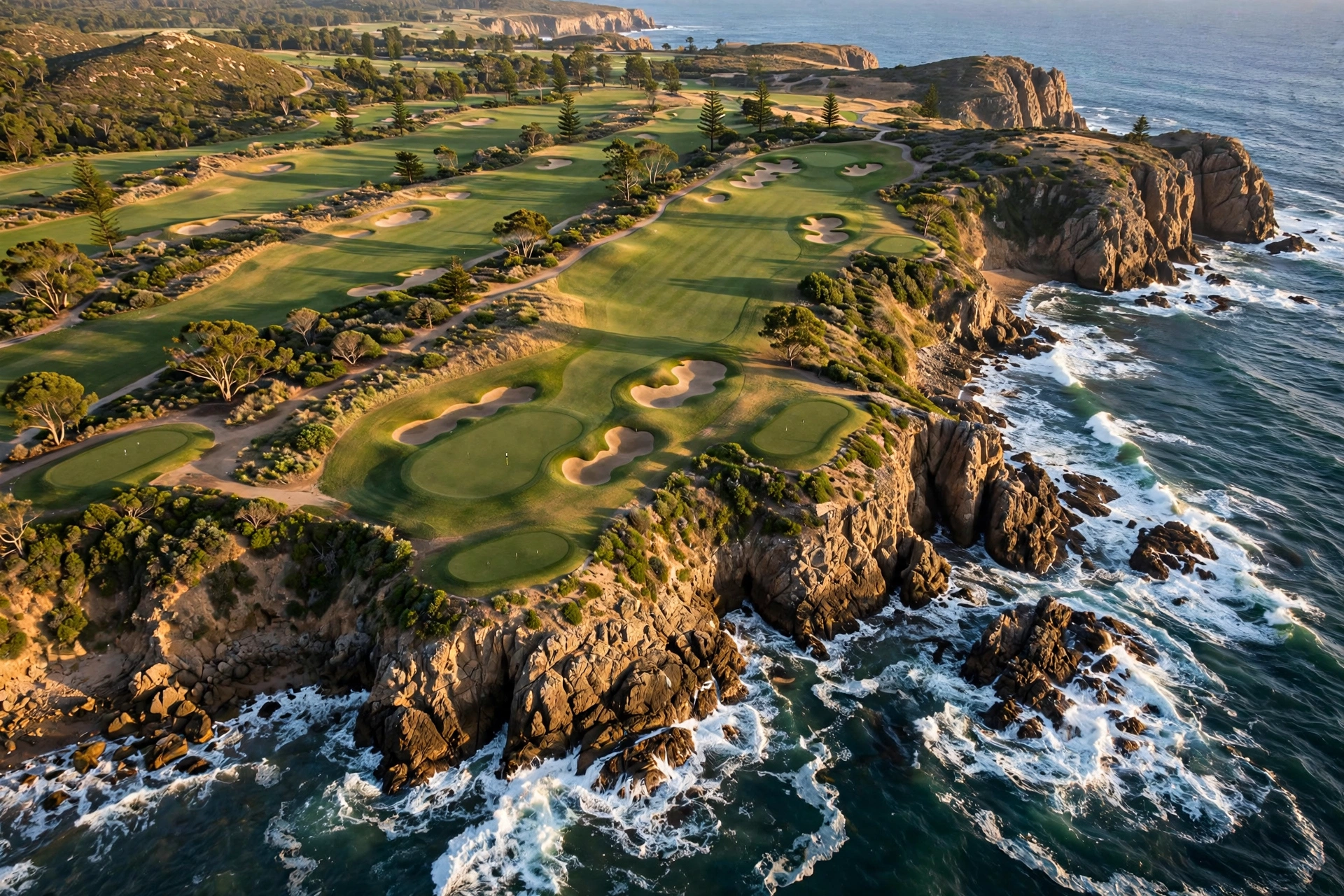
Best Public Golf Courses in the USA: you do not need a private club membership to play America’s greatest golf. From the cliff edges of Pebble Beach to the sand dunes of Bandon and the pine forests of Pinehurst, the finest public-access courses in the country are open to anyone willing to plan ahead — and many are far more affordable than their reputations suggest. This guide ranks twelve of the best public golf courses in the USA, explains what “public” actually means (daily-fee, resort, and municipal courses all qualify), covers how to book the toughest tee times, and gives realistic price ranges so you can plan your bucket-list round with confidence.
What “Public Golf Course” Actually Means
In the US, “public” simply means open to anyone — no membership required. But public courses come in three flavors with very different experiences and prices:
| Type | What It Is | Typical Green Fee Range |
|---|---|---|
| Municipal (“muni”) | City- or county-owned; the people’s golf | Typically $20–$70 |
| Daily-fee | Privately owned but open to the public | Typically $50–$200 |
| Resort / destination | Attached to a resort; open to staying guests and often day visitors | Typically $150–$600+ |
All twelve courses below are public in the meaningful sense: any golfer can book a tee time. Some require booking months ahead or staying at the resort; none require a membership. Prices shown are typical ranges compiled from publicly reported rates — green fees change seasonally, so always verify current pricing when planning.
The West: Ocean Cliffs and Desert Light
1. Pebble Beach Golf Links — Pebble Beach, California
The most famous public course on Earth, and the one every list must include. Pebble Beach drapes along the Monterey Peninsula’s cliffs with seven holes touching the Pacific, including the iconic par-3 7th — all 106 yards of terror over a churning cove — and the par-5 18th, one of golf’s great finishing holes along the water. It has hosted multiple U.S. Opens and remains the bucket-list round against which all others are measured.
What to know: green fees are premium — typically $600+ for 18 holes, with a cart fee on top — and resort guests get priority booking. Non-guests can usually book one day ahead, which requires flexibility. Caddies are available and recommended; the course is walkable but hilly. If the price stings, nearby Spyglass Hill and Spanish Bay (same resort family) offer world-class golf at lower rates. Verify current rates and booking windows on the resort’s official site before planning.
2. Torrey Pines Golf Course (South Course) — La Jolla, California
A municipal course that hosts the PGA Tour’s Farmers Insurance Open — proof that “muni” can mean magnificent. The South Course sits on cliffs above the Pacific with sweeping ocean views from nearly every hole, and its U.S. Open pedigree (2008, 2021) makes it arguably the best value in championship golf. The North Course is also excellent and slightly more forgiving.
What to know: San Diego residents enjoy deeply discounted rates; non-residents typically pay in the $200–$300 range — verify current pricing. Tee times are notoriously competitive and released on a rolling advance window; booking the moment they open is essential. Walk the South if you can — it is a proper links-style test.
3. Bandon Dunes Golf Resort — Bandon, Oregon
Not one course but a pilgrimage: Bandon Dunes, Pacific Dunes, Bandon Trails, Old Macdonald, and Sheep Ranch — five courses in Golf Digest’s orbit of the world’s best, all true links golf on Oregon’s windswept coast. Walking-only, caddie culture, fescue fairways, ocean on nearly every hole. For purists, this is the finest golf destination in America.
What to know: green fees typically run $300+ per round in peak season with meaningful shoulder-season discounts — verify current rates. Book lodging and golf together months ahead; the resort is remote (a few hours from major airports) and that remoteness is part of the magic. Pack rain gear regardless of forecast.
4. Chambers Bay — University Place, Washington
A former sand-and-gravel quarry transformed into a moonscape links course above Puget Sound, host of the 2015 U.S. Open. Chambers Bay is gloriously unconventional: massive dunes, single-flagstick greens (no separate pin positions — one enormous green per hole), and views across the water to the Olympic Mountains. It divides opinion and rewards creativity.
What to know: as a county-owned facility, rates are refreshingly sane — typically $200–$300 for non-residents with lower rates for locals; verify current pricing. Walking only, and the elevation changes are serious — bring your legs. Twilight rates offer excellent value.
The Midwest: Dunes, Quarries, and Heartland Giants
5. Whistling Straits (Straits Course) — Kohler, Wisconsin
Pete Dye’s manufactured-links masterpiece along Lake Michigan: over 1,000 bunkers, fescue-covered dunes, and a rugged coastline that hosted the PGA Championship and the 2021 Ryder Cup. The Straits Course is theater — every hole a postcard, every shot an examination. It is punishing from the back tees and playable from the forward ones.
What to know: green fees typically run $400+ in peak season — verify current rates. Caddies are required before twilight (walking only), which adds cost but enormous value. Stay at the American Club for the full experience, or visit in shoulder season for lower rates and thinner crowds.
6. Erin Hills — Erin, Wisconsin
Host of the 2017 U.S. Open, Erin Hills is a minimalist heartland links spread across glacial terrain — wide fairways, enormous greens, and fescue rough that swallows the greedy. It is walking-only with caddies, refreshingly unpretentious for a major-championship venue, and a pure test of golf rather than trickery.
What to know: rates typically run $250–$350 in peak season with stay-and-play packages offering the best value — verify current pricing. The on-site lodging is excellent and booking a package simplifies everything. An hour from Milwaukee, it pairs well with a broader Wisconsin golf trip.
The South: Pines, Plantations, and Year-Round Golf
7. Pinehurst No. 2 — Pinehurst, North Carolina
The crown jewel of the Sandhills and arguably America’s most historically significant course. Donald Ross’s 1935 masterpiece — restored to its sandy, wiregrass glory by Bill Coore and Ben Crenshaw — is defined by its devilish turtleback greens: domed putting surfaces that repel imprecise approaches. Multiple U.S. Opens, the “Cradle of American Golf,” and a village built entirely around the game.
What to know: green fees typically run $400–$500+ in peak season — verify current rates. Staying at the resort unlocks the best access and the full experience (nine courses on property). Do not miss the Thistle Dhu putting course and the Cradle short course — some of the most fun golf on the planet.
8. TPC Sawgrass (Stadium Course) — Ponte Vedra Beach, Florida
Home of The Players Championship and the most famous hole in golf: the island-green par-3 17th, where tour dreams drown annually. Pete Dye’s Stadium Course was built for spectators and drama, with water lurking on nearly every hole and a finishing stretch designed to break hearts. It is target golf at its most theatrical.
What to know: green fees typically run $450–$600+ in peak season — verify current rates. Book well ahead; tournament conditioning means the rough is genuinely penal. Play the forward tees unless your game is sharp — this course humbles professionals from the tips.
9. Streamsong Resort (Red, Blue, and Black Courses) — Bowling Green, Florida
Built on reclaimed phosphate mines in central Florida, Streamsong’s massive dunes feel transplanted from Ireland. The Red and Blue courses (Coore/Crenshaw and Doak) are modern classics; the Black (Gil Hanse) adds a sprawling third act. It is a self-contained golf universe an hour from Tampa and Orlando.
What to know: green fees typically run $250+ per round with stay-and-play packages offering the best value — verify current rates. The resort is deliberately isolated — plan to stay on property and play 36 a day. Walking encouraged; the scale is epic.
10. Kiawah Island (Ocean Course) — Kiawah Island, South Carolina
Pete Dye’s seaside monster — ten holes along the Atlantic, more seaside holes than any course in North America — host of the 1991 Ryder Cup’s “War on the Shore” and multiple PGA Championships. When the wind blows, it is among the hardest courses on Earth; when calm, it is among the most beautiful.
What to know: green fees typically run $400+ in peak season — verify current rates. Resort guests get priority; the island’s other courses (Turtle Point, Osprey Point) offer excellent slightly gentler alternatives. Alligators are real residents — admire from the cart.
The Northeast: History and Championship Pedigree
11. Bethpage Black — Farmingdale, New York
The people’s major-championship course: a state park facility that has hosted the U.S. Open twice and the PGA Championship, famous for its warning sign — “The Black Course is an extremely difficult course recommended only for highly skilled golfers.” It is rugged, relentless, and gloriously affordable for what it is.
What to know: New York residents play for a fraction of the cost (verify current resident rates); non-residents typically pay in the $150–$300 range — verify current pricing. The booking system is famously competitive — tee times release on a rolling window and vanish in minutes. Walk-up singles can sometimes snag spots. Bring your A-game and your patience.
12. Tobacco Road — Sanford, North Carolina
Mike Strantz’s wild fever-dream in the Sandhills: blind shots, massive waste areas, optical illusions, and some of the most photographed holes in golf. Tobacco Road is polarizing by design — golfers either love its audacity or find it maddening. Either way, you will talk about it for years.
What to know: green fees are moderate for the experience — typically $150–$250 — verify current rates. It pairs perfectly with a Pinehurst trip (under an hour away) as the fun, chaotic counterpoint to No. 2’s stern examination. Embrace the blindness; trust the yardage book.
How to Book the Toughest Tee Times
| Course | Booking Strategy |
|---|---|
| Pebble Beach | Stay at the resort for priority; non-guests book ~1 day ahead |
| Pinehurst No. 2 | Book a stay-and-play package months ahead |
| Bethpage Black | Hit the online booking the moment your window opens; consider walk-up singles |
| Torrey Pines | Book at the earliest release; twilight times are slightly easier |
| Bandon Dunes | Book lodging + golf together 6+ months ahead for peak season |
| TPC Sawgrass | Book weeks to months ahead; avoid tournament blackout periods |
General rules for bucket-list booking: shoulder seasons (spring and fall) mean lower rates and thinner crowds; weekday tee times are easier than weekends; and stay-and-play packages at resorts almost always beat à la carte pricing. A golf pilgrimage also makes a spectacular centerpiece for family road trip ideas — many of these destinations pair championship golf with beaches, historic towns, and scenery the whole family enjoys.
Budget Alternatives: Great Golf Under $75
Not every great public round requires a second mortgage. America’s municipal courses are the soul of the game, and many are architectural gems:
- Bethpage Green/Red/Blue (NY) — the Black’s siblings at muni prices.
- Torrey Pines North (CA) — ocean views at a fraction of the South’s rate.
- Rustic Canyon (CA) — a acclaimed minimalist muni near Los Angeles.
- Chambers Bay (WA) — already listed above; a major venue at county prices.
- Your local muni — every city has one, and weekday twilight rates are often under $30. Some of the best golf memories happen on $25 courses with good friends.
Exploring your area’s affordable courses pairs naturally with discovering everything else your community offers — from the best flea markets and swap meets in the USA to local artisan markets, a golf trip is richer when you experience the destination beyond the fairways.
Best Public Golf Courses in the USA: FAQ
What is the hardest public golf course in the USA?
Bethpage Black, Kiawah’s Ocean Course, and Whistling Straits’ Straits Course are the usual contenders — all have hosted majors and all carry slope ratings among the highest in the country. From the back tees in wind, each is brutally difficult; from forward tees, each is playable and fun.
Can beginners play these famous courses?
Yes — every course on this list welcomes golfers of all abilities. Play the forward tees, keep pace, and pick up when necessary. That said, beginners may enjoy their round more at the gentler options (Tobacco Road, Torrey Pines North, Streamsong) than at the sternest tests (Bethpage Black, Kiawah Ocean).
How far in advance should I book Pebble Beach?
Resort guests can book well in advance as part of stay-and-play packages; non-guests are typically limited to booking about one day ahead, which requires a flexible schedule. For the lowest-stress experience, book a resort stay. Always verify the current booking policy on the official site, as windows change.
Are caddies required at these courses?
Policies vary: Bandon Dunes and Erin Hills are walking-only with caddies strongly encouraged; Whistling Straits requires caddies before twilight; most others offer caddies as an optional (recommended) upgrade. Caddie fees are separate from green fees — budget accordingly.
What is the cheapest way to play a bucket-list course?
Shoulder-season timing, twilight rates, stay-and-play packages, and resident discounts (where applicable) all cut costs significantly. Some courses also offer replay rates — a second round the same day at a reduced fee — which halves the per-round cost of the trip’s centerpiece day.
Do I need a handicap to play these courses?
No course on this list requires an official handicap for casual play. You will be asked your ability level to recommend tees, but honesty about being a beginner just gets you better advice. An official handicap helps with net competitions, not with booking.
Start Your Bucket List
The best public golf courses in the USA prove that great golf is gloriously democratic — from $25 munis to once-in-a-lifetime pilgrimages, the full spectrum is open to anyone who loves the game. Pick one destination that speaks to you, whether it is the cliff edges of Pebble Beach, the dunes of Bandon, or the pines of Pinehurst, and start planning: book early, play the right tees, and savor every hole. And when the trip is done, turn it into a tradition — the best family weekend getaways are the ones built around shared passions, and few passions reward a lifetime of exploration like golf. The tee sheet is open; your move.
Honorable Mentions: 6 More Worth the Trip
Twelve courses cannot contain America’s public golf riches. These six nearly made the main list:
- Spyglass Hill — Pebble Beach, California. The Monterey Peninsula’s sternest test, consistently ranked among the world’s toughest courses. If Pebble Beach is the beauty, Spyglass is the beast — and its green fees run meaningfully lower.
- Pacific Dunes — Bandon, Oregon. Tom Doak’s masterpiece is many architects’ favorite of the Bandon quintet — rumpled, natural, endlessly surprising. If you can only play one Bandon course beyond the original, make it this one.
- Kapalua (Plantation Course) — Maui, Hawaii. The PGA Tour’s season opener plays across a former pineapple plantation with the Pacific as backdrop and trade winds as defense. Golf in paradise, with grainy greens unlike anything on the mainland.
- Wolf Creek — Mesquite, Nevada. Two hours from Las Vegas and worth every minute: a roller-coaster ride through desert canyons with elevated tees, island fairways, and scenery that borders on the surreal. A video-game course in the best way.
- Sand Valley (Mammoth Dunes) — Nekoosa, Wisconsin. The Midwest’s answer to Bandon — massive, walkable, fun-first golf on prehistoric sand dunes. Mammoth Dunes is gloriously playable; the original Sand Valley course is the sterner sibling.
- Harbour Town Golf Links — Hilton Head, South Carolina. Pete Dye’s shotmaker’s classic with the iconic lighthouse — tight, tree-lined, and strategic rather than brutish. The RBC Heritage host rewards precision over power.
Golf Course Architecture: What Makes Great Courses Great
Understanding a little architecture deepens every bucket-list round. The great public courses above share design virtues worth noticing:
- Variety: no two consecutive holes ask the same question — lengths, directions, and hazards constantly change.
- Strategic options: the safe route and the bold route both exist, with rewards scaled to risk.
- Naturalism: the best courses look discovered, not manufactured — even Whistling Straits, which was entirely built, honors its lakeside setting.
- Memorable holes: the great ones give you 3–4 holes you will describe for years (the 7th at Pebble, the 17th at Sawgrass, the 5th at Pinehurst No. 2).
- Walkability: the finest courses reveal themselves on foot — green-to-tee transitions, unfolding views, the rhythm of the walk.
You do not need to become an architecture nerd to enjoy these courses — but noticing why a hole works makes the round richer. Play the course as the architect intended: read the yardage book, consider the angles, and appreciate that every bunker was placed to make you think.