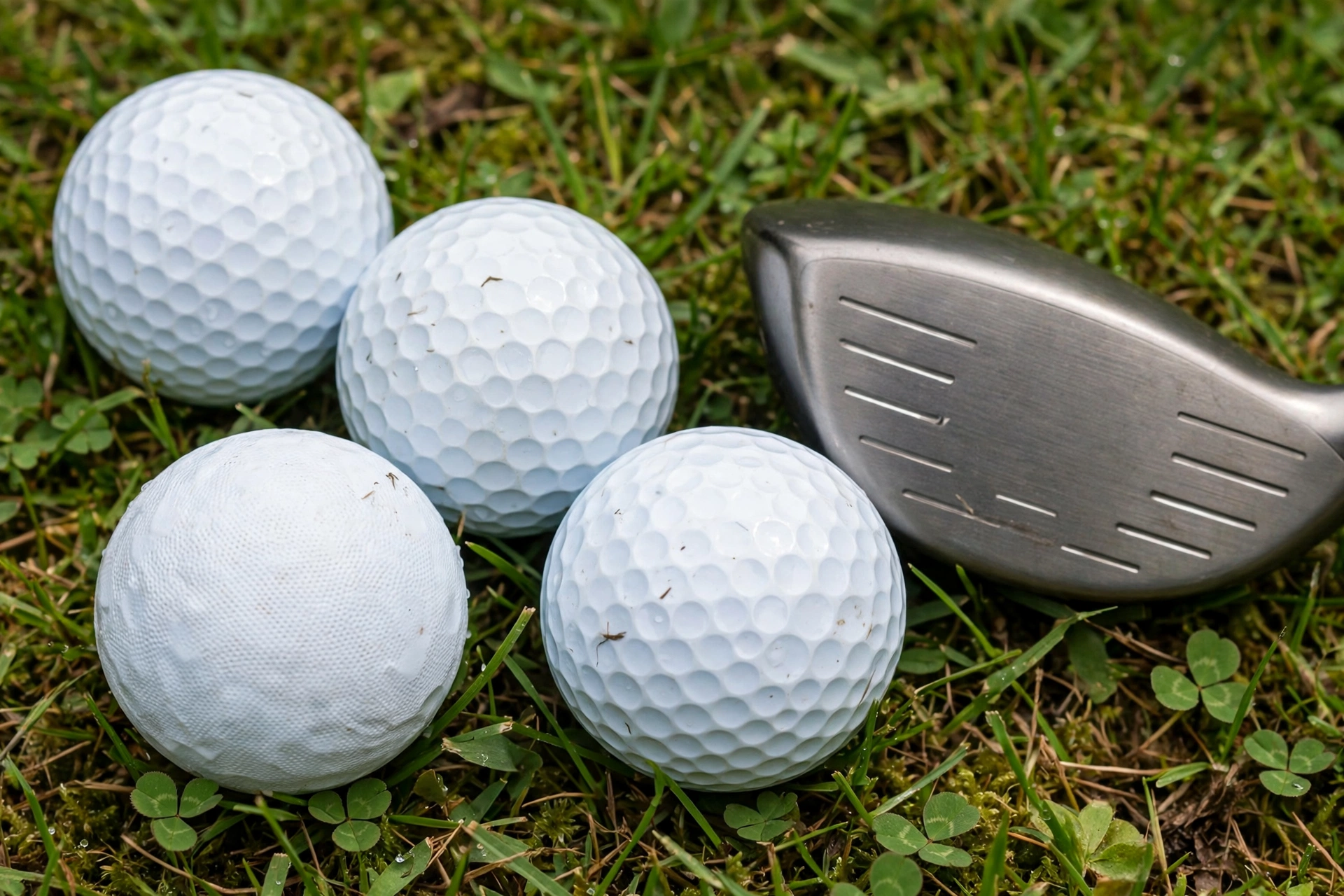
How to Choose Golf Balls is a question that confuses beginners far more than it should. Walk down the golf-ball aisle and you will find $50-per-dozen tour balls promising tour-level spin sitting next to $12-per-dozen value balls promising maximum distance — and almost no guidance on which one a new golfer should actually buy. Here is the short answer: beginners should buy inexpensive, low-compression, two-piece balls and spend the savings on lessons. But the full answer is more interesting, because understanding how golf balls are built — layers, compression, dimples, cover materials — will help you choose wisely at every stage of your golf journey. This guide explains it all in plain English, with honest comparisons and a simple five-step selection process.
Do Golf Balls Really Matter? (The Honest Answer)
Yes — but not in the way marketing suggests. For a beginner, the difference between a $15 ball and a $50 ball is nearly invisible: both will slice into the trees with equal enthusiasm when struck poorly. What actually matters for new golfers is consistency and cost: a ball that flies predictably and does not hurt to lose. Beginners lose a lot of balls — often 3–6 per round — so economics dominate the decision.
Where balls genuinely matter is at the margins of skilled play: tour professionals choose balls for precise spin control on wedge shots, specific launch windows with the driver, and feel off the putter. Those differences are real but irrelevant until your swing is consistent enough to produce them reliably. The right beginner strategy: play one affordable ball model consistently (so you learn its behavior), lose it without tears, and upgrade only when your game gives you a reason — typically when you are breaking 100 regularly and keeping most balls in play.
How Golf Balls Are Built: Layers Explained
Modern golf balls are engineered in layers, and the layer count is the single biggest determinant of price and performance:
| Construction | What It Is | Typical Price/Dozen | Best For |
|---|---|---|---|
| Two-piece | Solid core + durable ionomer (Surlyn) cover | Typically $10–$25 | Beginners — maximum durability, low spin, straight flight |
| Three-piece | Core + mantle layer + softer urethane or ionomer cover | Typically $25–$40 | Improving players — balanced distance and greenside spin |
| Four/five-piece | Multi-layer core + mantle(s) + soft urethane cover | Typically $40–$55 | Advanced players — tour-level spin control and feel |
The physics: the core generates ball speed (distance); the mantle layer(s) tune spin and feel; the cover determines durability and greenside spin. Hard ionomer covers are nearly indestructible and spin less — ideal for beginners who want straight, durable flight. Soft urethane covers grip wedge grooves for checking spin on greens — wonderful for skilled players, wasted on inconsistent contact. Prices are typical ranges; verify current pricing as models refresh annually.
Compression: The Number Beginners Should Understand
Compression measures how much a ball deforms at impact, rated roughly from 30 (very soft) to 110 (very firm). The rule of thumb: match compression to your swing speed.
- Low compression (30–70): softer feel, easier to compress — ideal for slower swing speeds (most beginners, seniors, many women). The ball launches higher with less effort.
- Medium compression (70–90): the versatile middle — suits moderate swing speeds and improving players.
- High compression (90–110): firmer feel, designed for fast swing speeds that can fully compress the core. Beginners with high compression balls lose distance and feel.
Most golfers overestimate their swing speed. The average male amateur swings the driver around 90–95 mph; many beginners are well below that. If you are new, a low-compression ball is almost certainly correct — it will feel softer, fly higher, and travel farther with your swing than a rock-hard tour ball. “Soft” on the box is beginner-friendly marketing you can trust.
Dimples: Why 300+ Tiny Dents Matter
A smooth golf ball would fly barely half as far as a dimpled one — this is real aerodynamics, not marketing. Dimples create a thin turbulent boundary layer of air that reduces drag and generates lift, keeping the ball airborne far longer. Key facts:
- Most balls have 300–500 dimples in carefully engineered patterns; the exact count matters less than the pattern’s quality.
- Dimple design affects trajectory: shallower dimples generally promote higher flight; deeper patterns can produce a more penetrating ball flight.
- You cannot see performance differences between dimple patterns as a beginner — but you benefit from all of them automatically. Every modern ball flies far because of dimples.
- Damaged covers disrupt airflow: retire balls with deep cuts or scuffs, as they fly unpredictably.
The Beginner’s Ball: Exactly What to Buy
Ignore the tour balls. Here is the beginner’s spec sheet:
| Characteristic | What to Choose | Why |
|---|---|---|
| Construction | Two-piece | Durable, affordable, low-spin straight flight |
| Compression | Low (under 70) | Matches beginner swing speeds; higher, easier launch |
| Cover | Ionomer (Surlyn-type) | Nearly indestructible; survives cart paths and trees |
| Price | Typically $10–$25/dozen | You will lose them — buy without guilt |
| Quantity | Buy in bulk (24–48 balls) | Bulk boxes cut per-ball cost significantly |
One more beginner rule: play one model consistently. Switching balls every round means relearning distance and feel constantly. Pick an affordable model, buy a bulk box, and play it for a full season. Consistency of equipment builds consistency of results. Savvy shoppers time purchases to retail cycles — check what to buy each month for the best windows on sporting-goods deals, since golf balls are frequently discounted in late fall and during holiday sales.
Ball Fitting by Swing Speed: When to Upgrade
As your game improves, match your ball to your actual game — not your aspirations:
| Your Game | Driver Swing Speed | Ball Type |
|---|---|---|
| New beginner (losing 4+ balls/round) | Under 85 mph | Low-compression two-piece; cheapest reputable option |
| Improving (breaking 110–100) | 85–95 mph | Low-compression two-piece or soft three-piece |
| Intermediate (breaking 100–90) | 90–100 mph | Three-piece urethane or ionomer blend |
| Advanced (breaking 90 consistently) | 100+ mph | Multi-layer urethane tour-type ball |
The upgrade trigger is not a score — it is consistency. When you strike the ball solidly most of the time, keep it in play, and can feel the difference between balls off the putter, you are ready for a premium ball. Until then, the expensive ball’s extra spin mostly creates extra trouble: high-spin balls curve more on mishits, punishing the exact shots beginners hit most.
Premium vs. Budget Balls: An Honest Comparison
| Factor | Budget Two-Piece ($10–$25) | Premium Urethane ($40–$55) |
|---|---|---|
| Driver distance (beginner swing) | Often longer — lower spin, higher launch | Can be shorter — excess spin robs carry |
| Accuracy on mishits | Straighter — low spin resists curving | Curves more — high spin amplifies slices/hooks |
| Greenside spin | Less — balls release and roll out | More — balls check and stop |
| Durability | Excellent — hard covers shrug off abuse | Fragile — soft covers cut and scuff |
| Feel off putter | Firmer, clickier | Softer, more responsive |
| Cost of losing one | Painless | Painful |
Read that table carefully: for a beginner, the budget ball wins on nearly every factor that matters. The premium ball’s advantages — wedge spin, soft feel — only materialize with consistent, high-quality contact. This is one of the rare cases in sports equipment where cheaper is genuinely better for the learner. It is also the more sustainable choice: losing fewer expensive balls matters less than buying durable ones less often, and when you do shop, our sustainable and ethical shopping guide has useful principles for buying gear mindfully.
Colors, Lines, and Personalization
- White vs. color: white remains standard and easiest to find in most conditions. Matte-finish colors (yellow, orange, red) are genuinely easier to track in flight and find in rough — many beginners love them. There is no performance difference; choose visibility.
- Alignment aids: many balls print a line or arrow on the equator for lining up putts. Useful if you use it; ignore it if you do not. Some players draw their own line with a permanent marker.
- Mark your ball: put a distinctive mark (dots, initials, a symbol) on every ball before a round. Identifying your ball is a rules requirement, and a personal mark prevents confusion — and disputes.
- Numbers: balls come numbered 1–4 (or 5–8) per dozen. In a group, agree on different numbers to avoid mix-ups.
- Personalized balls: custom printing is fun for gifts but adds cost — skip it for everyday play.
How Many Balls to Carry (and When to Retire Them)
Carry at least 6–9 balls for a casual round as a beginner; experienced players often carry 3–6. Refill before every round — running out mid-round is an avoidable embarrassment. As for retirement:
- Retire immediately: balls with deep cuts, cracked covers, or visible core — they fly unpredictably and may be non-conforming.
- Retire to practice: scuffed but intact balls are perfect for the range or chipping practice.
- Keep playing: balls with light scuffs and normal wear fly fine. Cosmetic blemishes do not affect performance.
- Water balls: a ball submerged briefly is fine; one that sat in a pond for months may have absorbed water and lost performance — relegate it to practice.
Found balls (“pond balls”) are a time-honored beginner economy — playing a found premium ball you would never buy is perfectly legal and deeply satisfying. Just verify it is not damaged, mark it as yours, and enjoy the free upgrade. Thrift-minded golfers can stretch the budget even further; the same sharp eye that finds deals in our thrift store shopping tips applies to spotting quality used-ball deals from reputable recyclers.
The 5-Step Ball Selection Process
- Assess honestly. Are you losing multiple balls per round? You are a two-piece, low-compression buyer. No shame — it is the correct engineering choice.
- Set the budget. Decide your per-dozen ceiling before shopping. For beginners: typically $10–$25. The “best” ball is the one you can afford to lose.
- Shortlist 2–3 models. Within your budget, pick two or three reputable low-compression two-piece options. Read reviews, but weight forgiveness and durability over distance claims.
- Test on course. Play a full round with each finalist. Note: trajectory, distance with your normal swing, feel off the putter, and — critically — how straight your mishits stay.
- Commit for a season. Buy the winner in bulk and play it exclusively. Reassess only when your game clearly outgrows it.
How to Choose Golf Balls: FAQ
Do expensive golf balls go farther?
Not for beginners. With slower swing speeds and inconsistent contact, low-compression budget balls often fly farther and straighter than premium tour balls, which are engineered for high swing speeds and produce excess spin (and curvature) on mishits.
What compression golf ball should a beginner use?
Low compression — generally under 70. Soft-compression balls launch higher and travel farther with moderate swing speeds, feel better off the clubface, and typically cost less. “Soft” or “low compression” on the box is what you want.
How long do golf balls last?
A ball in regular play lasts many rounds until lost or damaged — there is no meaningful performance degradation from normal use over weeks or months. Retire balls with cuts, cracks, or heavy scuffing; relegate cosmetically worn balls to practice.
Are colored golf balls legal?
Yes — colored balls conform to the rules as long as they meet size and weight standards, which all major manufacturers’ balls do. Color is purely a visibility preference.
Should I use the same ball my favorite pro uses?
No. Tour professionals use balls engineered for 115+ mph swing speeds and precise spin control — the opposite of what a beginner’s swing needs. Playing a tour ball as a beginner typically costs distance, accuracy, and money.
What is the difference between range balls and regular balls?
Range balls are built for durability over performance — harder covers, often with a stripe, designed to survive thousands of hits and ball-picker machines. They fly shorter with less spin. Never judge a ball model by how range balls perform; test with real balls on the course.
Choose Smart, Lose Happily
How to choose golf balls comes down to one principle: match the ball to the swing you have, not the swing you want. For beginners, that means an affordable, low-compression, two-piece ball played consistently and lost without regret. As your swing improves — contact solidifies, balls stay in play, scores drop — graduate deliberately through three-piece options toward premium urethane, testing each step on the course. The ball is the only piece of equipment you use on every single shot; choosing it thoughtfully is one of the simplest performance upgrades in golf. Buy in bulk, mark every ball, carry plenty, and remember the ultimate truth of ball selection: the best ball in golf is a ball you can afford to swing freely at — because a relaxed swing beats an expensive ball every time.
Used and Recycled Balls: Are They Worth It?
The recycled-ball industry — millions of balls recovered from water hazards and rough, cleaned, graded, and resold — is a legitimate budget option with caveats:
- Grades matter: reputable sellers grade balls from “mint” (like new) to “practice.” Mint and near-mint recycled balls perform essentially identically to new for amateur swings.
- The savings are real: premium models often sell recycled at half (or less) of retail — an affordable way to experiment with better balls as your game improves.
- Refinished vs. recycled: “recycled” balls are found and cleaned; “refinished” balls are stripped and repainted with a new cover — refinished balls may not conform to the rules and can perform unpredictably. Prefer plain recycled.
- Buy from reputable graders: established recycled-ball companies with clear grading standards beat anonymous bulk bags of unknown provenance.
- X-outs: factory-second balls with cosmetic flaws, sold at discounts — fully conforming and a great value when you find your model.
For beginners, recycled mint-grade budget models are the ultimate value: premium performance characteristics at value prices. Just verify the seller’s grading reputation before buying in bulk.
Ball Storage and Care: Small Habits, Real Benefits
- Clean balls before each round. Dirt and mud in dimples disrupt airflow and cost distance. Warm soapy water and a towel take minutes.
- Store at room temperature. Extreme heat (a car trunk in summer) can degrade ball materials over time; extreme cold temporarily hardens balls and costs distance until they warm up.
- Rotate your stock. If you buy in bulk, play older balls first — not because they expire quickly, but because fresh inventory deserves a system.
- Keep them dry. Prolonged submersion is the real enemy — a ball fished from a pond after months underwater has likely absorbed moisture and lost liveliness. Play it for fun, not for score.
- Mark before, not during. Mark your full dozen at home before the round — sharpie, distinctive and rules-compliant.
5 Golf Ball Myths, Busted
- “More expensive balls always go farther.” For amateur swing speeds, often the opposite — low-spin budget balls fly farther and straighter for beginners than high-spin tour balls.
- “Low-handicap balls will fix my slice.” No ball fixes a swing fault. High-spin premium balls actually curve more on mishits — they magnify the slice, not cure it.
- “Balls go bad after a year.” Unused balls stored properly perform fine for years. Performance loss comes from damage and waterlogging, not birthdays.
- “All balls are basically the same.” Construction, compression, and cover differences are real and measurable — they just matter most once your swing is consistent enough to reveal them.
- “Pros play the ball they advertise because it is the best.” Pros play balls fitted to their exact launch conditions through extensive testing — what is best for a 120-mph swing is irrelevant to a 85-mph one.
When to Switch Balls: A Decision Framework
Revisit your ball choice when any of these become true:
- You keep the ball in play consistently (losing 0–2 per round instead of 4–6).
- You can feel clear differences between ball models off the putter and wedges.
- Your wedge shots need more stopping power — budget balls are rolling through greens.
- Your swing speed has increased into a new compression range (verify with a launch monitor, not ego).
- You are playing competitions where every fraction of performance matters.
When you switch, do it deliberately: test 2–3 candidate models over several rounds, compare honestly, and commit for a season. The worst ball strategy is brand-hopping every month — consistency of equipment is a competitive advantage most amateurs give away for free.