Kids don’t need a reason to go outside — they need the right invitation. The Best Outdoor Toys for Kids turn backyards, parks, and sidewalks into arenas of adventure: climbing, splashing, racing, digging, and imagining. This guide covers the outdoor toy categories that deliver the most play value, matched to ages and spaces, with safety essentials and realistic price ranges.
Whether you have a sprawling backyard or a small apartment patio, you’ll find options here. We cover active-play equipment, water toys, ride-ons, sports gear, and nature exploration tools — plus how to choose for your space, keep things safe, and make outdoor time the part of the day your kids look forward to most.
Why Outdoor Play Needs Good Toys
Children today spend dramatically less time outdoors than previous generations, and the costs show up in fitness, sleep, attention, and mood. Outdoor toys aren’t just entertainment — they’re tools that make the outdoors more compelling than the couch. The right climbing dome, water table, or soccer goal doesn’t just occupy kids; it builds strength, coordination, risk assessment, and social skills through unstructured play.
Outdoor play also offers something indoor play can’t: scale. Big movements, loud voices, messy materials, and genuine risk-taking (climbing higher, running faster) all happen outside. Good outdoor toys channel that scale safely — giving kids the physical challenges they crave with guardrails that keep the challenges healthy.
The Best Outdoor Toy Categories
1. Climbing Domes and Playsets
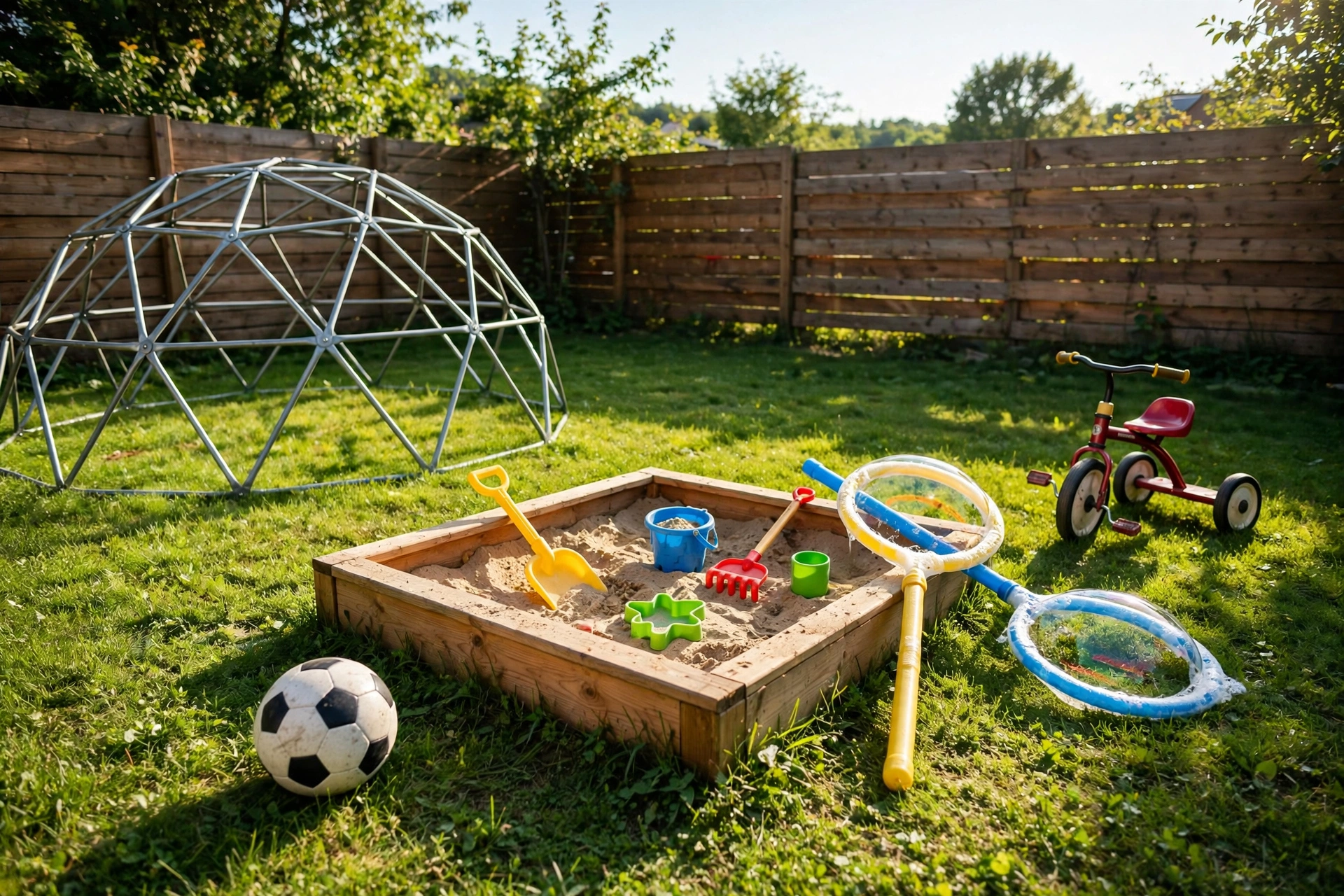
The backyard centerpiece. Climbing domes (geometric metal frames) suit ages 3–10 and build upper-body strength, coordination, and confidence; full swing-set/playset combos add slides, swings, and climbing walls for the ultimate playground. Choose based on your space and budget: domes are affordable and compact, while wooden playsets are investments lasting a decade. Always anchor equipment, follow weight limits, and maintain a soft landing surface (mulch, rubber, or sand) underneath.
2. Trampolines
Few toys match a trampoline’s pure joy-per-dollar — or require more respect for safety. If you buy one: choose a model with a full safety enclosure, enforce one jumper at a time, require adult supervision, and prohibit flips without training. Round trampolines direct jumpers toward the center more safely than rectangular ones. For younger kids, small indoor trampolines with handlebars offer bouncing fun with far less risk.
3. Water Tables and Splash Toys
For ages 1–5, nothing beats water play: water tables with pouring toys, splash pads that connect to a garden hose, and simple sprinklers. Water play builds sensory skills, early science concepts (floating, pouring, volume), and provides hours of cool summer engagement. Safety rules are firm: constant adult supervision around any water, empty tables after play, and no small parts that could be mouthed by toddlers.
4. Ride-Ons: Bikes, Scooters, and More
Wheels are childhood freedom. Balance bikes (ages 2–4) teach balance before pedaling; pedal bikes (4+) open the neighborhood; kick scooters (3+) are the sidewalk kings of elementary school. For thrills, consider pogo sticks (6+), beginner skateboards (with full safety gear), and electric ride-ons for young kids (slow speeds, flat surfaces only). Helmets are mandatory for all of them — fit the helmet before the first ride, and replace after any hard impact.
5. Sports Gear
Soccer goals, basketball hoops (adjustable height grows with kids), t-ball sets, badminton, and beginner archery sets turn yards into practice fields. Sports toys build coordination, teach rules and sportsmanship, and invite neighborhood play. Buy adjustable equipment that grows with your child, and choose sizes matched to their age — oversized gear frustrates and teaches bad form. Our Family Beach Day Guide includes beach-friendly sports picks too.
6. Sand and Digging Toys
Sandboxes remain one of the highest-value outdoor toys for ages 1–6: digging, pouring, molding, and burying build fine-motor skills and sensory development. A covered sandbox (covers keep out animals and rain) with quality sand and sturdy tools lasts for years. For kids without yard space, a small sand/water sensory table on a patio works beautifully. Kinetic sand brings the experience indoors for rainy days.
7. Bubbles, Sidewalk Chalk, and Classic Fun
Never underestimate the classics. Giant bubble wands, sidewalk chalk (for art, hopscotch, and obstacle courses), jump ropes, and hula hoops cost little and deliver enormously. These are the toys of spontaneous neighborhood play — the ones kids grab when friends knock on the door. Keep a “grab basket” by the door stocked with chalk, bubbles, and balls so going outside is always frictionless.
8. Tents, Tunnels, and Playhouses
Outdoor hideouts — pop-up tents, play tunnels, and wooden or fabric playhouses — give kids ownership of a space. They’re bases for imaginative play, reading nooks on nice days, and essential gear for backyard campouts. Choose weather-resistant materials, stake down anything the wind could take, and check playhouses for splinters and stability annually.
9. Gardening Kits for Kids
Kid-sized gardening tools, easy-grow seed kits (sunflowers, beans, cherry tomatoes), and a dedicated garden patch teach patience, responsibility, and where food comes from. Gardening is slow STEM: measuring growth, observing insects, learning seasons. Even a few pots on a patio work. The harvest — even three cherry tomatoes — is pure pride.
10. Nature Exploration Gear
Binoculars, magnifying glasses, bug catch-and-release kits, and nature journals turn any outdoor space into a laboratory. These pair beautifully with parks, trails, and camping trips — see our Stargazing With Kids Guide for nighttime adventures. Exploration gear is lightweight, affordable, and grows more interesting as kids’ knowledge grows.
11. Water Blasters and Summer Battle Gear
For hot days with older kids (6+), water blasters and water balloon alternatives (reusable silicone balloons) create legendary summer memories. Set ground rules: faces off-limits, refill stations, and everyone opts in. These are social toys at their best — best deployed at gatherings where everyone’s in on the fun.
12. Outdoor Games: Cornhole, Lawn Darts (Soft), and More
Lawn games bridge ages beautifully: cornhole, ring toss, soft-tip lawn darts, bocce, and giant versions of classic games (giant Jenga, giant Connect Four). They’re the rare toys equally fun for kids, teens, and grandparents — making them perfect for family gatherings and parties. Many are easy DIY projects too.
Choosing Outdoor Toys for Your Space
| Your Space | Best Bets | Think Twice About |
|---|---|---|
| Large backyard | Playsets, trampolines, sports goals, climbing domes | Overspending before kids show interest — start with one anchor piece |
| Small yard or patio | Water table, sandbox, ride-ons, foldable sports gear | Full playsets — measure twice, and check HOA rules |
| Apartment / no yard | Scooters, balls, exploration gear, park-friendly games | Anything requiring installation — invest in portable instead |
| Near parks and trails | Bikes, scooters, nature gear, sports equipment | Duplicating what the park already offers |
Outdoor Toy Safety Essentials
- Helmets for wheels, every time, no exceptions. Bikes, scooters, skateboards, skates — if it rolls and the child rides it, the helmet goes on. Ensure proper fit: snug, level, two-finger width above eyebrows.
- Anchor climbing equipment. Playsets, domes, and trampolines must be anchored per instructions and placed on shock-absorbing surfaces, never concrete.
- Water means supervision. Pools, water tables, splash pads, even buckets — drowning is fast and silent. An undistracted adult within arm’s reach for young children, always.
- Sun protection. Outdoor play means sunscreen, hats, and water breaks. Schedule intense play for morning or late afternoon in summer heat, and watch for signs of overheating.
- Inspect seasonally. Check for rust, splinters, cracked plastic, frayed ropes, and loose bolts each spring. Retire or repair anything compromised — weather degrades everything eventually.
- Teach boundaries. Clear rules about streets, fences, and neighbor yards prevent the most common outdoor injuries. Review them at the start of each season.
Typical Price Ranges
| Outdoor Toy Type | Typical Price Range |
|---|---|
| Sidewalk chalk, bubbles, jump ropes | Typically $5–$15 |
| Sandboxes, water tables, splash pads | Typically $30–$80 |
| Climbing domes | Typically $100–$300 |
| Trampolines (with enclosure) | Typically $200–$600 |
| Wooden playsets | Typically $300–$2,000+ |
| Bikes and scooters (plus helmet) | Typically $60–$200 |
| Sports goals and hoops | Typically $40–$200 |
Prices vary widely with sales — outdoor equipment is often discounted at end of summer. Always verify current prices, and factor in accessories (helmets, anchors, surfacing) when budgeting for big items.
Making Outdoor Time Happen
The best outdoor toy is useless in the garage. A few habits make outdoor play the default: keep a grab-basket of easy toys by the door, establish a daily outdoor window (after school, after dinner), invite the neighborhood (kids play longer with friends), and join in yourself sometimes — a parent who shoots hoops or hunts bugs signals that outside is where the fun is. Limit the friction: shoes by the door, sunscreen accessible, water bottles filled. And embrace mess: muddy, sandy, grass-stained kids are kids who played hard. For trip-friendly outdoor fun, our Family Road Trip Ideas includes park stops and outdoor adventures across the country.
Outdoor Play in Every Season
Outdoor toys shouldn’t hibernate for half the year. With the right gear and toy choices, every season offers play:
- Spring: gardening kits shine as things sprout, kites catch spring winds, and sidewalk chalk returns. Puddle boots turn rain into an event — jumping in puddles is legitimate developmental play (balance, sensory input, joy).
- Summer: water toys rule — splash pads, water tables, sprinklers, water blasters. Shift intense play to mornings and evenings, keep sunscreen and water breaks routine, and embrace the glorious mess.
- Fall: leaf piles are free and perfect, nature scavenger hunts get interesting as things change, and sports gear gets heavy use in crisp weather. Raking “work” that ends in jumping is the best chore ever invented.
- Winter: sleds, snow-building tools, and ice/snow experiment kits for snowy regions; for milder climates, bikes and scooters work year-round with layers. The rule is simple: there’s no bad weather, only bad clothing. Invest in quality outerwear and winter play happens.
Seasonal rotation also keeps toys fresh — store summer water toys in fall and their return in spring feels like Christmas. Mark your calendar for a seasonal toy swap alongside the seasonal clothing swap.
FAQs
How do I childproof a yard for outdoor play?
Walk your yard with fresh eyes: secure or remove access to pools, ponds, and water features (fencing with self-latching gates is the standard), lock sheds containing tools and chemicals, check fences for gaps and climbable objects near them, cover or fill holes, secure trampolines and playsets per manufacturer instructions, and scan for poisonous plants — many common landscaping plants are toxic if chewed, so identify what’s growing where kids play. Store outdoor toys to prevent pest nesting, and do this audit each spring since winter changes things. A twenty-minute walk saves genuine worry all season.
How do I keep outdoor toys from being stolen or damaged?
Bring smaller items inside nightly — it’s the single most effective theft and weather protection. For large equipment, anchor it (which also deters theft), consider motion-sensor lights, and get to know your neighbors — community awareness is real security. Some families engrave or label big items. And check your homeowner’s or renter’s insurance: expensive playsets may be worth scheduling, and trampolines in particular can affect liability coverage — call your insurer before installing one.
What are good outdoor toys for kids with disabilities?
Inclusive play is absolutely achievable: adaptive tricycles and bikes, wheelchair-accessible sandboxes and water tables (raised height), sensory-friendly outdoor toys (quiet, tactile), and smooth, stable surfaces for mobility devices. Many playground equipment manufacturers now offer inclusive designs — look for them when investing in big equipment. The goal is the same as for all kids: independent, joyful play. Consult your child’s therapists for specific recommendations matched to their abilities.
What outdoor toys are best for small yards?
Focus on compact, high-play-value picks: a water table or sandbox, ride-ons that store easily, foldable sports gear (pop-up soccer goals), and exploration kits. Vertical play (a small climbing dome) uses space efficiently. Avoid full playsets unless you’ve measured carefully — and check HOA or rental rules before installing anything permanent.
Are trampolines safe for kids?
Trampolines carry real injury risk, which is why safety setup matters enormously: a quality enclosure net, one jumper at a time, adult supervision, no flips or somersaults, and placement on soft ground away from structures. Pediatric safety organizations advise caution, especially for children under six. Families who follow all the rules can enjoy trampolines reasonably safely — families who don’t, can’t.
How do I get my kids to play outside more?
Reduce friction and increase invitation: keep outdoor toys accessible (not buried in the garage), establish screen-free outdoor time as routine, invite friends over, and go out yourself. Novelty helps — rotate toys, introduce a new sidewalk-chalk challenge, or plan a backyard campout. Often kids resist going out but don’t want to come back in; the transition is the hard part, not the play.
What age can kids play outside unsupervised?
There’s no single right age — it depends on the child, the space, and the neighborhood. Most families start with brief independent play in a fenced yard around ages 7–9, expanding as kids show good judgment. Always consider traffic, water hazards, and stranger safety in your specific situation. When in doubt, supervise longer — there’s no prize for rushing independence.
How do I maintain outdoor toys?
Rinse plastic toys seasonally, oil metal parts, tighten bolts on playsets each spring, store fabric items (tents, covers) dry to prevent mildew, and bring in anything not weather-rated before winter. A yearly “outdoor toy audit” each spring — inspect, clean, repair, retire — keeps everything safe and extends lifespan significantly.
What’s the best outdoor toy for toddlers?
Water tables, small slides, sandboxes, and push ride-ons are toddler outdoor royalty — safe, sensory-rich, and endlessly repeatable. Add bubbles and balls for variety. Keep everything low to the ground, supervise constantly (especially around water), and provide shade. Toddlers don’t need elaborate equipment; they need safe materials and your company.
Can outdoor toys survive winter?
It depends on the toy and your climate. Metal and quality plastic generally survive; wood needs sealing; fabric should come inside. In harsh-winter regions, many families store smaller items in the garage and winterize playsets (remove swings, cover slides). Check manufacturer guidance — freeze-thaw cycles crack cheap plastic, which is another reason quality matters.
Are expensive playsets worth it?
For families with young kids and yard space, a quality playset often delivers the lowest cost-per-hour of any toy purchase — kids may play on it daily for 5–8 years. Buy the sturdiest you can afford, install it correctly (or professionally), and maintain it. That said, don’t finance childhood: a climbing dome, sandbox, and good sports gear deliver 80% of the fun at a fraction of the price.
The Best Outdoor Toys for Kids share a simple superpower: they make going outside the easiest, most exciting choice. Match the toys to your space, anchor and maintain the big stuff, protect heads and skin, and then let them loose. Childhood happens outdoors — the toys just help it happen more often, one joyful afternoon at a time. For beach-specific gear, see our Family Beach Day Guide, and for after-dark adventures, Stargazing With Kids Guide turns clear nights into magic.