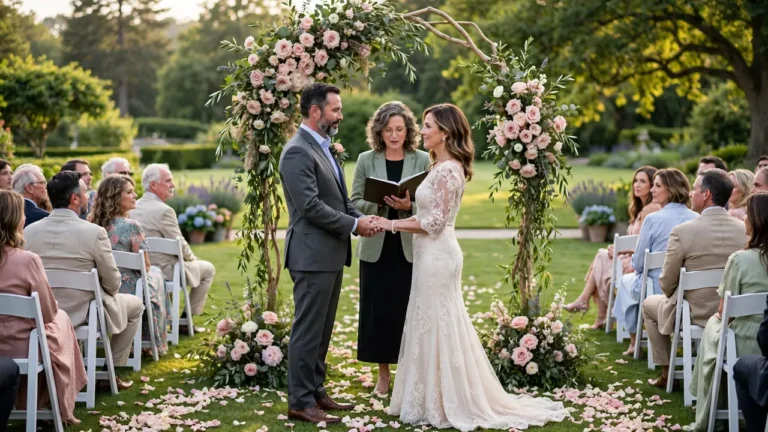
There is a reason so many love stories end — or begin again — at the water’s edge. The ocean does not care about your timeline. It was there before your wedding day and it will be there after your golden anniversary, and standing in front of it has a way of putting a marriage in perspective: this, too, is vast. This, too, keeps coming back. A beach vow renewal borrows that permanence and aims it at your promises.
Beach renewals occupy a special place in the ceremony world because they combine three things couples want most: natural beauty that needs no decoration, a built-in sense of occasion (people behave more tenderly near the ocean; it is science-adjacent), and the vacation feeling that turns a ceremony into a memory. Whether it is the beach where you honeymooned, a dream destination, or simply the shoreline nearest your home, the sand makes everything feel a little more eternal.
This guide covers it all: why the shore suits a renewal, how to choose the right kind of beach, fifteen ceremony ideas from barefoot-simple to full celebration, the practical realities (permits, tides, wind, sand — the unglamorous truth), timelines, and answers to the questions couples always ask. Salt air, bare feet, honest vows. Let us plan it.
Why the Shore Suits a Vow Renewal
A wedding at the beach is about beginning against a beautiful backdrop. A renewal at the beach is about something deeper: it is about measuring your marriage against the oldest metaphor humans have. The tide comes in and goes out, and the shore remains. Storms reshape the coastline, and the coastline endures. Every couple standing on a beach with decades behind them understands this in their bones, and the setting lets the vows borrow that gravity without a single extra word.
There is also the matter of beauty economics. A beach at golden hour is the most spectacular free venue on earth. Where a ballroom renewal needs thousands of dollars in flowers, draping, and lighting to look extraordinary, a beach needs… a beach. A simple arch, a few arrangements that will not blow away, and the sky does the rest. Photographers consistently rank beach ceremonies among their favorite to shoot, because the light is generous and the backdrop is inexhaustible. Your photos will look like a travel magazine, and you barely had to try.
The beach also solves the guest-experience problem elegantly. A renewal that requires travel becomes a vacation for everyone invited — and guests like that. The ceremony becomes the centerpiece of a long weekend rather than a three-hour obligation. Morning vows, afternoon swimming, sunset dinner: the whole event breathes. For milestone anniversaries especially (25th, 40th, 50th), gathering the family at the shore creates the kind of multi-generational memory that gets talked about for decades.
And practically: beaches are among the most permissive ceremony venues for small groups. Many public beaches allow small ceremonies with no permit at all (rules vary wildly by location — more on that below), and even where permits are required, they are typically inexpensive. Barefoot dress codes eliminate wardrobe stress. The sound of the waves covers nervous pauses. The ocean, it turns out, is an excellent wedding planner.
Choosing Your Beach: Six Shoreline Types
Not all beaches are created equal for ceremonies. The right choice depends on your guest count, your desired mood, and how much logistics you want to manage.
| Beach Type | Mood | Best For | Watch Out For |
|---|---|---|---|
| Resort beach | Polished, full-service | 20–100 guests, out-of-town family | Higher cost; package constraints |
| State/national park beach | Wild, dramatic | Small groups, photographers | Strict permits; no structures |
| Local public beach | Casual, easy | Under 25 guests | Crowds; limited privacy |
| Private rental beachfront | Exclusive, relaxed | 10–40 guests, multi-day stay | HOA rules; parking |
| Cliffside overlook | Dramatic, intimate | Just-us to 15 guests | Wind; accessibility |
| Lakeside “beach” | Calm, sweet | Budget renewals, kids | Less “wow”; bugs at dusk |
The single most important choice is timing relative to the sun and the tide. Golden hour — the hour before sunset — gives you the legendary light and comfortable temperatures, but it is also the most popular beach time, so arrive early to claim your spot. Check the tide chart for your date: a high tide can erase a wide beach entirely, while a low tide gives you a vast, firm ceremony floor. And always, always have a wind plan — beach wind is the great unscripted guest at every shoreline ceremony.
Fifteen Beach Vow Renewal Ceremony Ideas
From barefoot-minimal to full celebration, organized by scale. Every idea assumes the ocean does most of the decorating.
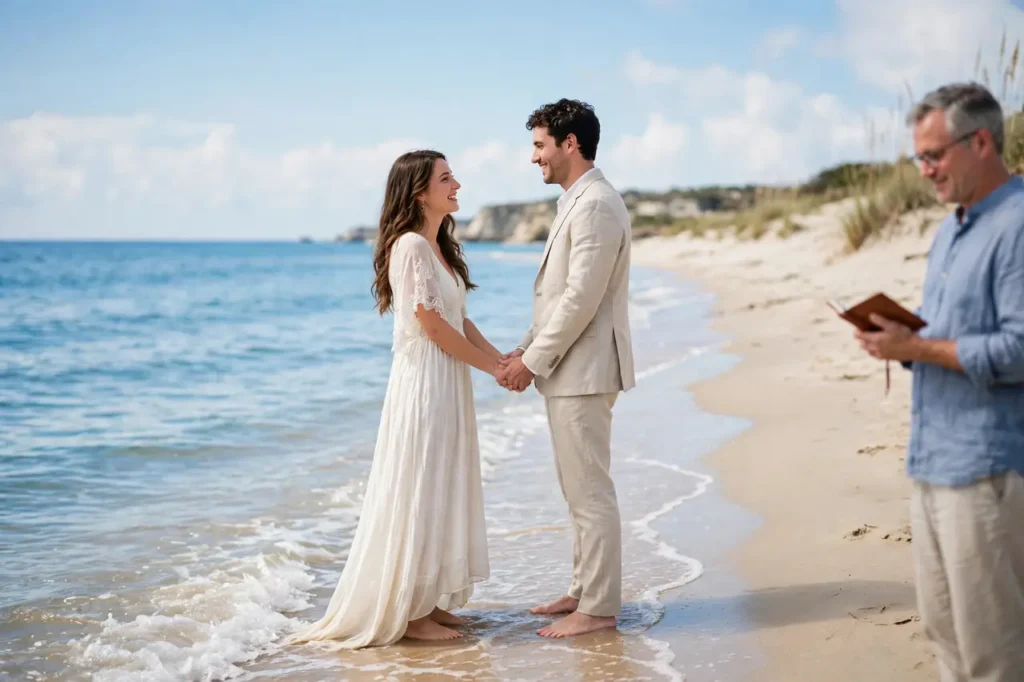
1. The barefoot sunrise. Just the two of you (plus an officiant and a photographer) at dawn, toes in the wet sand, vows exchanged as the sun clears the horizon. No arch, no chairs, no decor — the sunrise is the decor. The most intimate beach renewal there is. Scale: 2–6 people.
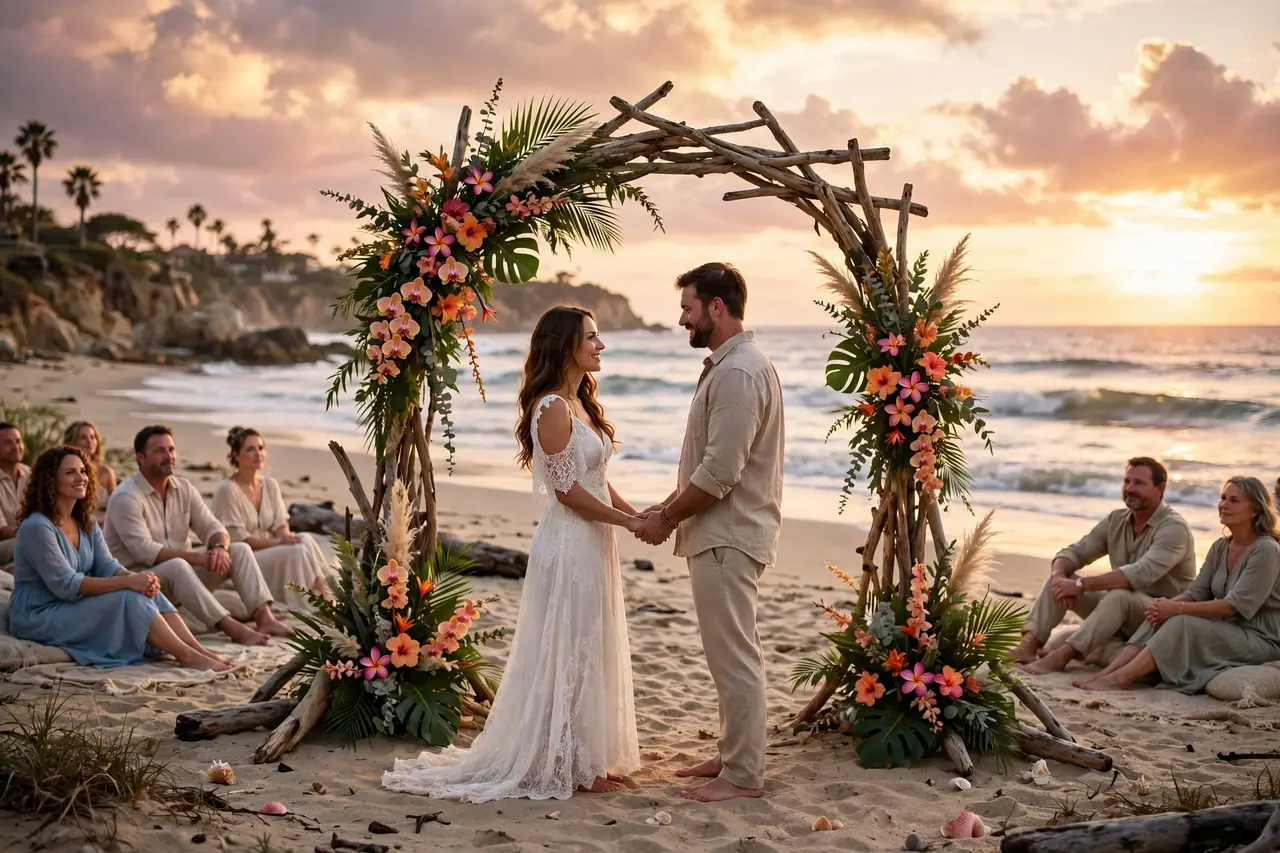
2. The driftwood arch. Build or rent an arch from driftwood and local greenery — it looks like it grew there, because aesthetically it did. Add a few low floral arrangements weighted against the wind. Timeless beach ceremony in its purest form. Scale: 10–50 people.
3. The circle in the sand. Draw a large circle in the sand (or mark one with shells and petals) and have guests stand around it while you exchange vows in the center. No seating, no structure — everyone is literally gathered around your promise. Profoundly moving and nearly free. Scale: 10–30 people.
4. The honeymoon-beach return. Go back to the exact beach where you honeymooned and renew your vows in the same spot, decades later. Recreate one photo from the original trip — same pose, same place, older and happier. Guests will weep; you will too. Scale: any. Pair it with a getaway mindset — see romantic anniversary getaway ideas for couples for building the trip around the ceremony.
5. The sunset sail-and-vow. Charter a sailboat for the ceremony itself — vows at sunset with water on every horizon — then return to shore for dinner. The boat handles the guest limit naturally (most charters take 12 to 40), which keeps the group intimate. Scale: 10–40 people.
6. The tiki-torch evening. Line the ceremony area with tiki torches and exchange vows at dusk as they are lit one by one. The ritual of the lighting becomes part of the ceremony — each torch for a decade, a child, a blessing. Then the torches light the beach party. Scale: 15–60 people.
7. The family beach day. Make the renewal the centerpiece of a full family beach day: morning swimming, midday picnic, vows at golden hour, bonfire after. The kids stay happy, the grandparents get chairs in the shade, and the ceremony feels woven into a day of joy rather than staged apart from it. Scale: 15–50 people.
8. The cliffside elopement-style. Find a dramatic overlook above the water — Big Sur, the Na Pali coast, the cliffs of Cornwall — and exchange vows with the ocean spread below. Just the two of you and whoever can make the climb. The photos will be the ones your grandchildren show people. Scale: 2–10 people.
9. The bonfire night. Vows at sunset, then a bonfire on the sand with s’mores, acoustic music, and stories. Firelight + ocean + stars is the most primally romantic combination humans have found. Check local fire regulations — many beaches allow contained bonfires with a permit. Scale: 10–40 people.
10. The unity-sand ceremony. The classic beach ritual, and for good reason: each partner pours sand from a separate vessel into a shared one, creating a keepsake of blended grains that can never be separated. Use sand from meaningful places — your honeymoon beach, your hometown. Scale: any.
11. The barefoot luxury. High-end simplicity: a designer arch, premium florals, a string duo, champagne service — but still barefoot, still on the sand. Proves that “beach casual” and “exquisite” are not opposites. Scale: 15–50 people.
12. The sunrise paddle-out. For surfing couples: paddle out together at dawn (or have the wedding party paddle out), exchange vows on boards or on the sand after. The ocean is not just the venue; it is the marriage’s element. Scale: 2–15 people.
13. The beach-house weekend. Rent a beach house for the weekend, host the ceremony on the sand out front, and let the house absorb the whole celebration — rehearsal dinner, morning-after brunch, everything. The house becomes headquarters; the beach becomes the chapel. Scale: 10–30 people. For capturing it all, see marriage anniversary photo ideas for couples.
14. The vow-renewal cruise stop. Plan the renewal as a port-day ceremony during a family cruise — vows on a Caribbean or Mediterranean beach, then back aboard for dinner. The logistics are handled by the cruise line; you handle the romance. Scale: 10–40 people.
15. The full-moon vow. Time the ceremony to a full moon rising over the water — vows at moonrise, with the moon’s path on the ocean as your aisle lighting. Check a lunar calendar when choosing your date. Rare, eerie, unforgettable. Scale: 2–20 people.
Permits, Tides, Wind & Sand: The Practical Truth
Beach ceremonies are gloriously simple — once you handle the unglamorous details. Here is the honest briefing.
Permits. Rules vary enormously. Many public beaches allow small ceremonies (under 25 people, no structures) with no permit. Larger groups, arches, amplified sound, or chairs often require one — typically $50 to $500. Private beaches and resorts handle this for you. Start with the local parks department or lifeguard station; they answer this question daily. Never assume — a ranger shutting down your ceremony is the one beach memory you do not want.
Tides. Check the tide chart for your exact date and beach. A high tide can shrink a wide beach to nothing; schedule around low or mid tide for maximum sand. As a rule, plan the ceremony for a falling or low tide, and never set up below the high-tide line (look for the debris line — the ocean marks its own territory).
Wind. The ocean breeze that feels lovely at noon becomes a vow-shredding gust at 5 p.m. Print vows on heavy cardstock or in a booklet (never loose paper), weight every decor item, skip veils and tall arrangements unless secured, and position the couple with their backs to the wind so the officiant and guests can hear. A handheld microphone is worth its weight in gold.
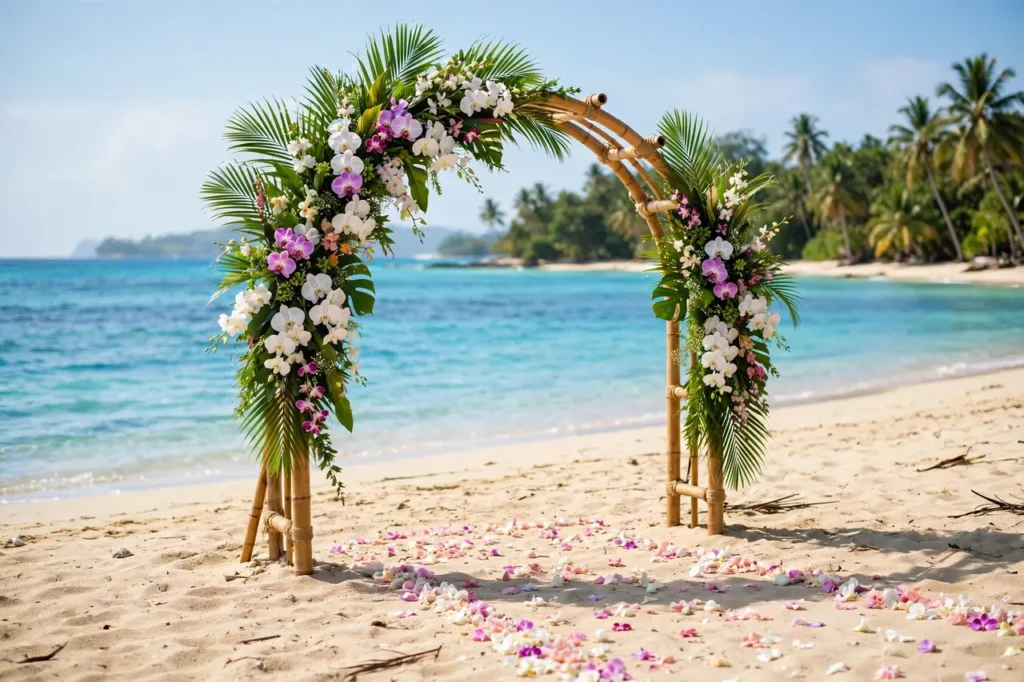
Sand. Sand gets everywhere — embrace it. Barefoot is the dress code; provide a foot-washing station (a tub of water and towels) at the exit. Chairs sink — use them only on firm, damp sand near the waterline, or skip chairs entirely. Long dresses will collect sand; factor a cleaning into the budget or choose shorter hemlines. These are features, not bugs — the sand in your shoes afterward is a souvenir.
Sun and heat. Provide water, encourage hats and sunglasses, and consider the sun’s position: you want it behind the photographer, not blinding the couple. Golden hour solves most sun problems at once — beautiful light, comfortable temperatures, and the day’s crowds thinning.
Beach Ceremony Day-Of Timeline
| Time (for sunset ceremony) | What Happens |
|---|---|
| 3 hours before | Setup: arch, seating markers, sound check, water station |
| 90 min before | Photographer arrives; couple portraits before guests |
| 45 min before | Guests arrive; foot-wash station and programs ready |
| 15 min before | Final tide/wind check; couple in position nearby |
| Golden hour | Ceremony: 15–25 minutes of vows and ritual |
| Sunset | Portraits on the beach; guests enjoy cocktails |
| After dark | Dinner nearby or bonfire on the sand |
Watch: A Maui Beach Vow Renewal
See the shoreline ceremony at its most beautiful: this trailer captures a Maui beach vow renewal — the arch, the waves, the light, the emotion of saying “I still do” with the ocean as witness. Watch it when you need a reminder of why the beach is worth the logistics.
The Beach Renewal Packing & Prep Guide
A beach ceremony has a packing list unlike any other venue — forget the wrong thing and the ocean will remind you. This is the complete prep guide, refined from real shoreline ceremonies: what to bring, what to wear, and the small decisions that separate a smooth beach renewal from a chaotic one.
The ceremony kit (non-negotiable). Vows printed on heavy cardstock in a bound booklet or laminated cards — never loose paper, which the wind will steal. A handheld wireless microphone with fresh batteries (test it on the actual beach; surf noise is louder than you think). Rings secured — put them on a ribbon, in a zipped pouch, or with a designated holder; a ring dropped in sand is findable, a ring dropped in surf is not. A small towel for wiping sandy hands before the ring exchange. Sunscreen applied 30 minutes before (not during — shiny faces photograph poorly). Water for the couple and the officiant. That is the core kit; everything else is enhancement.
The guest-comfort kit. Your guests’ comfort determines their memory of the day. Provide: a water station (a dispenser with cups — dehydration sneaks up on beachgoers), a basket of inexpensive sunglasses or hand fans for harsh light, a foot-wash station at the ceremony exit (a low tub of fresh water plus towels — guests will bless you), and clear guidance on footwear in advance (“barefoot welcome; sandals fine”). For elderly guests, bring two or three sturdy, low chairs even if everyone else stands — dignity matters more than aesthetics.
The decor-survival kit. Every decor item must pass the wind test. Floral arrangements go in heavy, low vessels — or skip vessels and use anchored shepherd’s hooks with hanging arrangements. The arch must be staked, weighted, or both; a toppled arch mid-ceremony is the classic beach disaster, and it is entirely preventable. Fabric draping should be tied, not pinned. Petals are better than loose confetti (which blows into the ocean — an environmental no). Programs, if any, go on cardstock with a shell or stone as a paperweight at each seat. Test everything in actual beach wind before the day, not in your calm backyard.
What to wear — the couple. Dress for wind, sand, and sun. Flowing fabrics photograph like dreams but become sails in gusts — choose weighted hemlines, or a wrap you can manage. Barefoot is traditional and practical; if you want shoes for photos, bring sandals you can slip off. Skip the veil unless it is secured like rigging, or choose a floral crown instead. Bring a cover-up or jacket for after sunset — beach evenings cool fast, and shivering through your own portraits is avoidable. And pack a full change of clothes in the car; salt, sand, and sweat are a trio.
What to tell guests to wear. Put it on the invitation, explicitly: “Beach formal — barefoot welcome, light fabrics, hats and sunglasses encouraged.” Guests stress enormously about beach dress codes; removing the guesswork is a kindness. Mention the walk (how far from parking over what terrain), the sun situation (no shade — bring hats), and the temperature swing (warm day, cool evening). Informed guests are comfortable guests.
The photography briefing. Beach light is generous but tricky. Brief your photographer on three things: the ceremony’s position relative to the sun (you want the sun behind the photographer or to the side, never blasting into the couple’s faces), the wind plan for hair and fabric (some wind looks romantic; a face full of hair does not), and the tide timeline (the best portraits happen in the 20 minutes after the ceremony, before the light changes). Ask for a mix of wide ocean shots and tight emotional close-ups — the beach gives you both for free. For posing inspiration, browse marriage anniversary photo ideas for couples before the day.
The day-before rehearsal. Walk the beach at your exact ceremony time the day before. Check: where the sun is, where the wind comes from, where the tide line sits, where guests will park and walk, where the shade falls (if any), how loud the surf is at the ceremony spot. Stake your arch positions, photograph the setup spots, and note the nearest restroom. Twenty minutes of reconnaissance prevents 90 percent of beach-day surprises.
The morning-of checklist. Tide check. Wind check. Cloud check (a marine layer that burns off by noon is normal on many coasts — do not panic at 9 a.m. overcast). Confirm the permit paperwork is in the bag. Charge the mic and the speaker. Pack the kits. Arrive 90 minutes early — beach setup always takes longer than planned, because sand. And designate one person whose only job is watching the sky and the water; the ocean does not send calendar invites.
Sunset vs. Sunrise: Choosing Your Ceremony Light
The single most consequential aesthetic decision of a beach renewal is when — because on the shore, light is the decor. Sunrise and sunset ceremonies are entirely different events sharing a location. Here is how to choose.
The case for sunset. Golden hour — the hour before sunset — is the most flattering light in photography: warm, directional, forgiving. Skin glows, the ocean turns gold, and the sky performs. Temperatures are comfortable, the day’s crowds are thinning, and the natural arc of the event (ceremony into dinner into evening celebration) feels effortless. The trade-offs: it is the most popular beach time (claim your spot early), and on some coasts the marine layer or afternoon wind peaks near sunset. If your beach faces west, sunset is almost always the right call.
The case for sunrise. Dawn on an empty beach is the most private ceremony setting on earth — you will likely have the shoreline to yourselves. The light is soft and pink-gold, the air is still (morning wind is calmer on most coasts), and temperatures are cool. The trade-offs: it requires commitment (a 5 a.m. wake-up for a 6:30 ceremony), and the event’s arc runs backward into the day (ceremony into breakfast into a full beach day — which many couples love). If your beach faces east, or if privacy outranks everything, sunrise wins.
The light-decision checklist. Check which direction your beach faces (west = sunset ceremonies glow; east = sunrise). Check the month’s typical marine layer and wind patterns — local surf shops and lifeguards know these intimately. Consider your guests: elderly family and young children do mornings poorly and evenings well. Consider your celebration: sunset flows into dinner and dancing; sunrise flows into a beach day and brunch. And consider photography: discuss both options with your photographer, who will have opinions grounded in that specific beach’s light. There is no wrong answer — only the answer that matches your priorities. For styling the celebration that follows either choice, marriage anniversary party theme ideas can help shape the event around your ceremony’s mood.
Frequently Asked Questions
Do we need a permit for a beach vow renewal?
It depends on the beach and the size. Small, simple ceremonies (under ~25 people, no structures) often need no permit on public beaches — but many locations require one for larger groups, arches, chairs, or amplified sound. Always check with the local parks department or lifeguard station. Permits typically cost $50–$500.
What time of day is best for a beach ceremony?
The hour before sunset (golden hour) is the consensus choice: gorgeous light, cooler temperatures, thinner crowds. Sunrise is the runner-up — equally beautiful, even more private, but requires commitment. Avoid midday: harsh light, harsh heat, maximum crowds.
What should we wear to a beach vow renewal?
Barefoot-friendly and wind-proof. Flowing fabrics photograph beautifully but catch wind — bring a wrap or choose weighted hemlines. Skip the veil (or secure it seriously). The couple should dress up enough to feel ceremonial; guests should be told “beach formal” so nobody arrives in a ballgown or a wetsuit.
How do we handle the wind during vows?
Position the couple with backs to the wind, print vows on heavy cardstock in a booklet, use a handheld or lapel microphone, and keep the ceremony short. Brief your officiant to project. A little wind in the photos looks romantic; a lot of wind in the audio is a problem — the mic solves it.
Can we have chairs on the sand?
Yes, with caveats: place them on firm, damp sand near the waterline (not soft dry sand), and keep the count modest. Many beach ceremonies skip chairs entirely — guests stand for 15 minutes, which most people prefer to sinking. For elderly guests, bring a few sturdy chairs regardless.
What about a backup plan for bad weather?
Have one, always. Options: a beachfront restaurant’s covered patio, a rented house nearby, or a tent on the sand. For destination renewals, the resort usually offers an indoor alternative. Make the call the morning of (or night before for tent rentals) and communicate once, clearly.
Is a beach renewal more expensive than other options?
Not necessarily. The beach itself is free or cheap (permit), decor needs are minimal, and the setting does the heavy lifting. Costs rise with guest count (travel, lodging, meals) and vendors (photographers may charge travel fees). A local beach renewal for 20 can cost under $2,000; a destination one for 50 can reach five figures.
How do we keep sand out of everything?
You do not — you manage it. Foot-wash station at the exit, towels in the car, dress bags for the outfits, and acceptance. Pro tip: baby powder removes sand from skin like magic. And honestly? Finding sand in your shoes a week later is one of the best souvenirs there is.
Conclusion: Let the Ocean Say What Words Cannot
You could exchange vows in a ballroom and they would be beautiful. But on the beach, something extra happens: the setting itself testifies. The waves keep their ancient rhythm while you make your new promises. The horizon reminds everyone that some things endure. And when you say “I still do” with the ocean as your witness, the words borrow a little of its permanence.
So check the tide chart, weight the arch, print the vows on cardstock, and go. The beach has been waiting — it is very patient, and it is very good at keeping secrets and keeping promises. Just like the two of you.