Your backyard has seen your marriage at its most real: the morning coffees, the kid chaos, the quiet evenings, the arguments through the screen door, the making up under the stars. It has hosted the unglamorous, unphotographed 99 percent of your love story. So when it comes time to renew your vows, where could possibly be more honest than the ground where the marriage actually happened?
Backyard vow renewals have quietly become one of the most beloved ceremony styles in America, and the reasons are obvious once you say them out loud. The venue is free. The meaning is built in. The guest list stays naturally intimate. The photos look like your life, not a stock photo. And the party afterward can run as late as the neighbors will tolerate — which, if you invite them, is pretty late.
This is your complete guide to a backyard vow renewal ceremony: why the backyard wins, how to map your yard into ceremony zones, fifteen concrete ideas for setups and styles, decorating guidance that respects both beauty and budget, a weather-backup plan, and answers to the practical questions (noise, neighbors, bathrooms — yes, we go there). Let us turn the place you live into the place you promise.
Why the Backyard Wins as a Renewal Venue
Start with meaning, because meaning is the backyard’s unfair advantage. Rented venues are beautiful, but they are strangers’ beautiful — they carry no memory. Your backyard carries all of it. The tree you planted the year your daughter was born. The patio where you have grilled a thousand summer dinners. The spot where the dog is buried. When you stand in that yard and promise forever again, every square foot testifies. Guests feel it too; there is a warmth to a home ceremony that no event space can manufacture, because the space itself is part of the family.
Then there is the money. Venue rental is typically the single largest line item in any ceremony budget — often thousands of dollars before a single flower is bought. Your backyard costs nothing, which means the entire venue budget can be reallocated to the things guests actually remember: great food, good music, beautiful flowers, a photographer worth hiring. A $5,000 backyard renewal routinely outshines a $20,000 ballroom renewal in guest satisfaction, because the money went to experience instead of real estate.
Control is the third win. At a rented venue, you are working around someone else’s rules: load-in times, vendor restrictions, noise curfews, decor limitations, the wedding before yours running long. In your backyard, you set up the day before. You rehearse at sunset in your pajamas. The dog can be the ring bearer. Your playlist runs through your own speakers. If the ceremony runs long because everyone is crying too hard to continue — and it might — nobody is tapping a watch.
Finally, the backyard renewal has a wonderful side effect: it re-enchants your home. Couples consistently report that after renewing vows in their yard, the space feels different — charged, somehow. The corner where you stood becomes the corner where we renewed our vows. You will walk past it every day. That is not a memory that fades; it is a memory you live inside. Try getting that from a hotel ballroom.
Mapping Your Backyard: The Five Ceremony Zones
Before you plan a single detail, walk your yard with fresh eyes and divide it into five functional zones. This is the single most useful planning exercise for a backyard ceremony, because it turns a familiar space into an event space in your mind.
Zone 1: The ceremony site. The flattest, most photogenic patch of ground — ideally with a natural backdrop (a tree, a garden bed, a fence you can dress up) and room for your arch plus two rows of seating or standing room. Visit it at your planned ceremony time to check the light: you want soft, flattering light on faces, not harsh noon sun or deep shade.
Zone 2: The guest arrival. A clear path from the parking area or front door to the ceremony site, marked with signs, lanterns, or flower petals. First impressions matter; the walk in sets the tone. If guests must pass through the house, tidy ruthlessly and put a sign on the bathroom door.
Zone 3: The celebration space. Where the party happens after the vows — dining tables, the grill or buffet station, the bar, the dance area. This can be the same lawn as the ceremony (flip the seating during cocktail hour) or a separate patio. Same-lawn flips feel magical; separate zones feel organized. Both work.
Zone 4: The practical backbone. The unglamorous zone: food prep, the cooler station, trash and recycling, the generator if you need one, the “vendor” corner. Tuck it behind the garage or a hedge. Every beautiful backyard party has an ugly-beautiful backbone. Plan it deliberately.
Zone 5: The quiet corner. One small, beautiful spot away from the action — a bench, a hammock, two chairs under a tree. Couples need a five-minute breather during their own party, and emotional guests need a place to compose themselves. The quiet corner is the most overlooked and most appreciated zone.
Fifteen Backyard Vow Renewal Ceremony Ideas
From simple to spectacular, each idea is designed for a residential backyard. Scale the guest count to your space — most work beautifully for 10 to 50 guests.
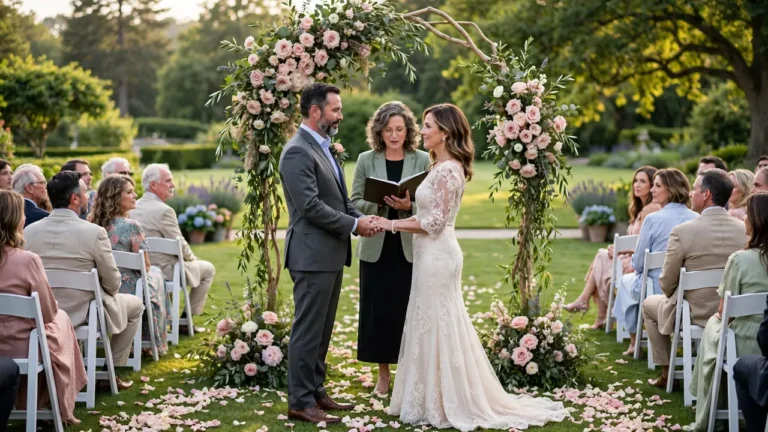
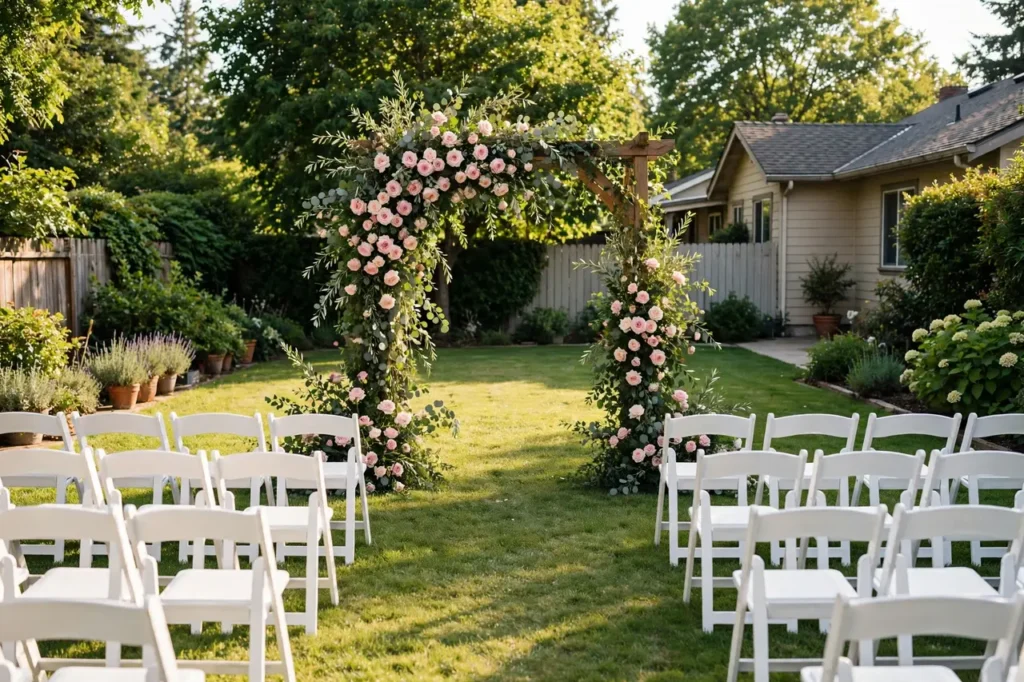
1. The garden-arch classic. A floral arch (rented or DIY from a wooden frame and grocery-store flowers) at the garden’s best spot, two rows of white chairs, string lights overhead. Timeless, photogenic, and the baseline against which all backyard ceremonies are measured. Effort: medium. Cost: $200–$800.
2. The tree ceremony. Exchange vows beneath the biggest tree in your yard — no arch needed, the tree is the arch. Hang lanterns or ribbons from low branches, arrange seating in a semicircle around the trunk. Profoundly simple and deeply symbolic: like your marriage, the tree was planted years ago and grew. Effort: low. Cost: under $150.
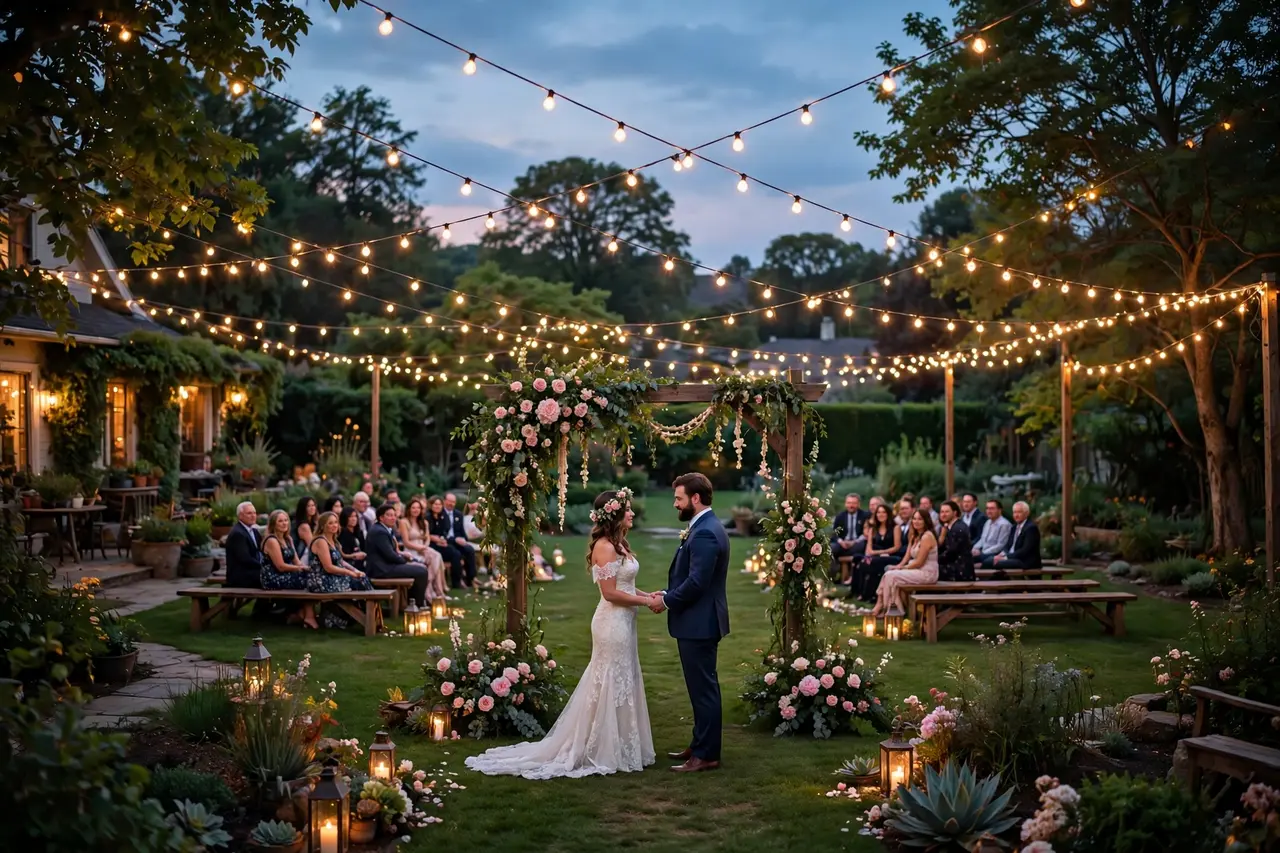
3. The twilight string-light canopy. Crisscross string lights above the entire ceremony area and hold the vows at dusk, so you exchange promises as the lights take over from the sun. The transition from daylight to lamplight during the ceremony is genuinely cinematic. Effort: medium. Cost: $100–$300 for lights. For more ways to dress your space, see marriage anniversary decoration ideas at home.
4. The fire-pit vow. Arrange seating around your fire pit, light it as the sun sets, and exchange vows in its glow. Firelight is the most flattering light ever invented, and the crackling fire covers nervous silences. S’mores for the reception write themselves. Effort: low. Cost: under $100.
5. The porch ceremony. Use your porch or deck as a natural stage — you stand on it, guests gather on the lawn below. The elevation gives everyone a clear view without rented seating risers, and the house itself becomes the backdrop. Hang bunting or garlands from the railings. Effort: low. Cost: $50–$200.
6. The memory-lane walkway. Line the aisle with framed photos from your marriage — one per year, in chronological order — so guests literally walk through your history to reach their seats. It doubles as decor and as the cocktail-hour activity. Effort: medium. Cost: $50–$150 for prints and frames.
7. The garden-party tea. An afternoon ceremony followed by a proper tea party: tiered stands, finger sandwiches, champagne. Set up small round tables with mismatched vintage china (thrift stores are goldmines). Effortlessly elegant and very affordable. Effort: medium. Cost: $200–$500.
8. The barbecue renewal. Vows at 5, barbecue at 6. The ceremony is sincere; the party is gloriously casual. This format delights guests because it demolishes the stuffiness some associate with ceremonies — and the food is better than any banquet chicken. Effort: medium. Cost: $300–$800 for food.
9. The morning garden. A 9 a.m. ceremony in the garden at its morning best, followed by brunch on the patio. Morning light is the most flattering of the day, the air is cool, and brunch is cheaper and easier than dinner. Mimosas optional but encouraged. Effort: low. Cost: $150–$400.
10. The kids’-art gallery. If grandchildren are involved, have them create the decorations — painted signs, handprint banners, flower arrangements. The decor will be gloriously imperfect and the kids will be unbearably proud. This is the ceremony the family will talk about forever. Effort: low. Cost: under $75.
11. The anniversary garden planting. During the ceremony, plant something permanent together — a rose bush, a tree, a perennial bed — with each guest adding soil or water. The planting becomes a living monument; every bloom recalls the day. Effort: low. Cost: $30–$100.
12. The lawn-game reception. Vows at 4, then croquet, bocce, cornhole, and badminton until dark. The games keep all ages entertained without a DJ or a program, and the photos of grandparents playing croquet in good clothes are priceless. Effort: low. Cost: $50–$150 (or borrow the games).
13. The movie-night finale. After the ceremony and dinner, project a slideshow — or a short film of your marriage, or even your original wedding video — on a sheet hung in the yard. Guests on blankets, popcorn, stars overhead. The most memorable ending a backyard renewal can have. Effort: medium. Cost: $50–$150 (projector rental).
14. The progressive yard. Use different parts of the yard for different chapters: vows in the garden, cocktails on the patio, dinner under the lights, dancing on the lawn. Moving the party through the space makes a familiar yard feel like a venue with “rooms.” Effort: medium. Cost: $200–$600.
15. The rain-or-shine tent. Rent a clear-top tent and commit to the yard regardless of weather — the tent becomes part of the aesthetic, especially with lights strung inside. Rain on a tent roof during vows is not a disaster; it is atmosphere. Effort: medium. Cost: $400–$1,200 (tent rental).
Decorating Your Backyard: Beauty Without the Big Budget
Backyard decor follows one rule: enhance, do not disguise. Your yard is already beautiful to the people who love you; the decor’s job is to mark the occasion, not to transform the space into something unrecognizable.
Light first. Lighting delivers more beauty per dollar than anything else. String lights ($30–$80 per strand) crisscrossed above the ceremony and dining areas transform a yard after dark. Add lanterns, candles in jars, and tiki torches for layers. If your ceremony is at dusk, lighting is not decor — it is the whole aesthetic.
One focal point. You need exactly one: the arch, the tree, the porch. Dress it well — fabric, flowers, greenery — and let the rest of the yard be itself. A single stunning focal point photographs better than scattered decorations everywhere.
Flowers from smart sources. Grocery-store flowers, farmers’ markets, and your own garden (plus friends’ gardens — ask!) produce gorgeous arrangements for a tenth of florist prices. Focus flowers on high-impact spots: the arch, the tables, the cake. Everywhere else, greenery and candles suffice.
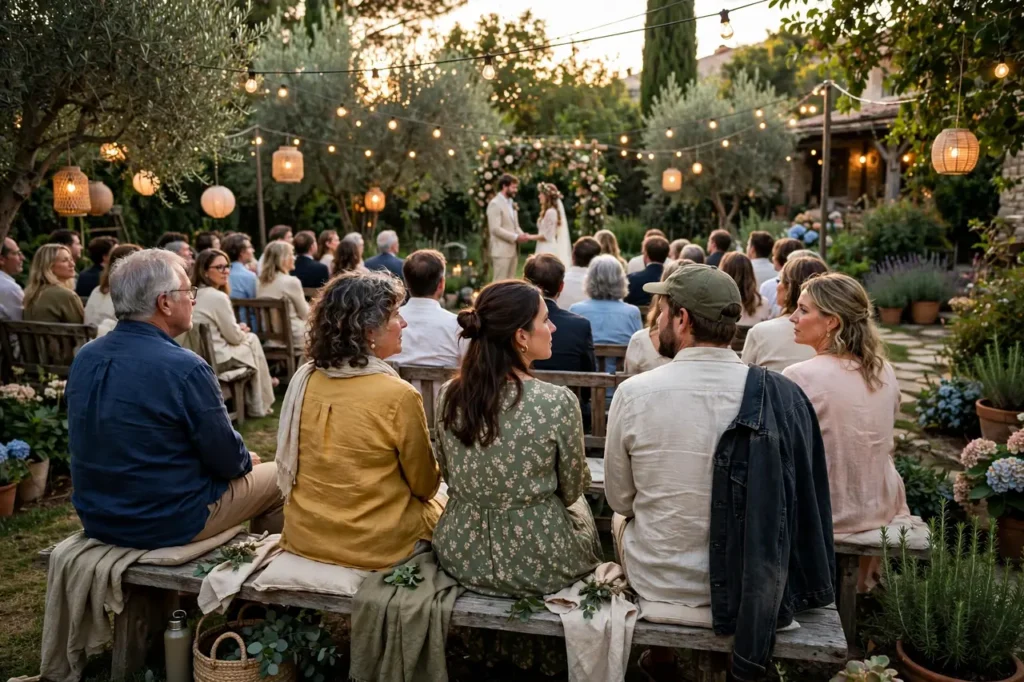
Seating that looks intentional. Mismatched chairs look charming if they are confidently mismatched — add a unifying element (a cushion, a ribbon, a flower on each) and the eclecticism becomes style. Benches, hay bales with blankets (for rustic themes), and borrowed chairs all work. For tablescape inspiration, see marriage anniversary table decoration ideas, and for ceremony-specific styling, wedding day decoration ideas at home.
Signs with personality. Hand-painted signs (“The [Your Name]s Est. [Year]”, “Pick a seat, not a side”, arrow signs to the bar) add charm for almost nothing. Chalkboards, reclaimed wood, or even nice cardstock in frames — the words matter more than the medium.
The Weather Backup Plan
Outdoor ceremonies need a Plan B. Decide it in advance, communicate it clearly, and then stop worrying.
| Forecast | Plan B | What You Need Ready |
|---|---|---|
| Light rain | Tent or large umbrellas for guests | Tent reserved; umbrella basket by entrance |
| Heavy rain/storms | Move ceremony indoors (garage, living room) | Indoor layout planned; decor movable |
| Extreme heat | Shift to morning/evening; add shade & water | Shade sails; water station; fans |
| High wind | Secure or simplify decor; shorten program | Weighted bases; wind-proof vow cards |
| Perfect weather | Enjoy it — you planned well | Sunscreen station; bug spray |
Pro tip: make the go/no-go call by 9 a.m. on the day (or the night before for tent decisions), communicate it once to everyone, and commit. Half the stress of weather is indecision, not weather.
Watch: A Real Garden Vow Renewal
See the backyard-garden format done beautifully: this film follows a couple renewing their vows in a garden setting — the flowers, the family, the unhurried joy of a ceremony rooted in a real place. Note how little “production” it needs to feel magical.
The Backyard Ceremony: A Minute-by-Minute Order of Events
One of the hardest parts of planning a backyard renewal is knowing what actually happens, and when. Without a coordinator or a venue’s standard timeline, couples stare at the blank schedule and freeze. Here is a complete, field-tested order of events for a late-afternoon backyard renewal with 20 to 40 guests — adapt the times to your light and your style.
4:00 p.m. — Setup complete, couple in hiding. Everything should be set by now: chairs placed, arch dressed, sound checked, beverage station stocked. The couple retreats inside — separately or together — for 45 minutes of calm. Eat something. Drink water. Read your vows one last time. This buffer is sacred; do not let well-meaning helpers pull you into last-minute tasks. Assign a point person (a sibling, a best friend) to handle any stragglers.
4:30 p.m. — Guests arrive. Your point person greets guests at the arrival zone and guides them to the ceremony area. Have the playlist running, drinks available, and the memory-lane walkway (if you built one) ready to browse. Guests naturally mingle for 20 to 30 minutes; this is not wasted time — it is the warm-up that makes the ceremony feel like a gathering rather than a show.
5:00 p.m. — Seating and welcome. The officiant (or lead friend/family member) invites everyone to be seated and offers a two-minute welcome: who you are, why you are gathered, what is about to happen. The welcome sets the emotional temperature — warm, unhurried, personal. A good welcome mentions something specific about the couple’s years together, not just generic celebration language.
5:05 p.m. — The entrance. Walk in together, or have one partner walk to the arch while the other waits — there is no rule, but some kind of entrance creates a threshold moment that tells everyone’s nervous system the ceremony has begun. Music shifts here: your song, a meaningful instrumental, or simply the playlist fading. Take 30 seconds at the arch to breathe and look at your guests before anything is said.
5:07 p.m. — Reflection on the years. The officiant speaks for three to five minutes about your marriage — the story, the milestones, the character of the love. This is where the ceremony becomes yours rather than generic: the officiant should name real things (the year you met, the house you built, the kids you raised). If a friend is officiating, help them write this part; specific beats eloquent.
5:12 p.m. — Readings or music (optional). One reading (a poem, a passage, a children’s book page — keep it under three minutes) or one live or recorded song. This beat gives the couple a moment to breathe and the guests a moment to settle emotionally before the vows. Choose something that means something to you, not something that sounds ceremonial.
5:15 p.m. — The vow exchange. The heart of the day. Each partner speaks (two to four minutes each), facing each other, holding hands. The officiant steps slightly aside — physically and energetically — so the moment belongs to the couple. Guests should hear every word; test the acoustics beforehand (backyards swallow sound — a simple portable mic is worth it for groups over 20).
5:23 p.m. — The ritual. One symbolic act: lighting a unity candle, pouring unity sand, planting the tree, the shared toast, handfasting. Keep it to one ritual, performed slowly, with the officiant narrating its meaning in a sentence or two. The ritual gives photographers their defining shot and gives the ceremony a physical anchor.
5:27 p.m. — The pronouncement and kiss. The officiant declares you “still married” / “married again in spirit” / whatever wording fits — then the kiss, then the cheer. Let the applause run; do not rush off. Stand in it for a full minute. This is the peak memory being formed.
5:30 p.m. — Recessional and cocktail transition. Walk back together through your guests (high-fives, hugs, tears), then disappear for 15 minutes of couple portraits while guests enjoy drinks and appetizers. This separation is strategic: it gives you a private breather and gives the photographer clean shots without an audience.
6:00 p.m. onward — The celebration. Dinner, toasts (keep to three or four, two minutes each — assign them in advance), first dance if you want one, and the party unfolding at its own pace. The golden rule of backyard receptions: program lightly and let the evening breathe. The best backyard parties feel unhurried because they are.
Total ceremony time: about 30 minutes. Total event: as long as the neighbors (and your energy) allow. Print this timeline for your point person and your officiant — when everyone knows the shape of the day, you get to simply live inside it.
Backyard Sound & Music: Making Sure Every Word Is Heard
The most common technical failure at backyard ceremonies is not the weather or the decor — it is sound. Open air swallows voices with ruthless efficiency, and couples consistently underestimate how much projection a yard requires. The fix is simple and cheap, but it must be planned.
The 20-guest rule. For groups under 20 in a quiet yard, natural voices usually carry — provided the couple faces the guests (not each other) during the officiant’s parts, and faces each other only for the vows themselves. For groups over 20, or any yard near a road, with wind, or with ambient noise (pool pumps, traffic, neighbors’ dogs), get a microphone. A $40 wired lavalier or a borrowed portable PA solves the problem completely. Test it in the actual yard at ceremony time; sound behaves differently at 5 p.m. than at noon.
Music strategy. You need music for three moments: guest arrival (background playlist, low volume), the entrance (one meaningful song, slightly louder), and the celebration after (the party playlist). A single good Bluetooth speaker covers all three for groups under 40 — place it centrally and elevated, not on the ground. For larger groups, rent a powered speaker ($50–$100). Assign one person as the “music human” with the phone and a printed cue sheet; do not rely on the couple to manage playback mid-ceremony.
The playlist itself. Build three playlists, not one: 45 minutes of mellow arrival music, the ceremony songs (entrance, any mid-ceremony music, recessional), and the party mix. Download everything offline — backyard Wi-Fi is unreliable and cellular data fails at the worst moments. Put the phone on Do Not Disturb; a ringing phone mid-vow is a special kind of horror. These small disciplines are what separate a smooth ceremony from a chaotic one, and they cost nothing.
Frequently Asked Questions
Do we need a permit for a backyard vow renewal?
Usually not for the ceremony itself on your own property. Check local rules if you expect amplified music late, a large tent (some areas require tent permits), many parked cars, or open flames. A quick call to your city or HOA avoids day-of surprises. When in doubt, keep music reasonable and end by local quiet hours.
How many guests can a typical backyard hold?
Comfortably, 20 to 50 for most suburban yards — ceremony seating plus mingling and dining space. Under 20 feels spacious; over 50 needs careful layout (and more bathrooms). Walk the yard with a tape measure and painter’s tape to map zones before you commit to a number.
What about bathrooms?
The question everyone thinks and nobody asks. For under 25 guests, your home bathrooms suffice — just stock them well and designate one as primary. For 25 to 50, consider renting a luxury restroom trailer ($500–$1,000); it is the single upgrade guests appreciate most. For over 50, it is essentially required.
How do we handle neighbors?
Invite them, or at least warn them warmly in advance with a note and a small gift. “We are renewing our vows Saturday evening — music until 10, please join us for dessert” turns potential complaints into goodwill. Most neighbors are delighted; the note is insurance for the rest.
What time of day is best for a backyard ceremony?
The hour before sunset (“golden hour”) for beauty and comfort, or mid-morning for brunch formats. Avoid midday in summer — harsh light, harsh heat. Visit your yard at the planned time on a similar day to check sun, shade, and bugs.
Can we have a backyard renewal in a small yard?
Yes — small yards force intimacy, which is a strength. A 15-person ceremony fits in most yards; use vertical decor (hanging lights, tall arrangements) to create grandeur without footprint. If the yard truly cannot hold your list, trim the list — the yard is telling you something.
What should we do about insects?
Citronella candles and torches, a bug-spray station (nice bottles, not the aerosol can), and timing (dusk is buggiest; a breeze helps). Avoid sweet perfumes and uncovered sweets. These small steps handle 90 percent of the problem.
How do we power music, lights, and microphones outdoors?
For most backyard ceremonies, a good Bluetooth speaker suffices for music — no power needed. String lights are increasingly solar or battery-powered. If you need real power (catering, larger sound), run outdoor-rated extension cords from the house or rent a quiet generator. Keep cords taped down and away from foot traffic.
Conclusion: The Yard Remembers
Years from now, you will stand in your yard on an ordinary evening — taking out the trash, watering the garden — and you will look at the spot where you stood and promised again, and the whole day will come back. The vows. The faces. The light. That is the thing about renewing your vows at home: the ceremony ends, but the venue keeps telling the story.
So map the zones, string the lights, warn the neighbors, and write the true words. Your backyard has hosted your whole marriage. Let it host the promise, too. It has earned it — and so have you.