
Some of the most powerful traditions are also the simplest: a jar, some slips of paper, and a habit of noticing the good. An appreciation jar collects the small moments that usually evaporate — the colleague who stayed late to help, the joke that saved a hard day, the tiny win nobody celebrated — and turns them into something you can hold, read, and revisit. Whether it sits on an office desk, a classroom shelf, or your kitchen counter, these appreciation jar ideas will show you how to set one up, keep it full, and turn a humble jar into one of the most meaningful rituals in your workplace, classroom, or home.
What Is an Appreciation Jar, Exactly?
An appreciation jar is a container where people regularly drop short written notes of gratitude, praise, or fond memories. The concept goes by many names — gratitude jar, kudos jar, wins jar, kindness jar, blessings jar — but the mechanics are always the same: write something good on a slip of paper, fold it, drop it in, and let the jar fill up over weeks or months. Then, at a chosen moment — the end of a quarter, a holiday, a tough day, a celebration — you open it and read the notes aloud. That reading is where the magic happens. People hear, in their colleagues’ and loved ones’ own words, exactly what they meant to each other, and the room changes.
The idea works because it solves the two biggest problems with gratitude: we feel it but forget to express it, and we express it but the moment vanishes. The jar captures gratitude at the speed of a sticky note — thirty seconds, no ceremony — and preserves it for a moment when it will mean the most. Psychologists who study gratitude practices point out that the writing is as important as the reading: pausing to articulate something good rewires your attention toward the positive, which is why people who keep gratitude jars consistently report better moods and stronger relationships. A jar on the desk is a thirty-second daily habit with compound interest.
How to Set Up an Appreciation Jar in 5 Steps
Step 1: Choose your jar. Any container works — mason jar, fishbowl, decorative box, even a decorated coffee can. Clear glass is ideal because a visibly filling jar is motivating; watching the notes pile up is part of the fun. Size it to your group: a quart jar for a family, a gallon jar or large bowl for an office.
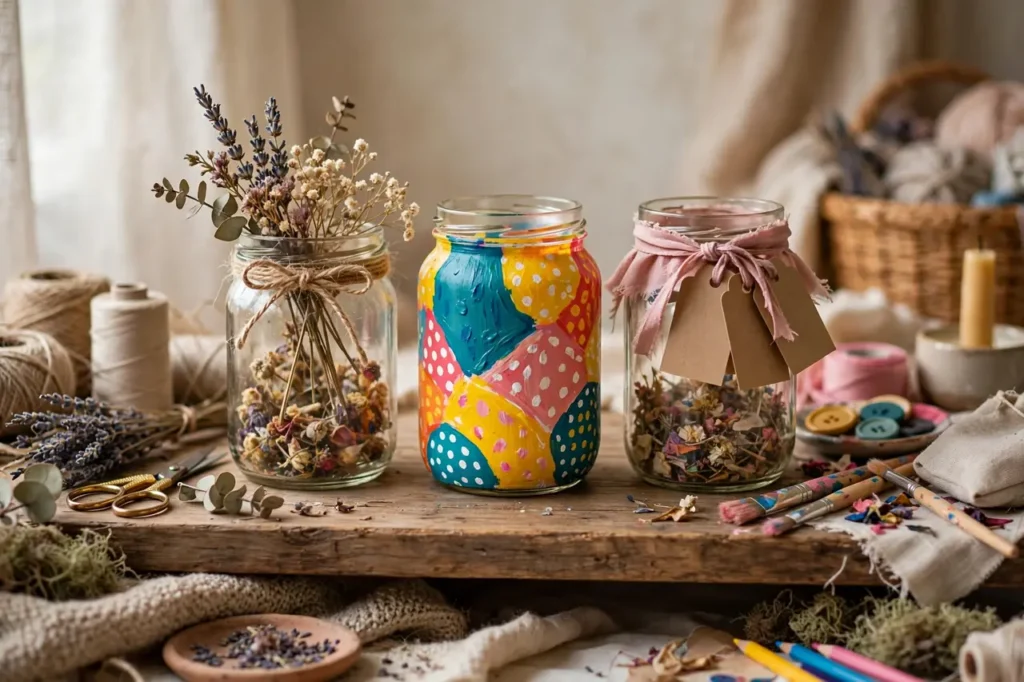
Step 2: Decorate it together. Let the group personalize the jar with paint, ribbon, twine, stickers, or a label with its name (“The Awesome Jar,” “Kudos Corner,” “Our Wins”). A jar people helped decorate is a jar people will actually use.
Step 3: Stock it with supplies. Keep colorful slips of paper or sticky notes and pens right next to the jar at all times. Friction kills habits — if someone has to hunt for paper, the moment passes. Pre-cut slips in a small basket solve this completely.
Step 4: Set the ritual. Decide when notes go in and when they come out. Popular rhythms: drop notes anytime, read them at the monthly team meeting; fill all quarter, read at the quarterly celebration; fill all year, read on New Year’s Eve. Announce the reading date when you launch — a deadline gives the jar purpose.
Step 5: Seed it yourself. Drop in the first five to ten notes before anyone else sees it. An empty jar is intimidating; a jar with notes in it is an invitation. Leaders should seed office jars, parents should seed family jars, teachers should seed classroom jars — the first notes model exactly what a good note looks like.
25 Appreciation Jar Ideas for Every Setting
The jar is endlessly adaptable. Below are twenty-five variations organized by where the jar lives — pick the one that fits, or run several at once.
Office and Team Jars
1. The Kudos Jar. The classic workplace version: anyone can drop a note praising any colleague for anything. Read a handful at each team meeting. It takes five minutes and transforms the meeting’s energy.
2. The Wins Jar. Inspired by a popular team ritual: every time something goes right — a deal closed, a bug fixed, a kind email received — write it down. Read them all at the quarterly review. Teams are always shocked by how much they accomplished and forgot.
3. The New Hire Welcome Jar. When someone joins, the team fills a jar with notes: welcome messages, tips, funny team lore, lunch invitations. Hand it over on day one and watch a stranger become a colleague by lunch.
4. The Farewell Jar. When someone leaves, collect notes from everyone — favorite memories, what you will miss, where to find them. It is the single best going-away gift: personal, permanent, and free.
5. The Client Love Jar. Print out kind client emails, great reviews, and positive feedback, and drop them in. On hard weeks, read a few aloud. It reconnects the team with why their work matters.
6. The Idea Jar (with appreciation twist). Half the slips are appreciation notes, half are improvement ideas submitted with gratitude for the chance to contribute. It pairs thanks with voice — people feel heard and valued.

Family Jars
7. The Dinner Table Jar. Keep it where the family eats. Once a week at dinner, everyone writes one note — something they appreciated about another family member that week — and drops it in. Read them monthly. Kids who grow up hearing specific appreciation become adults who give it.
8. The Birthday Jar. In the weeks before someone’s birthday, family members secretly fill a jar with notes: favorite memories, reasons you love them, funny stories. Present it with the cake. It routinely outshines every wrapped gift.
9. The New Year Jar. Start one on January 1st; all year, drop in good moments, big and small. Open it together on New Year’s Eve and relive the year. Families who do this once never stop — it becomes the holiday’s emotional centerpiece.
10. The Hard Times Jar. When the family is going through something difficult — illness, a move, a loss — start a jar specifically for collecting the kindnesses you receive and the strengths you discover. Reading it later reframes the whole experience.
11. The Gratitude Jar for Kids. A simplified version for young children: draw a picture of something you are thankful for instead of writing. It builds the gratitude habit before writing is even fluent, and the drawings are impossibly charming.
Classroom and Community Jars
12. The Kindness Jar. Students drop notes when they catch classmates being kind. When the jar hits an agreed level, the class earns a celebration. It makes kindness visible and aspirational instead of just expected.
13. The Teacher Appreciation Jar. Parents and students fill it through the year; present it during Teacher Appreciation Week. Teachers consistently say these notes mean more than any gift — they are proof the work lands.
14. The Meeting Icebreaker Jar. At community or club meetings, start by pulling three notes from the jar and reading them. It takes two minutes and sets a warm tone no agenda item can match.
15. The Wedding or Party Jar. Set one out at celebrations with a sign inviting guests to leave advice, memories, or wishes. The couple reads them on their first anniversary — a time capsule of love from everyone who was there.
Personal and Themed Jars
16. The Self-Love Jar. Write notes to yourself: things you did well, compliments you would give a friend, reminders of your strengths. Open it on bad days. It feels strange exactly once, then becomes a lifeline.
17. The Adventure Jar. Fill it with date ideas, day trips, and experiences on slips; draw one whenever you need plans. It is appreciation for your own life — a jar that says your time deserves delight.
18. The Memory Jar. Ticket stubs, fortunes, one-line memories — anything that captures a moment. Open yearly and marvel at how much living fit into twelve months.
19. The Affirmation Jar. Fill with encouraging quotes and personal mantras; draw one each morning. For ready-made material, our good morning quotes collection has hundreds of uplifting lines perfect for jar slips.
20. The “Open When” Jar. Label slips for moments — “open when you need courage,” “open when you miss home,” “open when you did it!” — and fill accordingly. It is a jar that parents give graduates, friends give friends, and teams give departing colleagues.
21. The Dream Jar. Write goals and dreams on slips; open it yearly to see which came true. It turns vague hoping into something you can hold, and the annual reading is pure motivation.
22. The Friendship Jar. A group of friends each contributes notes about the others; open it at reunions. Long-distance friendships especially thrive on this kind of tangible connection.
23. The Holiday Jar. Through December, drop in notes about the season’s best moments; open next December before starting the new one. Two years of holidays in one reading.
24. The Work Anniversary Jar. Colleagues add notes throughout someone’s anniversary year; present it on the day. It turns a date HR tracks into a celebration the team owns.
25. The Pay-It-Forward Jar. Fill with small kind acts written on slips — “buy coffee for a stranger,” “compliment a coworker,” “call your grandmother.” Draw one weekly and do it. Appreciation becomes action.
50 Prompts to Get People Writing
The number one reason jars stall is blank-page panic. Eliminate it with prompts — printed on a card next to the jar, rotated monthly. Here are fifty to start: “Someone who made my week better is…”; “A small win I am proud of…”; “Something a colleague did that I admired…”; “I am grateful for… because…”; “A funny moment from this month…”; “Someone who taught me something…”; “A customer who made my day…”; “Something I am looking forward to…”; “A strength I see in our team…”; “The best advice I received lately…” For personal jars: “Something my body did for me today…”; “A challenge I handled well…”; “Something beautiful I noticed…”; “A person I am lucky to know…”; “Something I did for someone else…” Rotate five new prompts each month and watch participation stay fresh. The prompts do quiet, important work: they teach people that appreciation is not just for grand gestures — the ordinary good counts too. For short, slip-sized sentiments, our short quotes for cards adapt perfectly to jar notes, and if you want to make the jar itself a craft project, our DIY gift guide has decorating techniques that work beautifully on glass.
Which Jar Is Right for You? A Comparison
| Jar Type | Best Setting | Reading Rhythm | Effort Level |
|---|---|---|---|
| Kudos Jar | Office, team | Weekly at meetings | Low |
| Wins Jar | Office, project team | Quarterly | Low |
| Family Gratitude Jar | Home | Monthly or yearly | Low |
| New Year Jar | Home, friends | New Year’s Eve | Very low |
| Kindness Jar | Classroom | When full | Medium |
| Farewell Jar | Office | On departure day | Medium |
| Self-Love Jar | Personal | On hard days | Low |
| Event Guest Jar | Weddings, parties | First anniversary | Low |
Watch: How a 5-Minute Daily Gratitude Jar Rewires Your Outlook
Curious about the science behind the jar? This short video explains the gratitude jar practice — writing down one thing you are thankful for each day — and why this tiny habit can genuinely shift how your brain filters the world. It is the perfect two-minute watch to share when you launch your own jar.
Keeping the Jar Alive: Troubleshooting Guide
The jar is empty after a month. You launched without seeding or ritual. Add ten starter notes yourself, announce a reading date, and have leaders visibly contribute weekly for the first month. Habits need scaffolding before they stand alone.
Only three people contribute. Broaden the prompts — narrow prompts (“praise a colleague’s work”) exclude people; broad ones (“something good from this week”) include everyone. Also check placement: the jar must be somewhere people naturally pass, not tucked in a corner.
Notes are vague (“thanks for everything”). Model specificity in your seed notes and add a prompt card with examples. Vague notes usually mean people do not know what a good note looks like, not that they do not care.
Someone wrote something unkind. Rare, but handle it immediately and privately. Remove the note, remind the group the jar is for appreciation only, and consider whether anonymous contributions need light moderation. One bad note can poison a jar; quick, kind handling saves it.
We forgot to read it. The reading is the payoff — without it, the jar is just a suggestion box. Put the reading date on the calendar when you launch, assign someone to own it, and treat it as immovable as any deadline.
Digital or remote team? Run a virtual jar: a shared document, a dedicated chat channel, or a simple online board where people post notes. Read them aloud on video calls. The mechanics differ; the magic does not.
10 Creative Twists on the Classic Jar
Once the basic jar is humming, these variations keep it fresh. The Question Jar: fill with conversation starters and pull one at team lunches or family dinners — appreciation for each other’s company. The Compliment Battle Jar: two teams compete to fill their jar with genuine compliments for the other team in a week; everyone wins. The Milestone Countdown Jar: numbered notes counting down to a launch, wedding, or retirement, each with a memory or encouragement. The Recipe Jar: family members contribute favorite recipes on cards; cook one monthly and read the contributor’s note. The Travel Jar: dream destinations on slips; draw one per quarter and actually plan it — appreciation for adventure. The Skill-Share Jar: colleagues write things they can teach (sourdough, Excel, guitar basics); draw monthly for lunch-and-learns. The Reverse Jar: instead of praise, collect requests — “I would love help with…” — and let the team fulfill them; it turns out asking is its own form of trust. The Time Capsule Jar: predictions about the team or family in five years, sealed and dated. The Photo Jar: printed snapshots instead of notes — a visual gratitude practice. The Gratitude Chain Jar: each note must thank someone who was thanked in a previous note, creating a visible chain of kindness across the group. Rotate a new twist quarterly and the jar never goes stale.
Giving an Appreciation Jar as a Gift
A pre-filled appreciation jar is one of the most moving gifts you can give, and it costs almost nothing. For a new parent: collect “you’ve got this” notes and practical offers of help from friends. For a graduate: advice, encouragement, and “proud of you” notes from everyone who watched them grow. For someone ill or recovering: short, warm notes they can read one per day — hope in measured doses. For a mentor’s retirement: stories from every era of their career, bound by the jar. For a partner: 365 tiny notes, one for each day of the year — the ultimate long game of love. To make a gift jar sing, write your notes on quality paper, vary the colors, include a few photos, and add a top note explaining the ritual: “Read one whenever you need it.” Presentation matters: nestle the jar in a gift box with tissue, or pair it with the supplies to start their own. People keep gift jars for decades — long after the occasion fades, the notes remain proof of how deeply they were loved.
The Quiet Science of Why Jars Work
The appreciation jar looks like a craft project, but it runs on well-documented psychology. First, it externalizes gratitude. Feelings we never articulate fade within hours; feelings we write down become objects we can revisit. The physical slip of paper is a commitment device — it turns a passing thought (“I should thank her”) into a completed act. Second, it leverages the peak-end rule. We judge experiences by their most intense moment and their ending; a jar reading manufactures a peak of concentrated warmth and ends the quarter or year on it, which literally rewrites how people remember the whole period. Teams that read wins jars in December remember the year as better than it felt in August — and that remembered warmth fuels next year’s effort. Third, it creates social proof of kindness. A visibly filling jar signals that appreciation is normal here, which licenses everyone else to participate; empty jars signal the opposite, which is why seeding matters so much. Fourth, it separates the feeling from the performance. Many people find face-to-face praise excruciating — to give or receive. The jar lets them contribute quietly and be celebrated without a spotlight, which includes the introverts every public recognition program accidentally excludes. None of this requires believing in anything mystical. It is just what happens when you give busy humans a thirty-second, low-friction way to notice the good and a scheduled moment to hear it back.
Launch Checklist: Start Your Jar This Week
Do not overthink this — a jar launched imperfectly today beats a perfect plan next month. Monday: find a clear jar or bowl and place it where people gather. Tuesday: decorate it simply and add a label with its name. Wednesday: stock the slips and pens, and write your ten seed notes. Thursday: announce it — one enthusiastic minute explaining what goes in and when you will read them. Friday: drop your own first public note where people can see you do it. Then put the reading date on the calendar and protect it like any deadline. That is the entire launch. Everything else — prompts, themes, twists — can evolve once the habit exists. The jar does not need to be beautiful or the notes profound. It just needs to exist, to fill, and to be opened.
Frequently Asked Questions
What do you write in an appreciation jar? Short, specific notes: something you are grateful for, someone you want to praise, a good moment worth remembering, or an encouraging thought. One or two sentences is perfect — “Maya stayed late to help me finish the report, and I am so grateful” beats a paragraph of generalities.
How big should an appreciation jar be? Big enough to visibly fill over your chosen period. A quart-size jar suits a family filling it for a year; an office jar collecting weekly notes needs a gallon jar or large bowl. When in doubt, go bigger — an overflowing jar is a triumph, not a problem.
How often should you read the notes? Match the rhythm to the setting: weekly for team kudos jars (read a few at each meeting), monthly for family jars, quarterly for wins jars, yearly for New Year and memory jars. The key is announcing the reading date at launch so the jar has a purpose.
Can appreciation jars work for remote teams? Yes — use a shared digital space like a dedicated chat channel, collaborative document, or online whiteboard. Have everyone add notes through the week and read highlights aloud on video calls. Some remote teams mail physical jars to each member for a hybrid approach.
What if people feel awkward writing notes? Normalize it fast: leaders go first and go often, keep prompts specific and low-pressure, and allow unsigned notes at the start. Awkwardness fades within two weeks once people see colleagues participating — social proof is the strongest solvent for shyness.
Should jar notes be anonymous? Signed notes mean more to recipients, but anonymity lowers the barrier to start. A good compromise: allow unsigned notes for the first month, then encourage signing once the habit is established. Never require signatures — the habit matters more than the attribution.
What is the difference between a gratitude jar and an appreciation jar? Mostly emphasis: gratitude jars typically collect things you are personally thankful for (often private), while appreciation jars collect praise and recognition for other people (usually shared). Many jars blend both, and the mechanics are identical either way.
How do you decorate an appreciation jar? Keep it simple and personal: paint, ribbon, twine, stickers, or a handwritten label with the jar’s name. Let the group decorate it together at launch — shared ownership of the jar’s look translates into shared ownership of the habit.
What do you do with the notes after reading them? Give them to the people they are about — the best outcome. For personal jars, keep them in an envelope or scrapbook; rereading a year’s notes is profoundly moving. Some families re-read the same jar every New Year’s Eve before starting fresh.
Can kids participate in appreciation jars? Absolutely — and they often love it most. Young children can draw pictures instead of writing, and the dinner-table jar ritual teaches them to notice and articulate gratitude. It is one of the simplest character-building habits a family can adopt.
A jar is just glass until people fill it with what matters. Start yours this week — pick the variation that fits, seed it with ten honest notes, set a reading date, and watch what happens. Months from now, when you open it and read what everyone wrote, you will understand why the simplest traditions are the ones that last — and why a jar of paper slips can hold a whole community’s heart.