
Walk into any office and you can read its culture off the walls. Blank walls say “work happens here and nothing else.” An appreciation board — alive with thank-you notes, shout-outs, photos, and inside jokes — says “people matter here, and we say so out loud.” It is one of the cheapest, highest-impact culture tools a company can install: a visible, permanent, growing record of the good people do for each other. These appreciation board ideas for office spaces cover everything from classic corkboards to digital shout-out walls, twenty fresh themes, setup guides, the rules that keep boards positive, and how to keep yours thriving long after the novelty fades.
Why Appreciation Boards Work So Well
An appreciation board does three jobs at once. First, it makes recognition public and permanent — unlike a verbal thank-you that evaporates, a pinned note can be reread for months, by the recipient and by everyone walking past. Second, it makes gratitude socially contagious: a board covered in notes signals that appreciation is normal here, which gives shy people permission to participate. Third, it turns the office itself into a culture artifact — visitors, new hires, and interview candidates read your walls, and a living appreciation board is the most convincing employer branding you will ever produce. No careers page copy competes with a wall of real thank-yous in real handwriting.
The format also solves recognition’s reach problem. Managers cannot see everything, but peers see plenty — the board crowdsources noticing. It includes the quiet contributors that formal awards miss, it costs almost nothing to run, and it works 24/7 without anyone scheduling it. The only real risk is neglect: a board with three yellowed notes from 2023 is worse than no board at all, because it advertises that appreciation died here. Everything in this guide is designed to prevent exactly that.
Choosing Your Board: Physical vs. Digital
The right format depends on where your team actually is. Physical boards win on presence and charm; digital boards win on reach and permanence. Many companies run both — a physical board in the office and a digital twin for remote staff.
| Board Type | Cost | Best For | Watch Out For |
|---|---|---|---|
| Corkboard + pins | $20–$50 | Classic office warmth | Can look cluttered; needs curation |
| Magnetic whiteboard | $40–$100 | Reusable, tidy notes | Less charming than cork |
| Chalkboard wall | $30–$80 | Creative, artistic teams | Smudges; needs artistic upkeep |
| Framed “wall of fame” | $50–$150 | Formal recognition displays | Can feel stiff if over-designed |
| Digital shout-out wall | $0–$50/mo | Remote/hybrid teams | Needs promotion to get traffic |
| TV display rotation | $200–$500 | Lobbies, break rooms | Content pipeline required |
| Slack/Teams kudos channel | $0 | Instant, searchable praise | Scrolls away; pair with display |
Placement matters as much as format. The board must live where people naturally linger — near the coffee machine, by the elevators, in the break room — never in a hallway people hurry through or a corner nobody visits. It needs good lighting (notes people cannot read might as well not exist) and supplies within arm’s reach: cards, sticky notes, pens, pins. If contributing requires a trip to the supply closet, contributions will not happen. And size it generously: a board that fills up in a week is a success story, but only if there is room to grow or a rotation system to archive full sections.
20 Appreciation Board Themes for the Office
A theme gives people a starting point and keeps the board visually fresh. Rotate themes monthly or quarterly — the change itself re-energizes participation.
Classic and Always-Effective Themes
1. The Kudos Board. The original: anyone pins a thank-you to anyone, anytime. Simple, timeless, effective. Keep a stack of branded “kudos cards” beside it to make contributing effortless.
2. Thankful Thursday Wall. New prompts every Thursday (“thank someone who helped you this week”); the board refreshes weekly. The rhythm builds a habit across the whole company.
3. The Wins Wall. Celebrate completed projects, closed deals, solved problems — team achievements displayed with pride. Add photos from the work itself for maximum effect.
4. Values in Action. One section per company value; notes must cite a specific moment someone lived that value. It turns abstract values into a gallery of real behavior.
5. The Gratitude Tree. A large tree illustration (or branches in a vase) where notes hang like leaves. It fills beautifully over time and photographs wonderfully for the careers page.
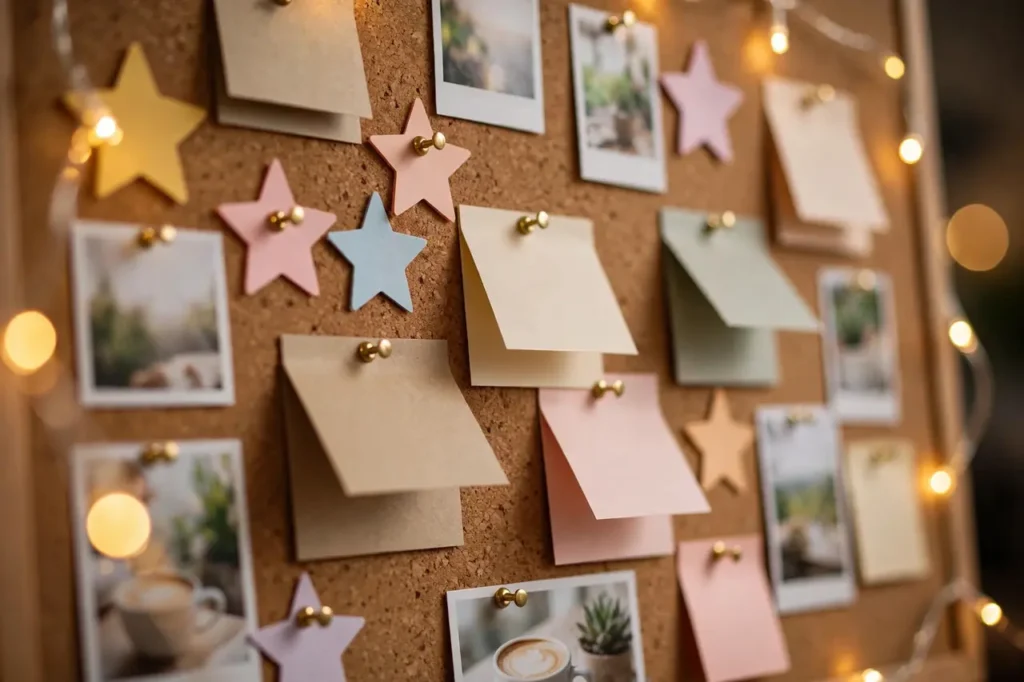
Creative and Conversation-Starting Themes
6. The Compliment Canvas. A giant blank canvas where people write compliments directly in markers. When full, frame it and start a new one — the archived canvases become office art with a story.
7. Superlatives Wall. Monthly peer-voted superlatives (“Best Debugger,” “Calmest Under Pressure”) with Polaroid-style photos. Playful, personal, and highly shareable.
8. The “Caught You Caring” Board. Specifically for noticing quiet kindness — the held door, the shared lunch, the patient explanation. It trains the whole office to look for good.
9. Customer Love Wall. Print and pin great reviews, kind emails, and thank-you messages from clients. On hard days, this wall reminds everyone why the work matters.
10. The Milestone Map. A timeline of the company’s year with notes celebrating each milestone as it happens. By December it is a visual history of everything the team accomplished together.
11. Shout-Out Bingo. A bingo card of appreciation categories (“thanked someone in another department,” “praised a quiet contributor”); complete rows earn small prizes. Gamification works shockingly well on adults.
12. The Welcome Wall. Dedicated to new hires: notes of welcome, tips, lunch invitations, team lore. It turns onboarding from a process into a reception.
Digital and Hybrid Themes
13. The Virtual Kudos Feed. A dedicated channel or digital board where remote and office staff post shout-outs with photos and GIFs. Display it on a lobby screen so the physical office sees the digital love.
14. GIF Gratitude. A channel where appreciation must be expressed with a perfectly chosen GIF plus one sentence. Silly, fast, and weirdly heartfelt — it lowers the bar to participation beautifully.
15. The “Wins of the Week” Roundup. A Friday post collecting the week’s shout-outs into one celebratory digest. It gives the scattered praise of the week a satisfying finale.
Seasonal and Event Themes
16. The Holiday Thanks Tree. November through December: notes of gratitude as ornaments on an office tree. It becomes the emotional centerpiece of the season.
17. Valentine’s Appreciation Hearts. February: paper hearts with notes of professional admiration. It reclaims Valentine’s Day as a celebration of all kinds of appreciation.
18. Back-to-School Supply Drive Board. Pair a charity drive with an appreciation theme — notes about teachers who shaped team members. Giving and gratitude in one installation.
19. Anniversary Year Timeline. During a company anniversary year, a board chronicling the organization’s history with notes from long-tenured staff. Institutional memory made visible.
20. The Farewell Gallery. A rotating section honoring departing colleagues with notes and photos. It tells everyone watching that this is a place where people are celebrated on the way out, not just the way in.
Setting Up Your Board: A Weekend Project
You can go from idea to installed in a single weekend. Friday: choose the location (high-traffic, well-lit, near lingering spots), buy the board and supplies, and draft three simple rules (see below). Saturday: mount the board, add the theme title in big friendly letters, stock the supplies in an attached caddy, and pin your ten seed notes — written by you and a few allies, specific and warm. Monday morning: unveil it with genuine enthusiasm: a two-minute announcement explaining what it is, one example note read aloud, and an invitation, not a mandate. Then walk over and pin your own first public note where people can see you. The seed notes are critical — they model what good looks like and prove the board is already alive. Within two weeks, assign a lightweight “board keeper” who tidies, rotates themes, and photographs full sections for the archive. Total cost: under $100. Total time: one weekend. Potential impact: a permanently warmer office.
The 5 Rules That Keep Boards Positive
Boards rarely fail from lack of enthusiasm; they fail from lack of guardrails. Post these five rules on the board itself, in friendly language. 1. Praise people, not just results. Effort, kindness, and character count as much as outcomes — this keeps the board from becoming a leaderboard. 2. Be specific. “Thanks for the help” is fine; “thanks for staying late Tuesday to fix the invoice error” is better. Specificity is what makes notes meaningful to reread. 3. Keep it kind and work-appropriate. No inside jokes that exclude, no backhanded compliments, nothing anyone would be embarrassed to have quoted. The board keeper removes anything off-tone, quietly and without drama. 4. Everyone is eligible. Explicitly invite notes for every role and level — including leadership, who rarely get appreciated publicly. 5. No self-promotion. The board is for appreciating others, not advertising yourself. These rules sound obvious until the day they are needed; having them posted in advance makes enforcement feel principled rather than personal. For wording inspiration, our respect quotes collection and warm wishes for coworkers offer dignified, adaptable language for any note.

Watch: The Fine Art of Appreciation at Work
Before you launch your board, watch this thoughtful breakdown of what genuine workplace appreciation actually looks like — noticing specific good work, saying the person’s name, explaining why it mattered. It is the philosophy your board should embody, in under ten minutes.
Keeping the Board Alive Month After Month
Launch energy fades; systems endure. Rotate themes monthly or quarterly — the visual change alone re-engages passersby. Feature a “note of the week” in the team newsletter or channel, with the writer’s permission; public spotlighting rewards contributors and models great notes. Tie the board to rituals: read three notes at each all-hands, start meetings with one, reference it in performance reviews as evidence of impact. Photograph and archive full sections before clearing them — a digital archive of years of appreciation becomes a treasured company artifact. Refresh supplies relentlessly: empty pen cups and missing cards silently kill participation. Celebrate milestones: the 100th note, the full board, the one-year anniversary — mark them publicly. And audit quarterly: is every department represented? Are quiet roles getting notes? If the same ten people dominate, run a targeted prompt (“thank someone in operations this week”) to rebalance. A board keeper spending thirty minutes a week on these tasks will keep the board alive indefinitely — the highest ROI half-hour in your culture budget.
Beyond the Office: Boards for Remote Teams
Distributed teams need appreciation walls too — arguably more, since hallway culture does not exist for them. The digital equivalent should be persistent (not a chat thread that scrolls away), visible (linked from the team homepage, displayed on office screens), and rich (photos, GIFs, and reactions, not just text). Practical setups: a dedicated Slack or Teams channel paired with a weekly digest; a virtual whiteboard with a permanent link; or a simple internal page with a submission form. Run the same themes as physical boards — Thankful Thursday works beautifully async — and bridge the two worlds by displaying the digital feed on a TV in the physical office. The goal is one culture of appreciation with two doors, not two separate systems. If your celebrations need a broader event framework, our celebration planning guide shows how themed events with food, games, and heartfelt notes come together for any group.
3 DIY Board Builds Under $50
You do not need to buy a premium board to make a beautiful one. The Framed Fabric Board: stretch burlap or linen over a large corkboard, frame it with inexpensive molding, and add a stenciled title — it looks boutique for about $35 in materials. The Chicken-Wire Memory Board: staple chicken wire into a wooden frame, hang notes with mini clothespins; the texture is charming and rearranging takes seconds. The Painted Plywood Mural Board: paint a large plywood sheet with chalkboard paint, frame it, and let people write directly in chalk markers — infinitely reusable and strikingly modern. All three take an afternoon, cost under $50, and look intentional rather than improvised. Whatever you build, finish it properly: sanded edges, straight mounting, a clean title. A board that looks cared-for signals that the appreciation on it is cared-for too.
30 Note Starters for People Who Stare at Blank Cards
Blank cards paralyze people. Print these starters on a tent card beside the board: “Thank you for…”; “I noticed when you…”; “You made my day when…”; “I admire how you…”; “Because of you, our team…”; “I will never forget when you…”; “Your superpower is…”; “This place is better because you…”; “I am grateful you…”; “You handled ___ beautifully.” Then add situational ones: “Welcome aboard — you will love it here because…”; “Congratulations on…”; “Thinking of you during…”; “You deserved that win because…”; “Thanks for covering for me when…” Rotate the displayed five monthly. The starters do not write the note — they unlock the writer. Within weeks, people stop needing them, which is exactly the point: the board has taught them the language of appreciation.
A Board’s First 90 Days: What to Expect
Days 1–14: The honeymoon. Launch excitement fills the first wave; your seed notes plus early adopters cover the board quickly. Photograph it — you will want the “before” picture. Days 15–30: The dip. Novelty fades and contributions slow. This is normal and where most boards die. Counter it: leaders pin fresh notes visibly, the board keeper rotates in a new prompt, and you read three notes at the all-hands. Days 31–60: The habit forms. A core group now contributes regularly without prompting. New hires encounter the board during onboarding and join in — this is the moment it becomes culture rather than campaign. Archive the first full section with photos; the archive itself becomes motivating. Days 61–90: The payoff. Someone will tell you they reread their notes on a hard day. A candidate will mention the board in an interview. A departing employee will photograph their notes before leaving. These are the signs it worked. After 90 days, the board runs on its own momentum with only the keeper’s half-hour of weekly care — and your office walls will never be blank again.
Boards for Special Occasions
The everyday board is the foundation; occasion boards are the fireworks. Work anniversary boards: a temporary board collecting notes for someone’s milestone year, presented on the day — it turns an HR-tracked date into a team-owned celebration. Project completion boards: document the journey with photos and thank-yous as the project unfolds, then gift the board (or its photo archive) to the team at the wrap party. Retirement boards: the grandest version — months of collected notes, photos from every era, presented in a bound book alongside the board itself. Holiday boards: seasonal themes that ride the year’s natural emotional peaks. Crisis response boards: when the team weathers something hard — a failed launch, layoffs elsewhere, a tough quarter — a board collecting “why I’m still proud of us” notes can be genuinely healing. Occasion boards work because they concentrate the everyday habit into a moment; and every occasion board reminds people the everyday board is there when the occasion passes.
From Board to Culture: Playing the Long Game
A board is a tactic; the strategy is a workplace where appreciation is ambient. The board gets you started, but the long game is weaving recognition into every system you have. Reference board notes in performance reviews as evidence of impact. Mine the board for award nominations — the best candidates are already documented. Onboard new hires at the board, literally walking them over on day one. Mention it in job postings (“our office walls tell the story”). Share milestone moments externally on the company’s social channels, with permission. And once a year, do something with the archive: a printed “year in appreciation” booklet for the team, a slideshow at the holiday party, a framed selection for the lobby. Each of these moves tells the team that what they pin matters beyond the cork. Culture is just what gets repeated and rewarded — and a thriving appreciation board, year after year, is culture you can touch.
5 Common Board Fails (and the Fix for Each)
The ghost board: three notes, all from launch month, slowly yellowing. Fix: archive it, relaunch with a new theme and ten fresh seed notes, and this time assign a keeper — boards do not run on hope. The clique board: all notes are between the same five friends. Fix: run targeted prompts by department and role for a month, and ask managers to seed notes for quieter team members. The messy board: overlapping, falling, chaotic — it reads as neglected. Fix: the keeper’s weekly ten-minute tidy, plus a simple layout (grid sections or dated rows) that makes order easy. The corporate board: HR-written, jargon-filled, obviously top-down. Fix: take down every note that was not written by a genuine peer and start over — authenticity cannot be manufactured, only invited. The invisible board: technically exists, but nobody passes it. Fix: relocate to the coffee area or break room, improve the lighting, and announce the move like a relaunch. Every failed board is fixable, because every failure is really just a missing habit: seeding, tending, featuring, or placing. Install the habit and the board heals itself.
Frequently Asked Questions
What should I put on an office appreciation board? Thank-you notes between colleagues, shout-outs for specific achievements, customer praise, team wins, welcome notes for new hires, and farewell tributes. Anything genuine, specific, and kind belongs; anything vague, self-promotional, or off-tone does not.
How do you get employees to actually use the board? Seed it with ten great notes before launch, place it in high-traffic areas with supplies attached, have leaders contribute visibly and often, rotate themes regularly, and read notes aloud in meetings. Participation follows social proof — once a critical mass contributes, the rest follow.
Should appreciation board notes be anonymous? Signed notes mean more and build stronger connections, but allow unsigned notes initially to lower the barrier. Most boards evolve naturally toward signed notes as the culture of appreciation takes hold. Never require signatures.
How often should we refresh the board? Rotate themes monthly or quarterly, archive full sections with photos before clearing, and tidy weekly. A board that never changes becomes wallpaper; a board that evolves stays a destination. The archived photos preserve everything worth keeping.
What size should an office appreciation board be? Bigger than you think — at minimum 3×4 feet for a team of twenty, and scale up from there. An undersized board fills instantly and then frustrates people. When in doubt, install two boards or plan a rotation system from day one.
Can we do an appreciation board for remote employees? Absolutely — use a persistent digital board, a dedicated chat channel with weekly digests, or a virtual whiteboard. Display the digital feed on screens in the physical office so both worlds see the same appreciation. The principles are identical; only the medium changes.
Who should manage the board? Assign a lightweight “board keeper” — ideally a volunteer who enjoys it — for about thirty minutes a week: tidying, restocking supplies, rotating themes, photographing full sections. Rotate the role quarterly to spread ownership and bring fresh energy.
What if someone posts something inappropriate? Remove it promptly and privately, then restate the posted rules to the group without naming names. Having clear rules displayed from day one makes moderation feel principled. In practice, this is rare — public, signed appreciation spaces are naturally self-policing.
How much does an appreciation board cost? A physical board runs $20–$150 in materials plus pennies per note in supplies. Digital boards are often free using existing tools. The real investment is the thirty minutes a week of keeper time — the highest-ROI culture spending most companies ever make.
How do we measure if the board is working? Track participation (notes per week, departments represented), survey sentiment (“do you feel appreciated at work?”), and watch for qualitative signs: new hires mentioning it in interviews, visitors photographing it, notes being saved and reread. A thriving board advertises itself.
Can appreciation boards work in small offices with few employees? They work even better — in a team of eight, every note is personal and every contributor visible. Use a smaller board, rotate themes more often to keep it fresh, and consider a shared board with a neighboring team or department to increase the variety of voices. Small teams often produce the most heartfelt boards of all, because every single note feels deeply personal and genuinely earned by someone you know well.
Your office walls are talking whether you curate them or not. An appreciation board lets you choose the message: here, we notice the good, we say it out loud, and we never let it fade. One weekend, under a hundred dollars, and a habit of pinning the truth — that is all it takes to turn blank walls into the warmest real estate in the building. Start this weekend, and give your team a wall worth reading. Years from now, when someone describes what made this workplace special, the board — and everything pinned to it — will be at the heart of the story they tell.