This Washington DC Travel Guide 2026 is your complete trip planner for the nation’s capital — a city where the monuments hit harder in person than in any photograph, where the world’s greatest collection of free museums lines a single two-mile park, and where the neighborhoods beyond the Mall serve some of the country’s most exciting food. Washington is two cities in one: the monumental capital of marble and ceremony, and a living, diverse, deeply neighborhood-driven town of row houses, jazz clubs, and international kitchens. In 2026, America marks its 250th birthday, and there is no better stage for the semiquincentennial than the city built to embody the American story.
Below you will find the best time to visit, how to ride the Metro like a local, every essential monument and (free) museum, the neighborhoods worth exploring, where to eat, where to stay, the best day trips, a three-day itinerary, and answers to first-timer questions. The best part? Much of the greatest stuff here costs nothing.
Why Visit Washington DC in 2026
- America at 250. The semiquincentennial puts DC at the heart of the national birthday — expect special exhibitions, events, and ceremonies at the Mall, the Smithsonian, and the National Archives all year.
- The best free museums on earth. Nineteen Smithsonian museums and galleries plus the National Zoo — all free, all day, every day. No other city offers this much world-class culture for zero dollars.
- Monuments that move you. The Lincoln Memorial at dawn, the Vietnam Veterans Memorial’s black granite wall, the MLK Memorial at dusk — these are emotional experiences, not just photo ops.
- A real food city now. The Michelin Guide covers DC, and neighborhoods like Shaw, Union Market, and 14th Street deliver everything from Ethiopian (the city’s unofficial second cuisine) to tasting-menu temples.
- Easy to navigate. The Metro is clean and simple, the Mall is flat and walkable, and the compact core rewards a good pair of shoes.
Best Time to Visit Washington DC
| Season | Months | Weather | Crowds & Prices | Best For |
|---|---|---|---|---|
| Spring | March–May | Mild, 55–75°F; famous cherry blossoms | Peak (blossom season) | Cherry blossoms, festivals, perfect walking weather |
| Summer | June–August | Hot & humid, 80–95°F | High (families, school groups) | Long days, outdoor concerts, July 4th fireworks |
| Fall | September–November | Pleasant, 55–75°F | Moderate | Sightseeing, fall color, comfortable everything |
| Winter | December–February | Cold, 30–50°F | Lowest crowds & prices | Museums without lines, holiday decor |
Late March through May and September through October are the sweet spots. Cherry blossom season (typically late March to early April) is magical but packed — book months ahead. Summer brings punishing humidity and school groups; if you come then, do monuments early morning and museums in the air-conditioned afternoons. Winter is the insider’s choice: walk straight into any museum and find hotel rates at their friendliest.
Getting to Washington DC and Getting Around
Flying in
Reagan National (DCA) is the winner — right across the Potomac with its own Metro stations (the Blue and Yellow lines serve the terminals directly). Dulles (IAD) is farther but now connected by the Silver Line Metro (about an hour downtown). BWI works via MARC commuter train to Union Station.
The Metro
Six color-coded lines, clean stations with vaulted ceilings, and fares based on distance and time of day. Buy a SmarTrip card (or use contactless payment) — you will need it for every ride. Key etiquette: stand on the right, walk on the left on escalators. Locals will judge you otherwise.
Walking and biking
The National Mall is two miles end to end — entirely walkable but longer than it looks. Capital Bikeshare has hundreds of stations and is perfect for the Mall loop and the Tidal Basin. Circulator buses ($1) connect the Mall, Georgetown, and Union Station on handy loops.
The National Mall: Monuments and Memorials
Start at one end and walk it — the progression from the Capitol to Lincoln is the essential American stroll.
- U.S. Capitol: Book a free tour through your representative’s office (or the visitor center) well in advance.
- Washington Monument: The 555-foot obelisk; timed tickets to the top go fast — reserve online.
- World War II Memorial: Granite pillars for each state ringed around the Rainbow Pool — stunning at night.
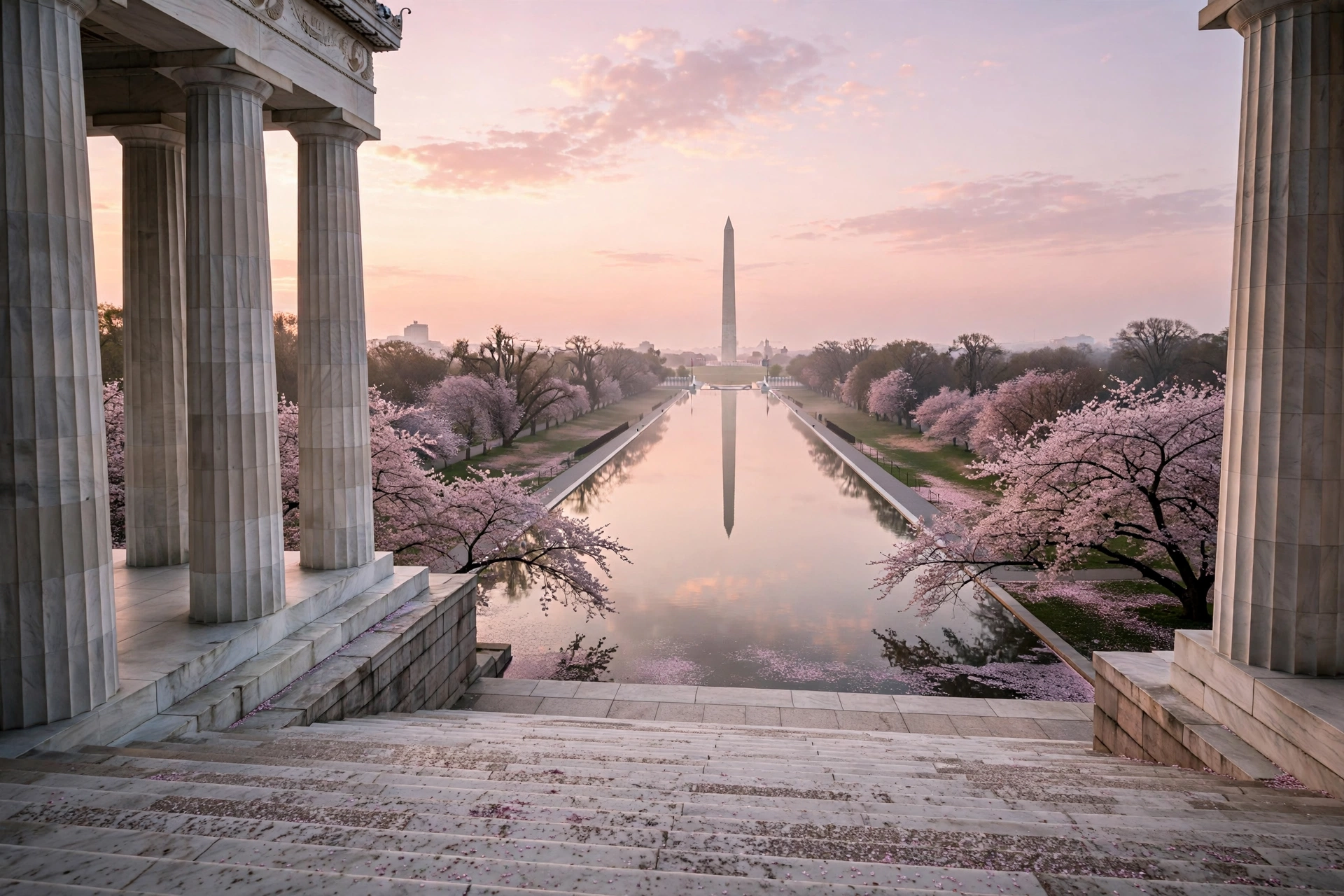
- Lincoln Memorial: Climb the steps at sunrise for the reflecting pool view and fewest crowds. Read the inscriptions; they still land.
- Vietnam Veterans Memorial: The black granite wall with 58,000+ names — quiet, devastating, essential.
- Korean War Veterans Memorial: Nineteen steel soldiers on patrol, haunting in fog or rain.
- Martin Luther King, Jr. Memorial: The 30-foot “Stone of Hope” emerging from the “Mountain of Despair” on the Tidal Basin.
- Franklin Delano Roosevelt Memorial: Four outdoor “rooms” for four terms — the most narrative and underrated memorial on the Mall.
- Thomas Jefferson Memorial: The domed rotunda on the Tidal Basin; sublime framed by cherry blossoms.
Smithsonian Museums: The Free Collection
All Smithsonian museums are free — no tickets for most (some require timed passes in peak season). Here is how to prioritize:
| Museum | Don’t Miss | Time Needed |
|---|---|---|
| National Museum of American History | Star-Spangled Banner, first ladies’ gowns, the Muppets | 2–3 hrs |
| National Air and Space Museum | Wright Flyer, Apollo 11 capsule, moon rock you can touch | 2–3 hrs |
| National Museum of Natural History | Hope Diamond, dinosaur hall, ocean hall | 2–4 hrs |
| National Gallery of Art | Da Vinci’s only painting in the Americas, the underground light tunnel | 2–3 hrs |
| National Museum of African American History and Culture | The history galleries (reserve timed passes early) | 3–4 hrs |
| National Portrait Gallery / American Art Museum | Presidents’ portraits, the glass-covered Kogod Courtyard | 1–2 hrs |
| National Zoo | Giant pandas (when in residence), elephant trails | Half day |
| Hirshhorn (modern art) | The doughnut-shaped building itself, the sculpture garden | 1–2 hrs |
Beyond the Smithsonian, the National Archives (the Declaration of Independence, Constitution, and Bill of Rights — expect a line), the Library of Congress (the most beautiful interior in Washington), and the Holocaust Memorial Museum (reserve timed tickets; plan half a day) round out the essential list.
Beyond the Mall: DC Neighborhoods
- Georgetown: Cobblestone streets, Federal row houses, the university, and the C&O Canal. Shop M Street, walk the waterfront at sunset.
- U Street / Shaw: The historic Black Broadway — jazz clubs, the African American Civil War Memorial, and one of the city’s best dining strips.
- Adams Morgan: Eclectic nightlife, international eats, and the city’s liveliest late-night scene.
- Capitol Hill / Eastern Market: The city’s oldest commercial district — weekend farmers market, row houses, and Barracks Row restaurants.
- Navy Yard / The Wharf: The redeveloped waterfront with the Nationals’ ballpark, concert venues, and riverfront dining.
- Dupont Circle: Embassies, bookshops, the Phillips Collection (America’s first modern art museum), and great people-watching.
What to Eat in Washington DC
- Half-smoke: DC’s signature sausage — spicier and coarser than a hot dog, best at Ben’s Chili Bowl on U Street (a civil-rights-era landmark).
- Ethiopian: The largest Ethiopian diaspora outside Africa makes DC the best US city for injera and wat — try the family-run spots on U Street and in Shaw.
- Chesapeake blue crab: Crab cakes, crab imperial, and whole steamed crabs in season (summer–fall).
- Mumbo sauce: The sweet-tangy condiment of DC carryouts — get it on wings or fried chicken.
- Union Market: The food hall anchor of the NoMa district — dozens of vendors under one roof.
Traveling on a budget? Our free things to do while traveling guide pairs well with DC, since the city’s best attractions are already free — and our cheapest time to travel guide helps you time the trip for the lowest fares and hotel rates.
Best Day Trips from Washington DC
- Alexandria, Virginia (25 min): Old Town’s brick sidewalks, the waterfront, and Gadsby’s Tavern — reachable by Metro or a Potomac riverboat.
- Mount Vernon (45 min): George Washington’s riverside estate — the mansion, gardens, and museum.
- Arlington National Cemetery (Metro): The Tomb of the Unknown Soldier and the changing of the guard — solemn and essential.
- Great Falls Park (45 min): Dramatic Potomac waterfalls and gorge trails, minutes from the city.
- Annapolis, Maryland (1 hr): The Naval Academy and a storybook colonial waterfront.
Where to Stay in Washington DC
| Area | Best For | Vibe & Price |
|---|---|---|
| Downtown / Penn Quarter | First-timers, museums | Central; $$–$$$ |
| Capitol Hill | History buffs | Residential, charming; $$–$$$ |
| Georgetown | Romance, shopping | Upscale village; $$$ |
| Dupont Circle / Logan Circle | Nightlife, dining | Lively, walkable; $$–$$$ |
| Navy Yard / The Wharf | Waterfront, baseball | Modern, new; $$–$$$ |
| Arlington / Crystal City | Budget, Metro access | Cheaper, quick ride in; $–$$ |
Perfect 3-Day Washington DC Itinerary
Day 1: The Mall, west to east
Sunrise at the Lincoln Memorial, walk east through the war memorials to the Washington Monument, lunch at a museum cafe, afternoon at the National Museum of American History, and the FDR and MLK memorials at dusk.
Day 2: Museums and the Capitol
Morning at the National Archives and the Capitol (booked tour), afternoon at the National Gallery of Art, evening in Penn Quarter or the Wharf for dinner. Traveling solo? See our best solo travel destinations in the USA — DC ranks high for independent explorers.
Day 3: Neighborhoods
Georgetown in the morning (canal walk, shopping), U Street for lunch (Ben’s Chili Bowl half-smoke), afternoon at the African American History museum or the Phillips Collection, and a jazz club night on U Street.
Practical Tips for Visiting Washington DC
- Book timed tickets early. The African American History museum, Holocaust museum, Washington Monument, and Capitol tours all require advance reservations — weeks ahead in peak season.
- The Mall is bigger than it looks. Two miles end to end; wear your best walking shoes and use Bikeshare for the long stretches.
- Security is everywhere. Carry minimal bags for museum and monument entry; lines move faster without backpacks.
- Metro etiquette matters. Stand right, walk left on escalators. Off-peak fares are much cheaper.
- Free is the theme. Between the Smithsonian, the monuments, the National Gallery, and the Library of Congress, a world-class three-day trip can cost almost nothing in admissions.
Washington DC After Dark
The monuments don’t close when the museums do — and the Mall after dark is a different, more beautiful place. The memorials are dramatically lit until late, and an evening stroll from the Lincoln Memorial to the Washington Monument (or a guided moonlight monument tour by trolley or bike) is one of DC’s great experiences. Summer brings free outdoor concerts: Jazz in the Garden at the National Gallery’s Sculpture Garden (Friday evenings, bring a picnic), the Marine Band’s concerts at the Sylvan Theater, and movies on the Mall.
For nightlife, U Street remains the soul of DC after dark — jazz clubs, the legendary 9:30 Club for touring bands, and cocktail bars. Adams Morgan and H Street NE skew younger and louder; Georgetown’s waterfront bars skew scenic. The Kennedy Center hosts free Millennium Stage performances every evening at 6 p.m. — an unbeatable free date night.
Washington DC with Kids
DC may be America’s best big city for kids — and most of it is free. The Natural History Museum’s dinosaurs and the Hope Diamond, the Air and Space Museum’s rockets, the National Zoo’s pandas, and the National Children’s Museum can fill days. The Bureau of Engraving and Printing tour (watch real money being printed) fascinates all ages — reserve tickets early. Teens love the International Spy Museum (paid, but worth it) and the National Archives (“that’s the actual Declaration of Independence”). Build in playground breaks: the Mall’s open space is made for running.
How Much Does a Washington DC Trip Cost?
DC is one of America’s best-value capitals because the headline attractions are free. A realistic daily budget per person:
| Category | Budget | Mid-Range | Splurge |
|---|---|---|---|
| Hotel (per night) | $130–$180 | $220–$350 | $450+ |
| Food & drink | $45–$65 | $90–$140 | $200+ |
| Attractions | $0 (Smithsonian!) | $20–$40 | $60+ |
| Transport | $10–$15 (Metro) | $20–$30 | $50+ (rideshares) |
Money savers: lean into the free museums and monuments; the Kennedy Center’s free nightly Millennium Stage shows; happy hours are a DC institution (especially downtown and on U Street); and staying across the river in Arlington or Crystal City with a Metro ride in saves significantly. Cherry blossom season and major event weekends spike hotel rates — book early.
Washington DC Travel Guide 2026: FAQs
How many days do you need in Washington DC?
Three full days covers the Mall monuments, 3–4 major museums, and a neighborhood evening. Four to five days lets you add Mount Vernon, Alexandria, and deeper museum time.
Are the Smithsonian museums really free?
Yes — all 19 Smithsonian museums, galleries, and the National Zoo are free every day. A few require free timed-entry passes in peak season, reserved online in advance.
What is the best month to visit Washington DC?
April (cherry blossoms) and October (perfect weather, fewer crowds) are the standouts. September is excellent too; winter offers the lowest prices.
Is Washington DC safe for tourists?
The Mall, downtown, and main tourist corridors are well-patrolled and safe. As in any major city, stay aware at night, especially in unfamiliar neighborhoods, and use rideshares late.
Can you tour the White House?
Public tours are available but must be requested through your member of Congress 21–90 days in advance (US citizens), and availability is limited. Book as early as possible.
What is there to do in DC at night?
Plenty — the monuments are beautifully lit until late, the Kennedy Center hosts free nightly performances, U Street and Adams Morgan have the city’s best nightlife, and summer brings free outdoor concerts on the Mall.
Is one day enough for Washington DC?
You can see the headline monuments and one or two museums in a packed day, but it will feel rushed. Two to three days is the comfortable minimum for the Mall, the Smithsonian highlights, and a neighborhood evening.
When do the cherry blossoms bloom in DC?
Peak bloom typically falls between late March and early April, varying with winter temperatures. The National Park Service issues forecasts each spring — book flexible dates if blossoms are your priority.
What is the best way to get around DC?
The Metro (subway) for longer hops, your feet for the Mall, and Capital Bikeshare for the Tidal Basin loop. A SmarTrip card or contactless payment covers Metro and buses.
Is Washington DC walkable?
The monumental core is flat and very walkable — the Mall, downtown, and Georgetown connect on foot. The city is bigger than it looks, though; use the Metro for cross-neighborhood trips like the Zoo or the Wharf.
What souvenirs should I bring home from DC?
Smithsonian museum shop finds (the Air and Space and Natural History shops are excellent), cherry-blossom-themed goods in spring, a National Archives replica document set, and DC-roasted coffee. Everything on the Mall is tax-free of tourist markup — the museum shops are genuinely good.
Can you visit the Pentagon?
Public tours of the Pentagon are available but must be booked 14–90 days in advance through the official tour program, and all adult visitors need valid photo ID. It is a fascinating add-on for military-history buffs with an extra half day.
Washington DC is a city that rewards curiosity — the deeper you look past the postcards, the richer it gets: a jazz set on U Street, sunrise on the Tidal Basin, the hush of the Library of Congress reading room. In 2026, with the nation celebrating 250 years, the capital will be telling its story louder than ever. Come listen.