From a toddler’s first wobbly tower to a tween’s 2,000-piece engineering marvel, the Best Building Toys for Kids are among the highest-value purchases in all of toyland. They develop spatial reasoning, fine-motor skills, patience, and creativity — and unlike most toys, they genuinely grow with your child. This buying guide covers every major type of building toy, matches them to ages, and helps you choose systems that will still be played with years from now.
You’ll learn the strengths of each building system, what to look for at every age, how to spot quality (and avoid frustration), typical price ranges, storage solutions that actually work, and how to keep the building hobby fresh. Whether you’re buying a first birthday gift or outfitting a dedicated building corner, this guide has you covered.
Why Building Toys Are in a Class of Their Own
Most toys do one thing; building toys do everything. A single set of building toys can be a castle, a spaceship, a bridge-testing lab, or a storytelling prop — the play is limited only by imagination. Research consistently links construction play to stronger spatial reasoning, which in turn predicts success in math, science, and engineering. Kids who build regularly also develop persistence: a collapsed tower teaches more about resilience than any lecture.
Building toys also have unmatched longevity. Toddlers stack, preschoolers create, school-age kids engineer, and teens design — all with the same basic materials. They’re social (siblings build together across age gaps), they’re quiet-ish, and they hold resale value remarkably well. If your toy budget is limited, putting it into building toys is one of the smartest moves you can make.
The Major Building Toy Systems
1. Interlocking Brick Systems
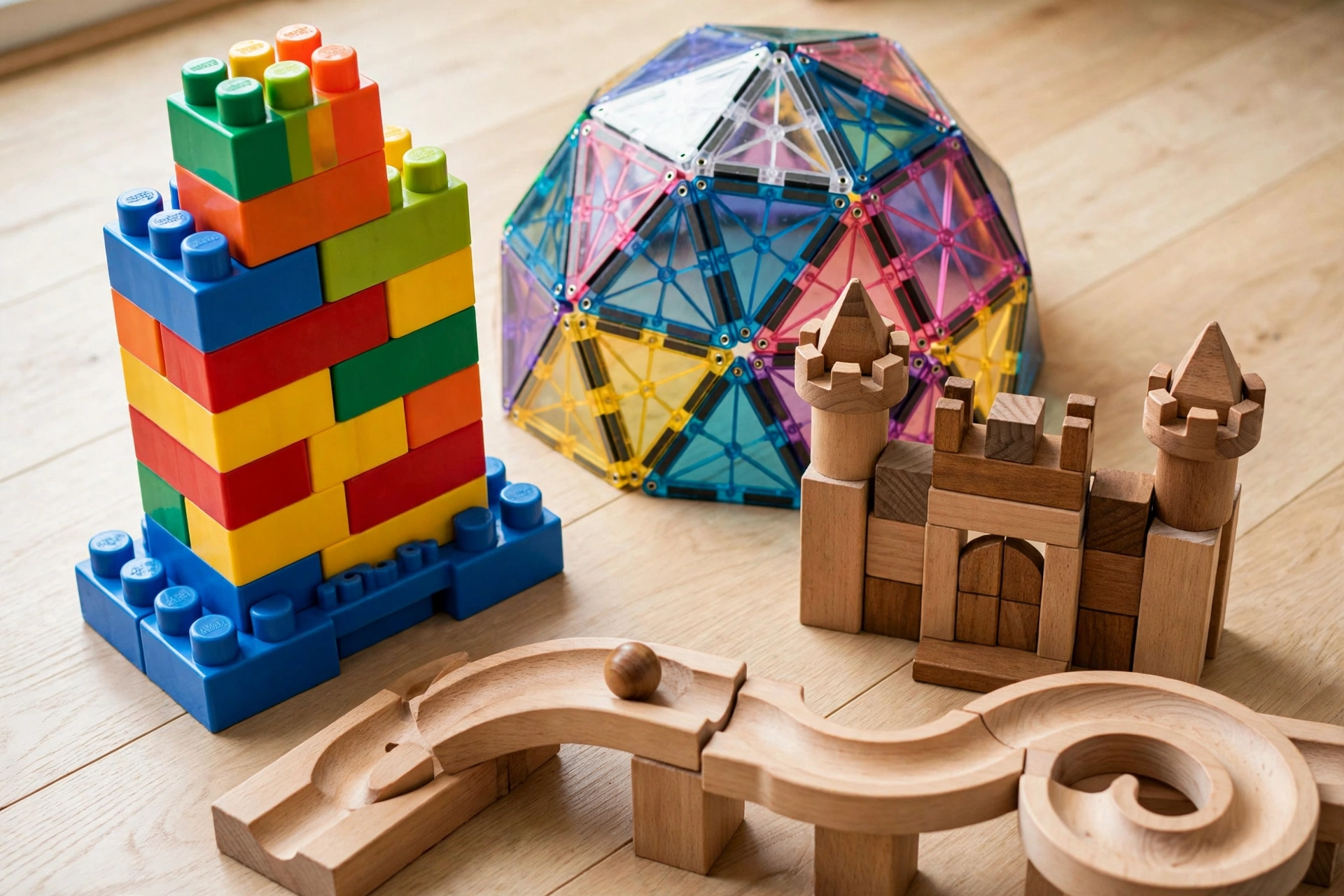
The classic stud-and-tube brick is the most versatile building toy ever made. Small bricks suit ages 4+ (with larger toddler-safe versions for younger kids), themed sets teach instruction-following, and free-build collections unleash creativity. Strengths: infinite expandability, enormous community and resale market, precision engineering that just works. Watch for: the cost of large themed sets, and the small-piece hazard for households with toddlers. Buy the classic system if you want the deepest ecosystem and best long-term value.
2. Magnetic Building Tiles
Flat magnetic shapes that click together into 3D structures — beloved from age 3 through elementary school. Strengths: incredibly intuitive (even toddlers succeed immediately), fast building and rebuilding, beautiful translucent colors, and near-indestructible construction. Watch for: cheaper knockoffs with weak magnets or unsafe construction — stick with reputable brands, and verify magnet safety for young children. Buy magnetic tiles if you want the best “first” building toy and fast, satisfying play.
3. Wooden Building Blocks
The timeless original: solid wood blocks in varied shapes. Strengths: beautiful, durable for generations, wonderful tactile feel, and no small parts in standard sets. Unit blocks (the classic rectangular proportions) teach real architectural concepts — arches need keystones, cantilevers have limits. Watch for: weight (toddlers can hurt toes), and cost for large quality sets. Buy wooden blocks if you value heirloom durability and open-ended simplicity.
4. Engineering and Girder Sets
Metal or plastic beams, girders, nuts, bolts, and eventually motors — the erector-set tradition. Strengths: teaches genuine mechanical engineering (levers, pulleys, gears), satisfying for kids who like “how things work,” and scales from simple models to motorized machines. Best for ages 6+. Watch for: small parts requiring supervision with younger kids, and a steeper learning curve. Buy engineering sets for the mechanically obsessed child ready for real tools.
5. Marble Runs and Ball Tracks
Building toys with a payoff: construct a track, release the marble, and watch physics happen. Strengths: teaches slope, momentum, and cause-and-effect intuitively; endlessly rebuildable; deeply satisfying for the whole family. Available in wood, plastic, and magnetic styles. Watch for: small sets frustrate — buy generously; marbles are choking hazards for under-3s. Buy marble runs if your child loves testing, iterating, and spectacular results.
6. Straw and Connector Systems
Lightweight tubes and connectors that build big structures fast — geometric domes, life-size forts, vehicles. Strengths: huge builds from affordable sets, great for collaborative play, and excellent for STEM classrooms. Watch for: less precision than bricks, and structures can be wobbly. Buy these for big-build ambitions on a budget.
7. Plank Building Sets
Identical small wooden planks that stack (not interlock) into astonishing structures through balance and friction. Strengths: deceptively simple, teaches physics of balance and load, beautiful to display, and appealing to adults too. Watch for: requires patience and a steady hand — better for ages 5+. Buy planks for the thoughtful builder who enjoys architectural challenge.
8. Electronic and Robotics Building Systems
Building sets with motors, sensors, and programmable controllers — where construction meets coding. Strengths: the capstone building experience for ages 8+, teaches systems thinking and programming alongside engineering, and connects to school robotics programs. Watch for: significant cost, and check that companion apps remain supported. Buy for the committed young engineer ready for the next level.
Best Building Toys by Age
| Age | Best Building Toy Types | What Kids Do With Them |
|---|---|---|
| 1–2 | Soft blocks, large interlocking toddler bricks, nesting cups | Stack two high, knock down, mouth everything |
| 3–4 | Magnetic tiles, wooden unit blocks, large-piece sets | Build towers, enclosures, simple houses |
| 5–7 | Small interlocking bricks, marble runs, plank sets | Follow instructions, free-build scenes, test tracks |
| 8–10 | Engineering sets, large brick sets, straw connectors | Complex builds, gears and motors, multi-day projects |
| 11+ | Robotics building systems, advanced engineering, architecture sets | Programmed machines, realistic models, competitions |
How to Choose Quality Building Toys
- Test the clutch. For interlocking bricks, pieces should connect firmly but separate without tools or tears. Poor clutch power — pieces that fall apart or won’t come apart — is the top frustration with cheap sets. Reputable brands engineer this precisely; bargain sets often don’t.
- Check piece compatibility. The best building systems work across sets and years. Before investing, confirm that new sets connect with old ones — proprietary one-off systems that don’t expand are dead ends.
- Count the pieces honestly. Marketing loves big piece counts, but 500 tiny decorative pieces build less than 200 structural ones. For marble runs and tile sets especially, buy bigger than you think — small sets are the most common regret.
- Inspect materials. Quality plastic is thick, colors are consistent, and edges are smooth. Wooden sets should be sanded smooth with non-toxic finishes. Avoid sets with strong chemical smells out of the box.
- Read instructions quality. For sets with builds, clear step-by-step instructions (with each step’s new pieces highlighted) make or break the experience for kids. Check reviews specifically mentioning instructions.
- Consider the noise factor. Marble runs clatter, wooden blocks crash. If you live in an apartment or value quiet evenings, magnetic tiles and planks are the gentler choices.
- Verify magnet safety. For magnetic building toys, buy from established brands that enclose magnets securely. Loose high-powered magnets are a serious ingestion hazard — this is one category where brand reputation genuinely matters for safety.
Typical Price Ranges
Building toys reward investment — quality sets last for decades. Typical ranges (always verify current prices):
| Building Toy Type | Typical Price Range |
|---|---|
| Wooden block sets (basic) | Typically $20–$50 |
| Magnetic tile sets (starter) | Typically $30–$100 |
| Toddler interlocking bricks | Typically $15–$40 |
| Small-brick themed sets (medium) | Typically $25–$80 |
| Marble runs | Typically $30–$90 |
| Engineering/mechanics sets | Typically $40–$120 |
| Robotics building systems | Typically $100–$350 |
Storage That Actually Works
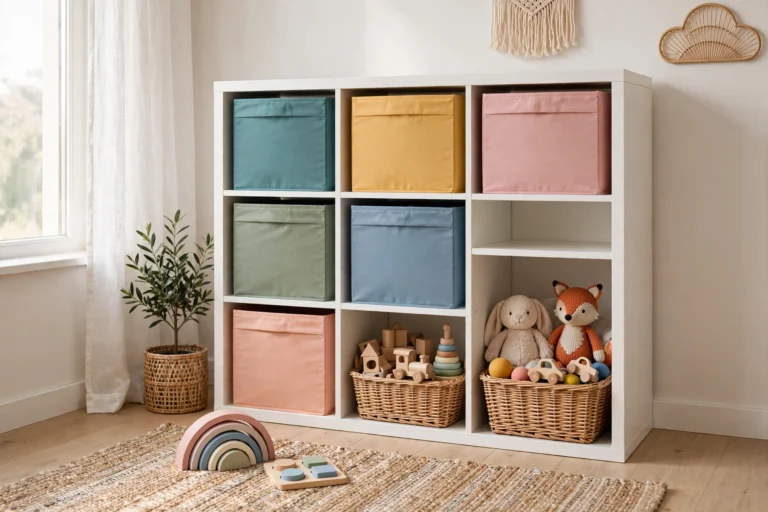
Building toys live or die by their storage. The best system is one your kids will actually use: wide, shallow bins beat deep toy boxes (pieces stay visible), and sorting by type or color works better than one giant jumble for older builders. For small bricks, a play mat with a drawstring edge lets kids build anywhere and tidy in seconds. Display shelves for finished creations honor the work — a child whose 800-piece build gets displayed builds the next one with even more care. Label bins with pictures for pre-readers. And accept some chaos: a perfectly organized building collection is usually one nobody plays with.
Keeping Building Fresh for Years
- Issue challenges. “Build the tallest tower that can hold this book,” “make a bridge spanning this gap,” “build something that moves.” Constraints spark creativity better than blank slates.
- Combine systems. Magnetic tiles plus small bricks, wooden blocks plus toy cars, planks plus marbles — cross-system building multiplies possibilities.
- Build together. Collaborative builds (each person adds five pieces, take turns) are wonderful family time and teach compromise.
- Document creations. Photograph finished builds before disassembly — a “build book” becomes a treasured record and eases the pain of taking masterpieces apart.
- Time the expansion. Add pieces on birthdays and holidays rather than all at once. A growing collection stays exciting; a massive initial dump overwhelms.
- Embrace destruction. The knock-down is part of the play, especially for young kids. Model delight, not dismay, when towers fall — then rebuild together.
Building Toys for Different Learners
Building play is wonderfully adaptable — with the right match, it works for nearly every child:
- For kids who need bigger pieces: magnetic tiles, large interlocking toddler bricks, and wooden unit blocks offer satisfying building without fine-motor frustration. Success builds confidence, which builds persistence for smaller pieces later.
- For sensory-sensitive kids: wooden blocks and silicone-based building toys offer calm tactile input without the click-clack overwhelm of plastic. Let the child choose textures they enjoy — building should soothe, not stress.
- For kids who crave structure: numbered-bag themed sets with crystal-clear instructions provide the step-by-step satisfaction these builders love. There’s no rule that free-building is superior — instruction-following is its own valuable skill.
- For highly social kids: collaborative building challenges (each person adds pieces in turn, team bridge contests) turn construction into social play. Straw-connector systems and large tile sets work well for group builds.
- For kids with short attention spans: marble runs and magnetic tiles deliver fast results — build something cool in minutes, not hours. Quick payoff keeps them engaged, and engagement stretches attention over time.
The principle: match the building system to the child’s needs, not the other way around. A frustrated child isn’t learning; a successful one is building both structures and self-belief.
FAQs
What’s the best way to display finished building creations?
Finished builds deserve better than the toy box. Dedicate a display shelf — even a single floating shelf — where completed creations live until the builder is ready to disassemble. Photograph every masterpiece before it comes apart; a digital “build gallery” on a family tablet becomes a treasured archive kids revisit proudly. For truly special builds, clear display cases protect against dust and younger siblings. And establish the house rule early: nobody disassembles someone else’s creation without permission. Respect for the build teaches respect for effort.
How do I get my child interested in building toys over screens?
Don’t compete with screens head-on — make building the easy, inviting default. Leave an in-progress build on the table (kids return to what’s started), build alongside them for the first ten minutes, introduce challenges with real stakes (“can you build a bridge that holds this book?”), and protect screen-free time where building is one of the appealing options. Often kids default to screens from habit, not preference — a compelling half-built project on the living room table changes the calculus. And play with them: building is dramatically more fun socially.
Are building toys good for only children?
They’re excellent — arguably even more valuable. Building gives solo children rich independent play: creativity, problem-solving, and the deep focus psychologists call “flow.” That said, intentionally create social building opportunities too: building playdates, family build nights, library LEGO clubs, or school robotics teams. Solo building develops the engineer; social building develops the collaborator. Kids benefit from both.
What is the best building toy for a 3-year-old?
Magnetic tiles, hands down. They’re intuitive enough for immediate success, safe for the age, nearly indestructible, and interesting enough to hold attention for years. Large wooden blocks are a close second. Avoid small interlocking bricks until age 4+ due to choking hazards and frustration.
Are expensive building sets worth the money?
Usually yes, within reason. Premium building toys offer better clutch power, safer materials, clearer instructions, and cross-set compatibility that cheap alternatives lack. The cost-per-hour of play is often pennies for a well-chosen set. That said, mid-range options from reputable brands hit the sweet spot — you don’t need the flagship 5,000-piece set to get the benefits.
How do I stop stepping on building pieces?
The eternal question. Practical answers: a dedicated building area with a rug or mat (pieces stay contained and feet stay safe), a strict “build here, not in walkways” rule, and nightly five-minute tidy sessions. For small bricks specifically, the drawstring play mat is life-changing. Also: slippers. Always slippers.
My child only follows instructions and never free-builds. Is that okay?
Completely normal, especially at first. Instruction-following builds valuable skills: sequencing, attention to detail, persistence. Free-building usually emerges naturally once confidence grows. You can nudge it with challenges (“can you build a garage for this car?”) or by providing loose pieces without instructions. Both modes are legitimate play — don’t force one over the other.
What’s better: themed sets or bulk building pieces?
Both, in balance. Themed sets teach instruction-following and deliver the joy of a recognizable finished model; bulk pieces enable unlimited creativity. A good ratio is roughly one themed set to a generous bulk collection. Over time, themed sets get disassembled into the bulk collection anyway — that’s the natural lifecycle.
Are magnetic building toys safe?
Quality magnetic building toys from reputable brands are safe — their magnets are securely enclosed and the toys meet safety standards. The danger comes from cheap imitations with poorly secured magnets, and from loose high-powered magnets generally (a serious ingestion hazard). Buy established brands, inspect regularly for damage, and follow age recommendations.
How do I clean building toys?
Most plastic building toys can be washed in warm soapy water — use a mesh laundry bag in the bathtub for large quantities, then air-dry fully. Wooden blocks should just be wiped with a damp cloth (soaking warps wood). Magnetic tiles wipe clean. Avoid harsh chemicals, and never put electronic building components in water.
Can building toys really help with school?
Yes — the research is solid. Construction play strengthens spatial reasoning, which predicts math achievement; following complex instructions builds executive function; and the persistence learned from rebuilding collapsed towers transfers to academic challenges. Teachers often notice which kids had rich building play. It’s one of the few toy categories with genuine, measurable educational impact.
The Best Building Toys for Kids earn their place toy box by toy box, year after year. Start with your child’s age and interests, invest in quality systems that expand, solve the storage question early, and build alongside them when you can. Every tower raised is persistence disguised as play. For indoor building marathons on cold days, our Indoor Family Activities for Winter guide has you covered — and Rainy Day Family Activities pairs perfectly with a fresh set of bricks. Planning a builder’s birthday? See Kids Birthday Party Ideas for construction-themed celebrations.