A home maintenance checklist is the difference between small, cheap fixes and big, expensive emergencies. Most costly home disasters — burst pipes, roof leaks, HVAC breakdowns in a heatwave — start as minor issues that went unnoticed for months. The fix is not complicated: a simple, repeatable routine of monthly, seasonal, and annual tasks that keeps every major system in your home inspected and running. This checklist organizes everything by season, adds the monthly habits that take minutes, and explains why each task matters, so you can protect your home’s value and your budget with a few hours of work per season.
You do not need to be handy to follow this checklist. Most tasks are inspections — looking, listening, and testing — that catch problems early enough for a professional to fix cheaply. Renters can use it too: knowing what to check helps you report issues to your landlord before they become your problem. Print it, save it, or set seasonal reminders — consistency matters more than perfection.
Monthly Tasks (Year-Round)
HVAC filters
Check your furnace or air-conditioner filter every month and replace it when dirty — typically every one to three months depending on pets, allergies, and filter type. A clogged filter forces the system to work harder, raising energy bills and shortening equipment life. This five-minute task is the single highest-return maintenance habit in homeownership. While you are there, make sure supply and return vents are not blocked by furniture or rugs.
Test safety devices
Press the test button on smoke detectors and carbon monoxide detectors monthly. Replace batteries at least once a year (many people do it when clocks change), and replace the detectors themselves every ten years — the sensors degrade. A working detector is the cheapest life insurance your home has.
Walk the water zones
Once a month, look under sinks, around toilets, behind the washing machine, and at the water heater for drips, stains, or musty smells. Water damage compounds silently: a slow leak under a sink can destroy a cabinet and subfloor before anyone notices. Also glance at the water heater for rust or pooling water at its base, and listen for popping or rumbling sounds that signal sediment buildup.
Garbage disposal and drains
Run the disposal with cold water and a handful of ice cubes monthly to scour the grinding chamber, followed by citrus peels for freshness. In bathrooms, remove and clean drain stoppers before slow drains become clogs. Avoid chemical drain cleaners — they damage pipes and rarely fix the real blockage.
Spring Checklist (March – May)
Roof and gutters
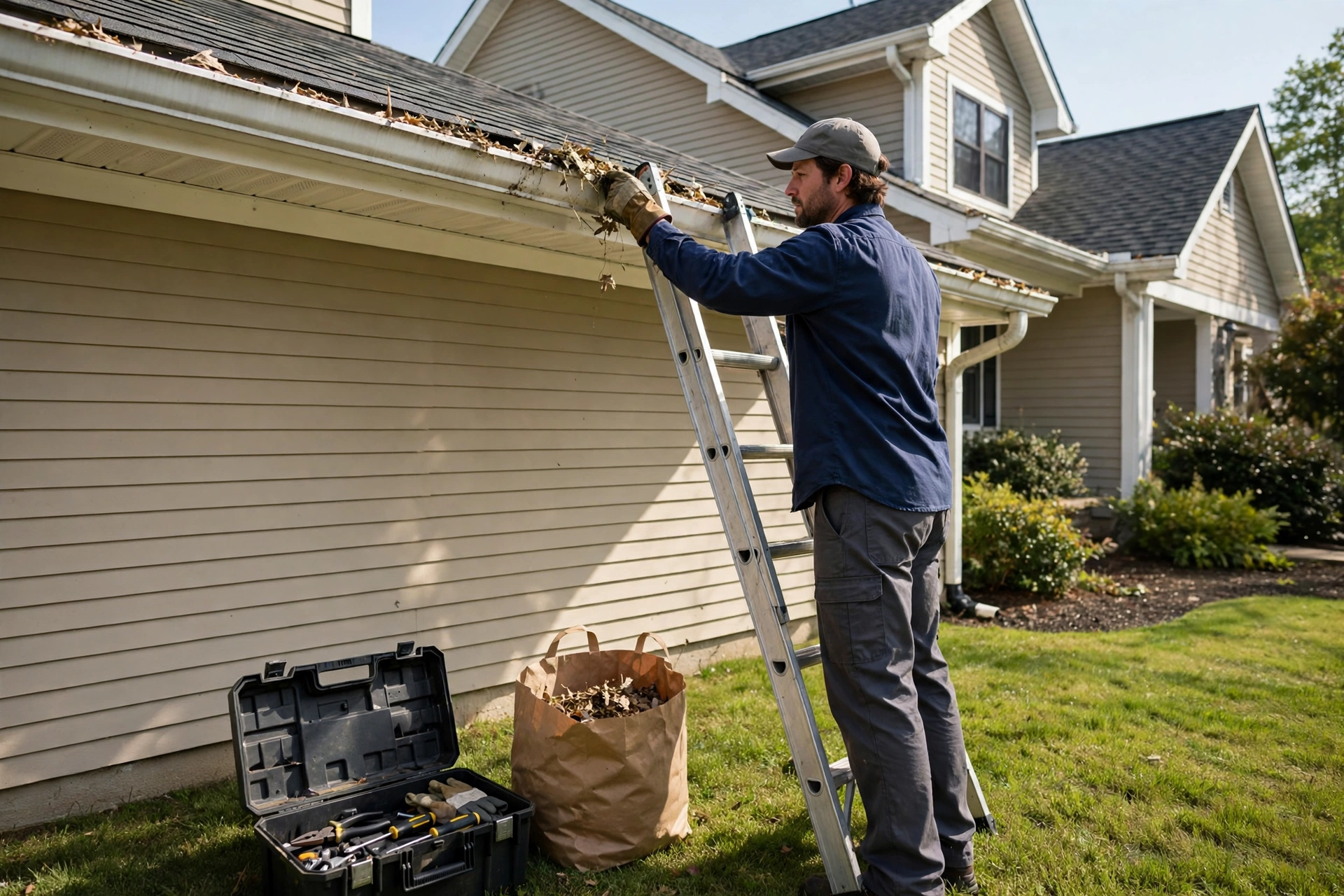
After winter, inspect the roof from the ground with binoculars: look for missing, cracked, or curling shingles, damaged flashing around chimneys and vents, and moss or algae growth. Clean gutters and downspouts of leaves and debris, and confirm downspouts direct water at least three feet from the foundation. Clogged gutters are a top cause of basement water problems and fascia rot — a ladder, gloves, and an hour prevent thousands in damage.
Exterior inspection
Walk the perimeter and check siding, brick, and stucco for cracks, gaps, or damage. Look at the foundation for new cracks (hairline cracks are usually normal settling; wide or stair-step cracks deserve a professional look). Check that soil slopes away from the foundation — mulch and soil settle over time and can reverse the grade, sending water toward the house. Inspect caulking around windows and doors and reseal where it has cracked or pulled away.
Air conditioning prep
Before the first hot day, clear leaves and debris from around the outdoor condenser unit (keep two feet of clearance), gently hose off the coils, and replace the filter. Then run the system and check that cool air flows from every vent and the thermostat responds accurately. Finding a problem in April means a relaxed service call; finding it during the first July heatwave means waiting days for a technician at emergency rates.
Plumbing and irrigation
Turn outdoor faucets back on and check for freeze damage — a spigot that leaks inside the wall when opened needs repair before it soaks the framing. If you have a sprinkler system, run each zone and look for broken heads, geysers, or soggy spots. Inspect washing machine hoses for bulges or cracks; braided stainless-steel hoses outlast rubber ones dramatically and are a cheap upgrade.
Pest prevention
Spring is when pests wake up. Seal gaps around pipes, vents, and the foundation with caulk or steel wool, trim tree branches that touch the roof (a pest highway), and make sure crawl-space vents are intact. Store firewood away from the house. A quick spring exclusion pass prevents the ant, wasp, and rodent invasions that peak in summer.
Summer Checklist (June – August)
Deck, patio, and outdoor structures
Inspect decks for loose boards, popped nails, and wobbly railings — tighten or replace as needed. Check for soft or discolored wood that signals rot, especially where the deck meets the house. Clean the deck and reseal or restain every two to three years; stain protects wood from UV and moisture damage that shortens its life. Inspect fences, pergolas, and sheds the same way.
Driveway and walkways
Look for new cracks in concrete and asphalt. Small cracks are normal, but seal them before water freezes in them and widens them over winter. Check that walkways have not heaved or settled into trip hazards. Pressure-wash siding, walkways, and the driveway to remove mildew and grime — it is cosmetic, but it also reveals damage hiding under the dirt.
Garage and attic
Summer heat makes the garage and attic the right inspection targets. In the garage, test the auto-reverse on the garage door (place a roll of paper towels under the door; it should reverse on contact) and lubricate the tracks and rollers. In the attic, look for daylight through the roof boards, signs of pests, and compressed or missing insulation. Attic temperatures soar in summer, so go early in the morning — and never step between joists.
Ceiling fans and ventilation
Reverse ceiling fans to counterclockwise for summer so they push cool air down. Clean range-hood filters (most are dishwasher-safe) and check that bathroom exhaust fans actually vent outside, not into the attic — a surprisingly common defect that pumps moisture into the roof structure. Clean dryer vents from the dryer to the exterior wall; lint buildup is a genuine fire hazard and also makes the dryer work twice as hard.
Fall Checklist (September – November)
Heating system service
Schedule professional furnace or boiler service before heating season — technicians check the heat exchanger for cracks (a carbon monoxide risk), clean burners, and verify safe operation. Replace the filter, test the thermostat, and bleed radiators if you have hot-water heat. Like AC service in spring, fall scheduling beats the winter rush.
Roof and gutters, round two
Clean gutters again after the leaves fall — this is the more important of the two annual cleanings, because clogged gutters in winter form ice dams that force water under shingles. Inspect the roof once more before snow season, and trim any branches that could break under snow load and land on the roof.
Weatherproofing
Check weatherstripping on doors and windows; replace what is cracked or compressed. Caulk exterior gaps you missed in spring. Insulate exposed pipes in crawl spaces, attics, and garages, and know where your main water shutoff is before you need it in an emergency. If you have a fireplace, schedule a chimney sweep and inspection — creosote buildup is a leading cause of house fires.
Winterize outdoor plumbing
Drain and shut off outdoor faucets, disconnect hoses (a connected hose traps water that can burst the pipe inside the wall), and winterize sprinkler systems by blowing out the lines or draining them per the manufacturer’s instructions. Store patio furniture or cover it. In cold climates, these steps are non-negotiable.
Winter Checklist (December – February)
Prevent frozen pipes
During extreme cold snaps, let faucets on exterior walls drip slightly and open cabinet doors under sinks to let warm air reach the pipes. Keep the thermostat at a consistent temperature day and night — the small energy cost beats a burst pipe. If you leave town, never set the heat below 55°F, and consider shutting off the main water valve for long absences.
Monitor ice dams and snow load
After heavy snow, watch for icicles and ice ridges at the eaves — signs of ice dams forming. A roof rake removes snow from the lower few feet of roof safely from the ground. Never climb onto a snowy roof. Inside, check the attic after storms for leaks that only appear under snow load.
Indoor air and humidity
Winter heating dries indoor air, which cracks woodwork and irritates sinuses. Aim for 30 to 50 percent indoor humidity — a hygrometer costs a few dollars and tells you where you stand. Clean humidifiers regularly to prevent mold. This is also the season to test every GFCI outlet (press the test button; it should trip and reset) and to check that space heaters, if used, sit three feet from anything flammable.
Annual Tasks (Pick a Month and Stick to It)
- Deep-clean the dryer vent line to the exterior — beyond the lint trap, every year.
- Flush the water heater to remove sediment, or have it serviced — extends its life significantly.
- Test the sump pump by pouring water into the pit; confirm it activates and discharges properly.
- Inspect the fire extinguisher — check the pressure gauge and expiration date; replace as needed.
- Service the septic system if applicable — pump every three to five years per local guidance.
- Check the water softener salt level and settings if you have one.
- Review homeowner’s insurance — update coverage for renovations, new valuables, or replacement-cost changes.
- Clean refrigerator coils — dust on the coils makes the fridge work harder and fail sooner.
- Lubricate door hinges and locks — a few drops of the right lubricant stop squeaks and sticking.
- Inspect crawl spaces and basements for moisture, pests, and insulation problems.
Maintenance Costs: What to Budget
A widely used rule of thumb is to budget 1 to 2 percent of your home’s value per year for maintenance — so a $300,000 home means $3,000 to $6,000 annually. Older homes and harsh climates push toward the high end. That sounds like a lot until you compare it to the cost of deferred maintenance: a $200 gutter cleaning prevents a $5,000 fascia and soffit repair; a $150 furnace tune-up prevents a midwinter $500 emergency call or a $5,000 premature replacement. Keep a simple log — a notes app or spreadsheet with dates and costs — so you know what was done and when, which also impresses buyers if you ever sell.
When to DIY and When to Call a Pro
| Task | DIY-Friendly? | Why |
|---|---|---|
| Replace HVAC filters, clean gutters (single story) | Yes | Simple, safe with basic precautions |
| Caulking, weatherstripping, painting touch-ups | Yes | Low risk, big payoff |
| Testing detectors, GFCI outlets | Yes | Push-button simple |
| Electrical panel work, new circuits | No — call an electrician | Shock and fire risk; code requirements |
| Gas appliance service | No — call a pro | Carbon monoxide and explosion risk |
| Roof repairs beyond a single shingle | No — call a roofer | Fall risk; improper repair voids warranties |
| Major plumbing (water heater install, sewer line) | No — call a plumber | Water damage risk; permits often required |
| Chimney sweeping and inspection | No — hire a sweep | Creosote fire risk; needs proper tools |
The guiding rule: DIY what you can inspect and understand fully; hire licensed professionals for gas, major electrical, roofing at height, and anything involving permits. A botched DIY on a critical system costs more than the pro would have.
Frequently Asked Questions
How often should I really replace my HVAC filter?
Check monthly; replace every one to three months. Homes with pets, smokers, or allergy sufferers need the frequent end of that range. A good test: hold the used filter up to light — if you cannot see light through it, it was overdue.
What is the most commonly skipped home maintenance task?
Dryer vent cleaning and gutter cleaning top the list. Both are out-of-sight tasks with serious consequences — dryer lint causes thousands of house fires yearly, and clogged gutters cause basement flooding and roof damage. Put both on a recurring calendar reminder.
Should renters do home maintenance?
Renters should do the renter-level basics: replace HVAC filters if accessible, test detectors, report leaks and pest issues promptly, and keep drains clear. Major systems are the landlord’s responsibility — but documenting issues in writing with dates protects you if problems escalate.
How do I remember all of this?
Set four seasonal calendar reminders (one per season) linking to this checklist, plus a monthly recurring reminder for filters and detectors. The system works because it is scheduled, not because you remember — even professionals use checklists.
Is a home warranty worth it instead of maintenance?
A warranty does not replace maintenance — most warranty contracts exclude failures caused by neglected upkeep. Think of maintenance as preventing problems and a warranty (if you choose one) as budgeting for the ones you cannot prevent. Read any contract’s exclusions carefully before buying.
A home maintenance checklist is not about being perfect; it is about being consistent. Filters, detectors, gutters, and seasonal inspections cover the vast majority of what keeps a home safe and sound. Work through one season at a time, log what you do, and budget the 1 to 2 percent — your future self, facing a dry basement and a furnace that starts on the coldest night of the year, will thank you. And since a well-kept home is easier to maintain when it is not buried in clutter, pair this routine with our room-by-room decluttering guide once a year.
Keep a Maintenance Log: The Pro Move
Professionals log everything, and you should too. A simple record — date, task, cost, and notes — turns maintenance from a vague intention into a managed system. It tells you when the water heater was last flushed, which filter size the furnace takes, and what the roof looked like last spring. When you sell, a maintenance log is compelling evidence of a cared-for home. A notes app, a spreadsheet, or even a paper binder in the utility room all work; the best format is the one you will actually update. Log these essentials: HVAC filter changes and service visits, water heater flushes, detector battery changes, gutter cleanings, pest treatments, appliance repairs, paint colors and formulas used, and the age and warranty status of major systems (roof, HVAC, water heater, appliances).
Maintenance for Special Situations
New homeowners: the first-year baseline
Your first year is about establishing baselines. Change all the locks, locate the main water shutoff and electrical panel, test every detector, and schedule inspections of the roof, HVAC, and any fireplace. Photograph the condition of everything — roof, siding, basement, attic — so future-you can compare. Ask the previous owners for manuals, paint colors, and the age of major systems; what they share saves you detective work.
Older homes (50+ years)
Vintage homes reward extra attention to: galvanized plumbing (corrodes from the inside — watch for low water pressure and discolored water), old electrical (knob-and-tube or undersized panels need professional evaluation), original windows (storm windows and weatherstripping beat replacement for cost-effectiveness), and foundations (monitor existing cracks for change rather than panicking at their existence). Budget toward the 2 percent end of the maintenance rule — old houses earn it.
Homes in harsh climates
Desert homes: service AC twice yearly, watch for stucco cracks and sun damage, and inspect irrigation constantly — water is precious and leaks are expensive. Coastal homes: rinse salt spray off exterior metal and windows, inspect for corrosion on railings and HVAC units, and watch for wind-driven rain intrusion around windows. Heavy-snow regions: reinforce the ice-dam prevention routine, know your roof’s snow-load limits, and keep a roof rake accessible. Each climate shifts which seasonal tasks matter most — adjust the checklist accordingly.
Frequently Asked Questions (Continued)
What home maintenance can I skip if I am busy?
Never skip safety items (detectors, dryer vent, chimney if you burn wood) or water management (gutters, leak checks, sump pump). If you must triage, those two categories prevent the disasters; cosmetic and efficiency tasks can wait a season. But “busy” is exactly why the checklist exists — scheduled 20-minute tasks beat emergency weekends.
How do I find a reliable contractor for the pro tasks?
Get three quotes, check licenses and insurance (ask for certificates, not promises), read recent reviews, and ask for local references you can actually call. Never pay the full amount upfront — a deposit of 10 to 30 percent with the balance on completion is standard. The cheapest bid is rarely the best value; the middle bid from a well-reviewed local company usually is.