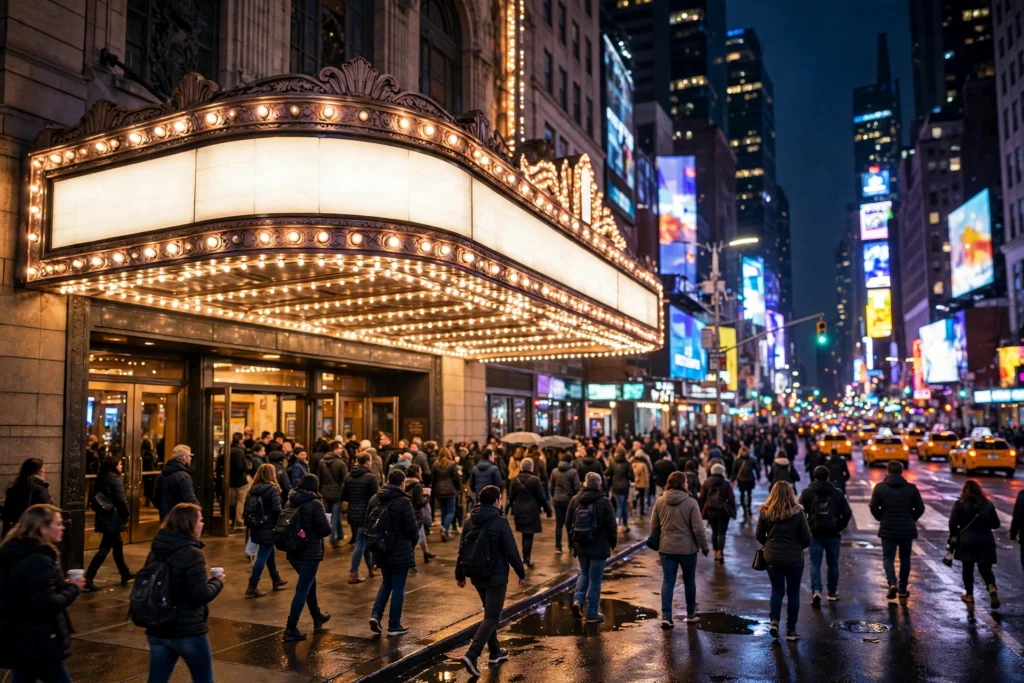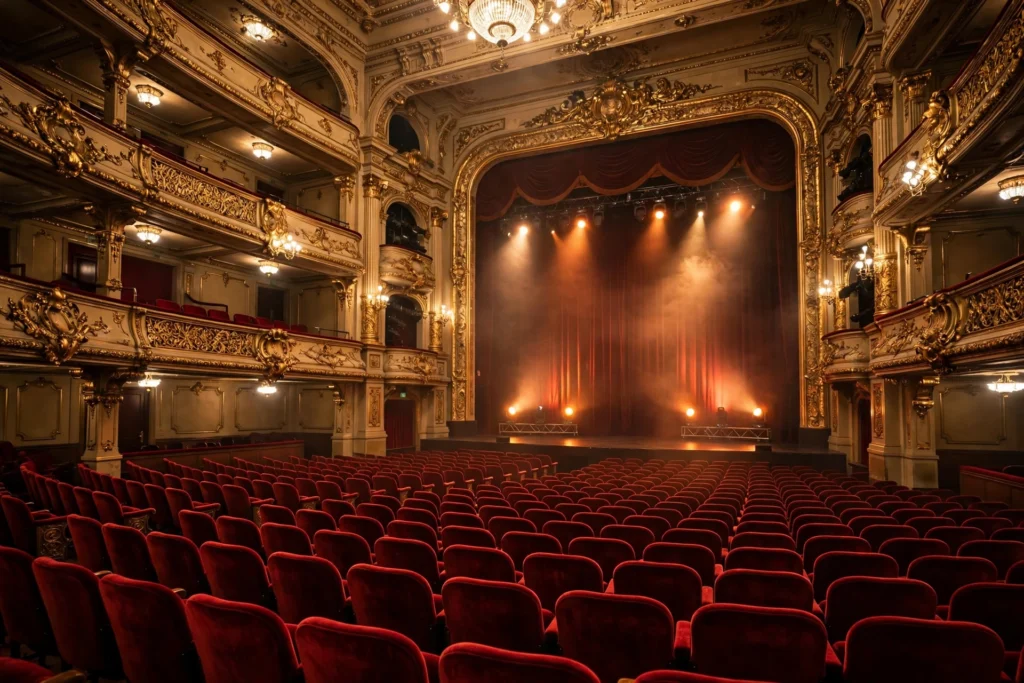
Some of the most exciting theater in New York doesn’t happen on Broadway at all. Off-Broadway — the productions playing in the city’s smaller theaters, from 100-seat black boxes to 499-seat houses — is where Broadway’s biggest hits are born (Hamilton, Dear Evan Hansen, and Hadestown all started Off-Broadway), where adventurous new writing premieres, and where tickets often cost less than half of Broadway prices. This guide to the Best Off-Broadway Shows covers what makes the scene special, the venues that matter, and the productions most worth your time.
First, the terminology. “Off-Broadway” is a contractual designation, not a location: it means a theater with 100 to 499 seats (Broadway houses have 500+). Many Off-Broadway theaters are in the same neighborhoods as Broadway — some are literally around the corner. “Off-Off-Broadway” means under 100 seats. The smaller the house, the more intimate and often more experimental the work.
Why See Off-Broadway?
- The prices. Off-Broadway tickets typically run $30 to $80 — a fraction of Broadway. You can see two or three Off-Broadway shows for the price of one Broadway orchestra seat.
- The discovery. This is where future classics premiere. Seeing a show Off-Broadway before it transfers means you saw it first — and paid less.
- The intimacy. In a 200-seat house, there is no bad seat. You are close enough to see actors’ expressions, which changes everything.
- The adventure. Off-Broadway takes risks Broadway can’t afford to — stranger stories, bolder staging, new voices. Some nights fail gloriously; many nights astonish.
- The access. Lotteries and rush are easier, lines are shorter, and the whole experience feels less like an industrial operation.
The Essential Off-Broadway Venues
The Public Theater (425 Lafayette St)
The most important nonprofit theater in America. The Public premiered Hamilton, Fun Home, and A Chorus Line before their Broadway transfers, and its free Shakespeare in the Park (see our Shakespeare in the Park guide) is a New York institution. The downtown season is consistently the strongest in the city — if you see one Off-Broadway season, make it this one.
Atlantic Theater Company (Chelsea)
Founded by David Mamet and William H. Macy, the Atlantic has premiered Pulitzer winners and Broadway transfers alike. The Linda Gross Theater’s productions are reliably excellent, and the company’s acting school keeps the work sharp.
New World Stages (340 W 50th St)
The most “commercial” Off-Broadway venue — a five-theater complex under one roof, home to long-running hits and family favorites. It is the easiest entry point: professional, comfortable, and programmed for broad appeal.
Playwrights Horizons (416 W 42nd St)
Devoted exclusively to new American plays and musicals. The track record is extraordinary — multiple Pulitzers, countless Broadway transfers. If you want to see the future of American theater, this is the address.
Second Stage (Tony Kiser Theater, 305 W 43rd St)
Specializes in second productions of worthy plays and new work by established writers. The programming is smart and accessible — a great bridge between commercial and adventurous.
Manhattan Theatre Club (City Center & Samuel J. Friedman)
MTC operates both Off-Broadway (City Center Stage I) and Broadway (Friedman) houses, which means its Off-Broadway premieres sometimes transfer upstairs — subscribers get the whole pipeline. The work is polished and writer-driven.
Ars Nova (511 W 54th St)
The downtown cool-kid venue — home to premieres of offbeat musicals and plays that later become cultural phenomena. Smaller, younger, weirder, wonderful.
Signature Theatre (480 W 42nd St)
Devoted to single playwrights in residency — a season exploring one writer’s work in depth. The Pershing Square Signature Center is a beautiful facility, and the ticket initiative has historically offered deep discounts.
What to See: Current Standouts and Perennial Types
Off-Broadway lineups change constantly, so rather than a fixed list that will age, here are the production types most worth seeking — plus how to find what’s on now.
The Future Broadway Transfer
Every season, one or two Off-Broadway productions generate the kind of buzz that screams “Broadway bound.” Signs: extended runs, celebrity attendance, major critics’ picks, and producers circling. The Public, Atlantic, and Playwrights Horizons are the most common launchpads. Check theater news sites for transfer rumors — seeing it Off-Broadway first is both cheaper and a better story.
The Intimate Musical
Small-cast musicals thrive Off-Broadway, where a 150-seat house turns a song into a confession. These are often the most emotionally powerful nights in New York theater — no spectacle to hide behind, just writing and performance.
The Star Vehicle Play
Film and TV stars regularly do limited Off-Broadway runs — the smaller houses and shorter commitments appeal to actors who want stage credibility without a year-long Broadway contract. These sell out fast but are often the most electric nights in the city.
The Immersive Experiment
Site-specific and immersive productions — shows staged in warehouses, apartments, or purpose-built environments — live almost entirely Off- and Off-Off-Broadway. If you want theater that breaks every rule, start here.
The Comedy Night
Off-Broadway houses some of New York’s best comedy — improv, sketch, and solo shows at venues like Ars Nova and the legacy of UCB. For a dedicated comedy night, our best improv comedy clubs in the USA covers the national scene.
How to Find What’s Playing
- Playbill.com — the most complete Off-Broadway listings, with news and discounts.
- Theatermania — listings plus a robust discount ticket section.
- Show-Score — audience reviews aggregated by show; invaluable for Off-Broadway where critical coverage is thinner.
- TodayTix — the app’s Off-Broadway inventory is excellent, with frequent discounts.
- Venue mailing lists — the Public, Atlantic, and Playwrights Horizons announce seasons to subscribers first, with the best prices.
Off-Broadway vs. Broadway: Honest Comparison
| Factor | Broadway | Off-Broadway |
|---|---|---|
| Ticket prices | $100–$300+ | $30–$80 typical |
| Theater size | 500–1,500 seats | 100–499 seats |
| Spectacle | Maximum | Intimate, inventive |
| Risk level | Proven hits | New work, experiments |
| Star power | Frequent | Regular (limited runs) |
| Best for first-timers? | Yes — the classic experience | Yes — if adventurous |
If this is your very first theater trip ever, start with our best Broadway shows for first-timers — then come back here for your second night. The ideal New York theater trip is one Broadway blockbuster and one Off-Broadway discovery.
Tips for the Off-Broadway Night Out
- Read reviews, but trust audiences. Off-Broadway gets less critical coverage than Broadway; Show-Score’s audience ratings are often more useful than a single review.
- Sit close. In a 200-seat house, the front rows are transformative — and often the same price as the back.
- Check the runtime. Off-Broadway shows vary wildly — 70 minutes with no intermission is common. Plan dinner accordingly.
- Look for talkbacks. Many nonprofit theaters host post-show discussions with the artists — free, fascinating, and a window into how theater gets made.
- Mind the etiquette. Intimacy cuts both ways: in a 150-seat house, your phone screen is visible to the actors. Our theater etiquette guide applies double here.
- Combine with dinner nearby. The Hell’s Kitchen and East Village restaurant scenes around Off-Broadway venues are half the fun — no need for the Times Square tourist traps.
A Brief History of Off-Broadway
Off-Broadway was born as a rebellion. In the 1950s, rising Broadway costs were squeezing out new and experimental work, so producers began staging shows in smaller downtown houses — church basements, converted warehouses, tiny theaters in Greenwich Village. The movement exploded in the 1960s: The Fantasticks opened Off-Broadway in 1960 and ran 42 years, still the longest-running musical in history. Hair premiered Off-Broadway before conquering Broadway. The Public Theater’s Joseph Papp made Off-Broadway a civic institution with free Shakespeare and radical new plays.
The economics that created Off-Broadway still define it. A Broadway musical can cost $15–$25 million to mount; an Off-Broadway production might cost a tenth of that. Lower costs mean lower risk, which means braver choices — the plays and musicals that couldn’t survive Broadway’s commercial pressures find their home here. Every few years, one of them breaks through and transfers uptown, and the cycle renews. Understanding this history reframes the experience: you’re not seeing “lesser” theater, you’re seeing theater at its most alive.
How to Read Off-Broadway Buzz
Off-Broadway discovery is a skill. Here’s how insiders spot the winners:
- Follow the extensions. The clearest signal in Off-Broadway is an extended run — it means word of mouth is working. A show that extends twice is almost certainly excellent.
- Watch the critics’ picks. The New York Times Critic’s Pick designation moves tickets Off-Broadway like nothing else. A Pick plus an extension equals a must-see.
- Check Show-Score. The audience-review aggregator is purpose-built for this: hundreds of verified audience ratings per show, often more reliable than any single review for Off-Broadway’s thinner critical coverage.
- Listen for transfer rumors. Theater journalists report when producers start circling a hit. If you hear “Broadway transfer” attached to an Off-Broadway show, see it now — prices triple after the announcement.
- Trust the venue. A new play at Playwrights Horizons or the Atlantic starts with the benefit of the doubt; their curation is that consistent.
The Off-Broadway Discount Playbook
Off-Broadway’s already-low prices drop further with the right tactics:
- TodayTix discounts: the app’s Off-Broadway deals are deeper and more frequent than its Broadway ones — 30–50% off is common.
- Nonprofit memberships: the Public, Atlantic, and Signature offer memberships with discounted tickets and priority booking. If you’ll see even two shows a season at one theater, join.
- Under-35 and student programs: many Off-Broadway theaters run steep young-audience discounts — sometimes $25–$30 tickets with ID. Always ask.
- Previews: Off-Broadway previews are the cheapest professional theater in New York — sometimes under $30 — and the work is nearly finished.
- Day-of rush: most Off-Broadway box offices hold rush tickets; lines are short compared to Broadway. Our cheap Broadway tickets guide covers the mechanics — they apply here too, with better odds.
A Perfect Off-Broadway Weekend
Here’s the ideal two-night itinerary for a visitor who wants the full picture:
- Friday night: a buzzy new play at the Atlantic or Playwrights Horizons — the adventurous choice, booked on Show-Score ratings. Dinner in Hell’s Kitchen before.
- Saturday matinee: something family-friendly or a long-running hit at New World Stages — the comfortable, crowd-pleasing counterpoint.
- Saturday night: the wild card — an immersive experiment, a late-night comedy show, or whatever the Public has on. Ask a bartender near the theater district what they’ve seen lately; locals know.
Three shows, total ticket cost often under $150 — less than one premium Broadway seat. You’ll leave understanding New York theater more deeply than most tourists who only do Times Square.
Playwrights and Companies to Watch
Off-Broadway runs on writers and companies. Following a few names will keep you ahead of the curve:
- The nonprofit powerhouses: the Public Theater, Atlantic Theater Company, Playwrights Horizons, Manhattan Theatre Club, and Signature Theatre develop the majority of plays that matter. Their seasons are the industry’s farm system.
- The downtown innovators: Ars Nova, Soho Rep, New York Theatre Workshop, and the Vineyard Theatre take the biggest artistic swings — smaller budgets, stranger work, occasional masterpieces.
- What to watch for: when a downtown hit gets picked up by a larger nonprofit for a bigger production, that’s the signal — it means the industry believes. Two steps later comes Broadway.
- The awards that matter Off-Broadway: the Obie Awards (for Off-Broadway and Off-Off-Broadway excellence), the Drama Desk Awards (which cover all New York theater), and the Pulitzer for Drama (frequently won by Off-Broadway premieres). Winners’ lists are reliable watchlists.
The deeper you go, the more rewarding it gets. Many theater lovers eventually prefer Off-Broadway entirely — the work is fresher, the rooms are kinder, and the discovery never stops. Start with the venues in this guide, follow what excites you, and let curiosity lead.
Off-Off-Broadway: For the Truly Adventurous
Below Off-Broadway lies Off-Off-Broadway: theaters under 100 seats, often in basements, lofts, and storefronts. This is theater at its rawest — experimental, intimate, sometimes baffling, occasionally life-changing. Tickets run $15–$30, and the work ranges from future Pulitzer winners workshopping new plays to glorious beautiful messes. The Fringe festivals (New York International Fringe, among others) are the concentrated dose. Go when you’re ready to be surprised.
Free and Cheap: The Extreme Budget Tier
Off-Broadway goes nearly free if you know where to look: many theaters offer pay-what-you-can performances (usually one per run — check listings), free first previews for mailing list subscribers, and rush tickets under $25 that rarely sell out. The Public’s Under the Radar festival and similar events price aggressively for accessibility. Students should always ask about student pricing — it’s deeper Off-Broadway than on, and sometimes unadvertised. Combined with the already-low face prices, a dedicated budget theatergoer can see Off-Broadway weekly for less than one Broadway show a month.
Building Your Off-Broadway Habit
The secret to great Off-Broadway attendance is low friction: join two or three theaters’ mailing lists, skim the season announcements, and commit to one show a month. At Off-Broadway prices, that’s a $40–$60 monthly entertainment budget — less than a streaming bundle plus takeout. Within a year you’ll have a favorite venue, a favorite playwright, strong opinions about casting, and the particular joy of saying “I saw it before it transferred.” That’s the whole game, and it’s wonderful.
More Theater Guides
Build your perfect theater itinerary: our best Broadway shows for first-timers, how to get cheap Broadway tickets, and best improv comedy clubs in the USA for a comedy night.
Your first Off-Broadway show is the start of something. Book it this month — future you, the one with strong opinions about downtown casting, says thanks.
The curtain’s going up. Don’t overthink it — just go.
Frequently Asked Questions
What is the difference between Broadway and Off-Broadway?
It is about theater size, not quality or location: Broadway theaters have 500+ seats, Off-Broadway houses have 100–499. Many Off-Broadway theaters are in the same Manhattan neighborhoods as Broadway. The designation affects union contracts and economics, not artistic merit.
Is Off-Broadway cheaper than Broadway?
Yes, dramatically — typical Off-Broadway tickets run $30 to $80 versus $100 to $300+ on Broadway. You can see three Off-Broadway shows for the price of one premium Broadway seat.
Can Off-Broadway shows be as good as Broadway?
Absolutely — and regularly better. Hamilton, Dear Evan Hansen, Fun Home, and Hadestown all premiered Off-Broadway. The smaller scale often produces more adventurous, intimate, actor-driven work.
How do I find out what is playing Off-Broadway?
Playbill.com and Theatermania have the most complete listings; Show-Score aggregates audience reviews; TodayTix sells discounted tickets. Subscribe to the Public Theater, Atlantic, and Playwrights Horizons mailing lists for season announcements.
Do Off-Broadway shows transfer to Broadway?
Frequently — it is the standard pipeline. Strong Off-Broadway runs with critical acclaim and commercial potential regularly transfer. Seeing a show Off-Broadway before it transfers is the ultimate theater bragging right.
Is Off-Broadway good for first-time theatergoers?
Yes, with one caveat: pick an accessible show. A star-led play or a well-reviewed musical at the Public or Atlantic is a wonderful first night. Save the experimental 70-minute two-hander for your second visit.