Guests spend more time looking at your centerpieces than at any other decoration. During dinner, the centerpiece sits eighteen inches from their faces, in every photo of the table, in the background of every toast video. These vow renewal centerpiece ideas will help you design tables that look stunning, photograph beautifully, and — just as important — do not block conversation, catch fire, or blow the budget.
A great centerpiece does four jobs at once: it anchors the table visually, it carries your palette and theme, it creates atmosphere (usually with light), and it stays out of the way of the actual celebration. The failures are instructive: the towering arrangement nobody can see past, the scented candle that overpowers the food, the elaborate design that leaves no room for the bread basket. This guide covers centerpiece formats compared head-to-head, 40 ideas across five styles, three complete DIY walkthroughs, sizing and safety rules, and answers to the questions couples ask most. For the broader table design around your centerpieces, see our wedding day table decoration ideas.
The Four Jobs of a Great Centerpiece
Before choosing a design, understand what it has to accomplish. A centerpiece that fails any of these four jobs will annoy your guests no matter how pretty it is:
1. Anchor the table. The centerpiece is the visual center of gravity. It should make the table look finished and intentional — the difference between “a table with stuff on it” and “a designed tablescape.” Even a simple candle cluster does this job if it is composed with care.
2. Carry the design language. Your centerpiece is where your palette, your florals, and your style show up at guest level. It should echo your arch and ceremony decor — same flowers, same metals, same mood — so the whole celebration reads as one coherent design.
3. Create atmosphere. The best centerpieces include a light source. Candlelight at the table flatters faces, makes food look delicious, and creates the warm glow guests associate with celebration. A centerpiece without any light element is missing its most powerful tool.
4. Stay out of the way. This is the non-negotiable: guests must see each other across the table, servers must reach around it, and there must be room for food, drinks, and elbows. The golden rule — under 12 inches or over 24 inches, never in between at eye level — exists because violating it ruins dinners.
Centerpiece Formats Compared
Choose your format before your flowers. Each has a distinct cost, height profile, and vibe:
| Format | Height Profile | Typical Cost per Table | Best For |
|---|---|---|---|
| Low lush bowl | Under 10″ | $25–$60 | Intimate dinners, conversation-first tables |
| Bud vase trio/cluster | 6–12″ | $15–$35 | Budget-friendly, modern, long tables |
| Tall trumpet arrangement | 24–36″ | $75–$150 | Ballrooms, grand statements |
| Candle cluster | Mixed 4–14″ | $20–$45 | Evening, romantic, any budget |
| Garland runner | Under 8″ | $30–$70 | Long banquet tables, garden style |
| Lantern centerpiece | 12–20″ | $25–$50 | Rustic, beach, outdoor |
| Geometric terrarium | 8–14″ | $20–$40 | Modern, minimalist |
| Photo-story display | Varied | $10–$25 | Personal, intimate renewals |
The mix-and-match secret: you do not need identical centerpieces. Alternating two or three formats through the room — tall, low, tall, low — creates visual rhythm and can cut costs (tall arrangements are expensive; alternating halves the number you need). Just keep the palette and materials consistent so the variety reads as designed, not random.
40 Vow Renewal Centerpiece Ideas
Forty designs across five styles. Each notes its format, approximate cost, and best setting.
Floral Centerpieces (1–10)
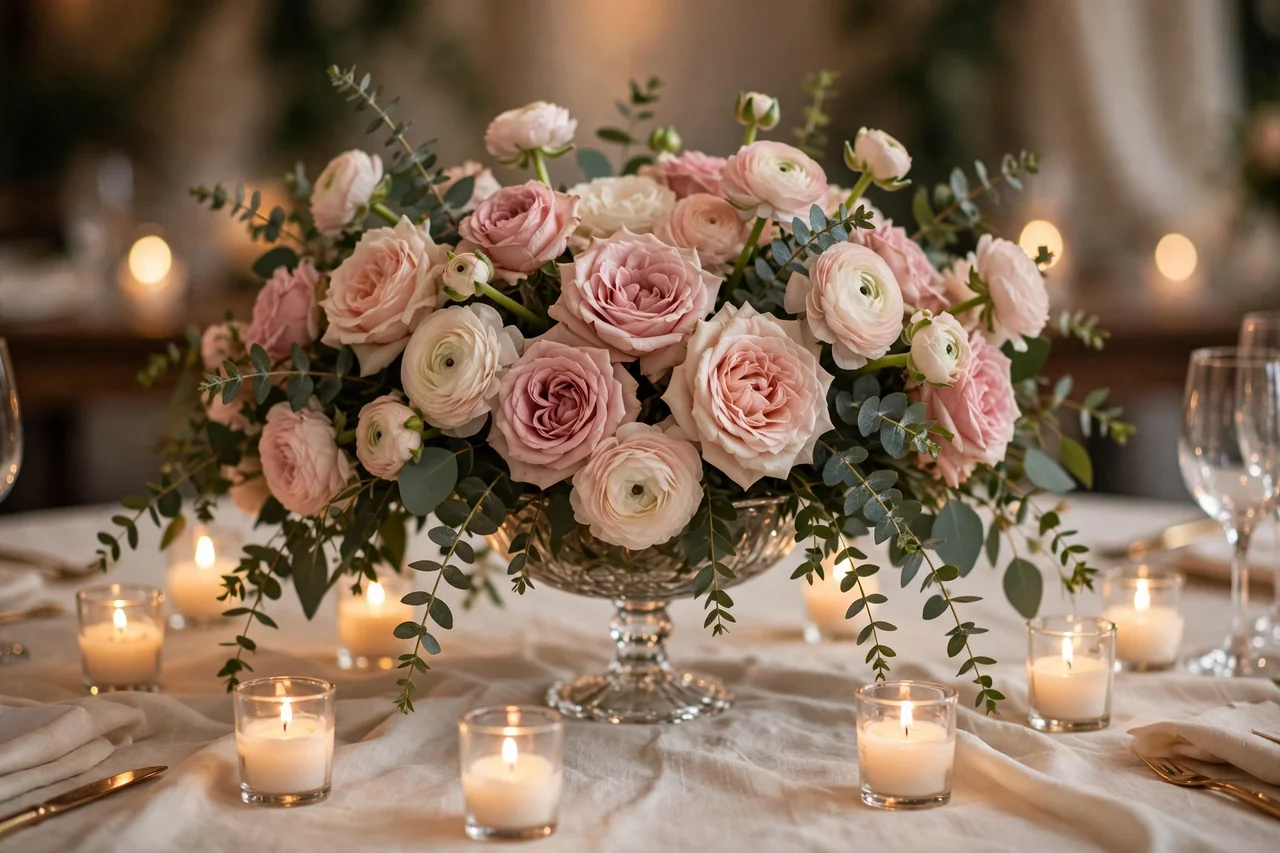
- The garden compote: A footed compote bowl overflowing with garden roses, ranunculus, and trailing greenery. Low, lush, romantic — the workhorse of elegant tables. ($40–$60)
- Monochrome bloom bowl: A low bowl filled with a single flower variety in one color — all white peonies, all blush roses. Striking in its simplicity. ($35–$55)
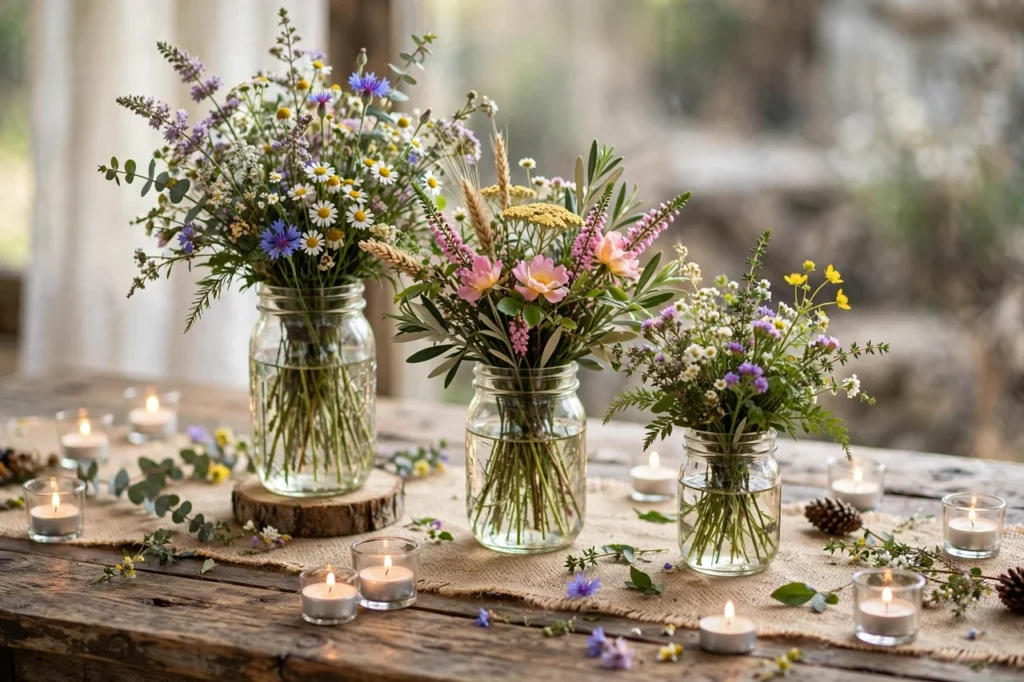
- Wildflower mason trio: Three mason jars of loose wildflowers at staggered heights. Effortless, cheerful, perfect for rustic and garden renewals. ($15–$25)
- Orchid elegance: A single stem or small cluster of phalaenopsis orchids in a simple ceramic pot, surrounded by votives. Minimalist luxury. ($25–$40)
- Dried pampas arrangement: Pampas grass, dried palms, and bunny tails in a textured vase. Bohemian, everlasting, and zero wilting risk. ($20–$35)
- Herb garden centerpiece: Potted rosemary, lavender, and thyme in small terracotta pots guests can take home. Fragrant, sustainable, and doubles as favors. ($15–$25)
- Floating bloom bowls: Wide shallow bowls of water with floating gardenia, rose, or orchid heads plus floating candles. Stunning, simple, and cheap. ($12–$20)
- Single-stem statements: One perfect long-stem rose, calla lily, or orchid in a tall bud vase per place setting, grouped at the center. Modern minimalism. ($15–$25 for the table)
- Succulent garden: Assorted succulents in a wooden box or concrete trough with sand and stones. Modern, drought-proof, and guests love taking them home. ($20–$35)
- Seasonal branch arrangement: Forced branches — cherry blossom in spring, berry branches in fall, evergreen in winter — in a tall vase. Dramatic height, seasonal soul. ($20–$40)
Candlelight Centerpieces (11–18)
- Hurricane trio: Three glass hurricanes of graduated heights with pillar candles inside, surrounded by scattered petals. The highest impact per dollar in all of event design. ($20–$35)
- Taper candle forest: A dozen taper candles in mixed brass holders at varied heights down the table center. Dramatic, romantic, endlessly photographable. ($25–$40)
- Mirrored tray cluster: Pillar candles and votives arranged on a mirrored tray with greenery tucked between. The mirror doubles the light — pure magic after dark. ($25–$40)
- Lantern glow: A large lantern with a pillar candle inside, flanked by small votives and eucalyptus sprigs. Cozy, contained, wind-resistant for outdoors. ($25–$45)
- Wine bottle candles: Empty wine bottles (your own collection!) with taper candles or fairy lights inside, in your palette colors. Personal, free, and charming. ($5–$15)
- Floating candle bowls: Wide bowls of water with floating candles and a few flower heads. Effortless elegance that takes five minutes to assemble. ($10–$18)
- Candelabra statement: A single grand candelabra — brass, crystal, or black metal — as the entire centerpiece. Old-world drama; rent rather than buy. ($30–$60 rental)
- Tea-light river: Dozens of tea lights in glass holders scattered down the length of the table among low greenery. Simple, breathtaking, and cheap in bulk. ($15–$25)
Personal and Photo-Story Centerpieces (19–26)
- The “year” table: Each table represents a year of your marriage, with framed photos and a card telling that year’s story. Guests hunt for “their” year. ($10–$20)
- Photo tree: A small branch “tree” in a pot with photos hung by ribbon like ornaments, fairy lights woven through. Whimsical and deeply personal. ($15–$25)
- Love-letter display: Framed excerpts from your old love letters, cards, or emails under glass cloches or in standing frames. Guests will read every word. ($10–$15)
- Memory jar: A large jar where guests add written memories throughout dinner, surrounded by candles and photos. Decor now, keepsake forever. ($8–$15)
- Travel souvenir collection: Small treasures from your trips together — shells, tickets, mini landmarks — arranged with candles on a tray. Perfect for travel-loving couples. ($5–$10)
- Wedding-day echo: A framed photo from your original wedding at each table, styled with flowers in your original palette. The then-and-now continuity is incredibly moving. ($10–$20)
- Family heirloom showcase: Grandmother’s teacups as bud vases, a vintage clock, inherited candlesticks — family pieces styled as the centerpiece. Irreplaceable and meaningful. ($0)
- Advice-card centerpiece: Cards and pens at each table inviting “advice for the next chapter,” displayed in a pretty box with flowers. Interactive decor. ($8–$12)
Budget and DIY Centerpieces (27–34)
- Grocery-store glam: Three $5 grocery bouquets, separated by variety and recombined into one lush arrangement plus bud vases. The $15 centerpiece that looks like $60 — the trick is editing, not spending. ($15)
- Painted jar collection: Jars you own, spray-painted in your metallic accent, filled with single-variety blooms. Coordinated, chic, nearly free. ($8–$15)
- Book-stack centerpiece: For literary couples — stacked vintage books with a small arrangement and candle on top. Intellectual charm. ($5–$12)
- Fruit and flower: Bowls of citrus, figs, or pomegranates mixed with blooms and greenery. Abundant, fragrant, colorful — and guests can eat the decor. ($12–$20)
- Paper flower pomanders: Tissue-paper flower balls on stands or in bowls. Festive, colorful, and completely everlasting. ($8–$15)
- Sand and shell (beach): Glass cylinders layered with sand, shells, and a pillar candle. Coastal elegance for nearly nothing. ($8–$14)
- Pinecone and evergreen (winter): Pinecones, cedar branches, and berries in a wooden box with candles. December tablescapes basically assemble themselves. ($8–$15)
- Balloon table accents: Small clusters of 3–5 balloons in your palette on weighted bases, mixed with flowers. Playful and festive for daytime celebrations. ($10–$18)
Statement Centerpieces (35–40)
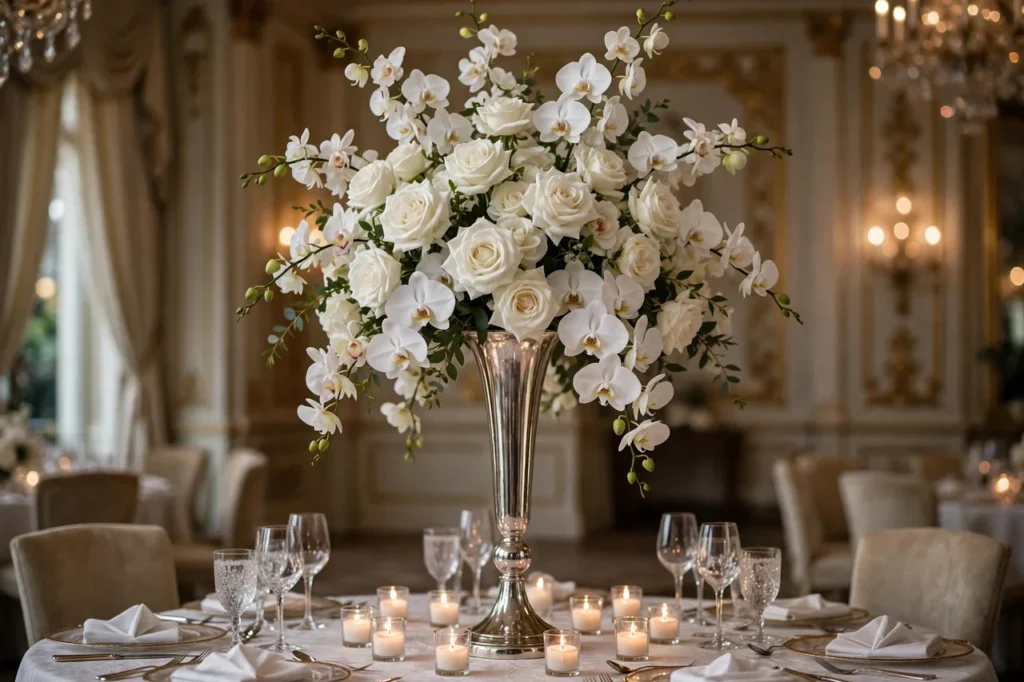
- The tall trumpet: A 30-inch trumpet vase with a lush arrangement floating above guests’ heads. Ballroom drama that keeps sightlines clear. ($75–$150)
- Hanging installation: Greenery and florals suspended above the table from a frame or the ceiling. The ultimate wow — guests dine under a garden. ($100–$250 per table)
- Champagne tower: A coupe tower as the centerpiece — visual spectacle and functional bar in one. Glamorous, festive, unforgettable. ($40–$80 plus champagne)
- The birdcage garden: A vintage birdcage filled with flowers and fairy lights. Romantic, unusual, and a great conversation piece. ($25–$50)
- Sculptural branch: A single dramatic manzanita or curly-willow branch in a tall vase with hanging votives or orchids. Ikebana-inspired art. ($30–$60)
- The dessert centerpiece: A styled cake or dessert tower as the table’s centerpiece — beautiful and edible. Works brilliantly for small, intimate renewals. ($30–$60)
Three DIY Centerpieces, Step by Step
Three complete builds you can make this weekend, with exact materials:
1. The $20 candle-and-greenery runner (30 minutes). Buy a 6-foot faux eucalyptus garland ($12), a bag of 24 tea lights ($4), and 12 glass tea-light holders ($4 at the dollar store). Lay the garland down the table center, tuck tea lights into holders along it, scatter a few rose petals. Done. It looks like a $75 professional garland installation.
2. The $25 grocery-store lush bowl (20 minutes). Buy three $5 grocery bouquets in coordinating colors plus one bunch of eucalyptus ($5). At home, separate every stem by variety. Fill a wide low bowl with the eucalyptus as a base, then cluster each flower variety in groups (not mixed) — all the roses together, all the carnations together. Grouping by variety is the professional trick that makes cheap flowers look designed. Add water, done.
3. The $15 photo-story lantern (15 minutes). Buy a large lantern ($10) and print 4–6 small photos ($3). Place a pillar candle (LED for safety) inside, tape photos to the glass panels facing outward, tie a ribbon in your palette around the top. Each table’s lantern shows different photos. Personal, glowing, unforgettable.
For couples decorating at home, these DIY builds pair perfectly with the strategies in our wedding day decoration ideas at home guide.
Watch: DIY Tall Silver Vase Centerpiece Tutorial
See a glamorous tall centerpiece built from start to finish — vase prep, flower placement, and styling tricks you can adapt to any palette:
Sizing, Spacing, and Safety Rules
The unglamorous rules that separate professional-looking tables from amateur ones:
- The sightline rule: under 12 inches or over 24 inches. Sit in a chair at the table and check — if you cannot see the person across comfortably, redesign.
- The elbow rule: leave at least 24 inches of table width per guest for place settings, and keep the centerpiece footprint to the middle third of the table. Guests need room for plates, glasses, and gestures.
- The scent rule: no strongly scented flowers (lilies, hyacinth) or scented candles at dining tables. Scent competes with food — unscented everything within three feet of plates.
- The flame rule: open flames need 12 inches of clearance from anything flammable (fabric, dried florals, paper). Use enclosed hurricanes or LED candles for tall or dried designs. Check venue fire rules before you buy a single candle.
- The wind rule: outdoor centerpieces need weight — heavy vessels, sand in the base, or low profiles. A centerpiece that topples in a gust is worse than no centerpiece.
- The photo rule: photograph one finished table from standing height and from seated height before committing to all tables. Problems invisible up close scream in photos.
- The teardown rule: decide in advance what happens to centerpieces — guests take them, you keep them, or they are donated. Announce it so there is no awkward hovering at evening’s end.
One more professional habit: build ONE complete table first — linens, centerpiece, candles, place settings, the works — and live with it for an hour. Adjust everything that bothers you, then replicate. This single mockup prevents more disasters than any other step. For theme coordination across all your tables, our wedding day party theme ideas help keep every table telling the same story.
Centerpiece Math: How Many and How Much
Budgeting centerpieces is simple arithmetic once you know your table count. For a 50-guest renewal: typically 5–6 round tables (8–10 guests each) or 3–4 long banquet tables. At $25–$40 per table for beautiful DIY designs, your total centerpiece budget is $125–$240 — a fraction of what couples assume. The expensive mistake is not the per-table cost; it is overbuying flowers “just in case” (buy 20% extra, not 100%) and choosing tall formats for every table when alternating tall and low halves the cost. Rent what you will never use again (trumpet vases, candelabras, lanterns); buy what you will keep (fairy lights, hurricanes, bud vases). Always ask your florist about repurposing ceremony flowers for tables — the most elegant budget move in existence. And track every receipt in one place; centerpiece costs creep when purchases are scattered across three weekends of craft-store runs.
Centerpiece Styles by Renewal Theme
Your centerpieces should speak the same design language as the rest of your celebration. Here is how to translate five popular vow renewal themes to the table:
Rustic romance: wooden boxes or slices with wildflowers and mason jars, burlap runners, lanterns with pillar candles, wheat and berry accents. The palette stays warm — cream, sage, dusty rose. Imperfection is the aesthetic: loose arrangements, varied jar heights, visible texture. Cost per table: $20–$35 DIY.
Modern glam: mirrored trays, geometric gold terrariums with orchids, black taper candles, crystal accents, monochromatic white-and-gold palette. Everything symmetrical, polished, and reflective. One statement per table, executed flawlessly. Cost per table: $40–$80.
Beach and coastal: glass cylinders with sand and shells, driftwood pieces, white blooms with sea grasses, pale blue and sand palette, lanterns instead of open flame (wind). Keep everything low — ocean wind is merciless to tall designs. Cost per table: $15–$30.
Vintage garden party: mismatched thrifted china as vessels, teacups with single blooms, lace runners, pastel palette, birdcages or small clocks as accents. The charm is in the collection — start thrifting months ahead. Cost per table: $15–$30.
Winter candlelit: evergreen branches, pinecones, and berries in dark vessels, abundant pillar candles, deep jewel palette with gold, velvet ribbon accents. Candlelight does 70% of the work — invest in volume of flame. Cost per table: $25–$45.
The through-line: pick the theme first, then let it dictate vessels, palette, and light. A centerpiece chosen for its theme always looks more intentional than one chosen because it was pretty in isolation.
Working with a Florist: What to Ask
If you are hiring a florist for centerpieces, these questions separate good outcomes from expensive disappointments. Ask for a mockup — one complete sample table before you commit to all of them. Confirm which flowers are in season for your date and what substitutions they will make if something is unavailable. Ask about repurposing: will they move ceremony flowers to tables during cocktail hour (many do this for a small fee, saving you hundreds)? Clarify setup and teardown — who places centerpieces, when, and who removes them. Discuss vessel ownership: rented vessels go back, purchased ones are yours — know which you are paying for. And always ask for photos of their actual work at real events, not Pinterest inspiration boards. A florist whose real work matches your vision is worth every penny; a florist selling someone else’s photos is a risk at any price.
Seasonal Centerpiece Calendar
The secret to affordable, fresh-looking centerpieces is brutally simple: use what is in season. Seasonal flowers cost a third of out-of-season imports and look twice as good. Here is your year at a glance:
- Spring (March–May): tulips, daffodils, ranunculus, sweet peas, cherry blossom branches, peonies (late spring). The most abundant and affordable flower season. Pastel palettes sing. Budget per table: $15–$30.
- Summer (June–August): garden roses, dahlias, sunflowers, zinnias, wildflowers, hydrangeas. Bold color season — go bright or go home. Heat warning: choose hardy varieties and keep arrangements cool until display. Budget per table: $15–$35.
- Fall (September–November): dahlias, mums, marigolds, grasses, berry branches, wheat, dried elements. The richest textures of the year; jewel tones and warm metallics. Budget per table: $15–$30.
- Winter (December–February): evergreens, amaryllis, anemones, hellebores, forced branches, pinecones and berries. Lean on greenery and candlelight — winter centerpieces are about glow more than bloom. Budget per table: $20–$40 (greenery is cheap; premium winter blooms are not).
Whatever the season, visit your local flower market or farm the week before and buy what looks best that day, not what you planned months ago. Flexibility is the professional’s edge — designers design around the market, not against it.
Frequently Asked Questions
How tall should vow renewal centerpieces be?
Either under 12 inches (low and lush, sightlines fully open) or over 24 inches (tall arrangements floating above guests’ heads). Never 14–20 inches — that is seated eye level, and it blocks conversation and photographs. When in doubt, go low: low centerpieces are cheaper, safer outdoors, and never annoy anyone.
How much should I budget per table for centerpieces?
Beautiful DIY centerpieces run $15–$40 per table; florist-designed ones run $50–$150. For 50 guests (5–6 tables), plan $125–$300 DIY or $400–$900 professional. Candle-heavy designs are the budget sweet spot — $20 in candles and greenery per table looks genuinely luxurious after dark.
Can I use different centerpieces on different tables?
Yes — alternating two or three designs is a professional technique that adds visual rhythm and can cut costs. Keep the palette, materials, and mood consistent so the variety reads as intentional. Alternate tall/low/tall/low down the room, and make the sweetheart table slightly grander than the rest.
What centerpieces work best outdoors?
Low, heavy, and wind-resistant: lanterns with enclosed candles, low lush bowls in weighty vessels, potted herbs or succulents, sand-and-shell cylinders. Avoid tall lightweight designs, loose petals (they blow away), and open flames near fabric. Always have a wind plan — test your designs outside before the day.
Are real or fake flowers better for centerpieces?
Real flowers win for scent-free varieties at close range (guests touch and smell centerpieces). Quality faux wins for greenery-heavy designs, outdoor heat, and anything built days ahead. The smart hybrid: faux greenery foundation with real statement blooms tucked in at the focal points.
How do I keep centerpieces from blocking conversation?
Follow the height rule (under 12″ or over 24″), keep the footprint to the middle third of the table, and do the seated sightline test at your mockup table. If you must have a mid-height element, make it narrow (a single candlestick, one bud vase) rather than wide.
What should I do with centerpieces after the renewal?
Decide in advance: let guests take them (announce it — it is a beloved tradition), keep the best for your home, or donate flowers to a nursing home or hospital (many accept next-day donations). Have bags or boxes ready and a helper assigned. Unclaimed centerpieces wilt in venue dumpsters — a sad end for beautiful work.
Can centerpieces double as favors?
Absolutely — potted herbs, succulents, small candles, and seed packets all work as centerpiece-favors. It is budget-smart (one purchase, two jobs) and guests love taking home something living. Just make sure the “favor” portion looks intentional as decor, not like a gift shop on the table.
How far in advance can I make DIY centerpieces?
Non-perishable designs (candles, lanterns, photo displays, faux florals) can be assembled weeks ahead. Fresh greenery: 1–2 days ahead, kept cool and hydrated. Fresh flowers: the day before at earliest, morning-of at best. Build all vessels and mechanics early; add fresh elements last.
What is the easiest impressive centerpiece for a non-crafty couple?
The hurricane trio: three graduated glass hurricanes with pillar candles, surrounded by scattered petals and a few grocery-store blooms. No arranging skill required, fifteen minutes per table, and it looks professionally designed once lit. Buy the hurricanes at a dollar or thrift store and the candles in bulk — total per table under $25.
The Table Is Where the Party Happens
Ceremonies are watched; dinners are lived. Your centerpieces sit at the center of the longest, most conversational, most photographed part of your celebration — which is why they deserve real thought, not leftovers from the decor budget. But “real thought” does not mean real money: a $20 candle-and-greenery runner, built with care and lit at dusk, will outshine a $200 arrangement that blocks conversation every single time. Choose designs your guests can see over, talk around, and remember fondly long after the last candle is blown out.
These vow renewal centerpiece ideas share one philosophy: design for the humans at the table. Keep sightlines open, keep flames safe, keep scents away from food, and let your palette and your story do the talking. A centerpiece is never just decoration — it is the small world your guests inhabit for the happiest hours of your celebration. Build one perfect mockup table, replicate with confidence, and then sit down at that beautiful table, look across at your partner through the candlelight, and enjoy the dinner you designed. For keeping the whole celebration beautiful on a budget, our wedding day celebration ideas on a budget guide is the perfect companion.
One Last Detail: The Table Talks
Here is the secret nobody tells you about vow renewal centerpieces: guests remember them because they stare at them for an hour while they eat, talk, and cry happy tears. Your tables are where the celebration actually happens, so treat each centerpiece like a conversation starter. A small framed photo of you two at the age you first married — placed beside a current photo — does more emotional work than any flower arrangement. Add a handwritten place card with a memory of each guest and their marriage, and people will keep those cards for years. Keep heights low enough for eye contact across the table; nothing kills dinner conversation faster than a centerpiece wall. And when the night ends, let guests take the arrangements home — a living centerpiece that brightens someone else’s kitchen extends your celebration for weeks, and it is the most graceful cleanup you will ever do.