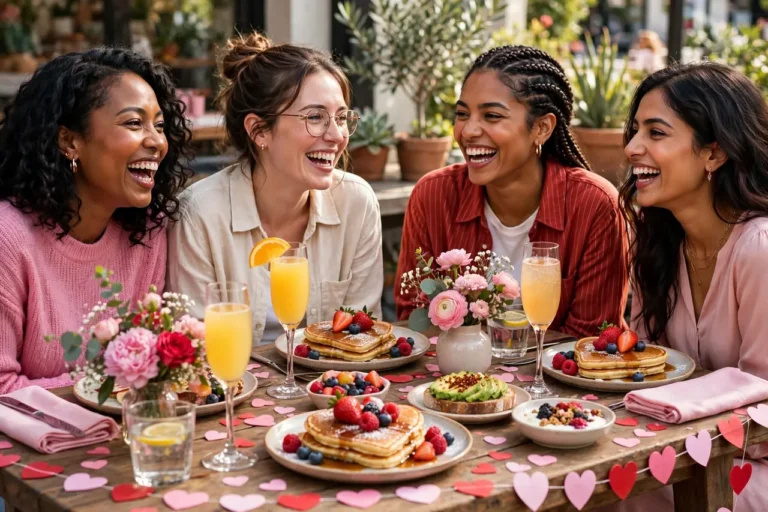
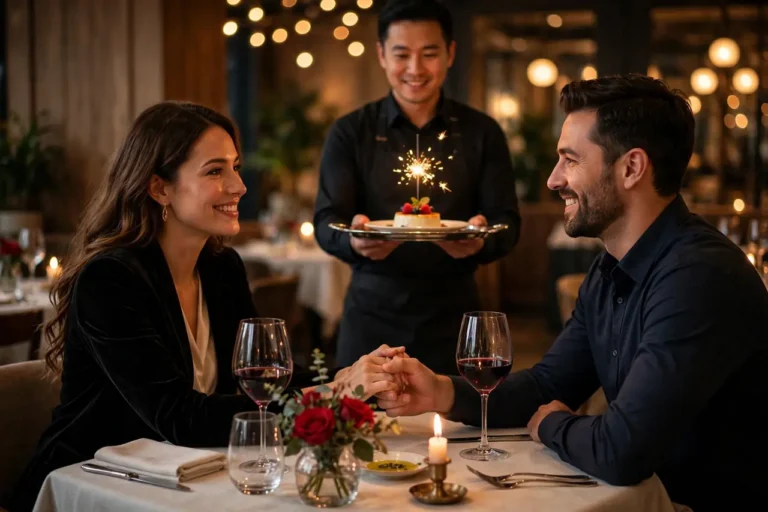
Every February 14, billions of cards change hands, some 250 million roses are grown for the occasion, and couples around the world pause — however briefly — to say I love you a little more deliberately than usual. But how did a midwinter date on the calendar become the world’s most romantic holiday? The Valentine’s Day traditions and meaning we know today are the result of nearly two thousand years of layering: Roman festivals, martyred saints, medieval poetry, Victorian industry, and modern marketing, each adding its own meaning to the day.
This guide traces the full story, from the wild Roman fertility festival of Lupercalia to the medieval poet who first linked February 14 with romance, from the Victorian card boom that commercialized love to the wonderfully varied traditions celebrated around the world today — Japan’s chocolate-giving customs, South Korea’s Black Day, Wales’s love spoons, and more. You will also find ten modern traditions worth starting with your own partner, and an honest look at what Valentine’s Day actually means in the 21st century.
Understanding where Valentine’s Day comes from does not make it less romantic — it makes it richer. Every heart-shaped box and handwritten card sits at the end of a very long, very human story about our need to mark love with ritual. Here is that story.

The Many Saint Valentines: Where the Name Comes From
The Catholic Church recognizes at least three different saints named Valentine (or Valentinus), all martyred in ancient Rome — and historians still debate which one, if any, gave the holiday its name. The confusion is part of the story: Valentine’s Day was built on legend as much as fact, and the legends are revealing.
The most famous account tells of a priest named Valentine living under Emperor Claudius II in the third century. According to tradition, Claudius had banned marriages for young soldiers, believing single men made better warriors. Valentine defied the ban, secretly performing weddings for young lovers — until he was caught, imprisoned, and executed on February 14, around the year 270. It is a powerful story: a man who died for love’s right to exist. Whether or not every detail is historically verifiable, the tale established Valentine as love’s patron martyr.
A second legend says Valentine was imprisoned for helping Christians escape persecution, and that while in jail he healed his jailer’s blind daughter — and fell in love with her. Before his execution, he allegedly wrote her a farewell note signed “from your Valentine,” originating the phrase still written in cards today. A third Valentine was a bishop of Terni, also martyred in the third century. The Church eventually merged these figures in popular memory, and Pope Gelasius I formally established February 14 as the Feast of Saint Valentine in 496 AD.
Here is the honest historical footnote: scholars note that almost nothing verifiable is known about any of these Valentines, and the romantic details were added centuries later. But that hardly matters for the holiday’s meaning. Legends shape culture whether or not they are literally true — and the legend of a man who risked everything for lovers gave February 14 a hero it still leans on.
Lupercalia: Rome’s Wild February Festival
Before there was Valentine’s Day, there was Lupercalia — and it was nothing like a candlelit dinner. Held in mid-February, Lupercalia was an ancient Roman fertility festival honoring Faunus, the god of agriculture, and Rome’s legendary founders, Romulus and Remus, who were said to have been nursed by a she-wolf (lupa) in a cave called the Lupercal.
The rituals were raw and physical: priests called Luperci sacrificed goats and a dog, then ran nearly naked through the streets, striking women with strips of goat hide. Far from being feared, the strikes were welcomed — women believed they promoted fertility and eased childbirth. The festival also included a matchmaking lottery in which young men drew women’s names from a jar, pairing couples for the duration of the festival (and sometimes longer). It was a celebration of vitality, spring’s approach, and the renewal of life — themes that, stripped of their wilder elements, echo faintly in the modern holiday.
Lupercalia survived for centuries, even after Rome became Christian. It was finally suppressed around 496 AD — the same era in which February 14 became Saint Valentine’s feast day. Historians debate whether the Church deliberately placed Valentine’s feast to absorb Lupercalia’s mid-February slot, but the timing is suggestive: old festivals rarely disappear; they get renamed, reframed, and given new meaning. Valentine’s Day may well be Lupercalia’s respectable descendant — the wild fertility rite civilized over fifteen centuries into chocolates and roses.
Chaucer and the Invention of Romantic Valentine’s Day
Here is the twist most people miss: for the first thousand years of its existence, Saint Valentine’s Day had nothing to do with romance. It was simply a martyr’s feast day. The person who changed that was a poet — Geoffrey Chaucer, the father of English literature, writing in the 1380s.
In his poem Parlement of Foules (Parliament of Fowls), Chaucer wrote that on “seynt valentynes day,” birds choose their mates — “every foul cometh ther to choose his make.” Medieval readers took the association to heart, and within a generation, February 14 was linked with courtly love across European aristocracy. Nobles began exchanging love notes on Valentine’s Day, and the tradition of romantic valentines was born — not from the saint’s legend, but from a poet’s imagination about birds in springtime.
The earliest surviving valentine we know of dates to 1415: Charles, Duke of Orléans, imprisoned in the Tower of London after the Battle of Agincourt, wrote a romantic poem to his wife signed as a valentine. By the 1400s, handmade valentines — poems, decorated letters, small tokens — were an established aristocratic custom. Shakespeare later referenced Valentine’s Day in Hamlet, cementing its place in English culture. The holiday’s romantic meaning, in other words, is a medieval literary invention that stuck — proof that poets sometimes reshape the calendar.
The Victorian Card Boom: Love Goes Mass-Market
For centuries, valentines were handmade — laborious, personal, and limited to those with time and skill. The Industrial Revolution changed everything. By the 1840s, advances in printing made it possible to mass-produce elaborate greeting cards, and entrepreneurs seized the opportunity. In America, Esther Howland — often called the mother of the American valentine — built a thriving business selling ornate, lace-trimmed cards, earning a fortune and proving that love was big business.
The Victorians embraced Valentine’s Day with characteristic enthusiasm and excess. Cards grew increasingly elaborate: lace, ribbons, embossed flowers, pull-tabs revealing hidden messages, even mechanical moving parts. At the same time, a mischievous counter-tradition flourished — “vinegar valentines,” insulting cards sent anonymously to rebuff unwanted suitors or mock the pompous. The Victorians, it turns out, were as complicated about love as we are.
Two other Victorian-era innovations shaped the modern holiday. In 1861, Richard Cadbury introduced the first heart-shaped box of chocolates, linking his company’s name permanently with Valentine’s indulgence. And the expansion of postal systems made sending valentines cheap and reliable — by the late 1800s, hundreds of millions of cards were mailed each February in Britain and America. The template of the modern Valentine’s Day — cards, chocolates, flowers, all purchased — was essentially complete by 1900. Hallmark’s entry in 1913 simply industrialized what the Victorians had started.
Valentine’s Day Traditions Around the World
Valentine’s Day is celebrated on every inhabited continent, but it does not look the same everywhere. Local culture reshapes the holiday in fascinating ways — here are twelve of the most distinctive traditions.
| Country / Region | Tradition | What makes it unique |
|---|---|---|
| Japan | Women give chocolate to men on Feb 14; men reciprocate on White Day (Mar 14) | Two holidays; giri-choco (obligation chocolate) vs. honmei-choco (true-feeling chocolate) |
| South Korea | Valentine’s Day, White Day, plus Black Day (Apr 14) for singles | A full calendar: couples celebrate, singles eat black bean noodles together on Black Day |
| Wales | St. Dwynwen’s Day (Jan 25) with hand-carved love spoons | Wales honors its own love saint; intricately carved wooden spoons symbolize devotion |
| France | Intimate dinners; once, the loterie d’amour partner lottery | Paris markets itself as the romance capital; the old lottery tradition was banned for rowdiness |
| Italy | Couples attach padlocks to bridges; Verona receives letters to Juliet | Thousands write to Juliet’s Club in Verona and receive replies from volunteers |
| Denmark | Men send gaekkebrev — funny anonymous poems | If the recipient guesses the sender, she earns an Easter egg; a playful, low-pressure custom |
| Brazil | Dia dos Namorados on June 12, not February 14 | Tied to St. Anthony’s feast (June 13); music festivals and gift exchanges in winter |
| South Africa | Women pin their beloved’s name on their sleeve — literally wearing hearts on sleeves | A literal take on the English idiom, dating back to Roman Lupercalia’s name pairings |
| Philippines | Mass Valentine’s weddings with hundreds of couples | Group ceremonies sponsored by malls and government — practical and festive |
| Finland & Estonia | Ystävänpäivä / Sõbrapäev — Friend’s Day | The holiday celebrates friendship broadly, not just romance; cards for everyone |
| Ghana | National Chocolate Day (since 2007) | Promotes local cocoa on Feb 14 — romance plus economic pride |
| China | Qixi Festival (lunar calendar) is the traditional lovers’ day | Based on the legend of the cowherd and weaver girl; Feb 14 is a newer import |
The pattern is clear: every culture keeps the holiday’s core — a day to honor affection — while adapting its expression. If your own Valentine’s routine feels stale, borrowing a tradition from this table (love spoons, friend’s-day cards, a reply-worthy love letter) is an easy refresh. Curious about the numbers behind the celebration? Our Valentine’s Day spending statistics reveal just how big this holiday has become.
10 Modern Traditions Worth Starting
History is fascinating, but traditions are made by living them. Here are ten modern Valentine’s rituals — small, repeatable, and meaningful — that couples can start this year.
Here are ten rituals to consider — each takes little time, costs little or nothing, and compounds in meaning every year you repeat it.
1. The annual love letter. Write each other a real letter every Valentine’s Day — not a card, a letter, at least a page, in your own handwriting. Seal them and keep them all in a dedicated box. In ten years you will own the most valuable object in your house: a decade of your own love story, told as it happened.
2. The same-restaurant anniversary dinner. Pick one restaurant and return every February 14, requesting the same table if you can. Over the years it becomes your place, layered with memories no new venue can offer — the staff will start to recognize you, and that recognition becomes part of the romance.
3. The Valentine’s walk. A long walk together with no destination and phones left behind. There is something about side-by-side movement that unlocks deeper conversation; couples consistently report talking more openly while walking than while sitting face to face. Make the walk itself the date.
4. The time capsule. Each year, add one item to a box: a photo, a ticket stub, a note about what the year held, a prediction for next year. Seal it and open it on a milestone anniversary. Future you will be amazed at what past you thought mattered — and moved by how right you were about the important things.
5. Cook the same meal. Choose a dish and perfect it together year after year — your signature Valentine’s recipe, improving with age like the relationship itself. The first attempt might be a disaster; that is fine. The disaster becomes part of the lore.
6. The gratitude list. Each of you writes down ten specific things you appreciated about the other this year — not generic traits, but moments: the night you drove through the storm to get me. Read them aloud over dessert. Simple, free, and devastatingly effective.
7. Recreate your first date. Same restaurant, same movie, same walk — once a year, on or near Valentine’s Day. Nostalgia is a love language, and revisiting the beginning reminds you both how far the story has come.
8. The unplugged evening. Phones in a drawer from 6 PM to midnight, no exceptions. One evening of true, undivided attention is worth more than any gift money can buy — and in an age of constant distraction, it feels almost radical.
9. A Valentine’s toast. End the night with a private toast — the same words every year, or new ones written for the occasion. Ritual language binds memory to emotion; years later, those words will still give you chills.
10. The kindness extension. Do one kind thing for someone else together — a neighbor, a friend, a stranger. Shovel a driveway, pay for the next table’s dessert, volunteer for an hour. Love shared outwardly has a way of coming back multiplied. (Our couples’ traditions guide has even more rituals worth borrowing.)
How Valentine’s Day Conquered America
Valentine’s Day crossed the Atlantic with English settlers, but it took root slowly. In colonial America, Puritan disapproval of frivolous celebration kept the holiday muted — the Puritans who banned Christmas were hardly going to embrace a festival of romance. It was the 19th century that changed everything: rising literacy, cheaper postage, and industrial printing converged to make the valentine card a mass phenomenon.
The pivotal figure was Esther Howland of Worcester, Massachusetts. In the late 1840s, after receiving an ornate English valentine from her father’s stationery business, she began importing lace and floral decorations and assembling her own elaborate cards. Her designs — layered lace, embossed paper, romantic verses — were an instant sensation. Within a few years she was running a thriving enterprise employing dozens of women, earning her the title of mother of the American valentine. Howland proved two things that still define the holiday: that Americans would pay for beautiful expressions of love, and that Valentine’s Day could be a serious business.
The 20th century completed the commercialization. Hallmark began mass-producing valentines in 1913, standardizing the aesthetics of the holiday. Florists, chocolatiers, and jewelers built February marketing campaigns that grew more elaborate each decade. By the 1980s, Valentine’s Day was firmly established as one of America’s biggest retail events — second only to Christmas in card sales. The American version of the holiday, with its emphasis on purchased gifts, then exported itself globally through film, television, and advertising — which is why the customs of Victorian England are now observed by teenagers in Tokyo and Seoul.
The Economics of Love: What the Holiday Costs
Valentine’s Day is enormous business. In the United States alone, consumers spend tens of billions of dollars on the holiday each year — covering jewelry, flowers, candy, greeting cards, clothing, and evenings out. Jewelry consistently tops the spending categories, followed by dining out and flowers. The average celebrating American spends well over a hundred dollars, and the total rivals major gift-giving holidays. Globally, the figure climbs far higher once Europe, Asia, and Latin America are included.
The numbers tell a story beyond commerce. Roughly half of Americans celebrate Valentine’s Day in some form, and spending has proven remarkably resilient — it dips in recessions and surges in recoveries, making it a quirky little indicator of consumer confidence. A growing share of Valentine’s spending now goes to non-romantic recipients: friends, family members, coworkers, and pets. The fastest-growing category in recent years has been gifts for pets — millions of Americans now buy their dog or cat a Valentine’s treat, a trend that says something sweet about how broadly we define love.
None of this means you must spend to participate. The data simply shows what the holiday has become at scale; your own Valentine’s Day can be as simple as a handwritten note. But if you enjoy the numbers, our Valentine’s Day spending statistics break down who spends what, where, and on whom — fascinating reading before you set your own budget.
Criticisms Worth Hearing
No honest account of Valentine’s Day can skip its critics — and some of the criticisms deserve attention. The most common complaint is commercialization: that a day meant for genuine affection has been captured by industries profiting from insecurity, convincing people that love must be purchased to be real. There is truth in this, and the healthiest response is the one this article keeps returning to: make the day personal, not expensive.
A second criticism is exclusivity. For people who are single — by choice or by circumstance — February 14 can feel like a weeks-long reminder of absence, amplified by advertising that equates coupledom with happiness. The rise of Galentine’s Day, self-love celebrations, and Friend’s Day traditions is partly a corrective: a broadening of the holiday so it stops feeling like a club with a membership requirement.
Finally, Valentine’s Day faces genuine cultural and religious opposition in some countries, where it is viewed as a Western import at odds with local values; a few governments have restricted public celebrations. These tensions are a reminder that the holiday’s meaning is not universal — it is negotiated, culture by culture, generation by generation. Knowing the criticisms does not require abandoning the holiday. It just means celebrating it with eyes open: deliberately, inclusively, and on your own terms.
What Valentine’s Day Means Today
Strip away the marketing, and what remains? At its best, Valentine’s Day is a scheduled reminder — and reminders matter. Relationship researchers consistently find that couples who maintain small rituals of connection report higher satisfaction than those who rely on grand occasional gestures. Valentine’s Day is, functionally, a culturally enforced ritual of connection: one day a year when attention to your partner is not just allowed but expected.
The holiday has also broadened far beyond romance. Galentine’s Day (February 13) celebrates female friendship; Palentine’s does the same more broadly. Finland and Estonia have long treated the day as Friend’s Day. Parents celebrate with children, friends exchange cards, and a growing self-love movement treats February 14 as a day for personal kindness too. This expansion is not dilution — it is the holiday returning to something like its Lupercalian roots: a midwinter celebration of human warmth in all its forms.
Of course, the commercial pressure is real, and it deserves honesty. No one needs to spend a fortune to prove love; the data on gift spending shows enormous sums flowing through the holiday, but none of it correlates with relationship happiness. The couples who love Valentine’s Day most tend to be the ones who made it theirs — a home-cooked meal, a walk, a letter — rather than the ones who spent the most. The meaning of Valentine’s Day, in the end, is whatever meaning you deliberately give it. That is not a bug in the holiday; it is the entire point. A day is just a day until a couple decides it means us.
Watch: From Ancient Rome to Overpriced Roses
This witty, well-researched video traces the full journey — from Lupercalia’s goat-hide whips through Saint Valentine, Chaucer’s poetry, and Victorian commercialization to today’s multi-billion-dollar holiday. It is the perfect companion to this article: history that entertains as much as it informs.
FAQs About Valentine’s Day Traditions and Meaning
Who was Saint Valentine, really?
Honestly, we are not certain. The Church recognizes multiple martyred Valentines from third-century Rome, and the romantic legends — secret weddings, the first valentine note — were added centuries later. What matters historically is that a real martyr’s feast day on February 14 became the anchor for everything that followed.
What was Lupercalia, and is it really connected to Valentine’s Day?
Lupercalia was a mid-February Roman fertility festival involving sacrifice, ritual running, and a matchmaking lottery. It was suppressed around 496 AD, the same era February 14 became Saint Valentine’s feast. Historians debate a direct link, but the timing strongly suggests the Church placed the feast to absorb the old festival’s calendar slot — a common pattern.
When did Valentine’s Day become romantic?
In the late 1300s, thanks to Geoffrey Chaucer. His poem Parlement of Foules linked Saint Valentine’s Day with birds choosing mates, and medieval aristocracy ran with the idea. Before Chaucer, the feast day had no romantic association at all — romance was a literary invention that became tradition.
Why do we give cards, flowers, and chocolates?
Handmade valentines date to the 1400s; mass-produced cards took off in the 1840s with industrial printing (Esther Howland built an empire on them). Richard Cadbury introduced the heart-shaped chocolate box in 1861. Flowers — especially red roses — became standard through Victorian flower language, where each bloom carried symbolic meaning. Our guide to Valentine’s Day symbols and their meanings unpacks the full floral code.
Do all countries celebrate Valentine’s Day on February 14?
No. Brazil celebrates Dia dos Namorados on June 12; China has the traditional Qixi Festival on the lunar calendar; Wales honors St. Dwynwen on January 25. Many countries also add companion days — Japan and South Korea’s White Day (March 14), South Korea’s Black Day (April 14) for singles.
What is the real meaning of Valentine’s Day today?
At its core, it is a culturally shared ritual of affection — a scheduled reminder to pay deliberate attention to the people you love. It has expanded beyond romance to include friendship, family, and self-kindness. The healthiest way to observe it: make it personal rather than commercial, and let the day mean whatever us means to you.
A Day 2,000 Years in the Making
From naked priests running through Rome to a poet’s verse about mating birds, from Victorian lace cards to the text you will send this February 14 — Valentine’s Day is one of humanity’s longest-running experiments in saying you matter to me. Its traditions are borrowed, its saints are murky, and its meaning has been reinvented a dozen times. And yet, every year, it works: millions of people pause, mid-winter, to be a little more deliberate about love. That is a tradition worth keeping. For the delightful details, test yourself with our Valentine’s Day facts and trivia — and if you are already planning ahead, check when Valentine’s Day falls in 2027.